Bur Dubai Food Walk: Fahidi And The Creek
Bur Dubai is the west bank of the Creek, and it packs the Al Fahidi Historical Neighbourhood, Arabic cafes, the Textile Souk and the abra docks into a walkable strip. Here is what a guided food walk there covers, what it costs and which tour fits which traveller.
Short answer
A Bur Dubai food walk typically runs 2.5 to 4 hours and links the Al Fahidi Historical Neighbourhood, the Al Seef waterfront, the Textile Souk and an abra crossing toward the Deira souks. Guided options on this route cost from prices listed on each booking page, and tastings usually include shawarma, falafel, karak chai and luqaimat.
The west bank of Dubai Creek holds more eating history per square kilometre than anywhere else in the city. Bur Dubai is where the Al Fahidi Historical Neighbourhood, the Al Seef waterfront promenade, the Textile Souk and the old abra docks sit within roughly twenty minutes of one another on foot, and where the street food is still priced for the people who live and work there. A guided walk through this strip is the most efficient way to eat your way across it, and this guide lays out exactly what that walk covers, what it costs and how the tour options differ. Solo women planning the route may wonder about safety and dress norms, and the guide to Dubai for female travellers covers exactly what to expect around the souks and the Creek.
What Does A Bur Dubai Food Walk Actually Cover?
A typical guided walk here spends 2.5 to 4 hours moving through the Al Fahidi Historical Neighbourhood, along the Al Seef waterfront, through the Textile Souk and across the Creek by abra, with street food tastings between the sights. Operators describe stops for shawarma, falafel, karak chai, samosas and luqaimat, plus Arabic coffee in the heritage quarter. Exact stops vary by tour and guide.
The geography explains the format. Bur Dubai is the older, western half of the city's original trading settlement, and its lanes were built for foot traffic long before the car arrived. A guide can move a small group from a heritage courtyard to a cafeteria counter to a spice-scented souk lane without any driving, which is why nearly every Old Dubai food tour on the market bases itself here or across the water in Deira.
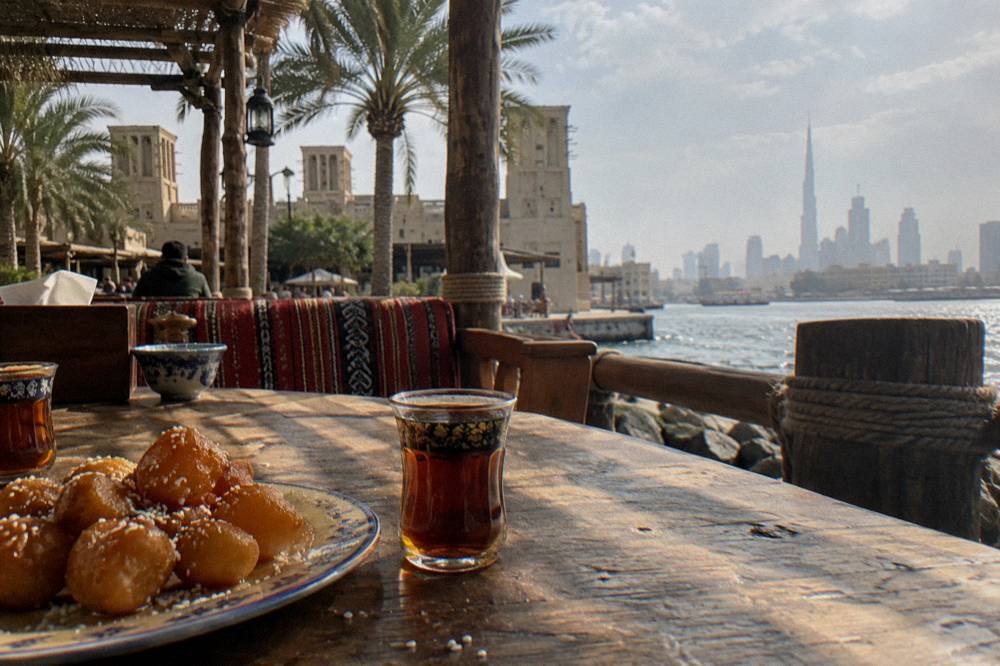
The food on this side of the Creek leans everyday rather than ceremonial. Think shawarma and falafel from counters that serve workers at lunch, karak chai poured through car windows at rush hour, and luqaimat fried to order in the evening. Emirati dishes such as machboos and harees appear on some routes that add a cultural meal stop, and the Emirati food guide on this site covers those dishes in depth if you want the background before you walk.
What the walk adds that independent eating cannot is context. A good guide explains which alley led to which merchant family, why the wind towers mattered before air conditioning, and which dish arrived with which trading community. The listings for the routes compared here describe exactly that mix of eating and storytelling.
| Walk segment | What it is | Food angle |
|---|---|---|
| Al Fahidi Historical Neighbourhood | Restored coral-and-gypsum lanes and courtyards | Arabic coffee, heritage cafe stops |
| Al Seef waterfront | Around 1.8 km of promenade, free to enter | Modern cafes beside heritage-style architecture |
| Textile Souk | Covered fabric market lanes | Cheap cafeterias and juice stalls around the edges |
| Abra dock | Traditional wooden boats crossing the Creek | The link to the Deira souks and their street food |
Al Fahidi Historical Neighbourhood: Where The Walk Begins
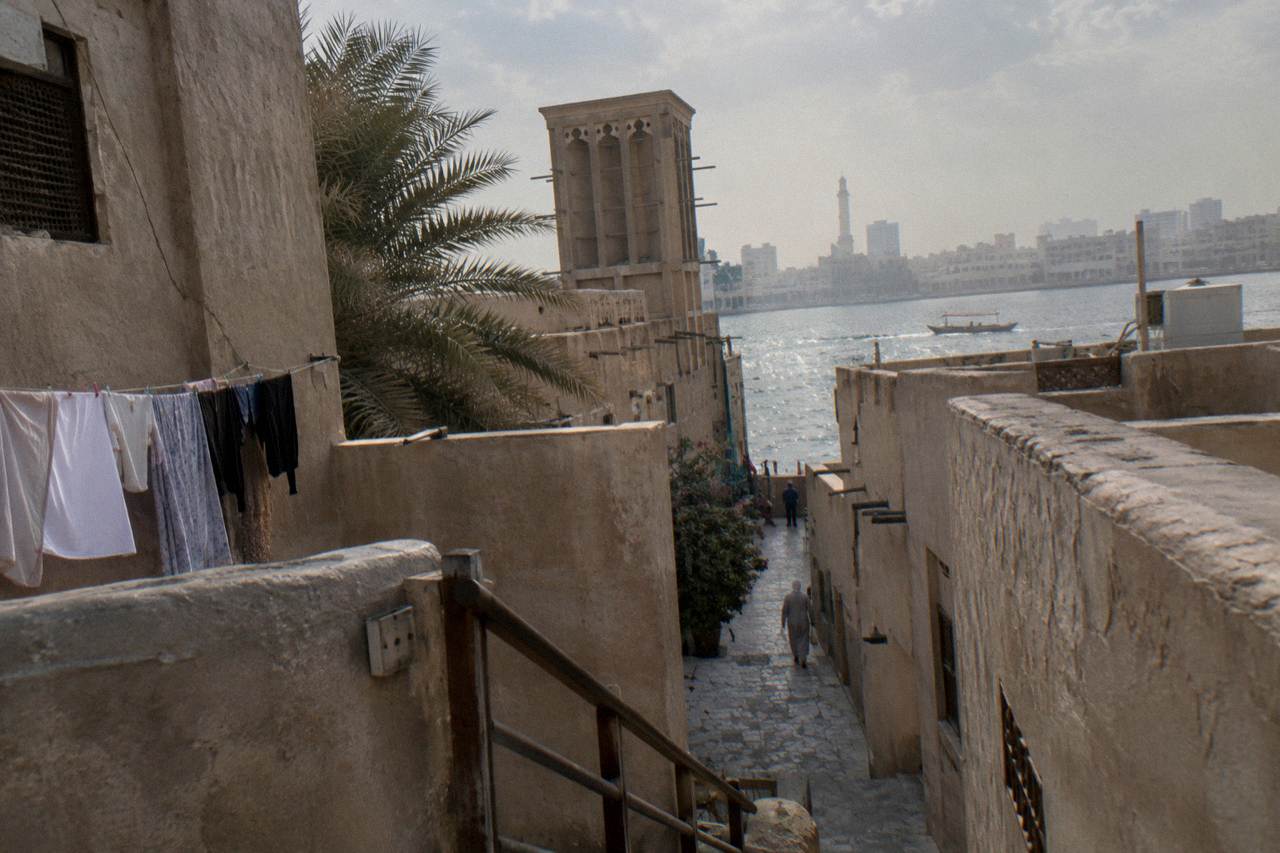
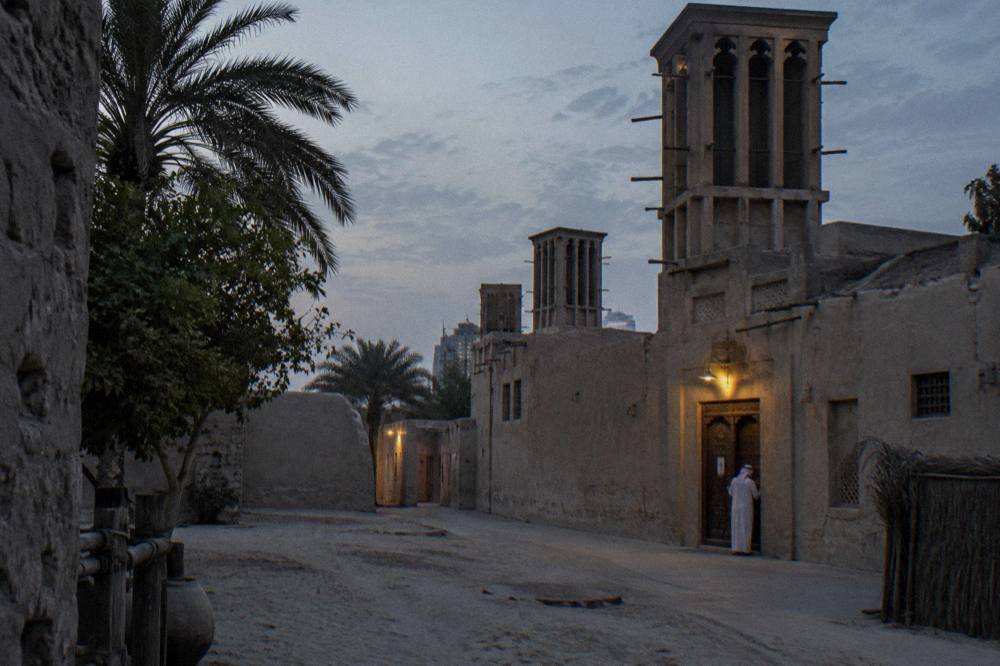
Most Bur Dubai food walks start inside or beside the Al Fahidi Historical Neighbourhood, a restored district of narrow lanes, courtyards and wind towers that Dubai Culture reports open to walkers from 7am to 8pm daily. Meeting points named on tour listings include heritage restaurant entrances in the district itself and the Al Seef area. Access to the lanes is free. If daylight hours feel tight, the guide to eating Old Dubai after dark covers how the same district works once the sun sets.
Al Fahidi is the oldest surviving residential quarter in Dubai, and its scale is the point: single-storey houses, plaster walls in shades of coral, and wind towers that caught the breeze decades before the towers downtown existed. Guides use it to set the scene, and the district's cafes and cultural spaces give the walk its first tasting stops. The Sheikh Mohammed Centre for Cultural Understanding sits in the heart of it and runs cultural meals with Emirati hosts, with reported session prices from AED 130 for breakfast to AED 160 for dinner, booking required. If you're weighing an Old Dubai food walk against a desert safari dinner for your evening, the comparison of a desert safari dinner versus a guided city food tour lays out the differences in pace, food and timing.
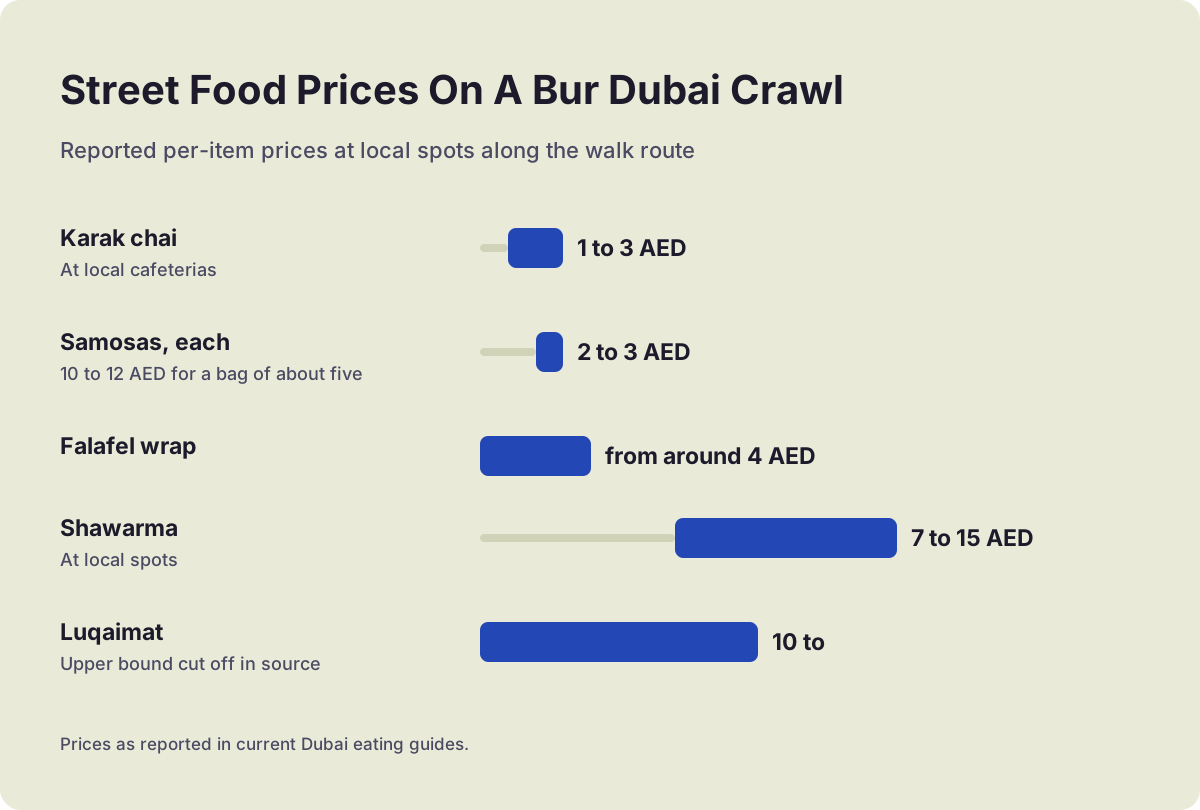
The coffee tradition here is its own lesson. Gahwa, lightly spiced unsweetened Arabic coffee, is served in small finjan cups with dates, and the etiquette is specific: receive the cup with the right hand, and shake it gently side to side when you have had enough. Karak chai, the spiced milky tea beloved across the city, reportedly costs 1 to 3 AED at local cafeterias, which is why it features on almost every walk's tasting list.
If you want to go deeper on this quarter before booking, the Al Fahidi historic district food and coffee stops guide maps the cafes and cultural venues in detail.
Because this district anchors so many routes, the tour choice matters more than the starting time. These three walks all use the Fahidi and Creek corridor and represent the main format differences between them.
The Creek And The Abra Crossing
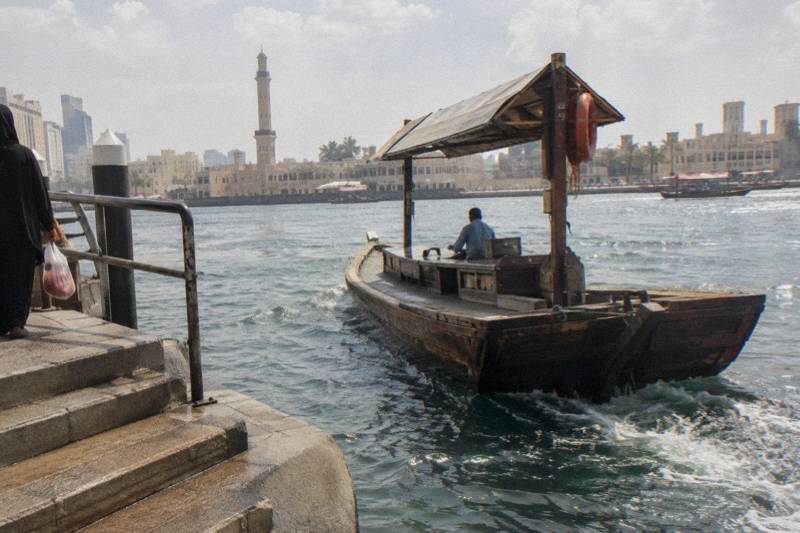
The abra is the small wooden boat that has ferried commuters across Dubai Creek for generations, and most guided walks here include a crossing as the bridge between the Bur Dubai sights and the Deira souks. The transport authority runs several traditional routes from the Bur Dubai docks, including services to Deira Old Souq and Al Sabkha. The ride takes only minutes.
The crossing is the moment the walk changes register. On the Bur Dubai side you are in heritage lanes and waterfront promenade; on the Deira side you step into the Spice Souk and Gold Souk, where the street food gets denser and the trading history gets louder. The Dubai Food Tours site covers the Deira half of the route separately, and the Deira spice souk guide picks up exactly where the boat lands.
The transport authority lists several commuter abra routes on its official Creek abra page, including routes linking the Bur Dubai docks with Deira Old Souq, Al Sabkha and Baniyas, plus an Al Seef connection. Tour listings that include a crossing describe it as part of the route; where a listing is unclear about whether the boat is included, check the booking page before you reserve.
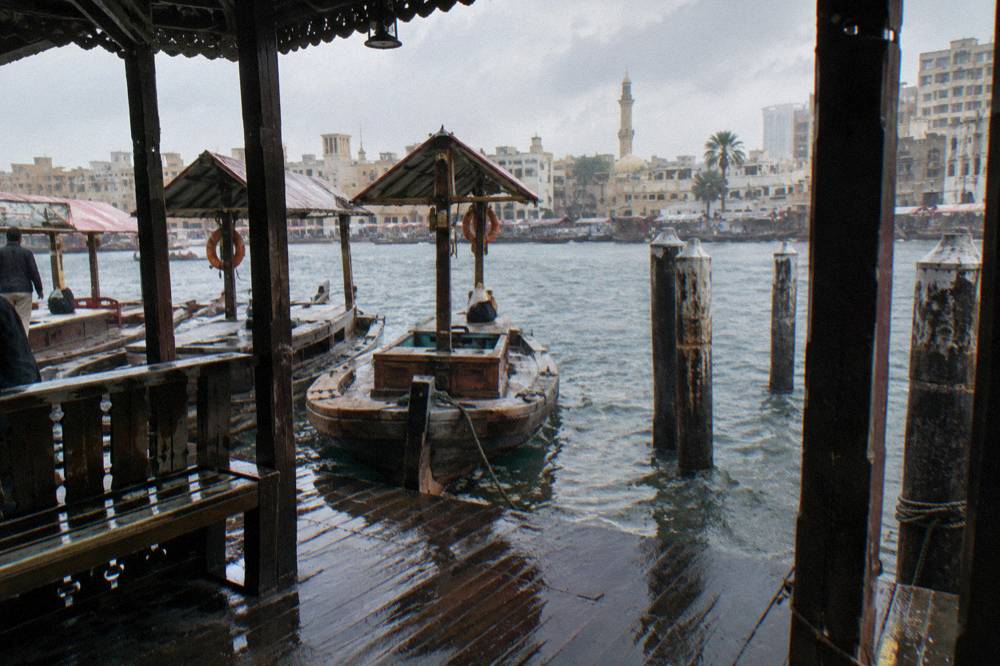
One point of honesty about the crossing itself: the abra is transport, not a cruise. Some tours name a longer boat ride or a cruise segment in their title, and those are different products with different durations and prices. Read the inclusions on the listing rather than assuming every boat mention means the same thing, and if the fare for the public crossing matters to your budget, the transport authority's page carries the current figures.
The Textile Souk And The Street Food Along The Way
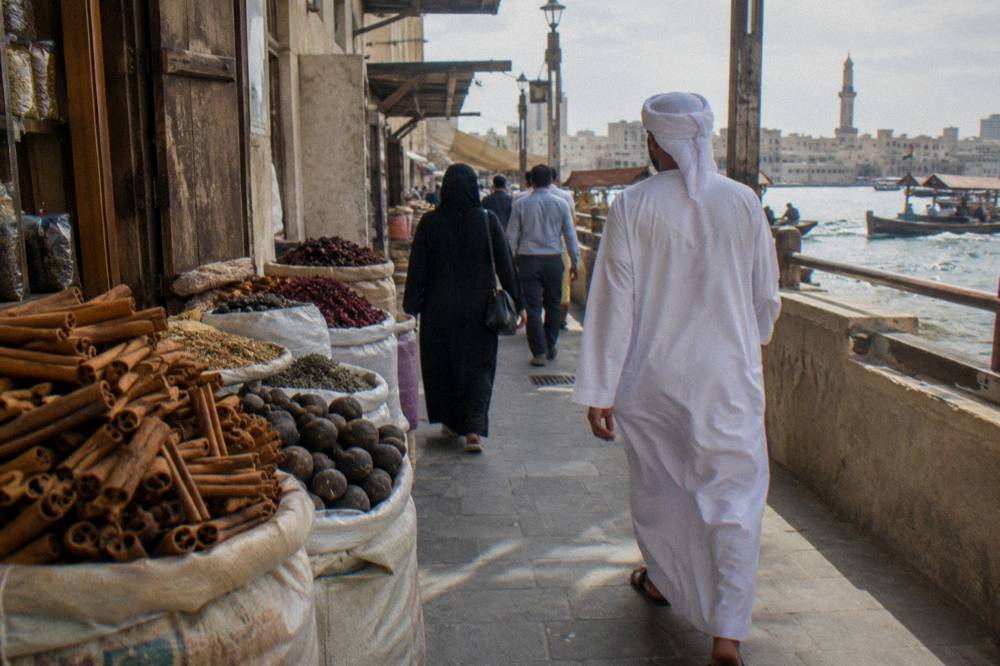
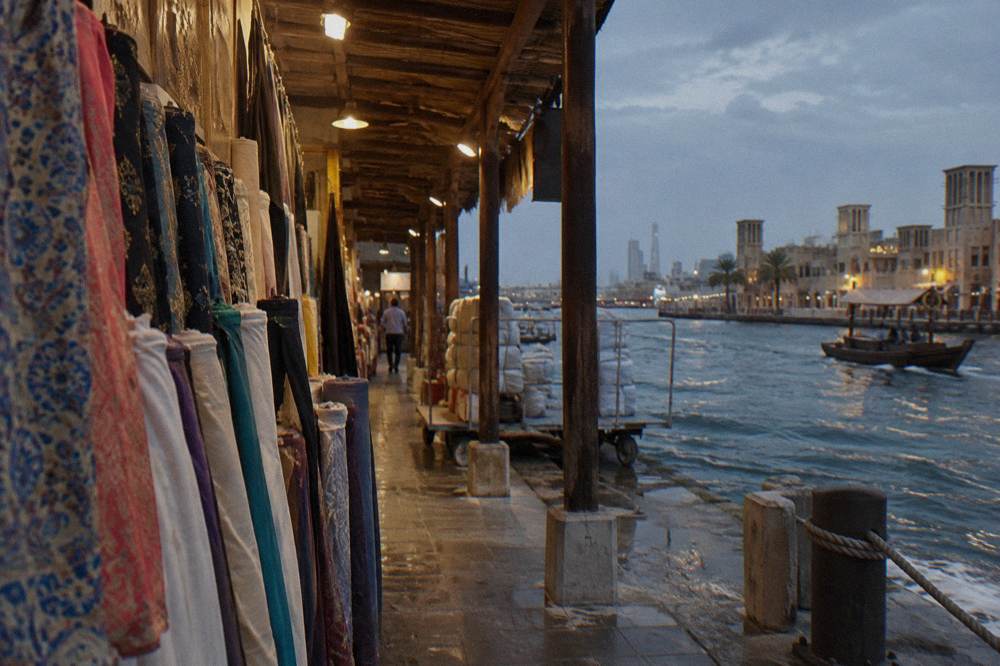
Between Al Fahidi and the abra docks sits the Textile Souk, a covered lane of fabric and tailoring shops that most Bur Dubai walks pass through or beside. No official opening hours are published for it; secondary sources report shops typically trade from around 9am to 8pm, with some Friday afternoon closures. The food value is in the cheap cafeterias around its edges. For a fuller picture of how this market connects with the Spice and Gold Souks across the creek, the guide to souk walking tours, abra crossings and food stops in Dubai lays out a practical route.
The souk itself is the shopping stop: bolts of silk and cotton, pashminas, and tailors who can measure you in the morning. But for a food walk, the district around it is where the everyday eating happens. Reported prices from current Dubai eating guides put shawarma at 7 to 15 AED at local spots, falafel wraps from around 4 AED, samosas at 2 to 3 AED each or 10 to 12 AED for a bag of about five, and luqaimat at 10 to 18 AED. These are street figures, reported by local sources, and they shift by stall and season, so treat them as planning ranges and check the counter.
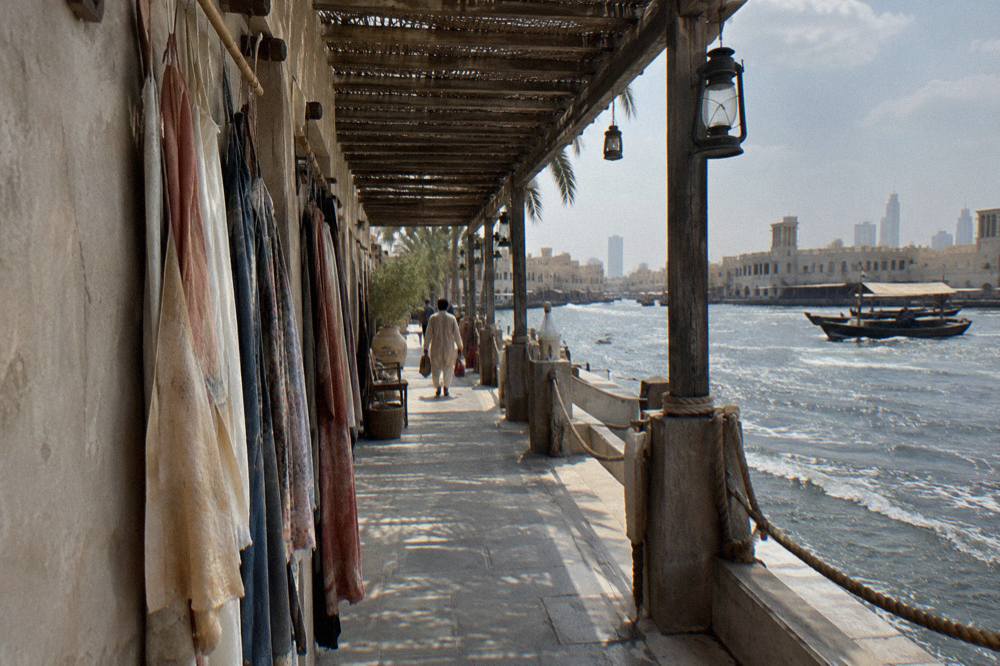
A guided walk bundles several of these into one route with the history attached, which is the real argument for booking one rather than grazing solo: the guide knows which counter is worth the stop and can explain what you are eating while you eat it. The trade-off is pace. Group walks move on a schedule, so if you want to linger over a second karak, a private format suits better.
Dietary needs are worth flagging early. All meat sold in Dubai restaurants and markets is halal, and pork appears only in designated licensed sections, so the default street food here suits halal eaters without any special request. Vegetarian options exist, notably falafel, but listings do not all describe themselves as vegetarian-friendly, so message the operator before booking if this matters. The dietary needs guide covers this in full.
Which Guided Bur Dubai Walk Should You Book?
The practical choice splits on three axes: duration, group format and how much of the route is food versus sights. The featured creek-side walk runs 2.5 to 4 hours and pairs the Fahidi lanes and souks with a boat segment. A 3-hour alternative adds an Emirati house visit, and a premium 3 to 4 hour option covers street food with an abra ride. Prices sit on each listing.
The featured option for this route is the Al Fahidi Old Town, Souks, Street Food and Abra Cruise walk, which matches this article's geography almost exactly: the heritage district, the souks, street food tastings and a boat segment on the Creek, in 2.5 to 4 hours. Check availability if that corridor is what you came for.
The 3-hour route that adds an Emirati house stop suits travellers who want a cultural interior to go with the street eating, and the listing describes the house visit alongside the food stops. It sits in the same family of walks and uses much of the same geography, so the decision is really whether the house visit matters to you.
The premium guided option runs 3 to 4 hours and describes street food with an abra ride in a smaller guided format, which is the pick if you want more guide attention without going fully private. Its tastings, as its listing describes them, run to shawarma, falafel, karak, samosa, rogag and luqaimat.
For a broader sweep of the same district, the Old Town, Souks, Street Food and Abra Ride walk covers 3 to 4 hours in a standard group format and is worth comparing on duration and price before you commit.
| Tour | Duration | Format | What the listing highlights |
|---|---|---|---|
| Al Fahidi Old Town, Souks, Street Food & Abra Cruise | 2.5 to 4 hours | Guided group | Fahidi lanes, souks, street food, boat segment |
| Old Town, Street Food, Creek, Souks & Emirati House | 3 hours | Guided group | Street food plus an Emirati house visit |
| Premium Guided Tour with Street Food & Abra Ride | 3 to 4 hours | Premium guided | Street food tastings with abra ride |
| Old Town, Souks, Street Food & Abra Ride | 3 to 4 hours | Guided group | Full Old Town sweep with tastings |
What A Bur Dubai Food Walk Costs
Guided walks on this route are priced per person on their listings, and the figures vary by date and group size, so this guide does not print them; check each booking page for the live price. The independent alternative is far cheaper: reported street food prices put a filling crawl at a handful of AED per item, with karak from around 1 AED and shawarma from around 7 AED at local spots.
The honest comparison is not price per tour but price per insight. A guided walk bundles six or more tastings, a route that avoids dead ends, and the history that turns a lane into a story. Eating the same items independently costs a fraction of the tour price, and the Dubai food prices guide breaks those street figures down item by item. What independent eating cannot buy is the guide, and for most first-time visitors that is the part worth paying for. If you want to add a different sensory stop to the day, the honest look at whether the Gold Souk is worth your time pairs the haggling scene with Deira's food streets.
Beyond the food itself, budget for the extras that sit outside the tour price. Restaurants commonly add a service charge of up to 10 per cent plus 5 per cent VAT, though street counters do not, and tipping is personal preference: Visit Dubai's own guidance suggests 10 to 15 per cent in restaurants and small amounts in cafes, as its tipping guide sets out. On a pay-what-you-want basis, guides on walking tours are typically tipped in cash at the end.
| Item | Reported local price | Notes |
|---|---|---|
| Karak chai | 1 to 3 AED | Cafeteria versions; cafe versions higher |
| Samosa | 2 to 3 AED each | Bags of about five reported at 10 to 12 AED |
| Falafel wrap | From around 4 AED | Range reported up to 15 AED |
| Shawarma | 7 to 15 AED | Local spots; tourist areas higher |
| Luqaimat | 10 to 18 AED | Fried to order, eaten warm |
When To Walk: Season, Day And Timing
December through February is the prime window, with December's average daily high around 26.5 C and lows near 17 C per compiled climate normals, and winter sunset falls near 17:30, so afternoon walks finish in daylight. Souk shops reported to trade from around 10am suit a late-morning start, and evening walks catch the promenade at its best.
The summer inversion is real. From late spring through summer, daytime highs make a 3-hour outdoor walk a different proposition, and tours shift to early morning or evening departures. The summer heat and timing guide covers how operators handle it. In winter, any daylight hour works, though the souks are quietest early and the abra docks busiest at commuter rush.
Fridays need a note. Reported souk patterns include Friday daytime closures, with trading resuming from late afternoon, so a Friday morning walk leans more on the heritage district and cafes than on the markets. Individual shops vary and some take midday breaks, so treat souk hours as reported patterns rather than a timetable.
| Month | Average daily high | Average daily low | Walk verdict |
|---|---|---|---|
| December | 26.5 C | 17.3 C | Prime walking weather |
| January | 24.4 C | 15.3 C | Coolest month, ideal |
| February | 26.1 C | 16.4 C | Prime, warming slightly |
| March | 28.9 C | 18.6 C | Very good, busier |
Getting To Bur Dubai: Metro, Taxi And On Foot
The Green Line serves this side of the Creek: Sharaf DG station serves the Al Fahidi area, with Al Ras and Baniyas Square on the Deira side, per the official transport authority map. Metro runs from 5am to midnight most days, from 8am on Sundays. A taxi starts at a reported 5 AED daytime, 5.5 AED at night, and everything in the walk zone is reachable on foot once you arrive.
The practical detail is which exit. Meeting points named on tour listings include metro exits and heritage restaurant entrances in Al Fahidi, so check your booking's meeting point against the station map before you travel; the official metro map shows the Green Line stops in order. A Nol card, which the transport authority sells from 25 AED with initial credit, covers metro, buses and trams.
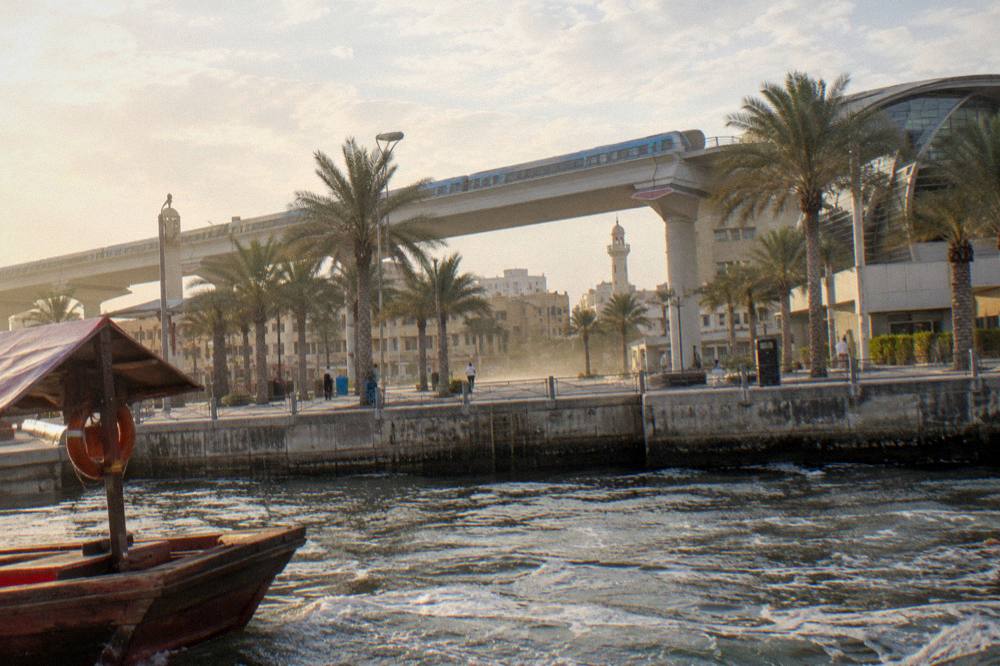
Once you are in the district, walking is the whole point. Al Fahidi, Al Seef, the Textile Souk and the Bur Dubai abra dock link by standard pedestrian routes with no reported closures, and the whole corridor is flat. The getting to Old Dubai guide has the full transport detail, including the abra routes from the docks.
Dress is the last planning item. Covering shoulders and knees is the reported expectation in heritage areas and souks, less a rule than a courtesy that keeps attention off you in traditional districts, and comfortable shoes matter more than anything else on a 3-hour route. Photography etiquette is simple: ask before photographing people, especially in the souks.
If you have settled on the creek-side route, these are the three walks this article has compared, side by side for a final look.
Common Questions About Bur Dubai Food Walks
How Long Does A Bur Dubai Food Walk Take?
Most guided walks on this route run between 2.5 and 4 hours, covering the Al Fahidi Historical Neighbourhood, the Textile Souk and a Creek crossing, with tastings between the sights. Check the duration on the specific listing before booking, since formats differ.
What Food Do You Eat On A Bur Dubai Food Walk?
Listings describe tastings of shawarma, falafel, karak chai, samosas, rogag and luqaimat, plus Arabic coffee in the heritage quarter. Exact stops vary by tour and guide, and routes that add a cultural meal stop may include Emirati dishes.
Is The Abra Crossing Included In The Tour Price?
Most walks that mention a boat segment include it, but listings differ: some name a crossing, others a longer cruise. Read the inclusions on the booking page for the tour you are considering rather than assuming.
When Is The Best Time Of Year For This Walk?
December through February, when average daily highs sit in the mid-20s C and lows near 15 to 17 C. Winter sunset falls near 17:30, so afternoon walks finish in daylight. Summer walks shift to early morning or evening departures.
Can Vegetarians Join A Bur Dubai Food Walk?
Falafel and other meat-free items appear on most routes, but listings do not all describe themselves as vegetarian-friendly. Message the operator before booking to confirm what can be substituted on your walk.
How Do I Get To The Start Of The Walk?
The Green Line serves the area: Sharaf DG station serves Al Fahidi, per the official metro map. Meeting points named on listings include metro exits and heritage restaurant entrances, so match your booking's meeting point to the station before you travel.