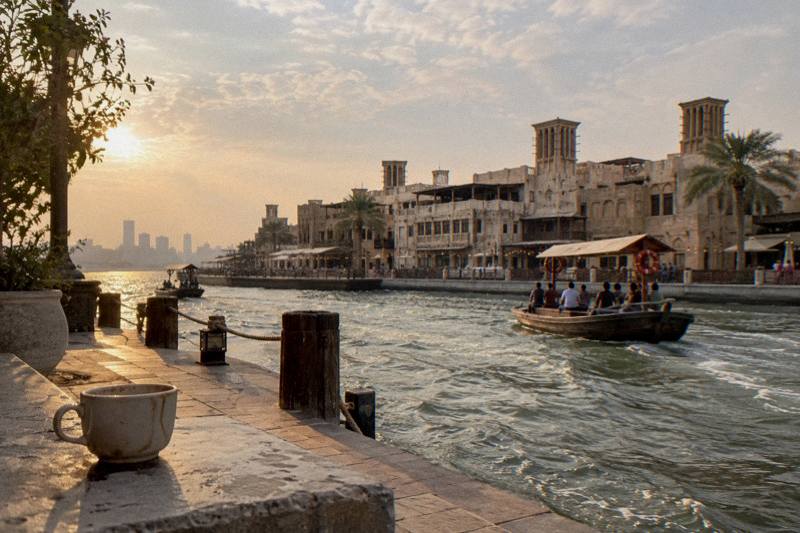
Emirati Food Guide: The Dishes Worth Knowing
Machboos, harees and luqaimat are the dishes that define Emirati cooking, yet most visitors never taste them without a guide or a local host. This guide explains what each dish is, where to find it in Old Dubai, and what a cultural meal or guided tasting covers.
Short answer
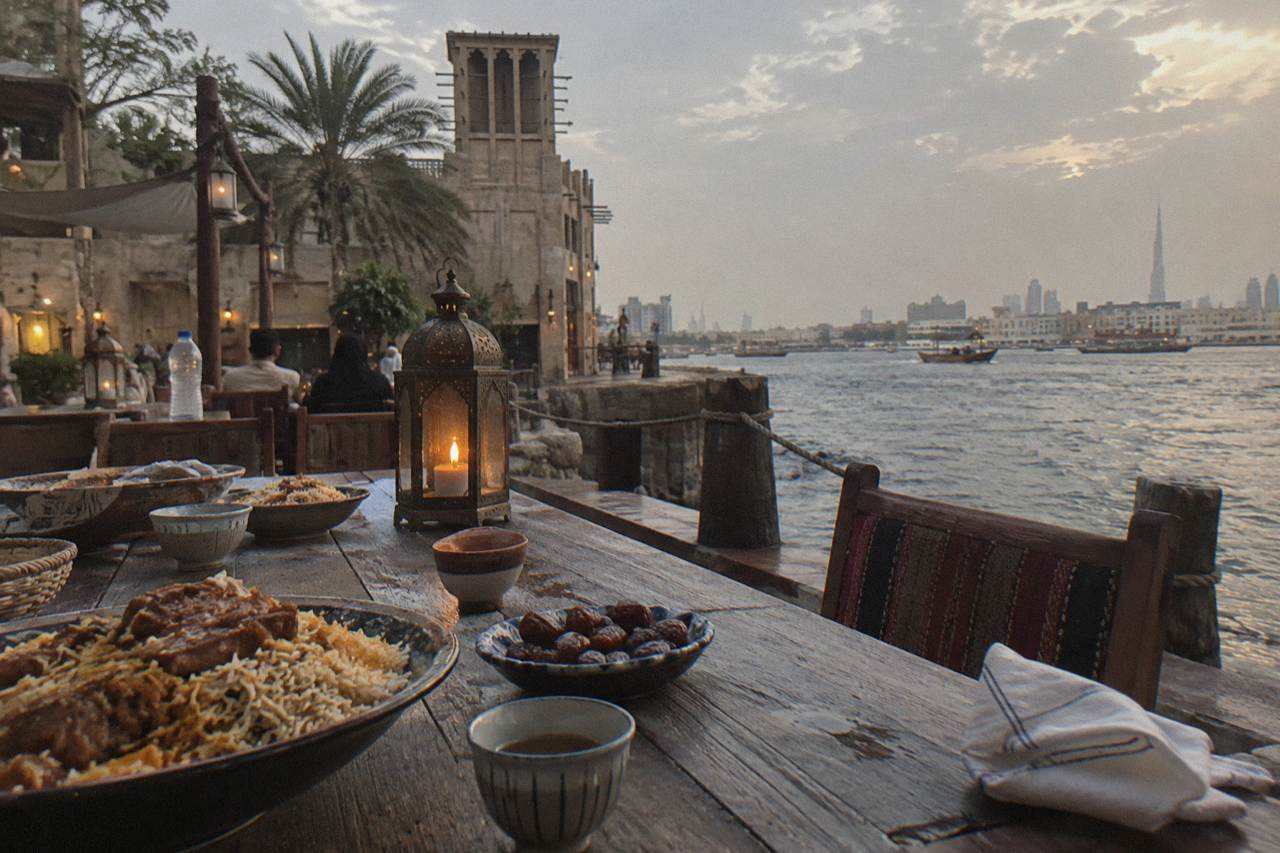
Emirati food centres on machboos, a spiced rice dish with lamb, chicken or fish, slow-cooked harees, and luqaimat dumplings with date syrup. Visitors meet them most reliably at cultural meals in Al Fahidi, reported from around AED 130 to 160, or on guided tastings and souk walks with dinner.
Most visitors leave Dubai having eaten shawarma, falafel and karak, and never once tasting the country's own cooking. The reason is simple: Emirati food is home food. Machboos, harees and luqaimat were built around family gatherings, Ramadan tables and majlis hospitality, not restaurant menus, and the restaurants that serve them are concentrated in a handful of heritage settings in Bur Dubai and Deira that tourists rarely stumble into. This guide from Dubai Food Tours covers the dishes worth knowing, what is actually in them, and the practical ways a visitor meets them, from cultural meals in Al Fahidi to guided souk walks with tastings and dinner.
What Is Emirati Food And Why It Is Hard To Find Alone?
Emirati food is the traditional cooking of the United Arab Emirates, built on rice, wheat, dried limes, cardamom, saffron and slow-cooked meat or fish, shaped by desert, sea and trade routes. It is not the same as Levantine or Indian food, which dominates Dubai's casual dining scene. Visitors struggle to find it because most Emirati dishes live in homes and heritage venues rather than the street stalls that make up most food walks.
The core flavours are worth naming before the dishes. Loomi, dried limes, give machboos its sour depth. Baharat, a warm mixed spice, plus cardamom, saffron and cinnamon, appear across the savoury repertoire. Ghee finishes many dishes, and dates run through everything from coffee accompaniments to syrup-drizzled desserts. Wheat and meat together define harees, one of the oldest dishes in the region.
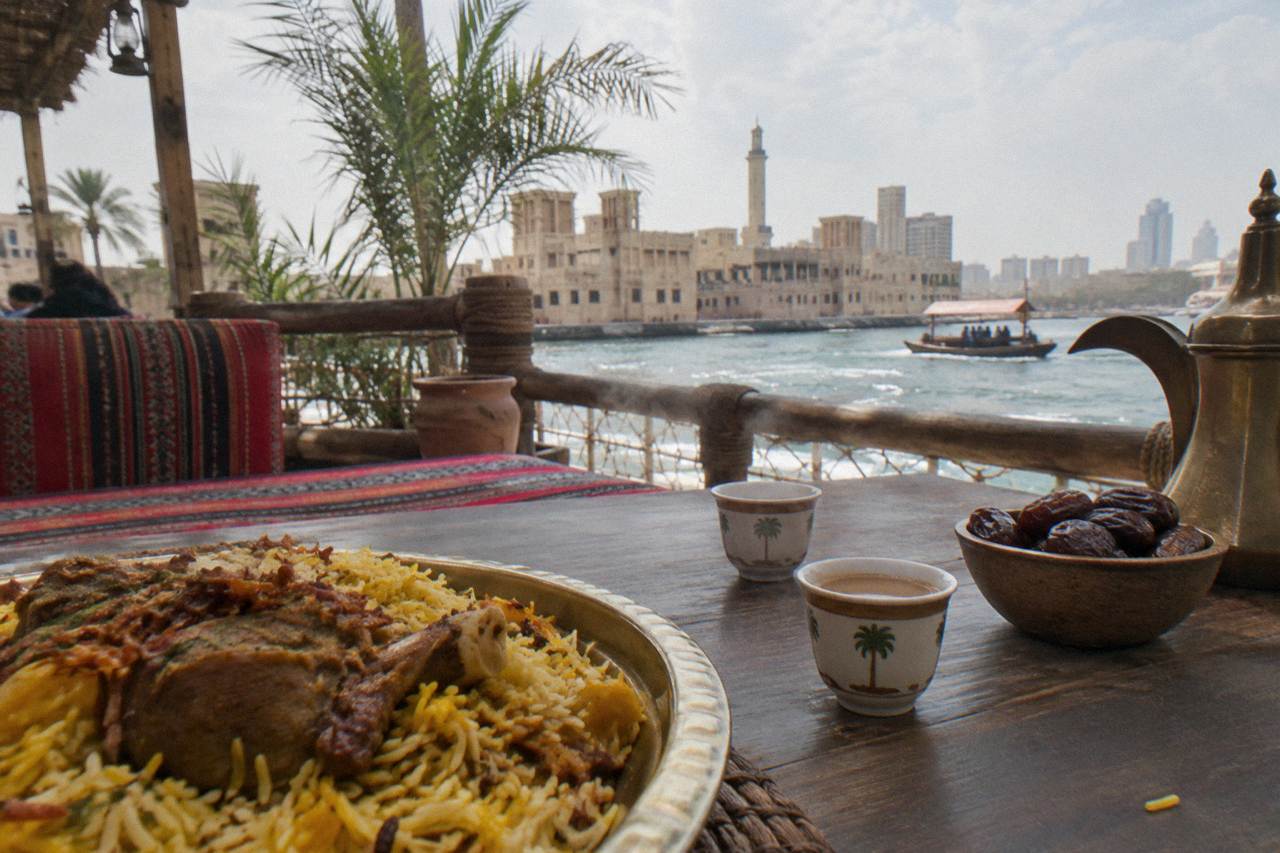
The reason it hides from visitors is structural. Dubai's restaurant scene is overwhelmingly expatriate: shawarma counters, biryani houses, Levantine grills. Emirati home cooking stayed home. The places that do serve it publicly tend to be heritage restaurants in Al Fahidi and Deira, cultural centres that host sit-down meals, and a small number of guided food experiences that make Emirati dishes part of their route. That is why a guide or a host changes the outcome here more than almost anywhere else in the city.
It also explains the shape of this guide. The dishes themselves are easy to describe. Finding them, ordering them and understanding what you are eating is the harder half, and it is where a cultural meal or a guided tasting walk earns its place.
The Dishes Worth Knowing First
Five dishes carry most of the story: machboos, the national rice dish; harees, a slow-cooked wheat and meat porridge; luqaimat, crisp dumplings with date syrup; balaleet, sweet saffron noodles with egg; and thareed, a stew ladled over thin regag bread. Learn those five names and you can read almost any Emirati menu in Dubai. Knowing the names is one thing, though; the must-eat guide for first-time visitors to Dubai pinpoints where to actually try each of these dishes.
Machboos is the flagship. Long-grain rice is slow-cooked with lamb, chicken or fish, dried limes, baharat, cardamom, saffron and cinnamon, then served family-style on a platter, often with tomato sauce or pickles. It is the dish the UAE points to first when it describes its own cuisine.
Harees is the comfort end of the repertoire: wheat and lamb or chicken cooked for six to eight hours until the texture turns smooth and porridge-like, finished with ghee and sometimes cinnamon. It anchors gatherings and Ramadan tables. Thareed, meat and vegetable stew over regag bread that soaks up the broth, sits in the same family of soaked, soothing dishes, as does madrouba, a thick spiced salted-fish porridge.
The sweet side is small but distinctive. Balaleet is sweet saffron and cardamom vermicelli topped with a thin omelette, a sweet-and-savoury breakfast. Chebab are saffron, cardamom and turmeric pancakes eaten with cream cheese and date syrup. Luqaimat, crisp fried dough dumplings drizzled with date syrup and sesame, are the dessert most visitors meet first, served warm and eaten immediately.
| Dish | What it is | When it is eaten |
|---|---|---|
| Machboos | Spiced long-grain rice with lamb, chicken or fish, dried limes, baharat, cardamom, saffron and cinnamon, served family-style | The national dish, everyday and celebratory |
| Harees | Wheat and meat slow-cooked six to eight hours into a smooth porridge, finished with ghee | Gatherings and Ramadan |
| Thareed | Meat and vegetable stew ladled over thin regag bread | Often served during Ramadan |
| Madrouba | Thick, spiced salted-fish porridge | Traditional comfort dish |
| Balaleet | Sweet saffron and cardamom vermicelli topped with a thin omelette | Classic breakfast |
| Chebab | Saffron, cardamom and turmeric pancakes with cream cheese and date syrup | Breakfast |
| Luqaimat | Crisp fried dough dumplings drizzled with date syrup and sesame, served warm | Dessert or Ramadan treat |
For most travellers, the fastest route from reading about these dishes to tasting them is a guided experience that builds them into the route. The three below cover the format spread: a souk walk with tastings and dinner, a short cultural meal with a talk, and a longer heritage route with Emirati cuisine at its centre.
If you want to dig deeper into the individual dishes before choosing, the companion pieces on traditional Emirati dishes and their stories and on the spices and methods behind the cuisine break each one down in detail.
Where Visitors Actually Eat Emirati Food
Three settings reliably put Emirati food in front of a visitor: cultural meals hosted in the Al Fahidi Historical Neighbourhood, heritage restaurants in Al Fahidi and Deira, and guided souk walks that end with tastings or dinner. Independent wandering finds the restaurants sometimes, but the cultural meal is the only setting that explains the food while you eat it.
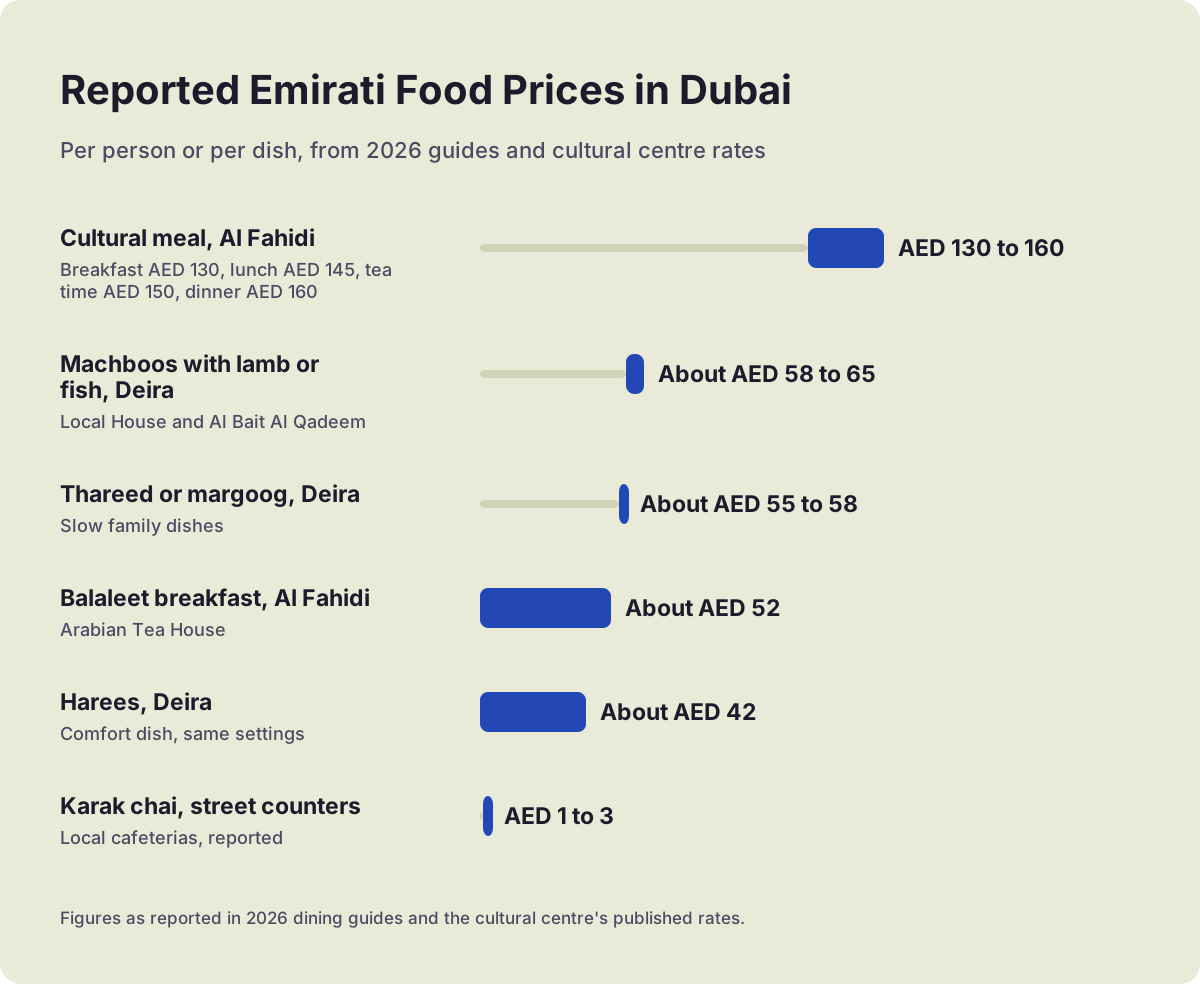
The cultural meal is the most distinctive option. The Sheikh Mohammed Centre for Cultural Understanding in Al Fahidi hosts 1.5-hour cultural meals with Emirati hosts, combining food with a question-and-answer session on customs, Islam and daily life, plus Arabic coffee and dates. Reported prices run from AED 130 for breakfast or brunch to AED 160 for dinner, with lunch at AED 145 and a fuala tea time at AED 150, booking required, and the centre states its own current rates on its cultural meals page. During Ramadan the dinner slot adjusts to iftar.
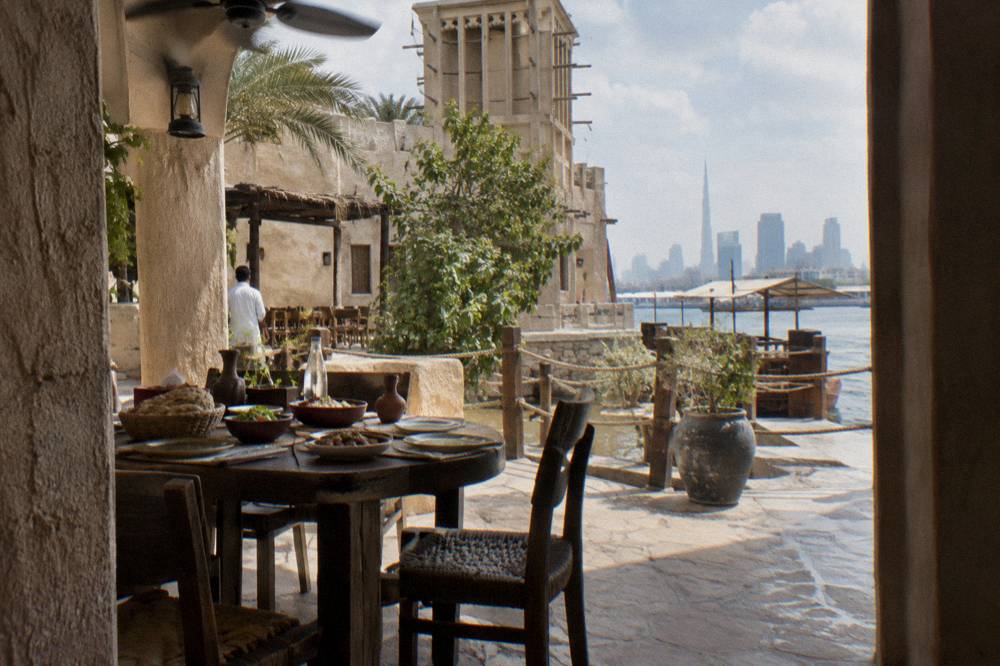
Heritage restaurants are the second route. In Al Fahidi, Arabian Tea House serves traditional breakfast items including balaleet, reported at around AED 52, plus regag with egg or cheese and Emirati breakfast boards. In Deira, Local House and Al Bait Al Qadeem serve machboos with lamb or fish, reported at roughly AED 58 to 65, harees at around AED 42, and thareed or margoog at around AED 55 to 58, all in heritage settings. These are reported figures from 2026 dining guides; check current menus on the day.
The third route is the guided walk. A souk tour that ends with tastings and dinner solves the two problems at once: someone else finds the dishes, and someone explains them. The Flavors of Arabia souk tour, a 2.5-hour walk with tastings and dinner, is the version this site features for exactly that reason, and the operator's live listing carries the current price, inclusions and meeting point. Check availability if that format fits your plans, and read more about what a guided route through Old Dubai covers before deciding.
One practical note on timing: fresh Emirati dates have a season, and it matters if dates are part of why you are going. The UAE's rutab harvest peaks through the summer months, with around 150 varieties, from Khalas to Barhi and Fard, reported from around AED 15 per kilogram at festivals and markets in season. Dried dates are available year-round, so a winter visit still gets the classic coffee-and-dates welcome, just not the fresh rutab.
Machboos, Harees And The Savoury Core
Machboos and harees are the two savoury dishes every visitor should be able to recognise. Machboos is spiced long-grain rice cooked with lamb, chicken or fish and dried limes, served from a shared platter. Harees is wheat and meat slow-cooked for six to eight hours into a smooth, ghee-finished porridge eaten at gatherings and in Ramadan. Both reward a host who can explain them.
Machboos rewards context. On a plate it looks like a cousin of biryani, and the difference is the loomi: the dried limes give a sour, almost smoky note that no biryani carries. The spicing runs to baharat, cardamom, saffron and cinnamon, and the platter arrives family-style, often with tomato sauce or pickles on the side. If a menu offers a choice of meat, lamb is the traditional centre of gravity.
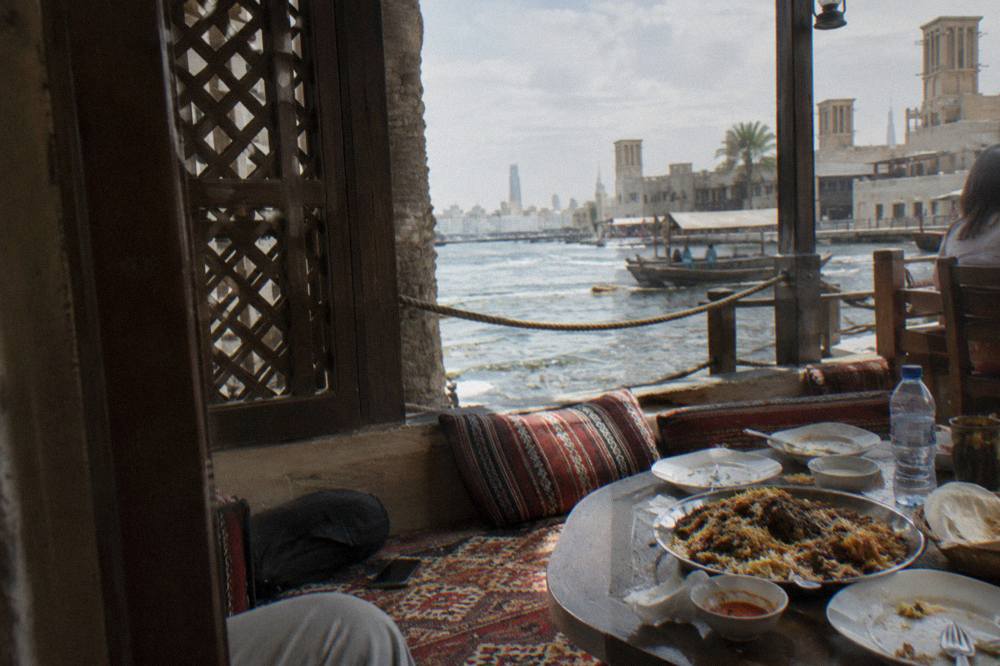
Harees is the dish that surprises people. Six to eight hours of cooking leaves almost no texture: the wheat and the meat dissolve into something smooth and mild, finished with ghee and sometimes cinnamon. It is comfort food in the strictest sense, eaten at gatherings and strongly associated with Ramadan, and it is one of the few dishes where a first-time eater genuinely benefits from being told what it is before the spoon goes in.
Thareed and madrouba complete the savoury picture. Thareed is a meat and vegetable stew ladled over thin regag bread, which soaks up the broth; it is often served during Ramadan. Madrouba is a thick, spiced salted-fish porridge, a traditional comfort dish with a strong flavour that divides first impressions. Neither appears often on tourist menus, which is precisely why a guided tasting that includes them stands out.
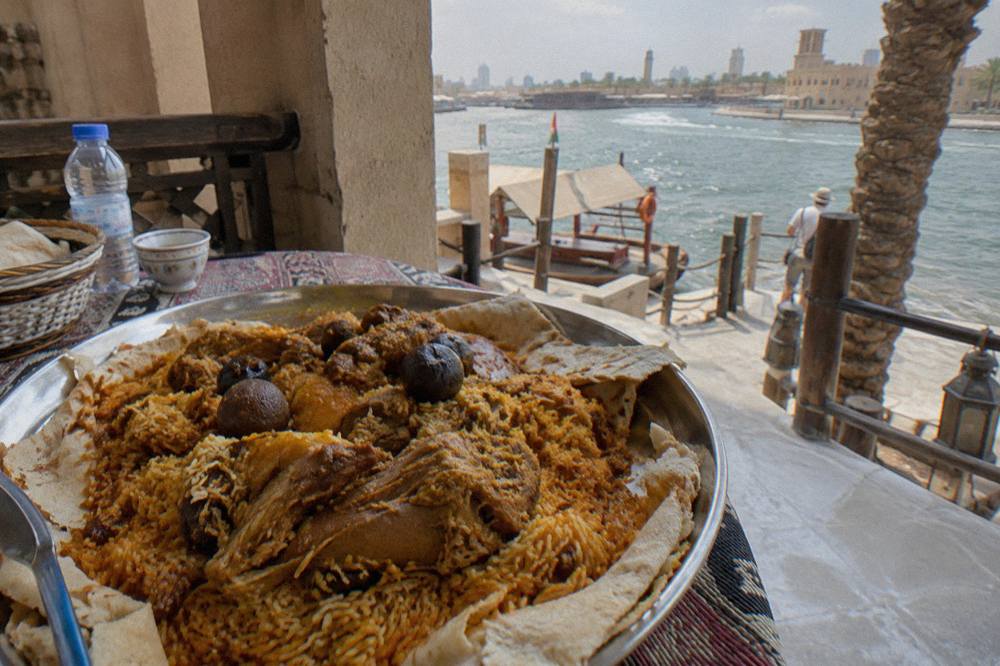
The short cultural meal format suits this savoury core well. A 1.5-hour Emirati cultural meal and talk in Old Dubai sits diners down with a host who explains exactly these dishes while they are on the table, and the live listing shows the current price and what the meal includes.
Luqaimat, Balaleet And The Sweet Side
Luqaimat are the Emirati dessert most visitors meet first: small crisp fried dough dumplings drizzled with date syrup and sesame, served warm and eaten immediately. Balaleet is the stranger and better breakfast story, sweet saffron and cardamom vermicelli topped with a thin omelette, a sweet-and-savoury combination with no close equivalent elsewhere in the region.
Luqaimat are the safe bet. They arrive hot, they are gone in two bites, and the date syrup and sesame combination is instantly likeable. The failure mode is timing: they soften as they sit, so a stall or kitchen that fries to order serves a different product from one that batches them. A guide who knows which counter fries fresh is worth having.
Balaleet is the dish to order when you want to understand the cuisine rather than just enjoy it. Sweet saffron noodles under a savoury egg sound like a mismatch until the first forkful, and it is a classic Emirati breakfast, often paired with karak chai. Chebab pancakes with cream cheese and date syrup sit in the same breakfast family, and an Emirati breakfast board at a heritage restaurant in Al Fahidi is the easiest way to taste several of these in one sitting.
Dates themselves deserve their own sentence. Beyond the fresh rutab season, dried and stuffed dates appear beside coffee at every level of Emirati hospitality, and a tasting walk that includes a date stop is doing something a restaurant cannot: letting you compare varieties side by side. The sweet half of Emirati food is small, but it is where the date, the country's most symbolic ingredient, actually gets tasted.
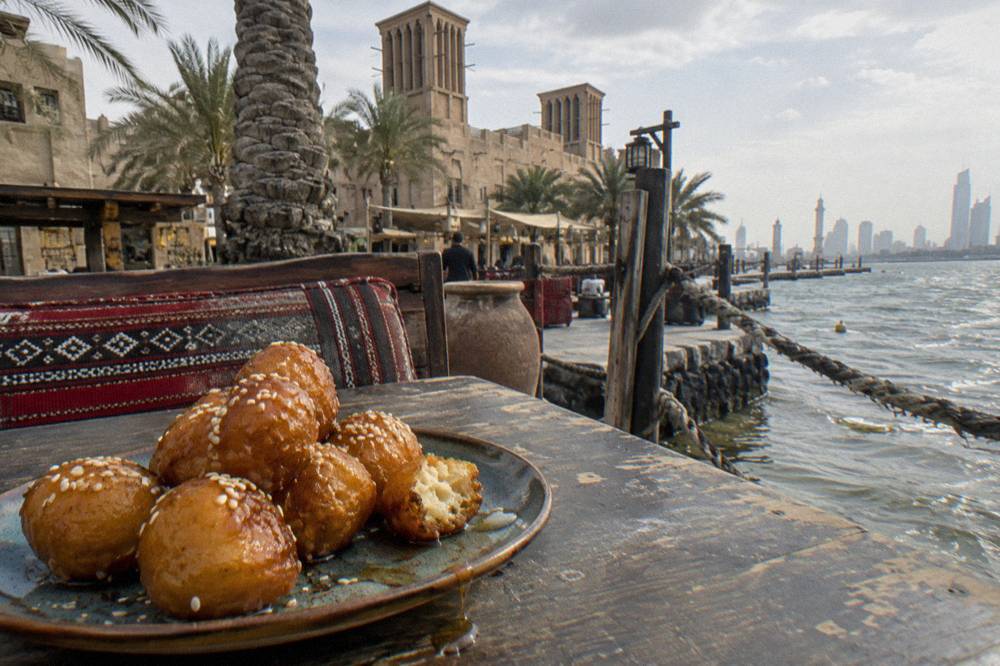
A longer heritage route pairs well with this half of the menu. The Flavors of Arabia Old Dubai route combines the souks with authentic Emirati cuisine across 2.5 hours, and the live listing details what the tastings cover.
Arabic Coffee, Karak And The Etiquette Around The Table
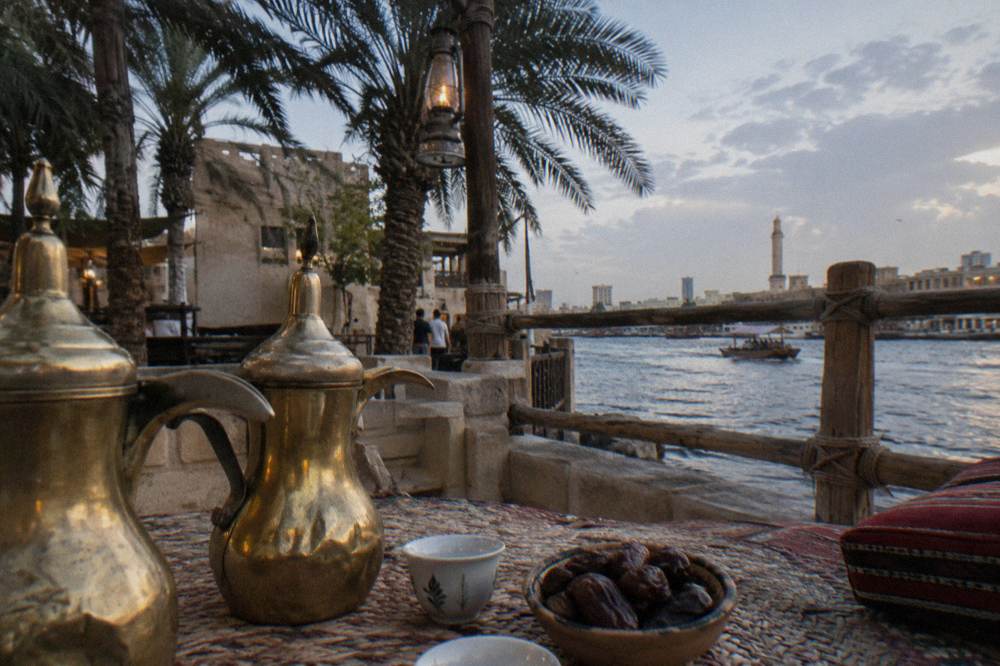
Arabic coffee, gahwa, is lightly spiced with cardamom, unsweetened and served in small finjan cups with dates; the etiquette is to accept and receive with the right hand and to shake the empty cup gently side to side to signal no more refills. Karak chai, spiced milky tea, is the everyday companion to Emirati breakfast dishes like balaleet.
The gahwa ritual is worth learning before you sit down, because refusing it wrongly is the one genuine faux pas available. The coffee is poured in small amounts, refilled constantly, and stopping is a gesture, not a word: a gentle side-to-side shake of the empty cup. Taking the finjan with the right hand is the traditional form. Dates sit alongside to balance the unsweetened coffee.
Karak is the other half of the drink story, and the two belong to different worlds. Gahwa is ceremony: majlis, hospitality, dates. Karak chai at 1 to 3 AED at local cafeterias, as reported by 2026 price guides, is the working city's daily fuel, spiced and milky, and it pairs naturally with breakfast dishes. A food walk that includes both shows you the two poles of Emirati drinking culture in a single morning.
Around the table, a few rules cover most situations. Cover shoulders and knees in heritage areas and souks. All meat in Dubai's restaurants and markets is halal, and pork appears only in designated licensed sections, so menus reflect that automatically. Tipping follows the standard Dubai pattern: restaurants commonly add a 10 per cent service charge, and an additional cash tip of 5 to 10 per cent is common but voluntary, guidance that matches Visit Dubai's tipping guide. Ask before photographing people, especially in traditional dress.
What An Emirati Meal Or Guided Tasting Costs
A cultural meal in Al Fahidi runs from a reported AED 130 to 160 per person depending on the slot, heritage restaurant mains run from a reported AED 42 to about 65, and guided Emirati food experiences each carry their own per-person price on the operator's live listing.
The independent route is the cheapest and the least explained. The table below gathers the reported figures from 2026 dining guides and the cultural centre's own published rates. Use them as planning ranges, not promises: menus and rates move, and the venues state their own current prices.
| Setting | What you get | Reported cost | Notes |
|---|---|---|---|
| Cultural meal, Al Fahidi | 1.5-hour meal with Emirati hosts, Q&A, coffee and dates | AED 130 to 160 | Breakfast AED 130, lunch AED 145, tea time AED 150, dinner AED 160; booking required |
| Heritage restaurant, Deira | Machboos with lamb or fish | About AED 58 to 65 | Local House and Al Bait Al Qadeem, heritage settings |
| Heritage restaurant, Deira | Harees | About AED 42 | Same settings, comfort dish |
| Heritage restaurant, Deira | Thareed or margoog | About AED 55 to 58 | Slow family dishes |
| Heritage cafe, Al Fahidi | Balaleet breakfast | About AED 52 | Arabian Tea House, with regag and breakfast boards |
| Street counters | Karak chai | AED 1 to 3 | Local cafeterias, reported |
The guided route costs more per person and removes the guesswork. The three Emirati-themed experiences compared on this site, the souk walk with tastings and dinner, the 1.5-hour cultural meal and talk, and the 2.5-hour Flavors of Arabia heritage route, each state their per-person price, inclusions and meeting point on their own booking pages. None of those figures belongs in a comparison table until you read them live, because per-person from-prices on guided experiences can vary by date and group size.
One format bridges the two worlds: a guided walk that passes through the Emirati House or a heritage setting as part of a broader Old Dubai route. The Old Town street food route that includes a Creek crossing, souks and an Emirati House runs about 3 hours and mixes Emirati dishes into a wider tasting walk, a good fit for travellers who want the national cuisine without making it the whole evening. The live listing has the current price and inclusions.
Dietary Questions Visitors Ask Before Booking
All meat served in Dubai restaurants and markets is halal, and pork appears only in designated licensed sections, so Emirati menus are halal by default. Vegetarian, vegan and gluten-free options are not promised on most Emirati listings unless the operator states them, so message the operator before booking. Alcohol is not part of traditional Emirati dining and licensed venues are the only place visitors over 21 may drink. For a fuller picture of how these dietary rules shape what ends up on your plate, the guide to halal food in Dubai for visitors explains where pork and alcohol fit in and what to expect on an Old Dubai food walk.
The halal point needs no planning: it is the default everywhere. The dietary point that does need planning is the vegetarian one. Machboos and harees are meat dishes at their core, and a walk built around them will not suit a strict vegetarian without warning. The honest advice is to message the operator through the booking page before paying, state the requirement plainly, and let them confirm what they can substitute. Where a listing says nothing about dietary needs, treat that as unconfirmed, not as a no.
Alcohol is the other frequent question, and the answer is cultural as much as legal. Emirati dining is traditionally dry, and food walks through Old Dubai serve no alcohol unless the operator's listing says otherwise. Visitors over 21 may drink at licensed venues, hotels, restaurants and lounges, and alcohol is not allowed in public places outside them, so plan any drinking around the meal rather than during it. The guide to alcohol and pork on a Dubai food walk covers the rules in full.
Ramadan deserves a calm sentence: non-Muslims are not required to fast, and restaurants and dining establishments operate as normal, with etiquette suggesting discretion outdoors during daylight fasting hours. Cultural meals adjust their dinner slot to iftar in that month. The dedicated guide to food tours during Ramadan handles the timing questions.
How The Guided Emirati Experiences Compare
The three Emirati-themed experiences differ mainly in time and depth: a 2.5-hour souk walk with tastings and dinner, a 1.5-hour cultural meal with a talk, and a 2.5-hour heritage route through the souks with Emirati cuisine. All three sit in Old Dubai, all include food, and each listing states its own price, meeting point and inclusions. Choose on depth of explanation versus breadth of walking.
The comparison below holds only what the listings themselves state: duration, category and what each format is built around. Prices and current inclusions live on each operator's booking page, and per-person figures there can vary by date and group size, so read them live rather than from a summary.
| Experience | Duration | Format focus | Best fit |
|---|---|---|---|
| Flavors of Arabia souk tour with tastings and dinner | 2.5 hours | Souk walk, tastings, dinner | First-time visitors wanting dishes plus context |
| Emirati cultural meal and talk in Old Dubai | 1.5 hours | Sit-down meal with a host and Q&A | Travellers short on time, questions about customs |
| Flavors of Arabia Old Dubai, souks and Emirati cuisine | 2.5 hours | Heritage route with Emirati cuisine | Repeat visitors deepening the cuisine |
Depth of explanation is the real differentiator. A cultural meal answers questions face to face over the table. A souk walk shows where the spices in the dishes come from, then serves them. A heritage route ties the cuisine to the buildings it grew up in. None is objectively better; they solve different versions of the same problem, which is that Emirati food rarely explains itself.
Common Questions About Emirati Food
What Is The National Dish Of The UAE?
Machboos, long-grain rice slow-cooked with lamb, chicken or fish, dried limes, baharat, cardamom, saffron and cinnamon, served family-style on a platter, often with tomato sauce or pickles.
Can I Eat Emirati Food As A Vegetarian?
It is difficult. The core savoury dishes are meat-based, and most listings do not promise vegetarian substitutions. Message the operator or restaurant before booking to confirm what they can serve.
Is Alcohol Served With Emirati Meals?
No, traditional Emirati dining is dry, and food walks in Old Dubai serve no alcohol unless the listing says otherwise. Visitors over 21 may drink at licensed venues only, and not in public places outside them.
Where Can I Try Emirati Food In Dubai?
Three settings: cultural meals at the Sheikh Mohammed Centre for Cultural Understanding in Al Fahidi, heritage restaurants in Al Fahidi and Deira, and guided souk walks with tastings and dinner.
What Is The Difference Between Harees And Machboos?
Harees is wheat and meat slow-cooked for six to eight hours into a smooth porridge finished with ghee. Machboos is spiced rice cooked with meat or fish and dried limes, served as a platter rather than a porridge.
What Should I Wear To An Emirati Cultural Meal?
Cover shoulders and knees, the standard guidance for heritage areas and souks. There is no strict legal dress code for tourists, but modest dress avoids attention in traditional districts.
If the sweet and savoury sides of this cuisine have won you over, the natural next step is choosing between the guided Emirati experiences, or reading what a typical meal in Dubai costs to budget the independent version.