Dubai Desert Safari Dinner Or City Food Tour
Two of Dubai's best-known evening ideas pull in opposite directions: a camp barbecue in the dunes, or a slow tasting walk through Al Fahidi and the souks. Here is how they genuinely differ, and who each one suits.
Short answer
A desert safari dinner is a dune drive plus a camp barbecue with entertainment, usually 4 to 6 hours with hotel pickup. A city food walk is a 2.5 to 4 hour guided tasting route through Old Dubai on foot. The safari is a spectacle with food attached; the walk is a meal with history attached. Many visitors with enough evenings do both.
What A Desert Safari Dinner Actually Includes
A desert safari dinner bundles three separate experiences into one long evening: a dune drive in a 4x4, time at a desert camp with a barbecue buffet, and camp entertainment such as music or dance shows. Most versions run roughly 4 to 6 hours with hotel pickup and drop-off included, and the food is served buffet style rather than ordered dish by dish. It is a spectacle first and a meal second.
That framing matters. The barbecue at a desert camp is built for volume and pace: a spread of grilled meats, rice, salads and desserts laid out for a large group of guests arriving together, eaten under open sky with the dunes behind the seating area. The setting does most of the work. For visitors whose main memory of Dubai is glass towers, an hour of golden sand at sunset answers a different question than dinner does.
The trade-offs are real. You spend a stretch of the evening in a vehicle, on sand tracks, before any food appears. Camps host many guests at once, so the meal is shared and social rather than intimate. And the food itself is broad international barbecue rather than specifically Emirati home cooking: grilled meats and familiar sides, with the desert rather than the recipes as the headline. None of that makes it a bad evening. It makes it a different product from a tasting walk, and the two should be compared honestly on that basis. For a fuller picture of what people actually eat across the country, from machboos to karak chai, the guide to everyday Emirati food and what dishes cost covers the ground a desert barbecue does not.
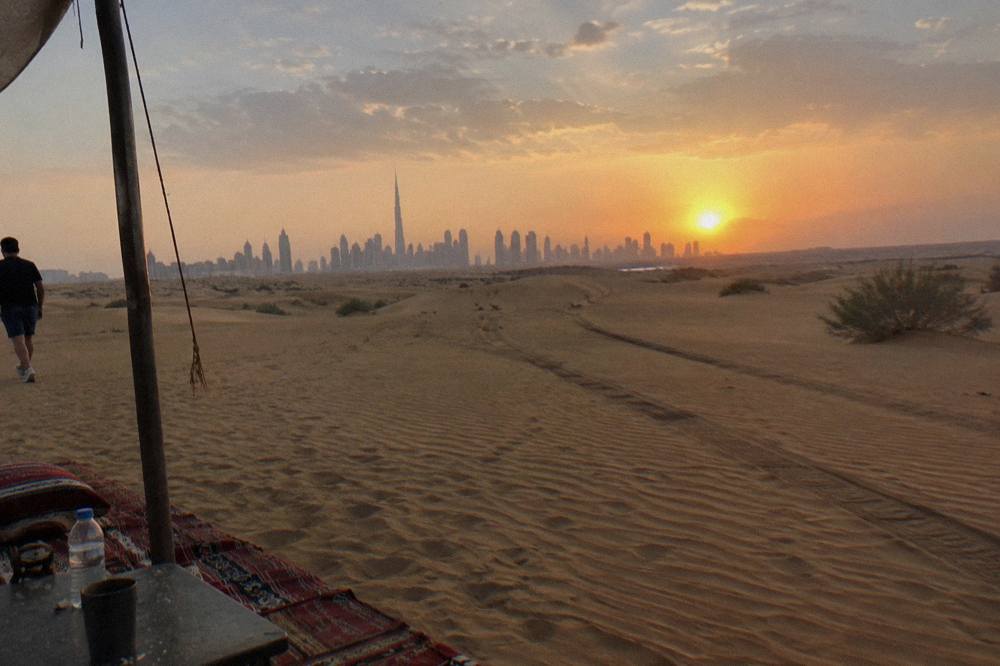
If your heart is set on sand, a safari delivers it in a way no city tour can. If your heart is set on food, the comparison below is where the decision actually gets made. The rest of this guide assumes you are weighing the two against each other, possibly for the same trip, and it treats both products with the respect they deserve rather than pushing one over the other.
What A Guided City Food Walk Covers Instead
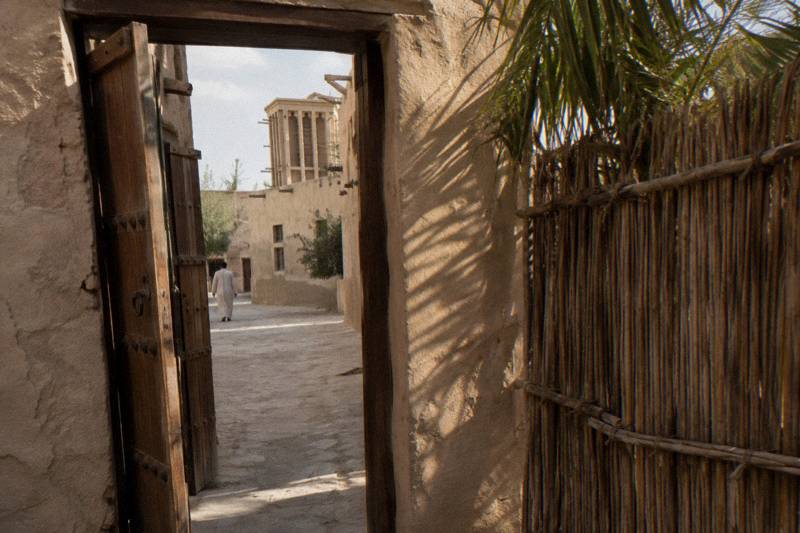
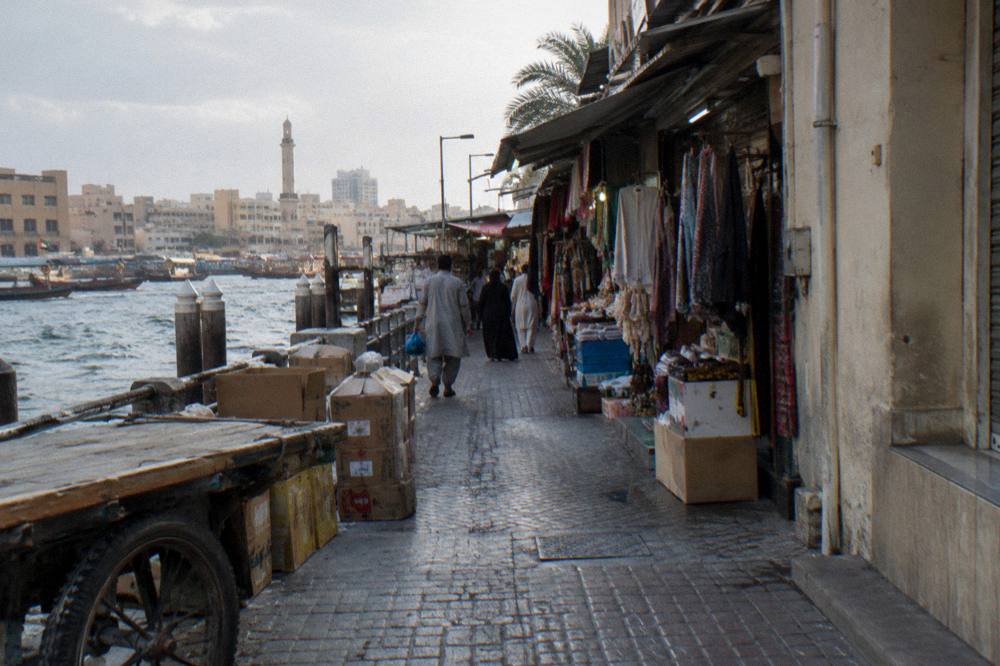
A guided city food walk is a 2.5 to 4 hour on-foot route through Old Dubai, usually Al Fahidi, the Bur Dubai souks and a Creek crossing, with a guide narrating the district's trading history between stops. Tastings are counted and listed on the booking page, and the group walks between them rather than riding. The featured option here runs 2.5 to 4 hours and moves at a walking pace through heritage lanes.
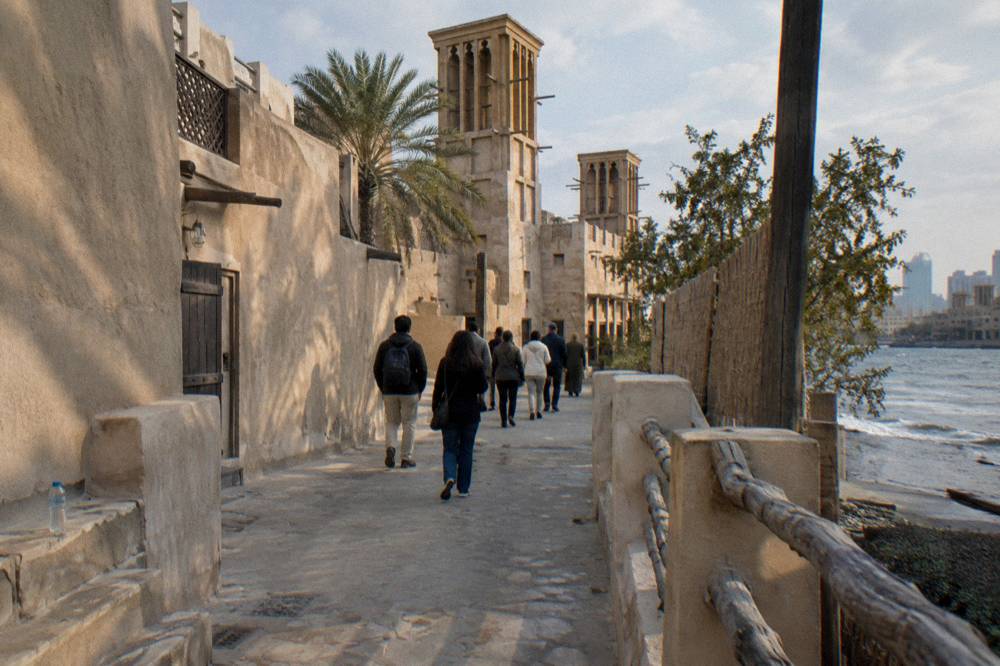
Where the safari compresses a landscape, the walk compresses a food culture. A guide who knows the lanes leads you past wind-tower houses and textile stalls, pausing at small vendors for the dishes Old Dubai actually eats: shawarma, falafel, karak chai, luqaimat, the Emirati breakfast dishes that appear on the Emirati food guide's dish list. The tastings are the spine of the route, and the history is the connective tissue between them.
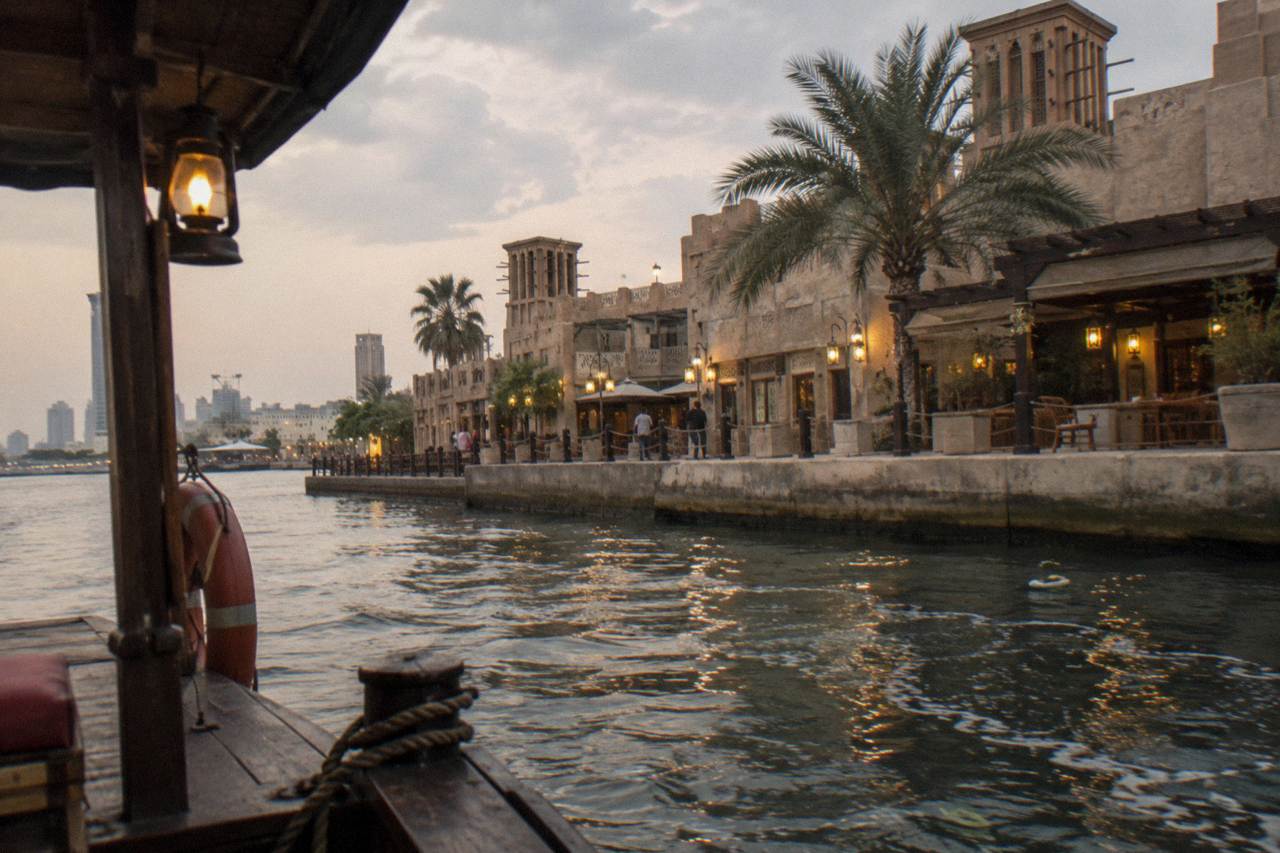
The featured walk, the Al Fahidi Old Town, Souks, Street Food and abra cruise option, adds a Creek crossing by boat, which is the single most photogenic ten minutes in Old Dubai and the moment many visitors remember longest. It starts in Al Fahidi, threads the souks, and ends across the water in Deira, so you finish with a mental map of the whole district rather than a single neighborhood. The price basis and inclusions are stated on the operator's live listing, so check there for the current figure and exactly what the ticket covers before you commit to a date. Since the walk finishes in Deira, the guide to the Gold Souk and Spice Souk is a handy primer on what to buy there and what prices to expect.
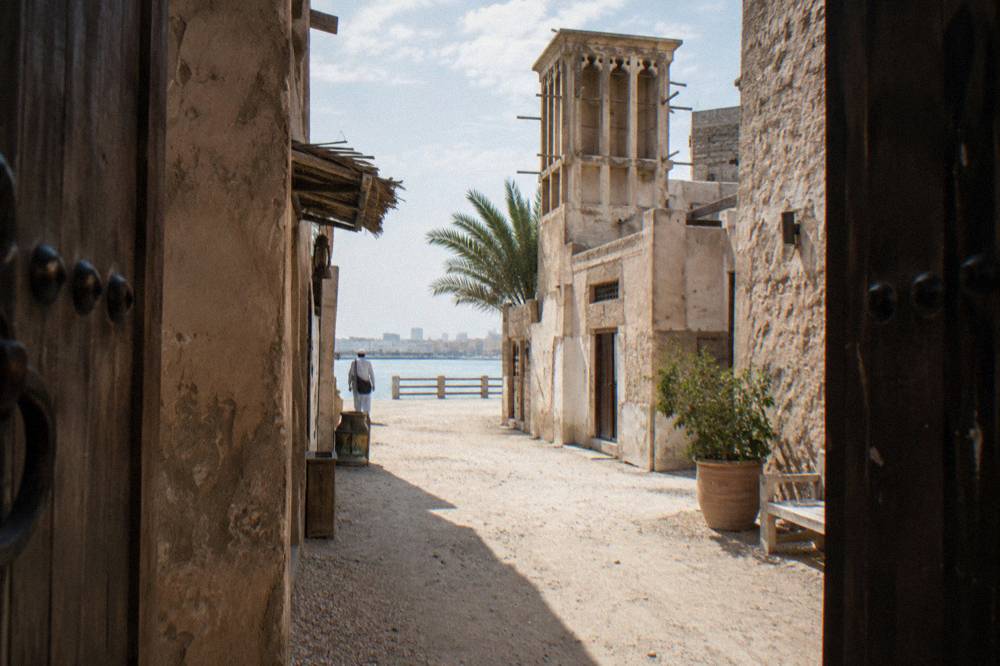
Three city options stand against the safari on this site, and they represent the range well: the featured Al Fahidi walk with its boat crossing, a longer premium old town route, and a museums-and-souks walk for visitors who want culture folded in.
How The Two Evenings Compare Side By Side
The honest comparison comes down to five lines: transport, food style, group feel, physical demand and what you can do afterward. The safari is vehicle-based with buffet food and a crowd; the walk is on foot with counted tastings and a small group. The safari ends with a hotel drop-off; the walk ends in Deira, steps from the metro and late-night eateries. Neither is cheaper by default: both figures live on the booking pages.
The table below puts the structural differences in one place. Read the duration column carefully: a 4 hour walk and a 6 hour safari consume very different slices of an evening, and in winter the sunset timing changes which one feels better. It is also worth reading the physical demand row honestly, because four hours on your feet in heritage lanes is a different commitment from four hours mostly seated at a camp.
| Factor | Desert Safari Dinner | Guided City Food Walk |
|---|---|---|
| Typical duration | Roughly 4 to 6 hours including transfers | 2.5 to 4 hours on foot |
| Getting there | Hotel pickup and drop-off included | Meet at a stated Old Dubai point, metro accessible |
| The food | Camp barbecue buffet, shared service | Counted tastings at multiple stops, listed on the booking page |
| Setting | Open desert camp with entertainment | Heritage lanes, souks and the Creek |
| Physical demand | Sitting and standing at camp; dune drive beforehand | Walking for the full duration, some uneven lanes |
| Where you finish | Back at your hotel | In Old Dubai, near stations and evening eateries |
| Best for | First desert experience, sunset photography | Food-focused visitors, repeat visitors, camera-light evenings |
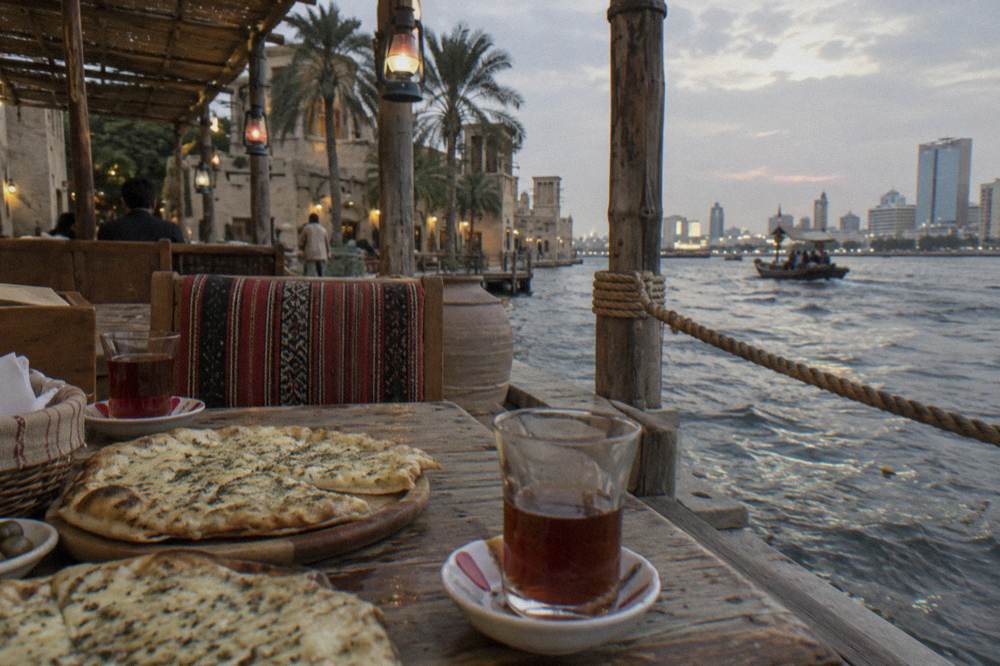
One more honest note on the food itself. Camp barbecue is filling and generous, but it is not the place to learn what Emirati home cooking tastes like: machboos, harees and balaleet rarely appear on a camp buffet. A walk through Old Dubai is where those dishes surface, at small vendors and heritage cafeterias, with a guide explaining what you are eating and where it came from. Visitors who want the cultural half of the meal usually get more of it from the walk.
The Premium Walk And The Museums Walk, Weighed
The premium old town route runs 4 hours, the longest of the city options here, and pairs the street food stops with a boat ride and a fuller sweep of the souks. The museums-and-souks walk runs 3 hours and trades some tasting depth for gallery and museum stops. Both are on foot; neither involves a dune, a buffet or a bus. Choosing between them is about how much culture versus how much food you want per hour.
The premium route suits visitors doing Old Dubai once and wanting the complete version: more stops, more time in Deira, and a boat segment on the Creek. Four hours on foot is a real commitment in anything warmer than winter, so it earns its place best between December and February, when the NCM-derived normals put daytime highs around 24 to 26 °C. In the hotter months, the same route is better booked for the latest start available.
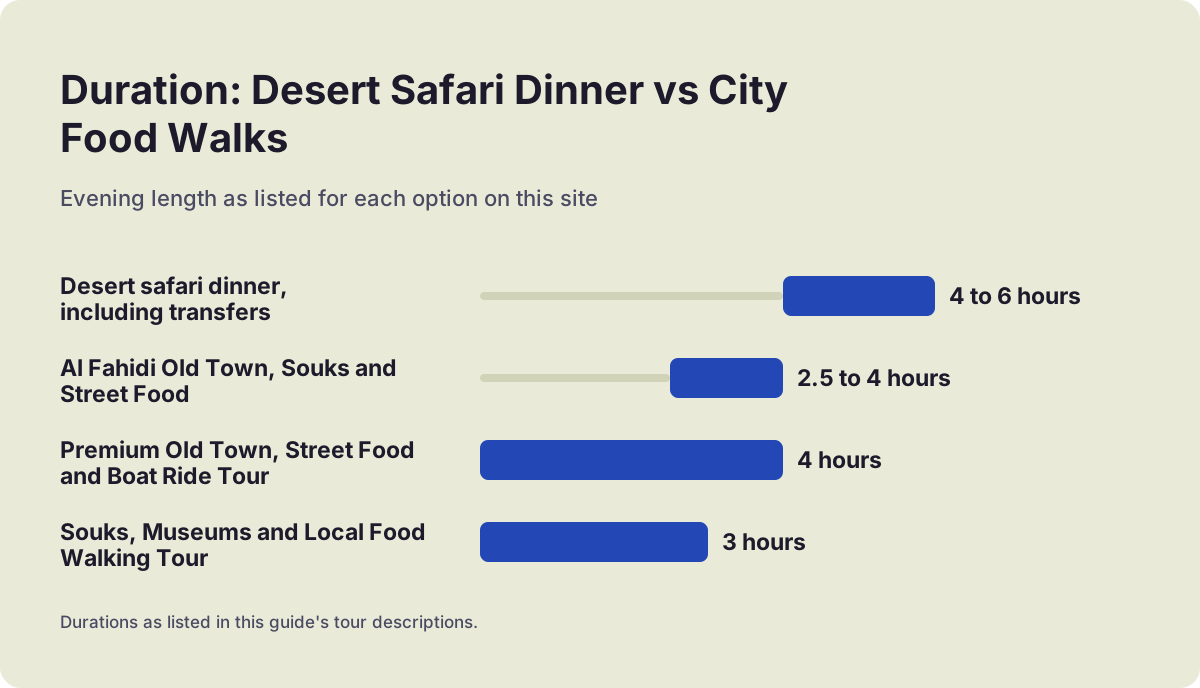
The museums walk suits visitors whose trip is heavy on food but light on context: it folds museums into the souk route so the afternoon doubles as a history lesson. Its duration, 3 hours, sits neatly between the featured walk and the premium route, and its inclusions are listed on the booking page. If a safari already covers your spectacle quota for the trip, this is the version of Old Dubai that adds depth instead of another show.
The three city options stack up against each other like this, and the differences are more about format than quality:
| City Walk | Duration | Format Emphasis | Category Family |
|---|---|---|---|
| Al Fahidi Old Town, Souks, Street Food and abra cruise | 2.5 to 4 hours | Street food tastings plus a Creek boat crossing | Old Dubai street food walks |
| Premium Old Town, Street Food, Souks and Boat Ride Tour | 4 hours | The fullest old town sweep, street food plus boat ride | Old Dubai street food walks |
| Walking Tour in Dubai: Souks, Museums, Local Food Testing | 3 hours | Souks and museums with local food tasting | Old Dubai street food walks |
Between the two, the premium route wins on food coverage and the museums walk wins on breadth. Neither competes with a safari on landscape, and that is the point: they are answers to a different question, and the question is usually whether you want to eat the city or watch it from a distance.
Timing, Weather And Getting To Either One
Winter, December through February, is the best time for both options, with NCM-derived normals putting Dubai daytime highs at 24 to 26 °C and lows around 15 to 17 °C, comfortable for a dune camp and ideal for four hours on foot. The safari depends on the sunset slot, while the walks run daytime and evening slots, so check the booking page for the current schedule. Both are reachable by metro from anywhere on the Red or Green Line.
“What a fantastic tour. I can highly recommend to anyone visiting Dubai for the first time. So interesting and a great fun way to learn about the history of the city, the country and experience the culture. Food was authentic and delicious.”
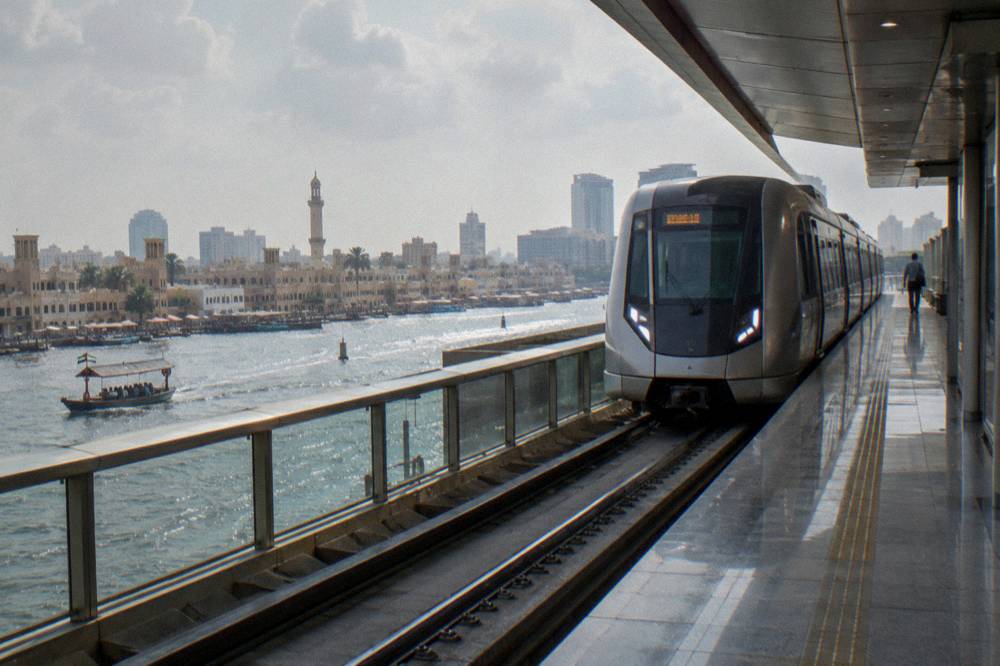
The transport logic differs. A safari collects you at your hotel, so location barely matters, though a pickup far from the desert edge lengthens the drive. A walk requires you to reach Old Dubai: the Green Line serves the district directly, with Al Ras station (G23) beside the Deira souks and Sharaf DG (G25) closest to Al Fahidi, per the official RTA metro map. Taxis start at a reported AED 5 between 06:00 and 22:00 and AED 5.5 overnight, per the RTA fare page, so check the RTA taxi fare page before budgeting a ride in.
Sunset timing shapes the safari more than any other factor, and mid-winter sunsets run around 17:32 in December and 17:51 in January, local time, which pulls the whole camp schedule earlier. The walks are less weather-exposed: the lanes of Al Fahidi hold shade through the afternoon, and the souks are largely covered. For more on reaching the district, see the guide to getting to Old Dubai by metro and abra, and for the seasonal angle, the best time to visit Dubai for food and walking.
The winter month-by-month picture, drawn from the NCM-derived normals for Dubai International Airport, looks like this, and it is the single best argument for timing either booking between December and February:
| Month | Mean Daily High | Mean Daily Low | Verdict For Walking |
|---|---|---|---|
| December | 26.5 °C | 17.3 °C | Comfortable all day |
| January | 24.4 °C | 15.3 °C | The coolest month, ideal for long routes |
| February | 26.1 °C | 16.4 °C | Comfortable, warming toward March |
| March | 28.9 °C | 18.6 °C | Fine in the morning, warm by midday |
A practical split that works for many trips: safari on the evening you arrive, when jet lag makes a pickup-at-the-hotel plan attractive, and the food walk two nights later, once you know the district well enough to return for dinner on your own. That sequencing also spreads the two longest activities of a Dubai trip across different days instead of stacking them.
Food Rules, Dress And Etiquette For Both Evenings
Both evenings call for modest dress and halal dining, with alcohol limited to licensed venues. All meat in Dubai restaurants and desert camps is halal, and pork appears only in designated licensed sections, so menu choices are simple. Covered shoulders and knees are the reported expectation in traditional districts and comfortable practice at a desert camp after sunset, while the walks serve no alcohol unless the booking page says otherwise.
The halal point is worth stating plainly because it removes a question many visitors carry: the barbecue at a desert camp and the shawarma on a food walk are both halal by default, and neither requires you to ask. For dietary needs beyond that, the listings here do not describe themselves as vegetarian or gluten-free, so message the operator before booking rather than assuming, a point covered in more depth in the guide to vegetarian and dietary needs on a Dubai food tour.
Tipping works the same way in both settings. There are no set rules; restaurants commonly add a service charge of up to 10 percent, and an additional cash tip of 5 to 10 percent for good service is normal but voluntary, per Visit Dubai's guide to tipping in Dubai. On a guided walk, a tip to the guide at the end is the same kind of voluntary gesture. Photography carries one extra rule in the souks: ask before photographing individuals, particularly Emirati women and families, a courtesy that also holds at a desert camp with performing staff.
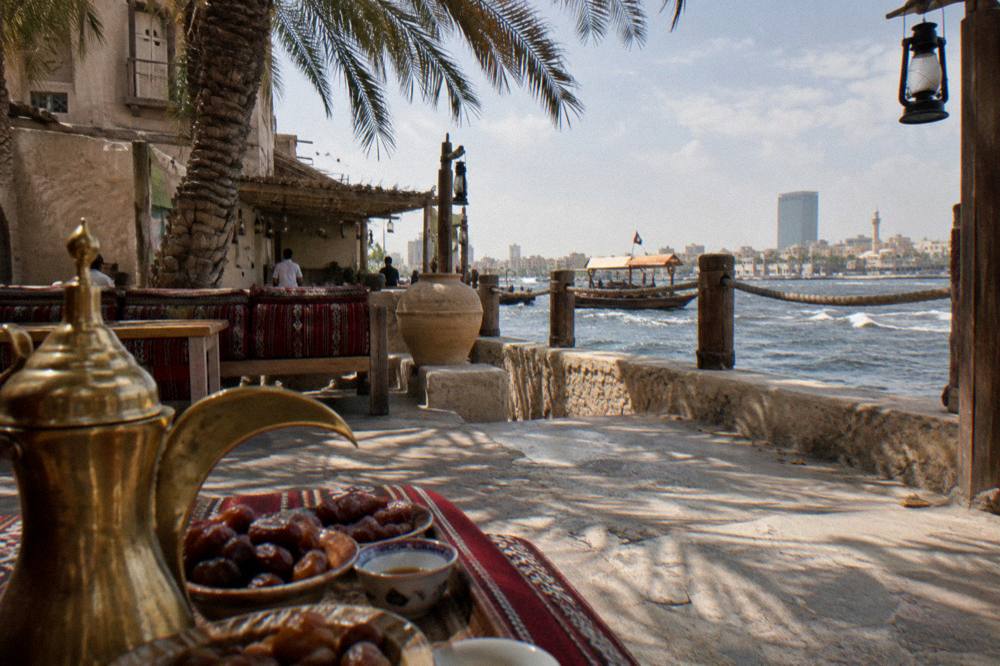
One habit from the Emirati table travels with you to either evening: gahwa, the lightly spiced cardamom coffee, is received with the right hand, and a gentle side-to-side shake of the empty cup signals no more refills. It is a small piece of etiquette that a food walk will likely teach you and a camp buffet rarely will.
Which Should You Book For Your Trip?
Book the safari if this is your first Dubai visit and the desert is the reason you came; book the food walk if the trip is about eating, or if you have already done a desert evening elsewhere. With enough nights, book both on different days, the safari for the landscape and the walk for the meal, because they genuinely do not overlap. If only one fits, the walk gives you more per hour in the city itself.
Budget logic supports the split more than a head-to-head. A safari's per-person price bundles transfers, the dune drive, camp entry and the buffet, so the figure on the booking page is the whole cost of the evening. A walk's per-person price bundles the guide and the counted tastings; extras beyond that are usually small, and the walk's cost sits against a city where a casual cafeteria meal runs a reported 15 to 40 AED per person and a mid-range restaurant meal around 80 to 150 AED, figures to check against current menus. Prices shift for both, so neither figure travels well; the operator's live listing carries the current number for each.
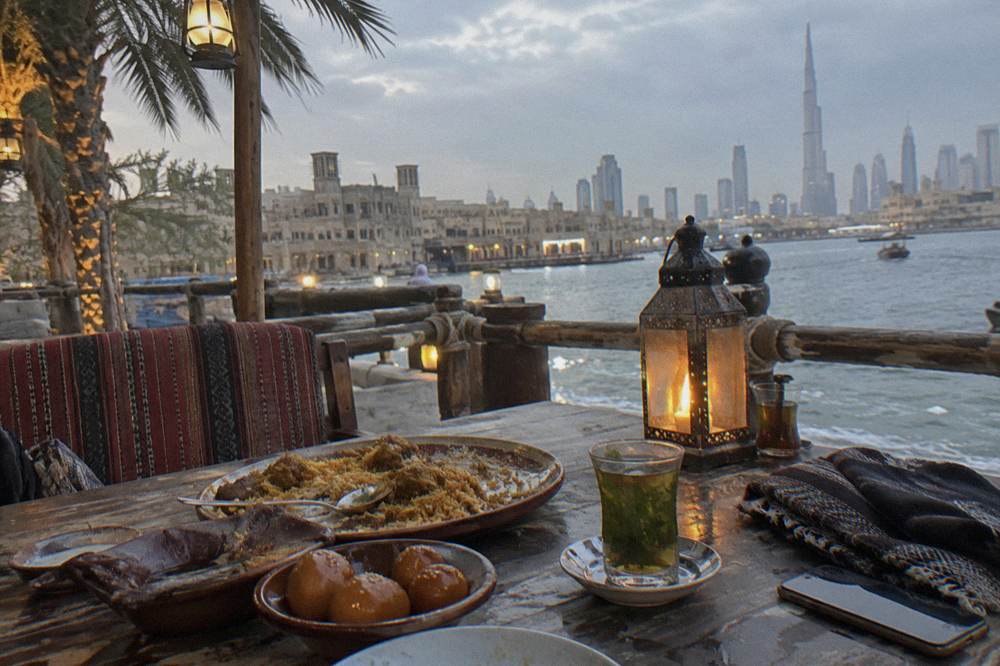
For a deeper look at that side of the ledger, see how much a food tour in Dubai costs and, for the broader question of value, whether food tours in Dubai are worth it. The honest summary from this site, Dubai Food Tours, is that the two products are complements, not competitors, and the only wrong answer is skipping the food half because the desert half looked more dramatic in photographs.
If you want a night-and-skyline variant instead of the old town, there is also a four-cuisine walk with souks and street bites that runs 3 to 4 hours and adds a different set of flavors to the same district. Its tastings and meeting point are listed on its booking page.
Common Questions About A Desert Safari Dinner Or A City Food Tour
Is A Desert Safari Dinner Or A City Food Tour Better In Dubai?
Neither is better across the board. The safari delivers landscape, sunset and a camp barbecue in roughly 4 to 6 hours with hotel pickup; the food walk delivers counted tastings and district history in 2.5 to 4 hours on foot. If food is the point of your trip, the walk wins; if the desert is the point, the safari wins.
Can You Do A Desert Safari And A Food Tour On The Same Trip?
Yes, and many visitors do, on different evenings. The safari consumes most of one evening with transfers, while a walk finishes in Old Dubai near the metro, so they rarely compete for the same night. Book the walk on a day you do not need an early hotel pickup.
Is The Food At A Desert Camp The Same As Emirati Food?
Not exactly. Camp menus lean toward broad barbecue formats for large groups, while dishes like machboos, harees and balaleet are more likely to surface on a guided walk through Old Dubai, where a guide can explain each dish. Check the camp menu on the booking page if specific dishes matter to you.
Which Is Better In Summer Heat?
Both shift. A safari relies on a sunset slot, and a walk in the warmer months is best booked for the latest start available, a point covered in the guide to Dubai food tours in summer heat and timing. Winter, December to February, removes the problem almost entirely, with daytime highs of 24 to 26 °C.
Do You Need A Car Or Transfers For The City Food Walk?
No. The walks meet at stated points in Old Dubai, reachable on the Green Line, with Al Ras beside the Deira souks and Sharaf DG near Al Fahidi. Taxis start at a reported AED 5 in daytime per the RTA fare page. The safari, by contrast, includes hotel pickup and drop-off.
Are Dietary Needs Handled On Either Option?
Message the operator before booking in both cases. All meat in Dubai is halal by default, but the listings here do not describe themselves as vegetarian, vegan or gluten-free, so the operator is the only reliable source for what can be adapted at a camp buffet or a tasting stop.