Dubai Night Food Tour: Eating Old Dubai After Dark
Old Dubai changes character once the sun goes down. The lanes around Al Fahidi and the Deira souks cool off, the snack stalls fire up, and several guided food walks shift their start times to the evening. Here is what actually runs after dark, when it starts, and what the night costs.
Short answer
A Dubai night food tour is a guided tasting walk through Al Fahidi, Al Seef and the Deira souks that starts in the late afternoon or evening, runs 2.5 to 4 hours, and pairs street snacks with an abra ride across the Creek. Sunset falls near 17:30 in December, so winter walks begin in full dark.
What Changes In Old Dubai After Sunset
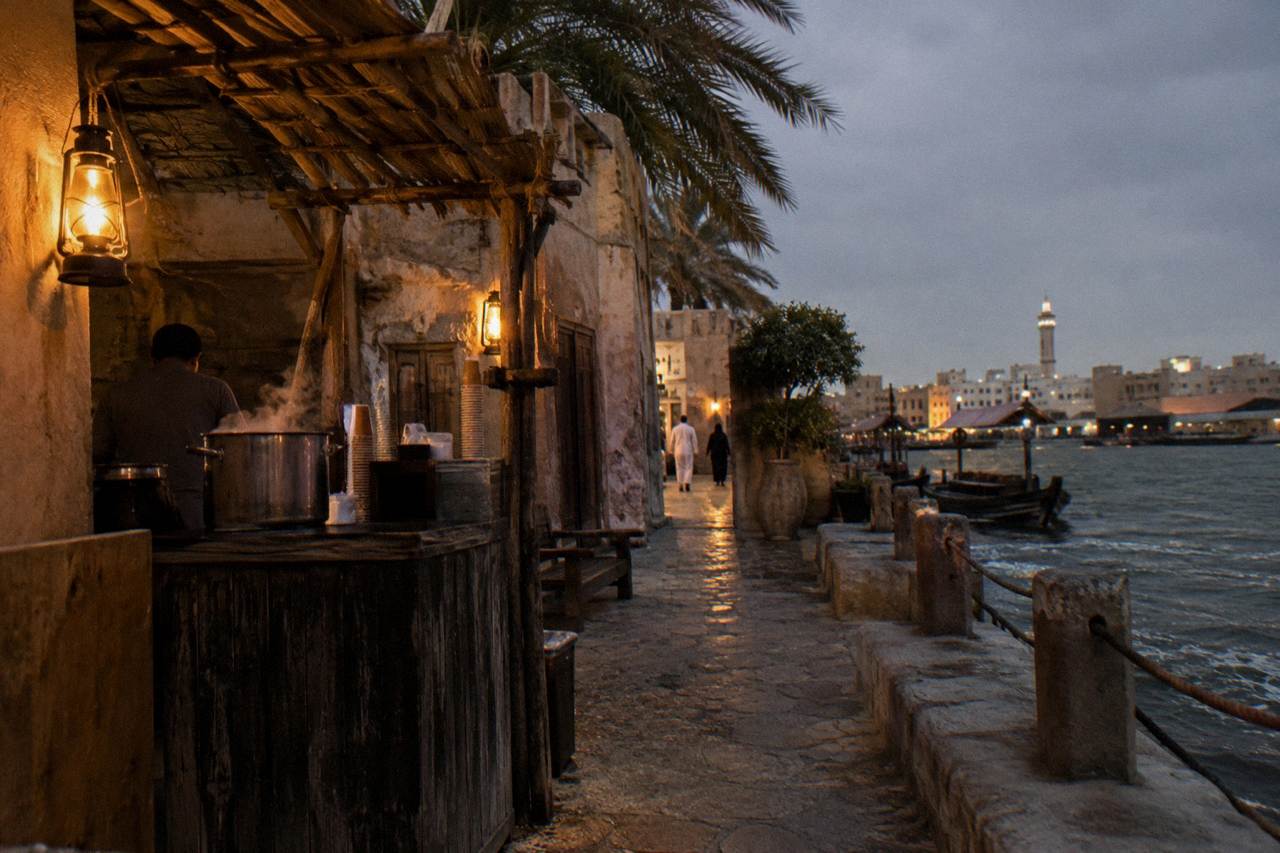
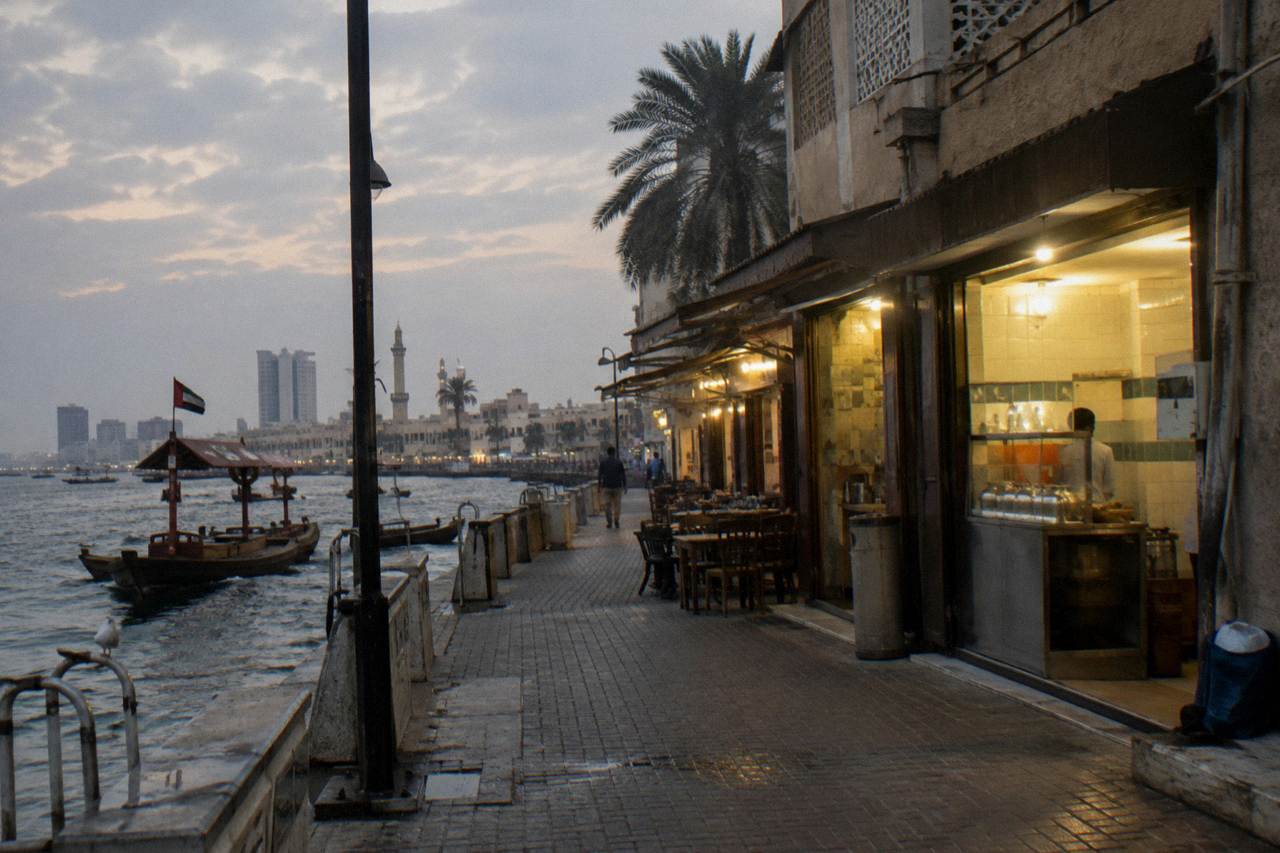
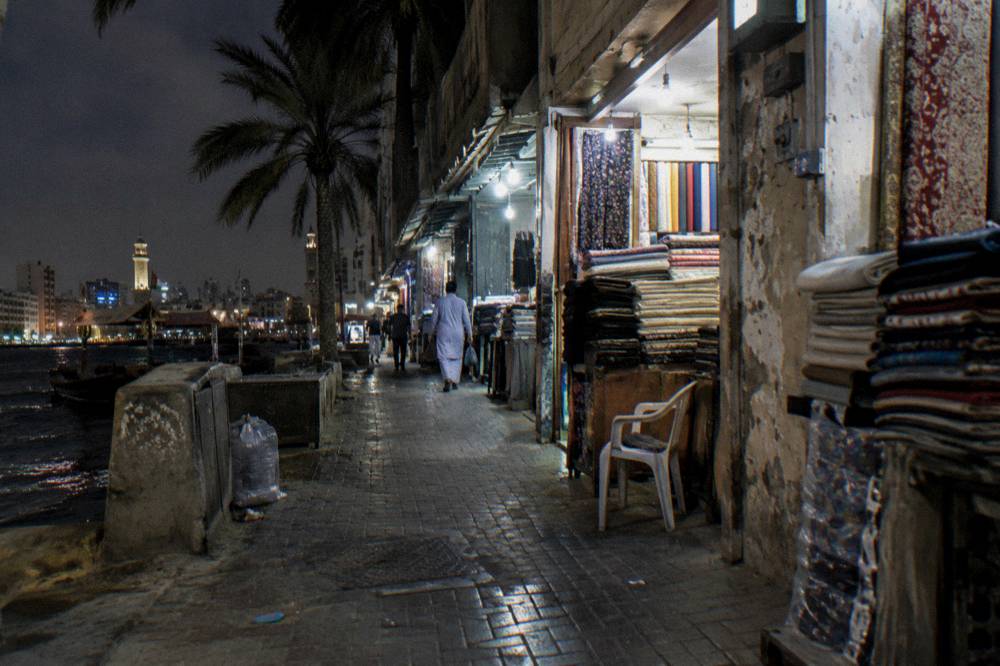
Once the sun drops, the heritage lanes of Bur Dubai and Deira become the comfortable version of themselves: the heat fades, the snack stalls along the Creek light up, and the souk lanes fill with evening browsers instead of midday workers. Guided food walks shift to late-afternoon and evening starts for exactly this reason, and the abra crossings keep running between the two shores. A night walk trades harsh daylight for lantern light and cooler air.
The practical difference is temperature. December through February brings the lowest average daytime highs of the year, around 24 to 26 °C per the NCM-derived monthly normals, with December sitting near a mean daily maximum of 26.5 °C and a minimum of 17.3 °C. By the time a 17:30 or 18:00 walk sets off, the evening is genuinely pleasant for standing around a karak stall. In the summer months the same logic applies in reverse: night starts are not a bonus, they are the only sensible time to walk the district on foot.
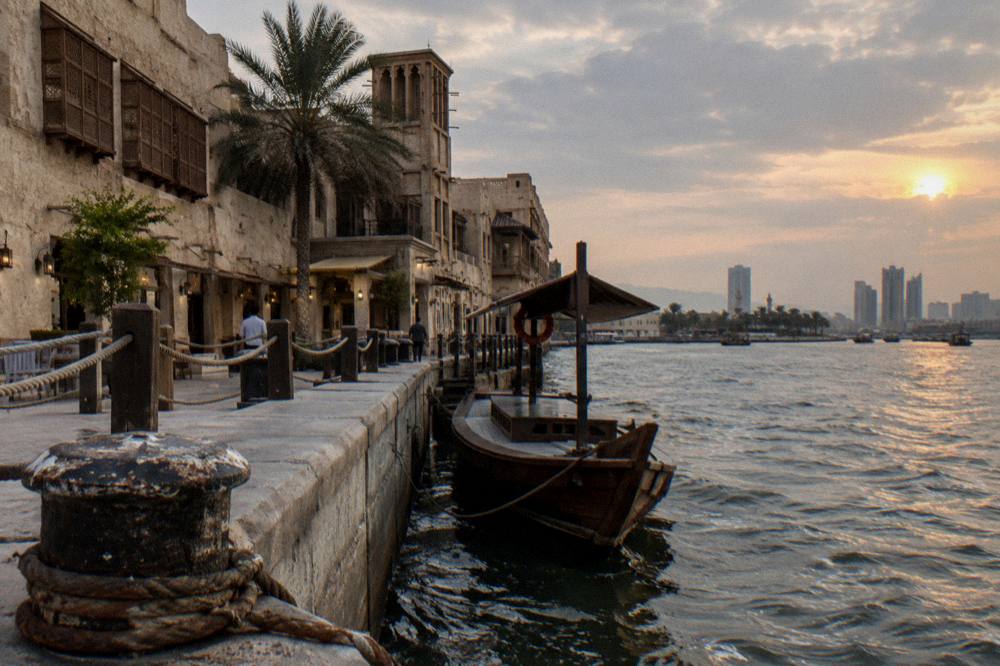
The second difference is atmosphere. The Al Seef promenade, a roughly 1.8 km stretch on the Bur Dubai side of the Creek, is open daily with free entry, and its heritage section is built for evening wandering. The Gold Souk's shops are reported by Visit Dubai to open to around 22:00, and the Spice Souk runs from before 08:00 to past 21:00, with many vendors taking midday breaks, which means the late hours are when the Deira side feels busiest. The Dubai Creek Lights project, a Dubai Municipality scheme installing more than 5,000 lighting units along roughly 8 km of Creek frontage including the Gold Souq promenade, Bur Dubai Souq and Al Seef, is scheduled to complete in Q1 2027, so the waterfront after dark is only getting brighter.
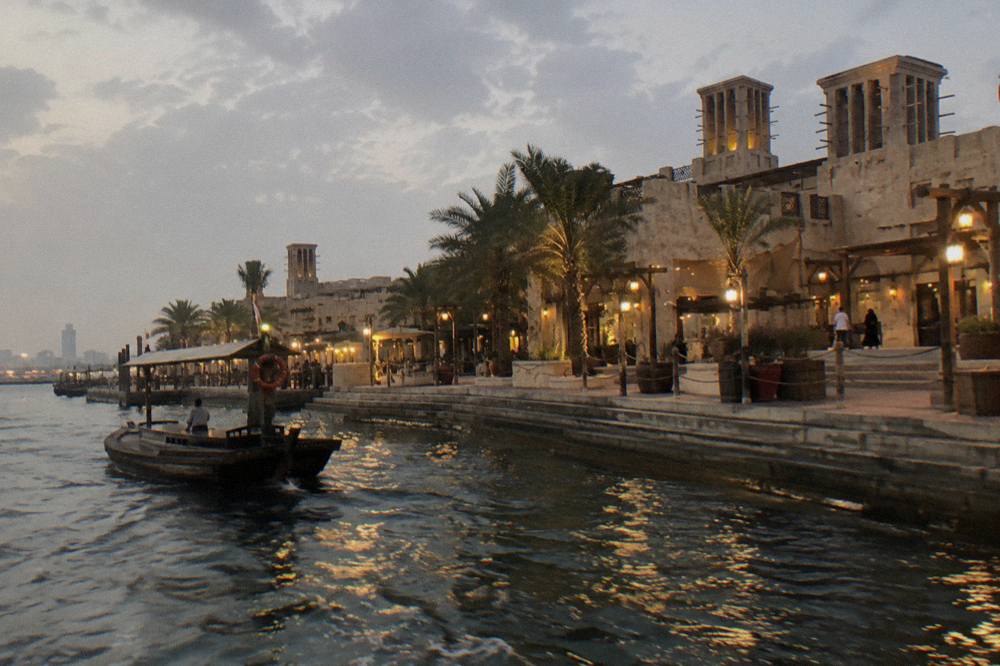
None of this means the district empties by day. It means the evening is when the street food infrastructure, the stalls selling shawarma, falafel, samboosa and luqaimat, does its best trade. If you are choosing between a morning and an evening walk, the deciding factors are heat tolerance, crowd preference and how you want the Creek to look in your photos.
What A Night Food Tour Actually Includes
A typical evening food walk in Old Dubai pairs a guided route through Al Fahidi or Al Seef with a set of street food tastings and an abra crossing of the Creek, running 2.5 to 4 hours depending on the listing. Tastings reported on the listings include shawarma, falafel, karak tea, samboosa, regag bread and luqaimat. Inclusions vary by tour: some count the snacks and drinks in the price, others leave extras to the stalls.
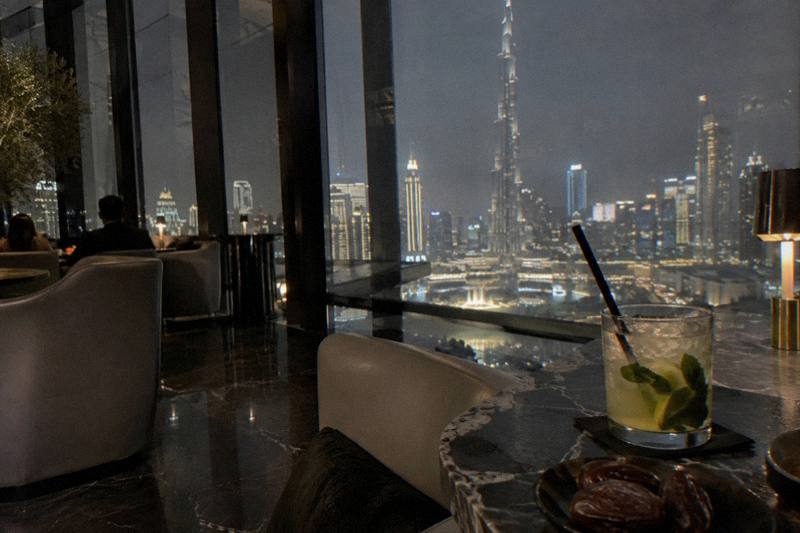
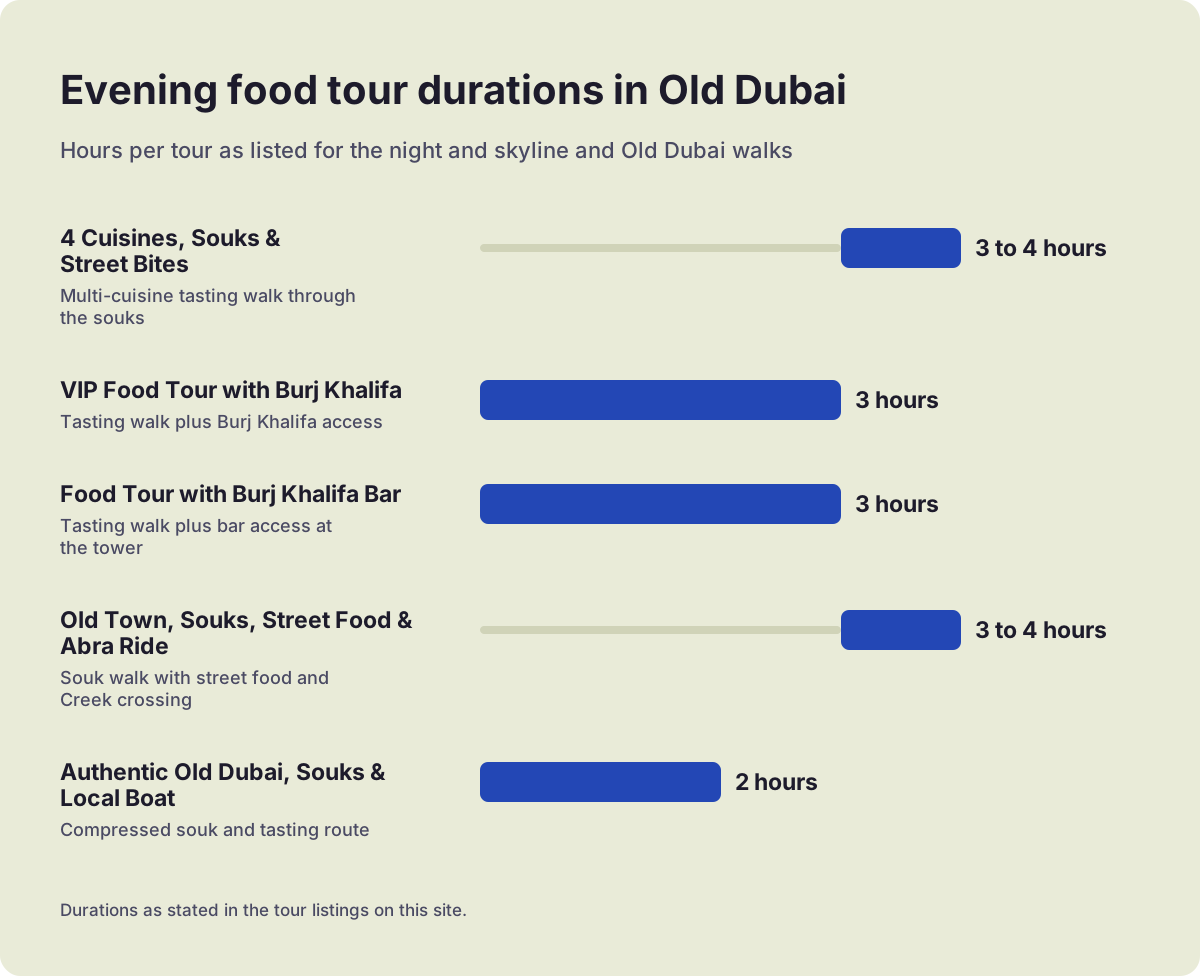
The featured walk of this kind is the 4 Cuisines, Souks and Street Bites tour, a 3 to 4 hour guided tasting route that moves through several culinary traditions of the city in one evening. It sits in the night-and-skyline family of tours, which is the group built for after-dark eating: the same family includes a VIP walk with 7 or more tastings plus Burj Khalifa access, and a 3 hour tour combining a Burj Khalifa bar visit with 6 food tastings.
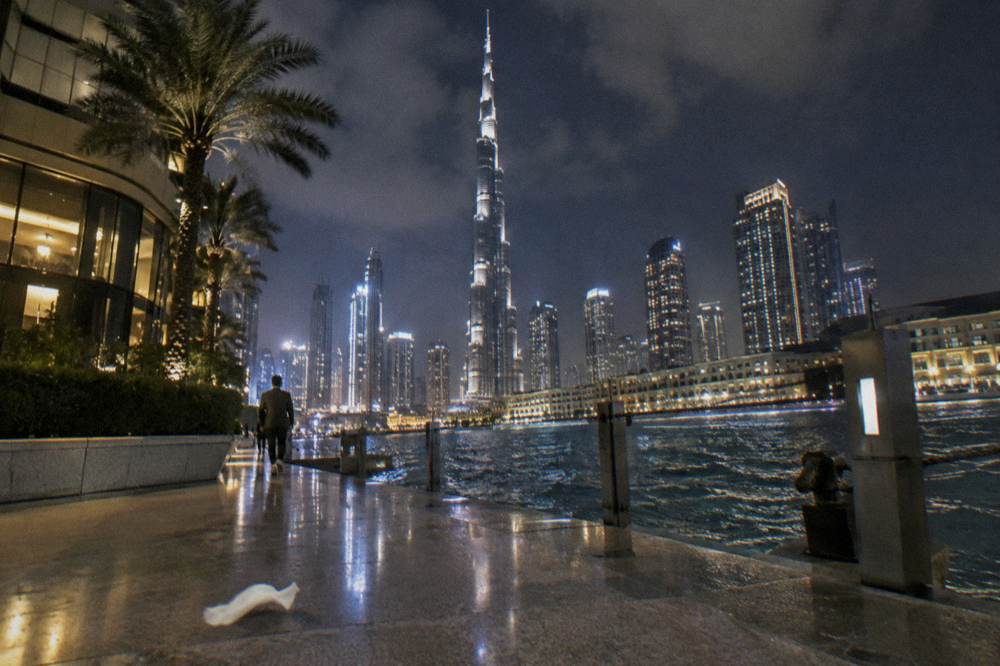
The distinction between these formats matters more at night than it does at midday. A souks-and-street-food walk spends its whole evening at ground level in Old Dubai, crossing the Creek by abra and eating from stalls and small cafeterias. The skyline pairings split the night in two: a tasting walk first, then a lift up the Burj Khalifa for the city after dark. If your evening in Dubai is a one-night-only affair and the skyline view is part of the plan, the combined tours fold two bookings into one start time.
The Old Dubai street food walks in the same family follow a consistent shape: a meeting point in Bur Dubai or Deira, a guided walk through the historical lanes and souks, tastings along the way, and a boat crossing. The 3 to 4 hour Old Town, Souks, Street Food and Abra Ride tour is the template, and shorter variants such as the 2 hour Authentic Old Dubai walk compress the same route for travelers with a tighter evening.
| Tour | Duration | Evening format | Category |
|---|---|---|---|
| 4 Cuisines, Souks & Street Bites | 3 to 4 hours | Multi-cuisine tasting walk through the souks | Night and skyline |
| VIP Food Tour with 7+ Tastings & Burj Khalifa | 3 hours | Tasting walk plus Burj Khalifa access | Night and skyline |
| Food Tour with Burj Khalifa Bar & 6 Tastings | 3 hours | Tasting walk plus bar access at the tower | Night and skyline |
| Old Town, Souks, Street Food & Abra Ride | 3 to 4 hours | Souk walk with street food and Creek crossing | Old Dubai walks |
| Authentic Old Dubai, Souks & Local Boat | 2 hours | Compressed souk and tasting route | Old Dubai walks |
What the table cannot tell you is which tastings each listing counts as included. The premium listings describe counted tastings and drinks; the standard walks describe tastings with some items bought at the stalls. Check the booking page for the inclusion list of the specific evening you want, because the difference between "all food included" and "some food at your own cost" changes the maths of the night.
Start Times, Meeting Points And How The Evening Runs
Evening walks in Old Dubai typically meet between 17:00 and 19:00, at landmarks rather than addresses: the Al Khayma Heritage Restaurant in Al Fahidi, Al Ras Metro Station exit 2 in Deira, the Al Seef Heritage Hotel entrance, or Sharaf DG Metro exit 4. The route then runs on foot through the lanes, with the abra crossing in the middle and the last tastings near the souks. Exact start times vary by season and by listing.
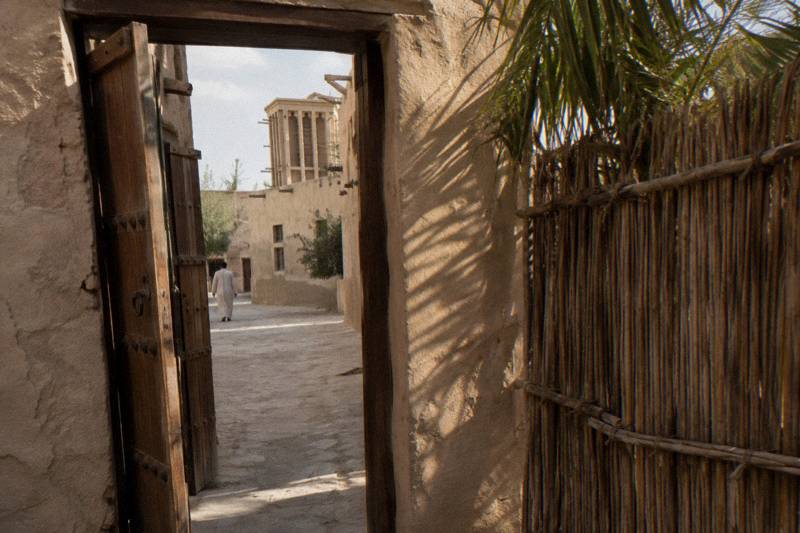
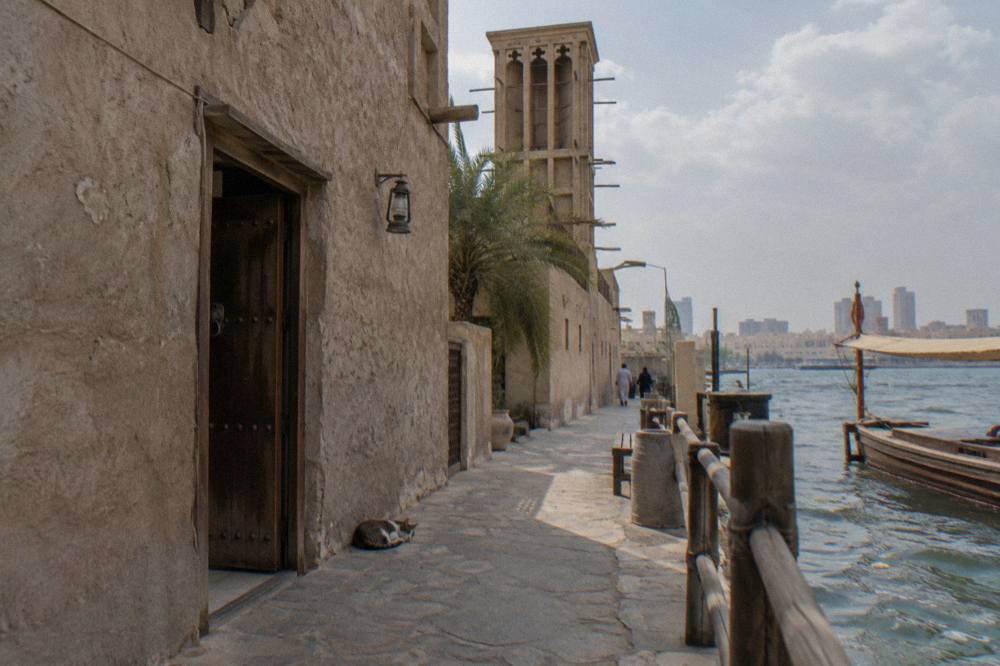
Meeting points are chosen for findability. The Al Fahidi-based walks use the heritage restaurant on the lane because the Historical Neighbourhood has no numbered street addresses a visitor can reliably punch into a map. The Deira-based walks use Al Ras Metro Station, which sits on the Green Line between Baniyas Square and Gold Souq stations, so the meeting point doubles as the arrival instruction. Sharaf DG station, also on the Green Line, serves the Al Fahidi side of the district.
The evening usually breaks into three movements. First, a walking segment through the heritage lanes or the Textile Souk, where the guide sets the historical context and the first snacks appear. Second, the abra crossing, the short boat hop between the Bur Dubai and Deira shores that every souk walk includes in some form. Third, the Deira side: the Spice Souk lanes, the Gold Souk frontage, and the final round of tastings before the tour disperses near a metro station.
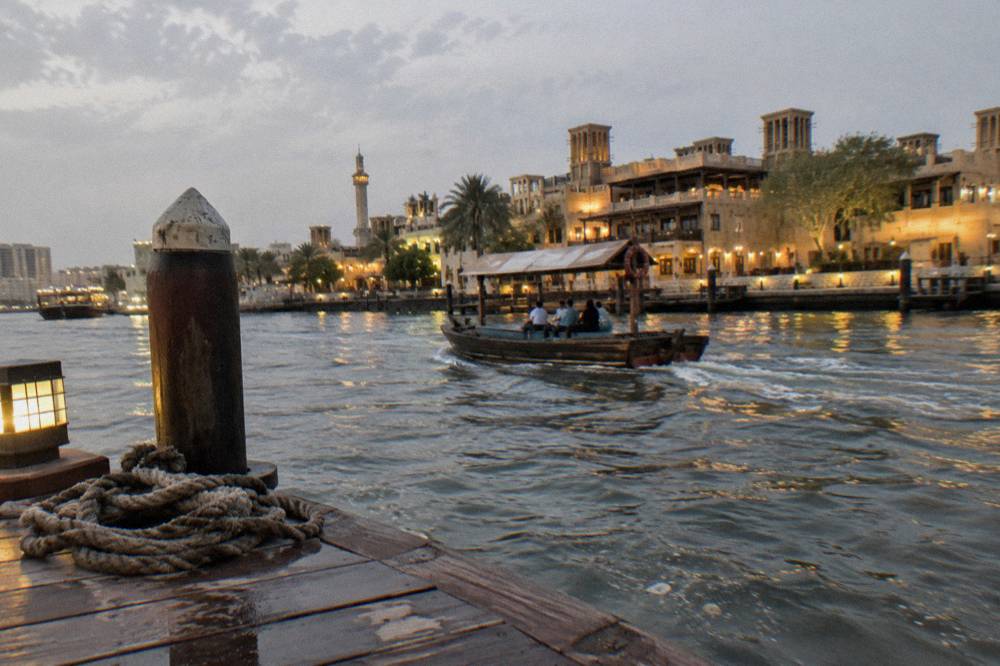
Winter light is a real constraint on start times. Mid-December sunset falls near 17:32 and mid-January near 17:51, so a 17:00 start in those months begins in daylight and finishes in full dark, which is arguably the best of both. A summer start of 19:00 or later avoids the heat but compresses the souk hours, since the Gold Souk shops are reported to close around 22:00. When you book, read the start time against the sunset of your travel month rather than assuming one evening fits all seasons.
Which Evening Format Suits Your Night
Choose a pure Old Dubai souk walk if the food is the whole point of your evening, a multi-cuisine walk if you want range, and a Burj Khalifa pairing if the skyline view shares the agenda. The souk walks run 2 to 4 hours and stay at Creek level. The skyline pairings run about 3 hours and split the night between tastings and the tower.
The souk-and-abra format is the deepest food experience of the three. The Old Town, Souks, Street Food, Guided Tour and Abra Ride listing runs 3 to 4 hours and describes tastings of shawarma, falafel, karak, samboosa, regag and luqaimat, which is the canonical Old Dubai snack list. The shorter 2 hour Authentic Old Dubai walk covers the souks and a local boat crossing for travelers who need to be elsewhere by mid-evening.
The multi-cuisine format widens the plate. Rather than staying inside Emirati and Levantine street food, it samples across the traditions that actually feed the city, which suits a first visit where one evening has to stand in for a week of eating. It is the pick for visitors who want a single booking to answer "what does Dubai eat".
The skyline pairing suits a different night entirely: the one where the Burj Khalifa is already on the list and the food walk has to share the evening with it. The VIP tour with 7 or more tastings and tower access, and the 3 hour walk with tower bar access and 6 tastings, both fold the two bookings into one start time, which saves an evening in a short trip.
There is a fourth, quieter option worth naming: a private evening walk. The private tours in the 3 to 4 hour range, such as the 10 Tastings with Locals format, let a family or a small group set the pace and the start time, which matters if you are eating with children late or want the guide's attention for questions about the dishes. Private listings are priced differently, often per group rather than per person, so read the price basis on the booking page before comparing.
Summer Nights Versus Winter Nights
In winter, December to February, an evening walk is the default choice: highs of 24 to 26 °C, sunset near 17:30, and comfortable standing-around weather for the whole route. In summer, an evening start is close to mandatory, with the walk beginning after the daytime heat breaks and the route shaded by darkness rather than by buildings.
The monthly normals compiled from NCM data put December at a mean daily maximum of 26.5 °C and minimum of 17.3 °C, January at 24.4 and 15.3 °C, and February at 26.1 and 16.4 °C. Those are airport-station figures, and the heritage lanes hold a little more warmth after dark, but the shape is right: winter evenings in Old Dubai are walking weather by any standard.
Summer flips the planning. A daytime walk through unshaded souk lanes in July or August is a different proposition from the same route at 20:00, and operators shift their schedules accordingly. If you are visiting in the hot months, treat the latest available start time as the best one, and check the booking page for seasonal time changes, because listings adjust their slots rather than their routes.
| Month | Mean daily max | Mean daily min | Approx. sunset | Evening walk feel |
|---|---|---|---|---|
| December | 26.5 °C | 17.3 °C | ~17:32 | Cool, dark by the midpoint |
| January | 24.4 °C | 15.3 °C | ~17:51 | Coolest evenings of the year |
| February | 26.1 °C | 16.4 °C | After 18:00 | Mild, dark start possible |
| Summer months | Well above 30 °C | Warm nights | After 19:00 | Late starts strongly preferred |
The dates cluster adds one seasonal bonus for winter walkers: the UAE fresh date harvest peaks across the summer, with fresh rutab at their best for roughly two to three months from June, and reported market prices around AED 15 per kg at festivals and markets. By December the fresh season has passed, but dried dates of the many varieties grown in the country are year-round, and a winter walk's gahwa and dates stop is the standard version of the pairing.
What The Evening Costs On Your Own Versus Guided
Eating Old Dubai independently at night is genuinely cheap: reported stall prices run around AED 7 to 15 for shawarma, AED 1 to 3 for karak at local cafeterias, AED 2 to 3 per samboosa or AED 10 to 12 for a bag, and AED 10 to 18 for luqaimat. A guided walk costs more per person and buys the route, the counted tastings and the context, with prices on each listing.
The honest comparison is not about money, it is about what the money buys. An independent evening costs a fraction of a tour and lets you eat the same dishes, but you need to know where the stalls are, which lanes to walk and how the souks connect, and you will be guessing at the ordering vocabulary. A guided walk hands you the route and the translations, and the premium listings count the food and drinks in the price.
| Item | Reported price at local spots | Notes |
|---|---|---|
| Shawarma | AED 7 to 15 | Tourist spots reported higher, 20 to 40 AED |
| Karak chai | AED 1 to 3 | Cafe versions reported higher, up to about 14 AED |
| Samboosa | AED 2 to 3 each, bags 10 to 12 | Bags of around 5 pieces |
| Falafel wrap | AED 4 to 15 | Wide range between stalls |
| Luqaimat | AED 10 to 18 | Served warm, eaten immediately |
| Casual cafeteria meal | AED 15 to 40 per person | Biryani or mezze sets |
Two cautions on the independent route. First, restaurant bills in Dubai commonly carry a 5% VAT plus a service charge of up to 10%, which is venue-retained rather than a government levy, so the printed menu price is not the final number. Second, a night of stall-hopping is only cheap if you know where the stalls are, and the lanes around Al Ras and the Spice Souk reward local knowledge. Our Dubai food prices guide breaks the full cost picture down, and the street food guide maps the dishes to the districts.
If you are weighing the guided option on value, the question to ask is how much of your one free evening you want to spend working out the lanes on your own. The are food tours in Dubai worth it guide works through the same trade-off in detail.
Safety, Dress And Etiquette After Dark
Old Dubai at night is a low-risk walking district by any visitor standard, and the rules that matter are the same ones that apply by day: cover shoulders and knees in the heritage lanes and souks, ask before photographing people, drink alcohol only at licensed venues, and tip in cash when service is good. There is no separate night-time rulebook.
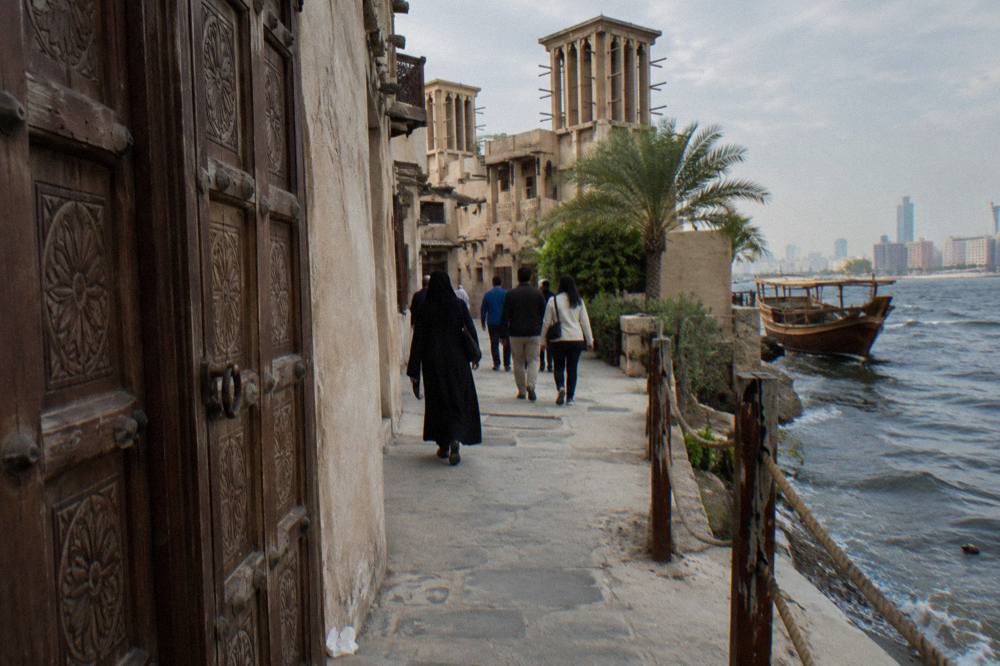
Dress is the one that catches evening visitors out, because a night out feels like cocktail attire weather. In the heritage areas the guidance is the same as at noon: shoulders and knees covered out of respect in traditional districts, with swimwear strictly for beaches and pools. A light layer for the winter evening breeze is the practical addition.
Alcohol is the other frequent question. Visitors over 21 may drink at licensed venues, hotels, restaurants and lounges, and no tourist permit is needed for on-site consumption. Drinking in public places outside licensed venues is not allowed, and public intoxication is strictly enforced. The food walks through Old Dubai serve no alcohol unless a listing says otherwise, so the karak and gahwa stops are the evening's drinks. The alcohol and pork on a Dubai food tour guide covers the detail.
Photography deserves one line of care: always ask before photographing individuals, especially Emirati women, families or anyone in traditional attire in the souks. Tipping is voluntary, with restaurants commonly adding a service charge of up to 10% and cash tips of 5 to 10% the norm for good service. On a guided walk, a tip for the guide at the end of the evening is customary and always at your discretion.
Getting Home: Metro, Taxi And The Creek At Night
The Green Line is the night walker's friend: Sharaf DG serves the Al Fahidi side, Al Ras and Gold Souq serve Deira, and the metro runs from 05:00 to midnight Monday to Thursday and Saturday, to 01:00 on Friday, and from 08:00 on Sunday. Taxis start at a reported AED 5 between 06:00 and 22:00 and AED 5.5 overnight, and the Creek abras run commuter routes between both shores.
The metro timetable is the number that ends most evenings. If your walk finishes near the Gold Souk at 21:30, the Green Line home is straightforward. If it runs long on a Sunday, remember the later start: 08:00 rather than 05:00, with service to midnight. The official RTA timetable page carries the current hours, and the RTA station map confirms the Green Line stops.
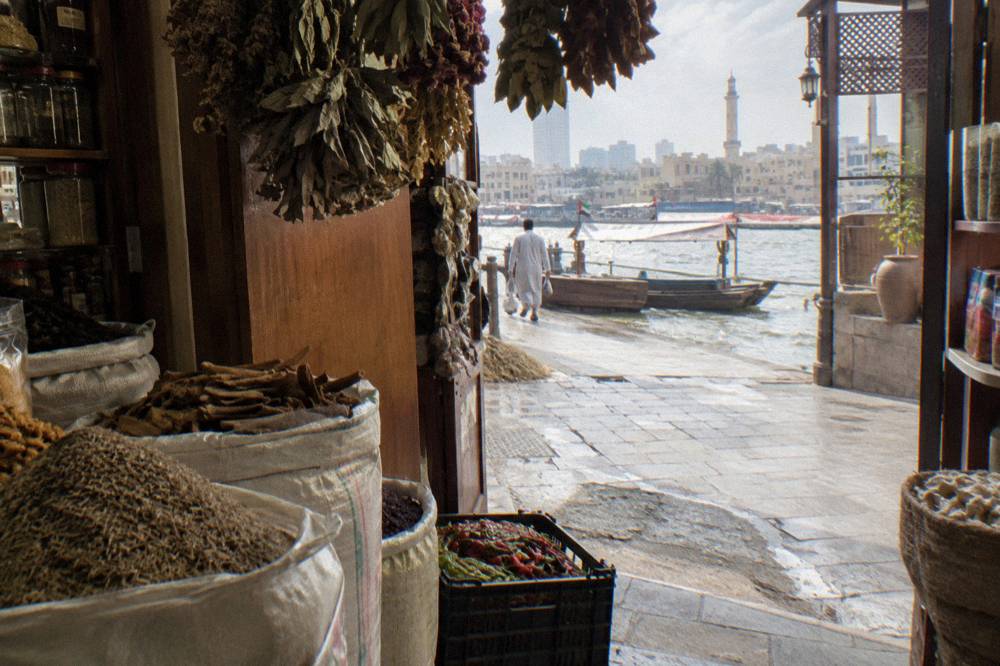
The abra is the crossing, not the commute home, but it deserves its own note: RTA runs traditional commuter routes including the Bur Dubai to Deira Old Souq line and the Al Seef to Baniyas line, and one 2026 flyer noted the Al Seef to Al Fahidi circular route temporarily on hold. Do not print an abra fare from memory, check the RTA marine page or pay at the dock.
For travelers who want the evening to end somewhere specific, the where to stay in Dubai for Old Dubai food guide maps the districts to the walking routes. And for the full picture of how the district eats after dark, Dubai Food Tours keeps the whole night-and-skyline family of walks in one place.
Booking An Evening Walk Without Overpaying
Book the format that matches your night, read the price basis and the inclusion list on the listing before you pay, and prefer listings with free cancellation when your evening schedule is still loose. Private tours are priced per group on some listings, so compare the basis, not the headline number. The standard group walks run 2.5 to 4 hours with counted or part-paid tastings depending on the listing.
Three checks save money and disappointment. First, the price basis: some listings are per person from a price that varies by group size or date, and private walks are often per group, so a headline number is meaningless until you know which. Second, the inclusions: the listing states which tastings and drinks are counted, and the difference between tours is mostly here. Third, the start time against the season, because a 17:00 winter start and a 20:00 summer start are the same product in different light.
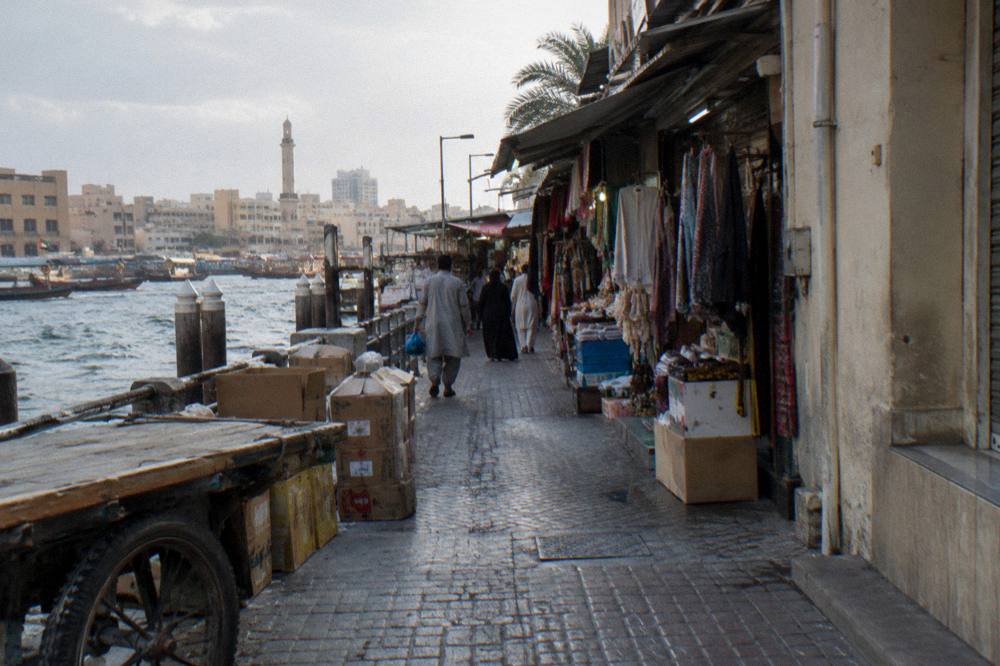
Dietary needs need a message to the operator before booking, not an assumption at the first stall. All meat in restaurants and markets is halal, and pork appears only in designated licensed sections, but vegetarian, vegan or gluten-free arrangements are only promised where a listing says so. The vegetarian and dietary needs guide covers what to ask.
Cancellation terms are the last check. Most listings on the evening side of the range allow free cancellation up to a cutoff, which matters when Dubai plans change at short notice, but the cutoff is on the booking page, not in the marketing copy.
Common Questions About Night Food Tours In Dubai
What Time Does A Night Food Tour In Dubai Start?
Evening walks typically start between 17:00 and 19:00, varying by season and listing. Winter starts near 17:00 catch the sunset around 17:30 to 17:50, while summer starts run later to avoid the heat. Check the exact start time on the booking page for your travel dates.
How Long Does An Evening Food Walk In Old Dubai Last?
The guided walks run from 2 hours for the compressed souk routes to 4 hours for the full Old Town formats. The multi-cuisine evening walk runs 3 to 4 hours, and the Burj Khalifa pairing tours run about 3 hours including the tower visit.
Is Old Dubai Safe To Walk At Night?
The heritage lanes, Al Seef promenade and souk districts are busy, well-lit walking areas in the evening, and the district is a low-risk walking environment by visitor standards. Normal city precautions apply. The Dubai Creek Lights project is adding further lighting along the waterfront through Q1 2027.
What Food Do You Eat On A Night Tour Of Old Dubai?
The listings describe tastings of shawarma, falafel, karak tea, samboosa, regag bread and luqaimat, alongside gahwa and dates on the cultural stops. Multi-cuisine walks sample across a wider set of the city's traditions in one evening.
Do Night Food Tours Include The Abra Ride?
Most Old Dubai walks include a Creek crossing by abra or local boat as part of the route between Bur Dubai and Deira. The inclusion is stated on each listing, so confirm it on the booking page for the tour you choose.
Can You Drink Alcohol On An Evening Food Walk?
Food walks through Old Dubai serve no alcohol unless a listing says so. Visitors over 21 may drink at licensed venues, and drinking in public places outside licensed venues is not allowed. The Burj Khalifa bar pairing is the format that builds a licensed drink into the evening.