Vegetarian And Dietary Needs On A Dubai Food Tour
Old Dubai runs on shawarma and karak, but the meat-free side of the city is bigger than most visitors expect. Here is what vegetarians, vegans and allergy sufferers can realistically eat on a guided food walk, and how to make sure the guide knows before the first stop.
Short answer
Vegetarians eat well in Old Dubai: falafel, hummus, luqaimat, karak chai, samosas and Emirati breakfast dishes like balaleet and chebab are all meat-free or easily made so. No tour is labelled vegetarian by default, so message the operator with your needs before booking and confirm on the day.
Old Dubai's street food scene is often described through its meat dishes: shawarma turning on a vertical spit, machboos with lamb, harees slow-cooked with chicken. That picture is accurate but incomplete. The same lanes serve falafel, hummus, fresh bread, crisp luqaimat drizzled with date syrup, and cardamom-scented karak chai, and several of those need no adaptation at all. The catch for a visitor with dietary needs is not the food itself, it is the communication: a guide who learns about a nut allergy at the third stop can do far less than one who knew at booking. This guide covers what is naturally vegetarian on a Dubai food walk, how the halal system shapes what "vegetarian" means here, and exactly how to flag allergies, vegan requirements and gluten issues so the day works.
Can Vegetarians Actually Eat Well On A Dubai Food Tour?
Yes, comfortably, with one caveat about how the food is cooked rather than what it is. Falafel, hummus, breads, luqaimat, karak chai and Emirati breakfast dishes like balaleet and chebab are meat-free staples that appear across Old Dubai. The caveat: kitchens often share griddles and fryers with meat, so strict vegetarians should ask the guide whether a separate pan is possible, and vegans should expect dairy (ghee, milk tea) in places a Western menu would mark as plant-based.
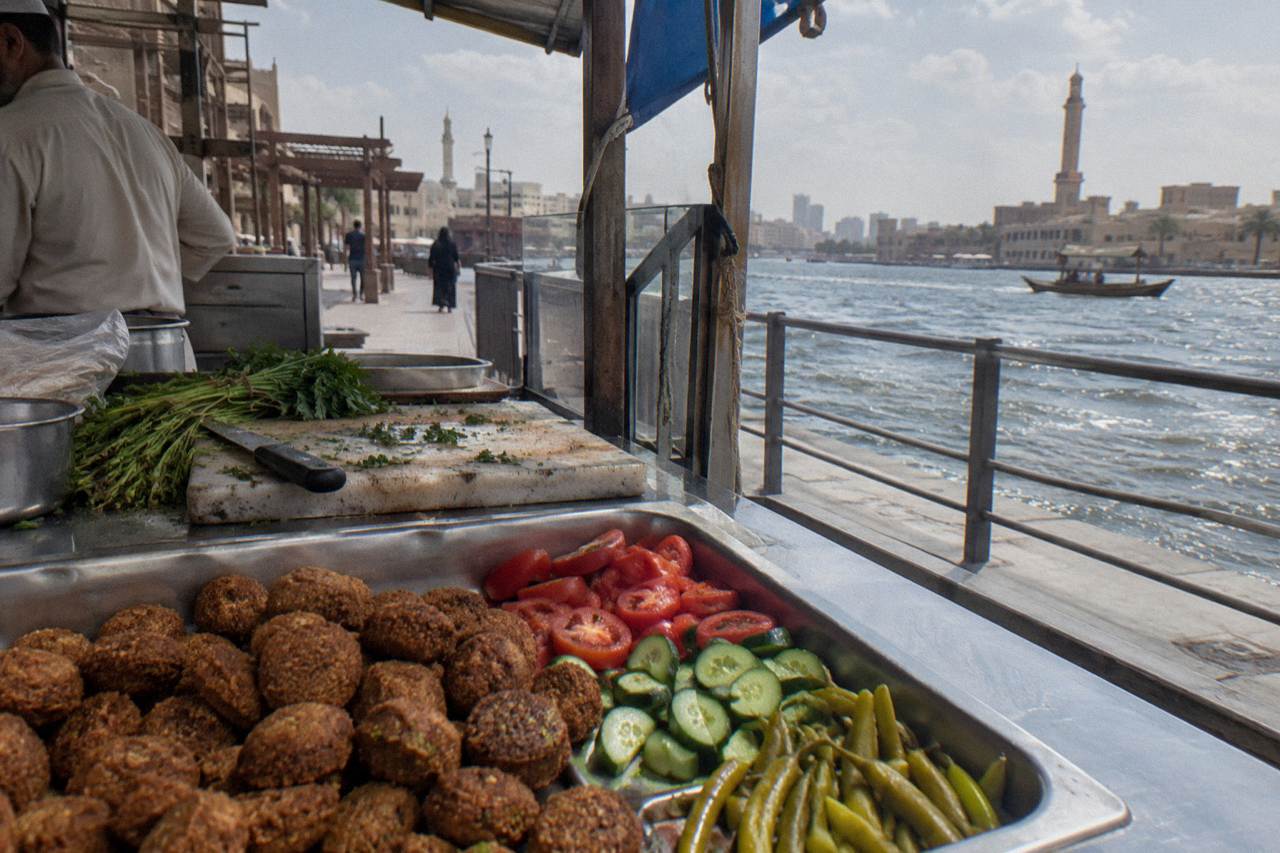
Start with what the city already does well. Falafel is everywhere in Deira and Bur Dubai, reported at roughly 1.50 to 8 AED depending on the outlet, and a falafel wrap reported at 4 to 15 AED makes a full, cheap, meat-free meal. Hummus and bread need no explanation. Samosas, called samboosa locally, are frequently vegetable-filled: potato and pea versions are the default at many stalls, reported at around 2 to 3 AED each or 10 to 12 AED for a small bag. Karak chai, the spiced milky tea that anchors Old Dubai's cafe culture, is reported at 1 to 3 AED at local cafeterias.
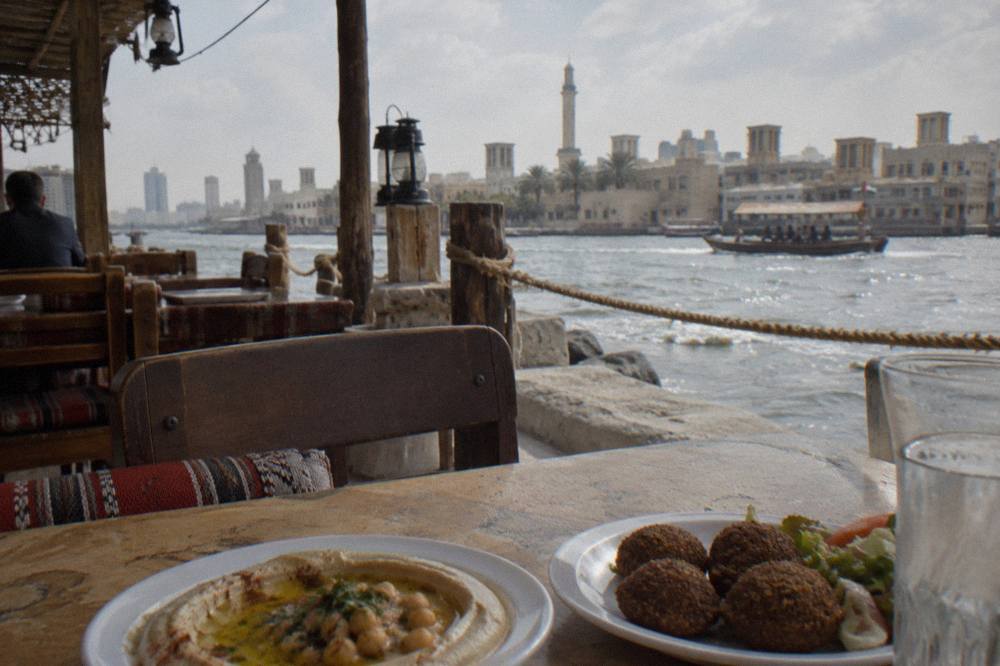
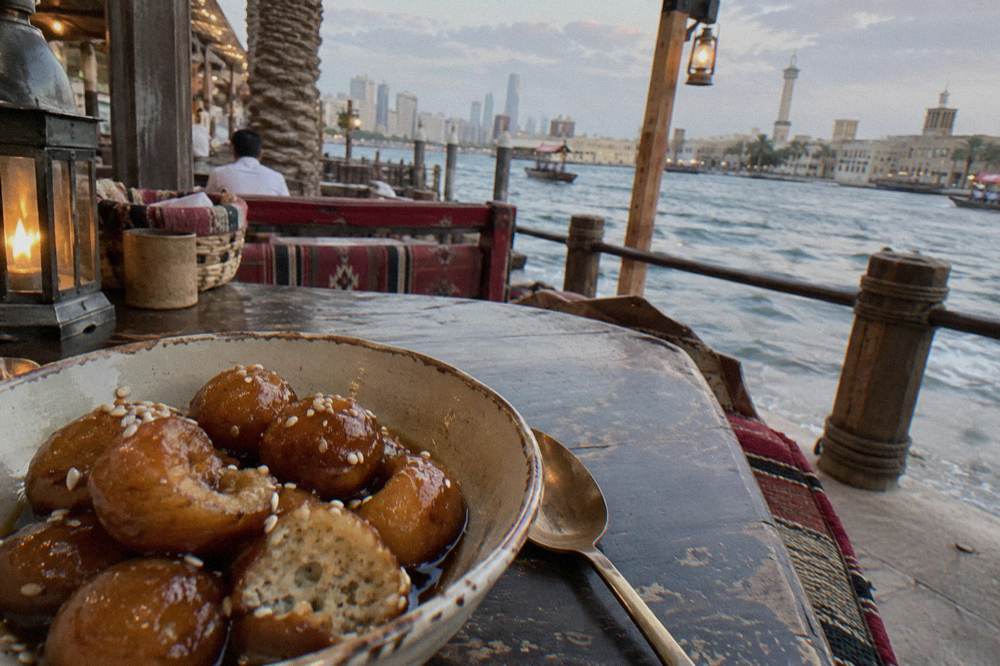
Then there is the Emirati side, which surprises people. Balaleet, sweet saffron and cardamom vermicelli topped with a thin omelette, is a classic breakfast. Chebab are saffron and turmeric pancakes usually served with cream cheese and date syrup. Luqaimat, the fried dough dumplings finished with date syrup and sesame, are vegan apart from the batter in some recipes. A fuller picture of these dishes is in the site's guide to traditional Emirati dishes, which lists what each one contains.
The honest gap is protein variety and cross-contamination. Old Dubai's cheap eats lean on meat for main courses, and a vegetarian doing the rounds independently can end up eating fried snacks all day. A guided walk fixes that by counting the tastings and steering to stops where the meat-free options are genuinely good, but only if the guide knows to do it. That is the difference between a tour that happens to suit vegetarians and one arranged for one.
Which Street Foods Are Naturally Meat-Free?
The reliably vegetarian list is short but solid: falafel, hummus, tabbouleh and mezze, fresh breads, vegetable samboosa, luqaimat, chebab, and most of the sweet course. Karak chai is vegetarian but not vegan, since it is built on milk. Dishes to check before assuming: harees and machboos are meat dishes by definition, and thareed is a meat stew, so none of the three can simply be ordered meat-free.
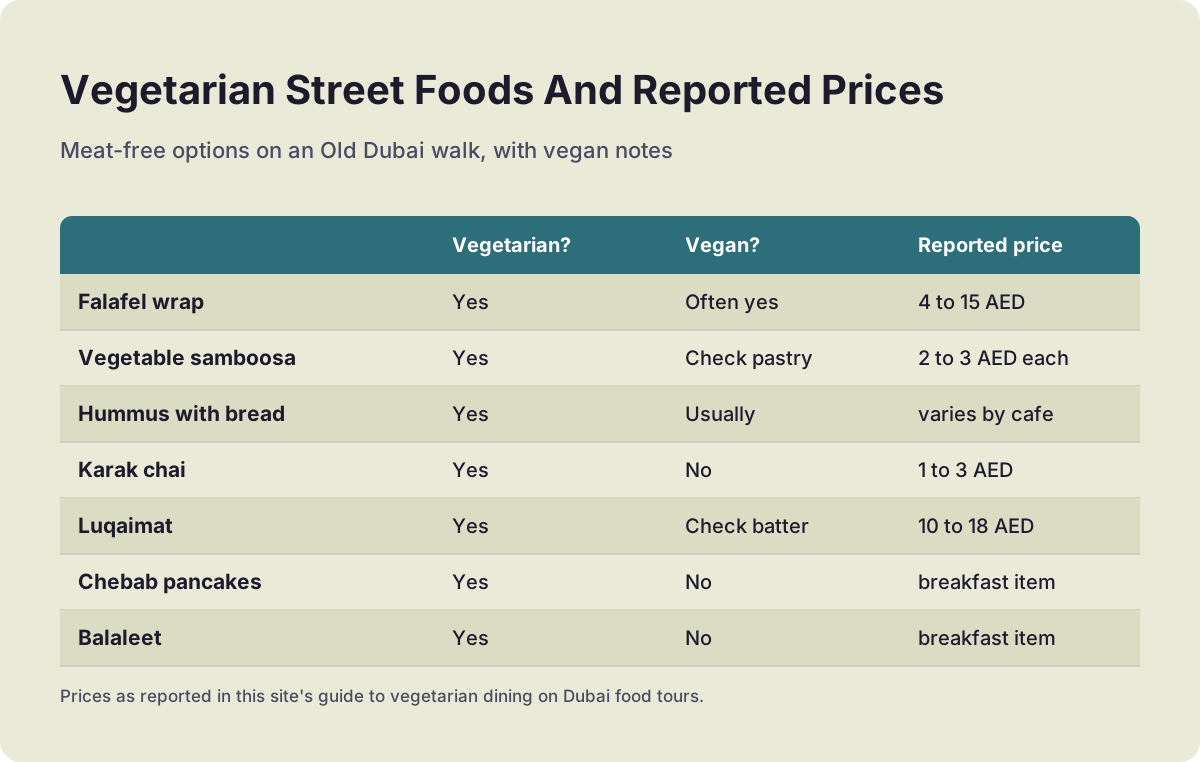
The table below is drawn from the site's research on Old Dubai eating, with prices reported in AED as local street figures, not tour prices. Treat them as planning ranges and check the stall on the day.
| Food | Vegetarian? | Vegan? | Notes | Reported local price |
|---|---|---|---|---|
| Falafel wrap | Yes | Often yes | Check yoghurt sauce | 4 to 15 AED |
| Hummus with bread | Yes | Usually | Ask about ghee on bread | varies by cafe |
| Vegetable samboosa | Yes | Check pastry | Potato and pea filling is common | 2 to 3 AED each |
| Karak chai | Yes | No | Milk-based by definition | 1 to 3 AED |
| Luqaimat | Yes | Check batter | Date syrup and sesame topping | 10 to 18 AED |
| Chebab pancakes | Yes | No | Served with cream cheese | breakfast item |
| Balaleet | Yes | No | Contains egg and ghee | breakfast item |
| Shawarma, machboos, harees | No | No | Meat-based | not applicable |
Two things help a vegetarian read an Old Dubai menu fast. First, all meat in Dubai restaurants and markets is halal by law, and pork appears only in designated licensed sections of hotel restaurants and supermarkets, so you will not encounter pork by accident; the trade-off is that "no pork" tells you nothing about whether a dish is vegetarian. Second, the Emirati breakfast set is your friend. The site's first-timer eating list covers how these breakfast dishes are served together, and a table built around balaleet, chebab, dates and Arabic coffee is meat-free by default rather than by request.
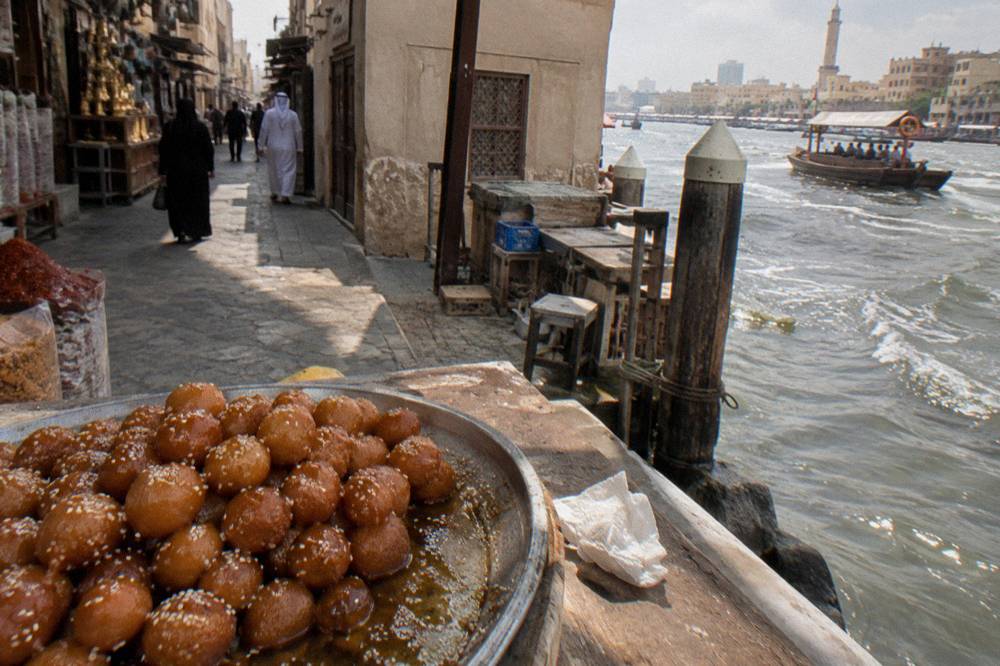
Arabic coffee, gahwa, is worth knowing about for its own sake: it is lightly spiced with cardamom, unsweetened, and served in small finjan cups with dates. It is vegan by default. The etiquette matters too. The site's coffee, karak and dates guide covers the full ritual, but the short version: receive the cup with the right hand, and shake the empty cup gently side to side when you have had enough, or your host will keep refilling.
For readers who want a guided version of exactly this territory, three Old Dubai walks fit a vegetarian brief well, and all three can be messaged ahead through the operator's booking page.
How Do You Flag Allergies And Dietary Needs Before You Book?
Message the operator at booking time, not on the day, and be specific: "vegetarian" is easier to serve than "no meat, no fish sauce, no nuts", but the second sentence is the one that prevents a hospital visit. State every allergy separately, name the severity, and ask what the operator can actually change. If the answer is vague, treat that as your answer and pick a different walk.
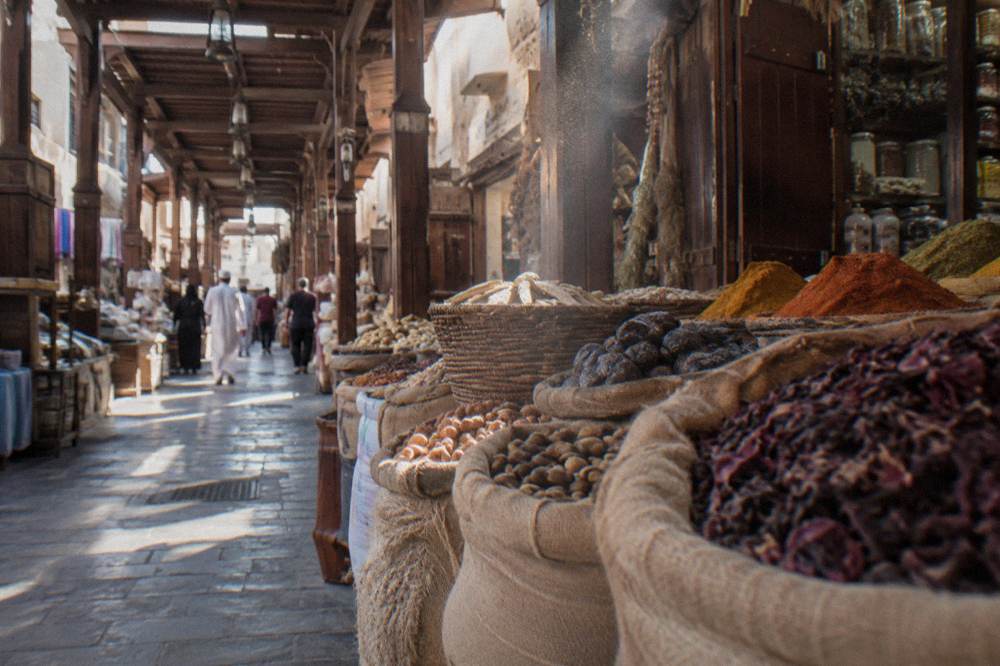
Operators report that they can usually swap a tasting, add a vegetarian stop or drop a dish, but no operator can remove nuts from a souk. The Spice Souk in Deira sells open sacks of nuts and spices, and the air carries the dust of both. A severe airborne nut or spice allergy is a reason to think carefully about any souk-based walk, whatever the kitchen arrangements. Sesame deserves a special warning here: it is in luqaimat toppings, in many breads, and in tahini, which runs through hummus and mezze. Dubai Food Tours keeps a wider discussion of the practical side of booking in its how to choose between food walks guide, including what to ask before paying.
A useful checklist before you pay:
| What to send | Why it matters | When |
|---|---|---|
| Every allergy, named and ranked by severity | Guides prioritise life-threatening items | At booking |
| Vegetarian or vegan, stated separately | Vegan rules out ghee, dairy-based karak, egg in balaleet | At booking |
| Gluten sensitivity versus coeliac disease | Cross-contamination handling differs | At booking |
| Whether you carry an adrenaline auto-injector | Guides plan stop order and pace | At booking |
| A same-day reminder at the meeting point | Staff change; guides forget | On the day |
One structural point in your favour: no listing on this site is described as vegetarian, vegan, gluten-free or kosher unless the tour details say so, and where they do not, the absence of a label is not a promise either way. It means the question is open and the operator has to answer it. Ask, in writing, through the booking page. The Local Street Food and Guided Walking Tour of Dubai Old Town is a good example of a walk to message first: it covers the classic Old Town route and the tastings are the kind that can be adjusted when the guide knows in advance.
What Do Vegan, Gluten-Free And Halal Mean In A Dubai Context?
Vegan in Dubai means watching for ghee, milk tea, egg and honey in dishes that look plant-based; gluten-free means bread is unavoidable at most stops, so the conversation is about what replaces it; halal is universal for meat and is not a dietary restriction you need to request. Kosher is the one label with almost no provision outside a handful of hotel outlets, and none of the walks here are described as kosher.
Take vegan first, because it is the label with the widest gap between appearance and reality. Luqaimat batter varies; some recipes use only flour, yeast and date syrup, others use yoghurt. Karak chai is milk tea, full stop, though black tea and gahwa are always available. Ghee turns up in breads and in dishes you would not suspect. The reliable vegan core of Old Dubai is falafel (ask for it without yoghurt sauce), hummus (ask about the bread), fresh vegetable mezze, dates and gahwa. That is a genuinely good lunch, just not an automatic one. Other pages covering the same trip are gathered on Dubai Food Tours.
Gluten-free is harder than vegan here. Bread is the delivery vehicle for half the street food: every wrap, most mezze service, chebab and balaleet are wheat-based. A guide can often substitute rice-based dishes or grilled items, and Emirati mains like machboos are rice-first, though they are meat dishes. Coeliac travellers should say the word "coeliac" rather than "gluten-free", because the second is often read as a preference, and should expect to skip more stops than a vegetarian would.
Halal needs no action from you. Federal rules mean all meat sold and served in restaurants and markets follows halal requirements, and pork appears only in clearly labelled, physically separated sections of licensed venues. For a Muslim traveller this is the default state of the city; for everyone else it simply means the pork question is already answered. The site's halal food guide goes deeper on what the certification system does and does not cover.
| Dietary label | Realistic on an Old Dubai walk | Main watch-outs |
|---|---|---|
| Vegetarian | Very workable | Shared fryers, meat-based mains |
| Vegan | Workable with notice | Ghee, milk in karak, egg, honey |
| Gluten-free | Partial | Bread at most stops; say "coeliac" |
| Nut allergy | Partial, plan carefully | Open nut sacks in souks, sesame everywhere |
| Sesame allergy | Hard | Tahini, luqaimat topping, breads |
| Kosher | Not provided on these walks | Check hotel outlets independently |
| Halal | Automatic city-wide | Nothing to request |
What Else Shapes The Day: Dress, Ramadan And Alcohol?
Cover shoulders and knees in souks and heritage areas, expect dining to operate normally during Ramadan with etiquette suggesting discretion outdoors in daylight hours, and expect no alcohol on these walks: Old Dubai food tours are food tours, and licensed venues are a separate evening. All three points are cultural context rather than obstacles, and none of them changes the dietary planning above.
Dress first, because it is the one you control at the hotel. There is no single dress-code law aimed at tourists, but shoulders and knees covered is the reported expectation in heritage districts, souks and malls, and it draws less attention in traditional areas. The site's dress code guide for walking tours covers seasonal variations. For a food walk the practical version is simple: you will be standing, walking between neighbourhoods and sitting at small cafe tables, so loose clothing beats fitted, and comfortable shoes matter more than anything in the wardrobe debate.
Ramadan is the one that worries people unnecessarily. Non-Muslims are not required to fast, and restaurants and dining establishments operate as normal, per the official Dubai guidance at dubai.ae. The etiquette advice is discretion: eating and drinking outdoors in shared public spaces during daylight fasting hours is legal but best done quietly. Ramadan 2026 ran roughly from 18 February to 19 March, so a walk in the November-to-March peak season falls outside it; exact 2027 dates follow lunar sighting and are not published far ahead. The site's Ramadan food tours guide covers the full picture.
Alcohol is a non-issue on these walks because it is not part of them. Visitors over 21 may drink at licensed venues, hotels, restaurants and lounges, and alcohol is not allowed in public places outside licensed venues, as the official visitor FAQ at Visit Dubai states. None of the Old Dubai walks described here serve alcohol unless the tour details say so. If an evening drink is part of your plan, it is a separate booking in a licensed venue, not something the guide will produce mid-walk.
Tipping closes the money etiquette. There are no set rules; restaurants commonly add a service charge of up to about 10 per cent, and an additional 5 to 10 per cent cash tip for good service is common but voluntary. Visit Dubai's own guidance at its tipping guide suggests 10 to 15 per cent in restaurants and AED 5 to 10 in cafes. For a food walk, tipping the guide is the same personal-preference question.
Which Tours Work Best When You Have Dietary Requests?
The best picks are the standard Old Town street food routes, because their stops are modular: a guide can trade a shawarma stand for a falafel counter without disrupting the route. Three solid options are the three-hour Local Street Food and Guided Walking Tour of Dubai Old Town, the Old Town, Souks, Street Food and Abra Ride walk, and the Al Fahidi Old Town walk with the abra cruise, each bookable with a message through the tour page.
The reason format matters more than brand here is simple. A fixed-menu cultural meal can accommodate a vegetarian only if the kitchen cooks a separate plate. A street food walk buys from multiple vendors, so a substitution costs the guide one conversation. Between group and private formats, a private walk gives the guide the most freedom, and the site's private versus group tour comparison weighs the price difference; the short version is that private makes sense when the dietary need is severe or the group is mixed.
For allergy severity, the honest ranking is not about tours at all but about exposure. A mild intolerance is a menu question. A severe nut or sesame allergy is an environment question, and the souks themselves, not the food stops, are the exposure. Nobody should book a Spice Souk walk with an airborne nut allergy and hope for the best. Say the severity in your booking message and let the operator say no if no is the truthful answer; an operator who answers honestly is doing you a favour.
Timing helps too. Winter months, December to February, bring the lowest average daytime highs, around 24 to 26 °C per the compiled weather normals, which matters for anyone whose dietary need also involves carrying medication or pacing the day gently. The site's best time to visit guide covers the seasonal trade-offs in full.
Common Questions About Vegetarian Food In Dubai
Is Dubai Good For Vegetarians?
Yes, especially in Old Dubai. Falafel, hummus, mezze, vegetable samboosa, luqaimat and Emirati breakfast dishes like balaleet and chebab are everyday items, not special requests. The gaps are protein variety and shared cooking surfaces, which a guided walk manages better than independent grazing.
Do I Need To Tell The Tour Operator About My Diet Before Booking?
Yes. Message through the booking page at booking time with every allergy named and ranked by severity, then repeat it at the meeting point on the day. Guides can swap tastings and adjust stop order when they know in advance; they cannot reorganise a route discovered mid-walk.
Can Vegans Join A Dubai Food Tour?
Usually, with notice. The watch-outs are ghee in breads, milk in karak chai, egg in balaleet and honey in some sweets. Falafel, hummus, vegetable mezze, dates and gahwa form a reliable vegan core, but the guide needs to know the word "vegan", not just "vegetarian".
Is All Food In Dubai Halal?
Effectively yes for meat served in restaurants and markets, which follow halal requirements by law. Pork appears only in designated, labelled sections of licensed venues. Halal is the default state of the city, not something you request.
What About Gluten-Free Eating On A Food Walk?
It is the hardest common requirement. Bread carries half the street food, so say "coeliac" if that is the situation, expect to skip more stops than a vegetarian would, and ask the operator what substitutions are realistic before paying.
Are There Vegetarian Emirati Dishes Worth Trying?
Several. Balaleet, chebab pancakes, luqaimat, regag bread with cheese, and the dates-and-gahwa course are all part of traditional Emirati breakfast and dessert repertoires. Machboos, harees and thareed are meat dishes by definition and cannot be ordered meat-free.