What Is Dubai's Most Famous Food?
The dishes Dubai is actually known for, from shawarma and karak to machboos and luqaimat, where they came from, what they cost, and how a tasting walk fits them into one evening.
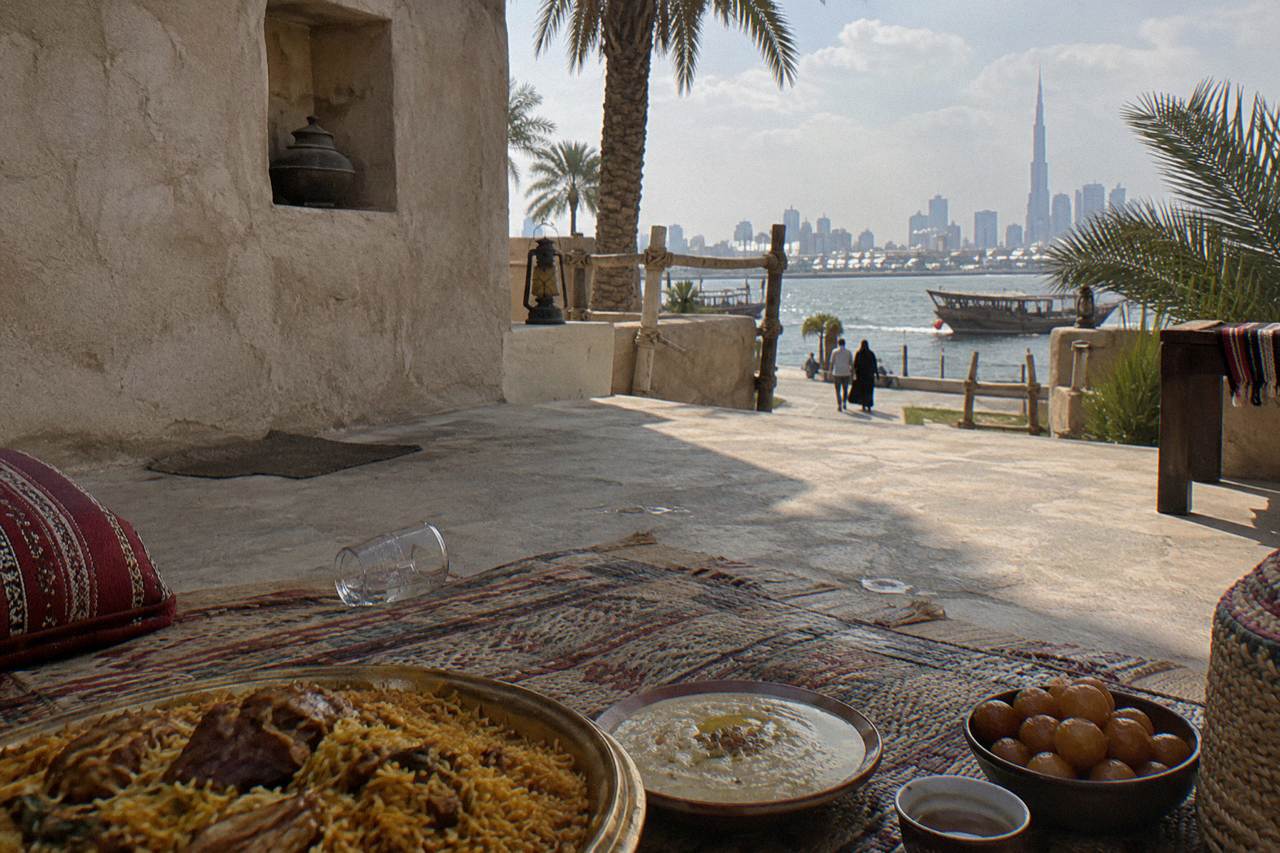
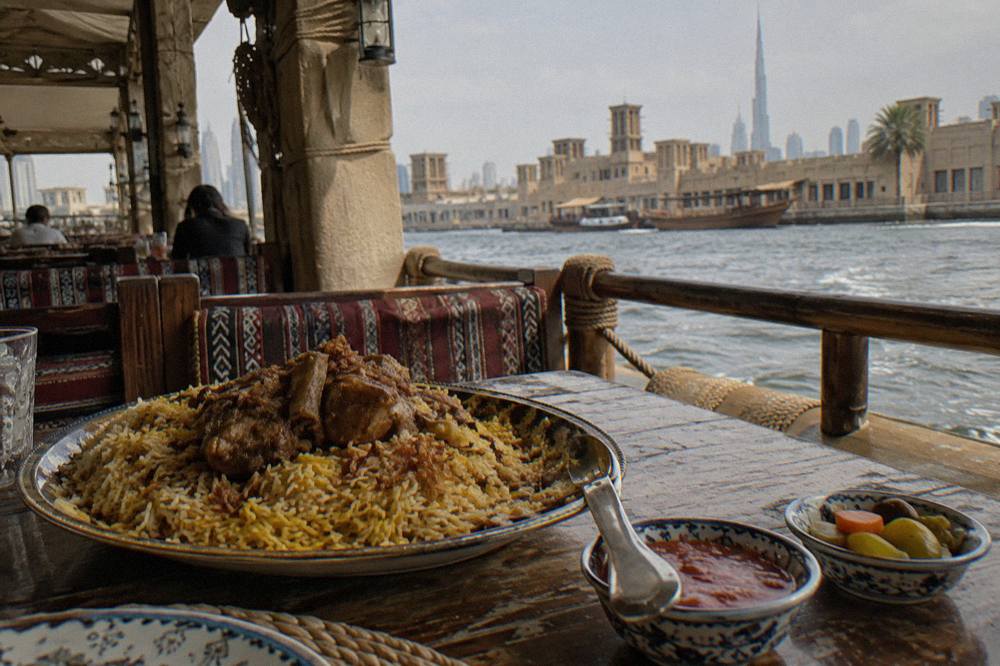
There is no single dish, but the strongest candidates are shawarma, karak chai and luqaimat on the street side, and machboos, harees and balaleet at the Emirati table. Machboos is widely described as the UAE's national dish, a spiced rice platter slow-cooked with lamb, chicken or fish, dried limes and saffron. If one plate carries Dubai's food identity, that is the one, with shawarma as the everyday street answer. To see how these dishes fit into everyday eating across the country, the guide to food across the UAE explains what each one is and what it typically costs.
That split, national dish versus street favourite, is the real shape of the question. Dubai's food fame runs on two tracks. The first is the street food of Deira and Bur Dubai: shawarma carved off a vertical spit, falafel wrapped in flatbread, karak chai from a cafeteria hatch, samosas fried by the bag. These are the foods the city's workers and residents actually eat every day, and they are the foods most visitors taste first because they are everywhere and they cost a few dirhams.
The second track is older and less visible. Emirati cooking, the food of the country's own households, centres on machboos, harees, thareed and balaleet, dishes built around rice, wheat, dried limes, cardamom and ghee. It is harder to find by accident because most of it is cooked at home or served in a small number of heritage restaurants and cultural venues. A visitor who eats only along the main tourist strips can miss it entirely, which is a fair part of why shawarma and karak, not machboos, are what Dubai is "famous" for abroad. For a shortlist of the traditional dishes actually worth hunting down, from machboos to luqaimat, the guide to Dubai's must-eat foods maps out where to try each one.
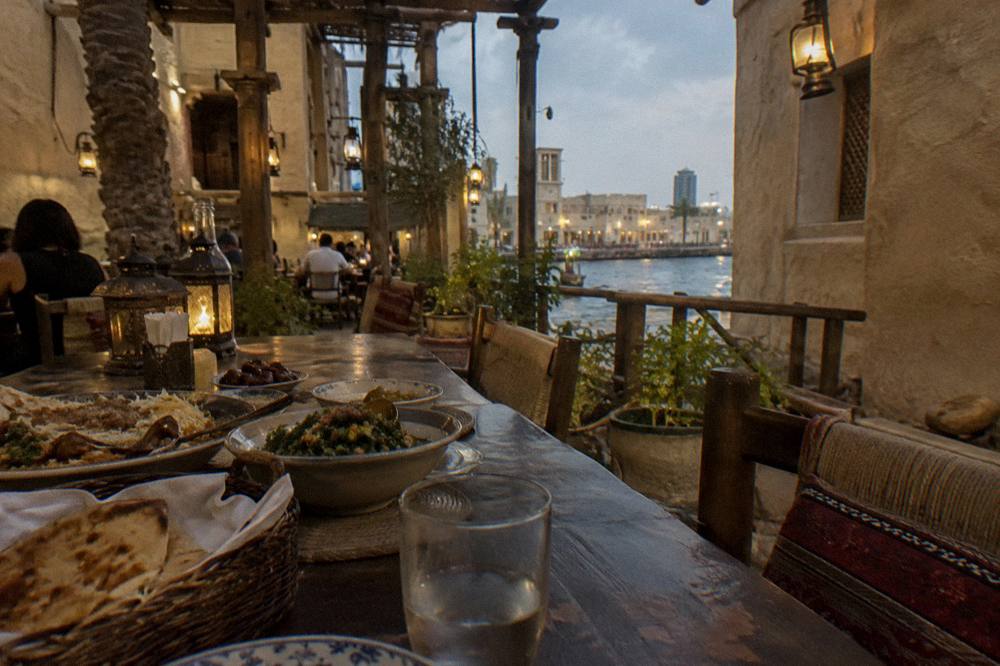
Both tracks are worth planning around. The street foods are cheap and immediate; the Emirati dishes take a little more effort to reach but they are the ones that exist nowhere else in the same form. A tasting walk that covers both, such as the Flavors of Arabia souk walk with an Emirati meal, is one way to compress the whole answer into a single evening, and its price and current rating are on the operator's listing. If you're curious which single dining spot carries the city's biggest reputation, the guide to Dubai's most famous restaurant explains why fame in this city works differently than you might expect.
Which Emirati Dishes Carry Dubai's Food Identity?
Machboos leads the Emirati list: long-grain rice slow-cooked with lamb, chicken or fish, dried limes, baharat spices, cardamom, saffron and cinnamon, served family-style on a shared platter. Harees follows close behind, wheat and meat cooked for six to eight hours until it turns smooth and porridge-like, finished with ghee. Both are gathering dishes, the kind cooked for families rather than ordered alone.
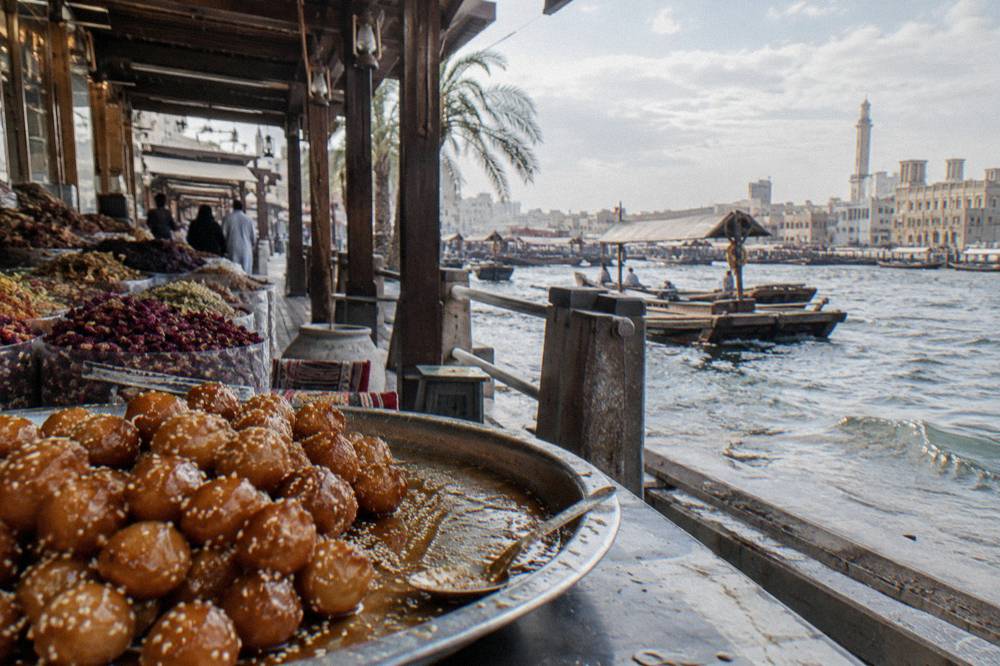
Balaleet is the breakfast answer, sweet saffron and cardamom vermicelli topped with a thin omelette, a sweet-savoury combination that surprises visitors on first bite. Chebab pancakes, flavoured with saffron, cardamom and turmeric and eaten with cream cheese and date syrup, sit on the same table. Madrouba, a thick spiced salted-fish porridge, and thareed, a meat and vegetable stew ladled over thin regag bread so the broth soaks in, round out the savoury side. Luqaimat closes the meal: crisp fried dumplings drizzled with date syrup and sesame, eaten warm and immediately, because they lose their crunch as they sit.
None of this is museum food. Harees is still the comfort dish of Ramadan gatherings, and thareed is served through the holy month for the same reason, it feeds a table cheaply and well. The dried lime, loomi, is the flavour that separates Emirati rice dishes from their neighbours: it gives machboos a sour depth that no substitute quite matches. Sources including the Arab Today's traditional foods of the UAE roundup describe machboos as the national dish in those terms (The Arab Today), and the UAE interact culture pages cover harees and thareed the same way (UAE Interact).
Where to taste them is the practical question. A few heritage restaurants in Deira serve machboos and harees in traditional settings, with reported mains prices around AED 42 for harees and roughly AED 58 to 65 for machboos, figures reported by local dining guides and worth checking at the door. The Sheikh Mohammed Centre for Cultural Understanding in the Al Fahidi Historical Neighbourhood takes a different route: seated cultural meals with Emirati hosts, questions answered over Arabic coffee and dates, with reported prices of AED 130 for breakfast through AED 160 for dinner and booking required. A third route is a guided walk that ends at an Emirati table, which is exactly what the Flavors of Arabia tour does after the souks.
What Are The Street Foods Dubai Is Known For?
Shawarma is the city's default street food, reported at 8 to 15 AED at local spots and 20 to 40 AED at tourist-facing ones. Karak chai, spiced milky tea, costs a reported 1 to 3 AED at cafeteria stalls. Falafel wraps run a reported 4 to 15 AED, samosas 2 to 3 AED each or 10 to 12 AED a bag, and luqaimat 10 to 18 AED. Together they are the everyday food of Deira and Bur Dubai.
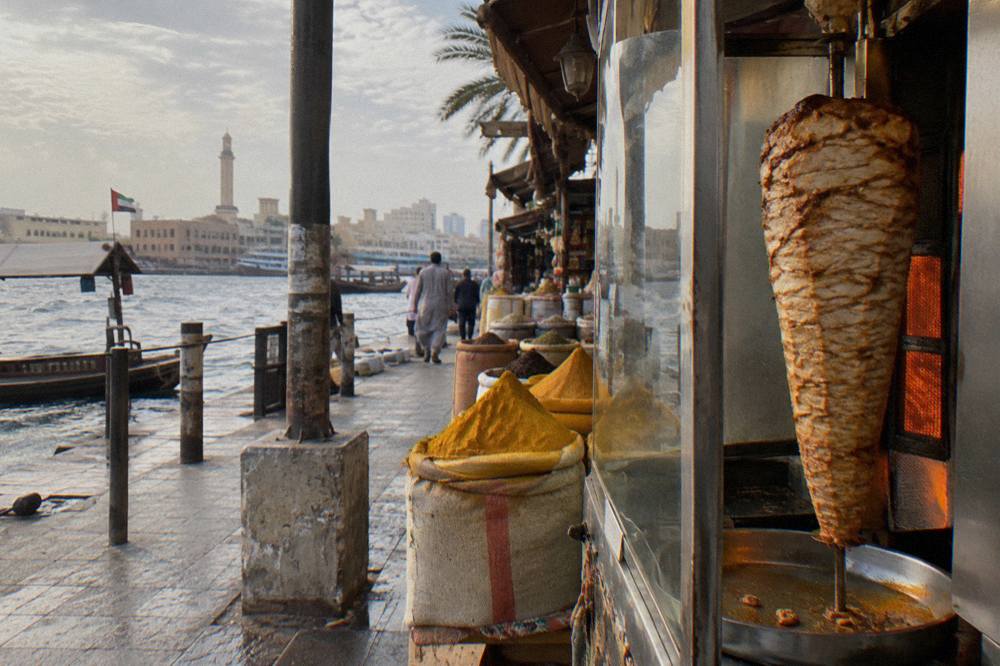
The shawarma is the one to start with if you only try one. It arrived with the Levantine and wider Middle Eastern workforce that built and runs the city, and it stayed because it works: chicken or lamb carved to order, wrapped with pickles, garlic sauce or fries, cheap enough to be lunch any day of the week. A chicken shawarma wrap runs a reported 12 to 18 AED at established spots, with a well-known example around 17 AED, so the range is real rather than theoretical.
Karak is the drink that goes with it. The spiced milky tea came with the South Asian community and became so thoroughly Dubai's own that it now shares a table with Emirati breakfast dishes. At 1 to 3 AED from a cafeteria it is the cheapest thing you will eat in the city, and the cafe versions cost more, one reported example at 14 AED, for a slower setting. Falafel, samosas and luqaimat fill the gaps between meals, and all of them appear on Old Dubai food walks because they are what the lanes actually smell of. For a fuller picture of what Emiratis and long-time residents actually put on the table, the guide to the famous food locals in Dubai order covers machboos, harees and where to track them down in Old Dubai.
“It was a personal tour with Orlina. Very special and great to have her all to ourselves. Orlina’s knowledge of Dubai and UAE history was great. She answered every question. Was great to learn and see loads about how Dubai has grown. Excellent trip round many key areas and the food tasting was brilliant addition. Lovely food and restaurants. Would highly recommend Orlina. She made us feel special.”
The honest caveat is that none of these are uniquely Emirati. Shawarma, falafel and falafel-adjacent wraps travel the whole region; karak travels with South Asia. What makes them Dubai's famous food is scale and mixing: a single block in Deira can hold an Iranian bakery, an Afghan kebab counter, a Pakistani cafeteria and a Lebanese sandwich shop, all serving overlapping crowds at overlapping prices. That mix, more than any one dish, is the food the city is known for. Our Dubai street food guide breaks the dishes down by neighbourhood, and the shawarma ordering guide covers how to order one properly.
A guided route that strings these stops together is the Old Town, Souks and Street Food walk with an abra ride, a 3 to 4 hour circuit through the old quarters that lists street food tastings among its inclusions. Its price and rating are on the operator's listing, and it suits a first visit better than self-guiding, because the good stalls are not always the obvious ones.
Where Did Dubai's Famous Dishes Come From?
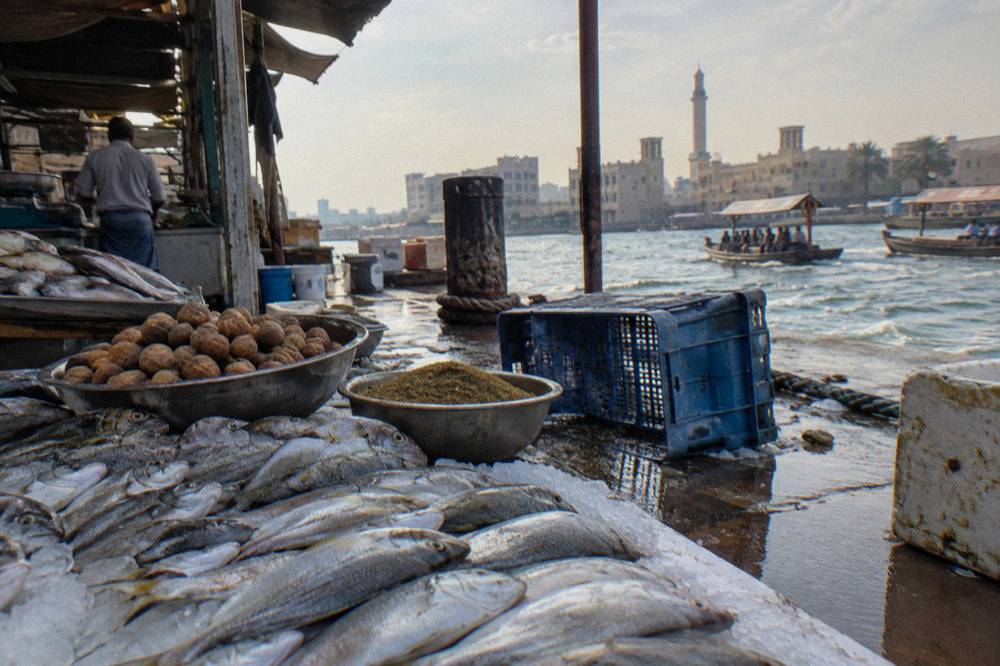
Emirati cooking grew from a coastal trading and pearl-diving economy: rice and spices arrived by dhow from India and Persia, dates and dried limes came from the Gulf's own agriculture, and fish and salted products from the Creek. Machboos, harees and balaleet all show that trade geography on the plate, rice plus Gulf protein plus Indian Ocean spice. The street foods arrived later with the workforce that built the modern city.
That trade story explains the flavour profile. Cardamom, saffron, cinnamon and baharat blends are imports that Emirati kitchens absorbed centuries ago and made their own, the same way dried loomi limes came from the region's orchards. Harees, wheat slow-cooked with meat until it collapses, appears across the Gulf and wider region in cousins, but the ghee finish and the six to eight hour cooking time are the Emirati signature. Balaleet's sweet noodles under a savoury egg is a Persian-rooted idea that Emirati breakfast tables made standard. The full index of guides sits on Dubai Food Tours.
Dates belong in this story too, because they are the one ingredient that is fully local. The UAE grows roughly 150 varieties, with the fresh rutab harvest peaking through summer and reported festival prices from around AED 15 per kilogram, and dried dates available all year. Gahwa, lightly spiced unsweetened Arabic coffee, is served with them, and the etiquette is worth knowing before you accept a cup: receive it in the right hand, and when you have had enough, tilt the empty cup gently side to side rather than saying so.
The street layer is much younger. Shawarma, falafel and karak arrived with the workers from the Levant, South Asia and beyond who built the modern skyline, and they settled into the cafeterias and stalls of Deira and Bur Dubai first. So when someone asks the famous food question, the era matters: the older answer is machboos and dates, the newer answer is karak and shawarma, and the city serves both at once.
How Much Does Eating Dubai's Famous Food Cost?
Street eating is cheap and reported: shawarma 8 to 15 AED at local spots, falafel wraps 4 to 15 AED, karak 1 to 3 AED, samosas 2 to 3 AED each. A casual Emirati or neighbourhood cafeteria meal runs a reported 15 to 40 AED per person. Mid-range restaurant meals cost around 80 to 150 AED per person, with restaurant bills commonly adding 5% VAT and often a service charge of up to 10%.
The gap between those tiers is the useful thing to understand. You can eat the famous street foods for the price of a metro ride, but the Emirati dishes are harder to find at the bottom tier because they are slow-cooked and served in fewer places. Harees reported at around AED 42 and machboos at roughly AED 58 to 65 in Deira heritage restaurants is still reasonable, but it is a sit-down price, not a stall price.
| Tier | What you eat | Reported cost per person |
|---|---|---|
| Street stall | Shawarma, falafel wrap, karak, samosa | 1 to 18 AED per item |
| Casual cafeteria | Biryani, mezze sets, neighbourhood meals | 15 to 40 AED |
| Heritage Emirati restaurant | Machboos, harees, thareed, luqaimat | Around 42 to 65 AED per main |
| Cultural meal venue | Seated Emirati meal with host and Q&A | 130 to 160 AED, booking required |
| Mid-range restaurant | Full service, mains often 40 to 80 AED | 80 to 150 AED |
Two bill details catch visitors. Restaurants commonly add a service charge of up to 10%, which is retained by the venue rather than being a government fee, and 5% VAT applies to food and beverage. Tipping on top is voluntary and common, with the Visit Dubai guidance suggesting 10 to 15 per cent in restaurants if the service merits it. None of these figures are promises; they are reported 2026 planning ranges, and individual venues vary, so treat them as orientation rather than quotation.
Guided eating sits on top of all this and is priced per person on the listings. A private street food format such as the private Dubai street food tour, a 4 hour walk, costs more than a group walk but buys a route built around your pace and dietary questions; its current price is on the operator's listing. Whether that is worth it depends on how much of the above you want explained rather than just eaten.
How Do You Actually Taste All Of This In One Trip?
Pick one street-food evening in Deira or Bur Dubai for shawarma, karak and luqaimat, one seated Emirati meal for machboos, harees and balaleet, and a souk walk in between for dates, gahwa and the spice trade context. Two guided formats cover the same ground faster: a street food walk through the old quarters, or an Emirati cultural meal with a host. A three-stop plan across two days is realistic for most trips. For the sweet side of the itinerary, the Dubai chocolate and sweet treats guide covers where luqaimat, fresh dates and karak chai fit into an Old Dubai food walk.
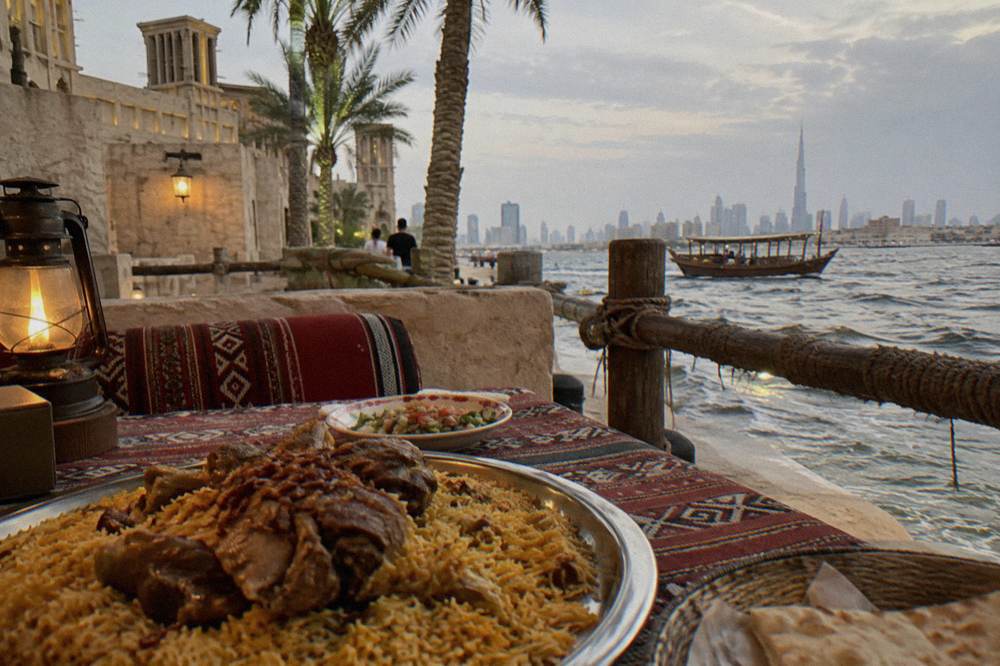
The geography helps. The street foods, the heritage restaurants and the cultural meal venues all sit within a short walk of the Creek, in Deira on one side and Bur Dubai on the other, and the Green Line metro stations of Al Ras, Baniyas Square and Sharaf DG serve the area. Winter is the comfortable season for this kind of walking, with December to February mean daily highs of 24 to 26 C, and winter sunset falls around 17:30 to 17:50, so an afternoon walk turns into an evening meal without planning.
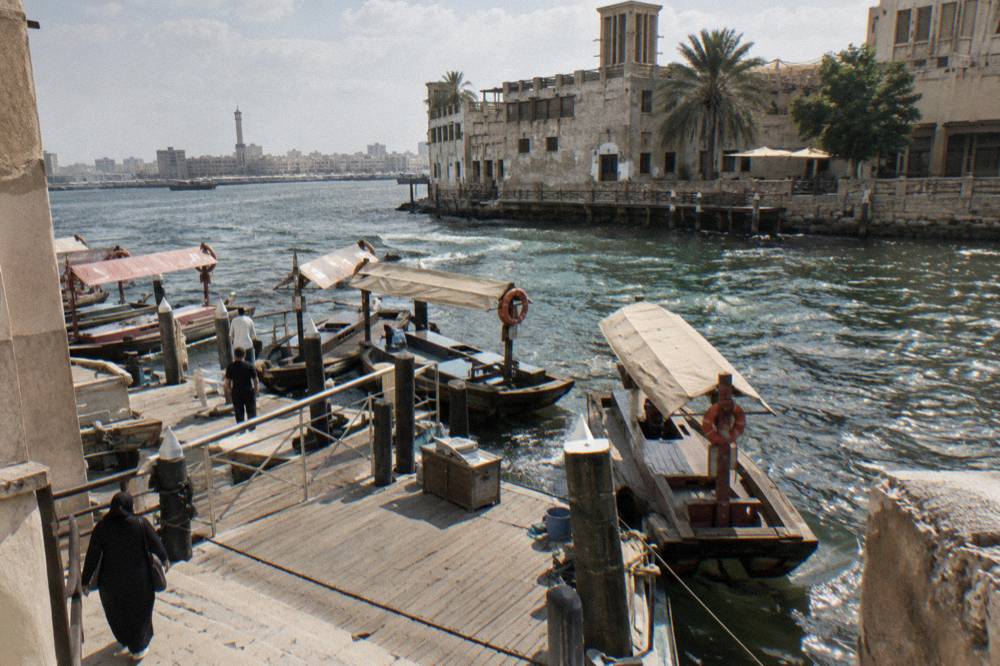
If you self-guide, the order matters less than the pairing: karak with breakfast, shawarma or falafel at lunch, a machboos or harees dinner, luqaimat whenever you pass a fryer. If you would rather have the context delivered, the guided formats do the sorting for you. The Flavors of Arabia walk covers the souks and then sits you down at an authentic Emirati meal, about two and a half hours end to end, and its meeting point and inclusions are listed on the booking page. The Old Town street food walks add an abra crossing of the Creek, which is half transport and half the best two minutes of the day. For a fuller picture of how those dishes stack into a complete eating day, the typical meal in Dubai breakdown covers prices and portion expectations from morning to night.
“We were fortunate enough to be the only couple on the tour. Our guide for the day was Malick and he was brilliant.”
One practical note on the meal side: all meat served in Dubai's restaurants and markets is halal, and pork appears only in designated licensed sections, so the dishes above are all cooked to that standard. Dietary needs beyond that, vegetarian, gluten-free or anything else, should go to the operator before booking, because a listing that does not mention an accommodation is not a promise of one. The dietary needs guide covers what to ask and when.
Does A Guided Tour Help You Answer The Famous Food Question?
A guided walk answers it in one evening where independent eating takes days of trial and error. The guide names the dishes in Arabic, orders at stalls with no English menus, explains what loomi and baharat are when you taste them, and ends the night at a table serving machboos or harees. The trade-off is cost per person against hours saved, and for most first-time visitors the tour is the faster route.
The failure mode of independent eating in Dubai is not bad food, it is safe food. The famous dishes sit behind small language gaps and unfamiliar counters, and the default for a hesitant visitor is the tourist-facing stall at double the price. A guide removes that friction. The formats compared on this site range from 2 to 4 hour walks, group and private, with the private options priced per listing and the group walks per person; every price and rating is on the operator's listing rather than restated here, because per-person from-prices move with date and group size.
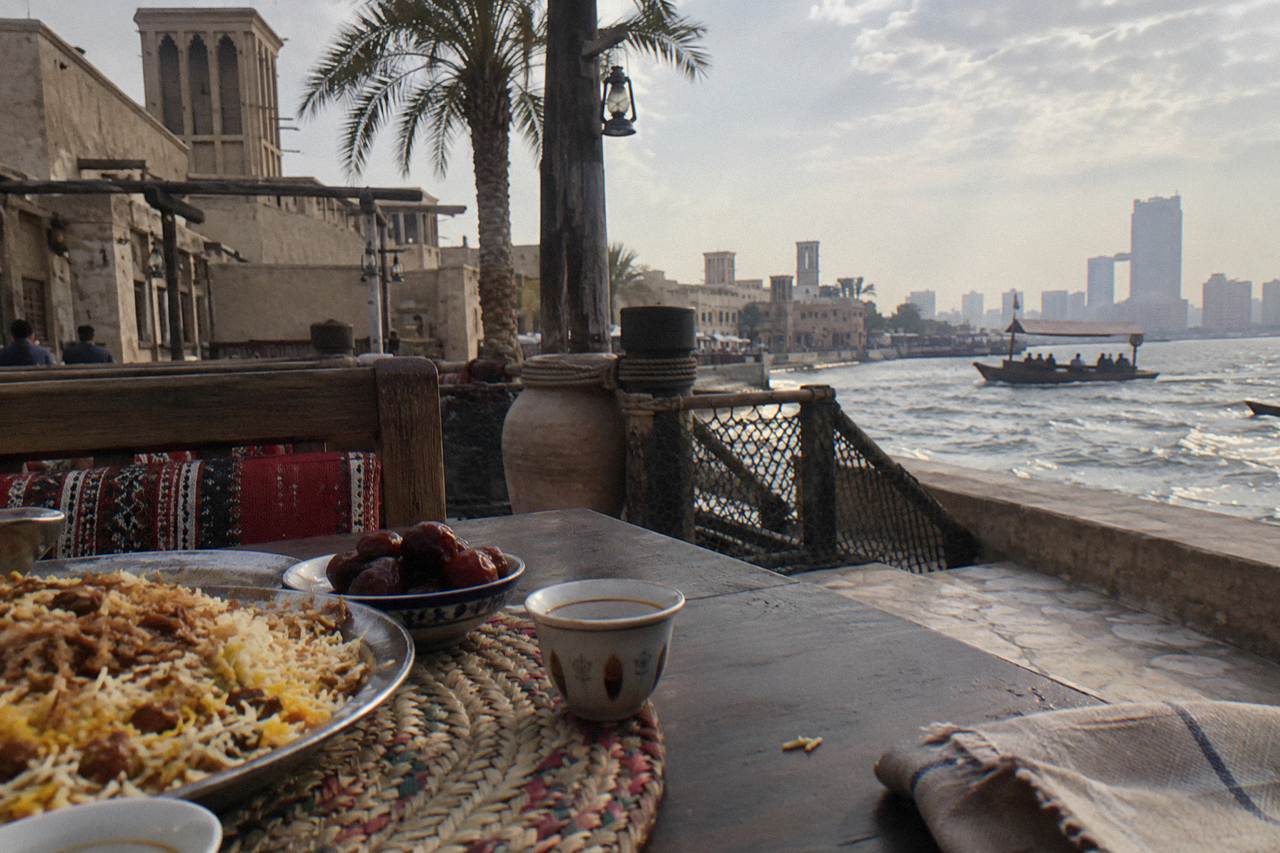
Choosing between them is mostly choosing between street and table. If shawarma, karak and the souk lanes are the priority, a street food walk through Old Dubai is the fit. If machboos, harees and balaleet are the reason you asked the question in the first place, an Emirati cultural meal or a walk that ends at one, like the Flavors of Arabia format, is the better spend. The how to choose between food walks guide lays the decision out by budget and appetite, and the cost guide covers what drives the price differences.
Whatever you book, read the cancellation terms on the booking page before you commit, because free-cancellation windows vary by tour and date, and the cheapest listing is not always the most flexible one.
Common Questions About Dubai's Most Famous Food
What Is Dubai's Most Famous Food?
There is no single dish, but the strongest candidates are shawarma, karak chai and luqaimat on the street side, and machboos, harees and balaleet at the Emirati table. Machboos is widely described as the UAE's national dish, so if one plate carries Dubai's food identity, that is the one.
Is Shawarma Actually Emirati Food?
No, shawarma arrived with the Levantine workforce and became Dubai's everyday street food through scale and mixing. Emirati cooking proper centres on machboos, harees, thareed and balaleet, which is why a full answer to the famous food question needs both a street stall and a seated Emirati table.
How Much Does Dubai's Famous Street Food Cost?
Reported 2026 prices: shawarma 8 to 15 AED at local spots, falafel wraps 4 to 15 AED, karak chai 1 to 3 AED, samosas 2 to 3 AED each, luqaimat 10 to 18 AED. Individual stalls vary, so treat these as planning ranges and check at the counter.
Where Can I Try Machboos And Harees In Dubai?
Heritage restaurants in Deira serve both, with reported mains prices around AED 42 for harees and roughly AED 58 to 65 for machboos. The Sheikh Mohammed Centre for Cultural Understanding in Al Fahidi offers seated cultural meals with Emirati hosts, reported at AED 130 to 160 with booking required.
Can A Food Tour Cover Both Street Food And Emirati Dishes?
Yes, some formats do both in one walk. The Flavors of Arabia tour covers the Old Dubai souks and then finishes with an authentic Emirati meal, about two and a half hours end to end. Its current price, rating and meeting point are on the operator's listing.
What Should I Drink With Dubai's Famous Food?
Karak chai is the everyday pairing, a reported 1 to 3 AED at cafeterias. With Emirati meals, gahwa, unsweetened cardamom Arabic coffee served with dates, is the traditional pour. Alcohol is served only at licensed venues, not on Old Dubai street walks, and visitors over 21 can drink at licensed hotels and restaurants.