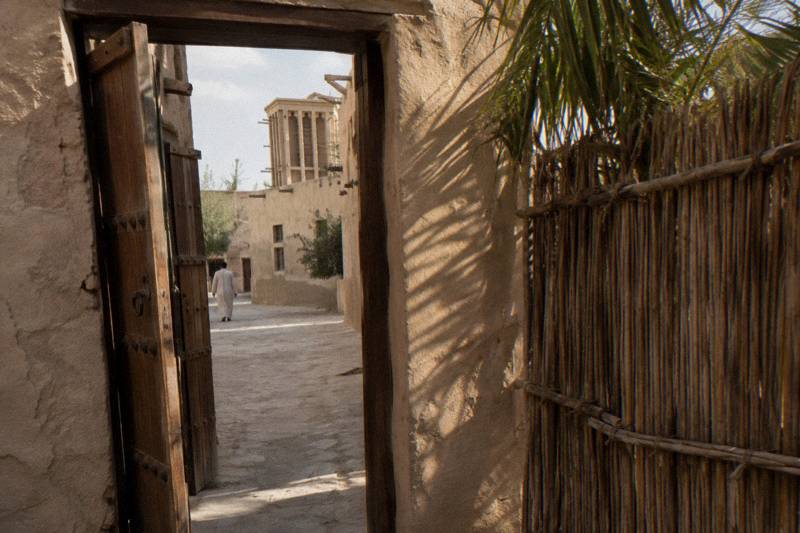
What Is A Typical Meal In Dubai?
What a typical meal in Dubai actually looks like, from karak and chebab at breakfast to machboos and harees at dinner, with reported prices and how a guided food walk fits in.
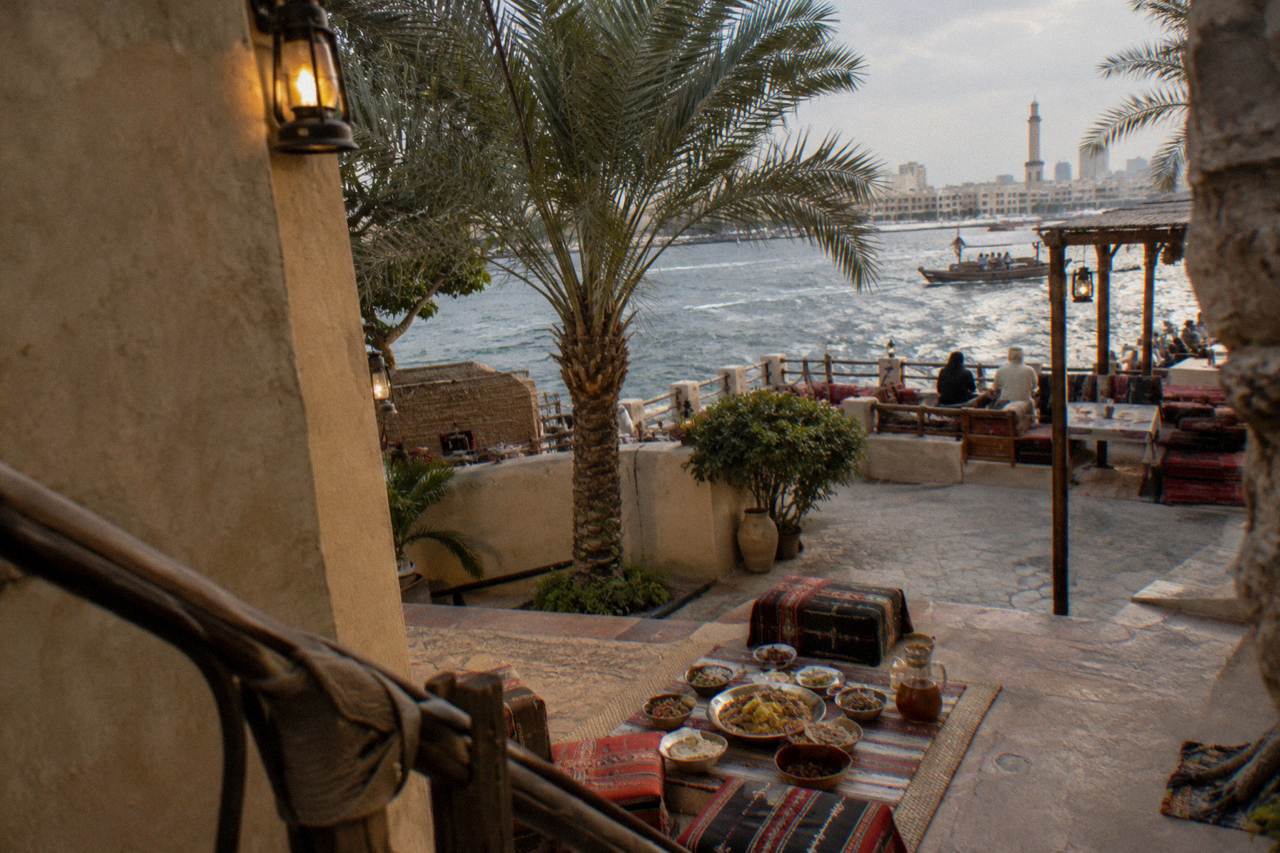
A typical meal in Dubai is casual, shared and built around rice, bread, spiced tea and grilled or slow-cooked meat. For most residents it is a shawarma or a biryani plate from a neighbourhood cafeteria, eaten in fifteen minutes. For an Emirati family table it is machboos or harees served family-style with dates and Arabic coffee. Visitors usually meet the city's food through a guided tasting walk in Old Dubai. To see how these dishes fit into eating habits across the whole country, the guide to everyday food across the UAE covers everything from machboos to karak chai.
There is no single answer, and that is the honest one. Dubai's population is overwhelmingly expatriate, so the "typical" plate on any given day is as likely to be Indian, Pakistani, Lebanese or Iranian as it is Emirati. Walk down Al Rigga Road in Deira and the smells come from a dozen kitchens at once: charcoal grills, cardamom in a tea kettle, frying dough dusted with sesame.
What ties it together is format. Meals here tend to be casual, served quickly, priced low by global standards and eaten with the hands or with bread rather than cutlery, especially at the street end. A reported shawarma at a local spot runs 8 to 15 AED, and a karak chai costs a reported 1 to 3 AED at local cafeterias and stalls. Those two figures describe half the city's eating in one sentence. To find the stalls and cafeterias where these prices are the norm rather than the exception, the guide to where locals eat in Dubai maps out the neighborhoods worth starting in.
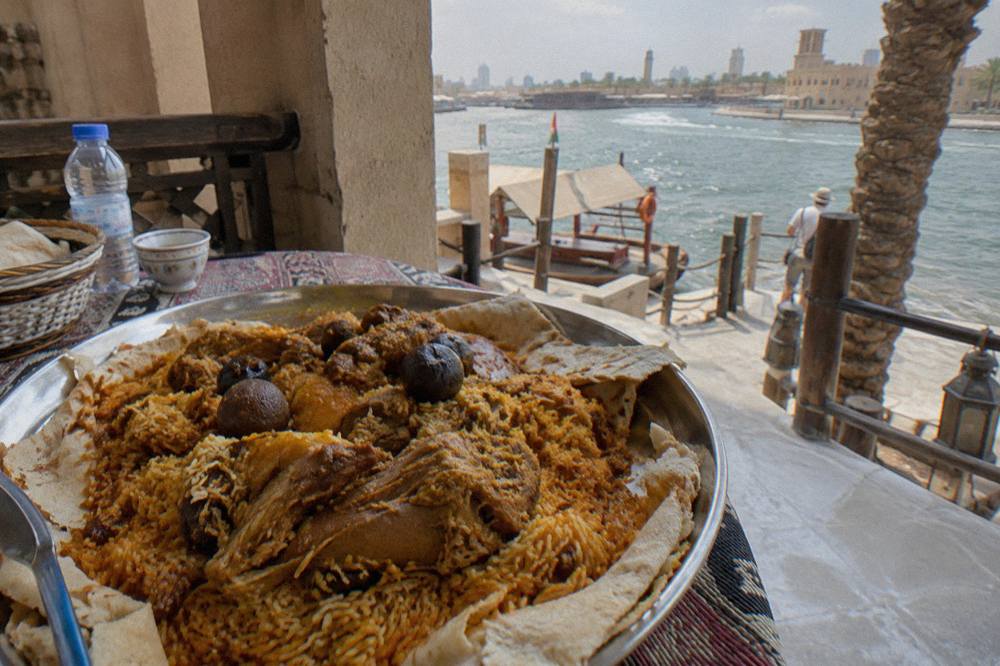
The Emirati table is the deeper layer, and it is the one most visitors want to understand. Machboos, the national dish, is long-grain rice slow-cooked with lamb, chicken or fish, dried limes, baharat spices, cardamom, saffron and cinnamon, served family-style on a platter. Harees is wheat and meat cooked for six to eight hours until it turns smooth and porridge-like, finished with ghee. These are gathering dishes, celebration dishes, the food that appears when the family sits down together.
If you want to taste the full spread without working out where each dish lives on the map, a guided walk does the routing for you.
This article walks through the day as Dubai eats it: breakfast, lunch, dinner, what it costs, and where a food walk slots in. Prices marked "reported" come from 2026 cost surveys and should be treated as planning ranges, not promises; a stall's price on any given day is the stall's to set. Once you know what a typical meal looks like, the comparison of desert safari dinners versus guided city food walks helps you decide which evening experience suits your appetite and schedule.
Breakfast: Karak, Dates And Emirati Morning Plates
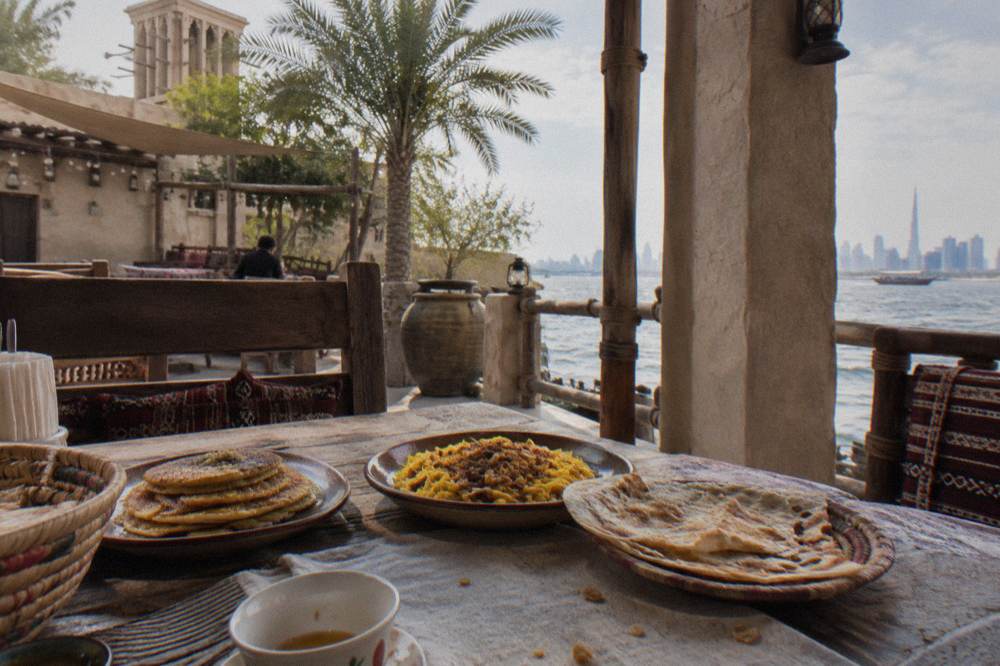
A typical Dubai breakfast splits into two versions. The street version is karak chai, spiced milky tea, with a shawarma, a samosa or a plate of chebab pancakes, eaten standing or in a car. The Emirati version is balaleet, sweet saffron and cardamom vermicelli topped with a fried egg, chebab with cream cheese and date syrup, dates and Arabic coffee. Karak is the thread that runs through both.
Karak deserves its reputation. It is strong black tea boiled with milk, cardamom and often saffron, sweet and thick, sold for a reported 1 to 3 AED at the cafeterias that line Old Dubai's side streets. Cafe versions run higher, with one survey citing 14 AED for a sit-down glass. Workers buy it in the morning, delivery riders buy it at midnight, and no one thinks of it as a dish for a particular hour.
The Emirati breakfast table is slower. Balaleet is the classic sweet-savoury example: vermicelli noodles scented with saffron and cardamom, served with a thin omelette or fried egg on top. Chebab are pancakes flavoured with saffron, cardamom and turmeric, typically eaten with cream cheese and date syrup. Gahwa, lightly spiced unsweetened Arabic coffee, is poured in small finjan cups and served with dates; the etiquette is to accept and receive the cup with the right hand, and to gently shake the empty cup side to side when you have had enough.
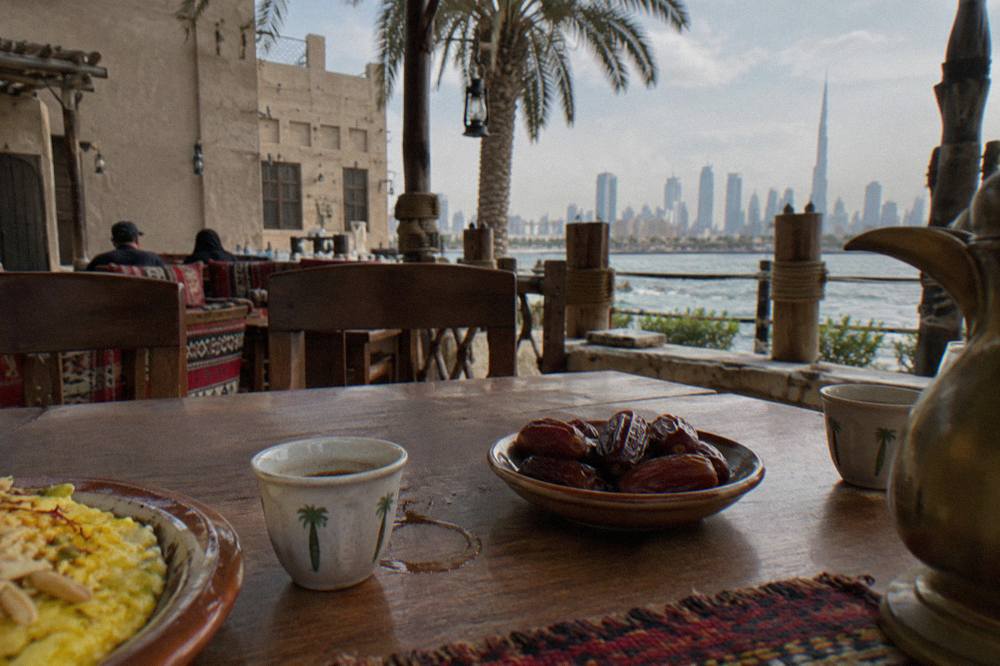
Dates themselves have a season here. The fresh rutab harvest runs primarily through summer, peaking between June and September, with around 150 varieties grown in the UAE, and reported prices from around 15 AED per kilogram at festivals and markets. Dried dates are available year-round, which is what most breakfast tables carry.
For visitors, the structured way into this spread is a cultural meal rather than a restaurant. The Sheikh Mohammed Centre for Cultural Understanding in the Al Fahidi Historical Neighbourhood runs 1.5-hour cultural meals with Emirati hosts and a question-and-answer session on customs and daily life, with reported prices of 130 AED for breakfast or brunch, 145 AED for lunch, 150 AED for fuala tea time and 160 AED for dinner; booking is required. The centre's own programme page lists the current schedule.
A guided walk in the morning covers the same neighbourhood with tastings folded in. The Historic Creek Walk, Pickup link beside our Old Dubai historic walk overview shows the operator's current price, meeting point and inclusions; the listing describes the route and what the tastings cover, so check it before choosing a start time.
Wondering whether a walk is worth it at all? Our longer take on whether Dubai food tours are worth it weighs the cost against doing it yourself.
Lunch: Shawarma, Falafel And The Cafeteria Plate
Lunch for most of Dubai is fast, cheap and handheld: a shawarma wrap, a falafel sandwich, or a rice plate from a neighbourhood cafeteria. Reported prices put a shawarma at 8 to 15 AED at local spots, a falafel wrap at 4 to 15 AED, and a full cafeteria meal of biryani or mezze at 15 to 40 AED per person. Tourist-area shawarma runs higher, at a reported 20 to 40 AED.
The shawarma is the city's default. Marinated chicken or lamb is stacked on a vertical spit, shaved to order, and wrapped in flatbread with garlic sauce, pickles and sometimes fries. A chicken shawarma wrap runs a reported 12 to 18 AED, with one survey citing around 17 AED at a well-known counter on Al Dhiyafah Road. Falafel is the vegetarian counterpart, chickpea fritters in a wrap with hummus and salad, reported at 4 to 15 AED depending on the size of the wrap and the address.
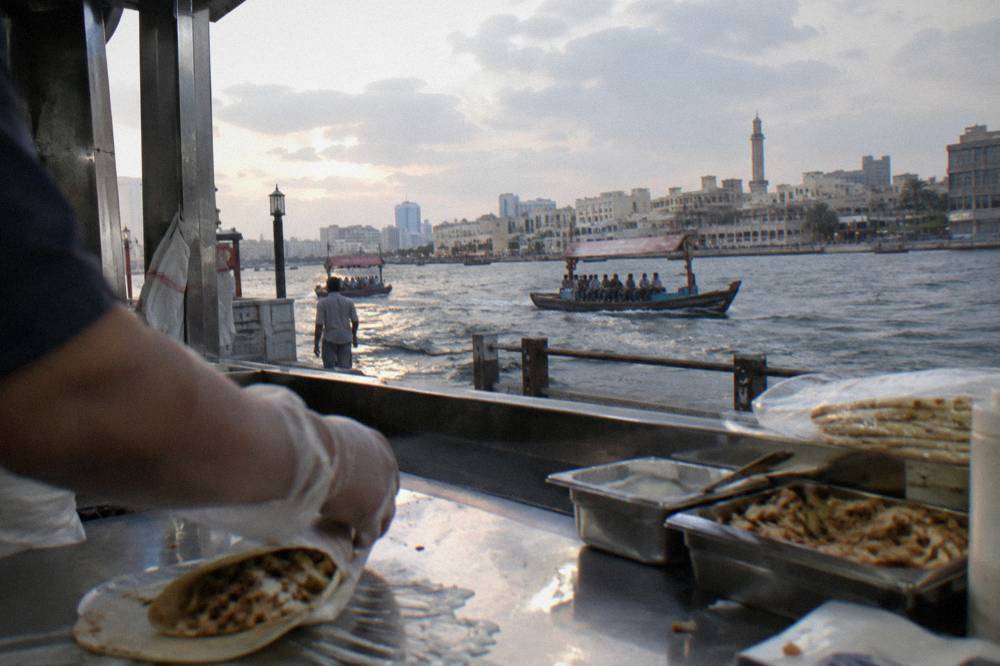
The neighbourhood cafeteria is the other lunch institution. These unlicensed, family-run counters serve biryani, mezze sets, grilled meats and fresh juice, and a meal costs a reported 15 to 40 AED per person. Samosas, called samboosa here, sell for a reported 1 to 5 AED each, or 10 to 12 AED for a bag of about five, which is a common way to stretch a shared table.
Two practical notes shape lunch. First, all meat sold in restaurants and markets in Dubai is halal, and pork appears only in designated licensed sections, so the default wrap is safe for halal-observing eaters without any special request. Second, if a listing for a tour or a meal does not state a dietary accommodation, message the operator before booking; a listing that says nothing about vegetarian, vegan or gluten-free options is a listing that has not promised them.
For the midday meal with some history attached, a walk through Deira pairs well. Our Deira food guide maps the district where most of these cafeterias sit, and the spice souk tasting guide covers what to buy and taste around the market itself.
Dinner: Machboos, Harees And The Shared Platter
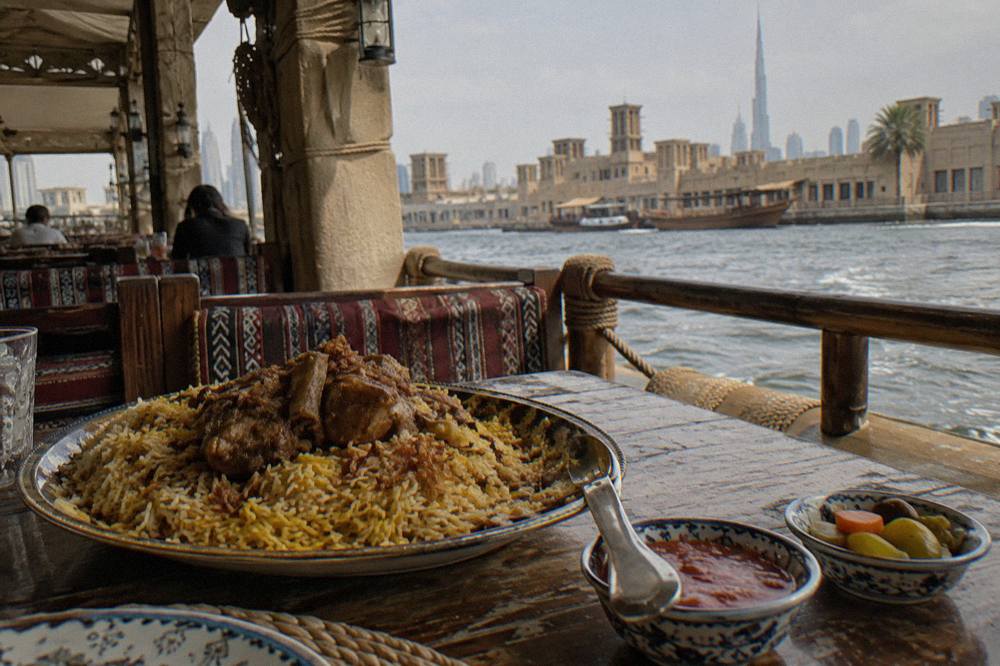
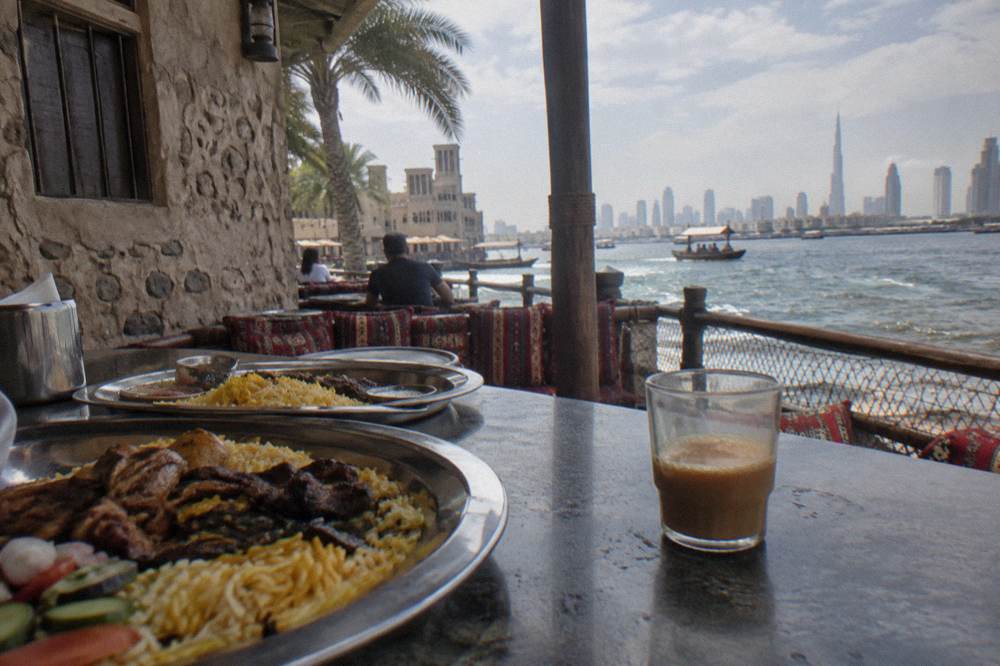
A typical Emirati dinner is a shared platter: machboos, rice slow-cooked with lamb, chicken or fish, dried limes and baharat, served family-style with tomato sauce or pickles, or harees, the wheat-and-meat porridge cooked for six to eight hours and finished with ghee. In practice most dinners in the city are simpler, a grilled-meat plate or a shared mezze spread, with luqaimat, fried dough drizzled with date syrup and sesame, as dessert.
Machboos is the dish to name if you name one. It is the UAE's national dish, built on long-grain rice, meat, dried limes called loomi, and a spice blend that includes cardamom, saffron and cinnamon. It arrives on a large platter for the table, not plated individually, and it is eaten the traditional way, with the right hand. Harees sits beside it, especially at gatherings and in Ramadan: wheat and lamb or chicken slow-cooked until smooth, glossy with ghee, sometimes finished with cinnamon. The rest of the planning pages sit on Dubai Food Tours.
Reported restaurant prices for these mains give a planning range: machboos with lamb or fish at around 58 to 65 AED, harees at around 42 AED, and thareed or margoog, stew dishes ladled over or served with thin regag bread, at around 55 to 58 AED, in heritage settings in Deira. An Emirati breakfast board with balaleet at a heritage restaurant in Al Fahidi runs a reported 52 AED. These are reported figures from 2026 surveys, so treat them as ranges and check the menu on the day.
Luqaimat is the standard dessert answer: crisp fried dough dumplings, drizzled with date syrup and scattered with sesame, served warm and eaten immediately. Street stalls sell them for a reported 10 to 18 AED. Thareed, meat and vegetable stew ladled over thin regag bread that soaks up the broth, is another gathering dish, often served during Ramadan.
Alcohol rarely appears at this end of the city. Visitors over 21 may drink at licensed venues only, hotels, restaurants and lounges, and alcohol is not permitted in public places outside licensed venues; the Old Dubai food walks serve no alcohol unless a listing says otherwise. If a dinner with a drink matters to you, check that the venue is licensed before you book.
If dinner is where you want the guidance, the premium walks run into the evening. After the paragraph that follows, the premium option is worth a look on its own.
The premium Old Town walk runs four hours and layers street food, the souks and a boat ride into one route; the listing carries the current price, the meeting point and exactly which tastings are included, so read it before choosing between it and the shorter historic walk.
For eaters who want breadth over depth, a multi-cuisine route is the other dinner-shape option, and the four-cuisine walk below is built exactly for that.
What A Meal Costs In Dubai
A meal in Dubai can cost anywhere from about 1 AED for a street snack to roughly 150 AED per person at a mid-range restaurant. Street items run 1 to 18 AED, a casual cafeteria meal runs 15 to 40 AED per person, and mid-range mains often cost 40 to 80 AED, while a 3.5-hour guided food tour with food and water included runs about 435 AED per person.
The honest comparison is not per dish but per experience. A karak at 2 AED and a guided walk at 435 AED are not competing for the same money: one is a tea, the other is a routed meal with a guide, multiple stops and the dishes counted and listed. What the tour buys is the routing, the context and the confidence to order on your own the next day.
Here is the reported cost picture in one table, drawn from 2026 price surveys. Treat every line as a range, not a fixed price, and check the board or the menu on the day.
| Where you eat | Typical items | Reported price range (AED) |
|---|---|---|
| Street stall or cafeteria | Karak chai | 1 to 3 |
| Street stall | Samosa, per piece | 1 to 5 |
| Local counter | Shawarma | 8 to 15 |
| Local counter | Falafel wrap | 4 to 15 |
| Cafeteria | Biryani or mezze meal, per person | 15 to 40 |
| Heritage restaurant | Machboos with lamb or fish | Around 58 to 65 |
| Heritage restaurant | Harees | Around 42 |
| Mid-range restaurant | Full meal, per person | Around 80 to 150 |
Two bill mechanics catch visitors out. Restaurants commonly add a service charge of up to 10 per cent, which is venue-retained rather than a mandatory government fee, plus 5 per cent VAT. Visit Dubai's own tipping guide puts restaurant tipping at 10 to 15 per cent and cafe tips at 5 to 10 AED, and notes that where a service charge appears, an extra tip is personal preference. Our fuller write-up on tipping and paying in Old Dubai works through the arithmetic.
Bottled water is trivially cheap if you buy it right: a supermarket multipack works out to a reported 1 to 2 AED per litre, while restaurant bottles run 6 to 12 AED. Carry a bottle from a supermarket and the day's drinks budget mostly disappears.
“It was a personal tour with Orlina. Very special and great to have her all to ourselves. Orlina’s knowledge of Dubai and UAE history was great. She answered every question. Was great to learn and see loads about how Dubai has grown. Excellent trip round many key areas and the food tasting was brilliant addition. Lovely food and restaurants. Would highly recommend Orlina. She made us feel special.”
How A Guided Food Walk Fits The Typical Meal
A guided food walk is not a different meal, it is the typical meal compressed into one route: the karak, the shawarma, the luqaimat and often the Emirati platter, tasted across several stops with a guide explaining each one. The Old Dubai Historic Guided Tour covers the Creek, the souks and street food in three to four hours, and its listing states the current price, meeting point and what the tastings include.
The value is in what a walk removes. On your own, finding the karak stall that locals actually use takes days of trial and error. On a walk, the stops are pre-scouted, the dishes arrive in an order that makes sense, and someone explains the difference between harees and thareed while you eat them. The trade-off is price: a walk costs more per dish than the dishes cost alone, and the tour listings carry their own prices, so read the operator's booking page for the current figure rather than any number quoted second-hand.
The walk also handles the Creek crossing, which is Old Dubai's signature move. Routes described on the listings run from the Al Fahidi side through the souks and across the water, with tastings folded in. Meeting points seen on listings include Al Khayma Heritage Restaurant in Al Fahidi and Al Ras Metro Station exit 2 in Deira, so check which one your departure uses.
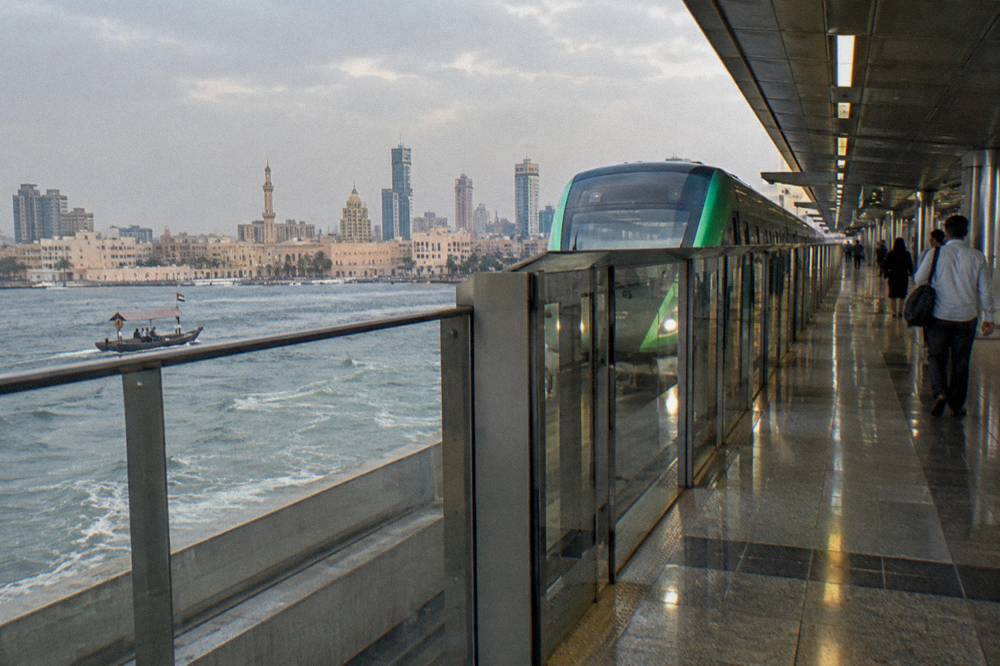
Getting there independently is easy. The Green Line serves the district: Sharaf DG station serves the Al Fahidi area, Al Ras serves the Deira souk side, and Union is the shared interchange. The official RTA metro station map shows the current naming and interchange layout. A reloadable Nol card costs 25 AED including initial credit, per the official RTA Nol page.
If the historic walk is the fit, the tile below shows the current details.
For a broader tasting route, the four-cuisine walk covers multiple food traditions in one three-to-four-hour loop, and the listing states what the four cuisines are and how many tastings are included.
Whether to book a walk at all, and which format suits your group, is covered in full in our comparison of Dubai food tour options.
If you are still mapping the city's food before the day itself, start with what to eat in Dubai as a first-timer, then let the walks below do the routing.
Common Questions About A Typical Meal In Dubai
What Is A Typical Meal In Dubai?
A typical meal is casual and shared: a shawarma or cafeteria rice plate at lunch for a reported 8 to 40 AED, or an Emirati shared platter of machboos or harees at dinner, with karak chai and dates running through the day. Mid-range restaurant meals run a reported 80 to 150 AED per person.
What Is The National Dish Of The UAE?
Machboos, long-grain rice slow-cooked with lamb, chicken or fish, dried limes, baharat spices, cardamom, saffron and cinnamon, served family-style on a platter, often with tomato sauce or pickles.
Is Food In Dubai Expensive?
It does not have to be. Reported 2026 figures put karak at 1 to 3 AED, a shawarma at 8 to 15 AED and a full cafeteria meal at 15 to 40 AED per person. Mid-range restaurants run around 80 to 150 AED per person, and bills commonly carry a service charge of up to 10 per cent plus 5 per cent VAT.
What Do Locals Eat For Breakfast In Dubai?
Karak chai with a samosa or shawarma is the everyday version. The Emirati breakfast table adds balaleet, sweet saffron vermicelli with a fried egg, chebab pancakes with cream cheese and date syrup, and Arabic coffee with dates.
Can I Drink Alcohol With A Meal In Dubai?
Visitors over 21 may drink at licensed venues only, such as hotels, restaurants and lounges. Alcohol is not permitted in public places outside licensed venues, and the Old Dubai food walks serve no alcohol unless a listing says otherwise.
Is All Food In Dubai Halal?
All meat sold in restaurants and markets is halal, and pork is sold only in designated licensed sections. If you need a vegetarian, vegan or gluten-free version of a dish, message the operator or venue before booking, since a listing that does not mention an accommodation has not promised one.