Shawarma In Dubai: Where And How To Order
Shawarma is one of the cheapest, fastest and most reliable eats in Dubai, and the city runs on it. Here is how the wraps differ between Old Dubai stands and tourist cafes, what to say when you order, and what the whole snack should cost.
Short answer
A chicken shawarma wrap at a local Dubai spot costs a reported 8 to 15 AED, while tourist-area cafes charge 20 to 40 AED for the same idea. Order at the counter, name your meat, pick your sauce, and take the wrap wrapped in paper. Deira and Bur Dubai have the densest supply of stands.
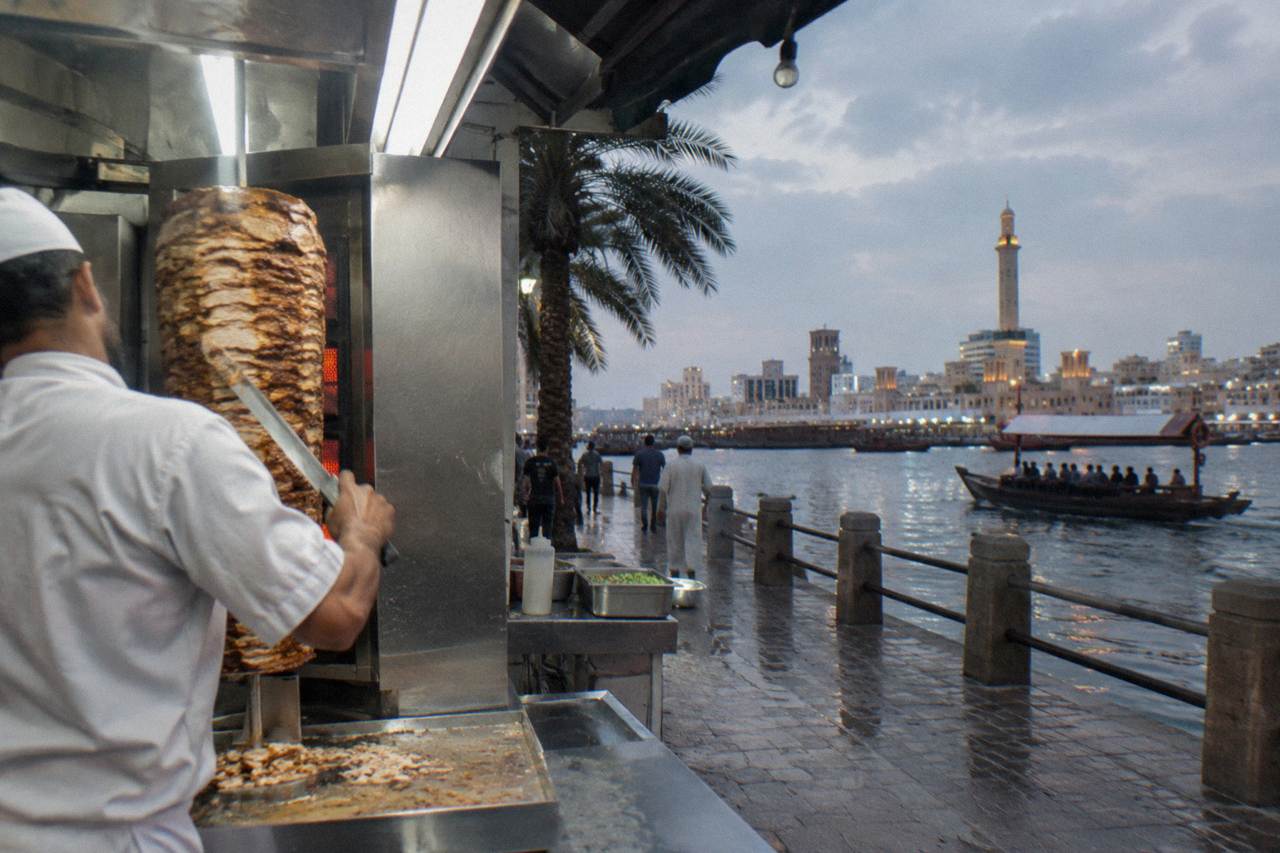
Shawarma is the workhorse of Dubai street food. Meat stacked on a vertical spit, shaved to order, folded into flatbread with pickles and sauce, and handed over in paper within minutes. Recent price surveys put a local shawarma at a reported 8 to 15 AED, which makes it one of the cheapest full-flavoured meals in the city, and the supply is densest exactly where most visitors want to walk anyway: Deira, Bur Dubai and the lanes around the Creek. This guide covers where the wraps are, how chicken and lamb versions differ, what to say at the counter, and how the stand-versus-cafe choice changes both the taste and the bill. For a fuller picture of how a guided walk through Old Dubai stacks the same stalls into a single day of eating, the guide to a Dubai street food tour and what it costs covers the itinerary, the prices, and how it compares to exploring on your own.
Where To Find Shawarma In Dubai
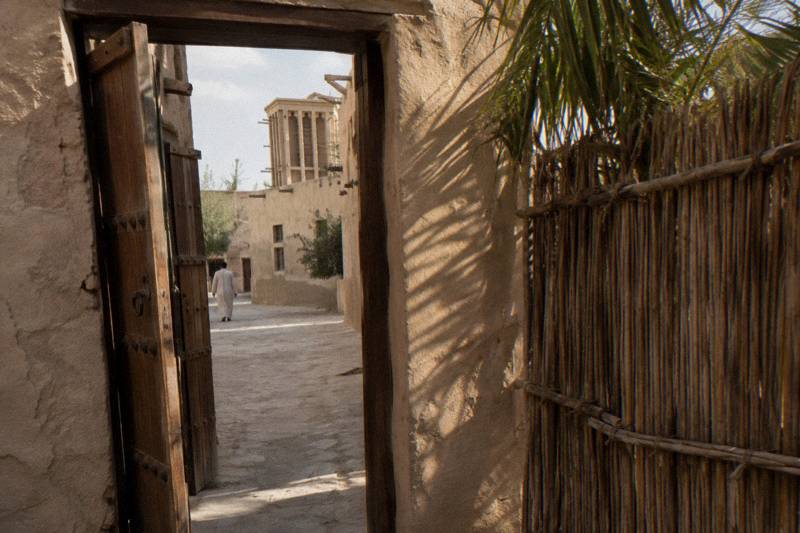
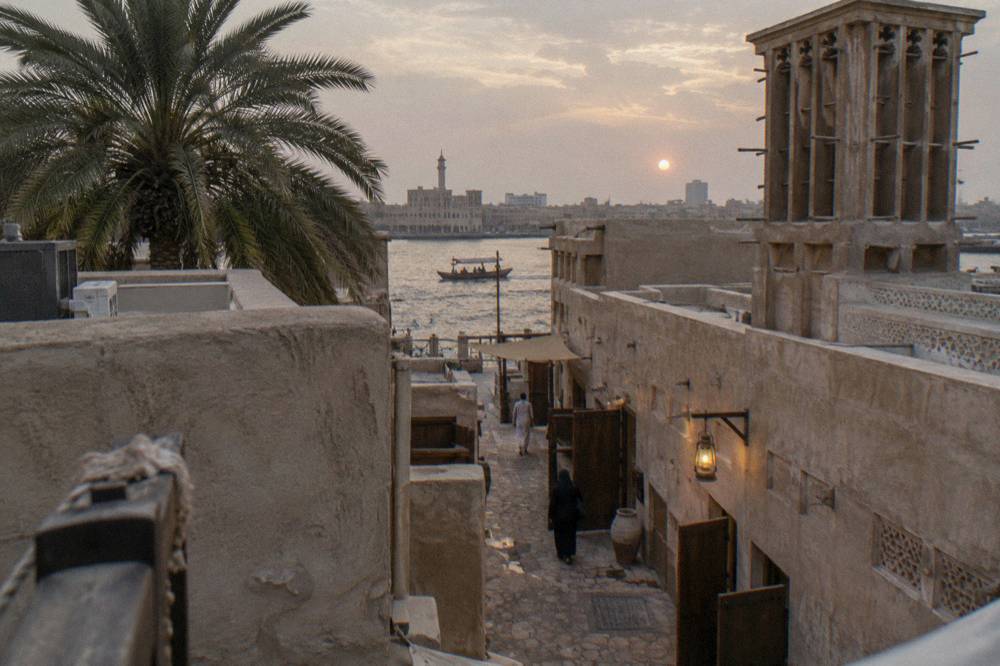
The densest concentration of shawarma stands is in Old Dubai: Deira around the Spice and Gold Souks, and Bur Dubai around Al Fahidi, the Textile Souk and Al Seef. Typical Deira and Bur Dubai stalls and the Iranian, Afghan, Indian, Pakistani and Lebanese cafes around them sell shawarma alongside falafel, samosa, luqaimat and karak, with a reported price of 7 to 15 AED for a wrap. Nothing requires a reservation, a car or a plan.
The geography matters more than any single address. Deira's souk quarter and Bur Dubai's heritage lanes are compact, walkable and saturated with cheap counters, so a shawarma crawl needs almost no logistics: you walk, you smell the spits, you stop. The clusters reported by the 2026 price surveys are the cheap-eats belt of Deira and the streets feeding into Al Fahidi and Al Seef on the Bur Dubai side.
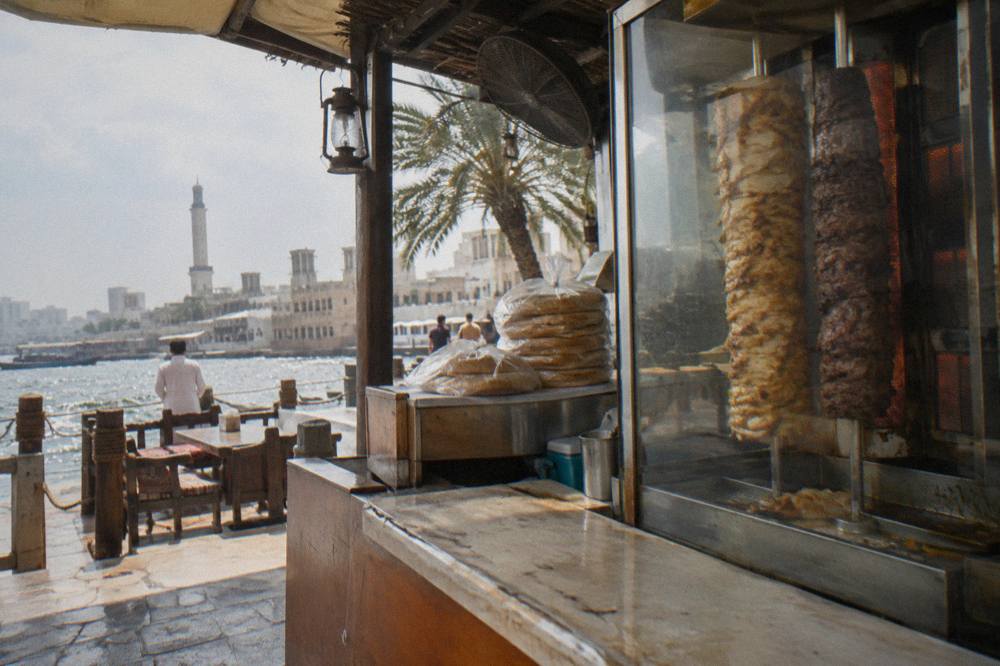
Tourist districts serve shawarma too, but the reported price gap is steep: the same surveys put tourist-spot shawarma at 20 to 40 AED, against 8 to 15 AED at local spots. The wrap is often bigger and the seating plusher, but you are paying for the address. If your day is already anchored in Old Dubai, there is little reason to leave the cheap belt. The broader context of the city's street food scene, including what else to try besides shawarma, is covered in the Dubai street food guide, and the Deira side is mapped in detail in the Deira food guide for Old Dubai.
| Area | Character | Reported shawarma price | Notes |
|---|---|---|---|
| Deira souk quarter | Dense cheap-eats stalls and cafes | 7 to 15 AED | Closest to Spice and Gold Souks |
| Bur Dubai, Al Fahidi and Textile Souk | Heritage lanes, small counters | 7 to 15 AED | Walkable from Al Seef |
| Tourist areas and hotel cafes | Seating, larger wraps | 20 to 40 AED | Price reflects the address |
Getting there is simple. The Green Line serves the Al Fahidi area via Sharaf DG station and the Deira souks via Al Ras, Baniyas Square and Gold Souq stations, according to the official RTA metro station map. A reloadable Nol card covers metro and buses; the anonymous Silver card costs a reported 25 AED including initial credit on the official RTA fare pages. Taxis start at a reported 5 AED between 06:00 and 22:00 and 5.5 AED overnight per the RTA fare page, though for a crawl within Old Dubai the metro plus walking is the faster option.
Chicken Or Lamb: How Dubai Shawarma Differs
Chicken shawarma is the Dubai default: thigh meat marinated in yoghurt, vinegar and spices, stacked on the spit with fat or garlic between layers, then shaved and folded into bread with garlic sauce and pickles. Lamb or beef versions run richer and heavier, often dressed with tahini instead of garlic sauce. The reported wrap prices barely differ between the two at local stands.
The chicken-versus-lamb choice is mostly a sauce and weight decision. Chicken shawarma in the Gulf style leans on toum, a whipped garlic sauce that is sharp enough to cut the richness of the spit fat, plus pickled cucumber or turnip for acid. Lamb and beef shawarma, closer to the Levantine original, usually gets tahini, tomato and parsley, and eats denser. Neither is the "real" one; both are normal orders in Dubai, and stands that run two spits will ask which you want before they start shaving.
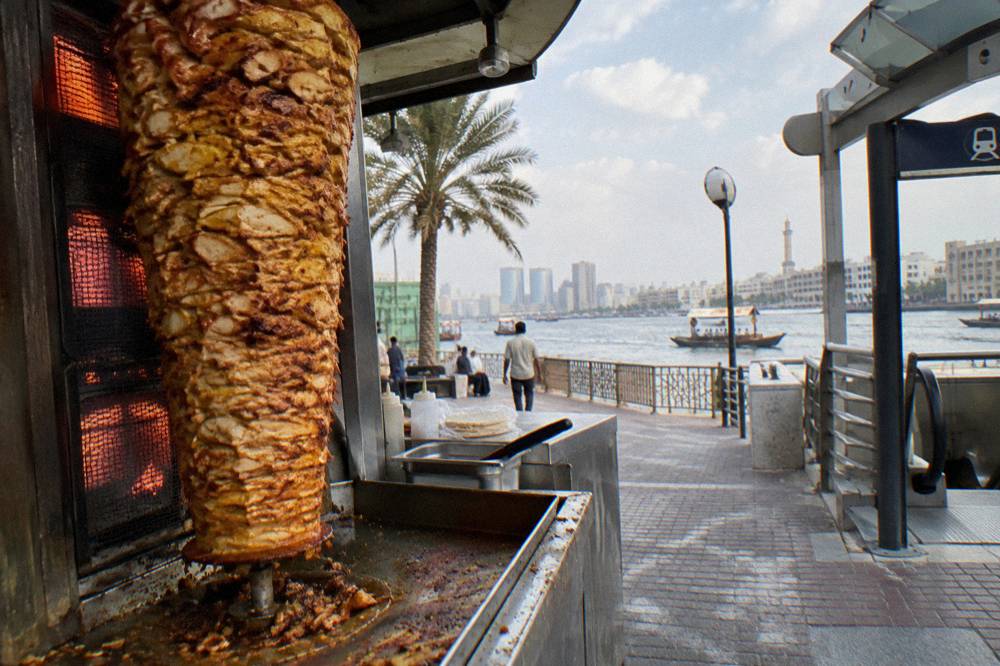
Bread is the other fork in the road. Some counters use thin saj or markook flatbread rolled tight, which gives you a compact, crisp-edged wrap; others use a puffier Arabic bread or a pressed panini-style roll that toasts the outside. There is no single standard, and the 2026 surveys do not rank one over another. Watch what regulars ahead of you are ordering and copy them, or ask for the wrap "pressed" if you want the outside toasted.
| Order | Meat | Typical sauce | Weight and character |
|---|---|---|---|
| Chicken shawarma | Marinated thigh, stacked with garlic | Toum (garlic) and pickles | Lighter, sharp, the local default |
| Lamb or beef shawarma | Fatty cuts, sometimes mixed | Tahini, tomato, parsley | Richer, denser, Levantine style |
| Mixed wrap | Both meats | Either | Larger, for a proper appetite |
If you want the decision made for you, a guided walk does exactly that. The premium Old Dubai guided tour with street food and an abra ride covers the Old Town, souks and street food over 3 to 4 hours, and its listing describes tastings that include shawarma alongside falafel, karak, samosa, rogag and luqaimat. It is one of three Old Dubai food walks compared below.
Prices and current inclusions sit on each operator's live listing, since several of these walks are per-person from-prices that vary by date and group size.
What Shawarma Costs In Dubai
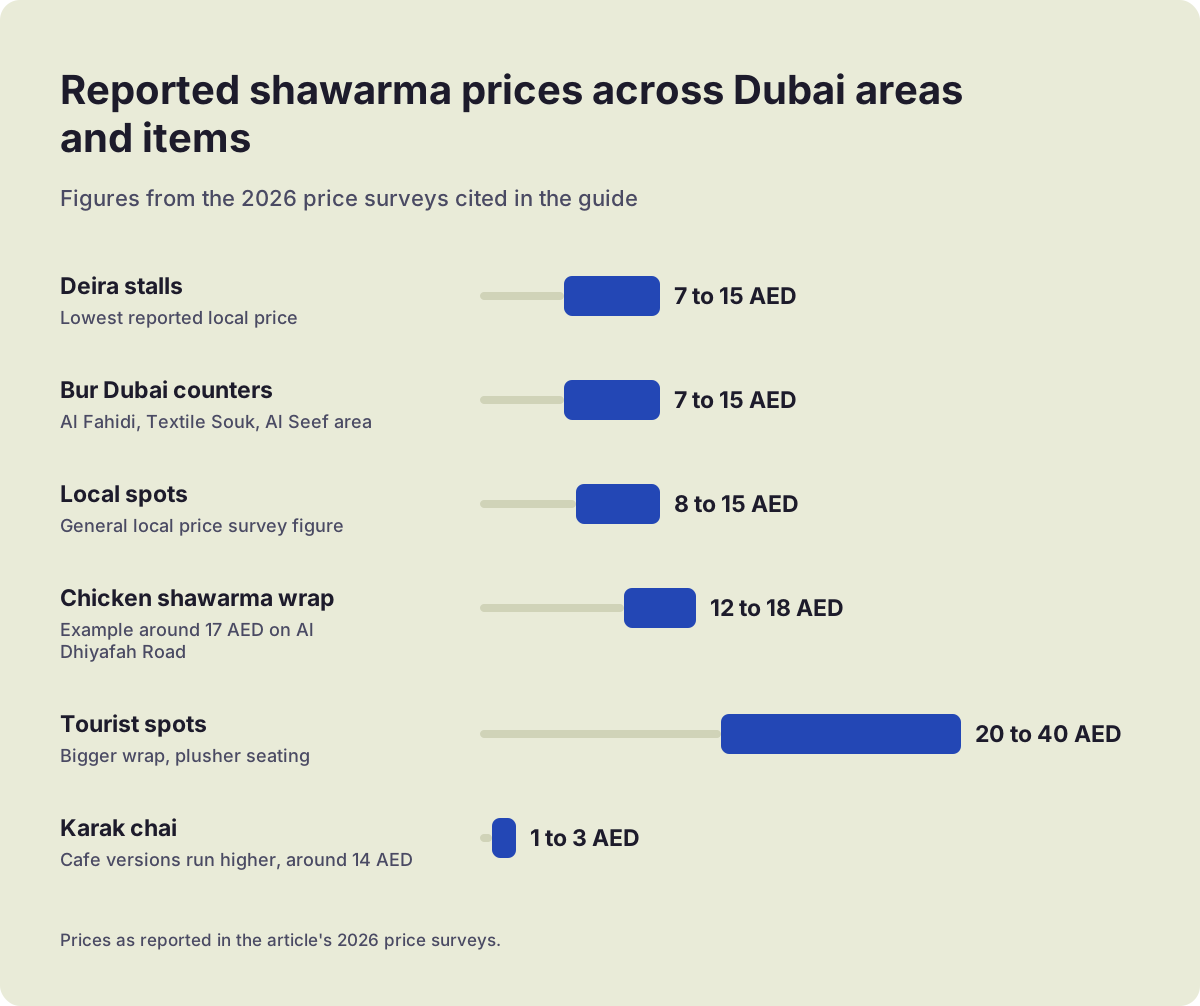
At local spots a shawarma costs a reported 8 to 15 AED, and Deira stalls run as low as 7 AED; tourist spots charge a reported 20 to 40 AED. A chicken shawarma wrap specifically runs 12 to 18 AED in the 2026 surveys, with an example around 17 AED at a well-known counter on Al Dhiyafah Road. Add a karak chai at a reported 1 to 3 AED and the whole snack costs less than most restaurant starters.
The cheap belt is genuinely cheap. Alongside shawarma, the 2026 price surveys report falafel wraps at 4 to 15 AED, samosa at 2 to 3 AED each or 10 to 12 AED for a bag of about five, and karak chai at 1 to 3 AED at local cafeterias, with cafe versions running higher, around 14 AED. A full casual Emirati, Levantine or neighbourhood-cafeteria meal, biryani or mezze sets included, runs a reported 15 to 40 AED per person. For a fuller picture of meal budgets across the city, see the guide to Dubai food prices.
One caution on restaurant bills: Dubai venues commonly add a 10 per cent service charge, which is venue-retained rather than a government fee, plus 5 per cent VAT, and some hotel-affiliated venues add a further municipality levy, according to the 2026 cost guides. Street counters and cafeterias do not. Tipping guidance from Visit Dubai suggests 10 to 15 per cent in restaurants as personal preference, with no set rule; at a shawarma stand, rounding up is enough. The official Visit Dubai tipping guide covers the details.
How To Order At A Shawarma Stand
Say the meat, then the bread, then the sauce: "one chicken shawarma, pressed, garlic sauce" is a complete order. Pay at the counter, usually cash or card. Wait by the spit; the wrap arrives in paper within a few minutes. Asking for "extra pickles" or "no onion" is normal and expected, and no stand expects a tip.
The transaction is fast and forgiving. Most counters in Deira and Bur Dubai serve a mixed clientele, so English works everywhere, and pointing at the spit is a complete sentence too. The useful vocabulary is short: "pressed" gets the wrap toasted flat, "spicy" gets hot sauce or chili, and "garlic" or "tahini" names the sauce. If the stand runs both chicken and red-meat spits, name the meat first, because that is the first thing the shaver needs to know. The rest of the planning pages sit on Dubai Food Tours.
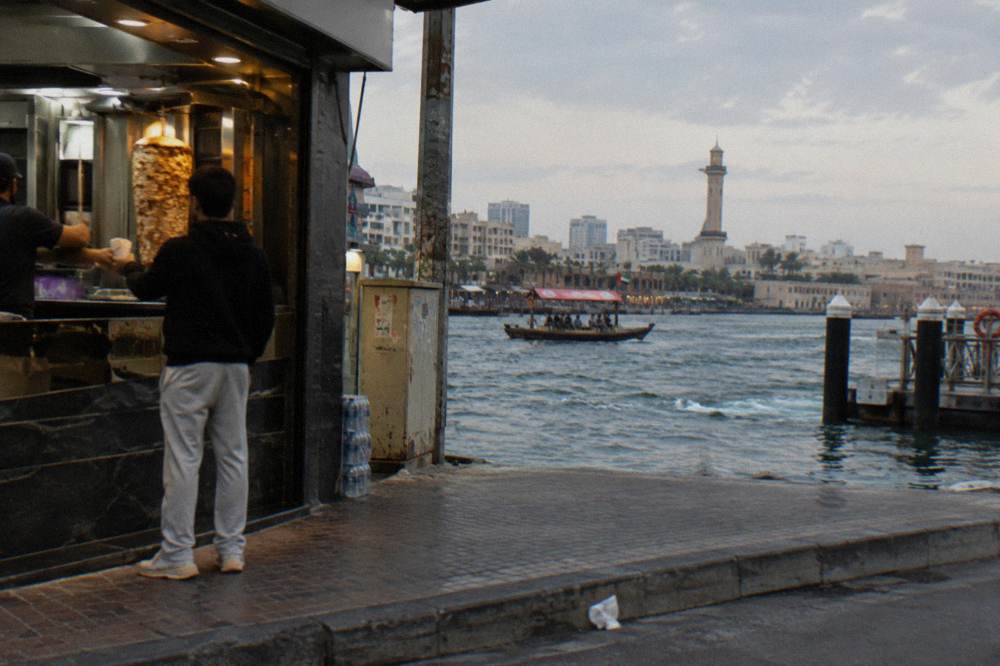
A few practical notes make the experience smoother. Meat across Dubai's restaurants and markets is halal by default under federal rules, and pork appears only in segregated licensed sections, so a shawarma stand is halal without needing to ask. Photography etiquette in the souks asks permission before photographing individuals, especially anyone in traditional dress, per the 2026 etiquette guides; a photo of your wrap is nobody's business but your own. Dress guidance for the souk districts is simply to cover shoulders and knees, which the etiquette sources describe as respect rather than law. Once you've mastered souk etiquette, the comparison of Marina dining and Old Dubai street food helps you decide which side of the Creek suits your appetite and budget.
If you would rather have the ordering done for you in a district where the stands blur together, the Old Town, Souks, Street Food guided tour with an abra ride runs 3 to 4 hours through exactly this terrain, and its meeting points in Old Dubai make it easy to bolt onto a souk day. Check the operator's booking page for the current price and meeting details.
Sauces, Sides And What To Order With It
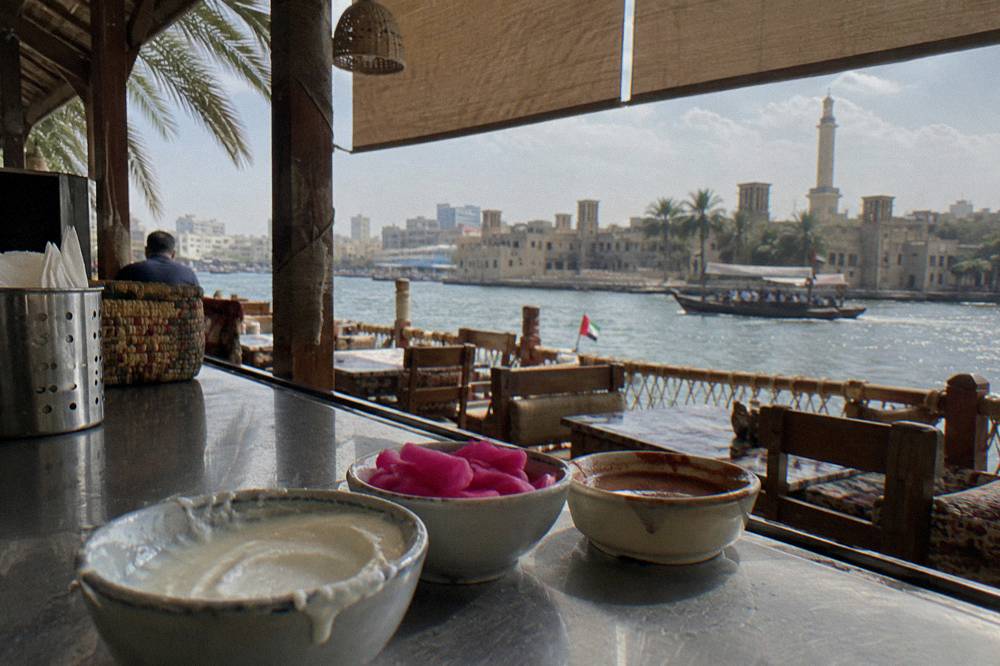
Toum, the whipped garlic sauce, is the classic pairing for chicken shawarma; tahini belongs with lamb or beef. Pickles supply the acid. On the side, karak chai at a reported 1 to 3 AED is the standard drink, falafel makes the wrap go further, and luqaimat, crisp fried dough in date syrup, finish the run as dessert.
The sauce decision shapes the wrap more than most visitors expect. Toum is aggressive, and a heavy hand can dominate a chicken wrap; asking for "light garlic" is a normal request. Tahini-based dressing is milder and slightly sweet, which suits fattier meat. Hot sauce in Dubai stands is usually a thin chili-garlic liquid, sharp rather than smoky. None of this is standardized, so two counters a street apart can produce noticeably different wraps from the same words, and the surveys report no ranking between them.
| Item | What it is | Reported price |
|---|---|---|
| Toum | Whipped garlic sauce, sharp | Included in the wrap |
| Tahini dressing | Sesame paste, mild, for red meat | Included in the wrap |
| Falafel side | Chickpea fritters, often in their own wrap | 4 to 15 AED |
| Karak chai | Spiced milky tea | 1 to 3 AED |
| Luqaimat | Fried dough dumplings, date syrup, sesame | 10 to 18 AED |
The drink pairing deserves its own sentence. Karak chai, the spiced milky tea sold at cafeterias for a reported 1 to 3 AED, is the working-class counterpoint to shawarma in this city, and the two together form a complete Old Dubai snack for pocket change. The pairing and the wider culture around karak and Arabic coffee are covered in the guide to karak, Arabic coffee and dates in Dubai.
Shawarma Crawls And Guided Street Food Walks
A shawarma crawl is a common food tour theme: a guided route through Old Dubai hitting several stands, with tastings counted and listed in advance. Guided walks in this category run 2 to 4 hours and pair shawarma with falafel, karak and luqaimat, plus the souks and Creek between stops. Independent crawling costs a reported 20 to 40 AED per person in food; guided walks price on the operator's listing. For a wider look at how tasting walks fit alongside souk visits and Creek crossings, the guide to food-led things to do in Dubai covers the full day of eating.
The guided version solves a real problem: at a stand, you cannot see the spit hygiene, judge the queue or know which counter the neighbourhood actually rates, and a guide makes those calls for you. The trade-off is pace and price. Independent, a shawarma, a falafel wrap, a karak and a bag of samosa total a reported 20 to 40 AED across the day. Guided, the walks in this family, the premium Old Dubai tour, the historic Creek walk and the 4-hour premium boat-ride tour, all list their prices per person on the operator's booking page, and inclusions vary, so check what each listing says is covered before choosing.
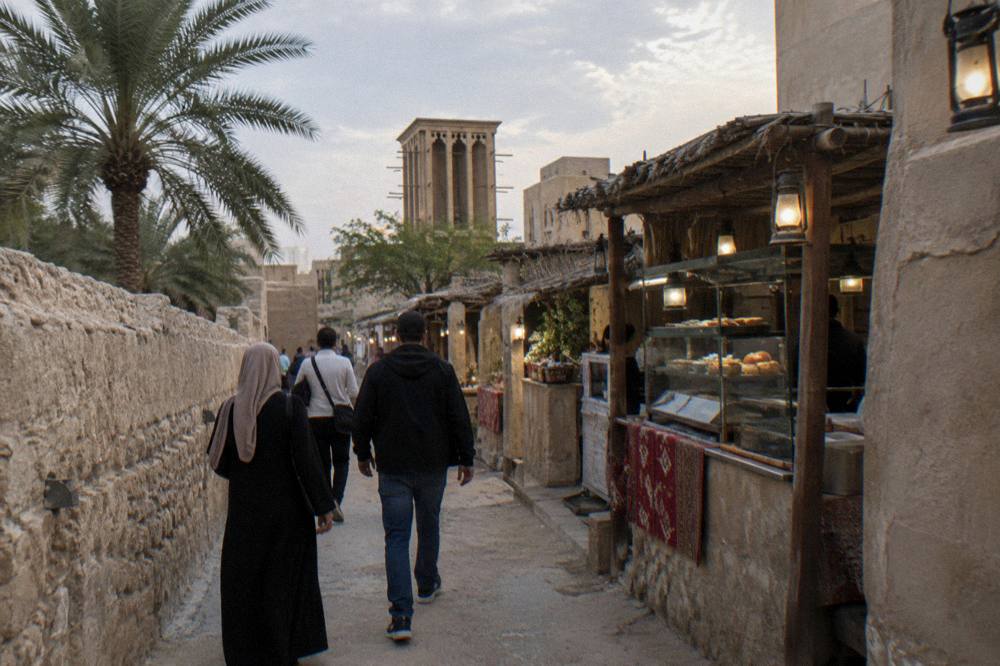
The Al Fahidi Old Town, Souks, Street Food and Abra Cruise walk is the shorter format in the family at 2.5 to 4 hours, and it suits a day that also wants the Creek crossing and the souks. Like the others, its current price and exact inclusions sit on the live listing, since per-person from-prices in this category move with date and demand.
For a broader crawl that is not shawarma-specific, the 4 Cuisines, Souks and Street Bites tour runs 3 to 4 hours and spreads its tastings across several food traditions of the city, which is a fair fit if your group wants variety rather than a deep dive on one wrap.
Practical Tips For A Shawarma Day In Old Dubai
Go hungry, walk between stops, and keep the day compact. The Green Line serves both sides: Sharaf DG for Al Fahidi and Al Ras or Gold Souq for Deira. Winter, December to February, brings the lowest average daytime highs, 24 to 26 °C, per NCM-derived normals, which is the comfortable walking window. Souk shops keep varied hours, with Friday daytime closures reported for the Spice Souk, so check before planning a morning.
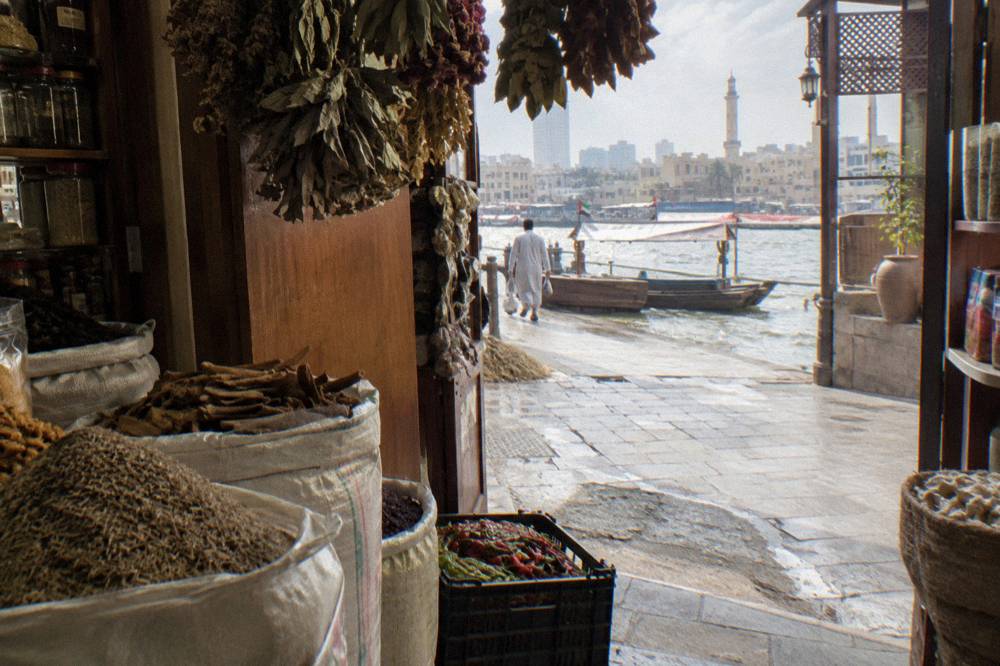
Timing shapes the crawl. The souk-side stalls are busiest in the cooler evening, and the Spice Souk's shops are reported closed during the daytime on Fridays, with many taking midday breaks. The Gold Souk's shops mostly open around 10am to 10pm per Visit Dubai's descriptive hours, with individual shops varying. None of this binds the shawarma counters, which keep their own hours, but a crawl that doubles as a souk visit should respect the market rhythm. The etiquette and timing details are expanded in the guide to Dubai dress code and souk etiquette.
A few closing mechanics. Alcohol is not part of this scene: it is served only at licensed venues to visitors over 21, and public drinking is prohibited, so a shawarma crawl is a dry affair by default, with karak as the closer. Dietary needs should be raised with the operator before booking any guided walk, since listings do not all state vegetarian or gluten-free options; falafel is the usual vegetarian fallback at stands. And if you are staying on the Creek side, the Bur Dubai food walk guide traces the same terrain from the Al Fahidi end.
Weather is worth a sentence of planning. December through February brings the lowest average daytime highs of the year, 24 to 26 °C per the NCM-derived normals, with December means of 26.5 °C by day and 17.3 °C at night, and sunset in mid-December falls around 17:32 local time. That early dusk means an evening crawl in winter runs partly after dark, which suits the lit souk lanes and the cooler air. In the hotter months, flip the plan: a late-afternoon start lets you eat as the heat breaks, and the stands keep turning spits well into the night.
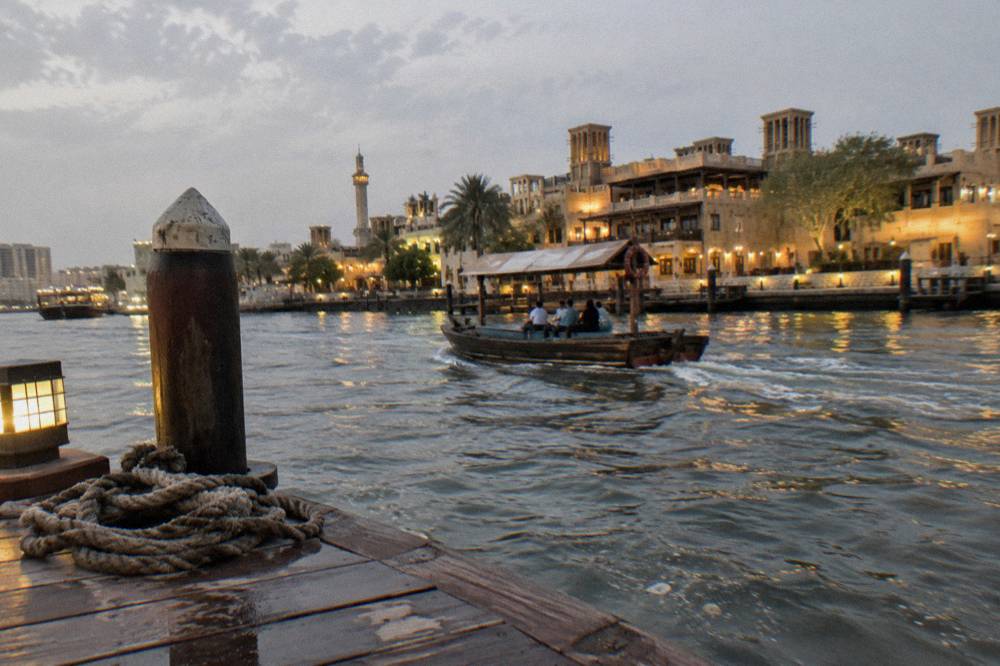
The three walks compared earlier cover the guided versions of this crawl, from the 2.5-hour abra cruise format to the 4-hour premium boat-ride tour.
Common Questions About Shawarma In Dubai
How Much Is A Shawarma In Dubai?
A local shawarma costs a reported 8 to 15 AED, with Deira stalls reported as low as 7 AED. Tourist spots charge a reported 20 to 40 AED. A chicken shawarma wrap specifically runs a reported 12 to 18 AED in the 2026 surveys.
Chicken Or Lamb Shawarma: Which Should I Order?
Chicken is the local default, dressed with whipped garlic sauce and pickles. Lamb or beef versions are richer and usually come with tahini. Both are normal orders in Dubai, and neither is the more authentic choice.
Where Is The Best Area For Shawarma In Dubai?
Old Dubai has the densest supply: Deira around the Spice and Gold Souks, and Bur Dubai around Al Fahidi, the Textile Souk and Al Seef. This guide does not rank individual stalls, since no verified standings exist, but the cheap-eats belt is concentrated there.
What Do I Say When Ordering Shawarma?
Name the meat, the preparation and the sauce: "one chicken shawarma, pressed, garlic sauce" is a complete order. Asking for extra pickles, light garlic or no onion is normal. English works at counters throughout Old Dubai.
Is Shawarma In Dubai Halal?
Yes. All meat sold and served in Dubai's restaurants and markets follows halal rules, and pork is sold only in designated licensed sections, so a shawarma stand is halal by default.
Can A Food Tour Include Shawarma?
Yes, shawarma crawls are a common food tour theme. The premium Old Dubai guided tour's listing describes tastings including shawarma, falafel, karak, samosa, rogag and luqaimat over a 3 to 4 hour walk. Check the operator's booking page for current prices and inclusions.