What Kind Of Food Do They Eat In The UAE?
A plain answer to what people eat across the UAE, from machboos and harees to shawarma and karak chai, with what the dishes are, what they cost as reported, and how a guided tasting walk fits in.
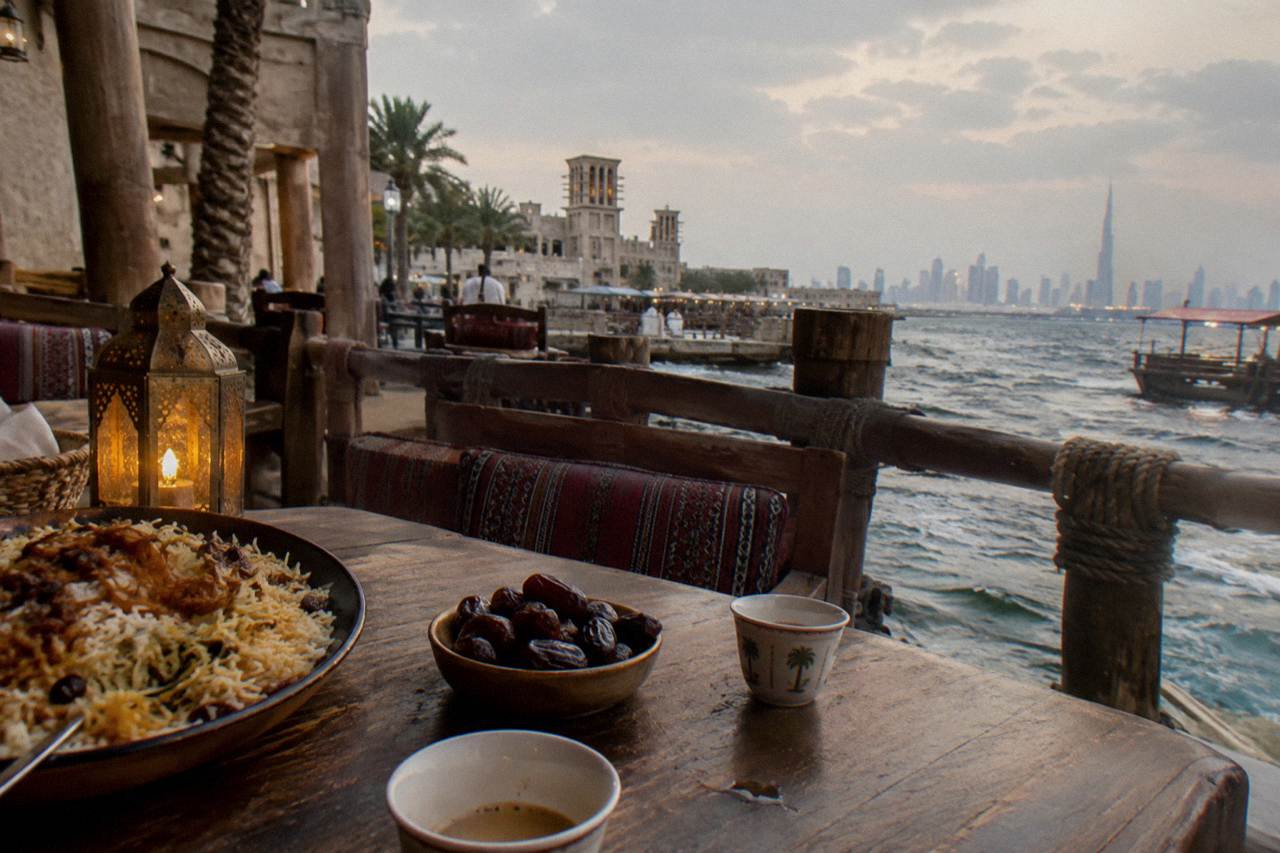
People ask this question expecting one answer, and the honest reply is that the UAE eats two different things at once. There is Emirati food, the country's own cuisine: machboos, harees, luqaimat, balaleet, chebab and gahwa. Then there is the everyday food of a city where most residents were born elsewhere: shawarma, falafel, biryani, karak chai. Dubai serves both, side by side, often on the same street. If you only have a few days in the city, the shortlist of must-try Dubai dishes tells you exactly which plates to seek out first.
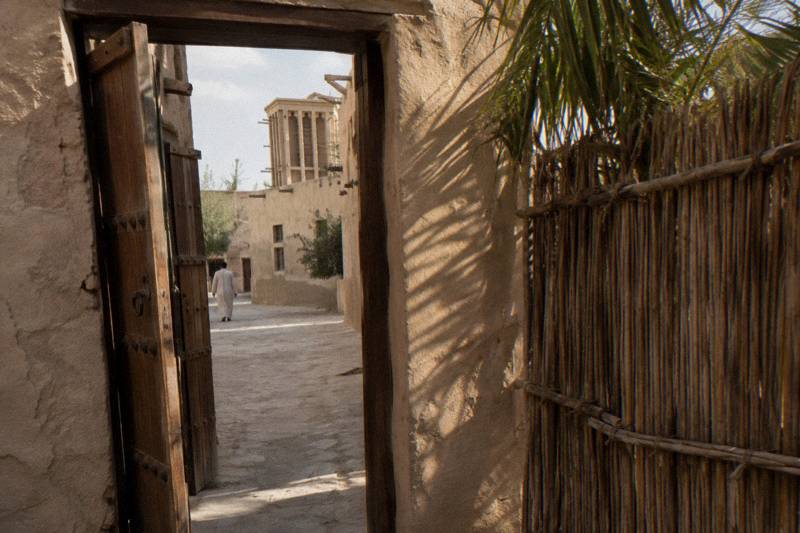
The split matters for visitors because the two cuisines live in different places. Emirati dishes are home food and heritage-restaurant food, concentrated in a handful of specific venues in Al Fahidi and Deira. The everyday street food is everywhere, sold from cafeterias and counters that open early and stay open late. A traveller who only wanders will find plenty of shawarma and might never once be offered harees. Knowing the difference is the difference between eating in the UAE and eating next to it.
The UAE's own cuisine centres on rice, wheat, meat and dates: machboos, a spiced rice dish with lamb, chicken or fish, is the national dish, harees is a slow-cooked wheat and meat porridge, and luqaimat are crisp fried dumplings drizzled with date syrup. Alongside it, everyday eating leans on shawarma, falafel, samosas and karak chai, the spiced milky tea sold for a reported 1 to 3 dirhams at local cafeterias. For a closer look at where to find these dishes in the city's older neighbourhoods, the guide to the famous food locals actually order in Dubai covers the best spots and prices.
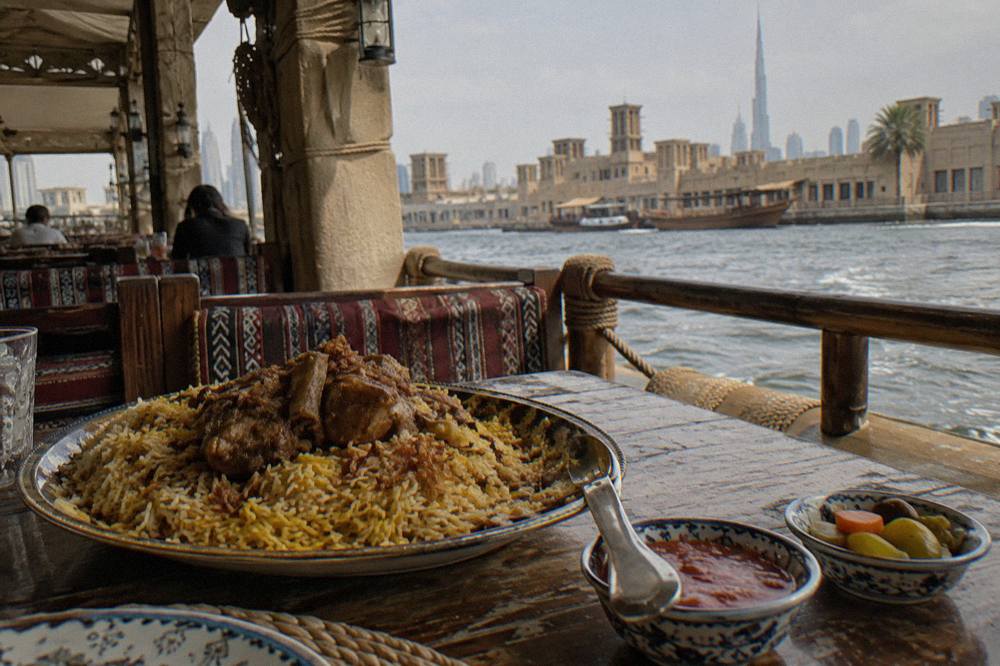
Machboos deserves the first sentence because it is the dish Emirati households build a gathering around. Long-grain rice slow-cooked with meat, dried limes called loomi, baharat spices, cardamom, saffron and cinnamon, served family-style on a platter, often with tomato sauce or pickles. Harees sits next to it at the same table: wheat and meat cooked for six to eight hours until it turns smooth and porridge-like, finished with ghee, eaten at gatherings and through Ramadan. Neither is fast food. Both are dishes you plan a day around, and the six to eight hours that harees demands is the clearest signal of what this cuisine values: time, patience, and enough food for everyone who turns up.
The sweet side is just as specific. Luqaimat are small fried dough dumplings, crisp outside, drizzled with date syrup and sesame seeds, served warm and eaten immediately. Balaleet is a breakfast dish that surprises visitors the first time: sweet saffron and cardamom vermicelli noodles topped with a thin omelette. Chebab are saffron, cardamom and turmeric pancakes, typically eaten with cream cheese and date syrup. Dates run through all of it, and the UAE's fresh date harvest, the rutab season, peaks from June to September, with around 150 varieties including Khalas, Barhi and Fard reported from about AED 15 per kilogram at festivals and markets. If you want a fuller picture of these dishes before choosing where to try them, the Emirati dishes worth knowing guide breaks each one down.
For most readers the fastest way to taste a cross-section is a guided walk through Old Dubai, where the Emirati classics and the street food share the same few blocks.
What Are The Traditional Emirati Dishes?
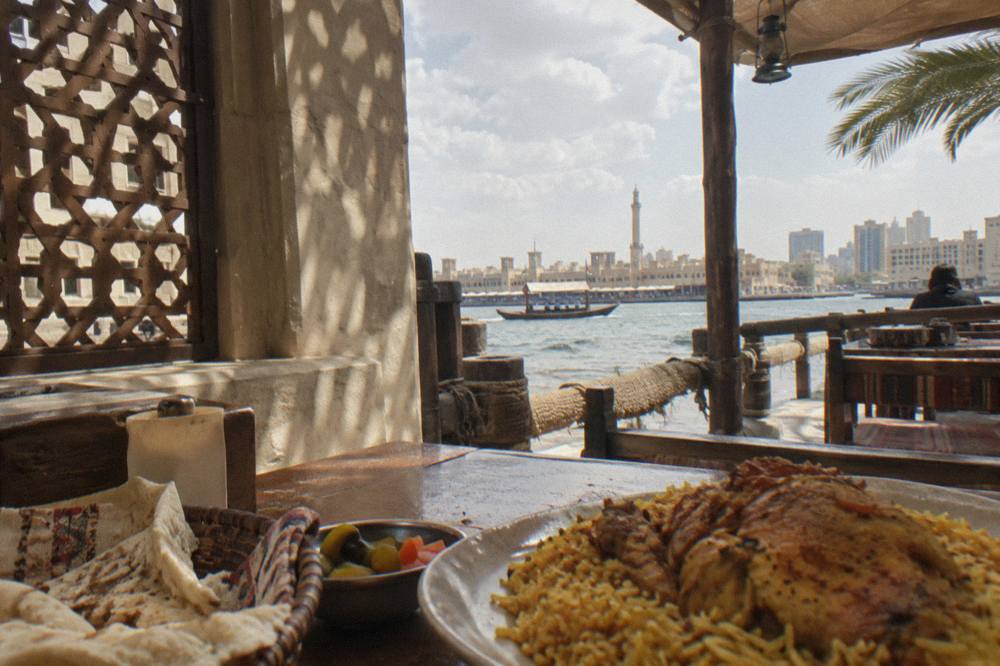
The core Emirati dishes are machboos, harees, thareed, madrouba, balaleet, chebab and luqaimat, with gahwa, unsweetened cardamom coffee, and dates served with all of them. Thareed is a meat and vegetable stew ladled over thin regag bread, and madrouba is a thick, spiced salted-fish porridge. Together they form a cuisine built on slow cooking, spices and wheat rather than fried street snacks.
Thareed is worth singling out because it explains how Emirati food works. The stew is the flavour, but the point is the regag bread underneath, a paper-thin flatbread that soaks up the broth. It is served often during Ramadan and at family tables. Madrouba is the comfort dish most visitors never hear about, a thick porridge of salted fish, rice and spices beaten until smooth. These are home dishes, which is exactly why they are hard to find by wandering: restaurants that serve them well are specific places, not a category. In Deira, heritage restaurants are reported to serve machboos at AED 58 to 65, harees around AED 42, and thareed or margoog around AED 55 to 58, in settings built to feel like a family majlis rather than a commercial dining room.
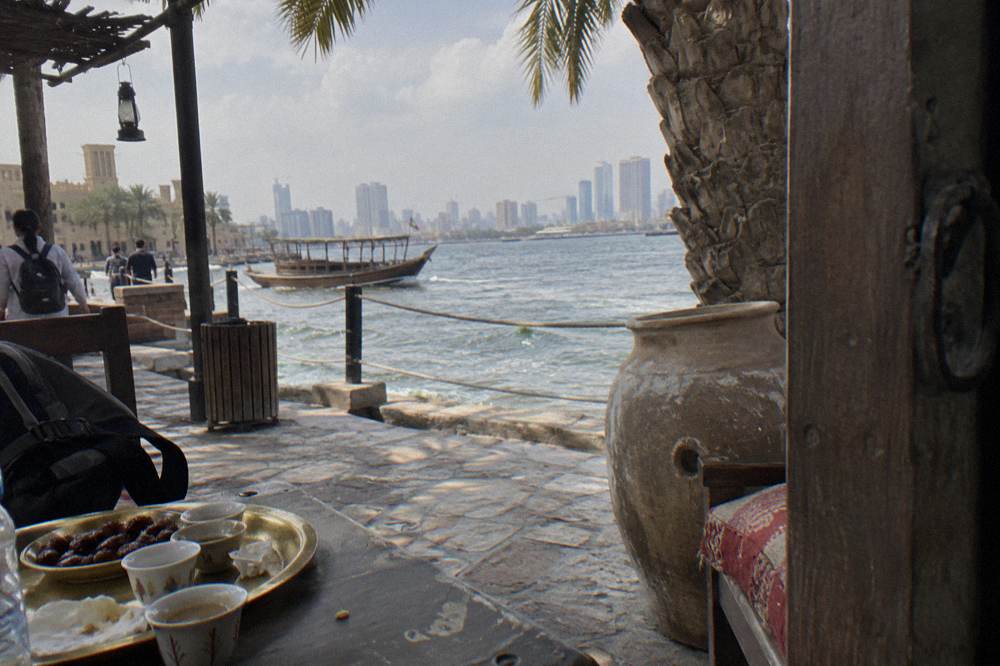
The drink that anchors all of it is gahwa, lightly spiced, unsweetened cardamom coffee poured in small finjan cups and traditionally served with dates. There is an etiquette to it: the cup is received and held in the right hand, and when you have had enough, you gently shake the empty cup side to side rather than saying so. A host will keep refilling until you make that gesture, so knowing it saves both sides an awkward few minutes. Karak chai, the spiced milky tea borrowed from South Asia and fully adopted, is the everyday counterpart, commonly paired with breakfast dishes like balaleet. The story of gahwa itself runs deep: the coffee was once served in majlis gatherings, and the finjan cup remains the vessel it arrives in today.
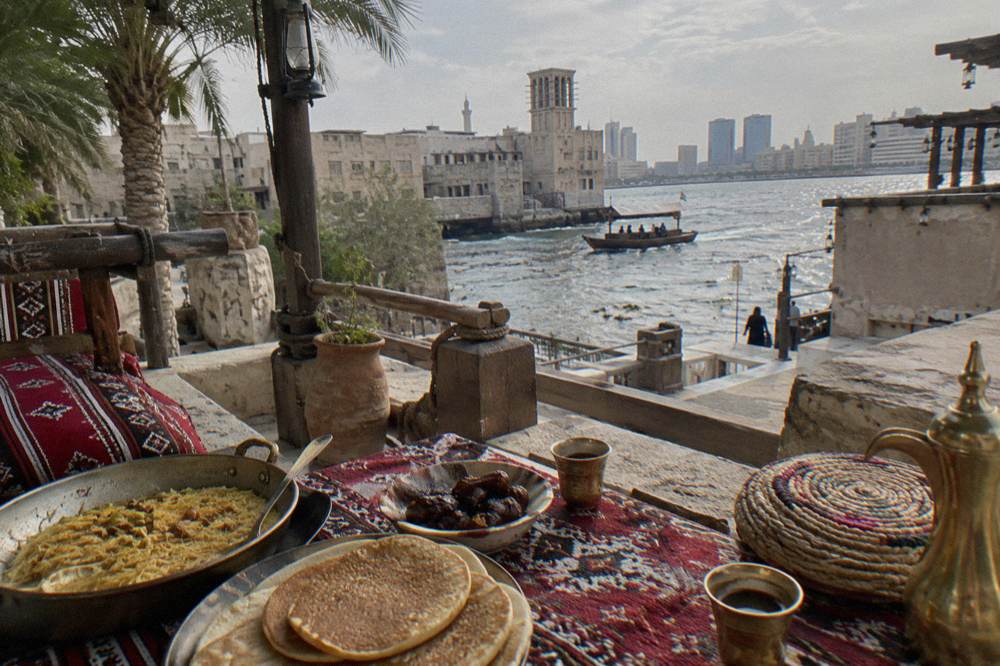
For a structured introduction, the Sheikh Mohammed Centre for Cultural Understanding in Al Fahidi runs 1.5-hour cultural meals with Emirati hosts, with Arabic coffee, dates and a question-and-answer session on customs and daily life. Reported prices are AED 130 for breakfast or brunch, AED 145 for lunch, AED 150 for the fuala tea time and AED 160 for dinner, with booking required. The centre's own programme page has the current details: the cultural meals programme. During Ramadan the dinner sitting adjusts to iftar, so check the page for seasonal changes before planning around it.
What Street Food Do People In Dubai Eat Every Day?
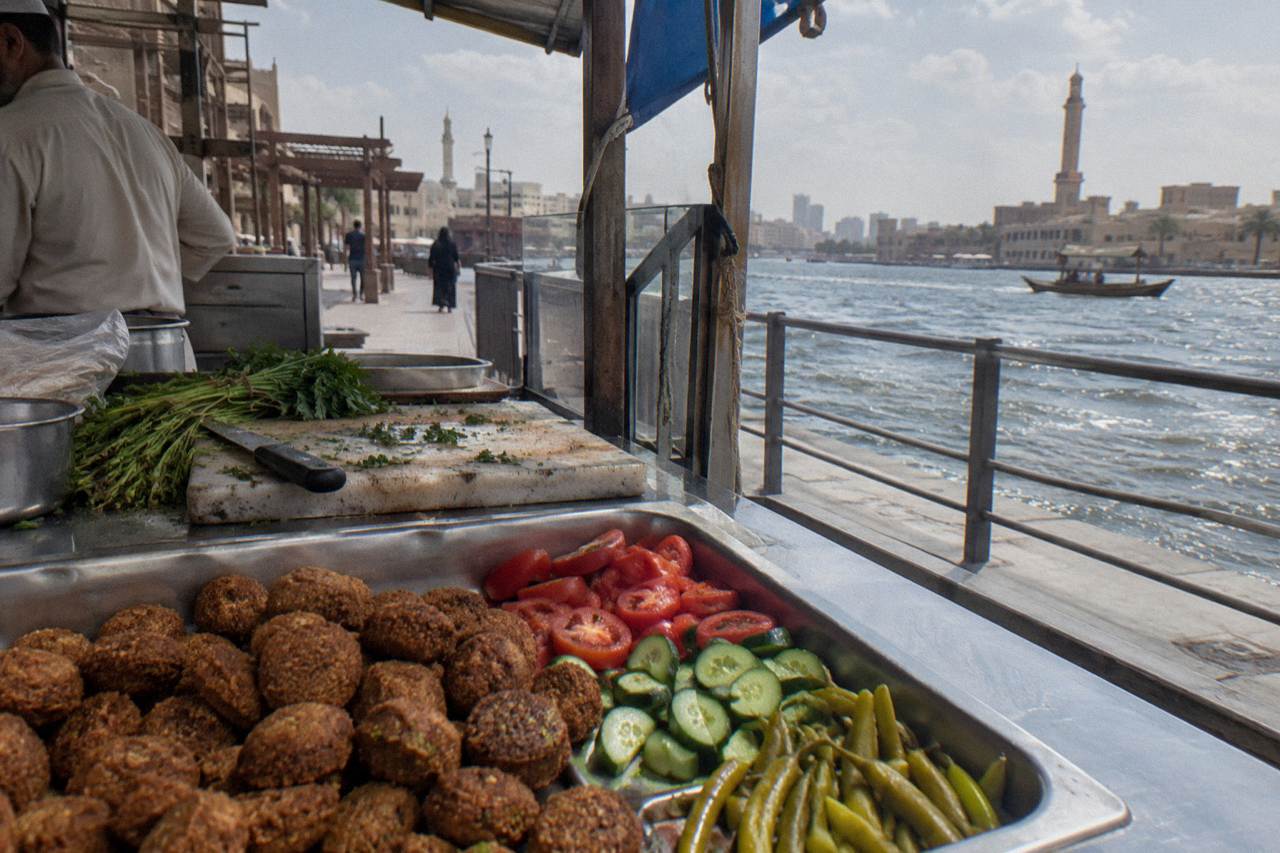
The everyday street food is shawarma, falafel, samosas and karak chai, drawn from the Levant, South Asia and Iran. Reported prices at local spots in Deira and Bur Dubai run 7 to 15 dirhams for shawarma, 1.50 to 8 dirhams for falafel, 2 to 3 dirhams per samosa, and 1 to 3 dirhams for a cup of karak. These are the dishes the city's residents actually live on. If you want to see how those street snacks fit into a full day of eating, the guide to a typical day of meals in Dubai traces the full arc from breakfast through dinner.
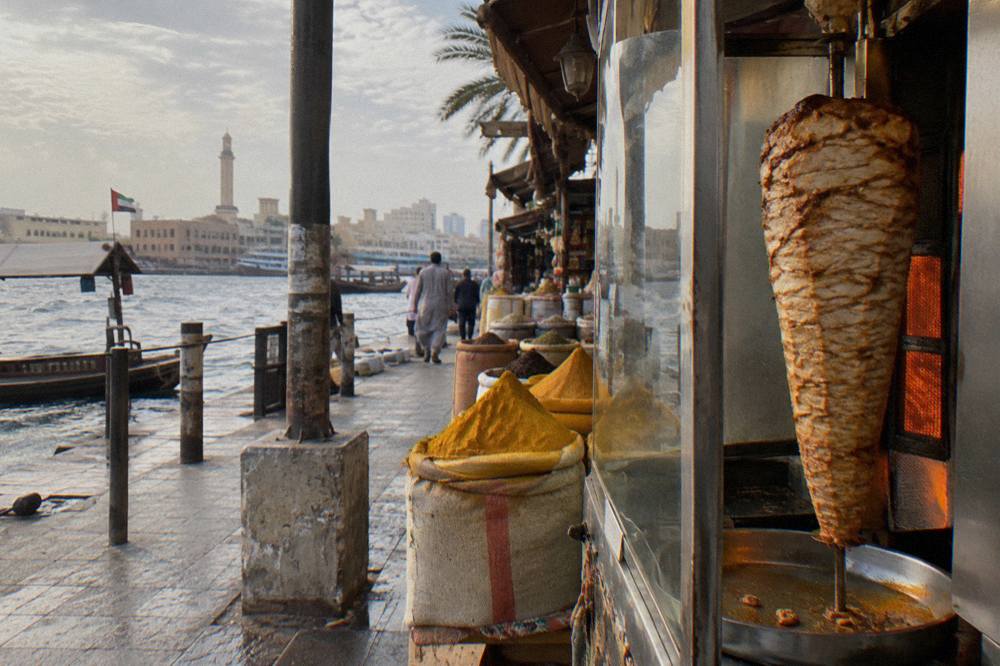
A shawarma in Dubai is a benchmark dish: spit-roasted chicken or lamb shaved into a wrap with garlic sauce or pickles, made in minutes, eaten standing or on a bench. The reported gap between local spots and tourist spots is large, 8 to 15 dirhams versus 20 to 40, which is one reason a walk through Deira pays off. Falafel with hummus is the other constant, a Levantine staple that doubles as the reliable vegetarian option. Samosas, called samboosa locally, sell as single pieces or in bags of around five for a reported 10 to 12 dirhams. Luqaimat, though an Emirati sweet, show up on the same street counters, reported at 10 to 18 dirhams a serving. For a fuller picture of where these street prices sit alongside sit-down Emirati and South Asian dishes, the first-timer's guide to eating in Dubai covers ten dishes with where to find each one.
| Street food item | Reported price at local spots | Notes |
|---|---|---|
| Shawarma | AED 7 to 15 | Tourist-area spots reported at AED 20 to 40 |
| Chicken shawarma wrap | AED 12 to 18 | Around AED 17 at one well-known example |
| Falafel wrap | AED 4 to 15 | Levantine staple, common vegetarian choice |
| Karak chai | AED 1 to 3 | Cafe versions reported higher, up to AED 14 |
| Samosa or samboosa | AED 2 to 3 each | Bags of about five reported at AED 10 to 12 |
| Luqaimat | AED 10 to 18 | Fried dumplings with date syrup, served warm |
These figures are reported local prices, not tour inclusions, and individual stalls vary, so treat them as planning ranges rather than promises. Where a specific stall or cafe is concerned, the only way to know today's price is to ask at the counter.
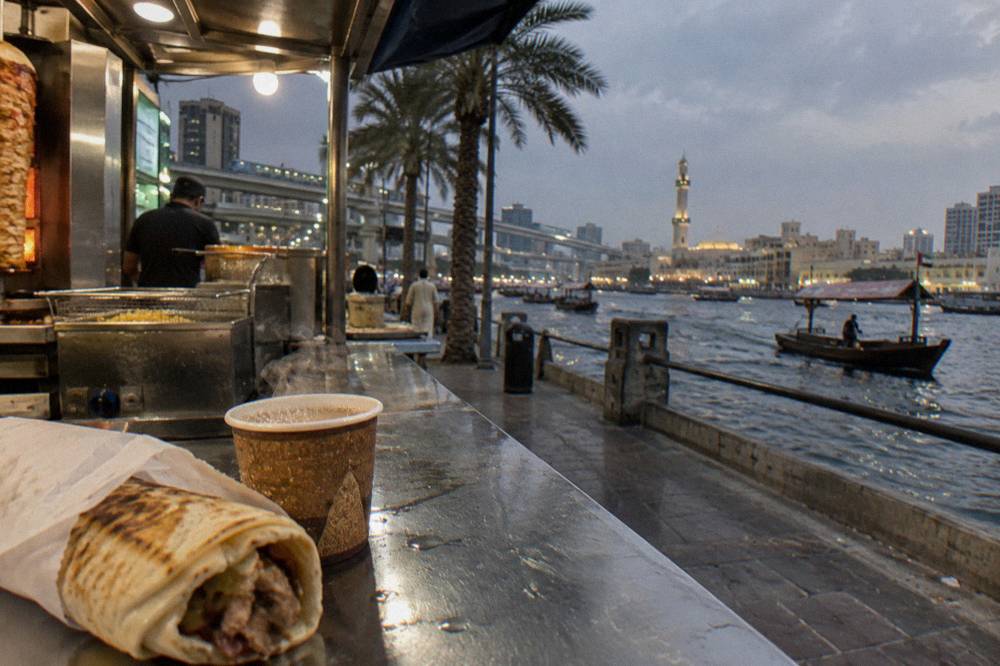
A guided walk is the efficient way to sample several of these in one route. The Al Fahidi, souks and abra cruise walk runs 2.5 to 4 hours through the old quarter and across the Creek, with street food tastings built into the route. Check the operator's live listing for the current price, the meeting point and exactly which tastings are included on your date.
What Does A Typical Meal Look Like?
A typical everyday meal in Dubai is a casual cafeteria or neighbourhood restaurant plate, reported at 15 to 40 dirhams per person for biryani or mezze sets, while a mid-range restaurant meal runs around 80 to 150 dirhams per person with mains often 40 to 80. The style is shared plates, rice or bread at the centre, and tea to finish.
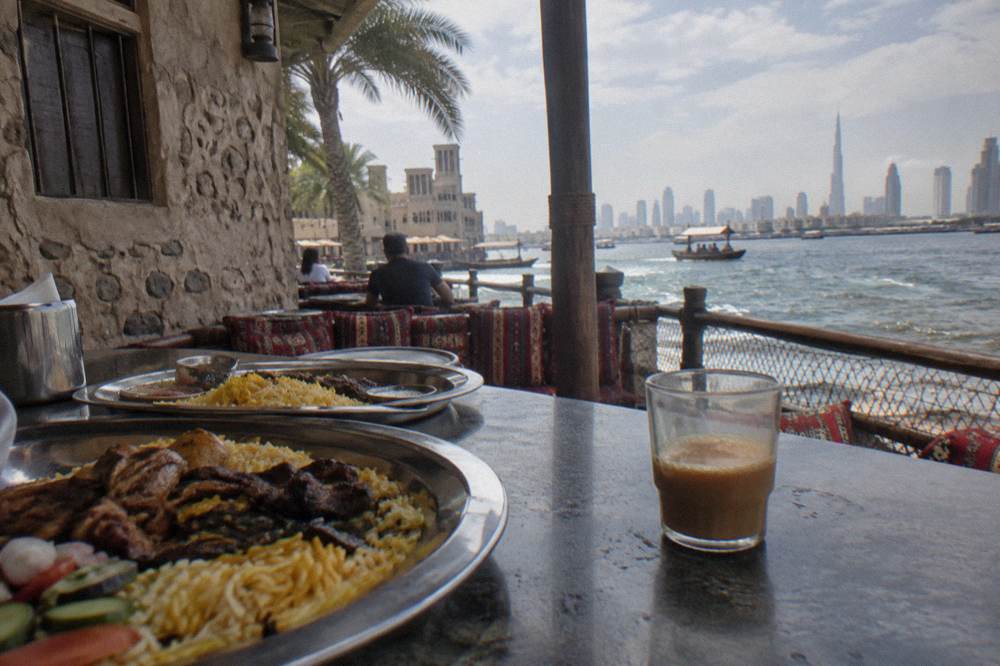
The cafeteria meal is the city's real baseline. A plate of biryani, a mezze spread, or a grilled meat platter from a neighbourhood Lebanese, Iranian, Indian or Pakistani cafe sits in that 15 to 40 dirham band, reported across 2026 price data. Mid-range restaurants sit several steps up, and the difference is not just quality but setting: licensed venues, hotel restaurants and waterfront tables. Restaurant bills also carry add-ons worth knowing before you sit down: a service charge of up to 10 per cent, which is venue-retained and not a government fee, plus 5 per cent VAT. Some hotel-affiliated venues add a 7 per cent municipality fee.
| Eating level | Reported cost per person | What you get |
|---|---|---|
| Street snack | AED 2 to 18 | Shawarma, falafel, samosa, luqaimat, karak |
| Casual cafeteria meal | AED 15 to 40 | Biryani, mezze sets, simple grilled plates |
| Mid-range restaurant | AED 80 to 150 | Mains often AED 40 to 80, licensed venues |
| Cultural meal experience | AED 130 to 160 | Emirati-hosted meal with coffee and dates |
Tipping follows the same logic as the service charge. There are no set rules, and the cash tip is voluntary: 5 to 10 per cent or simply rounding up is common for good service. The official tipping guidance for Dubai describes restaurant tips of 10 to 15 per cent as the usual practice, with smaller fixed amounts for cafes, lounges, porters and valets. The tipping and paying guide for Old Dubai covers the full picture, including checking with the waiter that a card-added tip reaches the staff rather than the restaurant.
What Do People Eat For Breakfast In The UAE?
An Emirati breakfast means balaleet, the sweet saffron vermicelli with a fried egg on top, chebab pancakes with cream cheese and date syrup, regag bread with egg or cheese, and dates with gahwa. In practice, many residents breakfast on karak chai with a samosa or a shawarma instead. Both versions are easy to find in Old Dubai in the morning.
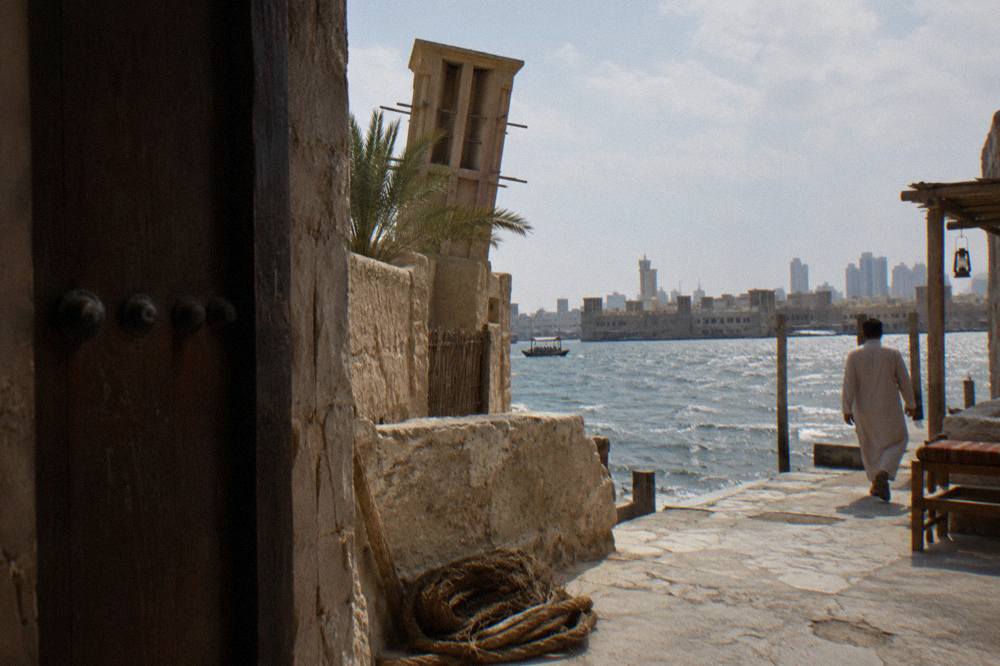
The Emirati breakfast is the most distinctive meal of the day and the one visitors are least likely to stumble into unprompted. Balaleet's sweet-savoury combination confounds expectations in a good way, and chebab with date syrup is closer to a pancake than anything else on the Emirati table. One Al Fahidi restaurant is reported to serve balaleet at around AED 52, alongside regag with egg or cheese and Emirati breakfast boards. That neighbourhood, a grid of coral-stone houses and wind towers, is also where the cultural centre serves its breakfast sittings, so a single morning in Al Fahidi can cover both the restaurant version and the hosted version of the same meal.
The other breakfast is the working one. Karak chai at 1 to 3 dirhams with a samosa is the morning fuel of the city's taxi drivers, shopkeepers and construction crews, and the cafeterias selling it open early. On a food walk, the two breakfasts sit five minutes apart. The practical difference between them is pace: the Emirati breakfast is a sit-down affair with coffee poured in rounds, while the karak counter is a two-minute transaction you can hold in one hand while walking to the souks.
What About Dietary Needs: Halal, Vegetarian And Alcohol?
All meat sold in Dubai's restaurants and markets is halal, and pork appears only in designated licensed sections. Vegetarian eating is easy day to day, with falafel, hummus and mezze everywhere, though no specific food walk is described as vegetarian or vegan unless its listing says so. Alcohol is served only at licensed venues to visitors over 21, never on the street.
The halal point matters because it shapes the whole food landscape: federal standards require meat and poultry in restaurants and markets to be halal-certified, and pork is sold only in segregated, clearly labelled sections of licensed hotel restaurants and supermarkets. For Muslim visitors this is reassurance, and for everyone else it is simply the background condition of eating in the UAE. Vegetarian visitors will not struggle with the everyday food, falafel and bread and mezze are everywhere, but a guided tasting walk is a different question, since its stops are fixed. The honest advice is to message the operator before booking about any vegetarian, vegan, gluten-free or other need, because a listing that does not mention it is not a no, it is an unstated. The vegetarian and dietary needs guide goes into this in detail, and the halal food rules for Dubai are documented separately.
Alcohol is the simplest rule to state: visitors over 21 may drink at licensed hotels, restaurants, bars and clubs, with no personal permit needed for on-site consumption, and alcohol is not allowed in public places outside licensed venues. Food walks through Old Dubai serve no alcohol unless a listing says so. During Ramadan, non-Muslims are not required to fast and restaurants operate as normal, with etiquette suggesting discretion outdoors during daylight fasting hours. The rules around public eating during Ramadan were relaxed in the current penal code, but the courtesy of discretion in shared spaces remains the local expectation.
How Can You Actually Taste These Dishes?
The practical routes are a guided food walk through Old Dubai, a cultural meal with Emirati hosts, or self-guided eating through Deira and Bur Dubai. A walk covers the most ground in one booking: tastings counted and listed, a guide who explains each dish, and a route linking Al Fahidi, the souks and the Creek. Costs and inclusions for each tour are on the operator's live listing.
“Our guide was amazing and knowledgeable. We learned alot about the history of UAE and Emirati culture. As for the food it was filling and tasty. This is a tour you should not miss and want be disappointed.”
Self-guided eating is genuinely viable in Old Dubai, and Dubai Food Tours exists partly to make it easier: the walking routes between Al Fahidi, Al Seef, the Textile Souk and the Deira souks are all open, with no reported closures. The Al Fahidi Historical Neighbourhood keeps free public access to its lanes, galleries and courtyards, and the Al Seef promenade runs roughly 1.8 km along the Creek, open daily with free entry. What a walk adds is structure. Instead of guessing which cafeteria is worth your dirhams, you get a route with tastings included, dishes explained as they arrive, and the Creek crossing by abra built into the day.
The premium guided option adds a similar spine with street food and an abra ride over 3 to 4 hours. Its listing describes tastings of shawarma, falafel, karak, samosa, rogag and luqaimat, which reads as a fair cross-section of the everyday food described above. Check the live listing for the current price and meeting point.
Whichever route you choose, two small things raise the experience. Cover shoulders and knees in the heritage districts and souks, which is respect rather than law, and ask before photographing people, particularly Emirati women and families. Both are covered fully in the dress code guide for walking tours and souks. Timing matters too: December through February brings the lowest average daytime highs, 24 to 26 degrees, which is the comfortable window for hours of walking, and the souks keep long hours, with the Gold Souk's shops generally reported open from about 10am to 10pm.
Common Questions About Food In The UAE
What Kind Of Food Do They Eat In The UAE?
Emirati food: machboos, harees, thareed, balaleet, chebab and luqaimat, served with gahwa and dates. Alongside it, the everyday food of Dubai's residents: shawarma, falafel, samosas, biryani and karak chai. Both cuisines share the same neighbourhoods in Old Dubai.
What Is The National Dish Of The UAE?
Machboos, long-grain rice slow-cooked with lamb, chicken or fish, dried limes, baharat spices, cardamom, saffron and cinnamon, served family-style, often with tomato sauce or pickles.
What Do People In Dubai Eat For Breakfast?
Emirati breakfast is balaleet, chebab pancakes with date syrup, regag bread and gahwa with dates. The everyday version is karak chai with a samosa from a local cafeteria, reported at 1 to 3 dirhams for the tea.
Is All Food In Dubai Halal?
Yes, all meat sold and served in restaurants and markets follows halal rules. Pork is sold only in designated licensed sections of approved venues, clearly labelled and physically separated.
Can Vegetarians Eat Well In Dubai?
Day to day, yes: falafel, hummus, mezze and bread are everywhere at low reported prices. On a guided tasting walk, message the operator before booking, since stops are fixed and a listing that does not mention vegetarian options has not confirmed them.
How Much Does A Meal Cost In Dubai?
Reported 2026 figures: street snacks run 2 to 18 dirhams, a casual cafeteria meal 15 to 40 dirhams, and a mid-range restaurant meal around 80 to 150 dirhams per person. Bills typically add a service charge of up to 10 per cent plus 5 per cent VAT.