What Is A Must Eat In Dubai?
The dishes a first-time visitor should not leave Dubai without tasting, from machboos and harees to karak chai and luqaimat, with where to try each one.
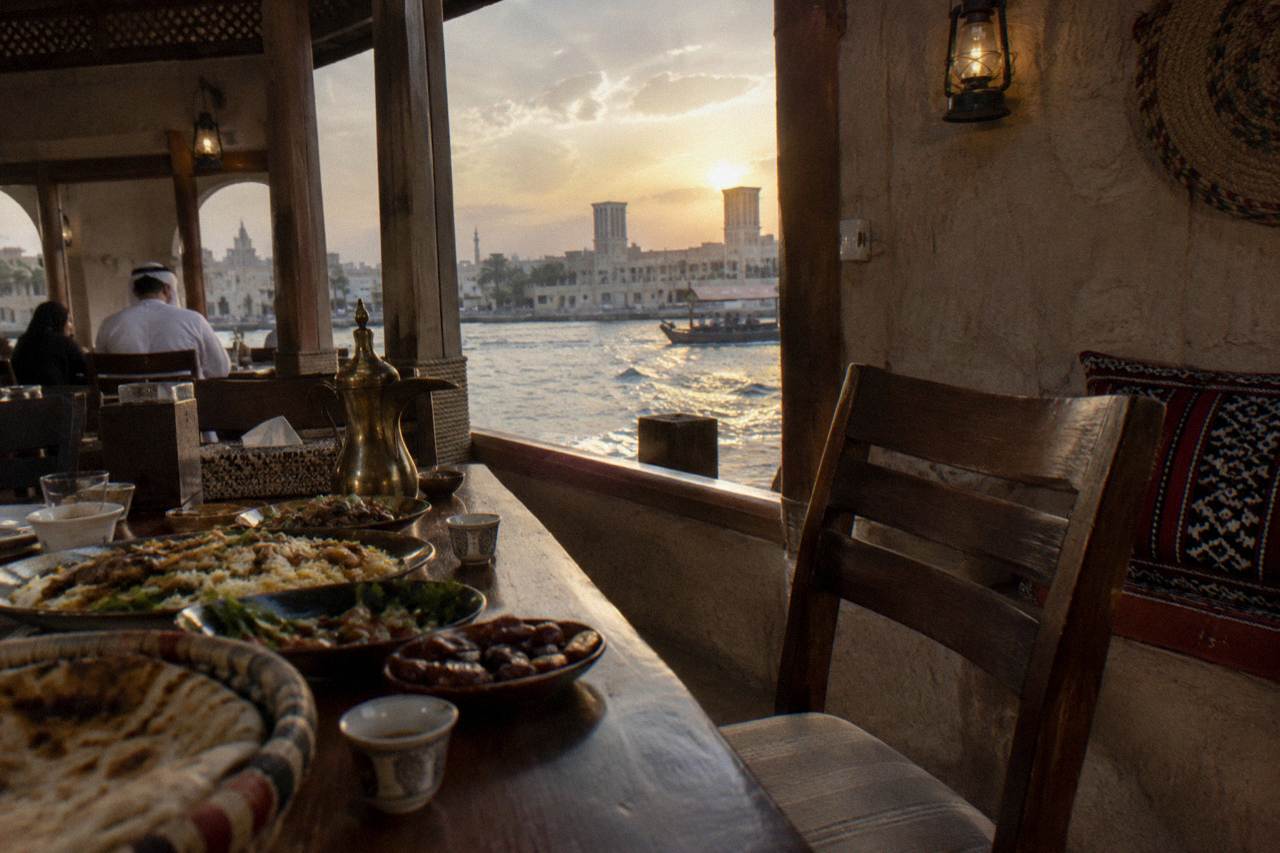
If a visitor eats only five things in Dubai, they should be machboos, harees, luqaimat, karak chai and a shawarma from a busy Old Dubai counter. Machboos is the national dish, a spiced rice platter slow-cooked with lamb, chicken or fish. Harees is the comfort food, wheat and meat cooked down to a smooth porridge. Luqaimat are the dessert, crisp dumplings in date syrup. Karak chai and shawarma are the everyday street layer that ties the whole city together. To see where locals actually eat these dishes in Old Dubai, the guide to famous food in Dubai and what locals order maps out the best counters and prices.
That shortlist is not a random collection of dishes. It tracks the two food cultures that actually define eating in Dubai. The first is Emirati home cooking, the food of gatherings and Ramadan tables, which most tourists never encounter unless they go looking for it. The second is the street and cafeteria food of Deira and Bur Dubai, where a shawarma wrap and a cup of karak cost a handful of dirhams and where the city's working population actually eats.
The gap between the two is where most visitors get lost. They arrive, see the mall food courts and the hotel brunches, and leave having eaten food that could exist in any city on earth. The dishes above cannot. Machboos with its dried limes and baharat spices, balaleet with its sweet saffron noodles under a fried egg, gahwa poured in small finjan cups: these exist because of the Gulf, its trade routes and its dates, and they are the honest answer to the question.
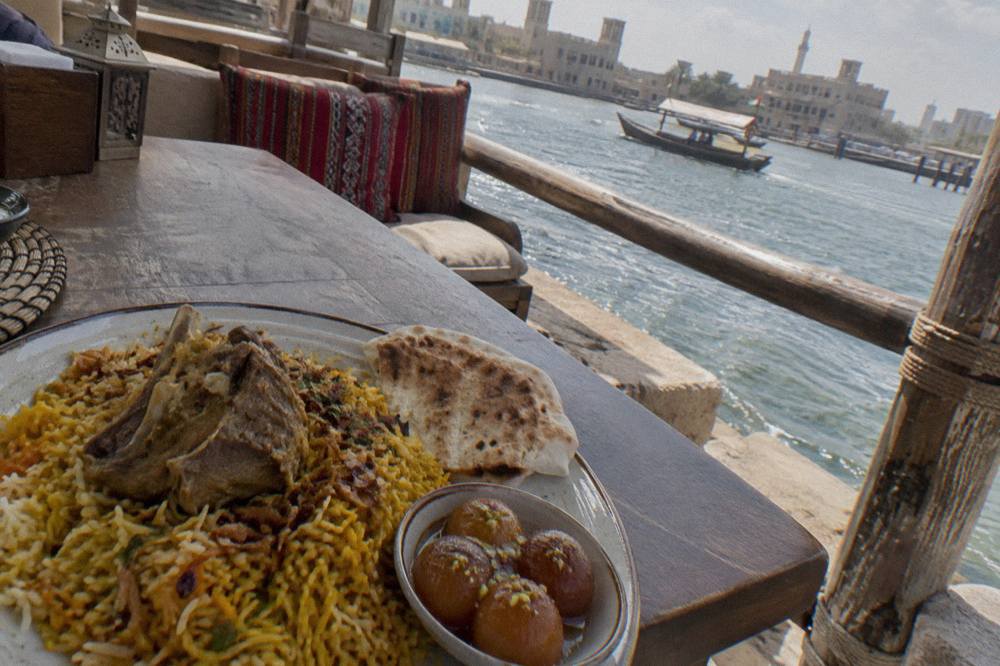
For travelers who want the list without the legwork, a guided tasting walk through Old Dubai covers several of these dishes in one route, with a guide explaining what each one is.
The rest of this article walks through each must-eat dish in turn, explains what it is and where the flavors come from, and ends with the practical layer: what things cost at street counters, how to handle Arabic coffee etiquette, and how to fit the whole list into a single day in Old Dubai.
The Emirati Dishes That Define The City
Machboos, harees, thareed and balaleet are the four dishes that carry Emirati identity, and a visitor who tastes them has eaten what the city was eating before the skyline. Machboos is rice slow-cooked with meat, dried limes and baharat spices. Harees is wheat and meat cooked for six to eight hours until smooth. Thareed is a stew ladled over thin regag bread. Balaleet is sweet saffron vermicelli topped with a fried egg, eaten at breakfast.
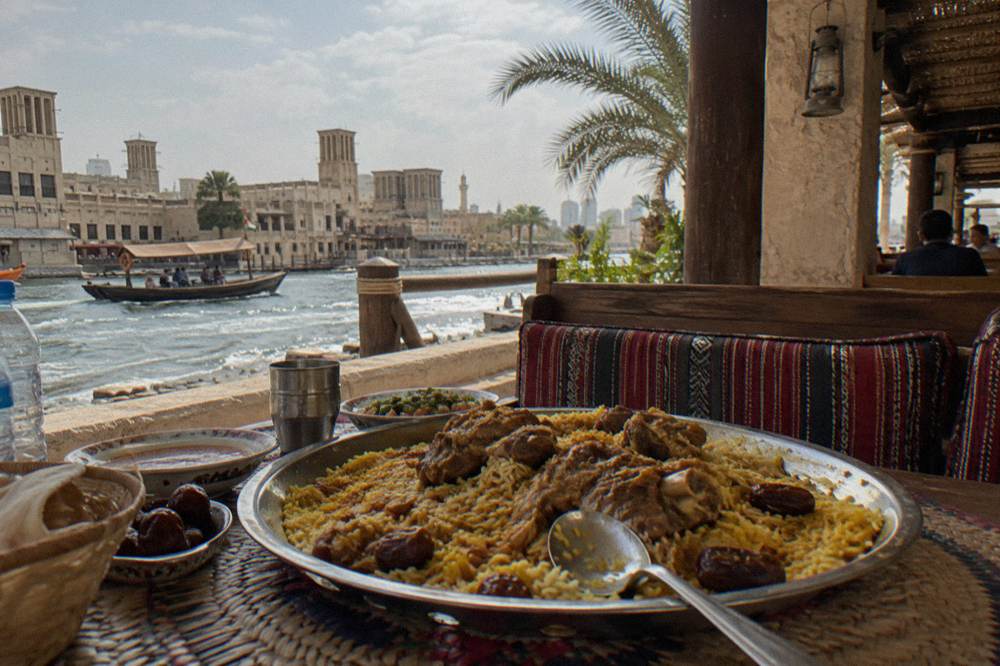
Machboos deserves its place at the top of any list. Long-grain rice is slow-cooked with lamb, chicken or fish, dried limes called loomi, baharat spices, cardamom, saffron and cinnamon, and the result is served family-style on a platter, often with tomato sauce or pickles on the side. It is the dish the UAE considers its own, and it shares a family tree with biryani while tasting distinctly of the Gulf's dried-lime sourness.
Harees is the opposite kind of dish: minimal ingredients, maximal patience. Wheat and meat, lamb or chicken, cook for six to eight hours until the whole pot turns into something smooth and porridge-like, finished with ghee and sometimes cinnamon. It is the dish of gatherings and of Ramadan, the equivalent of a comfort food that Emirati families make in quantity. Thareed sits next to it in the same tradition, a meat and vegetable stew poured over regag bread so the thin bread soaks up the broth.
“Excellent talk about Dubai and muslim culture. All questions answered and shared a beautiful arabian lunch to boot.”
Balaleet and chebab cover the sweet end of the Emirati table at breakfast. Balaleet is saffron and cardamom scented vermicelli noodles under a thin omelette or fried egg, a sweet-savory combination that surprises first-timers and converts plenty of them. Chebab are saffron, cardamom and turmeric pancakes, typically eaten with cream cheese and date syrup. Both appear on Emirati breakfast menus in Al Fahidi, where a traditional breakfast board can assemble them all on one table.
The fastest way to taste several of these dishes in one sitting, with someone explaining each one, is a hosted cultural meal. The Authentic Emirati Cultural Meal and Talk in Old Dubai pairs a meal with conversation, and its listing describes a setting where diners can ask about the dishes and the customs behind them. Duration and what is included are stated on the booking page.
For visitors who would rather eat their way through the same neighborhood on foot, the Old Dubai food walk route explains what a guided route through Al Fahidi and the Creek actually covers, stop by stop. The Dubai Food Tours site exists precisely because these dishes are easy to miss without a plan.
Street Food: Shawarma, Falafel And Karak Chai
The must-eat street foods in Dubai are shawarma, falafel, samosas and karak chai, sold at counters across Deira and Bur Dubai for just a few dirhams each. Reported prices put shawarma at 8 to 15 AED at local spots, falafel wraps at 4 to 15 AED, samosas at 1 to 5 AED per piece, and karak chai at 1 to 3 AED, which is what residents actually pay.
Shawarma is the workhorse. Meat turns on a vertical spit, gets shaved into a wrap with garlic sauce or pickles, and lands in hand for a price that has barely moved in years. Local spots charge a fraction of what tourist areas charge, with reported figures of 20 to 40 AED at the tourist end against 8 to 15 AED at the local one. The lesson is geographic, not culinary: the same wrap costs more near the attractions, so walk a few blocks into Deira.
Falafel is the vegetarian anchor of the street list, and in Old Dubai it is nearly as cheap as tea. Reported prices run from 4 to 15 AED for a wrap depending on size and fillings. Samosas, sold as samboosa in many shops, go for a reported 1 to 5 AED per piece, or 10 to 12 AED for a bag of around five, which is the way regulars buy them.
Karak chai is the drink that ties the district together. Spiced milky tea, boiled hard with cardamom and sometimes saffron, it costs a reported 1 to 3 AED at local cafeterias and stalls, though cafe versions run higher. It pairs naturally with the Emirati breakfast dishes mentioned above, and it is the single most repeatable purchase on this list: nobody drinks just one.
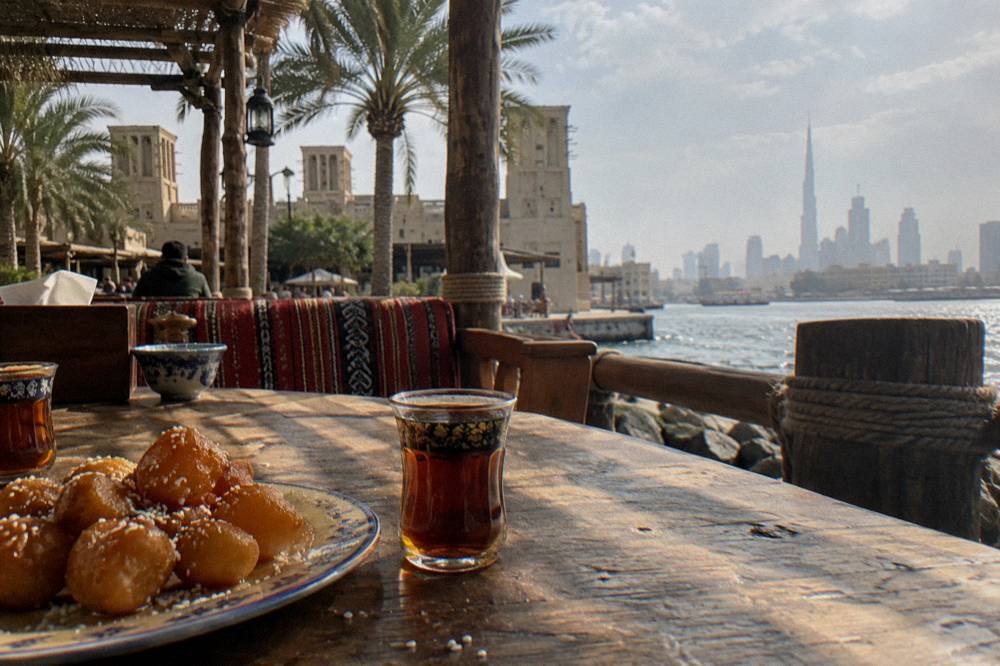
The counters selling these items cluster along the lanes between the souks and the metro stations, and the variety reflects who lives and works in the district. Iranian, Afghan, Indian, Pakistani and Lebanese cafes all operate in the same few blocks, which is why a single street can produce a falafel wrap, a plate of luqaimat and a karak within a two minute walk. Visitors eating their way through independently should carry small notes, since many of the cheapest counters remain cash-first businesses.
| Item | Reported price at local spots | Notes |
|---|---|---|
| Shawarma | 8 to 15 AED | Tourist areas reported at 20 to 40 AED |
| Falafel wrap | 4 to 15 AED | Filling and size drive the spread |
| Samosa (per piece) | 1 to 5 AED | Bags of about five reported at 10 to 12 AED |
| Karak chai | 1 to 3 AED | Cafe versions reported higher |
| Luqaimat | 10 to 18 AED | Served warm, eaten immediately |
All prices above are reported figures from 2026 sources covering Deira and Bur Dubai, and individual stalls vary, so treat them as planning ranges rather than promises. A fuller breakdown of meal costs across the city, including mid-range restaurant pricing, sits in the Dubai food prices guide.
Sweet Endings: Luqaimat, Dates And Dubai Chocolate
Luqaimat is the must-eat dessert: crisp fried dough dumplings drizzled with date syrup and sesame seeds, served warm and eaten immediately. Dates are the other essential, and the UAE grows around 150 varieties, with fresh rutab at their best in the summer months and dried dates available year-round. Dubai chocolate, the pistachio-filled bar that went viral, is the modern addition to the list and is sold across the city.
Luqaimat earns its place on taste and on timing. The dumplings go soft within minutes of frying, so a good batch is a hot batch, drizzled with date syrup and scattered with sesame seeds and eaten standing up. They are a Ramadan treat first and an everyday dessert second, and street counters in Old Dubai sell them at a reported 10 to 18 AED a portion.
Dates are less a dish than a constant. The UAE's fresh rutab harvest peaks in the summer, with the best two to three months falling in that window, and around 150 varieties grow in the country, including Khalas, Barhi and Fard. Fresh dates have been reported from around 15 AED per kilogram at festivals and markets, while dried dates sit in shops all year. Any visitor with a suitcase should buy a box before flying home.
Dubai chocolate is the newest item on the list and the one most likely to be requested by name back home. The pistachio and knafeh-filled bar became a global phenomenon, and shops across the city now sell it in many forms. For travelers hunting it specifically, the Dubai chocolate and sweet treats guide covers where the famous versions are sold and what to watch for when buying.
Arabic Coffee, Etiquette And The Table Manners That Matter
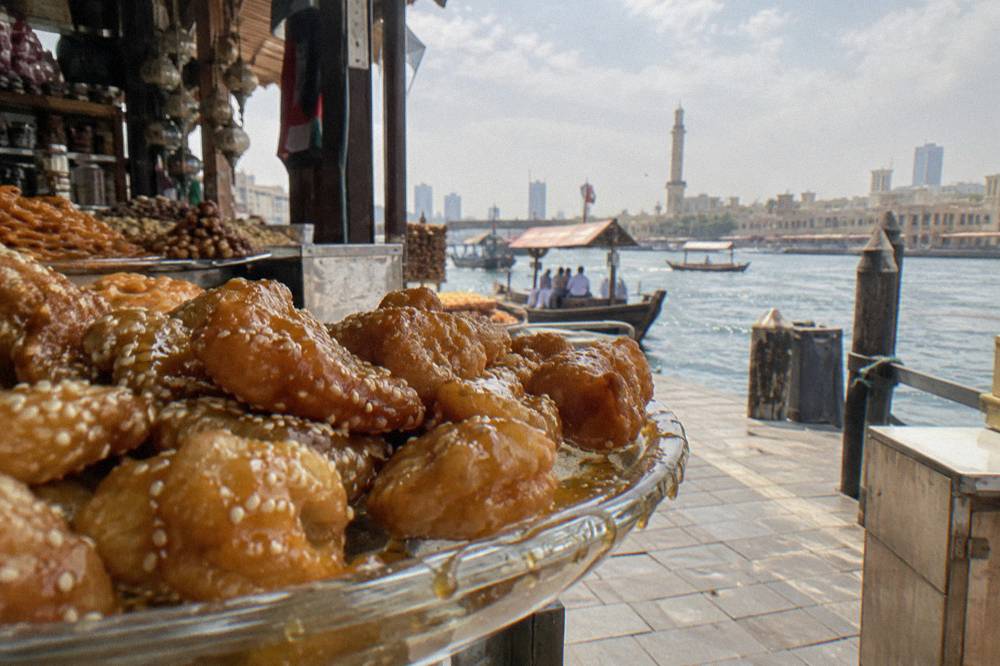
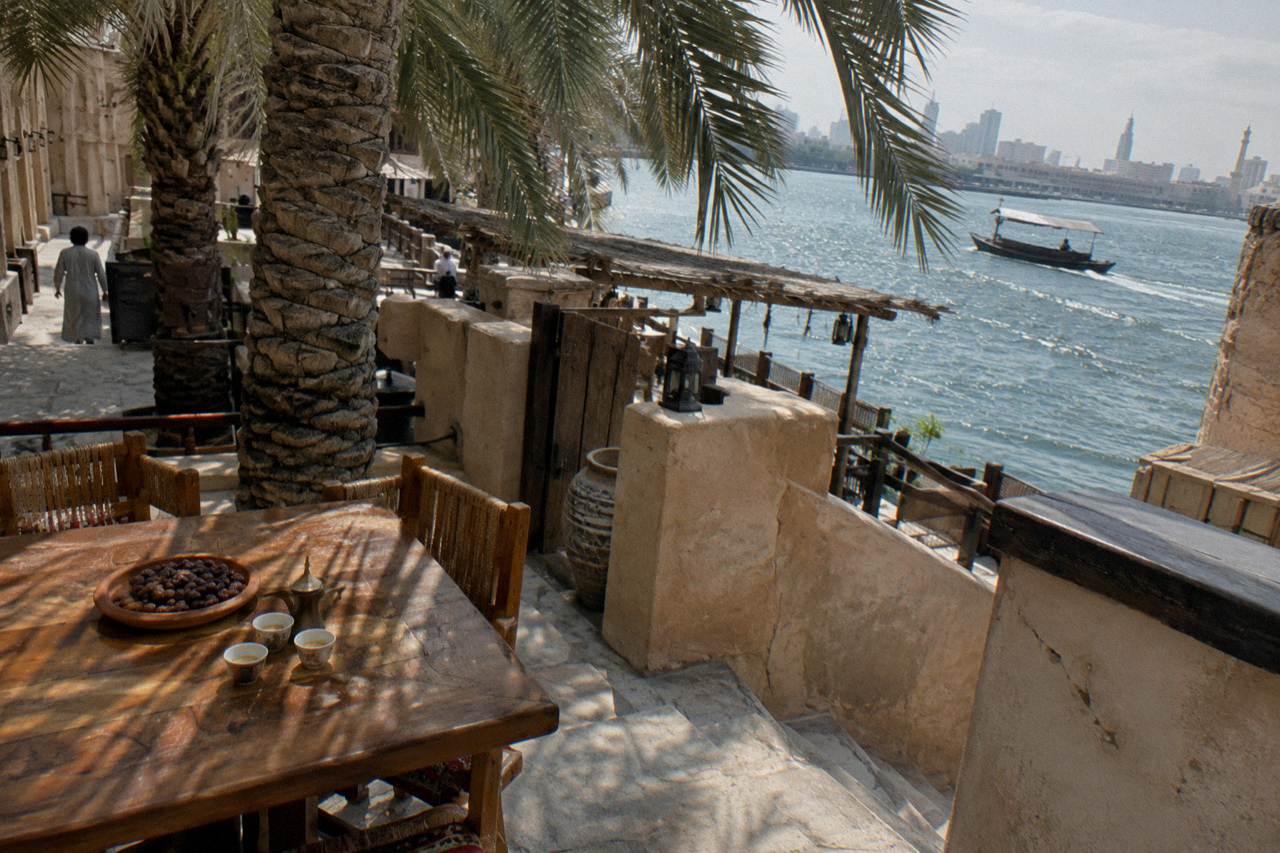
Gahwa, lightly spiced unsweetened Arabic coffee served in small finjan cups with dates, is the must-eat list's official welcome ritual, and it comes with etiquette: receive the cup with the right hand, and shake the empty cup gently side to side to signal no more refills. Around the table, meat is halal throughout, diners should cover shoulders and knees in heritage areas, and photography of people requires asking first.
Gahwa is cardamom-scented, unsweetened, and poured in small amounts, refilled constantly until the drinker signals. The signal is the shake: a gentle side-to-side tilt of the empty cup tells the host the service can stop. Hosts take this seriously, and visitors who learn the gesture are noticed for it. Dates almost always sit alongside, the sweetness balancing the bitter coffee.
The rest of the etiquette layer is short. All meat sold in restaurants and markets in Dubai is halal, and pork appears only in designated licensed sections, so halal diners can order freely and others should not expect pork on the menu. Dress in souks and heritage areas means covering shoulders and knees out of respect, with no strict legal fine attached in most cases but a clear social logic in traditional districts. Photography etiquette is firmer: always ask before photographing individuals, especially Emirati women and families, as photographing people without consent can violate privacy rules.
Tipping follows the same pattern of light rules and personal judgment. Restaurants may add a discretionary service charge, capped at 10 per cent by law and often retained by the venue rather than passed to staff, with 5 per cent VAT applying to food and beverage. Additional cash tips of 5 to 10 per cent, or simply rounding up, are common but voluntary for good service. Visitors checking a card terminal tip should confirm with the waiter that the amount reaches the staff.
Alcohol sits outside this list entirely, and that is accurate rather than an oversight. Food walks through Old Dubai serve no alcohol unless a listing says otherwise, and drinking is confined to licensed venues for visitors over 21, with public drinking prohibited. The alcohol and pork guide covers the rules in full for travelers who plan to mix a drink into the evening.
Visitors with dietary restrictions should message a tour operator before booking rather than assuming. A listing that does not mention vegetarian, vegan or gluten-free options is not saying no, it is saying nothing, and operators can often adapt when asked in advance. The dietary needs guide covers this in detail.
Fitting The Must-Eat List Into One Day
One well-planned day in Old Dubai can cover the entire list: an Emirati breakfast with balaleet and chebab in Al Fahidi, a walk through the souks with karak chai and samosas, a cultural meal or a plate of machboos at midday, shawarma and luqaimat from a Deira counter in the evening. The geography makes it possible, because Al Fahidi, the Textile Souk, the abra crossing and the Deira souks all sit within a short walk of each other.
“Seeing the old parts of the city was amazing, but the bits that we really loved came from our tour guide, Seef, who provided just with so much information and insights into local culture. Definitely recommend!”
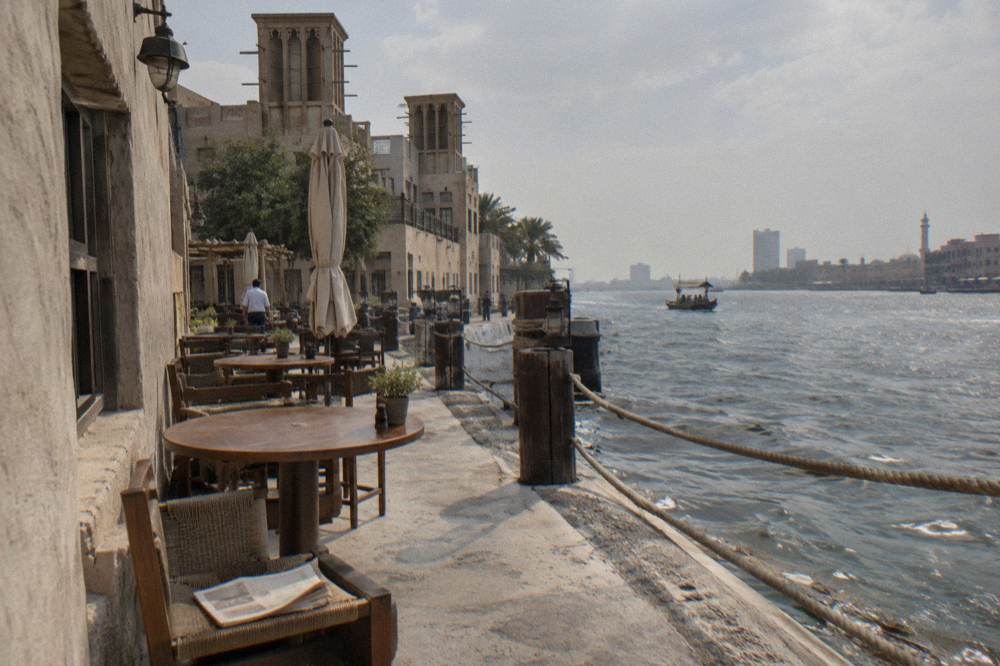
The route works because Old Dubai is compact. Al Fahidi Historical Neighbourhood is open for walking with free public access, its lanes and courtyards open daily, and the Al Seef waterfront promenade stretches about 1.8 km along the Bur Dubai side of the Creek with free entry. From there the Textile Souk, the abra docks and, across the water, the Spice Souk and Gold Souk line up in sequence, and standard walking connections between all of them are reported open with no route closures.
Timing matters more than distance. The souks keep varied hours: reported patterns put Gold Souk shops at roughly 10:00 to 22:00, the Spice Souk open earlier than 8:00 and past 21:00 but closed during the day on Fridays, and many shops taking midday breaks. A morning start in Al Fahidi, a midday crossing to Deira, and an evening counter crawl fits both the hours and the appetite.
The metro makes the day car-free. The Green Line serves the whole district, with Sharaf DG station serving the Al Fahidi area and Al Ras station sitting beside the Deira souks, so a visitor can enter at one end and exit at the other without backtracking. An anonymous Nol card costs a reported 25 AED including initial credit and covers metro, tram and buses.
A guided walk compresses the day further. The Local Street Food and Guided Walking Tour of Dubai Old Town runs for about 3 hours through the same streets, with a guide handling the route and the ordering, which matters for visitors who do not read Arabic menu boards or want the history alongside the food. Check availability if that format fits, and see the street food guide for a self-guided version of the same route.
Travelers who prefer the whole day handled privately, with hotel transfers removing the metro leg entirely, can look at the Private Old Dubai Street Food and Walking Tour With Transfers, a 3 hour private format covering the same district. Its price basis and inclusions are on the booking page. Check availability for that option.
Common Questions About Must-Eat Food In Dubai
What Is A Must Eat In Dubai?
Machboos, harees, luqaimat, karak chai and a shawarma from an Old Dubai counter. Machboos is the national dish, harees is the slow-cooked comfort food, luqaimat is the dessert, and karak chai and shawarma are the everyday street layer. Together they cover both the Emirati table and the street food that defines daily eating in the city.
Where Can I Try Emirati Food In Dubai?
Al Fahidi Historical Neighbourhood in Bur Dubai is the center of gravity: it hosts cultural meals with Emirati hosts, and its restaurants serve Emirati breakfast dishes like balaleet and chebab. Heritage settings in Deira also serve machboos, harees and thareed. A cultural meal with a local host is the fastest way to taste several dishes with explanations attached.
How Much Does Street Food Cost In Dubai?
Reported figures put shawarma at 8 to 15 AED at local spots, falafel wraps at 4 to 15 AED, samosas at 1 to 5 AED per piece, karak chai at 1 to 3 AED, and luqaimat at 10 to 18 AED a portion. Tourist areas charge more for the same items, so walking a few blocks into Deira or Bur Dubai saves real money.
Is Dubai Food Halal?
All meat sold in restaurants and markets in Dubai follows halal rules, and pork is sold only in designated licensed sections. Halal diners can order freely anywhere. Visitors with other dietary needs should message the operator before booking any food experience, since a listing that does not mention vegetarian or gluten-free options is not confirming either way.
What Dessert Should I Try In Dubai?
Luqaimat, crisp fried dumplings drizzled with date syrup and sesame seeds, served warm and eaten immediately. Dates are the second answer: the UAE grows around 150 varieties, with fresh rutab at their best in summer and dried dates available year-round. Dubai chocolate, the pistachio-filled bar, is the modern third choice and is sold across the city.
Can I Try All The Must-Eat Dishes In One Day?
Yes. Old Dubai is compact: Al Fahidi, the Textile Souk, the abra crossing and the Deira souks sit within a short walk of each other. A morning Emirati breakfast in Al Fahidi, karak and samosas through the souks, a cultural meal or plate of machboos at midday, and shawarma and luqaimat from a Deira counter in the evening covers the whole list.