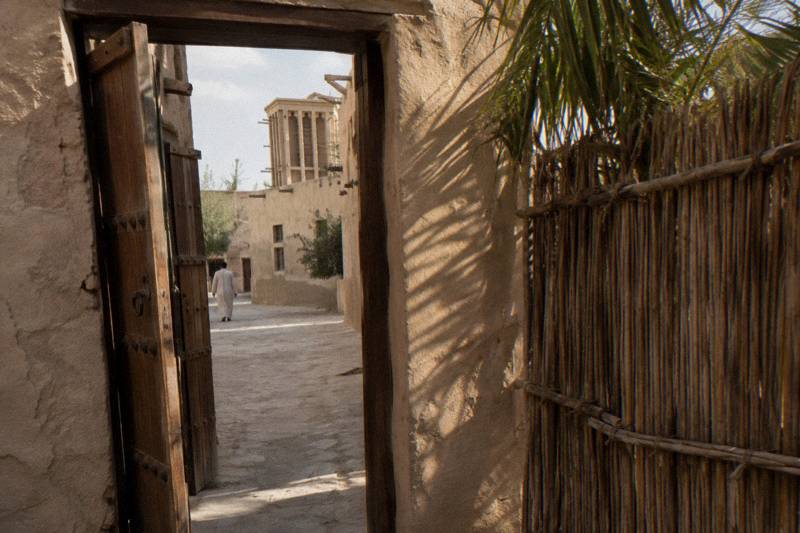
Dubai Street Food Guide: What To Try And Where
Dubai's best eating is at counter height: shawarma and karak in Deira, luqaimat by the Creek, Emirati breakfast plates in Al Fahidi. This guide covers the dishes, the reported prices, the ordering habits, and the honest point at which a guide adds something a solo walk cannot.
Short answer
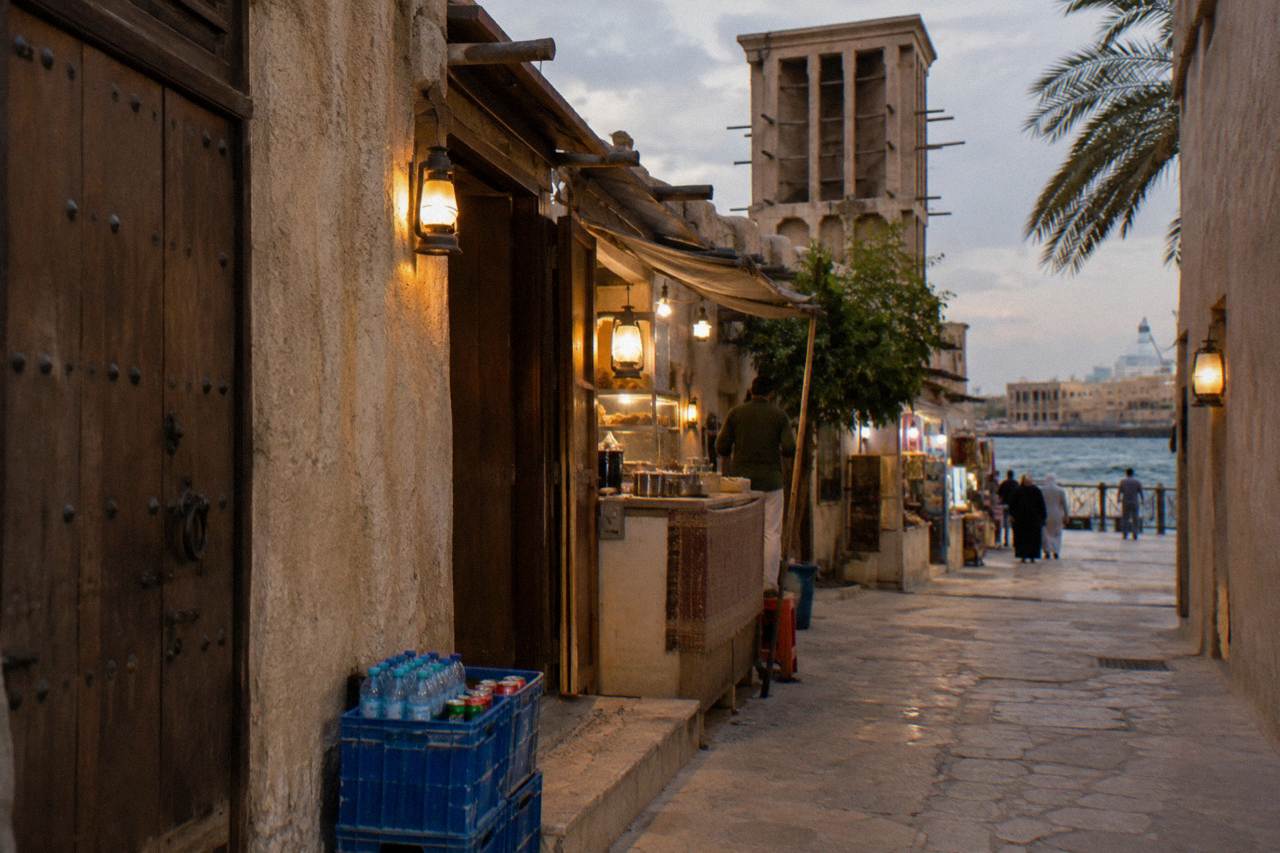
Dubai street food centres on shawarma, falafel, karak chai, samosas and luqaimat, with reported stall prices from around 1 AED for karak to 40 AED for tourist-area shawarma. Deira and Bur Dubai hold the densest eating, most of it halal, and a guided walk helps most with stall selection and context.
Street food in Dubai is not a hidden scene. It is the daily eating of the people who built the city, served at counters in Deira and Bur Dubai at prices that make the mall food courts look absurd. A shawarma in a local spot runs a reported 8 to 15 AED, while the same wrap near the tourist hotels goes for 20 to 40 AED. Karak, the spiced milky tea that fuels half of Old Dubai, costs a reported 1 to 3 AED at cafeteria counters. If that price gap makes choosing a spot feel confusing, the guide to ordering shawarma in Dubai covers chicken versus lamb, the sauces and breads, and what to expect from a stand versus a cafe.
The real question for a visitor is not whether the food exists. It is whether to eat it alone or with someone who knows which counter to stand at. This guide lays out the dishes, the areas, the reported costs, the ordering habits, and the honest point where a guided walk earns its keep. Dubai Food Tours exists for exactly that decision, and the rest of this page is built to help you make it with real numbers rather than slogans.
What Is Dubai Street Food And Where Do You Find It?
Dubai street food is counter service eating: shawarma, falafel, samosas, karak chai and luqaimat, served in the lanes of Deira and Bur Dubai, plus Emirati breakfast dishes in the heritage district. The densest concentration sits between Al Fahidi, the Bur Dubai abra dock and the Deira souks, where Iranian, Afghan, Indian, Pakistani and Lebanese cafes share the same few blocks.
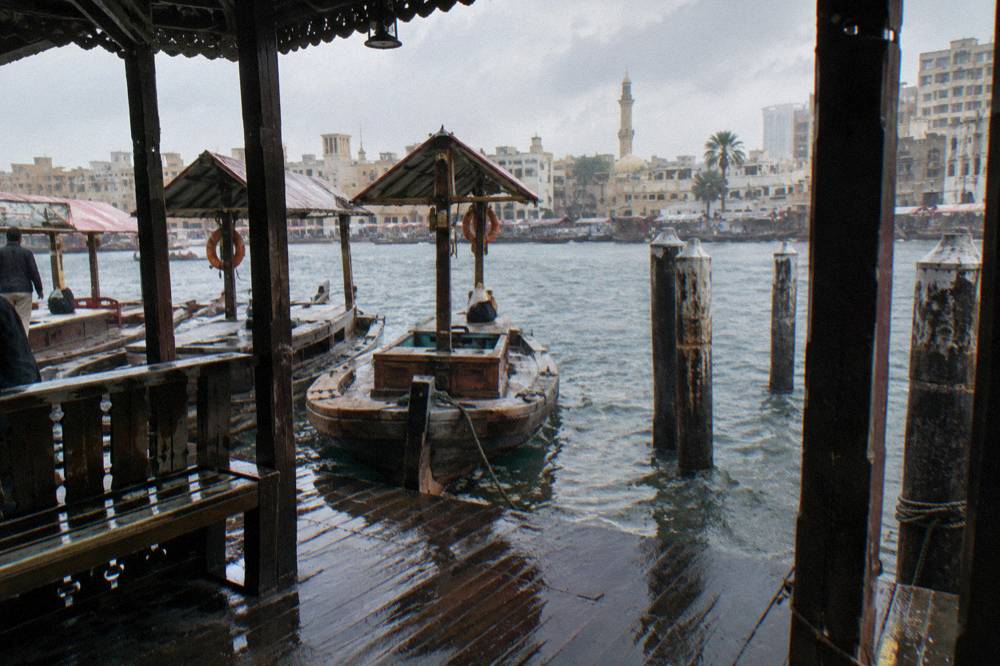
The geography matters more than most first-time visitors expect. Old Dubai splits along the Creek: Bur Dubai on one side, with the Al Fahidi Historical Neighbourhood, the Textile Souk and the Al Seef waterfront, and Deira on the other, with the Spice Souk, the Gold Souk and the lanes behind Al Ras Metro Station. An abra crossing connects them in a few minutes, and the RTA operates several commuter routes across the Creek, including the Bur Dubai to Deira Old Souq run and the Al Seef to Baniyas run, per the authority's marine pages.
Everything is walkable once you are inside the district. The Al Fahidi Historical Neighbourhood keeps free public access to its lanes, galleries and courtyards, with Dubai Culture stating neighbourhood hours of 7am to 8pm daily, and the Al Seef promenade runs a roughly 1.8 km free stretch along the Bur Dubai side. Between them, the eating never really stops: cafeterias open early, the souk stalls trade late, and the karak counters pour all day.
One note on what "street food" means here. Almost all of it is halal by default, because all meat sold in restaurants and markets in Dubai follows halal rules, with pork sold only in designated licensed sections. That is worth knowing before you ask a stall holder for something specific: the answer is shaped by the city's food laws, not by the stall's preference. For a fuller picture of how these rules affect what ends up on your plate, the guide to halal food in Dubai for visitors covers where pork and alcohol fit in and how dietary laws shape a food walk through Old Dubai.
The Dishes Worth Trying In Deira And Bur Dubai
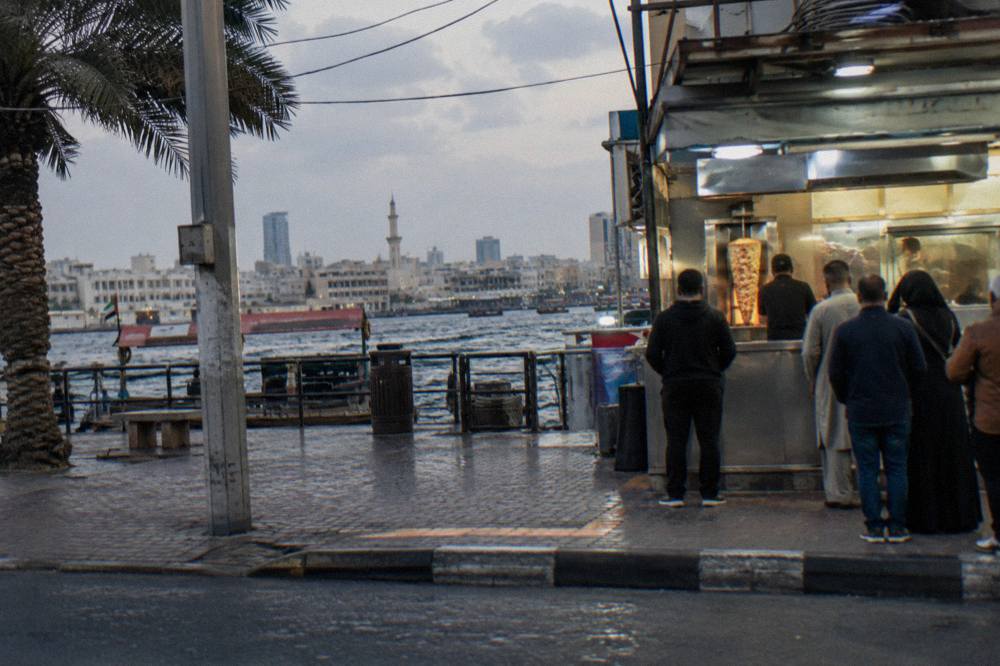
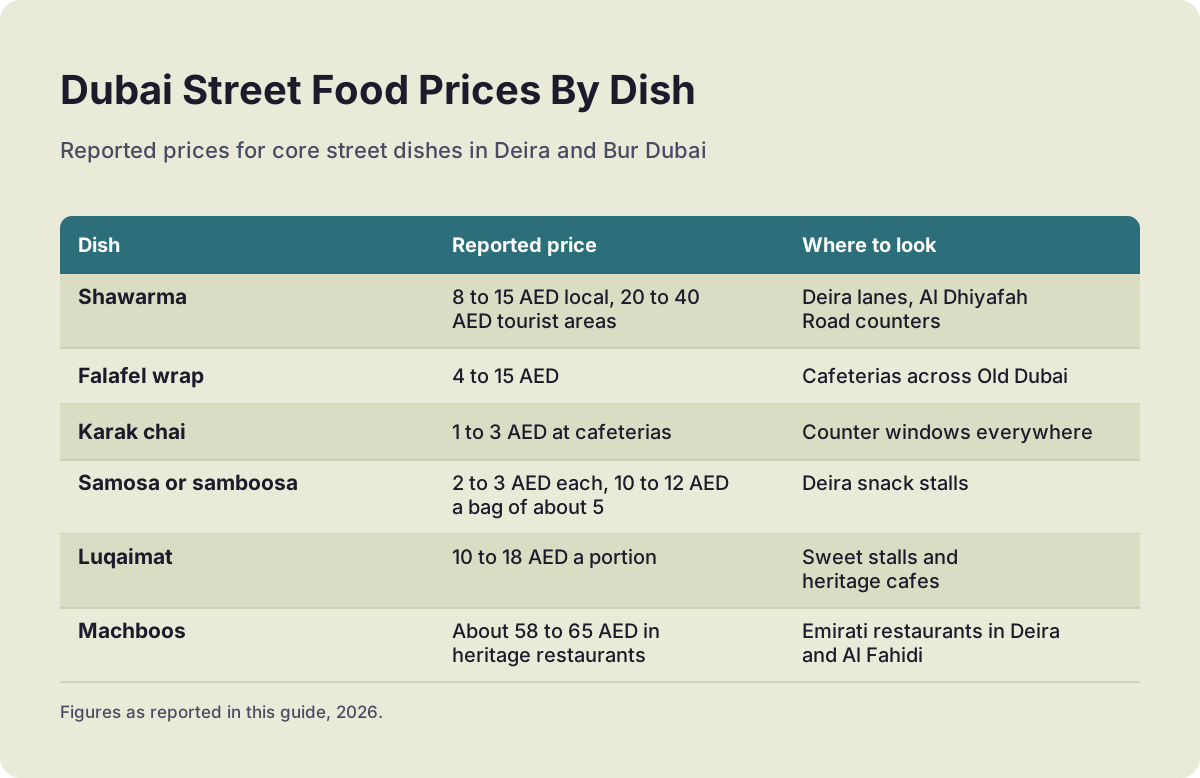
The core list is short and cheap: shawarma, falafel with hummus, samosas or samboosa, karak chai, luqaimat, and on the Emirati side, balaleet, chebab and machboos. Recent sources report shawarma at 8 to 15 AED in local spots, karak at 1 to 3 AED, falafel wraps at 4 to 15 AED and luqaimat at 10 to 18 AED, all figures to check on the day.
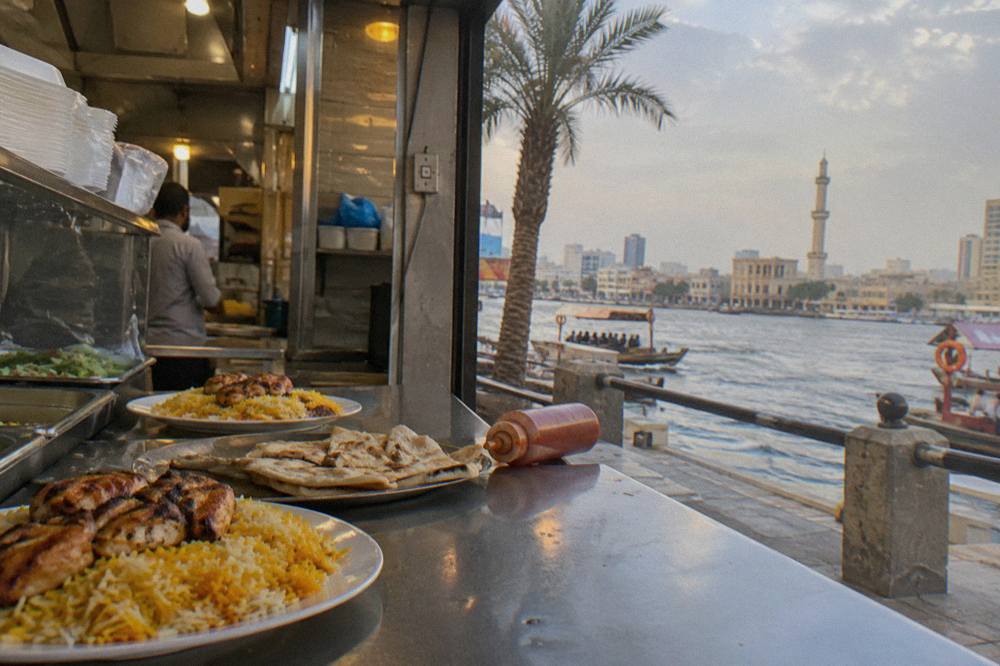
Start with the shawarma, because it is the benchmark. A chicken shawarma wrap costs a reported 12 to 18 AED at local spots, with one frequently cited example around 17 AED at a counter on Al Dhiyafah Road. The tourist-area version, at 20 to 40 AED, is the same dish with a view premium. If your shawarma costs more than your walk to the counter, you are in the wrong place.
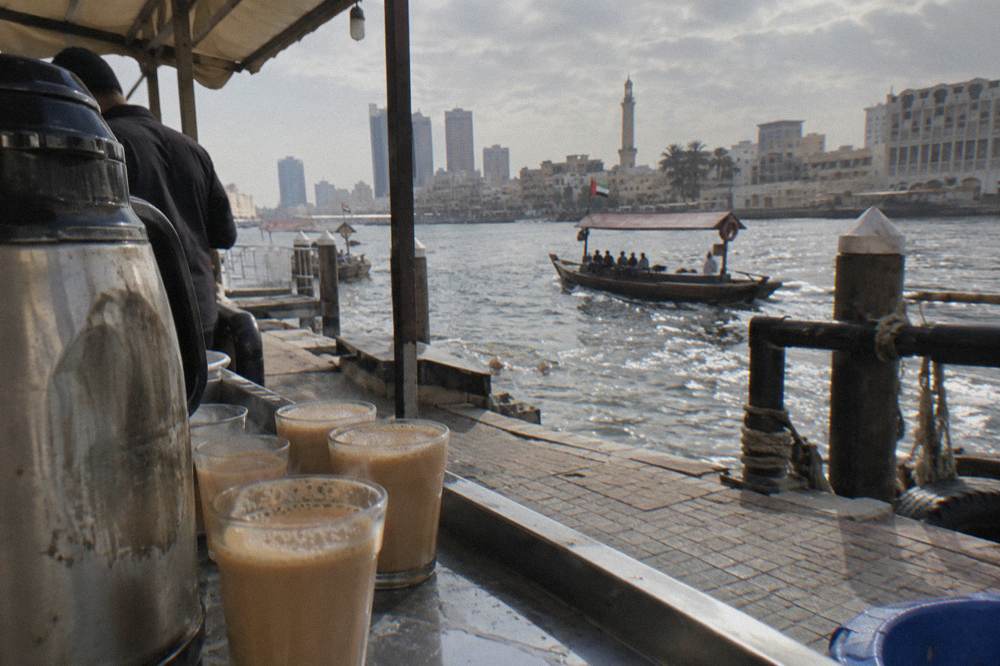
Karak is the other essential. It is spiced milky tea, boiled hard with cardamom and sometimes saffron, served in small paper cups at cafeteria windows for a reported 1 to 3 AED. Cafe versions run higher, with one source citing 14 AED for an upmarket pour, but the whole point of karak is the counter version. It pairs naturally with the Emirati breakfast dishes, and it is the cheapest possible way to eat like a local.
Then the sweets. Luqaimat are crisp fried dough dumplings drizzled with date syrup and sesame seeds, served warm and eaten immediately, at a reported 10 to 18 AED a portion. On the Emirati side of the plate, balaleet is sweet saffron and cardamom vermicelli topped with a thin omelette, chebab are saffron pancakes eaten with cream cheese and date syrup, and machboos is the national dish, long-grain rice slow-cooked with meat, dried limes and baharat spices, served family-style. One heritage restaurant in Al Fahidi serves balaleet at around 52 AED, per a March 2026 restaurant guide, which is the sit-down end of the scale rather than the counter end.
| Dish | What it is | Reported price | Where to look |
|---|---|---|---|
| Shawarma | Meat wrap with garlic sauce and pickles | 8 to 15 AED local, 20 to 40 AED tourist areas | Deira lanes, Al Dhiyafah Road counters |
| Falafel wrap | Fried chickpea balls with hummus | 4 to 15 AED | Cafeterias across Old Dubai |
| Karak chai | Spiced milky tea | 1 to 3 AED at cafeterias | Counter windows everywhere |
| Samosa or samboosa | Fried stuffed pastry | 2 to 3 AED each, 10 to 12 AED a bag of about 5 | Deira snack stalls |
| Luqaimat | Fried dumplings with date syrup and sesame | 10 to 18 AED a portion | Sweet stalls and heritage cafes |
| Machboos | Spiced rice with meat, dried limes | About 58 to 65 AED in heritage restaurants | Emirati restaurants in Deira and Al Fahidi |
The dishes above are exactly what the guided walks in the neighbourhood serve. The featured premium Old Dubai walk lists tastings of shawarma, falafel, karak, samosa, rogag and luqaimat among its inclusions, which is a useful cross-check: if a walk's tasting list matches the cheap-eats canon above, it is eating the real scene rather than a catered version of it.
If you would rather have the stalls chosen for you, these three walks cover the same lanes with different formats and durations:
How Much Does Street Food In Dubai Cost?
A solo street food eater can eat well for a reported 15 to 40 AED per person at casual Emirati, Levantine or neighbourhood cafeteria spots, with individual items from 1 to 18 AED. A mid-range restaurant meal runs about 80 to 150 AED per person, so the counter-to-table gap is roughly five times, using reported 2026 figures.
The honest budget picture has three tiers. The street tier: shawarma, falafel, karak and samosas, where a filling evening costs the price of a single restaurant main. The casual sit-down tier: biryani or mezze sets at a reported 15 to 40 AED per person in neighbourhood cafeterias. The restaurant tier: mid-range mains often 40 to 80 AED, with full meals around 80 to 150 AED per person. All of these are reported figures from 2026 price surveys, and every stall sets its own prices, so treat them as planning ranges rather than promises.
Two charges appear on sit-down bills that never appear at a counter. Restaurants commonly add a service charge of up to 10 per cent, which is venue-retained rather than a government fee, plus 5 per cent VAT; some hotel-affiliated venues add a 7 per cent municipality fee. Visit Dubai's own tipping guide keeps it simple: tips are personal preference, with 10 to 15 per cent usual at restaurants and around AED 5 to 10 at cafes, and most card terminals let you add it at payment. At a street counter, none of this applies. You pay the sticker price, in cash, and nobody expects a tip on a 3 AED karak.
| Eating tier | Reported cost per person | What you get | Notes on the bill |
|---|---|---|---|
| Street counter | 1 to 18 AED per item | Shawarma, falafel, karak, samosas, luqaimat | Cash, no service charge |
| Casual cafeteria meal | 15 to 40 AED | Biryani, mezze sets, daily plates | VAT may apply |
| Emirati heritage restaurant | About 42 to 65 AED for mains | Machboos, harees, thareed | Service charge up to 10 per cent plus 5 per cent VAT |
| Mid-range restaurant | 80 to 150 AED | Full meal with mains at 40 to 80 AED | Service charge, VAT, sometimes municipality fee |
Water is the quiet saver. Supermarket multipack bottled water runs a reported 1 to 2 AED per litre, while restaurant bottles go for 6 to 12 AED. Carry a bottle from a supermarket and the day's drinking costs less than one karak.
Eating Alone Or With A Guide: What Actually Changes
A guide changes three things: which stalls you stop at, how much context you get with each bite, and how many tastings fit into a fixed window. The food costs the same either way, but a walk that includes its tastings converts a guessing game into a counted list, which matters most for short visits and cautious eaters.
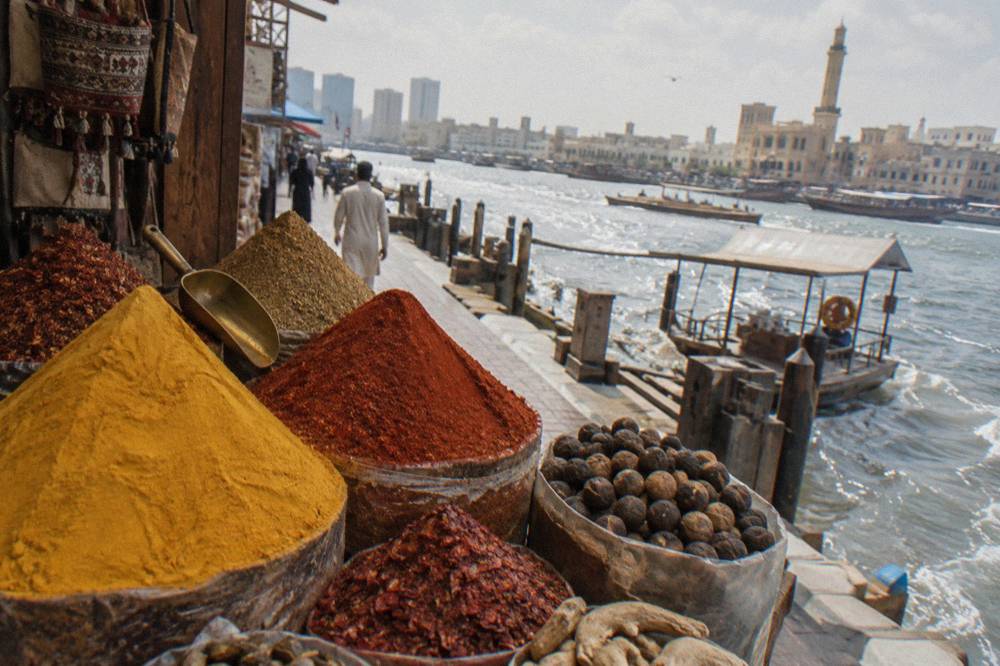
Eating alone in Old Dubai is genuinely easy, and this guide would be dishonest to pretend otherwise. The stalls are visible, the prices are posted or gesture-negotiable, and the dishes above are all findable with a map and an hour. What you supply yourself is the filtering: which of the forty shawarma counters near Al Ras is worth your one evening, which sweet stall fries luqaimat to order rather than hours earlier, and what the dried limes in the Spice Souk are actually for.
A guided walk buys exactly that filter. The featured premium Old Dubai walk runs 3 to 4 hours and lists its tastings, an abra crossing and the souks among its inclusions, with the price and current rating on the operator's booking page. The historic guided tour of the Creek, street food and souks covers similar ground in the same 3 to 4 hour window. Neither makes the food better. They make the choosing faster and the eating better-informed, which is a fair trade for anyone with two nights in the city rather than two weeks. Most of these walks spend their time in Deira, so before you book, the honest breakdown of Deira's souks, street food and costs tells you what to expect from the district beyond the tour route.
| Factor | Eating solo | Guided walk |
|---|---|---|
| Stall selection | Your own research, trial and error | Guide's local knowledge |
| Cost of food | Paid per item at the counter | Tastings included on walks that say so |
| Context per dish | Whatever you read beforehand | Explained at the counter |
| Time efficiency | Unbounded, easy to wander | Fixed window, counted stops |
| Dietary flexibility | Full control | Message the operator before booking |
| Best for | Long stays, confident eaters | Short visits, first-timers, cautious groups |
The dietary point deserves its own line. No walk should be described as vegetarian, vegan or gluten-free unless its listing explicitly says so, and many do not. The safe move is to message the operator before booking with your needs; the dishes above are meat-heavy by default, though falafel, hummus, luqaimat and karak are widely available without meat. The same caution applies to alcohol: food walks through Old Dubai serve no alcohol unless the listing says so, and visitors over 21 can drink only at licensed venues, never in public places, per the current rules.
Hygiene, Ordering And Payment At Dubai Stalls
Dubai's food stalls operate under municipal food safety rules, and the practical hygiene signals are turnover, frying to order and visible busy counters. Ordering is mostly pointing and cash, though many counters take cards; the useful habits are small: order one item first, watch the fryer, and keep small notes for karak windows.
Start with the reassuring part. Dubai's food retail sector is regulated by the municipality, and the same halal and food-safety framework that governs restaurants governs the counters. That does not make every stall identical. The practical signals a street eater uses anywhere in the world work here too: high turnover means fresh stock, oil that is changed often, and a queue of regulars is a better hygiene indicator than any certificate on a wall.
Ordering is simpler than most visitors fear. English works at nearly every counter in Old Dubai, and where it does not, pointing works universally. Karak windows operate on a shout-and-pay rhythm: say the count, take the cups, hand over the notes. Samosa stalls sell by the piece or by the bag, with a reported 10 to 12 AED buying a bag of about five. For shawarma, the only real question is chicken or meat, and the garlic sauce comes as standard unless you refuse it.
Payment is cash-first at the cheapest counters, though cards are widely accepted in the city and many counters have terminals. Carry small notes. A 1 to 3 AED karak bought with a large note at a rush-hour window makes you the least popular person in Deira. Tipping at a counter is not expected; the Visit Dubai guidance reserves tips for table service, and nobody tips a karak window.
One etiquette note that matters more than any hygiene tip: if you photograph stall holders or other customers, ask first. Photographing people without consent can violate privacy rules, and in the souks especially, a camera raised without a word reads as rude. Ask, and the answer is usually yes.
Getting To The Street Food Areas
The Green Line serves Old Dubai directly: Baniyas Square, Gold Souq and Al Ras stations sit inside Deira, and Sharaf DG serves the Al Fahidi side, with the metro running from 5am to midnight most days. A Nol card costs AED 25 including initial credit, and taxis start at a reported AED 5 in the daytime.
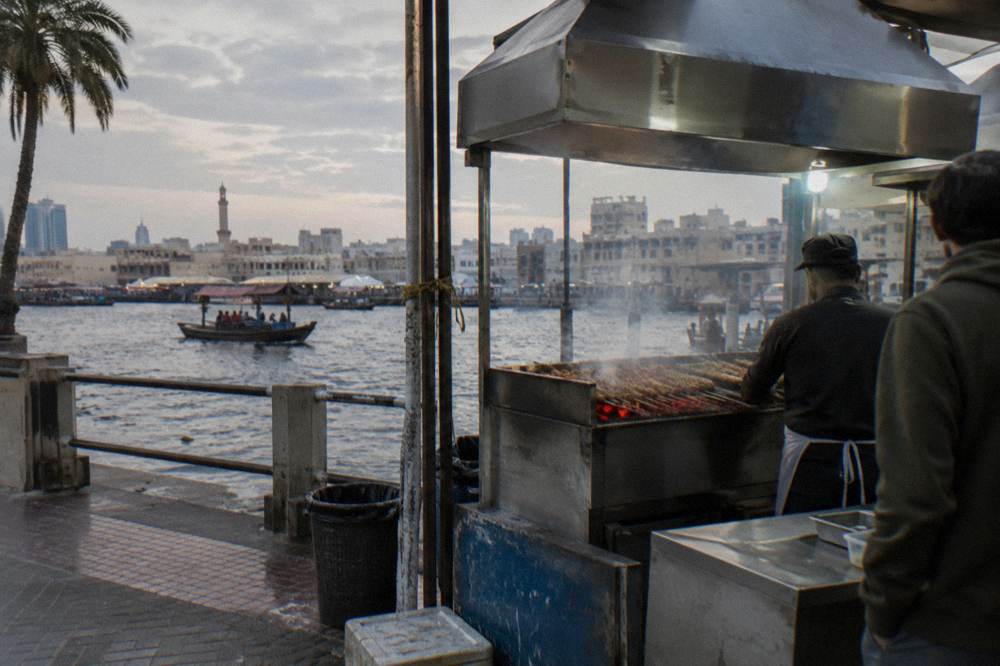
The metro is the honest answer for getting here. The RTA's Green Line stations in the district are Baniyas Square, Gold Souq and Al Ras on the Deira side, with Sharaf DG serving the Al Fahidi area and Union as the Red and Green interchange. Trains run 5am to midnight Monday to Thursday and Saturday, 5am to 1am on Friday and 8am to midnight on Sunday, per the authority's timetable. The Nol card, the reloadable smart card for metro, buses and trams, costs AED 25 for an anonymous Silver or Gold card including initial credit, per the RTA's fare pages.
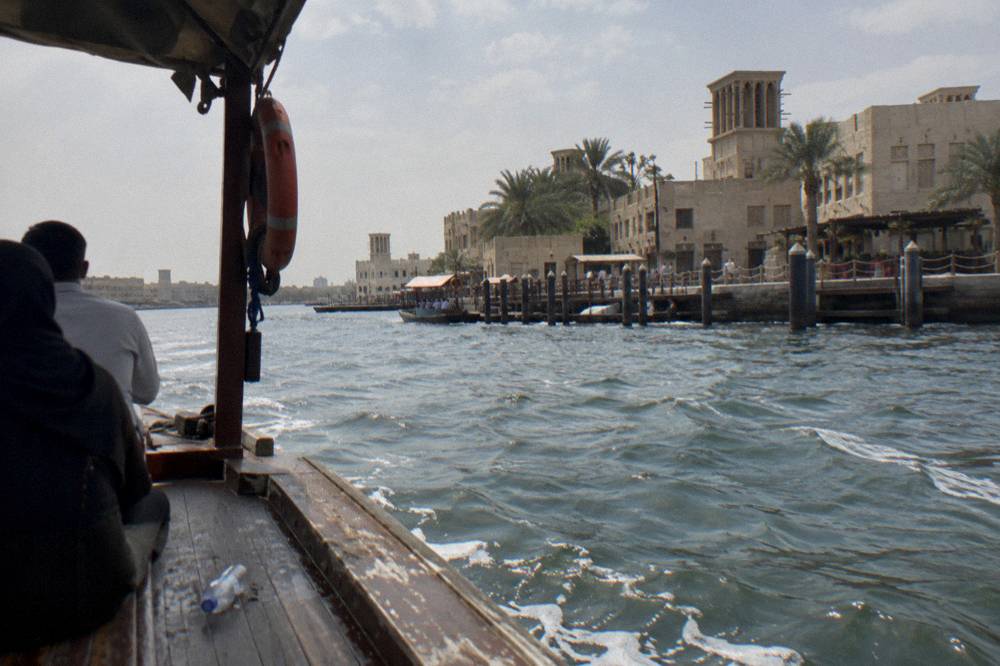
Once inside the district, walk. The connections between Al Fahidi, Al Seef, the Textile Souk, the abra docks and the Deira souks are all standard walking routes, and no closures affecting them were reported in 2026. The abra crossing itself is part of the eating day rather than an obstacle to it: the RTA runs several Creek routes, including the Bur Dubai to Deira Old Souq commuter crossing, and the crossing takes minutes.
Taxis are the fallback, with the RTA's fare page listing a road-pickup starting fare of AED 5 from 6am to 10pm and AED 5.5 overnight. For a day built around 3 AED karak, the metro plus feet is the combination that keeps the budget honest.
| Mode | Key facts | Best for |
|---|---|---|
| Green Line metro | Al Ras, Gold Souq, Baniyas Square in Deira; Sharaf DG for Al Fahidi | Arriving from Downtown or the Marina |
| Nol card | AED 25 including initial credit | Any metro or bus use |
| Abra crossing | RTA commuter routes across the Creek, minutes each way | Moving between Bur Dubai and Deira mid-walk |
| Taxi | Reported AED 5 starting fare daytime, AED 5.5 overnight | Late nights, group convenience |
When To Eat: Timing The Old Dubai Food Day
December to February brings the lowest average daytime highs, 24 to 26 °C per NCM-derived normals, making it the best walking season. Souk shops keep variable hours, with the Spice Souk reported as opening before 8am and closing past 9pm but shutting in the daytime on Fridays, so a Friday visit needs afternoon timing.
The weather shapes the whole plan. Dubai's airport weather station records December mean daily maxima of 26.5 °C, January of 24.4 °C and February of 26.1 °C, with March already climbing to 28.9 °C. Winter, roughly December through February, is the walking season, with mid-winter sunrise around 6.57am and sunset around 5.32pm in December, per 2026 solar tables. An evening food walk that starts at sunset in January finishes in full dark, comfortably.
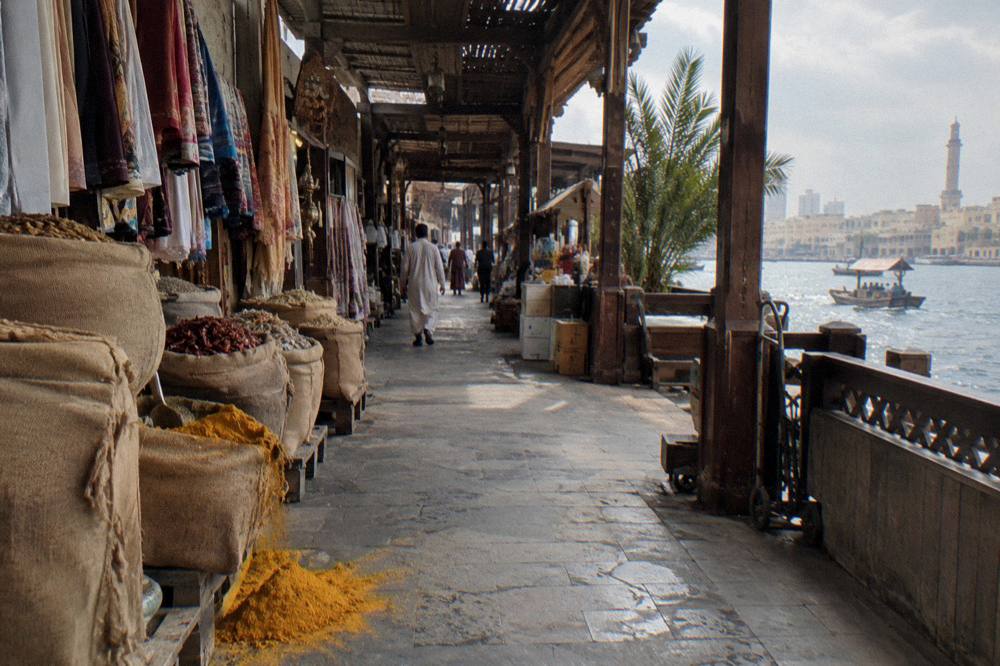
Hours are the other constraint, and they are patchier than the weather. The Gold Souk's shops mostly open around 10am to 10pm per Visit Dubai's descriptive guidance, with individual shops varying. The Spice Souk opens earlier than 8am and trades past 9pm, but closes during the daytime on Fridays, with many stalls taking midday breaks. The Textile Souk has no official published hours at all; vendors typically trade around 9am to 8pm, with some Friday afternoon closures reported. None of this is a timetable you can bank on, so check on the day, and treat Friday morning as a write-off for souk eating.
The stalls themselves follow demand rather than signs. Karak counters pour from early morning to late night. The evening, when the heat drops and the local workforce comes out, is when Old Dubai eats at its most alive, and it is no accident that the guided walks in the district run their 3 to 4 hour windows into the evening hours.
Choosing A Walk If You Decide You Want One
If the solo day feels like too much filtering, pick a walk by three criteria: its listed tastings, its window, and whether its route covers both Creek sides. The three walks compared here run 3 to 4 hours each, cross the Creek, and list street food tastings, with prices and ratings on the operators' booking pages.
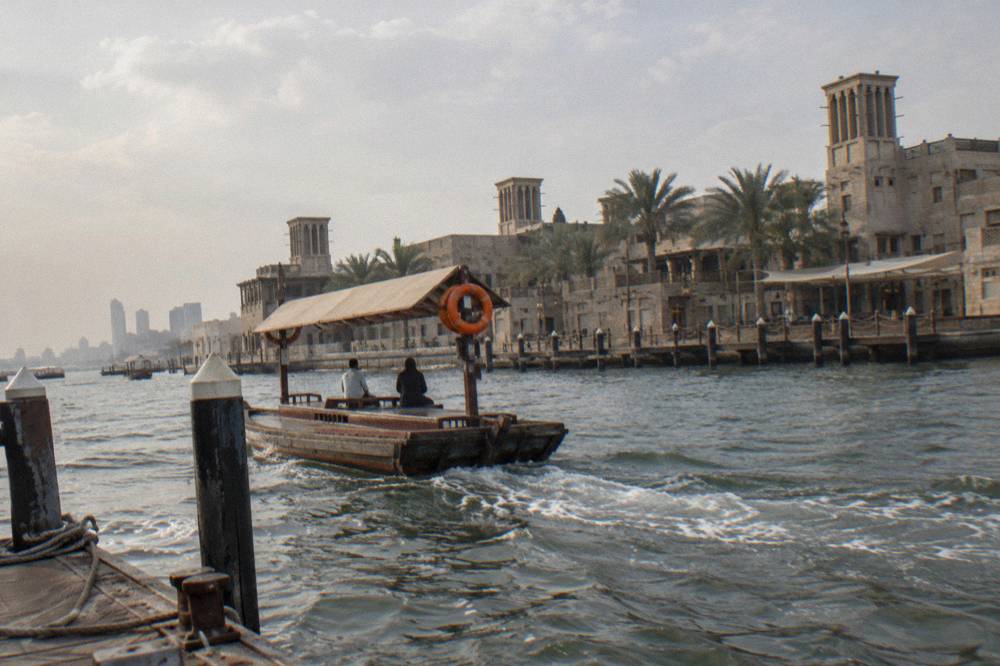
The featured premium Old Dubai walk is the natural benchmark: 3 to 4 hours, tastings of shawarma, falafel, karak, samosa, rogag and luqaimat listed among its inclusions, plus the abra crossing and the souks. The historic guided tour covers the Creek, street food and souks in a similar window, and the premium Old Town walk stretches to 4 hours with the boat ride and souks in its route. All three are compared in detail in the guide to how to choose between Dubai food walks, and the cost picture, including what drives the price gaps between formats, is laid out in what a Dubai food tour costs.
The honest framing is this. A walk does not make the food better, and it does not find stalls that a week of solo wandering would not find. What it does is compress the week into an evening, hand you the context at each stop, and count the tastings so you know what you paid for. For a two-night visitor, that is a fair purchase. For a week-long resident-to-be, the solo path in this guide is cheaper and entirely workable.
Dietary needs are the one case where booking ahead matters more than choosing ahead. Message the operator with vegetarian, vegan or allergy needs before you pay; the listings do not describe themselves as accommodating any specific diet unless they say so, and the default plate is meat-forward and halal. The same applies to group sizes and children: check the booking page rather than assuming.
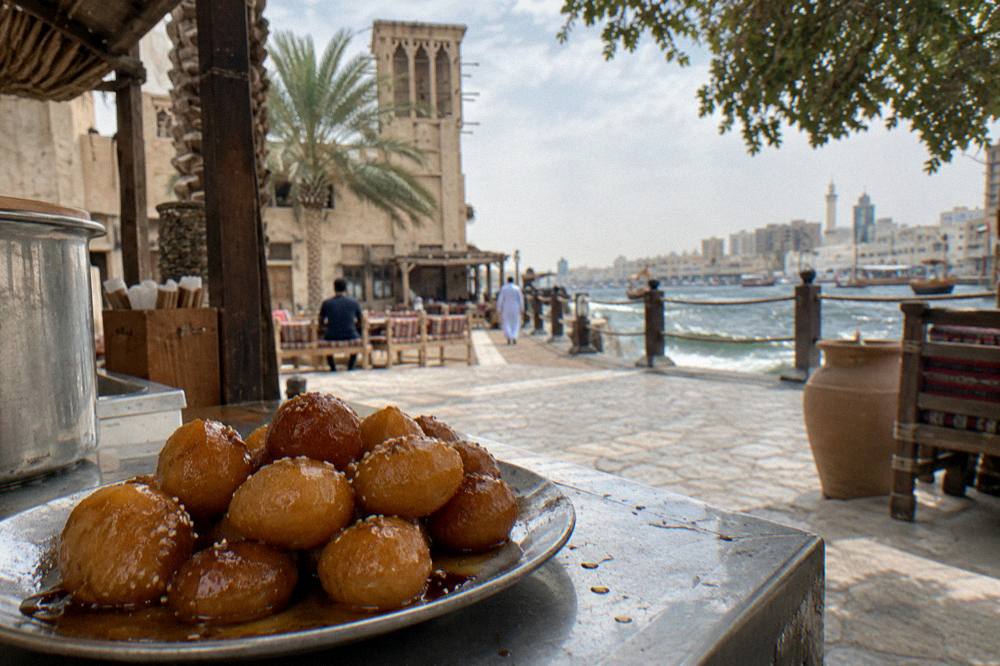
A Practical Solo Route Through The Eating Lanes
A workable solo evening: start at Al Fahidi for Emirati breakfast dishes or heritage cafe plates, walk the Textile Souk to the Bur Dubai abra dock, cross to Deira, eat through the lanes behind the Spice Souk, and finish with luqaimat and karak near Al Ras. Allow three hours at eating pace, more with shopping.
Begin in Al Fahidi, where the heritage restaurants serve the Emirati dishes at the sit-down end of the scale, machboos at around 58 to 65 AED and harees at around 42 AED per the 2026 restaurant guides. The Sheikh Mohammed Centre for Cultural Understanding in the same neighbourhood runs 1.5-hour cultural meals with Emirati hosts, with reported prices of AED 130 for breakfast, AED 145 for lunch and AED 160 for dinner, booking required, if you want the explained version of the cuisine rather than just the plate. Details are on the centre's own programme page at cultures.ae.
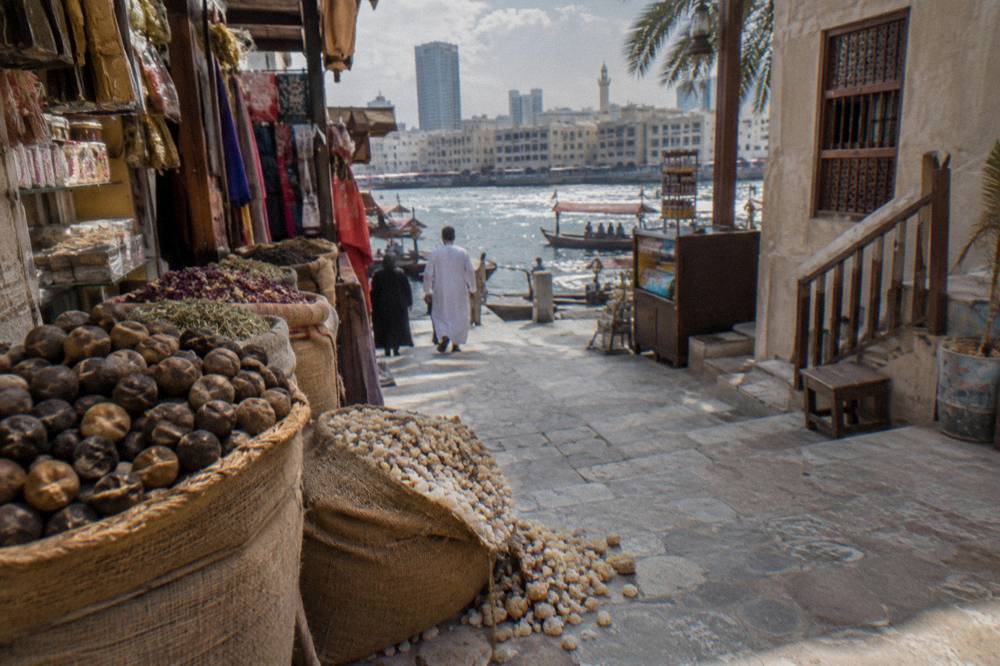
Walk the Textile Souk toward the water, then cross the Creek by abra to Deira. The Spice Souk lanes behind the dock hold the dried limes, baharat blends and saffron that explain the dishes you have been eating, and the snack stalls around them sell the reported 2 to 3 AED samosas. The Gold Souk is a look rather than a buy for most, with its shops mostly open around 10am to 10pm. Finish in the lanes near Al Ras Metro Station, where the cafeterias pour the 1 to 3 AED karak and the sweet stalls fry luqaimat to order at a reported 10 to 18 AED.
That route is the skeleton every guided walk in the district fleshes out, and walking it solo costs only the food. The trade is your own navigation against a guide's filter, and both answers are correct depending on how much time you have. For more on the specific areas, the Deira food guide and the Bur Dubai food walk guide break each side of the Creek down dish by dish.
Common Questions About Dubai Street Food
What Is The Most Famous Street Food In Dubai?
Shawarma is the everyday benchmark, at a reported 8 to 15 AED in local spots, with karak chai as its constant companion at 1 to 3 AED. Luqaimat, crisp fried dumplings with date syrup, are the signature sweet at a reported 10 to 18 AED a portion.
Is Street Food In Dubai Safe To Eat?
Dubai's food retail sector is regulated by the municipality under the same framework as restaurants. The practical hygiene signals are high turnover, frying to order and busy counters, and the stalls with regulars queuing are the reliable ones.
How Much Does Street Food Cost In Dubai?
Reported 2026 figures put individual items from 1 to 18 AED, with casual cafeteria meals at 15 to 40 AED per person. A mid-range restaurant meal runs about 80 to 150 AED, so counter eating costs a fraction of the table equivalent.
Where Is The Best Area For Street Food In Dubai?
Deira and Bur Dubai, on either side of the Creek, hold the densest eating: the lanes behind the Spice Souk, the counters near Al Ras Metro Station, and the heritage cafes of Al Fahidi. An abra crossing connects the two sides in minutes.
Do I Need A Guide To Eat Street Food In Dubai?
No. The stalls are visible and the prices are low. A guide helps most when your time is short, because the walk filters the dozens of counters down to a counted list of tastings with context at each stop. For a week-long stay, solo eating from this guide is entirely workable.
Is Dubai Street Food Halal?
Yes, effectively all of it. All meat sold in restaurants and markets in Dubai follows halal rules, with pork sold only in designated licensed sections. Vegetarian items like falafel, hummus and luqaimat are widely available, and anyone with specific dietary needs should message a walk operator before booking.