Is $100 A Day Enough In Dubai?
A practical answer to whether $100 a day covers eating, transport and sightseeing in Dubai, with reported local prices and where a guided food walk fits into the budget.
Yes, for most eating-and-sightseeing days $100 per person is workable, and on a street-food day it is comfortable. Dubai's split personality is the reason: a mid-range restaurant meal runs around 80 to 150 AED per person, while a shawarma at a local spot costs a reported 8 to 15 AED and a karak chai 1 to 3 AED. The budget holds if you eat where the city's own workers eat.
The honest answer depends on which Dubai you are buying. The city contains one of the world's cheapest eating cultures and one of its most expensive, sometimes on the same block in Deira. A visitor who starts the morning at a cafeteria, lunches on a casual Emirati or Levantine meal at a reported 15 to 40 AED per person, and spends the afternoon walking Al Fahidi and the souks can finish the day well under budget. A visitor who books a Downtown hotel brunch has already spent the day's allowance before noon.
Transport is the quiet ally of a tight budget. The Nol card that runs the Metro costs a reported AED 25 for a Silver or Gold anonymous card, and that price includes initial credit, so a day of Green Line hops between Bur Dubai and Deira costs very little per trip. Old Dubai is compact: Al Fahidi, the Textile Souk, the abra docks and, across the Creek, the Spice and Gold Souks are all within a short walk of each other once you are in the district. Multiply those small daily savings across a full week and the full cost breakdown of a seven-day Dubai trip shows where the money really goes.
This article walks through the numbers meal by meal, using reported local prices, and then answers the harder question: whether a paid guided tasting walk belongs in a $100 day at all, or whether it blows the budget. The short version is that on many itineraries the walk replaces a meal you would have bought anyway, and the arithmetic is closer than people expect.
What A Basic Eating Day Actually Costs
A realistic cheap day, breakfast karak with a samosa, a casual lunch, an afternoon of souk walking with a snack, and a shawarma dinner, is built from items costing 1 to 15 AED each, with casual meals at 15 to 40 AED per person. That leaves a large share of a $100 day for transport, a coffee stop and one paid experience. These are reported 2026 figures, not promises, and venues vary.
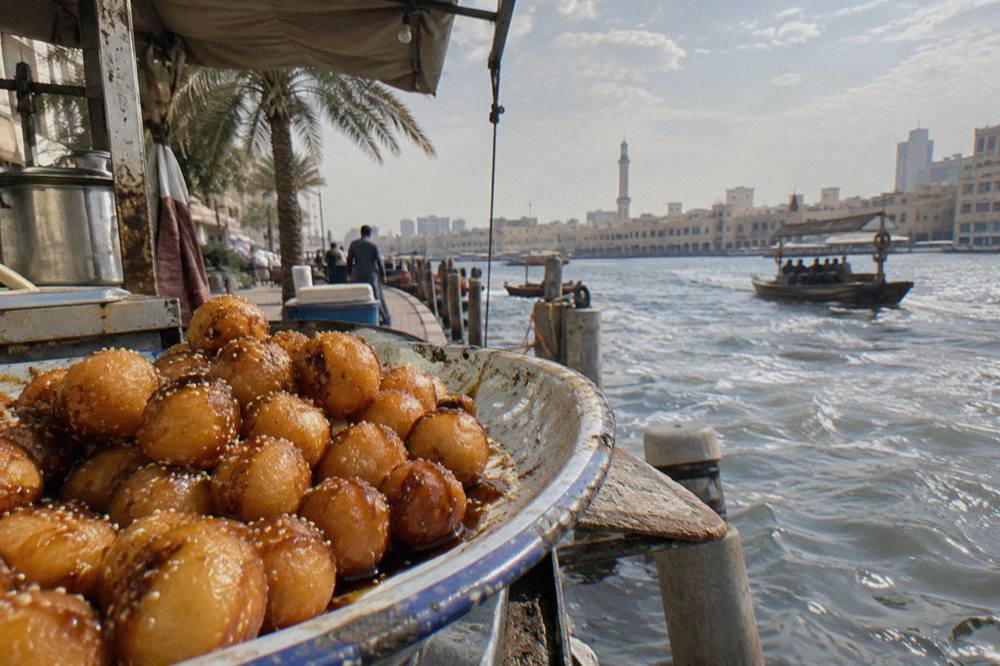
Start with the items that make Old Dubai one of the better-value eating districts anywhere. A falafel wrap costs a reported 4 to 15 AED depending on where you buy it. A samosa or samboosa runs 1 to 5 AED per piece, or 10 to 12 AED for a bag of around five, which is a snack for two people. Luqaimat, the crisp date-syrup dumplings that end so many food walks, run a reported 10 to 18 AED. Karak chai, the spiced milky tea that Dubai runs on, is 1 to 3 AED at local cafeterias, though cafe versions climb, one source cites a 14 AED cafe karak. To find more of these budget-friendly spots beyond Old Dubai, the guide to where locals eat in Dubai maps out the cafeterias and dining rooms residents actually frequent.
The pattern to notice is that the low numbers belong to the places with the least decoration. The same shawarma that costs 8 to 15 AED at a local spot is reported at 20 to 40 AED in tourist areas. Nothing about the wrap changed. The rent did. This is the single most useful budgeting insight for Dubai: geography, not cuisine, sets the price. Deira and Bur Dubai hold the cheap end; beachfront and hotel-adjacent strips hold the other.
“We did a late afternoon tour and it was a great experience. From the beginning our tour guide Hossam made sure we were looked after and had a relaxed manner that easily conveyed information and answered questions. Would recommend.”
A casual Emirati or Levantine meal, think a biryani or a mezze set at a neighbourhood cafeteria, comes in at a reported 15 to 40 AED per person. That is a full lunch with change from a ten-dollar note. Even the heritage-restaurant tier in Deira stays reasonable: one 2026 guide reports machboos at around AED 58 to 65 and harees at around AED 42 at named Old Dubai Emirati restaurants, which is a sit-down main course, not street food, still inside a $100 day with room to spare. If you want to see how far that much money stretches beyond meals, the breakdown of what 100 AED buys in Dubai covers street snacks, rides and souvenirs too.
| Item | Reported price | Where the figure comes from |
|---|---|---|
| Karak chai (local cafeteria) | 1 to 3 AED | 2026 cheap-eats guides |
| Samosa, per piece | 1 to 5 AED | 2026 cheap-eats guides |
| Falafel wrap | 4 to 15 AED | 2026 street-food price guides |
| Shawarma (local spots) | 8 to 15 AED | 2026 price comparison |
| Shawarma (tourist spots) | 20 to 40 AED | 2026 price comparison |
| Luqaimat portion | 10 to 18 AED | 2026 cheap-eats guides |
| Casual meal, per person | 15 to 40 AED | 2026 neighbourhood price guides |
| Mid-range restaurant meal | 80 to 150 AED | 2026 restaurant price guides |
One warning about restaurant bills: a mid-range sitting is where a $100 day dies. At 80 to 150 AED for the food, plus a commonly added 10 per cent service charge and 5 per cent VAT, with some hotel-affiliated venues adding a further 7 per cent municipality fee, a single dinner can consume half the day's budget before drinks. The tipping culture is voluntary and personal-preference, Visit Dubai's own guidance suggests 10 to 15 per cent at restaurants and AED 5 to 10 at cafes, so budget for a tip you choose, not one you owe.
How Much Does Transport Take Out Of The Budget?
Almost nothing, if you use the Metro and walk. A Nol card costs a reported AED 25 including initial credit, Metro rides between Old Dubai stations are short hops, and the whole heritage district is walkable on foot once you arrive. A taxi starts at a reported AED 5 in daytime and AED 5.5 at night. The people who overspend on transport are the ones who taxi between every stop instead of riding two Metro stations.
The Green Line is the budget traveller's friend. Sharaf DG station serves the Al Fahidi area, Baniyas Square and Gold Souq sit on the Deira side, and Al Ras drops you right at the edge of the Spice Souk district. The RTA's official Metro timetable shows trains running from 5am to midnight Monday to Thursday and Saturday, from 5am to 1am on Fridays, and from 8am on Sundays, so early-evening food wanderings are easy to plan around. The official card and fare details are on the RTA's Nol page if you want to check current fares before you travel.
Walking is free and Old Dubai rewards it. The Al Fahidi Historical Neighbourhood is open to walkers with free public access to its lanes and courtyards, Dubai Culture states hours of 7am to 8pm daily. The Al Seef waterfront promenade on the Bur Dubai side of the Creek is free to enter, a stretch of roughly 1.8 km open daily. Between Al Fahidi, Al Seef, the Textile Souk, the abra docks and the Deira souks there is a standard walking network with no reported route closures, so a full day of sightseeing can genuinely cost nothing beyond the food you stop for.
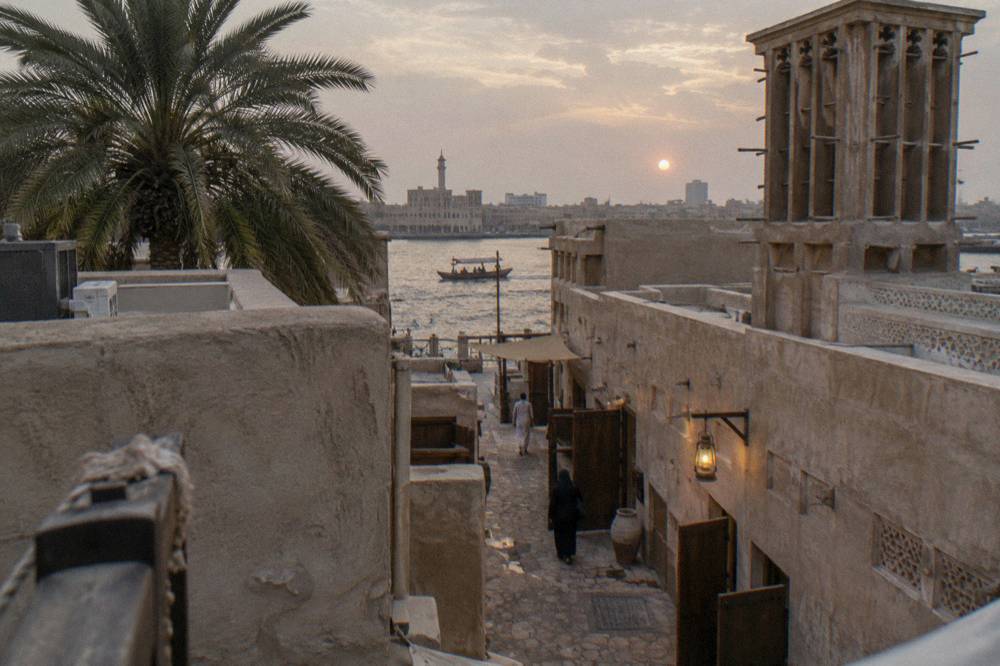
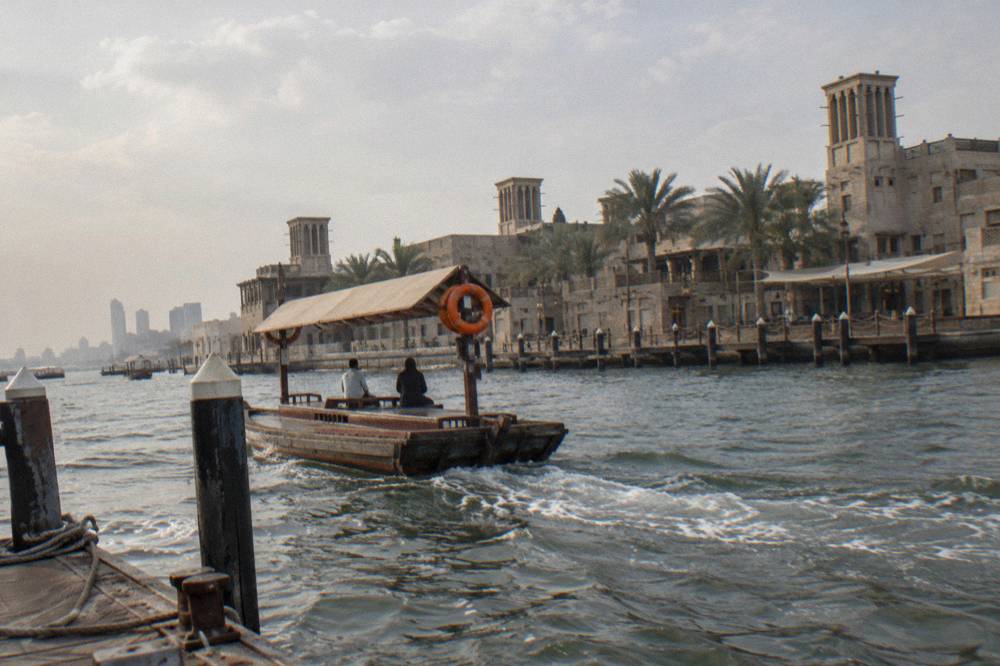
The Creek crossing itself is part of the fun. RTA operates traditional commuter abra routes across the water, including the Bur Dubai to Deira Old Souq run, and the fare is not something to print here, check the RTA marine page for the current price before you ride. Whatever it costs, a commuter abra is one of the cheapest boat rides in any city on earth, and several guided walks include a crossing in their route.
| Transport | Reported cost | Notes |
|---|---|---|
| Nol Silver or Gold card | AED 25 | Includes initial credit, per RTA |
| Metro day of short hops | Small per-trip fares | Check RTA Nol page for current fares |
| Taxi, road pickup | AED 5 daytime, AED 5.5 night | RTA published starting fares |
| Al Fahidi lanes and galleries | Free | Dubai Culture hours 7am to 8pm |
| Al Seef promenade | Free | Roughly 1.8 km, open daily |
Where A Guided Food Walk Fits Into A $100 Day
A guided tasting walk is the one big line item where a $100 day needs a decision, not a sacrifice. The reason is substitution: the walk's tastings replace food you would have bought anyway, so the true cost is the tour price minus the meals it covers. A three-hour walk with a string of tastings, a guide's local knowledge and a Creek crossing can be worth more than the same money spent guessing between identical-looking shawarma counters. If the guesswork around local customs makes the first day feel heavier than the budget, the guide to how Dubai treats American visitors covers the etiquette basics and the cost of food and transport in plain terms.
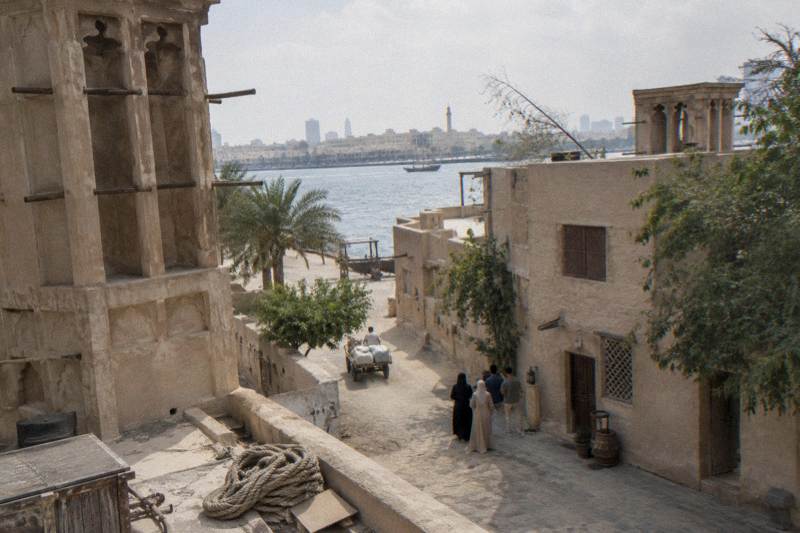
The tour price itself is on each booking page, and prices vary by tour, group size and date, so treat any figure you see here as something to confirm at the point of booking rather than a constant. What the listing does tell you is the shape of what you get. Dubai's Favourite Food & Historic walking Tour runs about 3 hours through the private-food-tours family and pairs the historic lanes with food stops, with the meeting point and full inclusions listed on its booking page. For a budget traveller it functions as lunch plus a history lesson plus an orientation session, three things you would otherwise pay for separately or miss entirely. The rest of the planning pages sit on Dubai Food Tours.
“We had a fantastic tour today facilitated by Hossam. He was a very friendly and engaging guide and we found the pace of the tour excellent. I would definitely recommend this activity to others and will likely rebook when other family members visit Dubai.”
The budget case for a walk is strongest on day one of a trip. A guide tells you which cafeteria karak is the one locals queue at, which souk stalls sell to residents rather than tourists, and what a fair price for dates looks like, reported at around AED 15 per kilogram for fresh rutab at festivals and markets, with roughly 150 varieties grown in the UAE. That knowledge pays for itself over the following days when you are eating independently at local prices instead of tourist ones. Once you know what to order, the guide to typical Dubai meals and their real prices makes it easy to plan a full day of eating on a tight budget.
The budget case against is real too. If your $100 day already includes a paid attraction, a Desert Safari or a Burj Khalifa ticket, then adding a guided walk pushes you over, and the free alternatives are genuinely good. Our piece on free things to do and budget eating covers the no-cost side of the same district. The walks that fit a tight day are the shorter Old Dubai routes; the premium ones, like the VIP food tour with Burj Khalifa access, belong to a different kind of day entirely.
Can You Eat Well Without A Tour At All?
Yes, you can eat very well in Old Dubai without any tour, and many visitors do exactly that. A self-directed eater following the reported price bands, karak at 1 to 3 AED, shawarma at 8 to 15 AED, casual meals at 15 to 40 AED, will eat genuinely well for a fraction of $100. The trade is that you give up the counted tastings, the guide's curation, and the confidence to walk into a place with no English menu.
The self-guided version of the day is easy to sketch. Morning: Al Fahidi lanes and a cafeteria karak. Midday: cross the Creek, work through the Spice Souk, where shops generally open before 8am and past 9pm with Friday daytime closures reported, then browse the Gold Souk, where most shops are reported open around 10am to 10pm. Afternoon: a falafel or shawarma stop in Deira. Evening: back across the water for luqaimat and a Creek-side wander. Food spend for the day: modest. Experience: very good, if you know what you are looking at.
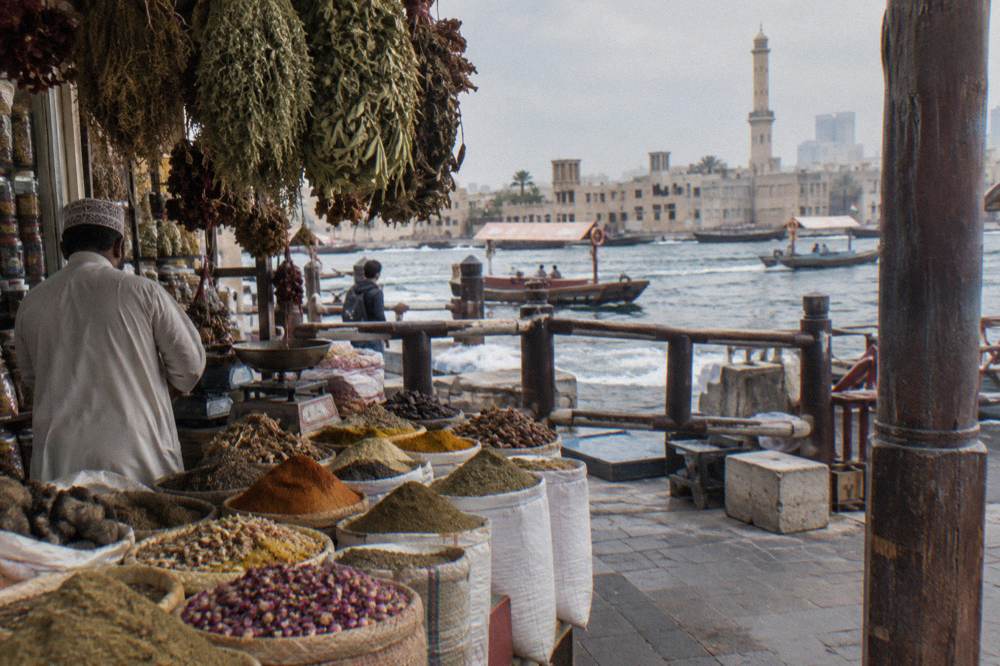
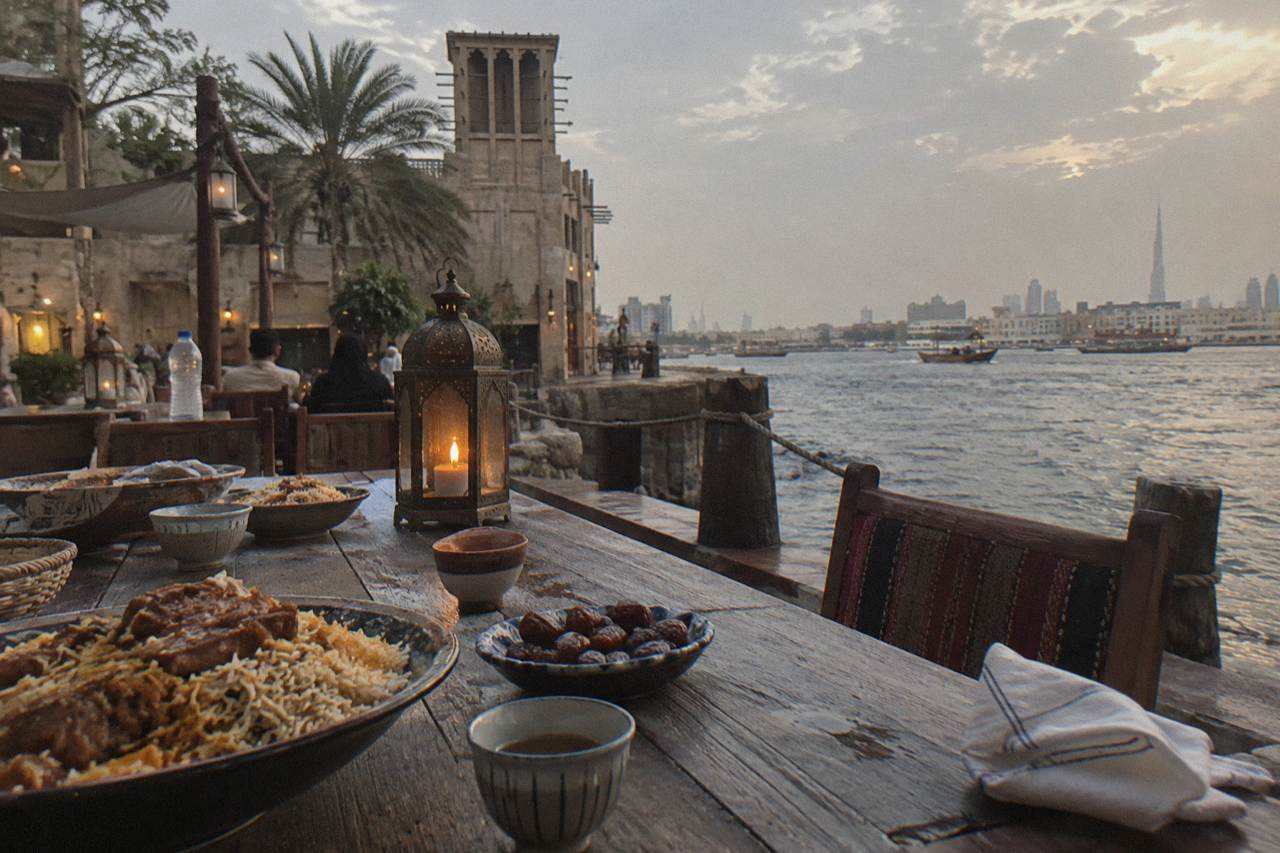
The gap a tour fills is the gap between eating and understanding. The Emirati dishes worth knowing, machboos with its loomi-dried-lime depth, harees slow-cooked for six to eight hours, thareed ladled over regag bread, rarely appear on a first-time visitor's own ordering list, because the names are unfamiliar and the cafeterias do not advertise. A guided Emirati tasting experience, like the Flavors of Arabia walk through the souks with authentic Emirati cuisine, exists precisely to close that gap, and its inclusions and duration are on its booking page.
There is also a cultural layer that money cannot shortcut. Gahwa, the cardamom-scented Arabic coffee served in small finjan cups, comes with its own etiquette, received in the right hand, with a gentle side-to-side shake of the empty cup to signal enough. A guide demonstrates these things. A sign rarely does. For a deeper run through the dishes themselves, see our Emirati food guide to the dishes worth knowing.
What A $100 Day Does Not Cover
Three things break the budget fast: alcohol, mid-range restaurant sittings and big-ticket attractions, and any two of them together will end the $100 question. Alcohol is the clearest case, since visitors over 21 may drink only at licensed venues such as hotels, restaurants and lounges, and Old Dubai's walks serve no alcohol unless a listing says otherwise. A single cocktail at a hotel lounge can cost more than an entire day of eating in Deira.
The restaurant trap deserves its own sentence structure. It is not that 80 to 150 AED is unreasonable for a good meal, it is that the add-ons quietly stack: the commonly applied 10 per cent service charge, the 5 per cent VAT, the tip you will want to leave anyway. The guidance from Visit Dubai's tipping page is that there are no set rules and tipping is personal preference, with 10 to 15 per cent usual at restaurants. None of that is a scam, it is just arithmetic that a fixed daily budget feels sharply.
“Excellent talk about Dubai and muslim culture. All questions answered and shared a beautiful arabian lunch to boot.”
Attractions are the third leak. The Burj Khalifa, the theme parks, the desert safaris with dinner: each is a fine use of a day's money, but each is a decision to abandon the $100 frame, not stretch it. The food-focused traveller's honest move is to pick one paid experience per day and let the cheap eating culture absorb everything else. That is the actual answer to this question for most visitors: $100 is enough for a day built around food and walking in Old Dubai, and it is not enough for a day built around headline attractions plus a nice dinner, and no budgeting trick changes that.
A note on dietary planning, because it affects the wallet too. All meat sold in restaurants and markets in Dubai is halal, and pork appears only in designated licensed sections, so a halal-only day is the default rather than an effort. If you need vegetarian, vegan or gluten-free arrangements on a guided walk, message the operator before booking, the listings do not all state dietary accommodation, and a check costs nothing.
For the wider money picture, including what meals cost across the city's neighbourhoods, our guide to Dubai food prices goes deeper than a single day's budget can.
The pattern across all of it: Dubai rewards visitors who spend on one deliberate thing and eat cheaply everywhere else. The city's own food culture, the cafeterias, the souk stalls, the heritage restaurants, is built for that kind of day. The $100 question has a better answer than a yes or no, it has a route.
Common Questions About A $100 Daily Budget
Is $100 A Day Enough In Dubai?
For a day built around Old Dubai, yes. Street food items run 1 to 15 AED each, casual meals 15 to 40 AED per person, and the Metro plus walking covers transport cheaply. The budget breaks if you add alcohol, a mid-range restaurant sitting at 80 to 150 AED, or a big-ticket attraction.
How Much Does A Street Food Meal Cost In Dubai?
Reported 2026 figures put a shawarma at 8 to 15 AED at local spots, a falafel wrap at 4 to 15 AED, a samosa at 1 to 5 AED per piece, and karak chai at 1 to 3 AED. A casual cafeteria meal runs 15 to 40 AED per person.
Is Food Expensive In Old Dubai Compared To Downtown?
Old Dubai is the cheaper end of the city. The same items that cost single-digit or low-double-digit AED amounts in Deira and Bur Dubai climb sharply in tourist zones, with shawarma reported at 20 to 40 AED in tourist areas, and mid-range restaurant meals citywide at 80 to 150 AED per person.
Can I Do Dubai Cheaply Without A Guided Tour?
Yes. Al Fahidi's lanes, the Al Seef promenade and the souks are free to walk, and the Green Line stations serve the whole district. A guided walk adds counted tastings, local knowledge and dishes you might never order alone, so many visitors book one for their first day and explore solo after.
Do Restaurant Bills Include Service Charge And Tax?
Restaurants commonly add a 10 per cent service charge, which is venue-retained rather than a government fee, plus 5 per cent VAT. Some hotel-affiliated venues add a 7 per cent municipality fee. Tipping beyond that is voluntary, with Visit Dubai suggesting 10 to 15 per cent at restaurants as personal preference.
Is Alcohol Affordable On A $100 Budget?
Not really. Visitors over 21 may drink only at licensed venues such as hotels, restaurants and lounges, and hotel lounge drinks are priced accordingly. Old Dubai's food walks serve no alcohol unless a listing says otherwise, and the street-food day loses nothing by skipping it.