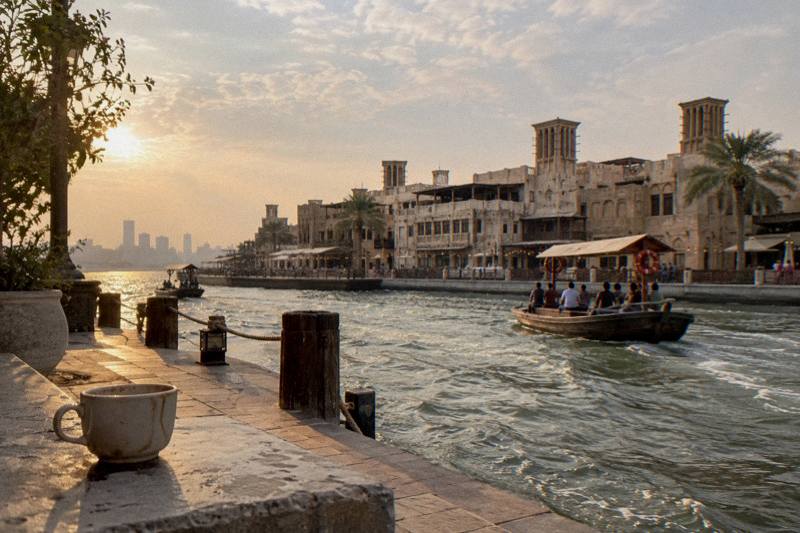
How Much Would A 7-Day Trip To Dubai Cost?
An honest breakdown of what a week in Dubai costs: reported street food and restaurant prices, transport fares, and where a guided food walk fits the budget.
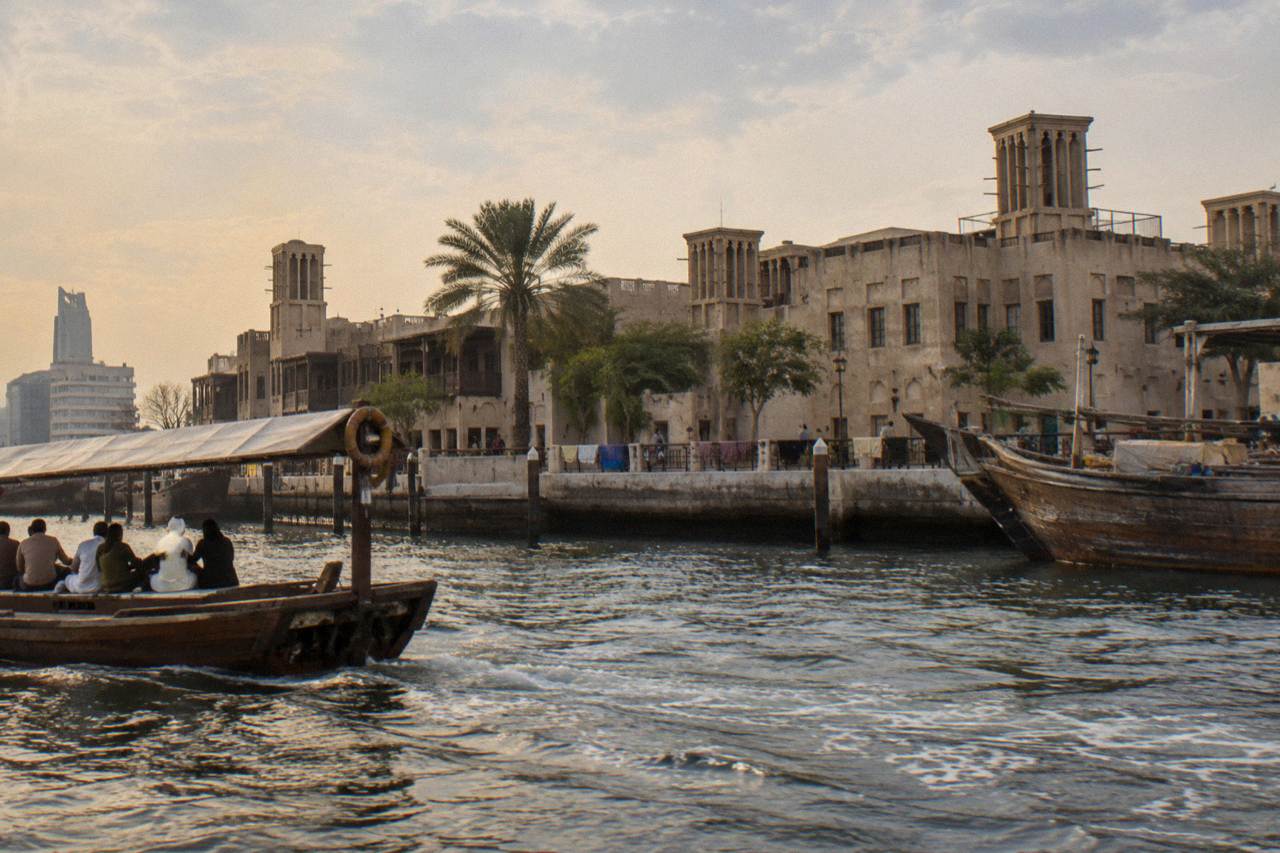
The honest answer is that nobody can give one number, because Dubai runs two price scales side by side. A week built around reported shawarma at 8 to 15 AED, karak chai at 1 to 3 AED and a metro card looks nothing like a week of hotel brunches. What can be stated plainly is what each piece of the trip costs, in the figures local sources report and official operators publish, so the total is yours to assemble.
The food piece of that budget is the part this site knows best. Old Dubai is the cheapest eating district in the city, and it is also where the guided tasting walks run, so the two decisions, where to eat and whether to book a walk, sit together naturally. If you're weighing a desert evening against a city food walk, the guide comparing a desert safari dinner with a Dubai food tour lays out the differences in pace, food and cost.
A 7-day trip to Dubai has no fixed price, and any single figure would be invented. The honest method is to cost the parts: reported street food runs 1 to 15 AED per item, casual meals 15 to 40 AED per person, mid-range restaurant meals around 80 to 150 AED, and transport starts at a 25 AED rechargeable card plus metered taxi fares from 5 AED. Hotels, flights and tours sit on top of that, priced per listing. For a closer look at how dining prices differ across the city, the Marina versus Old Dubai restaurant comparison covers both sides of the Creek.
That answer will frustrate anyone wanting a headline number, and it should, because the honest version is more useful. Dubai is a city where a filling lunch and a hotel dinner can differ by a factor of ten. Cost guides that print one weekly total quietly assume a hotel tier, a dining style and an activity list, and if your week differs on any of those, the total is wrong.
What the reported figures do support is a clear split. Eating cheaply in Dubai is genuinely cheap by global-city standards: local sources report shawarma at 8 to 15 AED at local spots, falafel wraps at 4 to 15 AED, and karak chai at 1 to 3 AED from cafeteria counters. A casual Emirati, Levantine or neighbourhood cafeteria meal runs a reported 15 to 40 AED per person. Those numbers hold across Deira and Bur Dubai, the districts most food walkers visit.
“We did a late afternoon tour and it was a great experience. From the beginning our tour guide Hossam made sure we were looked after and had a relaxed manner that easily conveyed information and answered questions. Would recommend.”
The upper scale starts at mid-range restaurants, where a meal costs a reported 80 to 150 AED per person, and climbs from there through hotel dining. Add the standard extras: restaurants commonly add a 10 per cent service charge, retained by the venue rather than a government fee, plus 5 per cent VAT on food and drink. None of that is a trap, it is printed on the bill, but a week of mid-range dinners carries it seven times.
Flights and hotels are the pieces this site cannot price for you, because they vary by season, origin city and booking date far outside anything reported here. The food and transport layers, by contrast, are stable and documented, which is why the rest of this article stays on those layers where the figures are real.
What Does Food Cost Per Day In Dubai?
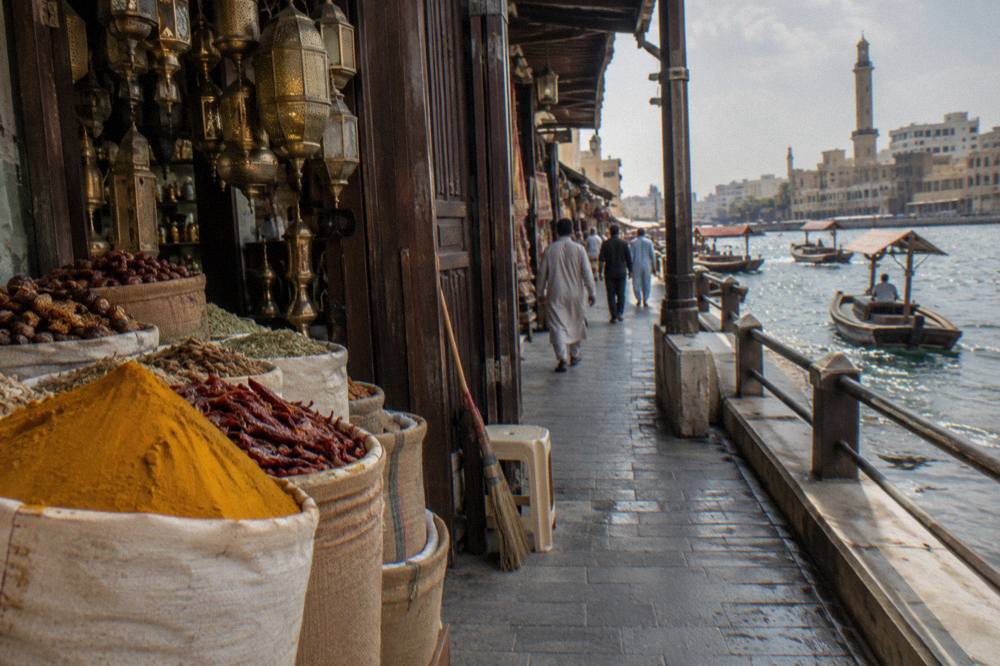
Reported figures put a cheap eating day at cafeteria prices: shawarma 8 to 15 AED, falafel wraps 4 to 15 AED, samosas 1 to 5 AED each, karak chai 1 to 3 AED, and casual cafeteria meals 15 to 40 AED. A mid-range day with one restaurant meal runs 80 to 150 AED for that meal alone. Bottled water runs a reported 6 to 12 AED per bottle in restaurants.
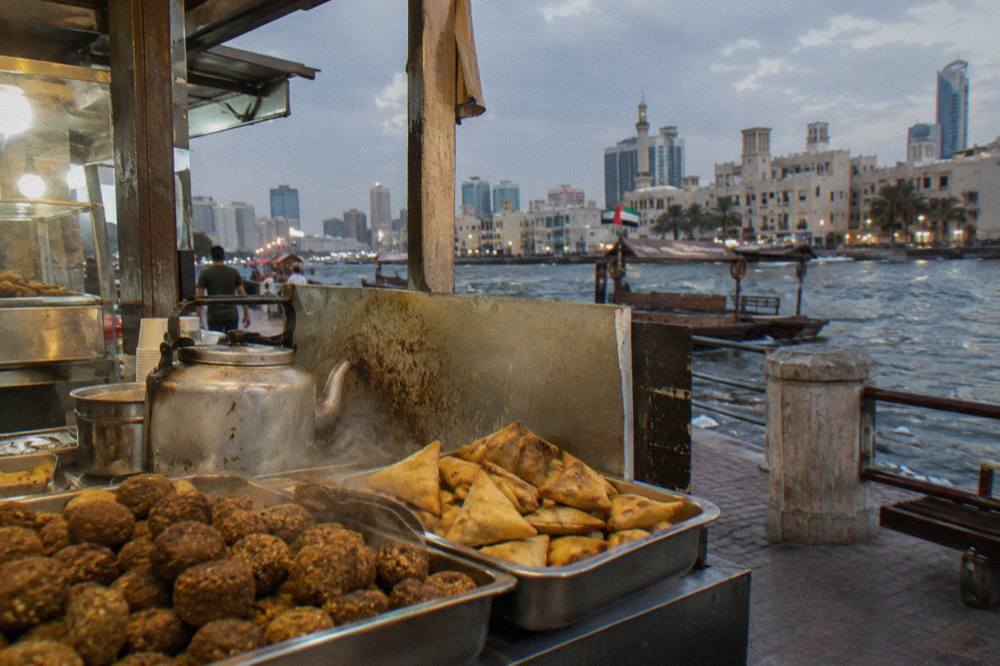
The cheapest eating in the city concentrates in exactly the districts a visitor walks anyway. Deira and Bur Dubai street stalls and the Iranian, Afghan, Indian, Pakistani and Lebanese cafés around the souks sell shawarma, falafel, samosas, luqaimat and karak at the low end of every reported range. One recent Deira eating guide reports samosas at 1 to 5 AED per piece or 10 to 12 AED for a bag of about five, and luqaimat at a reported 10 to 18 AED an order.
Breakfast is the cheapest meal to eat like a local. Karak chai at 1 to 3 AED and a bread or wrap item from the same counter is a morning meal at the price of a coffee anywhere else. Emirati breakfast dishes, balaleet, chebab and regag, appear on café menus in Al Fahidi at sit-down prices, and the Sheikh Mohammed Centre for Cultural Understanding in the Al Fahidi Historical Neighbourhood offers cultural meals with Emirati hosts at reported prices of 130 AED for breakfast or brunch, 145 AED for lunch, 150 AED for tea time and 160 AED for dinner, booking required.
| Food item or meal | Reported price (AED) | Where this applies |
|---|---|---|
| Karak chai | 1 to 3 | Local cafeterias and stalls |
| Samosa, per piece | 1 to 5 | Deira street stalls and cafés |
| Shawarma | 8 to 15 | Local spots, 20 to 40 at tourist spots |
| Falafel wrap | 4 to 15 | Street counters and cafés |
| Casual cafeteria meal | 15 to 40 per person | Emirati, Levantine, neighbourhood cafés |
| Mid-range restaurant meal | 80 to 150 per person | Sit-down restaurants citywide |
| Luqaimat, an order | 10 to 18 | Street and heritage dessert stalls |
A practical note on the bill: the 10 per cent service charge many restaurants add is discretionary and venue-retained, not a mandatory government fee, and cash tips of 5 to 10 per cent are common but voluntary. Visit Dubai's own tipping guide describes restaurant tipping at 10 to 15 per cent as the usual practice, with card terminals generally allowing an added tip, and suggests checking with the waiter that the amount reaches the staff. None of this changes the food prices above, but it changes the total on the receipt.
Where a guided walk fits this layer deserves its own honesty. A food tour is not a cheaper way to eat than a cafeteria, and no claim here says it is. What a paid walk buys is a counted set of tastings, a guide who explains the district, and a route that would take a first-timer days to assemble alone. One established local operator's example is reported at 435 AED per person for a 3.5-hour walk with sampled food and water included, which is a fair marker for what serious guided food walks in this city charge. The tours on this site are priced on their listings, and the listings state what each includes.
How Much Does Getting Around Dubai Cost?
Transport is the cheapest layer of the trip. The Nol card costs 25 AED including initial credit, the metro runs from early morning to midnight on most days, and metered taxis start at a reported 5 AED in daytime and 5.5 AED at night. A week of metro-and-walking transport costs less than one mid-range restaurant meal.
The Roads and Transport Authority's Nol card is the single purchase that unlocks the system: a reloadable smart card covering metro, tram, buses and some non-transport services, with anonymous Silver and Gold cards at 25 AED including initial credit. The official card page sets a maximum anonymous balance of 1,000 AED, which no tourist will approach in a week. Metro operating hours, per the official timetable, run 5:00 to midnight Monday to Thursday and Saturday, 5:00 to 1:00 the next day on Friday, and 8:00 to midnight on Sunday.
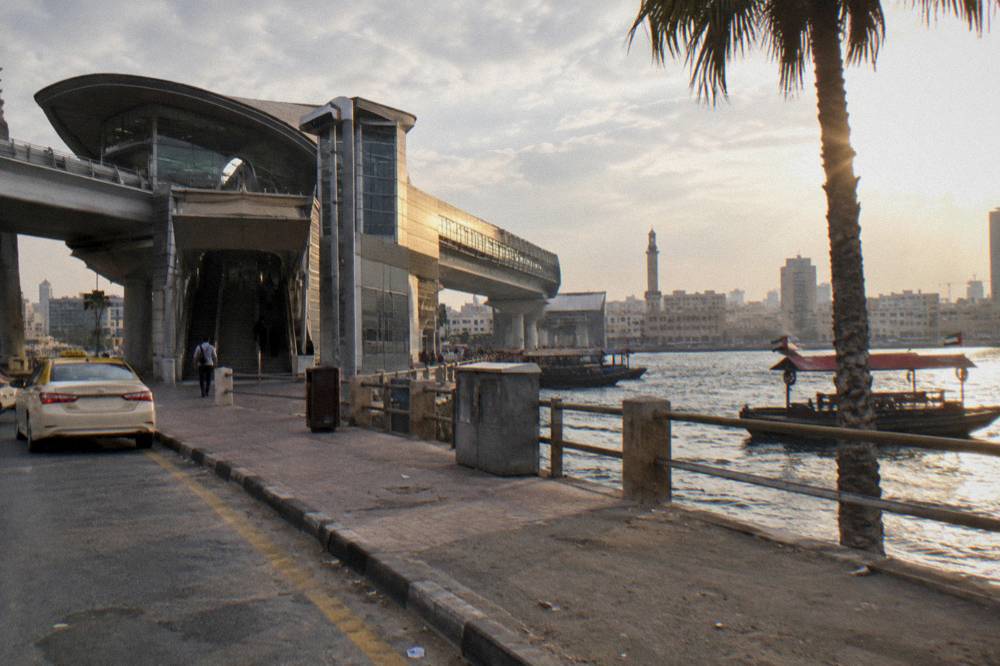
For the districts that matter to an eating trip, the Green Line is the useful one. Official station naming puts Baniyas Square, Gold Souq and Al Ras on the Green Line in Deira, with Sharaf DG serving the Al Fahidi area and Union as the shared Red and Green interchange. That means the whole Old Dubai food circuit, Al Fahidi to the Deira souks, sits on a single line with a walk at each end. If you're curious how locals and vendors respond to American visitors along this route, the guide to Dubai friendliness for US travelers covers the etiquette basics and what to expect on a first walk through Old Dubai.
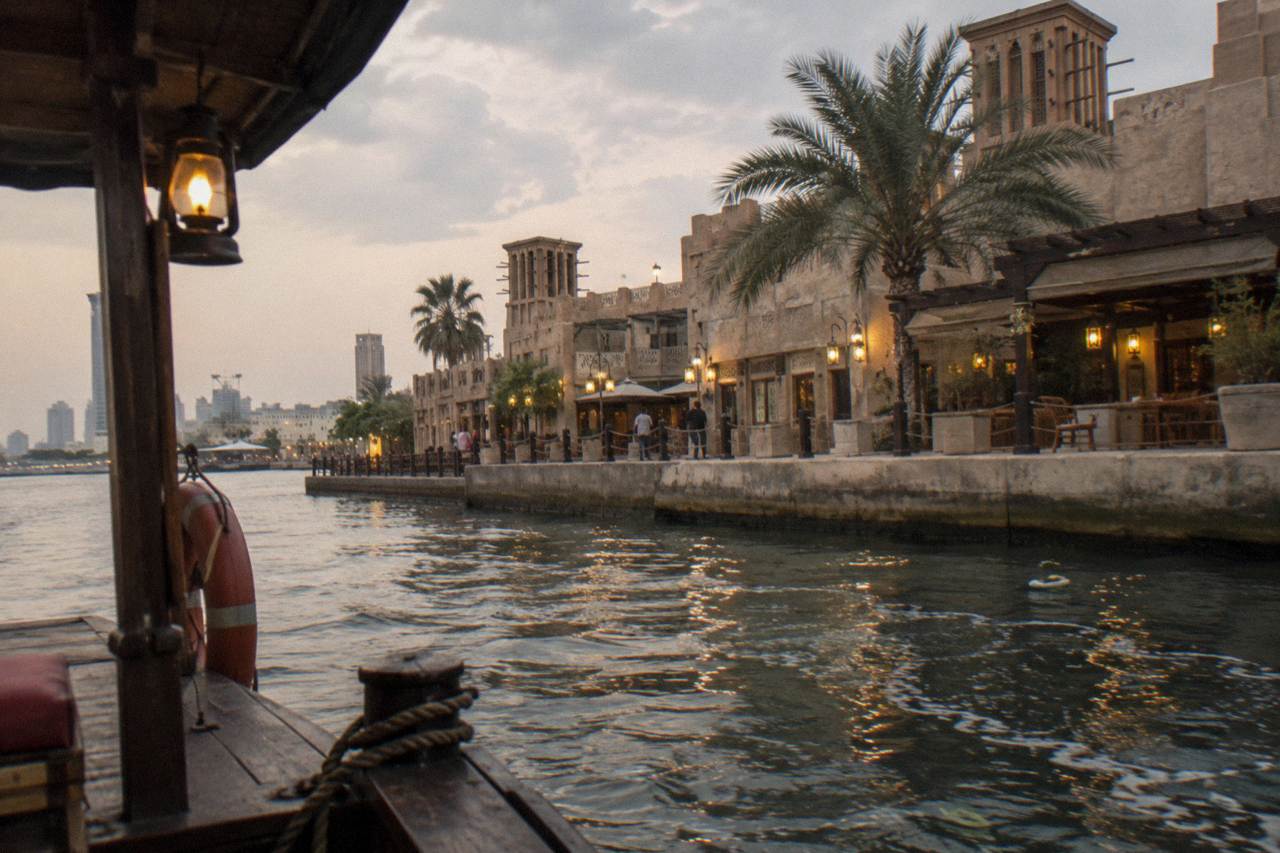
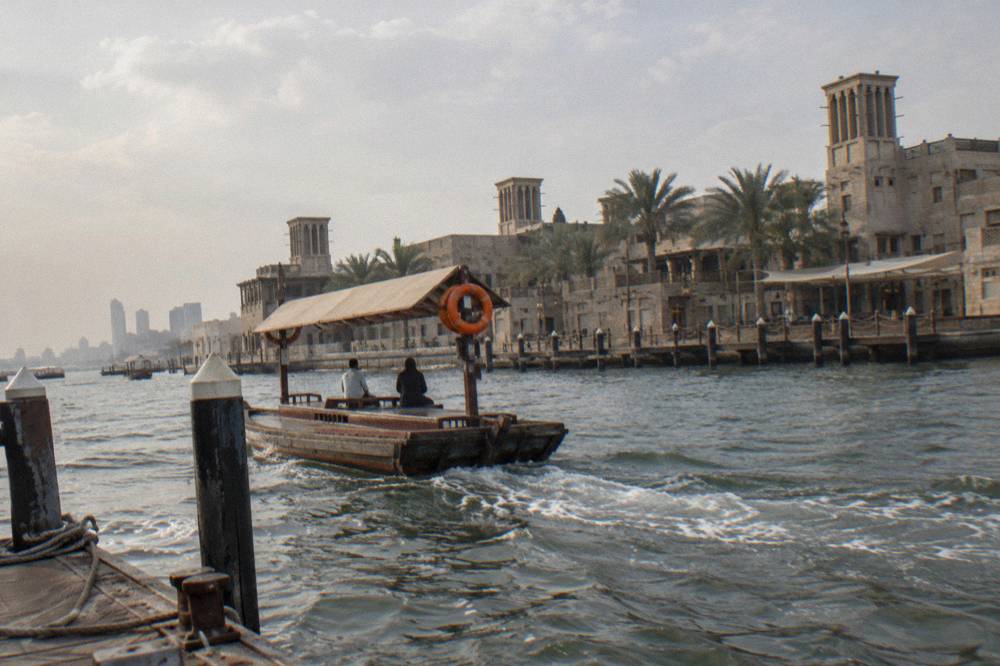
Taxis fill the gaps. The RTA's published pickup fares are 5 AED between 6:00 and 22:00 and 5.5 AED between 22:00 and 6:00 for regular and family taxis, before distance charges. For a week spent mostly in Old Dubai, most travellers use the metro for the long legs and walk the rest; the creek crossing itself is the abra, and the traditional crossing between Bur Dubai and Deira is a short boat ride on routes the RTA lists as CR1 through CR6, with fares to check on the RTA marine page before riding.
| Transport item | Reported or official figure | Notes |
|---|---|---|
| Nol card, Silver or Gold | 25 AED including initial credit | Official RTA price |
| Metro hours, most days | 5:00 to 24:00 | Friday to 1:00, Sunday from 8:00 |
| Taxi pickup fare, daytime | 5 AED | 6:00 to 22:00, official RTA figure |
| Taxi pickup fare, night | 5.5 AED | 22:00 to 6:00, official RTA figure |
| Creek abra routes | CR1 to CR6 listed by RTA | Fares on the RTA marine page |
The airport transfer sets the tone for the week: the metro runs from the airport's own stations, so the cheapest version of arrival needs no taxi at all. The official RTA timetable page carries the current hours, and the RTA taxi fare page publishes the pickup fares above, worth a glance before you ride.
Is A Guided Food Walk Worth Adding To The Budget?
For most first-time visitors, one guided walk is a defensible spend, not a luxury. It converts a district you would wander anyway into a counted tasting route with a guide who explains it, at a price comparable to one mid-range dinner. The deciding factors are how many tastings the listing includes, whether drinks or a meal are covered, and whether the route matches the district you planned to see.
“Be prepared to receive historical information, learn about the culture, eat, and shop with Mohammad. This is a must-try when visiting Dubai. Wear comfortable walking shoes and bring a mini hand fan…you’ll thank me later for this tip. Thank you Mohammad for a great experience!!”
The case for adding a walk is structural, not sentimental. Old Dubai is walkable and free to explore, which is exactly why a first-timer can spend a day there and eat three forgettable meals. A guided walk compresses the learning curve: the guide picks the stalls, the tastings are counted and stated on the listing, and the walk doubles as a history tour of the creek, the souks and the heritage quarters. Every listing on this site states its inclusions, its duration and its meeting point, and those three details are what you are paying for.
The case against is equally real. If your week already includes a local friend, a long stay, or a deep tolerance for trial and error, the walk duplicates what you can do alone for the price of the food itself. And a walk is not a meal plan: most run around three hours with tastings, which supplements a day of eating rather than replacing it.
For travellers who want the food and the skyline in a single evening, the VIP food tour with Burj Khalifa access pairs more than seven tastings with entry to the city's icon in one three-hour booking, which is a neat answer to the "one splurge" slot in a week's budget. Its price and current availability are on the operator's listing.
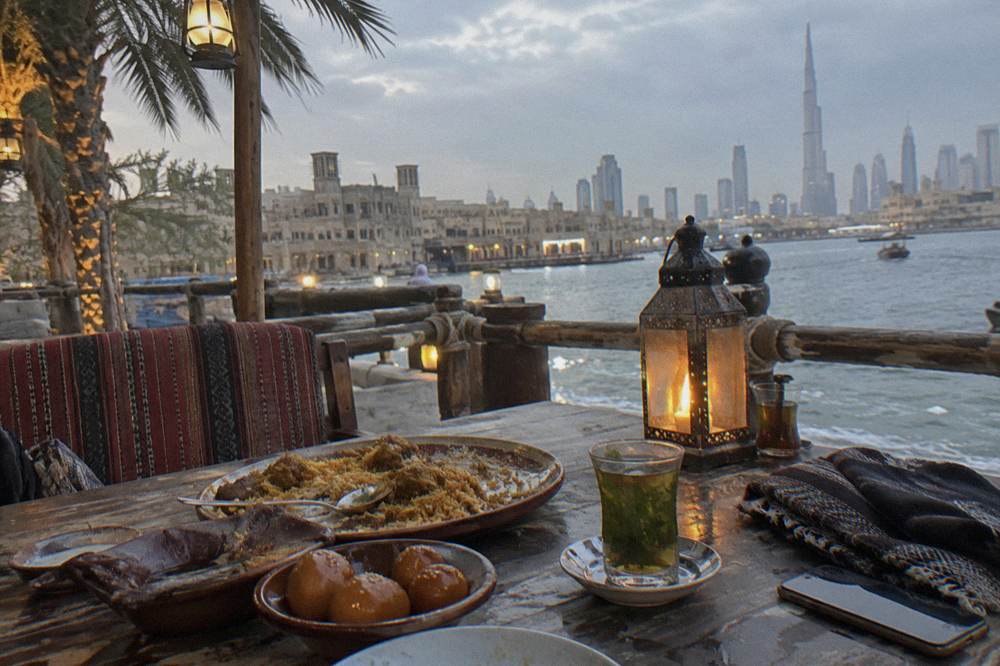
If the budget allows only one paid food experience, the format choice matters more than the operator. A souks-and-tastings walk covers the market district and the creek; a private tasting tour with a local covers a counted set of stops at your own pace; a cultural meal covers Emirati home dishes in a seated setting.
What Does A Cheap Week Versus A Comfortable Week Look Like?
A cheap week eats the reported low end: cafeteria meals at 15 to 40 AED, street snacks at 1 to 15 AED, karak at 1 to 3 AED, and one or two paid experiences. A comfortable week adds mid-range restaurant meals at 80 to 150 AED per person, a cultural meal such as the SMCCU dinner at a reported 160 AED, and a guided walk. The difference between the two weeks is almost entirely the restaurant tier. For a clearer picture of what that money buys day to day, the breakdown of 100 AED in Dubai covers street food, sit-down meals, transport, and souvenirs at reported prices.
“We had Tamour as a guide for a tasting tour! It was a private tour and he was so wonderful with accommodating to our requests. He took us to wonderful food spots and was so friendly to us. He made certain we didn't get scammed on prices at the souks. I would highly recommend him!!!!”
The cheap version is not a compromise version. Some of the best food in Dubai, the shawarma counters, the cafeterias, the samosa bags, the luqaimat stalls, sits at the bottom of the reported price table, and a traveller who eats in Deira and Bur Dubai all week eats well at cafeteria prices. The savings then fund the experiences that are genuinely worth their price: a guided walk, a cultural meal with Emirati hosts, or the skyline splurge. If you want to test that kind of budget against real daily costs, the guide to whether one hundred dollars a day covers Dubai walks through eating, transport and sightseeing with local prices.
The comfortable version differs in three places. Restaurants replace cafeterias for one or two meals a day, which moves the food budget by tens of AED per person per meal. The hotel tier moves up, a layer this site does not price. And the activity list grows, desert trips, skyline observation, boat cruises, each priced on its own listing.
| Budget layer | Cheap week, reported figures | Comfortable week, reported figures |
|---|---|---|
| Breakfast | Karak 1 to 3 AED plus a bread item | Café breakfast or hotel buffet |
| Lunch | Cafeteria meal, 15 to 40 AED | Mid-range meal, 80 to 150 AED |
| Dinner | Street food, items 1 to 15 AED | Restaurant meal plus 10 per cent service and 5 per cent VAT |
| Transport | Nol card 25 AED plus metro rides | Same, plus more taxi pickups from 5 AED |
| Paid food experience | One group walk, price on the listing | Walk plus cultural meal, SMCCU dinner 160 AED reported |
Two rules keep any version of the week honest. First, reported prices are reported: stall and café prices shift, so treat the ranges as planning figures and check the counter. Second, never let the cheap week become a stressed week. The point of the reported low end is that it is genuinely good food, not that it is a test of endurance.
For the walking itself, the practical notes live in the Dubai food walking tour pace and dress guide, and the dish-by-dish background is in the traditional Emirati food guide. Dress matters in the souks and heritage quarters: the reported guidance is to cover shoulders and knees in traditional districts, not as a legal matter but as respect in the areas where the cheapest food is found.
What Could Derail The Budget?
Three things move a Dubai week's cost more than any food choice: the hotel tier, the restaurant ratio, and the paid-experience count. Food inflation inside the week is small, reported ranges are stable, and transport is negligible. The risk is not overspending on shawarma, it is booking seven splurge experiences without noticing the pattern.
Alcohol is the clearest example. Visitors over 21 may drink at licensed venues only, hotels, restaurants and lounges, and alcohol is not allowed in public places outside licensed venues. A week of licensed-venue drinking sits at hotel-bar prices, not cafeteria prices, and no food walk through Old Dubai includes alcohol unless the listing says so. Travellers who drink should budget it as a separate layer, and check current rules before arrival.
Dietary needs rarely change the cost but can change the plan. All meat sold in restaurants and markets in Dubai is halal, and pork appears only in designated licensed sections, so the default street food landscape is halal throughout. Where a listing does not state vegetarian, vegan or gluten-free coverage, the honest move is to message the operator before booking rather than assume.
Season moves the hotel layer more than the food layer. The reported weather data puts December to February daytime highs at 24 to 26 °C, the best walking conditions of the year, which is also when hotel pricing peaks. The food counters charge the same in August, when the walking is harder, as in January. A budget week in the hotter months eats identically and walks less.
“We had a fantastic tour today facilitated by Hossam. He was a very friendly and engaging guide and we found the pace of the tour excellent. I would definitely recommend this activity to others and will likely rebook when other family members visit Dubai.”
Photography and etiquette costs nothing but matters in the districts a food walk crosses: the reported guidance is to ask permission before photographing individuals, particularly Emirati women and families, in the souks and heritage areas. A guide on a paid walk handles these introductions naturally, which is one quiet argument for the guided format in the most traditional quarters. If you're weighing which district suits this kind of walk best, the guide to Deira's souks, street food and transport links covers what to expect in the city's oldest commercial quarter.
Common Questions About A 7-Day Dubai Trip Budget
How Much Would A 7-Day Trip To Dubai Cost?
There is no single honest figure, because hotel tier and restaurant choice dominate the total. The documented layers are: street food at reported prices of 1 to 15 AED per item, casual meals at 15 to 40 AED per person, mid-range restaurant meals at 80 to 150 AED, a 25 AED transport card, and tours priced per listing. Cost the parts and the total is yours.
Is Food Expensive In Dubai?
It is two cities at once. Local cafeterias and street stalls in Deira and Bur Dubai sell shawarma at a reported 8 to 15 AED and karak chai at 1 to 3 AED, while mid-range restaurants run 80 to 150 AED per person. A traveller who eats at the low end eats well for a fraction of hotel-dining prices.
How Much Does Transport Cost For A Week?
The Nol card costs 25 AED including initial credit and covers metro, tram and buses. Official taxi pickup fares are 5 AED daytime and 5.5 AED at night. For a week focused on Old Dubai, transport is the cheapest layer of the trip.
Should I Add A Food Tour To A Week's Budget?
For most first-timers, one guided walk is a defensible spend: it converts a free-to-walk district into a counted tasting route with explanation, at a price comparable to one mid-range dinner. Check the listing for what the tastings include, the duration and the meeting point before booking.
Are Restaurant Bills Higher Than The Menu Price?
Often, yes. Restaurants commonly add a 10 per cent service charge, which is venue-retained and not a government fee, plus 5 per cent VAT. Cash tips of 5 to 10 per cent are common but voluntary, and Visit Dubai's tipping guide describes 10 to 15 per cent as the usual restaurant practice.
What Is The Cheapest Way To Eat Well In Dubai?
Eat where the workers and locals eat: the cafeterias and stalls of Deira and Bur Dubai, where reported prices run 1 to 15 AED per item and full casual meals run 15 to 40 AED. The districts are the same ones the souks, the creek and the heritage quarters sit in, so cheap eating costs no extra travel.
The budget question resolves into a choice of scales, and Dubai Food Tours exists for the food layer of it. A week priced around the reported cafeteria figures, one guided walk, and a single skyline evening is a realistic and generous version of Dubai, and the numbers above are the documented pieces it is built from.