Free Things To Do In Dubai And Food On A Budget
Old Dubai gives away its best views for nothing. The lanes of Al Fahidi, the Al Seef promenade, the souks and the Creek are all free to wander, and the street food around them costs a few dirhams. One pay-what-you-want walking tour ties the whole route together, and a paid tasting walk is the natural upgrade when you want the food counted and explained.
Short answer
The free core of Dubai is Old Dubai: Al Seef's 1.8 km waterfront, the Al Fahidi Historical Neighbourhood, the Textile, Spice and Gold Souks, and the Creek itself. A verified pay-what-you-want walk covers that route in about 2 hours 30 minutes. Street food is reported at 1 to 15 AED per item, and a paid tasting walk adds counted dishes and a guide.
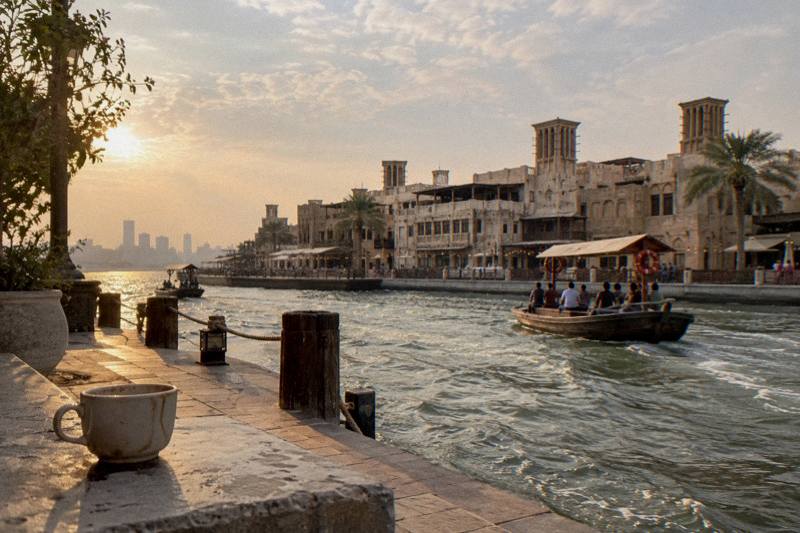
Old Dubai costs nothing to enter. The wind-tower lanes of the Al Fahidi Historical Neighbourhood, the roughly 1.8 km Al Seef waterfront promenade, the Textile Souk on the Bur Dubai side and the Spice and Gold Souks across the Creek are all free to walk, browse and photograph, and the views over the Creek from the docks are the oldest skyline Dubai has. The food around them is just as accessible: a cup of karak chai is reported at 1 to 3 AED at local cafeterias, and a shawarma wrap runs around 7 to 15 AED at local spots. This guide lays out the free sights in walking order, one verified pay-what-you-want tour that strings them together, the reported cost of eating cheaply, and the honest point at which a paid tasting walk earns its price. Along the way it points to the planning pieces that matter, from getting to Old Dubai by metro and abra to the Creek abra ride and waterfront eating.
What Can You Do In Dubai For Free?
The free list is almost entirely an Old Dubai list: the Al Seef promenade, the Al Fahidi Historical Neighbourhood, the Bur Dubai Textile Souk, the abra crossing of the Creek, the Deira Spice Souk and the Gold Souk, plus the Creek waterfront itself. Every one of these is open to walk without a ticket, and the whole set connects on foot in a single loop of a few kilometres. Nothing on this route charges entry.
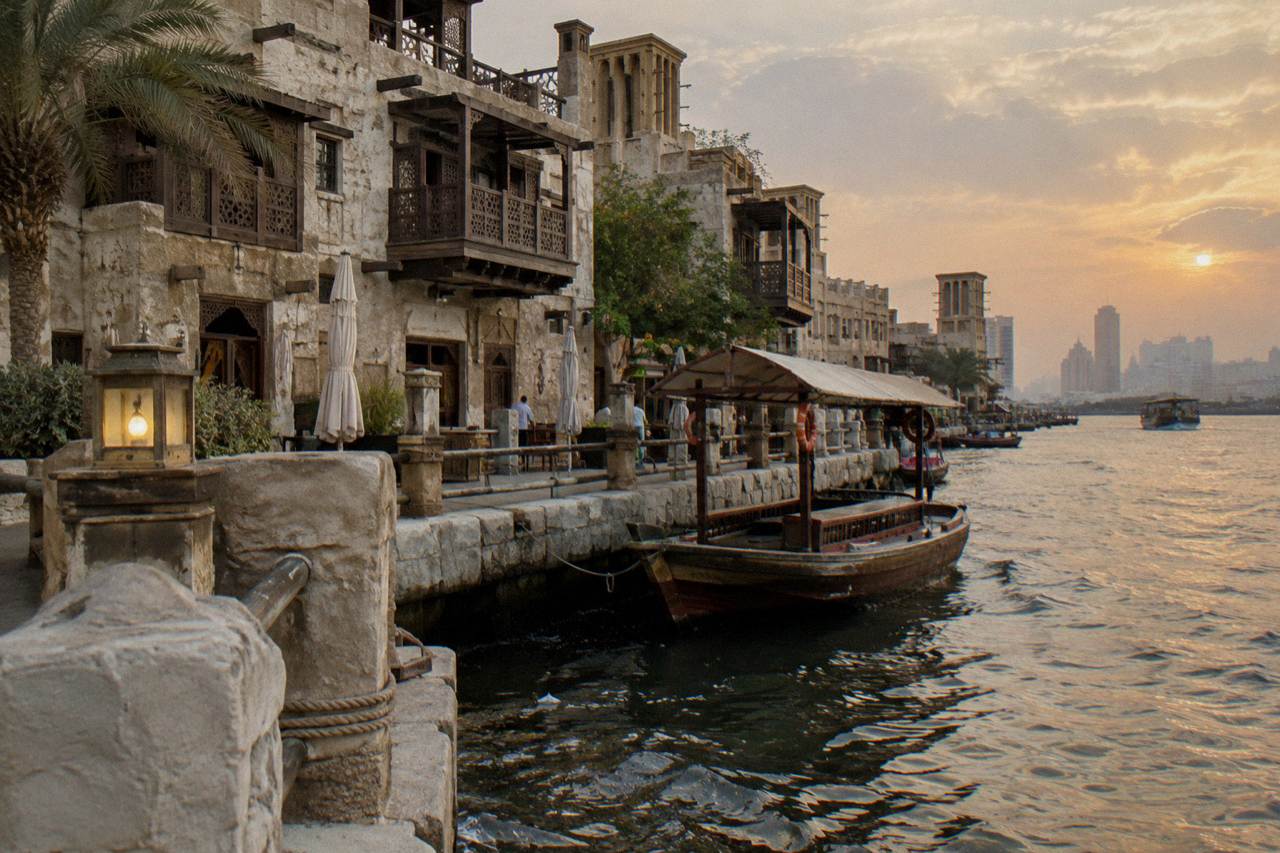
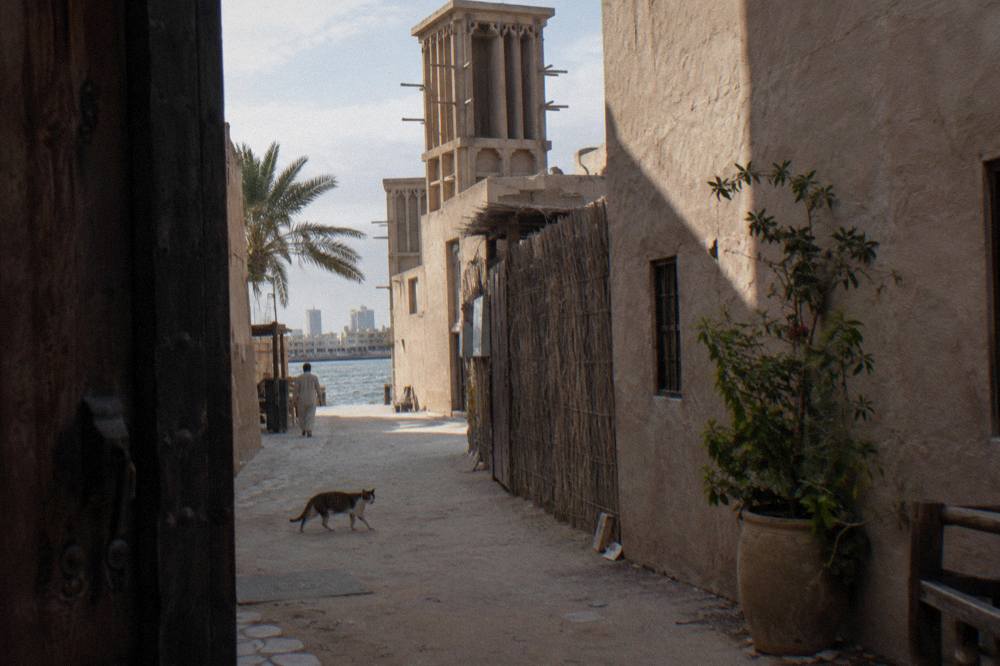
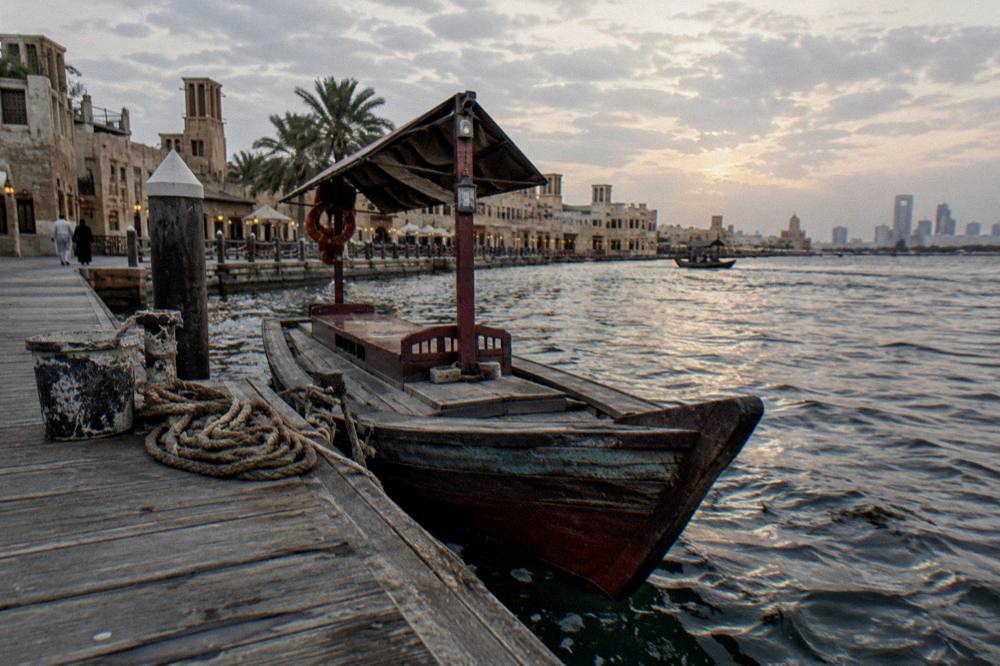
Start on the Bur Dubai side. Al Seef is a waterfront stretch of roughly 1.8 km, open daily, free to enter, split between a heritage quarter of coral-stone and gypsum buildings and a modern marina walk. The Al Fahidi Historical Neighbourhood sits a few minutes inland: narrow lanes, wind towers, courtyard houses, small galleries, and free public access, with the district reported open 7am to 8pm daily per Dubai Culture. From there the Textile Souk runs toward the abra docks, and the crossing to Deira lands you between the Spice Souk and the Gold Souk, both free to browse whether or not you buy anything.
Two honest notes. The Al Fahidi Fort, which houses Dubai Museum, has been closed for a major restoration since 2021, with 2026 reports pointing to a reopening in the coming weeks or months, so do not build a day around it until it is confirmed open. And the Dubai Creek Lights project, a Dubai Municipality scheme installing more than 5,000 lighting units along roughly 8 km of the Creek including the Al Seef and Bur Dubai Souq areas, is underway with completion scheduled for the first quarter of 2027, which means some promenade sections may carry work. No core walking-route closures between Al Fahidi, the souks and the abra stations were reported for 2026.
| Free sight | Side of the Creek | What it is | Reported access |
|---|---|---|---|
| Al Seef promenade | Bur Dubai | 1.8 km heritage and modern waterfront walk | Free entry, open daily |
| Al Fahidi Historical Neighbourhood | Bur Dubai | Wind tower lanes, courtyards, galleries | Free public access, reported 7am to 8pm |
| Textile Souk | Bur Dubai | Covered fabric and souvenir arcade | Free to browse, vendor hours vary |
| Spice Souk | Deira | Open lane of spice, herb and oud stalls | Free to browse, many stalls close midday and on Friday daytime |
| Gold Souk | Deira | Covered jewellery market | Free to browse, most shops reported open around 10am to 10pm |
| Creek waterfront and docks | Both | Working water views, abras, dhows | Free, public |
Souk browsing is its own free activity. The Spice Souk's sacks of turmeric, dried limes and saffron are photogenic from the aisle without buying a gram, and the Gold Souk's window displays cost nothing to admire. For what is actually worth tasting and buying in the spice lanes, the Deira spice souk guide goes deeper, and the Deira food guide covers the cheap cafeterias around them.
How Does A Pay-What-You-Want Walking Tour Work?
A pay-what-you-want walking tour costs nothing upfront: you book for free, join the walk, and at the end tip the guide whatever amount you feel the tour deserved. In Dubai, the verified option is the 7 Hidden Gems Of Old Dubai route on GuruWalk, a roughly 2 hour 30 minute English-language walk rated 4.87 from 31 reviews, covering Al Seef, Al Fahidi, the Textile Souk, an abra crossing, the Spice Souk, and the Gold Souk.
That is the one independent free tour this site can point to with confidence. GuruWalk is a separate, independent platform, not this site's product, and the walk is a sightseeing walk with a small tasting, not a food tour. The listing says it includes a free tasting of camel milk tea, Arabic coffee and local sweets alongside the route itself, which runs from Al Seef through the Al Fahidi Historical Neighbourhood and the Textile Souk, crosses the Creek by abra boat, and finishes through the Spice Souk and the Gold Souk. You tip the guide directly at the end.
See this free tour on GuruWalk
"Free" here means pay-what-you-want, and that is worth saying once plainly: the walk has no fixed price, and the tip is the entire payment. For the sights themselves, nothing on the route charges entry, which is what makes the format work in Old Dubai specifically. A guide in this district is adding stories and navigation, not gatekeeping, and the route is genuinely walkable alone if you prefer to self-guide with a map.
The honest gap is food. A tip-based walk is a sightseeing walk with a small tasting, not a meal. It does not cover a counted set of dishes, and it does not sit you down for a full plate of machboos or harees. If the food is the reason you are in Old Dubai, that is exactly where a paid guided food walk adds something the free format cannot: the tastings are listed and counted in advance, and on several options a full meal or drinks are included as the listing states. The paid options compared on this site are built around that difference.
What Does The Free Old Dubai Route Look Like On Foot?
The verified free walk and any self-guided version follow the same loop: start at Al Seef, walk the Al Fahidi lanes, browse the Textile Souk, cross the Creek by abra, work the Spice Souk, then finish in the Gold Souk. That is roughly a morning or an afternoon at a relaxed pace, and every leg is flat, paved and connected.
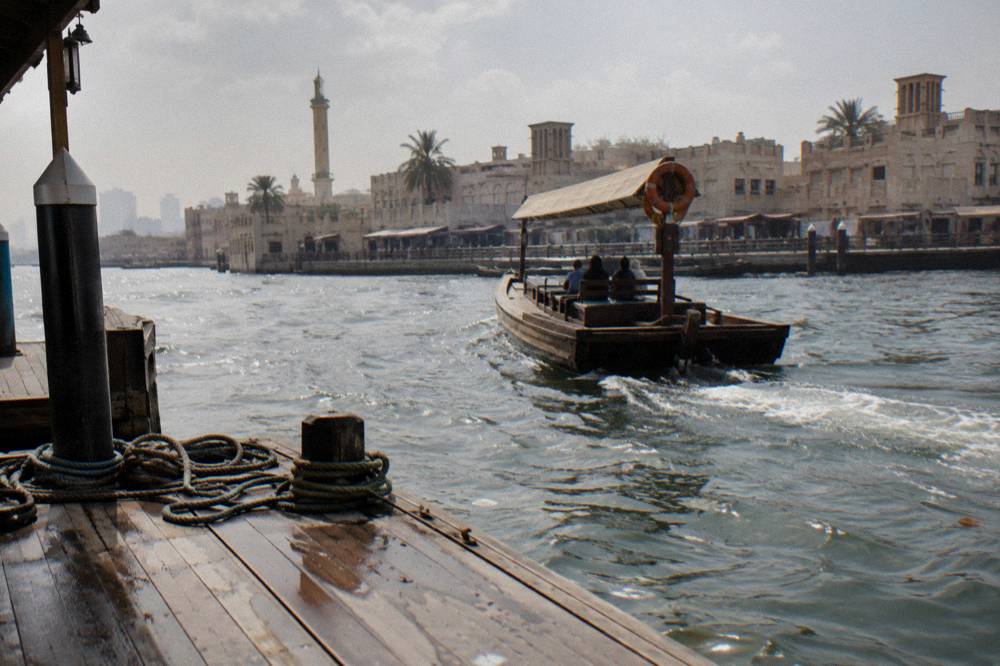
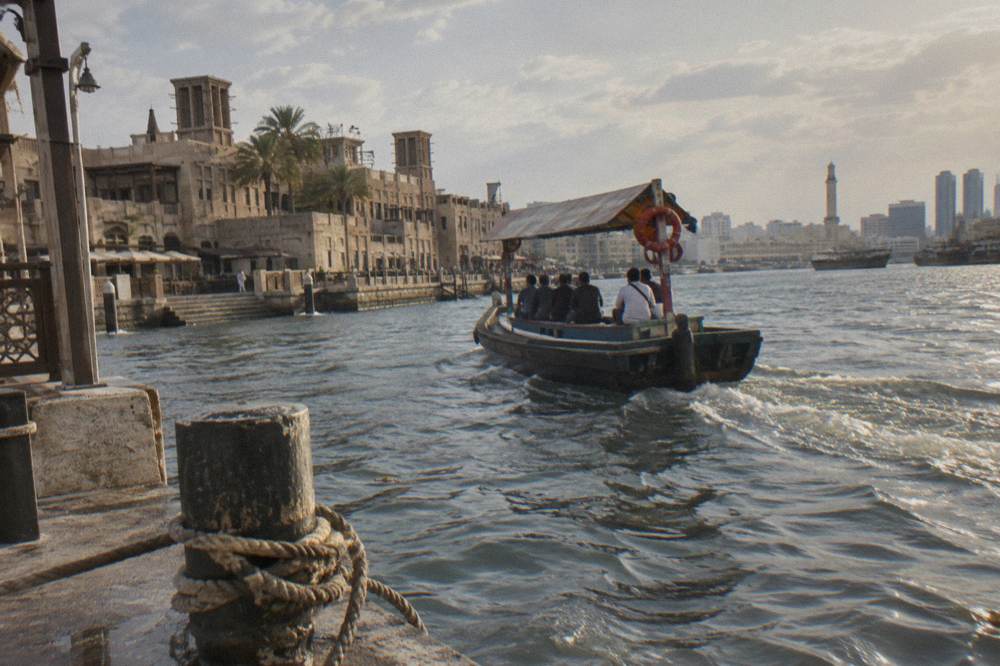
The geography is simple. Al Seef, Al Fahidi and the Textile Souk all sit within a few hundred metres of each other on the Bur Dubai bank, and the abra docks sit at the end of the souk lane. The crossing itself takes minutes, and the RTA, which operates the Creek abras, runs traditional commuter routes including the Bur Dubai to Deira Old Souq line; the fare is paid at the dock and the RTA page carries current timings. On the Deira side the Spice Souk and Gold Souk are again a short walk apart, with the Al Ras and Baniyas Square metro stations nearby on the Green Line for the ride home.
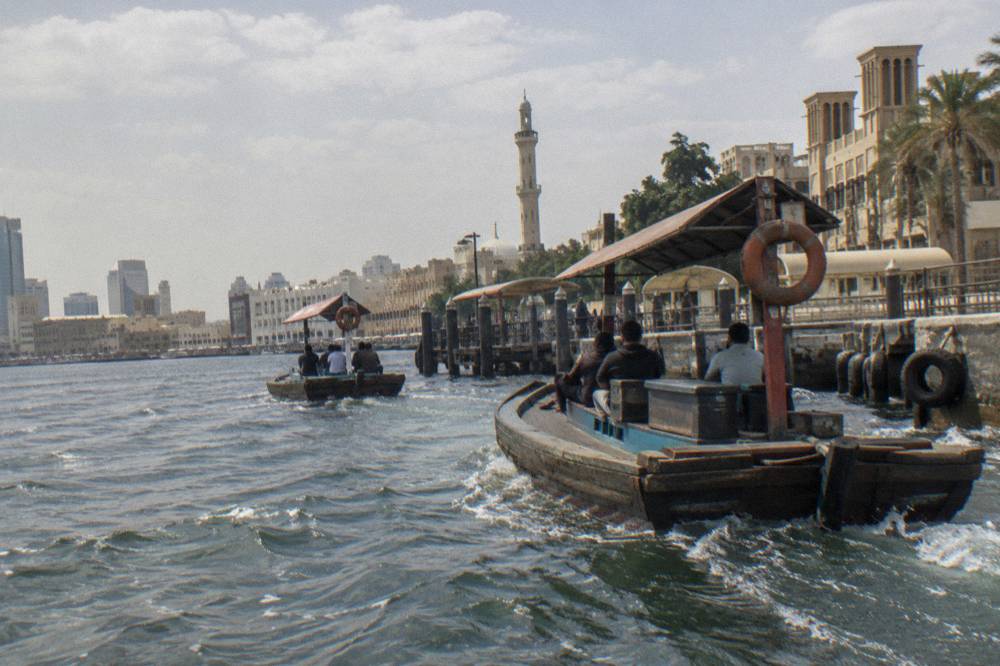
Timing shapes the day more than distance does. The souks keep varied hours: the Gold Souk's shops are reported mostly open around 10am to 10pm, the Spice Souk from earlier than 8am to past 9pm with many stalls closed during the daytime on Fridays, and individual shops close for midday breaks. The Al Fahidi lanes are reported open 7am to 8pm. A morning start catches the spice stalls open and the heat down; December through February brings the lowest average daytime highs of the year, reported at 24 to 26 C, which is the comfortable walking window.
Each of those three is a different animal. The first pairs a food walk with Burj Khalifa access, the second is a short Emirati-culture-and-cuisine route, and the third is a private four-hour street food walk. Prices and inclusions are on each live listing, and the sections below take them one at a time.
What Does Budget Street Food In Dubai Cost?
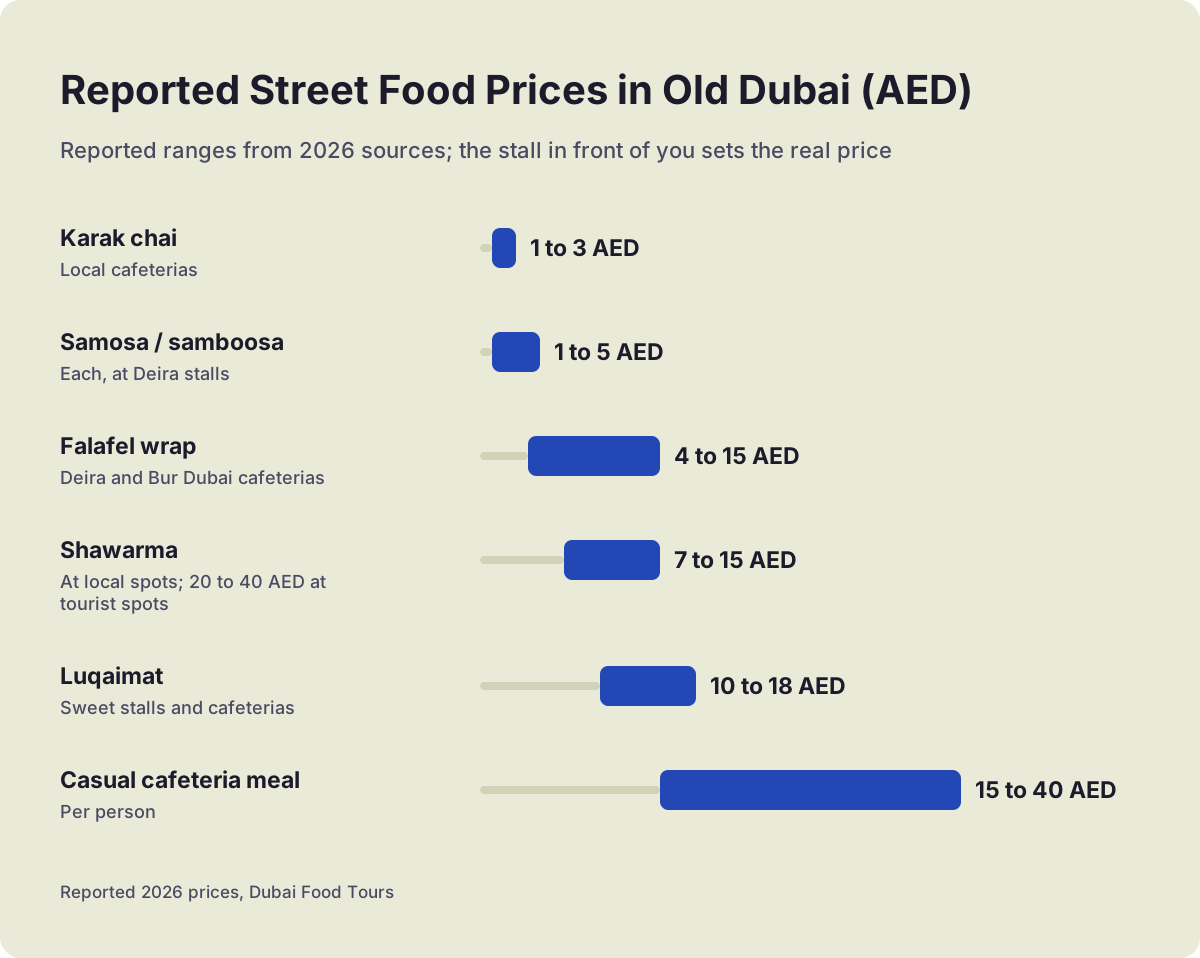
Reported prices from 2026 sources put the cheapest items at 1 to 3 AED for karak chai, 1 to 5 AED per samosa, and 4 to 15 AED for a falafel wrap, with shawarma at 7 to 15 AED at local spots. A casual cafeteria meal runs 15 to 40 AED per person. These are reported figures, they move, and the stall in front of you sets the real price, so treat them as planning ranges and check the board.
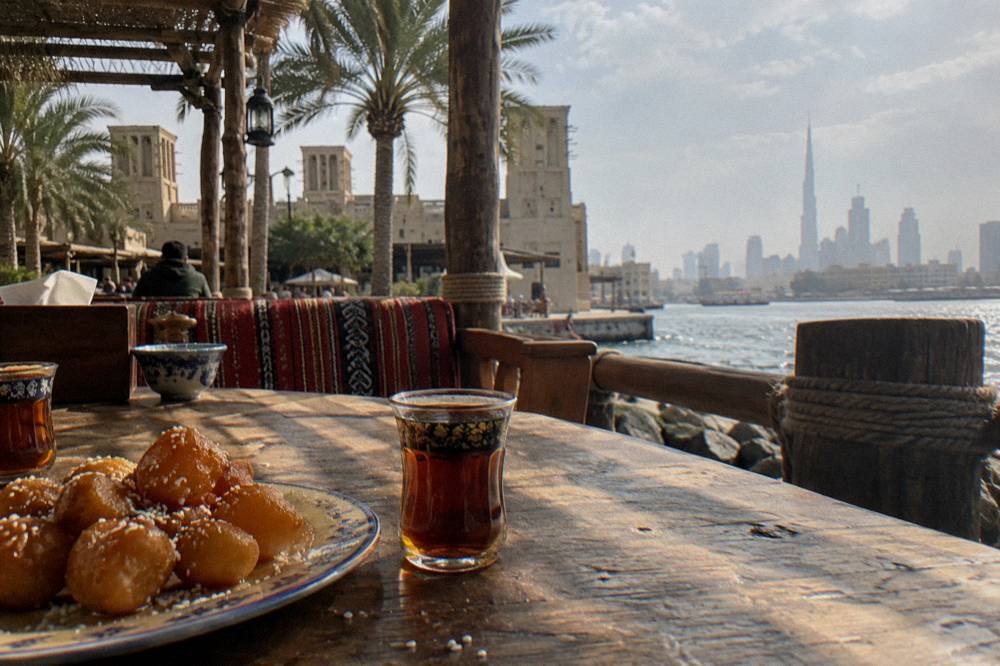
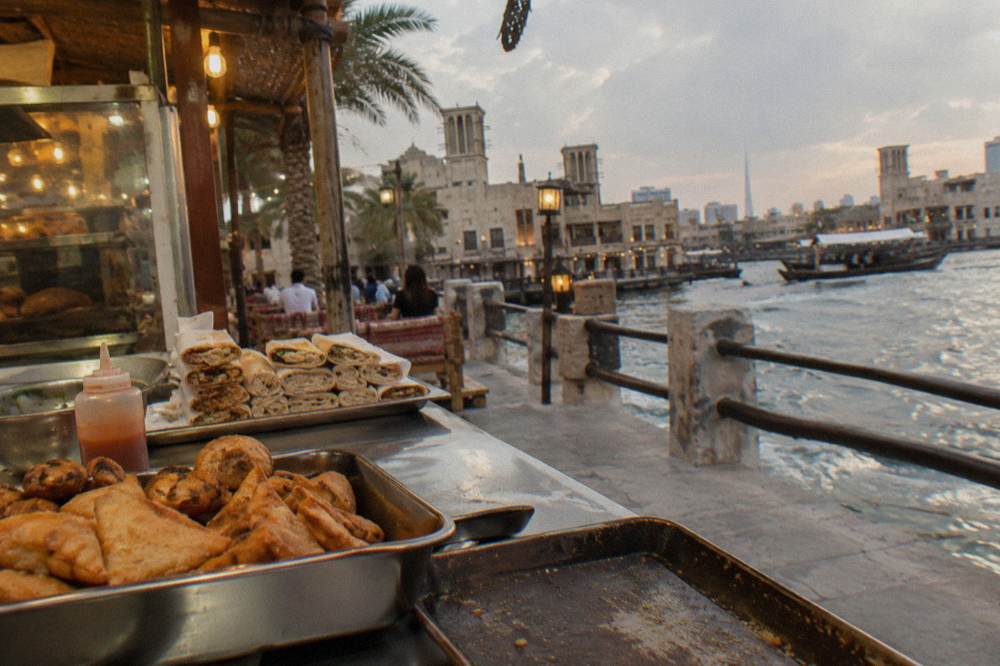
The street food of Deira and Bur Dubai is the budget traveller's main course, not a consolation prize. The Iranian, Afghan, Indian, Pakistani and Lebanese cafeterias around the souks sell the same shawarma, falafel, samboosa, luqaimat and karak that the paid walks stop for, and the 2026 price reporting above is consistent across several sources. Luqaimat, the crisp date-syrup dumplings, are reported at 10 to 18 AED, and a bag of samosas at 10 to 12 AED for around five pieces.
| Item | Reported price | Where to find it |
|---|---|---|
| Karak chai | 1 to 3 AED at local cafeterias | Cafeterias around the souks |
| Samosa / samboosa | 1 to 5 AED each, or 10 to 12 AED for a bag of about 5 | Deira stalls |
| Falafel wrap | 4 to 15 AED | Cafeterias in Deira and Bur Dubai |
| Shawarma | 7 to 15 AED at local spots, 20 to 40 AED at tourist spots | Deira and Bur Dubai |
| Luqaimat | 10 to 18 AED | Sweet stalls and cafeterias |
| Casual cafeteria meal | 15 to 40 AED per person | Neighbourhood Emirati and Levantine cafeterias |
For context, a mid-range restaurant meal is reported at roughly 80 to 150 AED per person, so a day of street eating costs a fraction of one sit-down dinner. The Dubai food prices guide breaks the full ladder from cafeteria to fine dining, and the street food guide maps which dishes to hunt down first.
Two bill mechanics worth knowing before you eat. Restaurants commonly add a service charge of up to 10 per cent, which is venue-retained and not a government fee, plus 5 per cent VAT; some hotel-affiliated venues add a further municipality fee. Tipping itself is voluntary: Visit Dubai's own guidance suggests 10 to 15 per cent in restaurants or a few dirhams in cafes, and card terminals usually let you add it, though it is worth checking with the waiter that the amount reaches staff. The tipping and paying guide covers the detail.
If you want those same dishes counted, seated and explained rather than hunted stall by stall, this is the natural upgrade point:
Where Can You Eat Emirati Food Without Paying Restaurant Prices?
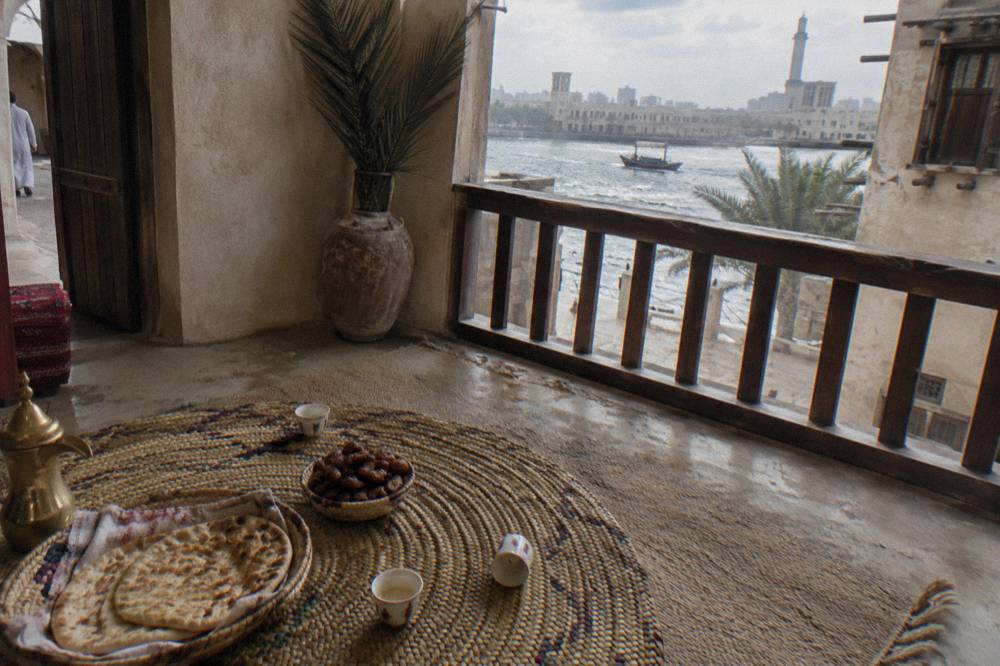
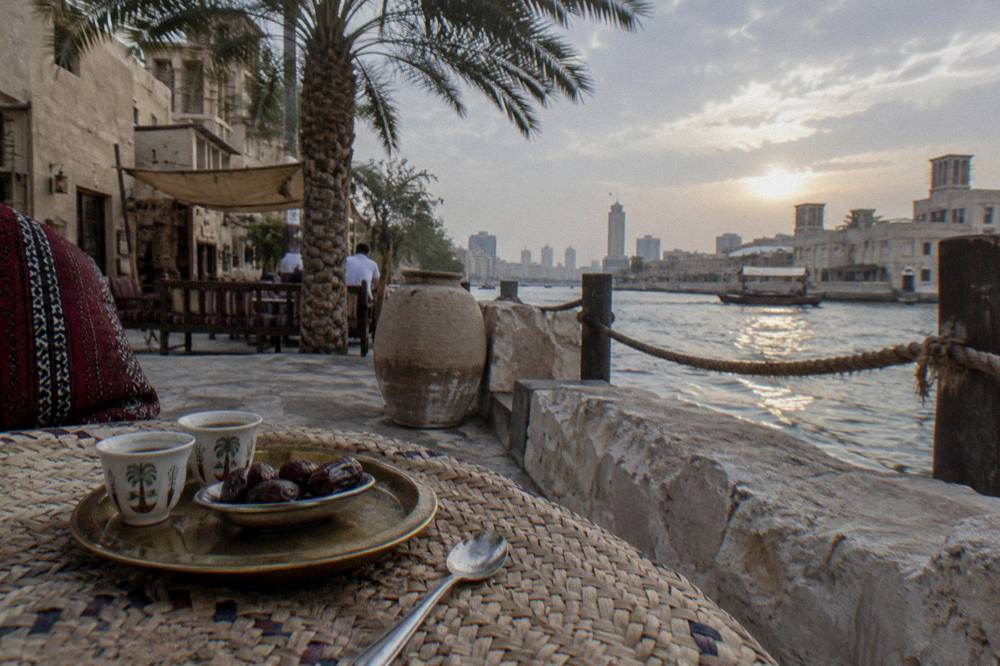
The cheapest verified Emirati meal in Old Dubai is the cultural meal at the Sheikh Mohammed Centre for Cultural Understanding in Al Fahidi: reported at 130 AED for breakfast or brunch, 145 AED for lunch, 150 AED for tea time and 160 AED for dinner, each a 1.5-hour sitting with Emirati hosts, Arabic coffee and dates, and an open question session on customs and daily life. Booking is required.
That meal is the best value in the category because it buys context as well as food, and the centre's own programme page carries the current prices and booking. Below that sit the neighbourhood restaurants: the 2026 reporting on Emirati dining in Old Dubai records machboos at around 58 to 65 AED for lamb or fish, harees at around 42 AED, and thareed or margoog at around 55 to 58 AED at heritage-settings restaurants in Deira, with luqaimat as the standard dessert. An Emirati breakfast of balaleet, the sweet saffron vermicelli with egg, or chebab pancakes with date syrup, is the lighter-budget entry, with one Al Fahidi restaurant's balaleet reported at around 52 AED.
| Emirati meal option | Reported price | What you get |
|---|---|---|
| SMCCU cultural breakfast or brunch | 130 AED | 1.5-hour meal with Emirati hosts, coffee and dates, Q&A |
| SMCCU cultural lunch | 145 AED | Same format, midday |
| SMCCU fuala tea time | 150 AED | Same format, afternoon |
| SMCCU cultural dinner | 160 AED | Same format, evening; adjusts to iftar in Ramadan |
| Machboos at a Deira heritage restaurant | around 58 to 65 AED | Lamb, chicken or fish rice dish, family-style |
| Harees at a Deira heritage restaurant | around 42 AED | Slow-cooked wheat and meat |
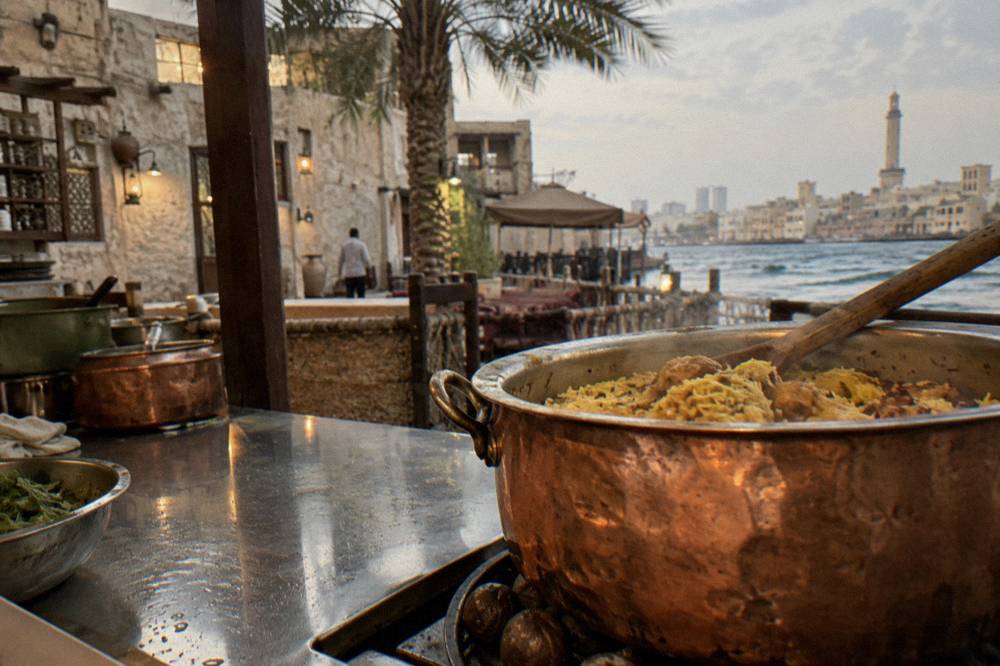
The dishes themselves reward a little knowledge before you order. Machboos is the UAE's national dish, long-grain rice slow-cooked with meat, dried limes and baharat spices; harees is wheat and meat cooked down to a smooth porridge and finished with ghee; thareed is stew ladled over thin regag bread. The Emirati food guide and the machboos, harees and luqaimat guide walk through the full list.
The Flavors of Arabia Old Dubai route runs 2 hours 30 minutes through the souks with authentic Emirati cuisine as its focus, a tighter and more food-centred version of the free walk's geography. What it includes at what price is on the operator's live listing.
When Is A Paid Food Walk Worth The Upgrade?
A paid food walk is worth the upgrade the moment you want the food itself decoded rather than just the streets around it. Tastings are counted and listed before you book, some options include a full meal or drinks, and a guide explains each dish instead of leaving you guessing at a counter. If a self-bought karak and shawarma along your own route satisfies you, the free walk plus street stalls is a genuinely good day.
The line between the two days is easy to draw. The free walk plus independent eating gives you the sights, one small tasting, and whatever you buy yourself at reported street prices, maybe a handful of items across a morning for the price of a mid-range main. A paid walk converts that same district into a structured tasting: you know how many stops, roughly what you will eat, and that the operator has chosen the stalls. The are food tours in Dubai worth it guide runs the full arithmetic, and the how much does a food tour in Dubai cost guide covers price structure.
The Private Dubai Street Food Tour runs 4 hours, the longest of the three paid options here, and its price basis is per listing, so check the booking page for the current figure. A private format means the route flexes to what you want more of, which suits travellers with dietary questions; on that point, the listing is the source, and where it does not state vegetarian or other options, message the operator before booking, as the dietary needs guide explains.
The third paid shape is the group walk that keeps the free route's geography and adds counted tastings:
The Old Town, Souks, Street Food, Guided Tour and Abra Ride runs 3 to 4 hours over essentially the same ground as the pay-what-you-want walk, with street food and the abra crossing built in. It is the closest like-for-like comparison with the free tour: same district, same crossing, but with the food stops planned and paid rather than improvised.
One further upgrade exists for travellers whose day runs past Old Dubai. The food tour with access to a Burj Khalifa bar and 6 food tastings pairs a 3-hour tasting walk with skyline access, a combination that turns a budget morning in the souks into a full day across both Dubais. Check availability on the live listing for current pricing and dates. This site, Dubai Food Tours, compares the full range of these walks side by side.
How Do You Get Around Old Dubai Cheaply?
The metro is the budget spine: the Green Line serves the district directly at Baniyas Square, Gold Souq, Al Ras and Sharaf DG stations, and an anonymous Nol card costs a reported 25 AED including initial credit, usable on metro, tram and buses. The abra crossing of the Creek is the other essential leg, paid at the dock, with the fare on the RTA page. Everything else in Old Dubai is walkable.
The RTA's own station map places the Green Line's Baniyas Square, Gold Souq and Al Ras stops within minutes of the Deira souks, with Sharaf DG serving the Al Fahidi side and Union as the interchange. Metro hours are reported as 5am to midnight Monday to Thursday and Saturday, 5am to 1am on Friday, and 8am to midnight on Sunday, so early spice-souk mornings and late Gold Souk evenings both work by rail. The Nol card is reloadable, with a reported maximum balance of 1,000 AED on the anonymous version.
| Transport leg | Reported figure | Notes |
|---|---|---|
| Nol card, anonymous | 25 AED including initial credit | Covers metro, tram, buses |
| Metro hours | 5am to midnight most days, Friday to 1am, Sunday from 8am | Per the RTA timetable |
| Taxi starting fare | 5 AED daytime, 5.5 AED at night | Per the RTA fare page |
| Creek abra crossing | Fare paid at the dock | Check the RTA page for current fares and routes |
| Walking loop, Bur Dubai to Deira souks | A few flat kilometres | The whole free route connects on foot |
Taxis start at a reported 5 AED from 6am to 10pm and 5.5 AED overnight, useful for the ride back to a hotel with tired feet, but the district rarely needs one. The metro and abra guide covers the stations, crossings and walking connections in detail.
What Should You Know About Dress, Tipping And Ramadan?
Dress conservatively in the souks and heritage areas, with shoulders and knees covered: there is no single dress-code law for tourists, but heritage districts are the one place it genuinely matters. Tipping is voluntary, with Visit Dubai suggesting 10 to 15 per cent in restaurants. During Ramadan, restaurants operate normally and non-Muslims are not required to fast, though daytime eating outdoors is best done discreetly out of respect.
The dress point is cultural rather than legal: swimwear belongs at beaches and pools, and shoulders and knees covered is the standard for souks, heritage areas and malls. Photography etiquette matters more in Old Dubai than anywhere else in the city, always ask before photographing individuals, particularly Emirati women and families. All meat sold in restaurants and markets follows halal rules, with pork only in designated licensed sections, so halal eating is the default everywhere on this route; the halal food guide covers the detail.
On alcohol: visitors over 21 may drink at licensed venues only, hotels, restaurants and lounges, and alcohol is not permitted in public places outside them. The street food walks of Old Dubai serve no alcohol unless a listing states otherwise, so plan the evening drink for a licensed venue afterward. The alcohol and pork guide states the rules as reported, with the note to check current official guidance.
Ramadan in 2026 ran roughly from 18 February to 19 March, and the pattern for future years is similar in shape: dining operates as normal indoors, restaurants and food courts serve during the day without the screening used in earlier decades, and the respectful move is discretion when eating or drinking outdoors during daylight fasting hours. The Ramadan food tours guide covers how tours adjust, including the SMCCU dinner's shift to iftar.
The free walk costs a tip, the street stalls cost a few dirhams each, and the paid walks cost whatever the live listing shows today. Whichever way the budget lands, the district itself is the bargain: the lanes, the souks and the Creek charge nothing at all.
Common Questions About Free Things To Do In Dubai
What Can You Do In Dubai For Free?
The free core is Old Dubai: the Al Seef promenade, the Al Fahidi Historical Neighbourhood, the Textile Souk, the abra crossing, and the Deira Spice and Gold Souks. All are free to enter and browse, and a verified pay-what-you-want walking tour covers the whole loop in about 2 hours 30 minutes.
Is The Free Walking Tour In Dubai Really Free?
It is pay-what-you-want: there is no fixed price, and you tip the guide at the end whatever you think the walk was worth. The verified route, the 7 Hidden Gems Of Old Dubai walk, runs about 2 hours 30 minutes in English and includes a small tasting of camel milk tea, Arabic coffee and local sweets per its listing.
How Much Does Street Food Cost In Old Dubai?
Reported 2026 figures put karak chai at 1 to 3 AED, samosas at 1 to 5 AED each, falafel wraps at 4 to 15 AED and shawarma at 7 to 15 AED at local spots. A casual cafeteria meal runs 15 to 40 AED per person. Prices are reported ranges, so check the stall's board.
Can You Eat Cheaply In Dubai On A Budget?
Yes. The cafeterias around the Deira and Bur Dubai souks sell shawarma, falafel, samboosa, luqaimat and karak at the reported prices above, a fraction of the 80 to 150 AED per person reported for a mid-range restaurant meal. A day of street eating can cost less than one sit-down dinner.
What Is The Cheapest Way To See Old Dubai?
Walk it. The Green Line serves the district at Baniyas Square, Gold Souq, Al Ras and Sharaf DG stations, a Nol card costs a reported 25 AED including initial credit, and the entire free route between Al Seef, Al Fahidi, the souks and the abra docks is flat and connected on foot.
Is A Paid Food Tour Worth It If The Sights Are Free?
It depends on what you want from the food. The free walk covers the sights with one small tasting, while a paid walk lists and counts the tastings in advance, often includes a full meal or drinks as the listing states, and explains each dish. If the food is the point, the paid format adds what the free one cannot.