Where Do Locals Eat In Dubai?
Where Dubai locals actually eat, from Deira cafeterias and karak stalls to Emirati dining rooms in Bur Dubai, with reported costs and how a local-led tasting walk fits in.
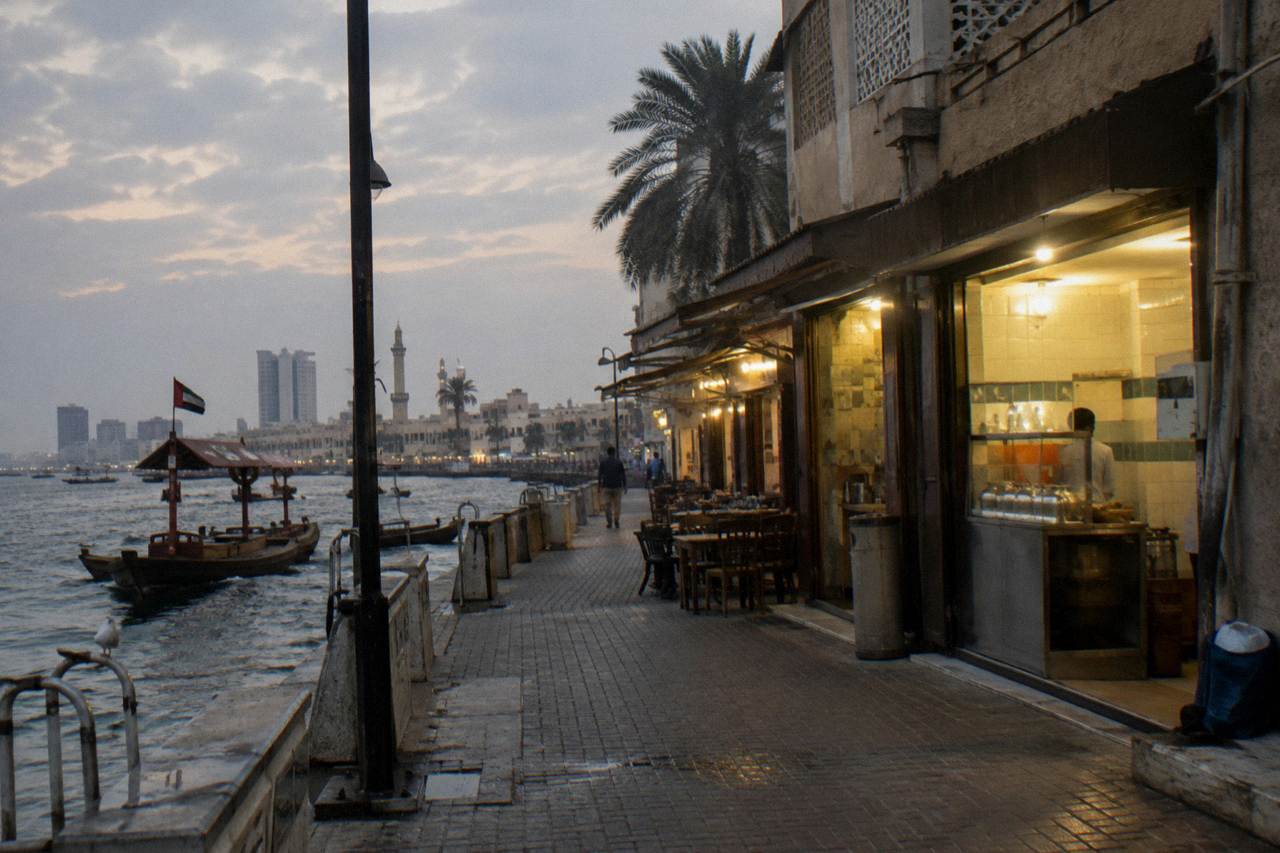
Locals in Dubai eat in Deira and Bur Dubai, in small cafeterias and heritage dining rooms rather than mall food courts: shawarma and falafel counters near the souks, karak stalls charging a reported 1 to 3 dirhams a cup, and Emirati kitchens serving machboos, harees and luqaimat. Reported neighbourhood meal prices run 15 to 40 dirhams a head, with mid-range restaurant meals around 80 to 150 dirhams.
The honest answer starts with geography. Dubai's residents do not eat at the Burj Khalifa view restaurants every night, and they do not queue for anything with a skyline terrace. Everyday eating happens in the older districts, Deira on the Creek's north bank and Bur Dubai on the south, where a shawarma costs a reported 8 to 15 dirhams at local spots while tourist-facing versions run 20 to 40, and where a spiced milky karak chai costs about the same as the cup it comes in.
That gap between local prices and tourist prices is the whole reason the question matters. A visitor who eats only around Downtown and Dubai Marina can spend a week in the city and never taste the food residents actually order. A visitor who crosses the Creek, even once, eats in a different city altogether: Iranian bakeries, Afghan kebab rooms, Pakistani curry houses, Lebanese sandwich counters, and a small but serious Emirati dining scene that most tourists never find on their own.
The districts themselves explain why. Deira grew around the Creek trade, and its food businesses grew around the people who worked it, which means the cooking is Iranian, Afghan, Indian, Pakistani and Lebanese first, with the Emirati table sitting alongside rather than on top. Bur Dubai is older and quieter, built around the heritage lanes of Al Fahidi and the Textile Souk, and it holds the cultural institutions. Neither district was built for visitors, which is precisely why the eating in both is good.
Finding it cold is genuinely hard, which is why a local-led walk has become the standard first move for food-focused visitors. The options below are the formats that fit this question best.
The first tour in that selection is the one this article keeps coming back to: a private tasting walk built around exactly this question, with a local host choosing the stops. It runs about 3 hours and the listing describes ten tastings with locals, which is the difference between eating near locals and eating with one. The other two cover the same ground differently, one as a historic walk with tastings and one as a skyline evening, and the sections below say when each format earns its price.
Which Neighbourhoods Do Dubai Locals Actually Eat In?
The core local eating neighbourhoods are Deira around the Spice Souk, Gold Souk and Al Rigga, and Bur Dubai around Al Fahidi, the Textile Souk and Al Seef. Deira holds the cheap cafeterias and South Asian and Iranian kitchens; Bur Dubai holds the heritage lanes and the Emirati dining rooms. Both sit on Green Line metro stations, so residents reach them without a car.
Deira is where the city eats on a weekday. The RTA's Green Line runs straight through it, with stations at Baniyas Square, Gold Souq and Al Ras, and the streets between those stations hold the densest run of small food businesses in Dubai. Recent reporting on the area's cheap eats lists shawarma at a reported 7 to 15 dirhams, falafel wraps at 4 to 15, samosas at 1 to 5 each or 10 to 12 for a bag of about five, and karak chai at 1 to 3 dirhams from cafeteria counters. These are the numbers that shape a local's week, not a visitor's splurge.
The souk rhythm matters as much as the addresses. The Gold Souk's shops mostly open around 10am and close around 10pm, while the Spice Souk starts earlier than 8am and runs past 9pm, with many stalls closing during the daytime on Fridays and taking midday breaks through the week. Locals time their eating around those patterns: a morning karak run pairs with the spice stalls opening, and an evening shawarma pairs with the gold windows lighting up. A visitor who arrives at midday on a Friday can find the eating streets half asleep, and wrongly conclude the district has nothing to offer.
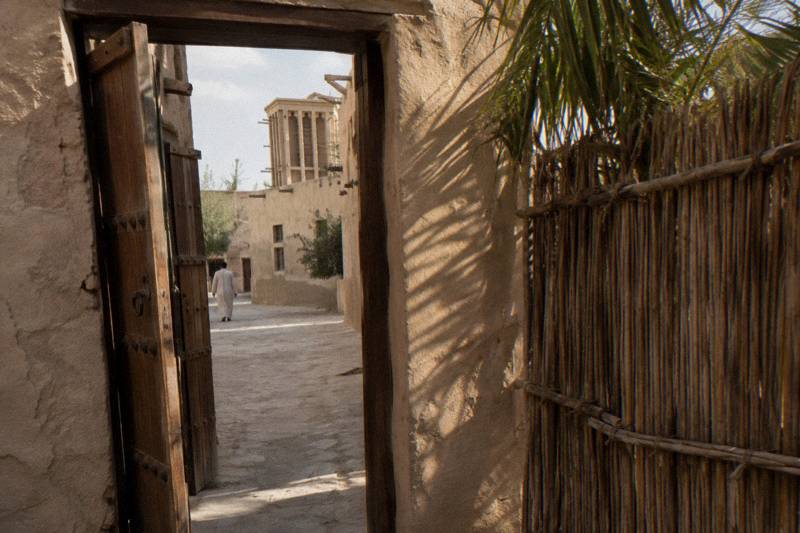
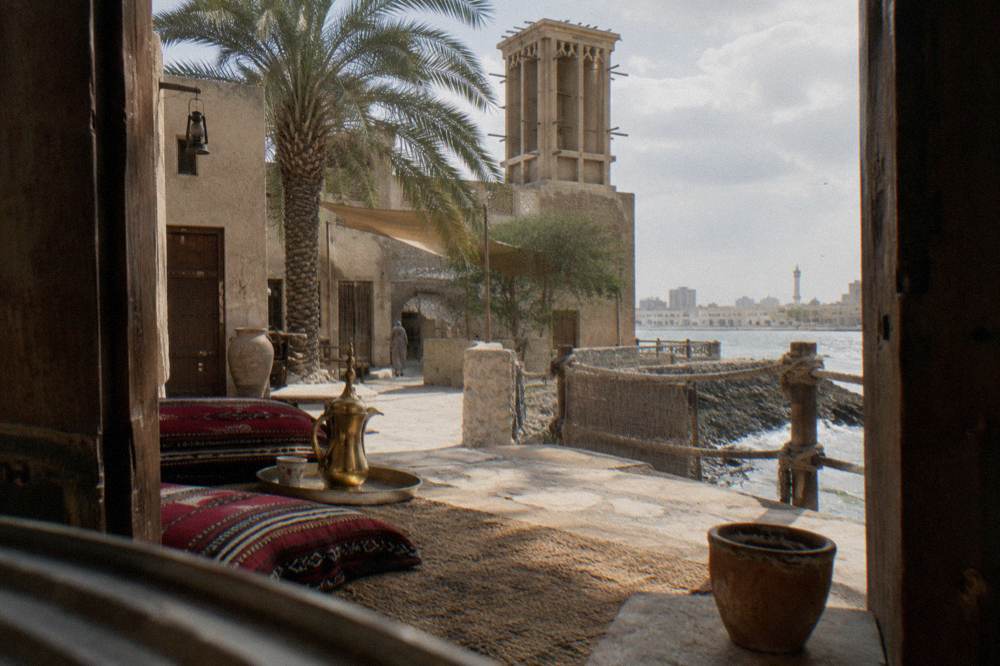
Bur Dubai answers differently. Around Al Fahidi Historical Neighbourhood, the lanes are heritage buildings, courtyard cafes and a small number of dining rooms serving Emirati food, the one cuisine tourists consistently struggle to find unaided. The Sheikh Mohammed Centre for Cultural Understanding sits in this district and runs 1.5-hour cultural meals with Emirati hosts, with reported prices of 130 dirhams for breakfast, 145 for lunch, 150 for tea time and 160 for dinner, booking required. That is a local-institution answer to this question in itself: when residents want visitors to understand their food, they send them to Al Fahidi.
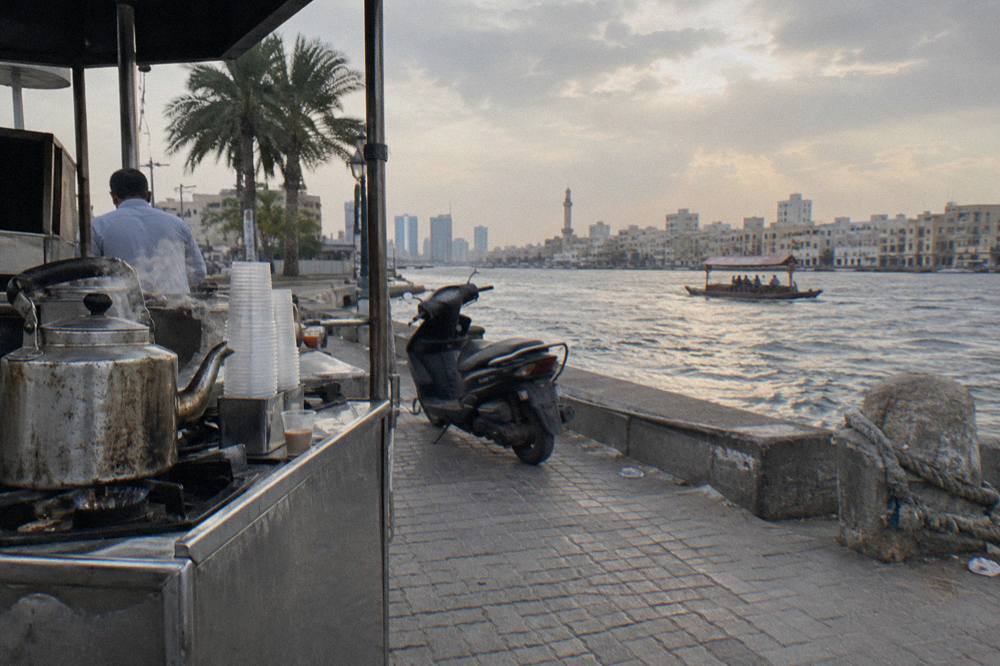
The Al Seef waterfront stitches the two halves of Bur Dubai together, a reported 1.8 km promenade with free access that runs from heritage-style blocks into the modern Creek edge. It is where local families stroll in the evening, and the food businesses along it range from snack counters to sit-down rooms. The practical pattern for a visitor is simple. Pick a Green Line station, walk out, and eat within four blocks of it. Locals do not travel across the city for a sandwich; they eat within walking distance of where the metro drops them, and the metro drops them in exactly the districts worth eating in.
If you would rather have a resident make those calls for an afternoon, the private tasting walk covers this ground directly.
What Do Locals Order For Breakfast And Tea?
Breakfast for Dubai locals means karak chai with something sweet or savoury: balaleet, sweet saffron vermicelli topped with egg, chebab pancakes with date syrup and cream cheese, or regag bread with egg and cheese. Karak itself costs a reported 1 to 3 dirhams at cafeteria counters, and the cafe versions run higher. Arabic coffee, gahwa, served in small cups with dates, is the greeting drink rather than a breakfast one.
Karak is the city's true common denominator. It is spiced milky tea, boiled hard rather than steeped, sold from small cafeterias across Deira and Bur Dubai, and it pairs with almost everything on the Emirati breakfast table. The drink crossed into the city with South Asian workers decades ago and was adopted so thoroughly that it now reads as Emirati comfort in its own right. A cup from a counter costs a reported 1 to 3 dirhams; the same drink in a styled cafe runs to around 14, which is the clearest single illustration of the two price tiers running through this article.
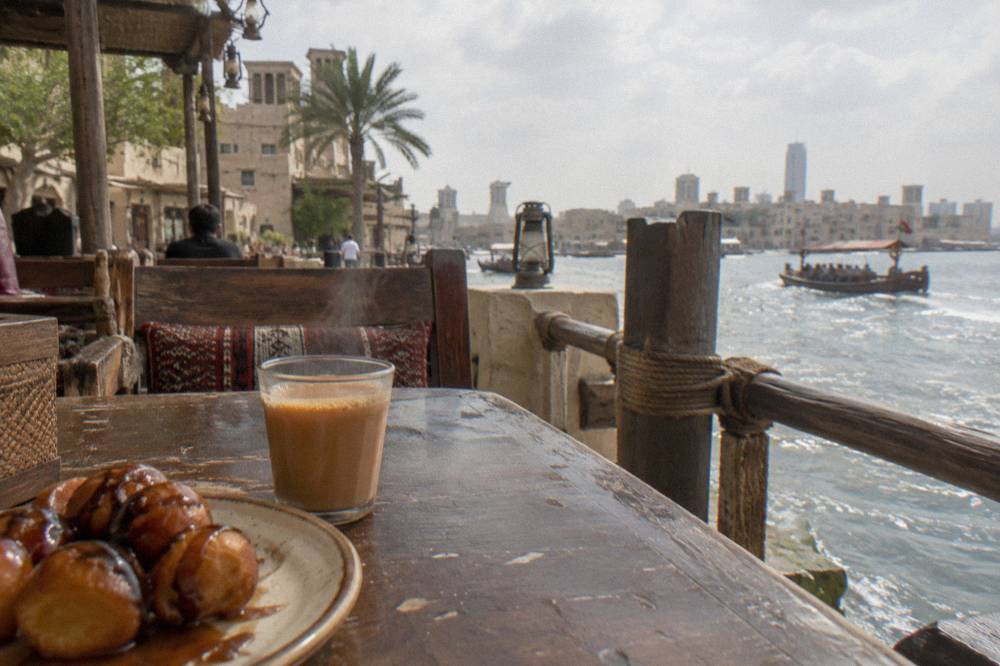
The gahwa etiquette is its own small ritual. The coffee is lightly spiced with cardamom and unsweetened, served in a small finjan cup, accepted with the right hand, and an empty cup shaken gently side to side signals no more refills. It comes with dates, and the etiquette around it is the kind of detail a host will teach but a menu never prints.
The dishes around it are worth learning by name. Balaleet is sweet saffron and cardamom vermicelli with a thin omelette on top, a sweet-savoury combination that surprises first-timers. Chebab are saffron, cardamom and turmeric pancakes eaten with cream cheese and date syrup. Regag is the thin bread that also carries the savoury side of breakfast, and it reappears at lunch under thareed, soaking up the stew's broth. One reported Al Fahidi venue serves balaleet at around 52 dirhams, which tells you the neighbourhood's sit-down breakfasts sit closer to restaurant pricing than to cafeteria pricing.
The historic walking tour in the selection above spends its 3 hours in exactly these districts, and its listing describes tastings alongside the heritage sights, which suits the breakfast-and-tea end of the local table.
How Much Does A Local Meal Cost In Dubai?
Reported local eating costs run from 1 to 3 dirhams for karak, 4 to 15 for a falafel wrap, 8 to 15 for a local shawarma, 15 to 40 per person for a casual Emirati, Levantine or cafeteria meal, and 80 to 150 for a mid-range restaurant meal. Restaurant bills commonly add a 10 per cent service charge plus 5 per cent VAT, so the menu price is not the final price.
The table below collects the reported figures in one place. These are planning ranges drawn from 2026 cost reporting, not promises: individual venues vary, and street prices move.
| Item | Reported price range | Where you find it |
|---|---|---|
| Karak chai | 1 to 3 AED | Cafeteria counters, Deira and Bur Dubai |
| Falafel wrap | 4 to 15 AED | Street counters and casual cafes |
| Shawarma, local spots | 8 to 15 AED | Deira side streets |
| Samosa, per piece | 1 to 5 AED | Cafeterias, souk edges |
| Casual meal per person | 15 to 40 AED | Neighbourhood cafeterias, biryani and mezze spots |
| Mid-range restaurant meal | 80 to 150 AED | Sit-down venues citywide |
Two bill details matter more than the menu prices. Restaurants commonly add a service charge of up to 10 per cent, which is venue-retained rather than a government fee, plus the standard 5 per cent VAT on food and drink. Hotel-affiliated venues may add a municipality fee on top, though standard restaurant bills do not carry one. Visit Dubai's own tipping guidance is relaxed: there are no set rules, 10 to 15 per cent at restaurants is usual, and diners should check with the waiter that a card tip actually reaches staff. Cash tips of 5 to 10 per cent are common and voluntary.
Bottled water is worth a line of its own, because it is the quiet budget killer in a hot walking day. A supermarket multipack works out to a reported 1 to 2 dirhams a litre, while the same bottle on a restaurant table runs 6 to 12. Locals buy water at the supermarket and carry it; visitors learn this on day two.
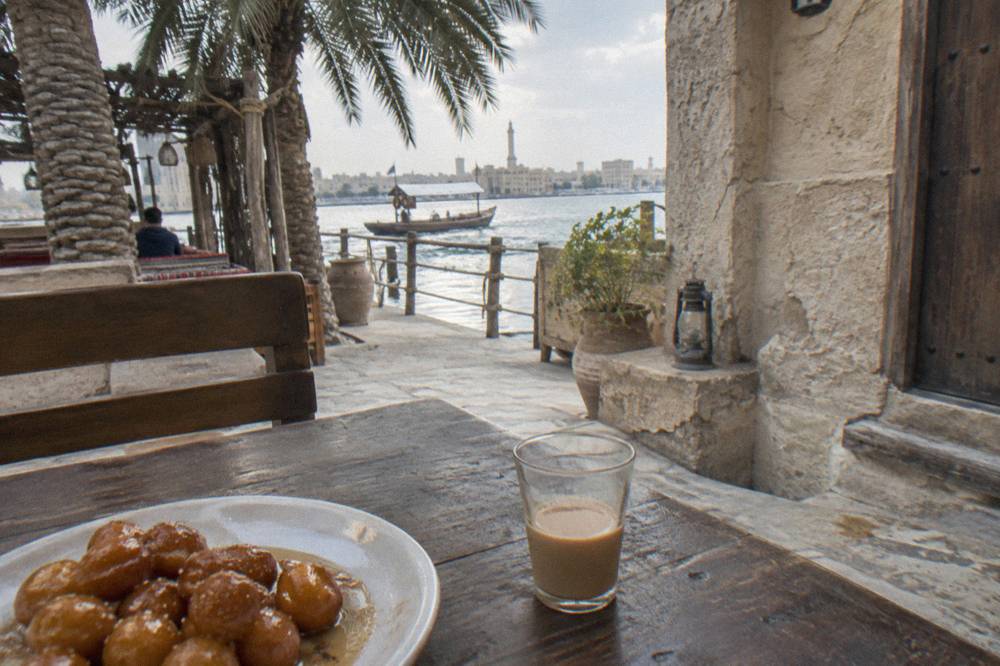
For dessert, the local answer is luqaimat: crisp fried dough dumplings drizzled with date syrup and sesame seeds, eaten warm and immediately, with recent reporting putting them at 10 to 18 dirhams a portion. They appear on tasting walks as well as at street counters, and they are the dish most likely to convert a skeptic in one bite. Dates themselves are the other everyday sweet, and the fresh rutab harvest peaks between June and September, with about 150 varieties reaching markets from roughly 15 dirhams a kilogram; dried dates keep the counter stocked the rest of the year.
Where Do Emirati Locals Eat Traditional Food?
Emirati residents eat machboos, harees, thareed and luqaimat at a small set of heritage dining rooms in Deira and Bur Dubai, with reported mains of 42 to 65 dirhams, and at the Sheikh Mohammed Centre for Cultural Understanding, whose cultural meals run a reported 130 to 160 dirhams depending on the sitting. Machboos, the national dish, is slow-cooked rice with meat, dried limes and baharat spices.
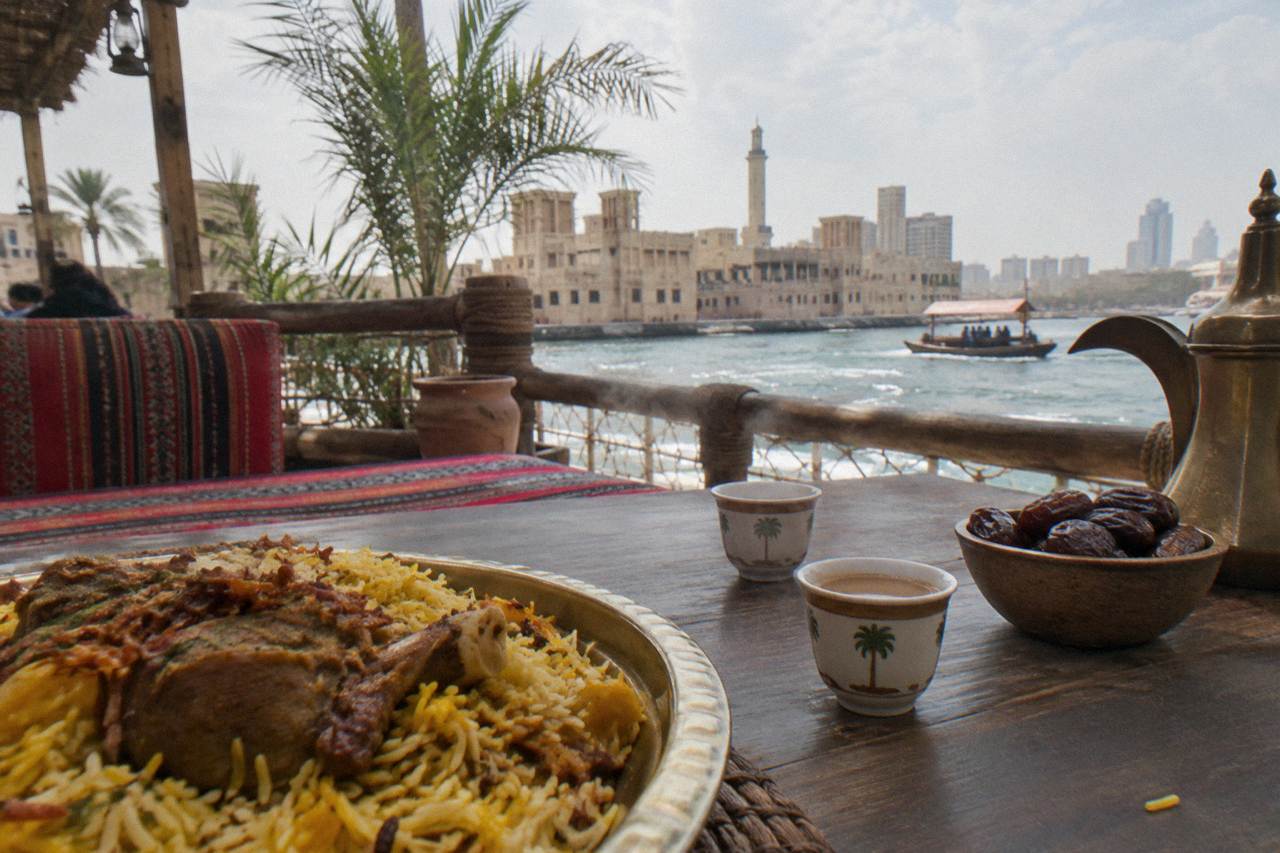
The Emirati table is small, slow and specific, which is why it is easy to miss. Harees is wheat and meat cooked for six to eight hours until it turns smooth, finished with ghee, a dish of gatherings and Ramadan. Thareed is meat and vegetable stew ladled over thin regag bread so the broth soaks through. Machboos is the platter dish at the centre of it all, long-grain rice slow-cooked with lamb, chicken or fish, dried limes, baharat spices, cardamom, saffron and cinnamon, served family-style with tomato sauce or pickles. Reported prices at named Deira heritage venues put machboos at around 58 to 65 dirhams, harees at about 42, and thareed and margoog dishes at about 55 to 58.
Madrouba belongs on the same list: a thick, spiced salted-fish porridge that most visitors have never heard of, precisely because it rarely appears on hotel menus. It is comfort food, the kind of dish a grandmother makes rather than a restaurant, which is why the heritage dining rooms that do serve it carry weight with residents.
The cultural centre route is the other half of the answer. Its meals come with Emirati hosts and an open question-and-answer session on customs, Islam and daily life, plus Arabic coffee and dates, which is something a restaurant cannot replicate. Bookings are required and the reported prices sit above street food, but the format is unique to the district. Details are on the centre's own programme page at cultures.ae.
Dietary notes belong here too. All meat sold in Dubai's restaurants and markets is halal, and pork appears only in designated licensed sections. A listing that does not state vegetarian, vegan or gluten-free options means the listing does not say: message the operator before booking rather than assuming. During Ramadan, dining operates as normal for non-Muslims, who are not required to fast, though discretion in shared public spaces during daylight hours is the reported etiquette.
Do Locals Ever Eat Downtown And At The Skyline?
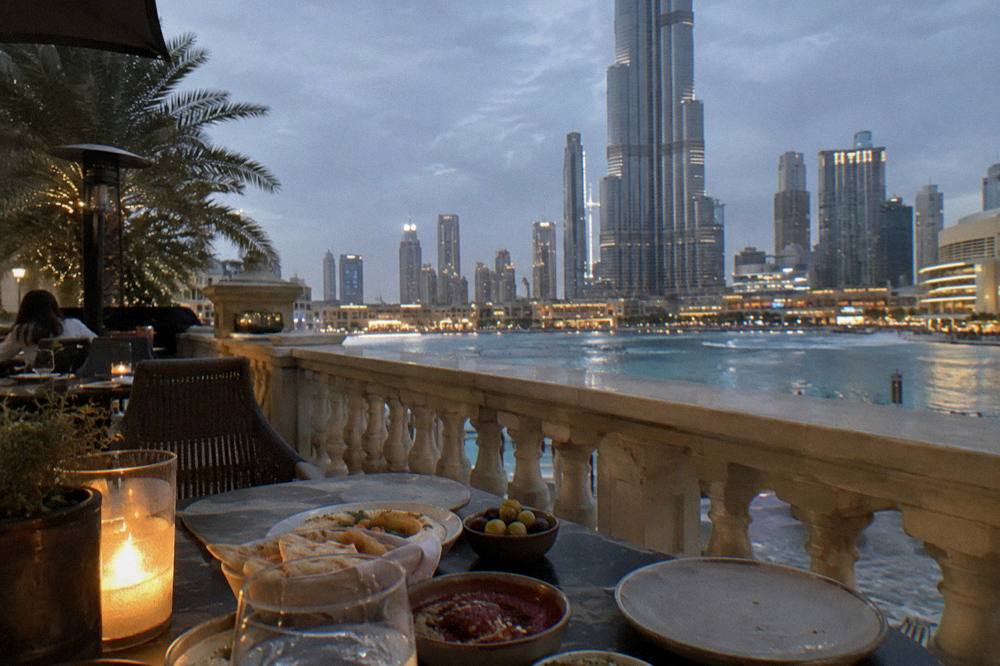
Yes, but as an occasion rather than a habit. Residents do take visitors to Downtown and Dubai Marina, and licensed hotel and restaurant venues there serve alcohol to visitors over 21, unlike the Old Dubai food walks, which serve none unless a listing says otherwise. The local pattern is Old Dubai for everyday eating, Downtown for celebrations, and the Burj Khalifa area for showing the city off.
The alcohol split is worth understanding before you plan. Visitors aged 21 and over may drink at licensed hotels, restaurants, bars and clubs with no personal permit, but drinking in streets, parks, beaches and on public transport is prohibited and enforced. A food walk through the souks is a dry experience by nature. A Downtown evening is not, and the two formats genuinely serve different evenings.
The same logic applies to smoking, since shisha terraces cluster in the licensed zones rather than the heritage lanes. Smoking, including vapes and shisha, is banned in enclosed public spaces, malls and restaurants without designated ventilated areas, and shisha venues sit within tight distance rules of residential areas, schools and mosques. The upshot for a food-focused evening is that the Old Dubai districts stay calm and family-oriented after dark, while the licensed Downtown and Marina venues carry the late noise.
“What a fantastic tour. I can highly recommend to anyone visiting Dubai for the first time. So interesting and a great fun way to learn about the history of the city, the country and experience the culture. Food was authentic and delicious.”
That is the logic behind the Burj Khalifa pairing in the selection below: a 3-hour food tour that ends with access to a Burj Khalifa bar, combining the local-eating half of the city with the skyline half in one booking. It suits a visitor who wants both faces of Dubai and has one evening to do it.
How Do You Find Local Food Without A Guide?
Take the Green Line to Al Ras or Baniyas Square and eat within four blocks, order what the counter is selling rather than what a menu photograph suggests, carry small notes for cafeterias, and cover shoulders and knees in the heritage districts. For structure, a local-led private tasting walk over about 3 hours costs nothing to check and removes the guesswork from the first visit.
The self-guided version works, with patience. The metro runs from 05:00 to midnight Monday to Thursday and Saturday, from 05:00 to 01:00 on Friday and from 08:00 on Sunday, per the RTA timetable. A Nol card costs 25 dirhams including initial credit. From Al Ras, the Spice Souk lanes, the Gold Souk and the cafeteria strips are all walkable, and the abra docks sit at the Creek edge for the crossing to Bur Dubai; the fare is paid at the dock, so check the RTA page before riding. Taxis start at a reported 5 dirhams between 06:00 and 22:00 and 5.5 after that, but for this route the metro is the local choice.
Two habits make the difference between a tourist meal and a local one. First, eat where the queue is local: a counter with a line of residents at 2pm is a better bet than any review score. Second, ask permission before photographing people, particularly in the souks, where privacy expectations are real and photographing individuals without consent can breach them. Dress code-wise, there is no single law for tourists, but covering shoulders and knees in souks and heritage areas is the reported norm and saves attention.
Timing matters more than most guides admit. Winter, December through February, brings the lowest average daytime highs, 24 to 26 degrees, which is walking weather from breakfast to dinner. Mid-summer flips the rhythm: locals eat early or late and indoors, and a visitor planning a midday souk circuit in August should plan for heat rather than crowds. The sunrise-to-sunset window in winter runs roughly 07:00 to 17:30, so the evening eating streets start early.
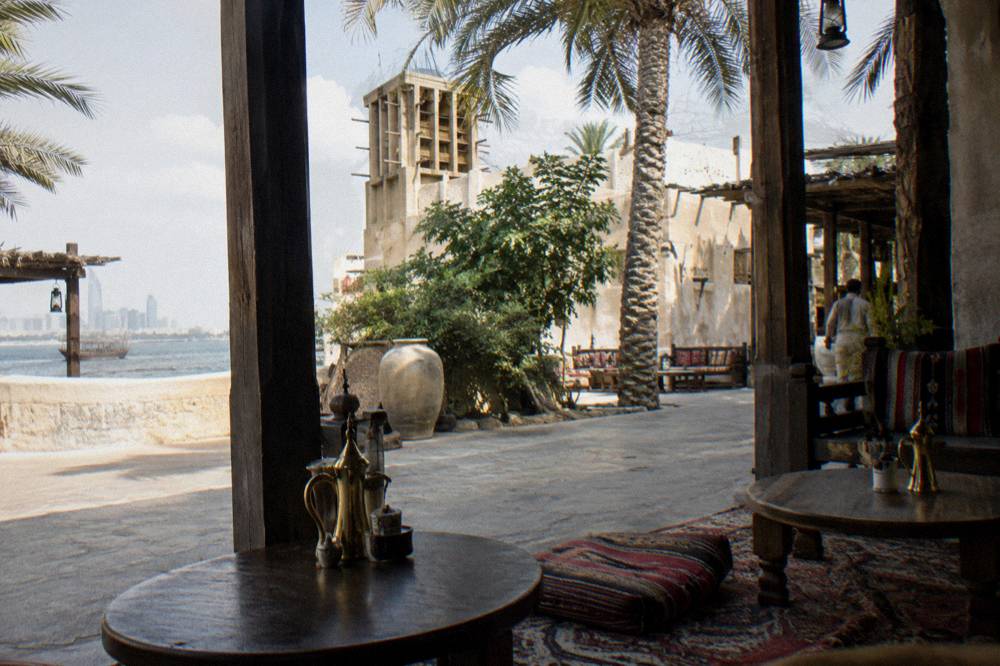
The guided version compresses all of that judgement into one afternoon. Dubai Food Tours covers the local-eating question in depth across its guides, including a Deira eating guide for old Dubai and a first-timer list of what to eat. For the tour itself, Check availability on the booking page, where the meeting point and inclusions are listed.
Common Questions About Where Locals Eat In Dubai
Where Do Locals Eat In Dubai?
In Deira and Bur Dubai: cafeteria counters and South Asian, Iranian, Afghan and Lebanese kitchens around the souks, plus a small set of Emirati heritage dining rooms in Bur Dubai and the cultural meals at the Sheikh Mohammed Centre for Cultural Understanding. Reported everyday prices run from 1 to 3 dirhams for karak to 15 to 40 dirhams for a casual meal.
Is Street Food In Dubai Safe For Visitors?
The food businesses around the souks operate under Dubai Municipality's food code, the same rules that govern restaurants citywide. Eat where turnover is high and the counter is busy, which in Deira is most of them. Carry small notes, since some cafeterias are cash-first.
Can Vegetarians Eat Like A Local In Dubai?
Yes, with a caveat. Falafel, hummus, breads, luqaimat and much of the breakfast table are meat-free, and all meat served is halal. A tour listing that does not state vegetarian options means the listing does not say, so message the operator before booking to confirm what can be adapted.
Do Locals Tip At The Small Cafeterias?
Tipping has no set rules in Dubai. At restaurants, 10 to 15 per cent is usual; at cafes, 5 to 10 dirhams or 10 per cent of a larger bill. At a 3 dirham karak counter, rounding up is the local habit. Check with the waiter that any card tip reaches staff rather than the venue.
Can You Drink Alcohol Where Locals Eat?
Not on the Old Dubai food streets. Visitors over 21 may drink only at licensed hotels, restaurants, bars and clubs, and drinking in public places outside licensed venues is prohibited. The Old Dubai walks are dry; the Downtown and skyline evenings are not.
Is A Food Tour Worth It If I Already Know The Neighbourhoods?
If you already eat confidently in Deira, a tour adds less. If the souks are new to you, a local-led walk saves the trial and error of finding the right counters, and the private tasting format lets you set the pace and ask dietary questions up front.