Is Dubai Friendly To American Tourists?
A practical answer for US visitors: how Dubai treats American tourists, the etiquette basics that matter, what food and transport cost, and how a guided first walk takes the guesswork out of Old Dubai.
Yes, and the honest version is better than the brochure version: Dubai is one of the easiest major cities in the world for an American to visit. English is the default language of menus, signs, metro announcements and small talk. The tourism economy is built around international visitors, and US passport holders get visa on arrival. The things that genuinely differ from home are a short list: alcohol rules, dress in heritage districts, photography courtesy and the pace of a place that runs on Friday-to-Sunday weekends. None of them are hard, and a first outing with a local guide makes all of them easier.
This site is about food, so this article leans toward what a hungry American actually does on day one: eat well in Old Dubai, understand the bill, ride the metro and the Creek boats, and decide whether a guided food walk is worth booking. Spoiler on that last one: for a first visit, a private option like the private Old Dubai street food and walking tour with transfers solves several first-day problems at once, and it comes up again below. For solo female travellers planning that same first day, the guide to whether Dubai is female friendly covers dress codes, safety, and how a guided food walk makes the souks easy to explore.
Yes, unambiguously. Dubai is a city where roughly nine in ten residents are expatriates, English is the working language of daily life, and the entire visitor economy, from the metro to the souks, is designed around people who have never been there before. Americans report finding it easier to navigate than most European capitals, mainly because signage, payment and service culture all run in English. The friendliness is professional and genuine at street level alike.
The practical evidence stacks up fast. The Dubai Metro announces stations in English and Arabic. Restaurant bills are printed in English. Card payment is accepted almost everywhere, and contactless works on the metro through the Nol system. US credit cards work in taxis, at stalls and in the Gold Souk, though a little cash in small notes is handy for souvenirs and street snacks.
Service culture deserves a specific mention because it surprises Americans in a good way. Dubai's hospitality sector is staffed largely by workers from South Asia, the Philippines, the Levant and East Africa, and the standard of attentiveness in cafes and restaurants runs high. Tipping follows its own logic, and there is a full breakdown in tipping and paying in Old Dubai, but the short version is that a tip is appreciated, not legally expected.
One more reassurance point: safety. Dubai is widely regarded as one of the safest large cities for tourists, with low violent crime and a heavy, visible security presence in tourist zones. Normal city caution applies, nothing more. Solo travellers, couples and families all report the same thing: walking the Creek at night feels unremarkable in the best way, and the usual big-city habits, keeping an eye on your bag and your phone, are enough.
“Be prepared to receive historical information, learn about the culture, eat, and shop with Mohammad. This is a must-try when visiting Dubai. Wear comfortable walking shoes and bring a mini hand fan…you’ll thank me later for this tip. Thank you Mohammad for a great experience!!”
What Rules Actually Matter For Americans?
Four things, and none of them will cramp a normal trip. Alcohol is legal for visitors over 21 but only inside licensed venues such as hotels, restaurants and bars, never in public spaces. Shoulders and knees should be covered in souks and heritage districts. Ask before photographing people, especially Emirati women and families. All meat in restaurants and markets is halal, so pork appears only in designated licensed sections. Everything else is ordinary tourist common sense.
The alcohol rule is the one Americans ask about most. There is no personal liquor licence requirement for drinking at a licensed venue; a passport proving age over 21 is enough. Public drinking, public intoxication and drink-driving are enforced strictly, with fines and worse on the table, so the pattern is simple: drink where you are served, then take a taxi home. Details are on the official guidance at Visit Dubai's FAQ page.
Dress code has no single law for tourists, but the convention in the souks, heritage neighbourhoods and malls is shoulders and knees covered. Swimwear belongs at beaches and pools. In practice this means light trousers or a longer skirt and a shirt with sleeves for Old Dubai, which most people prefer anyway for sun protection. The fuller version, including what works for a walking tour in July, is in the Dubai dress code guide for walking tours and souks.
Photography etiquette matters more in Dubai than in most American cities. Always ask permission before photographing individuals, particularly Emirati women, families and anyone in traditional dress. Photographing people without consent can violate local privacy rules, and in the souks a polite request is usually met with a yes.
Halal is worth understanding before the first restaurant visit. Federal rules mean virtually all meat and poultry in restaurants and markets is halal-certified, and pork is sold only in segregated, clearly labelled sections of licensed venues. For most American visitors this changes nothing about how they order. Vegetarian and vegan dishes are widely available, though individual guided food walks vary in what they can accommodate, so message the operator before booking about any dietary need.
Tipping is the last piece. There are no set rules, and the official guidance from Visit Dubai's tipping guide suggests 10 to 15 per cent in restaurants and small amounts in cafes. A service charge of up to 10 per cent appears on many bills, and it is worth checking with the waiter that a card tip reaches the staff rather than the venue.
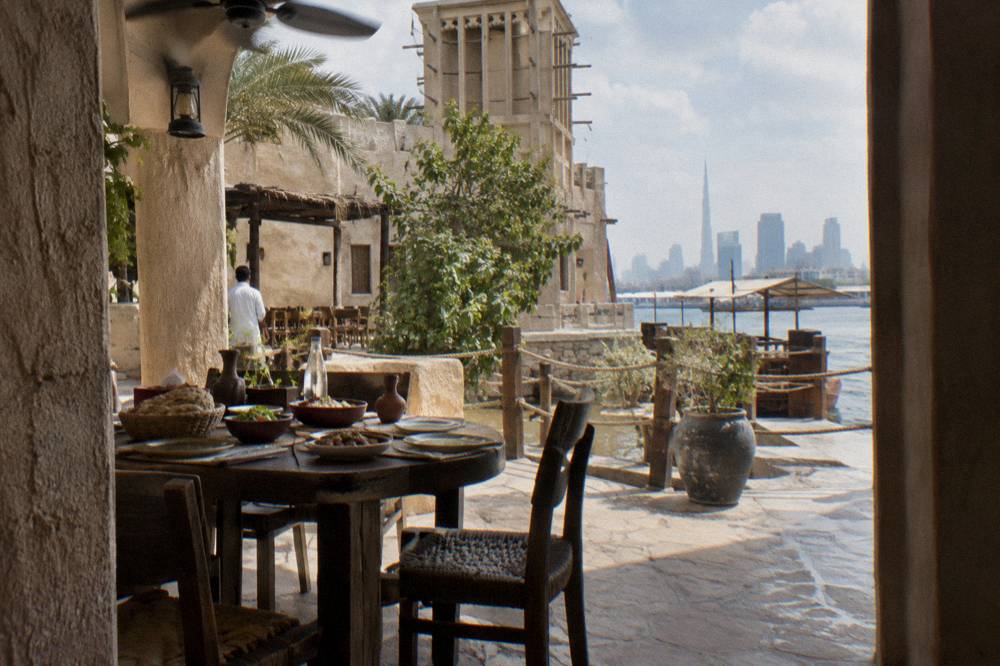
A few practical habits tie these rules together. Carry your passport on any evening that involves a licensed venue, since it doubles as your age proof and saves an awkward moment at the door. When a bill arrives with a service charge already listed, decide whether the suggested 10 to 15 per cent still applies or whether a smaller cash amount for the waiter makes more sense. And if a dietary question comes up mid-trip rather than before booking, ask the restaurant or operator directly, since vegetarian and vegan options are widely available even when a set food walk cannot flex its menu.
None of this requires memorising a rulebook. The four points above cover the situations an American visitor is realistically likely to meet, the official pages linked here handle the edge cases, and a guided first outing in Old Dubai is a low-stress way to see the conventions in practice before exploring on your own.
If that all sounds like a lot to hold in your head while also finding dinner in an unfamiliar district, this is exactly the problem a guided first outing solves:
What Does A First Day In Old Dubai Look Like?
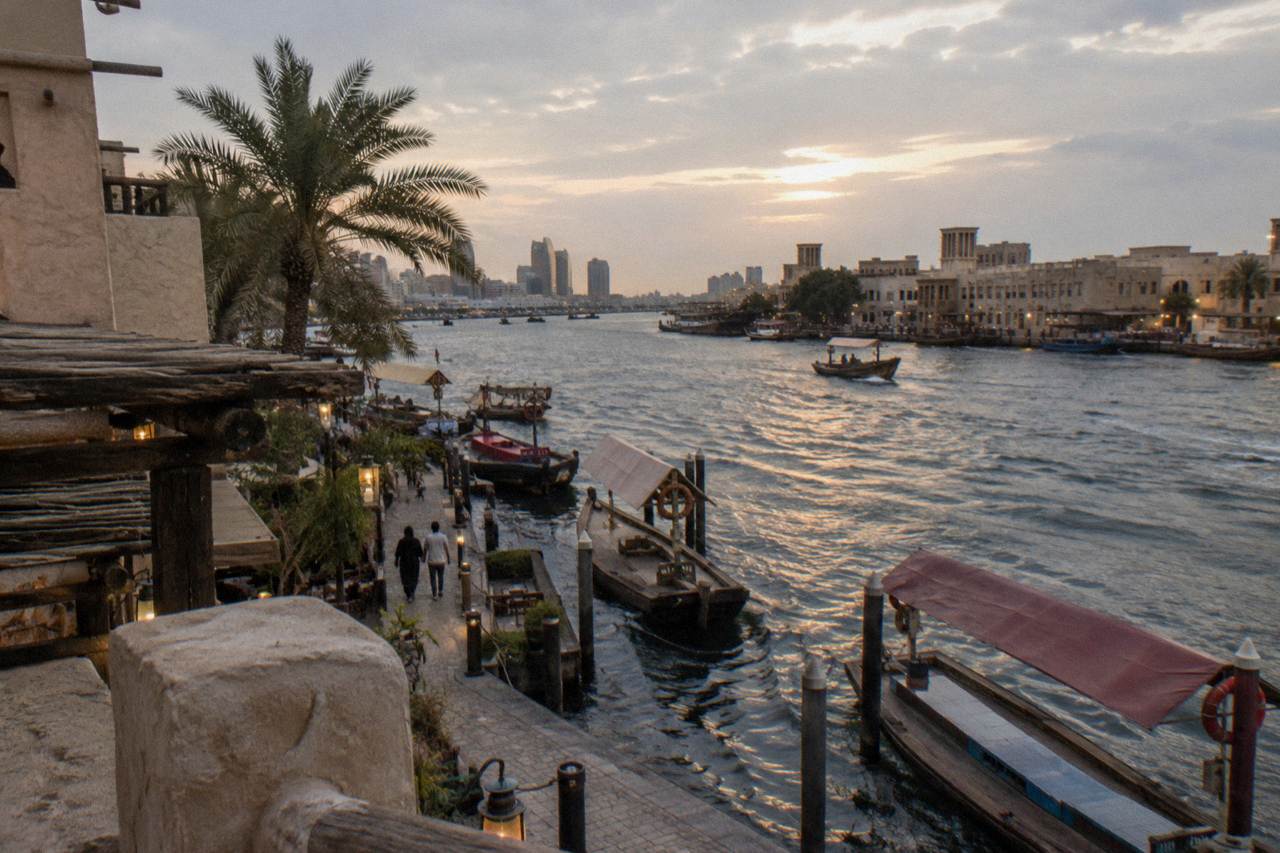
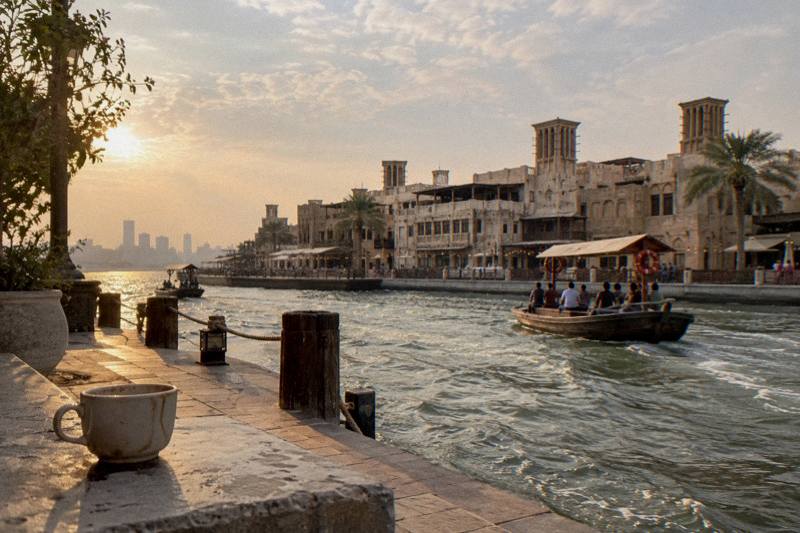
Most first-timers start on the Bur Dubai side of the Creek, in the Al Fahidi Historical Neighbourhood, walk the lanes and the Al Seef waterfront, cross the Creek by abra boat to Deira, then work through the Spice Souk and the Gold Souk. The route is flat, walkable and free to wander, with street food available the entire way. Al Fahidi's lanes are reported open 7am to 8pm daily, and the Al Seef promenade stretches about 1.8 km.
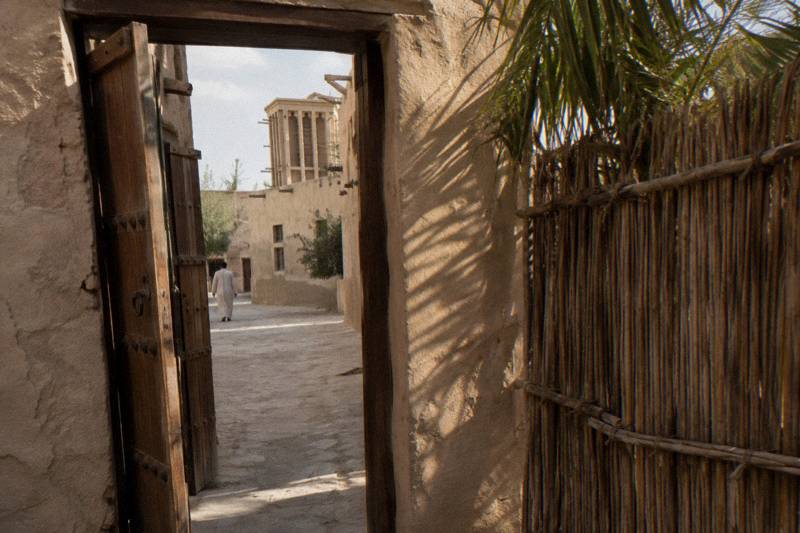
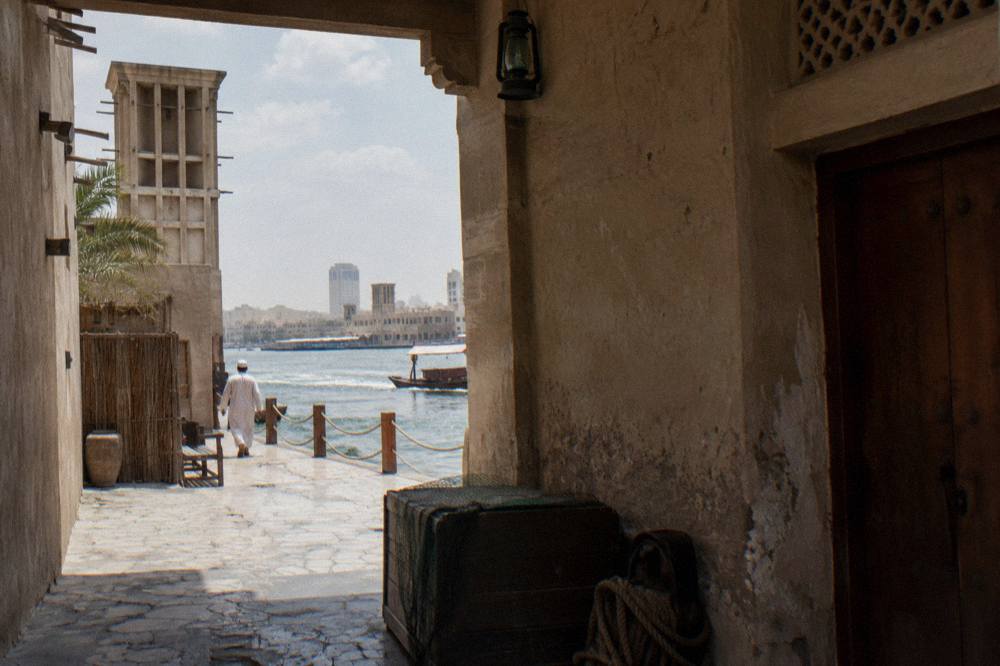
Al Fahidi is the oldest surviving residential quarter in the city, a grid of narrow lanes, wind tower houses and courtyard galleries. Access to the lanes is free, and the district sits a short walk from Sharaf DG metro station on the Green Line. From there the walk to Al Seef and the Textile Souk is straightforward, and the abra stations link Bur Dubai to the Deira side across the water.
“Seeing the old parts of the city was amazing, but the bits that we really loved came from our tour guide, Seef, who provided just with so much information and insights into local culture. Definitely recommend!”
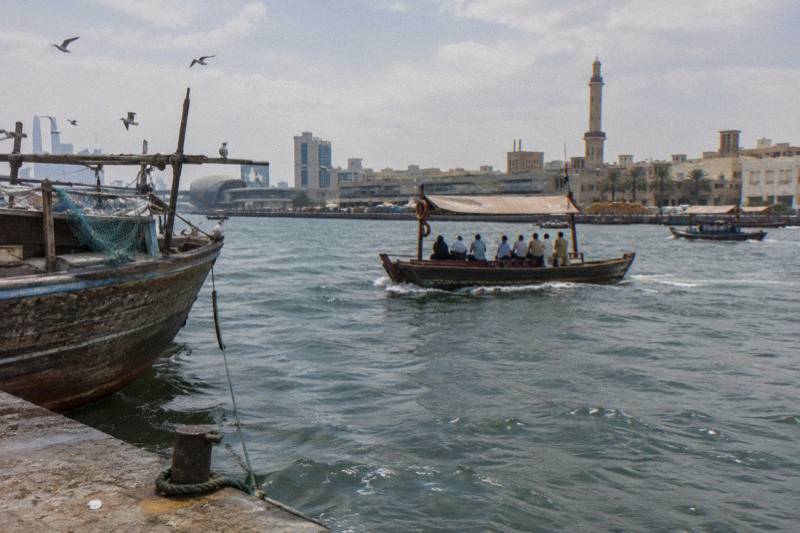
The abra crossing is the moment most Americans remember longest. The Creek is the reason Dubai exists at all, and the small wooden boats shuttle across it on several routes, including the Bur Dubai to Deira Old Souq run and the Al Seef to Baniyas run, operated by the roads authority as commuter transport. The fare is set by the operator; check the current figure at the station. No tour of Old Dubai is complete without the crossing, and most guided food walks include one.
On the Deira side, the Spice Souk and Gold Souk sit within a few minutes of each other. Reported hours for the Gold Souk area are roughly 10am to 10pm for most shops, while Spice Souk traders open early, from before 8am, close during the day on Fridays and take midday breaks. Individual shops vary, so treat those as planning ranges, not promises.
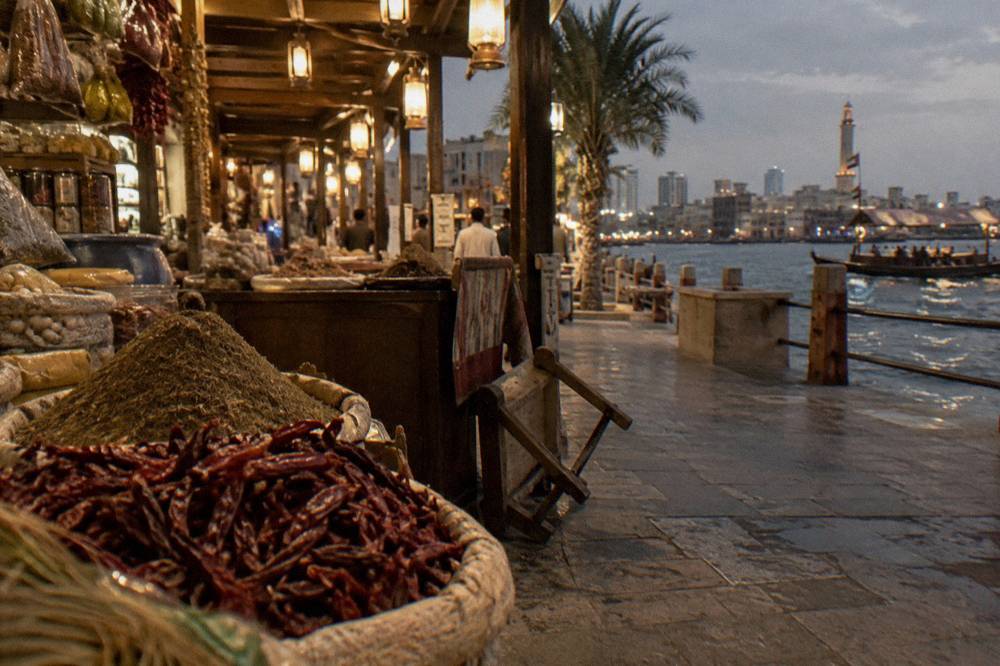
The food along this route is the real draw, and it is covered dish by dish in the Dubai street food guide. Shawarma, falafel, karak chai and luqaimat appear in the Deira and Bur Dubai cafes throughout the walk, and the reported costs are low enough that tasting widely costs less than one sit-down meal at home. The Deira side in particular rewards a slow wander, and the Deira food guide maps the district in more detail.
How Much Should Americans Budget For Food And Transport?
Reported street food prices in Old Dubai are low by US standards: a shawarma runs about AED 7 to 15 at local spots, a falafel wrap about AED 4 to 15, karak chai about AED 1 to 3, and a casual cafeteria meal about AED 15 to 40 per person. A mid-range restaurant meal runs around AED 80 to 150. Transport is cheap too, with a reloadable Nol card costing AED 25 including initial credit. With prices like these, the guide to whether one hundred dollars a day covers Dubai shows how far a modest budget can stretch across meals, metro rides and sightseeing.
These figures come from 2026 price reporting and should be treated as ranges, not fixed prices, since every stall sets its own rates. The pattern that matters for an American visitor: eating at street level in Old Dubai costs a fraction of what the same quality costs in a US city, and even the mid-range tier rarely shocks a New York or San Francisco diner. A full budget breakdown, including what a whole day of eating adds up to, is in the Dubai food prices guide.
| Item | Reported Price (AED) | Notes |
|---|---|---|
| Shawarma at local spots | 7 to 15 | Tourist-area versions reported higher |
| Falafel wrap | 4 to 15 | Wide range by filling and venue |
| Karak chai | 1 to 3 | Cafeteria price; cafe versions higher |
| Samosa, per piece or bag | 1 to 5, or 10 to 12 per bag of about 5 | Deira reporting |
| Casual cafeteria meal | 15 to 40 per person | Biryani and mezze sets |
| Mid-range restaurant meal | 80 to 150 per person | Mains often 40 to 80 |
| Nol card (Silver or Gold) | 25 | Includes initial credit, works on metro, tram, buses |
On bills: a 5 per cent federal VAT applies to food and beverage, and many restaurants add a service charge of up to 10 per cent, which is venue-retained rather than a government levy. Cash tips of 5 to 10 per cent are common but voluntary. Check the bill, add a tip if the service earned it, and move on.
Transport costs are minimal. The metro runs from 5am to midnight most days, from 8am on Sundays, and taxis start at a reported AED 5 between 6am and 10pm. The Green Line stations covering Old Dubai include Sharaf DG for Al Fahidi, Al Ras for the Deira souks and Baniyas Square. Full route and fare detail is in getting to Old Dubai by metro and abra.
Which Guided Food Walk Suits A First-Time American Visitor?
For a first visit, a private walk with transfers is the least-friction option: the guide meets you at the hotel, the route is paced to you, and the translation, ordering and etiquette questions are all handled. Group walks cost less and work well for confident travellers.
“Wonderful tour and great experience. The gold market & boat is an added treat. We would definitely book again.”
The private Old Dubai street food and walking tour with transfers is the natural first-day pick because it removes the two things Americans most often worry about: getting to Old Dubai from a beach or Downtown hotel, and ordering unfamiliar food in an unfamiliar district. The listing describes hotel transfers, a guided walk through the souks and tastings along the way. As a private format, it also lets a vegetarian or a spice-shy traveller set the pace, always worth confirming with the operator before booking. If you haven't settled on a base yet, the comparison of Dubai's best areas for food-focused travellers explains how Old Dubai, Downtown, the Marina and the beaches stack up for walking and eating.
Travellers who want the maximum number of tastings tend toward the private 10-tastings format, which the listing describes as a walk with locals through 10 tasting stops. It runs about 3 hours and suits visitors whose main goal is to eat as broadly as possible in one outing.
The third format, the favourite food and historic walking tour, blends the history and the eating more evenly, which suits visitors who want the story of the Creek and the souks alongside the shawarma. It also runs about 3 hours.
A quick way to decide: if the priority is comfort and logistics, take the private walk with transfers; if the priority is maximum tastings, take the 10-tastings format; if the priority is context and history, take the food and historic walk. All three are covered in more depth in how to choose between Dubai food tours, and the private-versus-group trade-off has its own page in private or group food tour in Dubai.
What Should Americans Know About Weather And Timing?
Visit between December and February, when the average daytime high sits around 24 to 26 C and walking Old Dubai is genuinely pleasant. Summer heat is the one thing that reliably defeats a first-time visitor on foot, so plan walks for morning or evening outside that window and lean on the metro and taxis for midday. Winter sunset falls around 5:30pm, so afternoon walks turn into evening ones quickly.
The climate data from the national weather station shows December highs averaging 26.5 C, January 24.4 C and February 26.1 C, with overnight lows in the mid-teens. That is walking weather by any American standard. By contrast, the summer months push daytime temperatures to levels where a 3-hour outdoor walk is unpleasant at best, and the guidance in Dubai food tours in summer heat and timing matters.
Ramadan is the other timing question, and the honest answer is that it changes less than Americans fear. Non-Muslims are not required to fast, and restaurants and dining establishments operate as normal. Discretion around eating outdoors during daylight fasting hours is good manners. The details, including how guided walks adapt, are in food tours in Dubai during Ramadan.
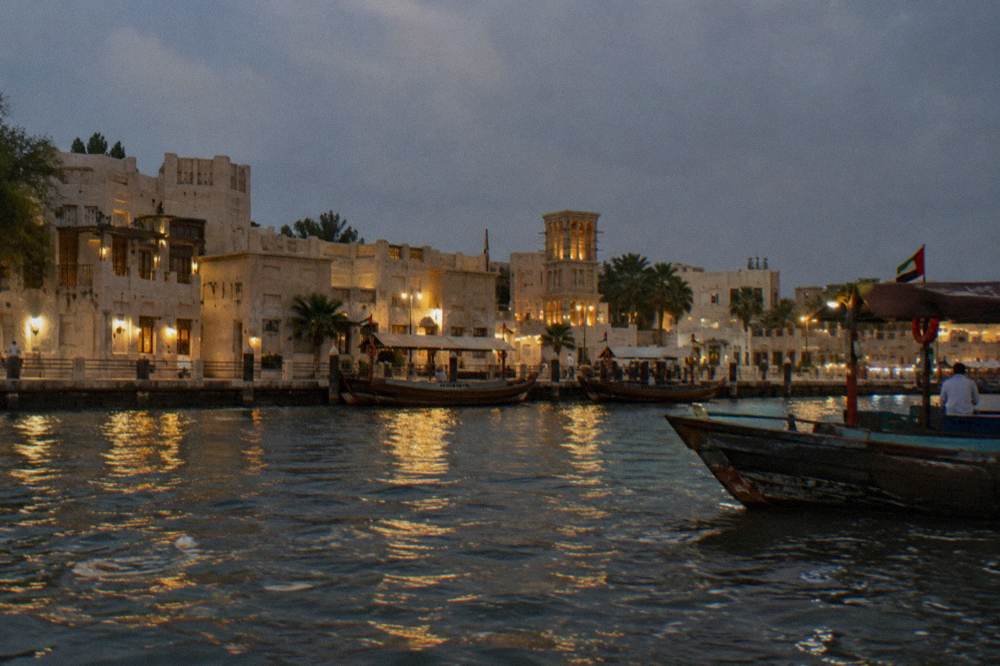
For a first visit, the simplest plan is a winter or spring trip, a morning or late-afternoon walk in Old Dubai, and an evening that ends with luqaimat by the Creek. That sequence is what the best first day in Dubai looks like for an American, and a guided version of it is exactly what Dubai Food Tours exists to help book.
Common Questions About Dubai For American Tourists
Is Dubai Friendly To American Tourists?
Yes. English is spoken everywhere, the visitor infrastructure is built for first-timers, and the rules that differ from the US, mainly around alcohol venues, dress in heritage districts and photography courtesy, are simple to follow. Millions of international visitors, including large numbers of Americans, travel there without incident each year.
Can Americans Drink Alcohol In Dubai?
Visitors aged 21 and over can drink at licensed venues such as hotels, restaurants and bars, with no personal permit needed beyond ID. Alcohol is not allowed in public places outside licensed venues, and public intoxication is enforced strictly. Drink where you are served and take a taxi back.
Is English Widely Spoken?
Yes. English is the working language of Dubai's service economy. Menus, metro announcements, street signs, bills and tour guiding all run in English, and staff in restaurants and shops use it by default.
What Should Americans Wear In Old Dubai?
Shoulders and knees covered is the convention in souks, heritage districts and malls, though there is no single dress-code law for tourists. Light, breathable clothing that covers those areas works for the heat and the culture alike. Swimwear belongs at beaches and pools only.
Is Food In Dubai Safe For American Stomachs?
Yes. Food safety standards are enforced by the municipality, street food turnover is high, and tap water is safe to drink, though many visitors prefer bottled water, which costs around AED 1 to 2 per litre at supermarkets. All meat served is halal, which affects nothing about how most visitors order.
Do I Need To Tip In Dubai?
There are no set rules. Official guidance suggests 10 to 15 per cent in restaurants and small amounts in cafes. Many bills already carry a service charge of up to 10 per cent, which is retained by the venue, so check the bill and tip in cash or by card as the service warrants.