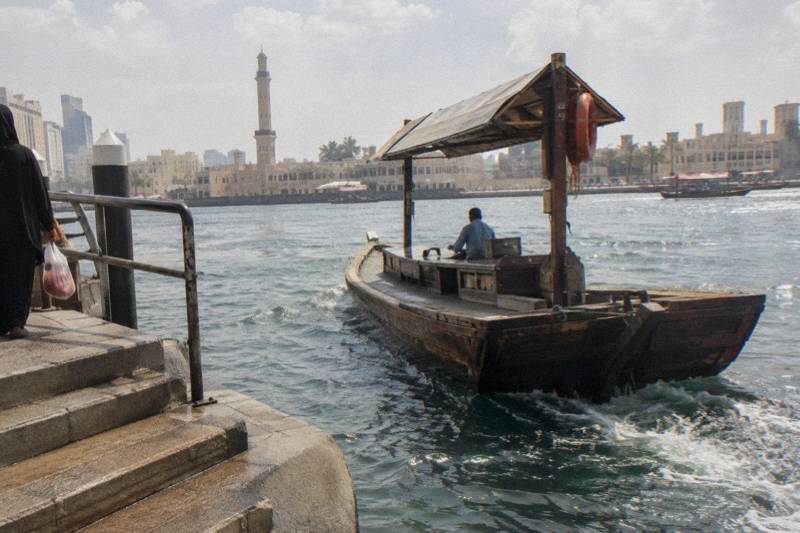
Dubai Food Walking Tour: Pace, Stops And What To Wear
A guided food walk through Old Dubai is a slow, stop-start morning or evening on foot, not a hike. Here is what the pace, the distance, the stops and the dress code actually involve, so you can book the right shoes and the right start time.
Short answer
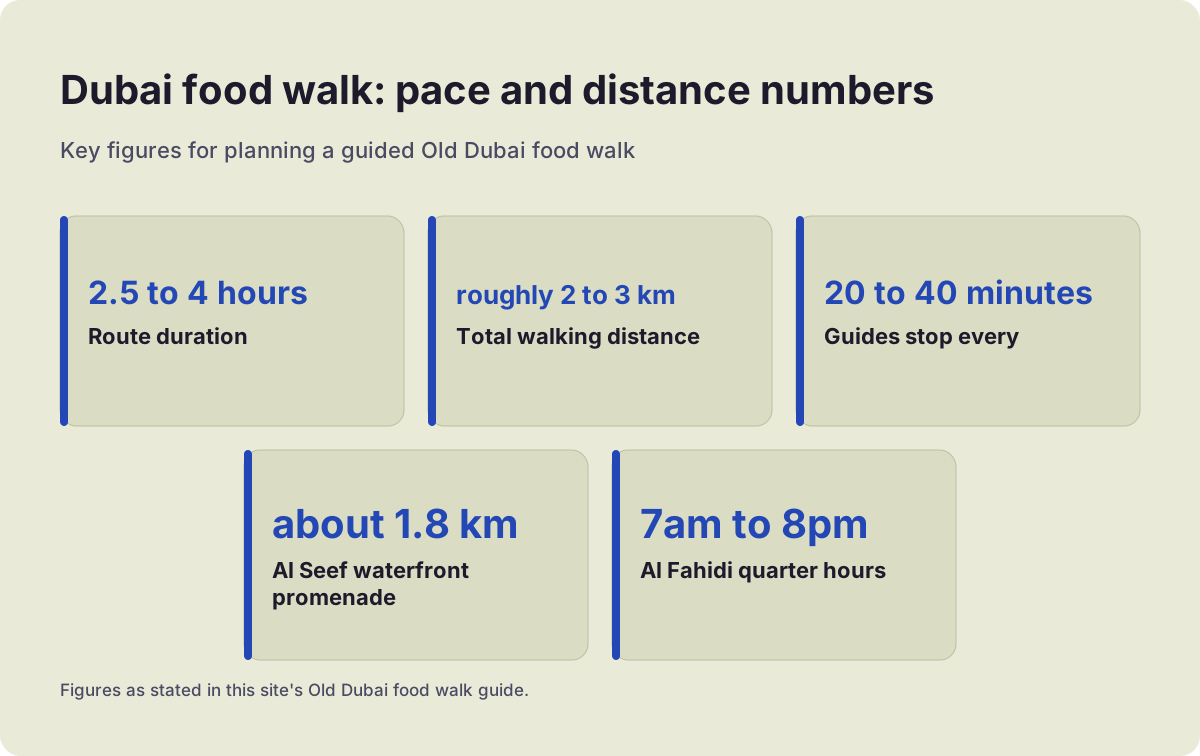
Most guided food walks in Old Dubai run 2.5 to 4 hours and cover a compact route between Al Fahidi, the Bur Dubai souks and the Deira side of the Creek, crossed by abra. The pace is gentle, with a tasting stop every 20 to 40 minutes. Wear closed walking shoes, cover shoulders and knees for the souks, and start early or late in the warmer months.
Old Dubai is small, dense and built for walking. The lanes of Al Fahidi, the covered arcade of the Bur Dubai Textile Souk and the abra crossing to Deira all sit within a couple of kilometres of each other, which is exactly why nearly every guided food experience in this part of the city happens on foot. That compactness surprises people who picture Dubai as a highway city of towers and malls. The food routes share nothing with Downtown's air-conditioned blocks; they run through the oldest continuously inhabited streets in the emirate.
This guide covers the practical side of a guided food walk: how far you actually walk, what the pace feels like, what the stops between tastings look like, and what to wear so the souks, the sun and the heritage buildings do not catch you out. The figures here come from operator listings and official sources, and where a detail varies, the booking page for the specific walk is the place to confirm it.
What Does A Guided Food Walk Through Old Dubai Involve?
A guided food walk in Old Dubai is a 2.5 to 4 hour route on foot that strings together heritage lanes, souk arcades, an abra crossing of the Creek and a series of tasting stops, led by a guide who sets the pace and orders the food. Most of the routes compared here run in the old-dubai-street-food-walks family, and the format is the same: walk, stop, taste, repeat. The walks are not endurance events. They are built around eating, so the walking sections are short and the stops are frequent, which is why the format suits almost every fitness level. If you would rather taste your way through the old quarter without paying for a guide, the guide to free and cheap eats and sights in Old Dubai covers what you can do on your own and where a paid route still helps.
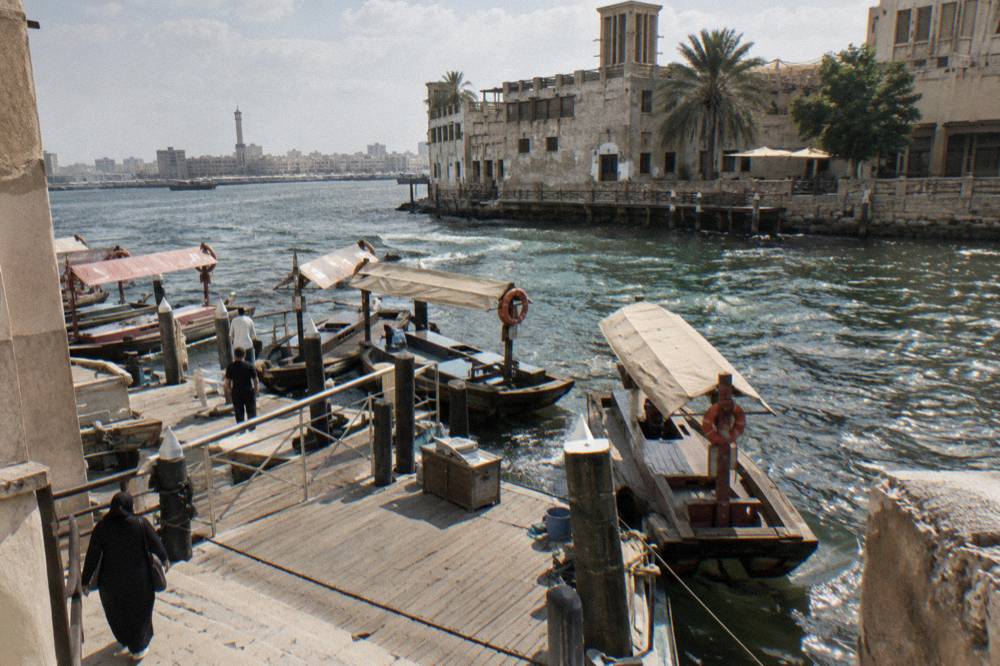
The featured route on this site, the Old Town, Souks and Street Food guided walk with an abra ride, runs 3 to 4 hours and follows the classic shape: the Al Fahidi Historical Neighbourhood on the Bur Dubai side, the Textile Souk, an abra across the Creek, then the Spice Souk and Gold Souk in Deira. The listing describes tastings along the way, with the guide handling ordering and payment at each stop. That handover of logistics is the real product: you eat what a local guide already knows is good, on a route you would otherwise navigate by guesswork.
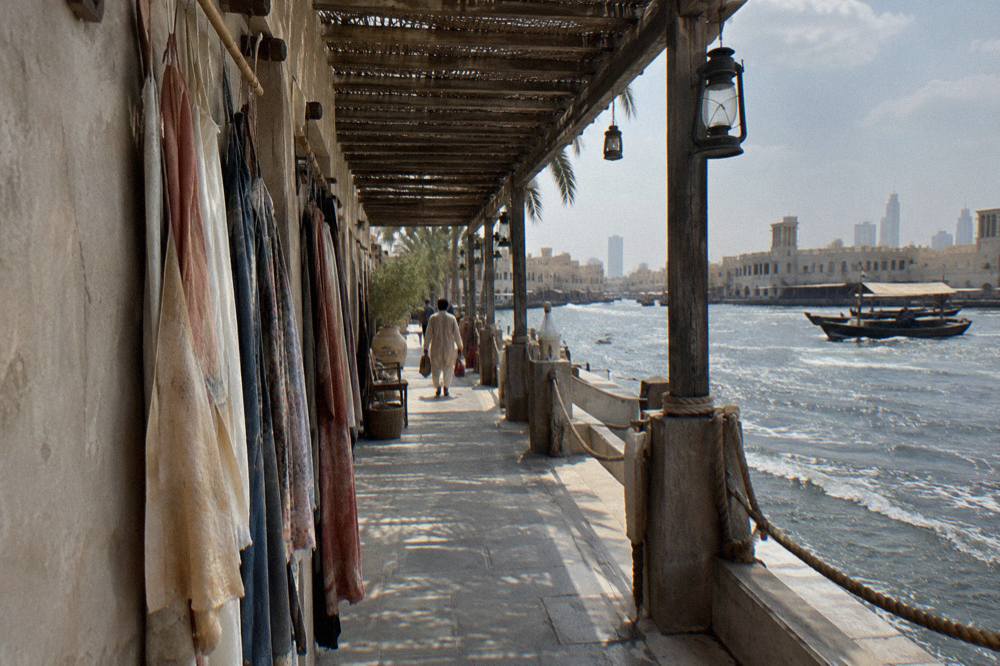
A few things shape the day more than the food itself. The Creek crossing is one, and the souk arcades are another, because the Textile Souk's covered walkway is one of the few stretches of shade between heritage buildings. The meeting points on the listings cluster around Al Khayma Heritage Restaurant in Al Fahidi, Al Ras Metro Station exit 2 in Deira and the Al Seef Heritage Hotel entrance, which tells you how tight the whole circuit is. If you want the deeper background on the district itself, the Al Fahidi historic district food and coffee stops guide maps that neighbourhood in detail.
How Far Do You Actually Walk, And At What Pace?
The full circuit between Al Fahidi, the Bur Dubai souks, the abra dock and the Deira souks fits inside roughly 2 to 3 km of total walking, spread across a 2.5 to 4 hour window, so the moving pace is a stroll rather than a march. Guides stop every 20 to 40 minutes for a tasting, a story or a photo, and the abra ride sits in the middle as a seated break. Nothing about the route demands training. The only physical challenge is heat in the warmer months, not distance.
The geography keeps everything close. Al Fahidi's lanes and the Textile Souk sit within a few hundred metres of each other on the Bur Dubai side. The abra crossing to Deira takes minutes on the water, and the Spice and Gold Souks start almost at the waterline on the far bank. The Al Seef waterfront promenade, a free public stretch of about 1.8 km, connects the heritage quarter to the modern end of the shoreline, and some routes use a section of it. Al Fahidi itself is open for walking with free public access to lanes, galleries and courtyards, with neighbourhood hours reported as 7am to 8pm daily.
Pace varies with the guide and the group, but the stop-start rhythm is constant. A typical hour looks like 10 minutes of walking, a 15 to 25 minute stop, then more walking. Groups with children or with a photographer in them move slower, and guides on small-group and private walks adjust. If you are deciding between formats, the private or group food walk comparison explains how group size changes the rhythm of the day.
What Should You Wear On A Food Walk Through Souks And Heritage Lanes?
Cover your shoulders and knees, wear closed walking shoes with grip, and skip anything tight, sheer or sweat-heavy. There is no single dress-code law for tourists in Dubai, but heritage areas, souks and malls call for modest clothing, and the walking surfaces, heat and dust reward practical choices. Light, breathable fabrics beat denim in every month of the year. The dress guidance is cultural rather than legal, and it is the same advice for men and women.
The dress detail that matters most on this specific route is the souks. The Deira Spice Souk and Gold Souk and the Bur Dubai Textile Souk are working markets in a conservative district, and the official guidance is to cover shoulders and knees in heritage areas and souks. Shorts and sleeveless tops are common on Dubai's beaches and hotel streets, but in Old Dubai they read as out of place. A loose long-sleeve linen shirt, trousers or a knee-length skirt, and a scarf for mosque-adjacent stretches covers every stop on a standard route. The dress code for walking tours and souks guide goes deeper on seasonal variants.
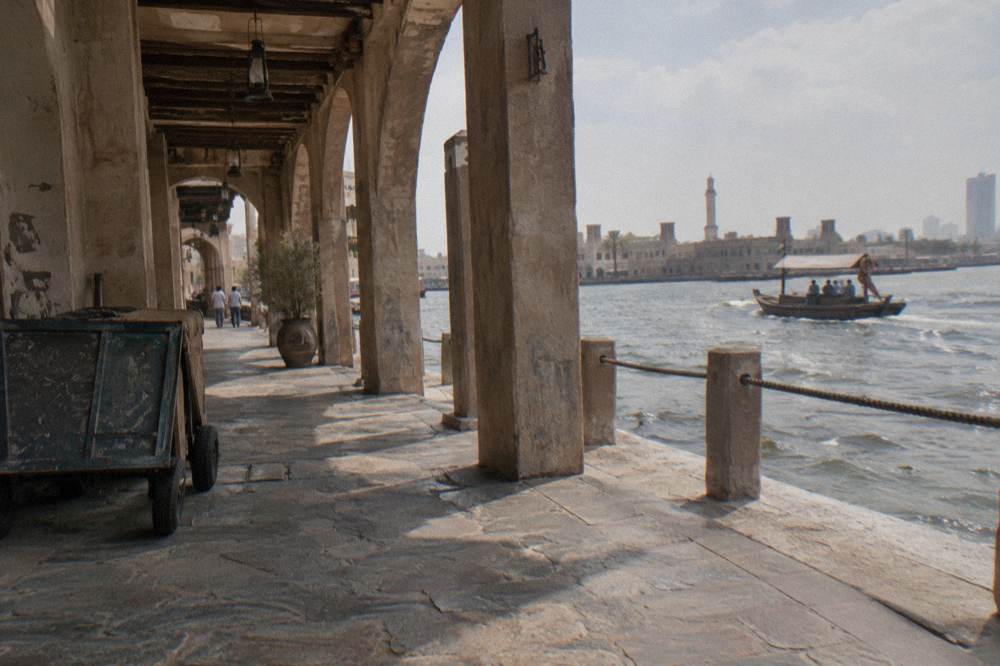
Shoes deserve more thought than most visitors give them. The route mixes paved promenade, cobbled heritage lanes, souk floors that can be slick with produce dust, and abra ramps that tilt with the tide. Sandals with a back strap work; flip-flops do not, because the abra boarding ramp and the midday heat both punish them. Socks matter less than grip and breathability.
| Item | Why It Matters On This Route | Best Pick |
|---|---|---|
| Shoes | Cobbled lanes, slick souk floors, abra ramps | Closed, broken-in, grippy soles |
| Trousers or long skirt | Souk and heritage-area modesty norms | Loose cotton or linen |
| Top | Shoulder coverage in souks and mosques-adjacent stops | Light long or half sleeve |
| Scarf or shawl | Quick extra coverage, also sun cover | Cotton, packs flat |
| Hat | Full-sun stretches on the Deira side | Wide brim, chin strap for the abra |
| Sunglasses | Glare off the Creek and gold shop windows | Any, plus a hard case |
One clothing question comes up repeatedly: can a woman wear shorts in Dubai? The honest answer for Old Dubai is that it is not a legal issue but it sits outside the local comfort zone in souks and heritage districts, and the answer changes by district. The shorts and dress code question is answered in full elsewhere on this site.
If comfort planning is what decides your booking, a guided route removes the navigation worry but not the weather, and the featured walk's booking page lists its start times so you can pick a cooler slot.
What Stops Break Up The Walking On A Typical Route?
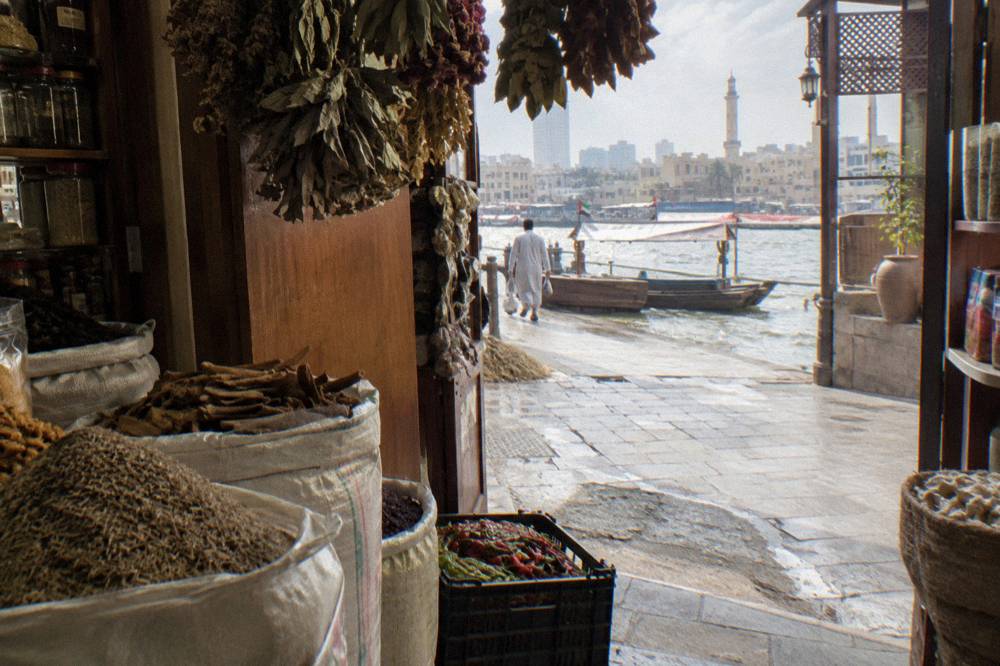
Between tastings, a standard Old Dubai route stops at the Al Fahidi lanes, the Textile Souk arcade, an abra station, the Spice Souk and the Gold Souk, and often a stretch of the Al Seef waterfront. Those stops do the pacing work: each one is a shaded, seated or slow-moving pause, and the abra crossing is a short boat ride that splits the route in half. The stops are the tour's air-conditioning, in a district that has very little of the literal kind.
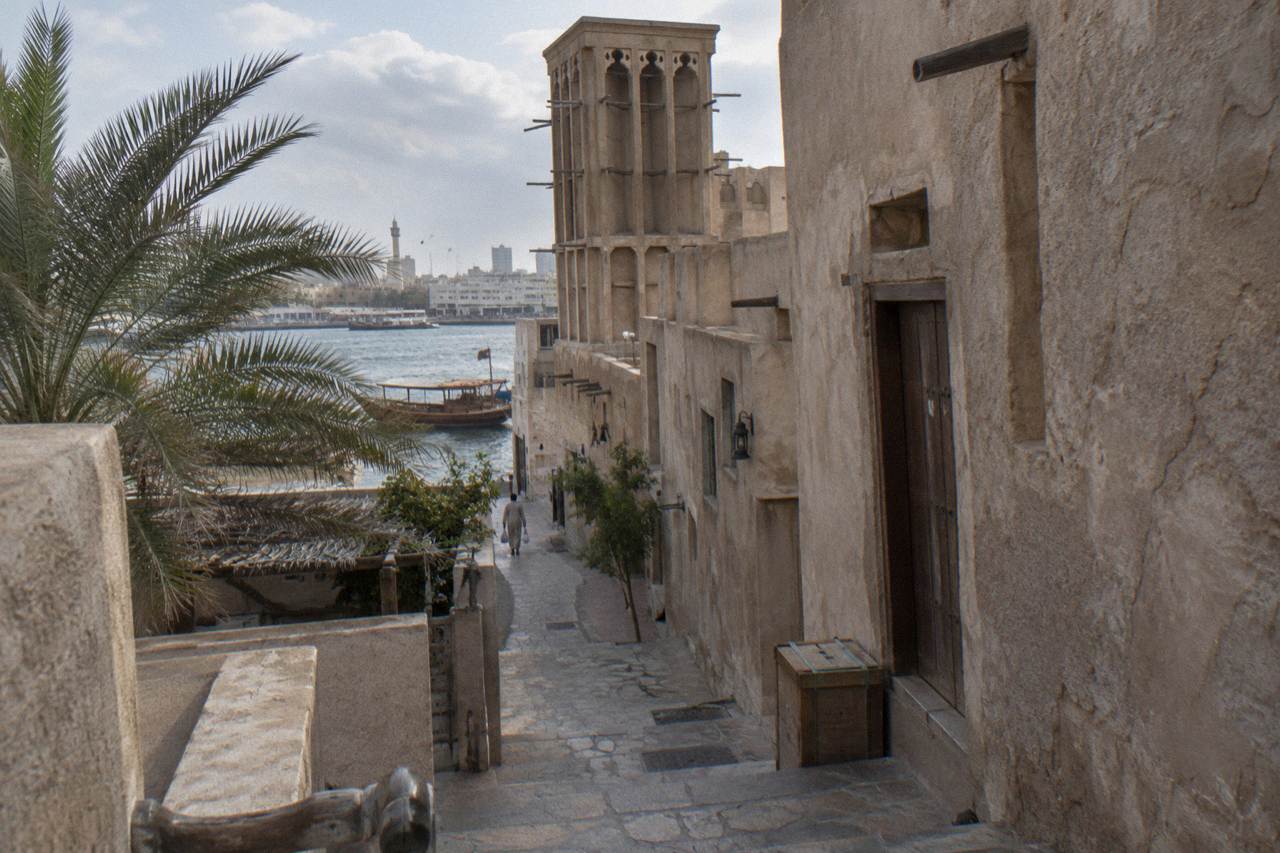
The Al Fahidi Historical Neighbourhood is where most routes open. Its coral-stone and gypsum buildings, wind towers and courtyard galleries are free to walk, and the quarter's reported hours of 7am to 8pm mean both morning and evening departures work. The Textile Souk that follows is one of the few genuinely shaded stretches on the route, a covered arcade where the walking slows to browsing speed. On the Deira bank, the Spice Souk's sacks of dried lime, saffron and cardamom give the guide a natural five-minute talk, and the Gold Souk's window displays do the same. The souks' hours vary shop by shop, with the Gold Souk area generally reported as 10am to 10pm and the Spice Souk opening earlier than 8am and closing past 9pm, with Friday daytime closures, so a guide's route timing accounts for all of this in a way an independent walk cannot.
The abra is the stop that surprises people. The Roads and Transport Authority runs traditional commuter abra routes across the Creek, including the Bur Dubai to Deira Old Souq line, the Al Fahidi to Deira Old Souq line and the Al Seef to Baniyas line, and guided routes use them as a seated crossing rather than a sightseeing detour. The fare is small, and several listings include the crossing in the ticket, so check the inclusions on the booking page rather than assuming. The Creek abra ride and waterfront eating guide covers the crossing and the food on both banks in detail.
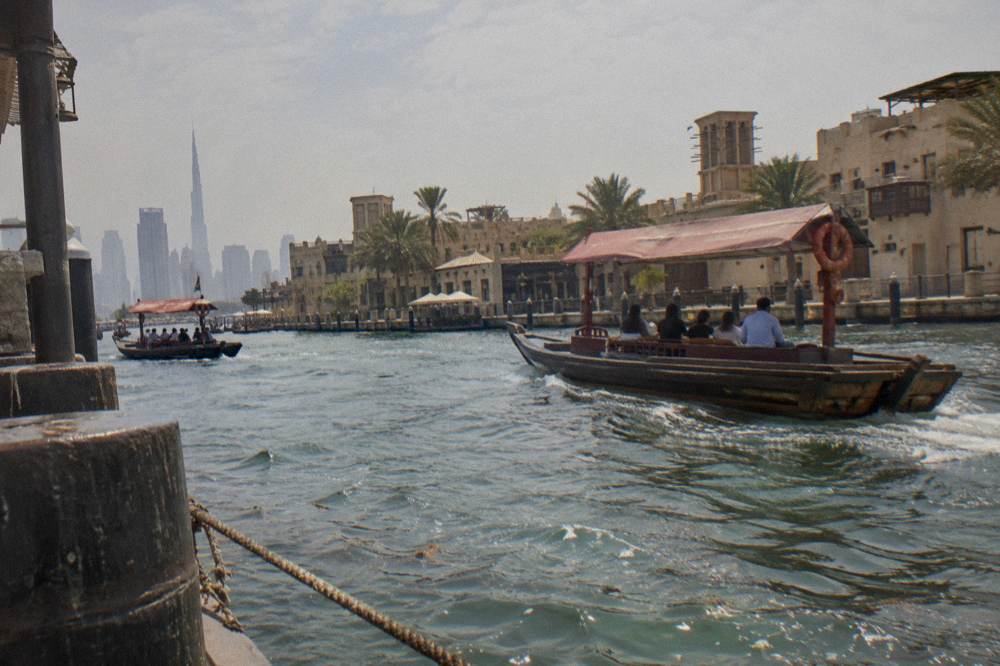
The Al Fahidi Old Town route with the Creek cruise covers the same ground in 2.5 to 4 hours with a boat leg, which suits anyone who wants the water time without the full walking load.
How Does Heat Change The Timing Of A Walking Food Route?
In the warm months, the timing matters more than the route: departures before 10am or after 5pm avoid the worst of the sun, and December to February, with average daytime highs of 24 to 26 C, is the most comfortable window for walking Old Dubai. In summer, morning and evening slots are the only sensible choice, and shaded stops become the backbone of the day. The climate normals for the airport station put December's mean daily maximum at 26.5 C and January's at 24.4 C, with overnight lows in the mid-teens, which is why winter is Old Dubai's walking season.
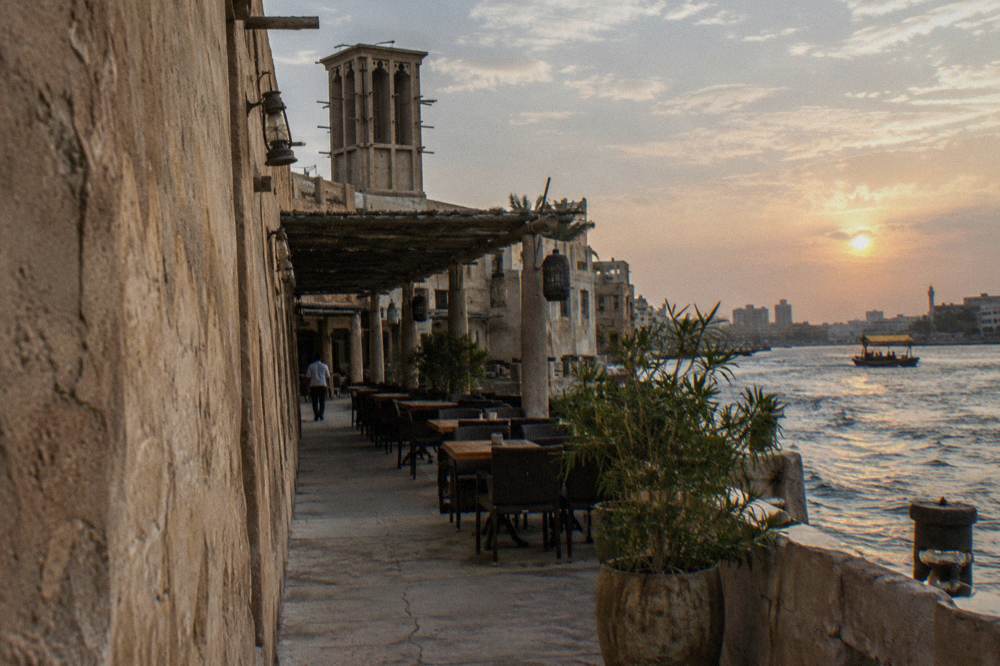
Summer is a different discipline. From late spring through early autumn, midday temperatures make a 3 hour outdoor walk punishing, and the responsible choice is a route that starts at opening or one that leans on shade. The Textile Souk arcade, the souk interiors and the abra crossing all offer breaks from direct sun, and guides on the routes compared here adjust stop lengths in the hot months. The summer heat and timing guide covers this in full, including which formats hold up best.
| Period | Average Daytime High | Walking Comfort | Best Departure Window |
|---|---|---|---|
| December to February | 24 to 26 C | Comfortable all day | Any daylight slot |
| March | 28.9 C | Warm midday | Before 10am or after 4pm |
| April to May | Hot, rising | Early mornings only | 8 to 10am |
| June to September | Very hot | Short shaded walks | First departure, or evening |
| October to November | Cooling | Mornings comfortable | Before 11am |
Winter daylight helps with planning. Mid-December sunrise sits around 6:57am with sunset around 5:32pm, and mid-January around 7:07am to 5:51pm, so a 10am winter departure still gives you a full route in daylight, while a summer evening walk can start at 6pm and finish in the cool. The best time to visit Dubai for food and walking guide extends the seasonal picture.
What Should You Bring Beyond Clothing?
Bring a refillable water bottle, sun protection, a small cross-body bag, a card plus a little cash for tips and small stalls, and any personal medication, because the route is long enough to need all of them and short enough to need nothing more. Heavy bags, tripods and anything you cannot carry for three hours work against you. The walks are urban and never far from shops, so over-packing is the more common mistake.
Water is the one non-negotiable. Even in winter the souks are dry-air environments, and tastings of karak, Arabic coffee and fried street snacks go better with water between them. Some listings state that water is included, so check the inclusions before you load up. Sun protection matters on the Deira side, where the souk lanes are open to the sky for long stretches: a hat, sunglasses and sunscreen on the neck and face. Photography etiquette is worth knowing before you go, since asking permission before photographing individuals, especially in traditional attire or in the souks, is the local norm and in some cases a privacy requirement.
| Item | Needed On Route | Notes |
|---|---|---|
| Refillable water bottle | Yes, every month | Some listings include water, check inclusions |
| Hat and sunscreen | Yes, October to May especially | Open stretches on the Deira side |
| Small cross-body bag | Yes | Hands free for food and abra boarding |
| Cash for tips | Small amount | Tipping is voluntary, 10 to 15 per cent in restaurants is the stated norm |
| Personal medication | As needed | 3 to 4 hours away from your hotel |
| Power bank | Optional | Photo-heavy routes drain phones |
Payment and tipping deserve a sentence. Restaurant bills in Dubai commonly carry a 5 per cent VAT and sometimes a venue service charge, and the official tourism guidance suggests 10 to 15 per cent in restaurants as a personal-preference tip, with AED 5 to 10 in cafes. On a guided walk, the food is typically prepaid through the booking, and a cash tip for the guide at the end is the usual gesture. The tipping and paying in Old Dubai guide covers the details.
How Do You Get To The Meeting Point Without A Car?
The Green Line of the Dubai Metro serves Old Dubai directly: Sharaf DG station covers the Al Fahidi area, Al Ras serves the Deira souk side, and Baniyas Square and Gold Souq stations sit within walking distance of the markets, with trains running from 5am on most days. A Nol card, sold at AED 25 including initial credit, covers metro, buses and the marine transport, and taxis start at AED 5 in daytime hours. Almost every meeting point on the listings is within a 10 minute walk of a metro station.
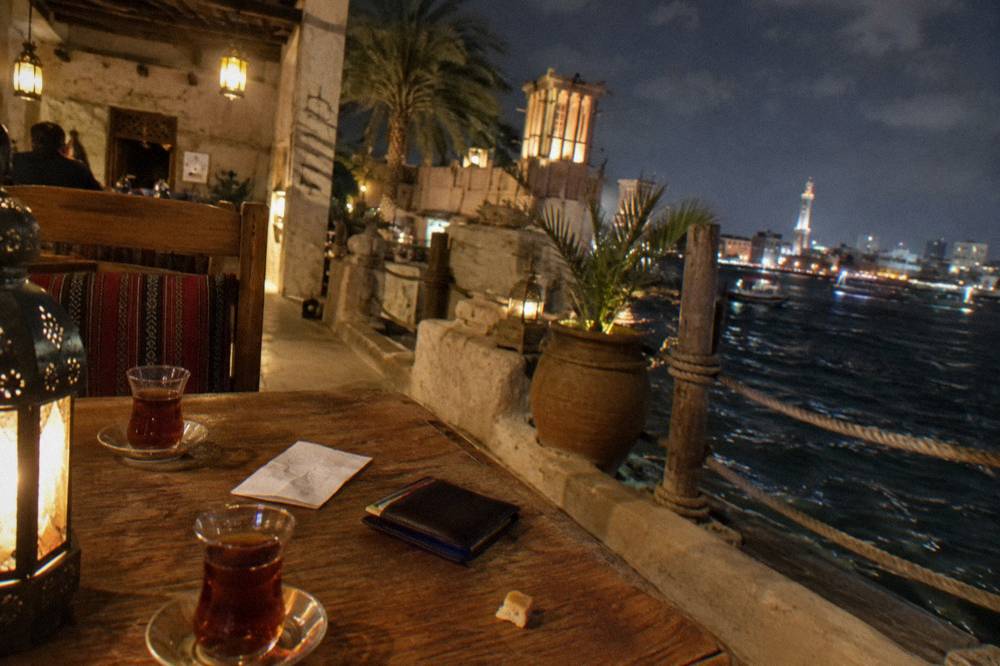
The station-to-meeting-point match is worth planning the night before. For Al Fahidi meeting points, including the heritage restaurant used by several listings, Sharaf DG is the station, and the walk through the district is part of the experience. For Deira-side starts such as Al Ras Metro Station exit 2, you are already at the meeting point when you exit the gate. The metro's operating hours, 5am to midnight Monday to Thursday and Saturday, 5am to 1am on Friday and 8am to midnight on Sunday, matter for early departures, and the RTA's official metro station map is the source to check before you travel. The Nol card details, including the AED 25 anonymous card price, come from the official RTA Nol page.
Taxis are the fallback, and the reported road-pickup starting fare is AED 5 between 6am and 10pm and AED 5.5 overnight, per the RTA's fare page. For a 7:30am winter departure, a taxi from Downtown or the Marina beats the metro on time and costs little more for a group. The getting to Old Dubai by metro and abra guide maps every station and crossing.
Which Small Details Make The Day Go Better?
Arrive 10 minutes early, eat lightly beforehand, tell the operator about allergies and dietary needs before the day, and keep your phone charged for the meeting point messages. The routes run on tight timing, a latecomer compresses every stop after it, and dietary adjustments usually need advance notice rather than on-the-spot fixes. The booking page is where allergies, vegetarian needs and mobility questions should be raised, because the listings do not describe every diet as catered.
A few practical notes round out the day. All meat served in Dubai's restaurants and markets is halal, and pork appears only in designated licensed sections, so halal eating is the default on every route. Alcohol is not part of the Old Dubai street food walks unless a listing says otherwise; visitors over 21 can drink at licensed venues only, and public drinking is prohibited. Smoking, including shisha, is banned in enclosed public spaces and permitted only in licensed outdoor zones, so a mid-walk cigarette is not a casual thing. And if your walk falls in Ramadan, dining operates as normal for non-Muslims, with etiquette suggesting discretion outdoors during daylight hours, a topic covered fully in the Ramadan food tours guide.
Photography deserves a repeat mention because the souks are where it most often goes wrong. Ask before photographing individuals, especially women and families in traditional attire, and expect a no sometimes. Shopkeepers in the Gold Souk are generally happy to have window displays photographed, but the stalls in the Spice Souk are working businesses and some vendors prefer you buy rather than shoot. A guide handles these interactions well, which is one quiet argument for the guided format.
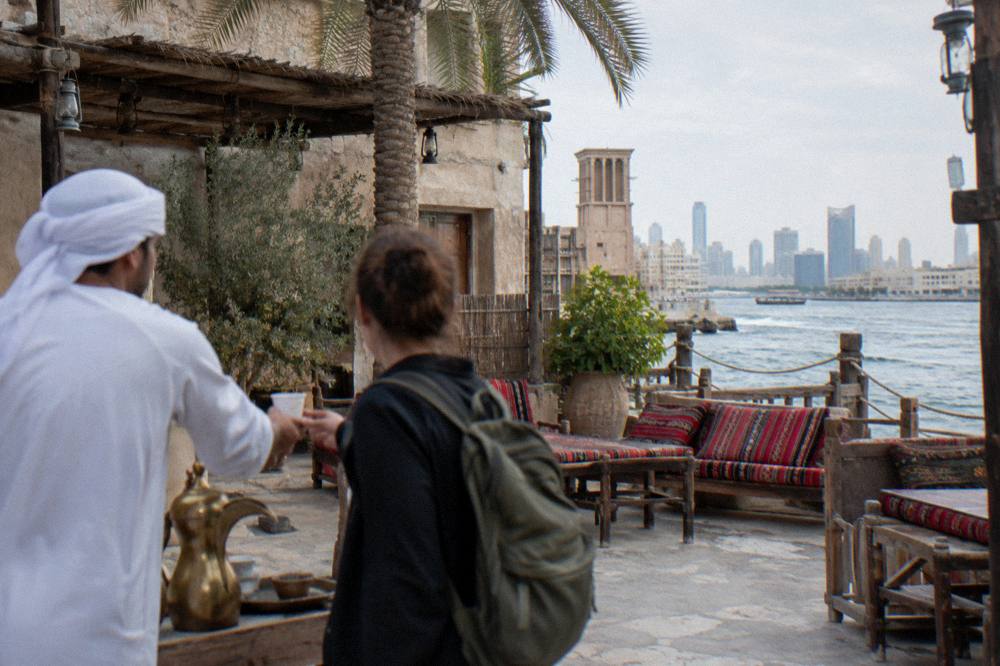
For a route that adds an Emirati house stop to the street food and souks, this 3 hour walk covers the same ground with a cultural interior in the middle, which is a good fit for a first visit.
The premium Old Dubai guided walk with street food and an abra ride runs the full 3 to 4 hour format with a smaller group and a higher touch of service, which suits anyone who wants the longer route with more guide attention. Check availability if that balance fits, and read the inclusions on the booking page before choosing a date.
Whether you book the featured route or a shorter one, the day itself is the easy part: modest clothing, closed shoes, a water bottle and an early or late start time cover almost every variable. The Dubai Food Tours comparison pages exist for the harder decision, which is matching a route to your pace, your budget and your appetite.
Common Questions About Walking A Dubai Food Route
How Far Do You Walk On A Dubai Food Walking Tour?
The full Old Dubai circuit between Al Fahidi, the Bur Dubai souks, the abra dock and the Deira souks fits inside roughly 2 to 3 km of total walking, spread across a 2.5 to 4 hour window with frequent tasting stops, so the pace is a stroll.
What Should You Wear On A Food Walk Through The Souks?
Cover shoulders and knees, wear closed walking shoes with grip, and choose light breathable fabrics. There is no single dress-code law for tourists, but heritage areas and souks call for modest clothing, and the heat rewards loose cotton or linen.
What Time Of Day Is Best For A Walking Food Tour In Dubai?
December to February is comfortable at almost any daylight hour, with average highs of 24 to 26 C. In the warmer months, departures before 10am or after 5pm avoid the worst sun, and summer walks are best at the first morning departure or in the evening.
Do You Need To Be Fit For A Guided Food Walk?
No. The route is flat, urban and broken by stops every 20 to 40 minutes, plus a seated abra crossing. The only real physical factor is heat, which timing and shade manage.
How Do You Get To The Meeting Point Of An Old Dubai Food Walk?
The Green Line serves the area: Sharaf DG for Al Fahidi meeting points and Al Ras for the Deira souk side. Trains run from 5am on most days, a Nol card costs AED 25 including initial credit, and taxis start at a reported AED 5 pickup fare in daytime.
Can Dietary Needs Be Handled On A Guided Food Walk?
Sometimes, but not automatically. Raise allergies, vegetarian needs and other requirements with the operator through the booking page before the day, because listings do not describe every diet as catered and guides need notice to adjust stops.