Traditional Emirati Food: Machboos, Harees And Luqaimat
Machboos, harees and luqaimat are the three dishes that show up again and again when Emirati cooks feed guests in Dubai. Here is what each one is, how it tastes, and where a visitor can try all three in one sitting.
Short answer
Machboos is spiced rice slow-cooked with meat and dried limes, harees is wheat and meat cooked to a smooth porridge, and luqaimat are crisp fried dumplings with date syrup. Guided Emirati tastings in Old Dubai run from 1 hour 30 minutes to 2.5 hours and serve these dishes with Arabic coffee and dates.
Most visitors arrive in Dubai knowing the shawarma and the skyscrapers and leave without ever tasting the food of the country they are standing in. That is a genuine gap, because Emirati cooking has a small, distinctive core that is nothing like the Levantine and South Asian food that dominates the city's casual dining. Three dishes carry most of that identity: machboos, the national rice dish; harees, a slow-cooked wheat and meat comfort food; and luqaimat, the sticky fried dumplings that end most Emirati gatherings.
None of these are hard to find if you know where to look, but they are also easy to miss, because Old Dubai's restaurant strips are packed with Indian, Iranian, Afghan and Lebanese kitchens that crowd out the local repertoire. This guide explains what each dish is, how it tastes, what it costs when you track it down yourself, and which guided experiences put all of them on one table. For a broader look at the cuisine, start with the Emirati food guide for visitors.
What Is Traditional Emirati Food?
Traditional Emirati food is a small repertoire of rice, wheat, meat and date dishes built around slow cooking and warm spices like dried limes, cardamom and saffron. Shaped by a coastal desert culture that traded with Iran, India and East Africa, it turns humble pantry staples into hearty, aromatic meals. Machboos, harees, thareed, balaleet and luqaimat are its anchors. The cuisine is spiced rather than spicy, and its techniques are patience techniques: hours of simmering rather than chili heat.
The logic behind the food comes straight from the environment. Before air conditioning and global supply chains, Gulf cooks worked with what survived the climate: dried limes called loomi, dried fish, wheat, dates, and whatever meat was available for celebrations. Rice arrived through the trade routes that made Dubai a port in the first place, and it became the celebration grain. Meat dishes like machboos and harees were, and still are, the food of gatherings: weddings, Ramadan evenings, family Fridays.
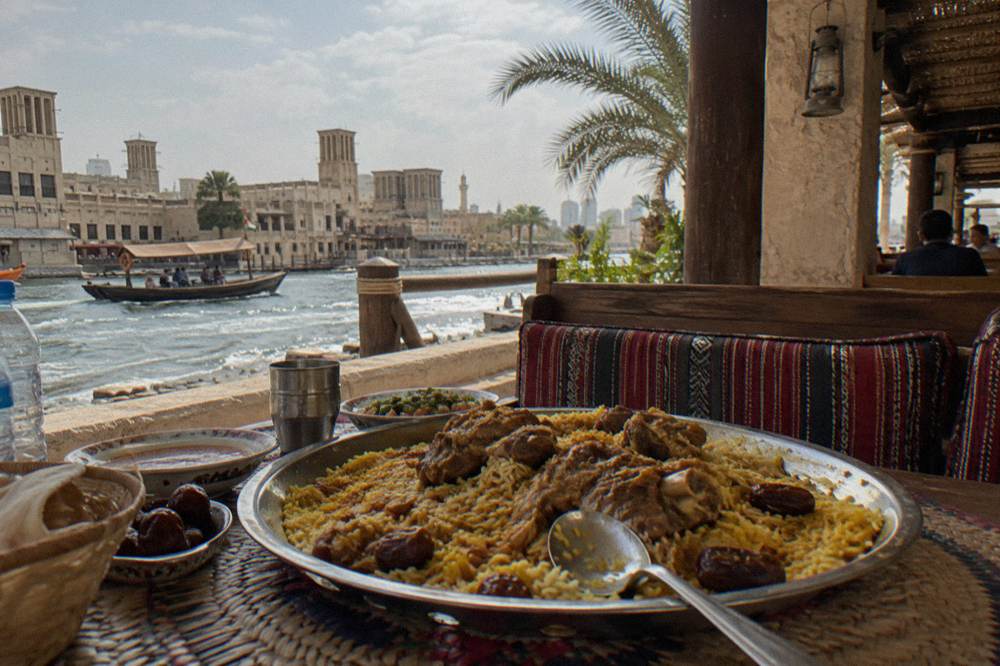
That is also why Emirati food is often described as hospitality food rather than restaurant food. A lot of it is cooked at home, in large quantities, for shared platters. The restaurants in Deira and Bur Dubai that serve it do so in heritage settings, and the guided cultural meals that have grown up around Al Fahidi lean into that gathering format deliberately. A good introduction to what that table feels like is in the Emirati food experience walkthrough.
For a visitor, the practical takeaway is this: the dishes are few, the flavors are subtle, and the setting matters as much as the plate. Eating machboos from a plastic container is a different experience from eating it while a host explains why the gahwa is served in small cups with the right hand.
Machboos: The National Rice Dish Of The UAE
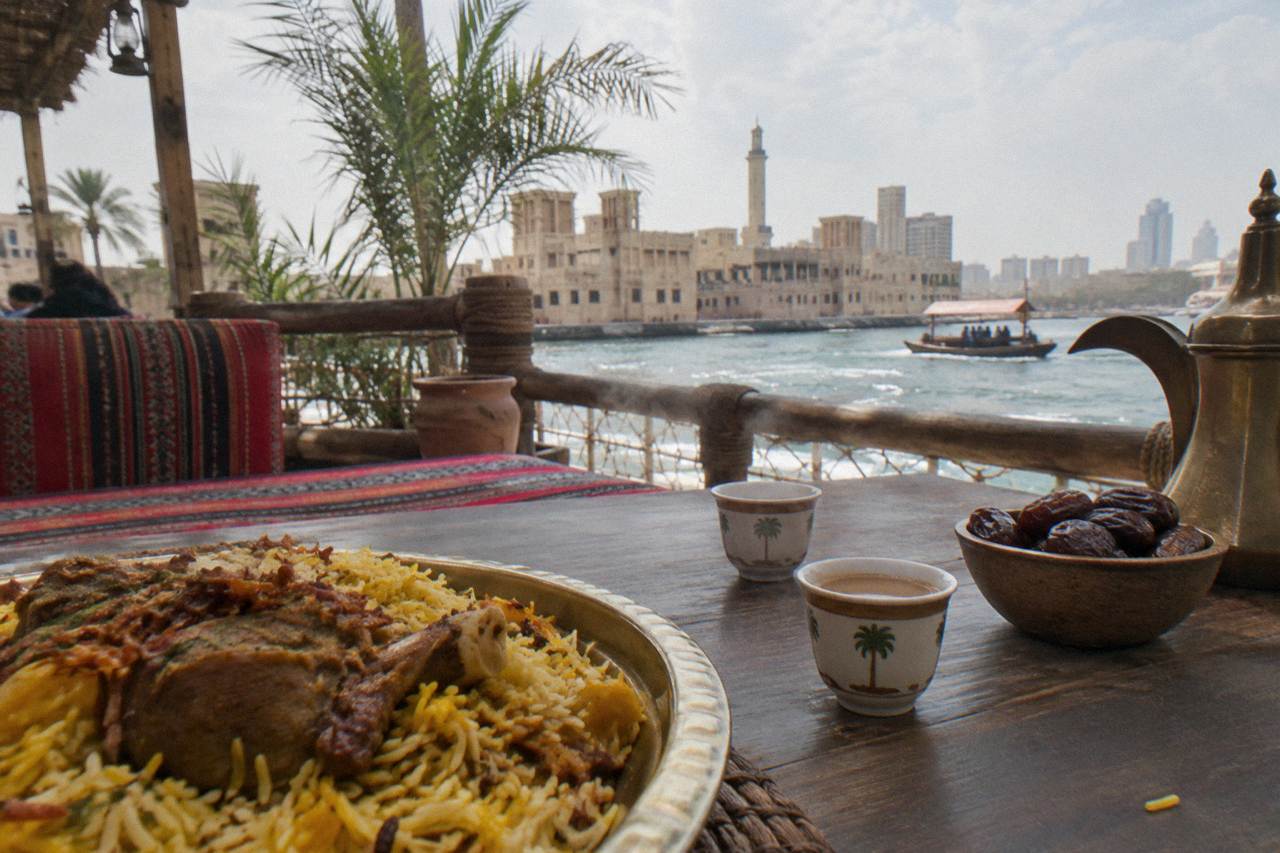
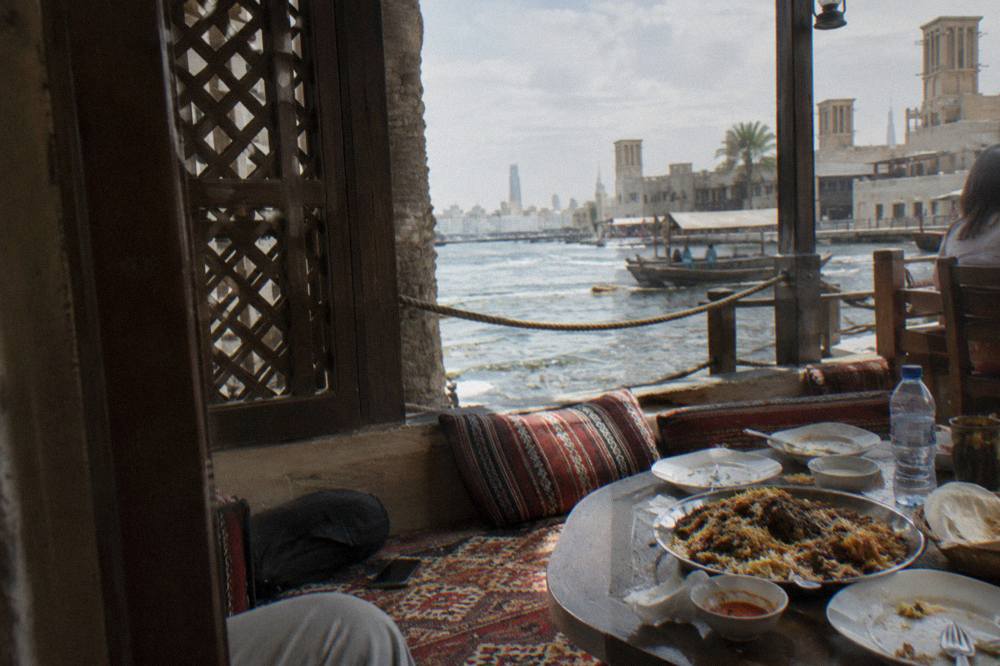
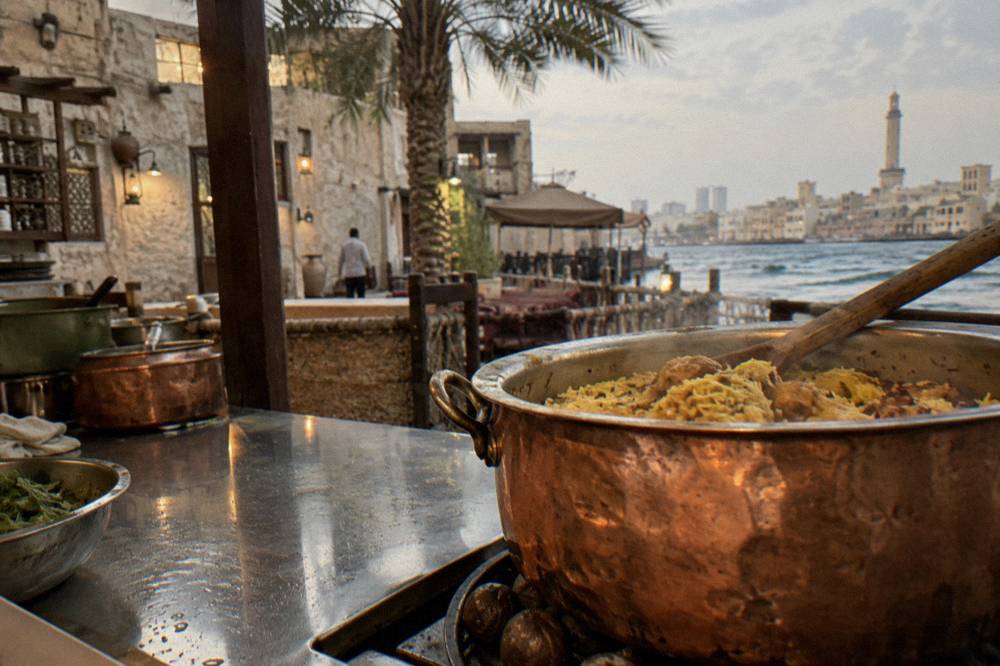
Machboos is the UAE's national rice dish, built around long-grain rice slow-cooked with lamb, chicken, or fish and seasoned with dried limes, baharat spice mix, cardamom, saffron, and cinnamon. It is typically served family-style on a large platter, often accompanied by tomato sauce or pickles, making it a centerpiece of Emirati home dining. It tastes like a cousin of biryani but more restrained, with the sour edge of loomi cutting through the rich meat broth that the rice absorbs.
The dried lime is the flavor that separates machboos from every rice dish a visitor already knows. Loomi are limes that have been boiled in salt brine and dried until they are hard and black, and they give the cooking liquid a fermented, citrusy depth that no fresh lime reproduces. The baharat blend adds warmth rather than heat, and the saffron, used in small amounts, colors some grains a deep orange so the platter arrives looking layered rather than uniform.
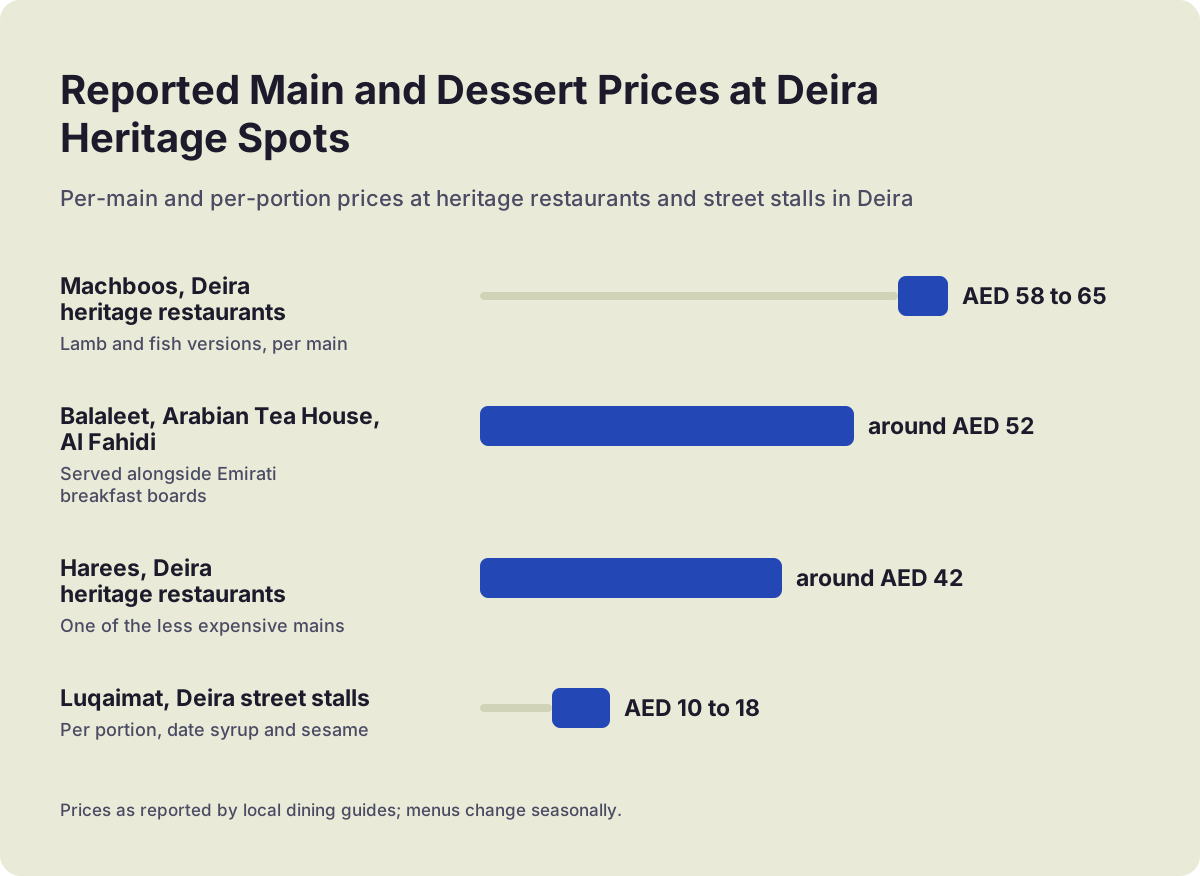
Machboos is built for a crowd. It is cooked in one pot for a family or a gathering, then turned out onto a large platter that everyone eats from together, which is why it anchors weddings and Ramadan evenings. Restaurants in Deira that serve it in heritage settings list lamb and fish versions at around AED 58 to 65 per main, as reported by local dining guides, with the dish served in the traditional shared format rather than as an individual plate.
If you want the dish explained rather than just served, a guided tasting is the efficient route. The Dubai: Flavors of Arabia Souk Tour with Tastings & Dinner is a 2.5-hour experience built around exactly this kind of cuisine, and the trio below compares it with the two other Emirati cultural dining options worth knowing.
Harees: The Slow-Cooked Dish That Defines Emirati Comfort Food
Harees is wheat and lamb or chicken cooked slowly for six to eight hours until it breaks down into a smooth, porridge-like dish, finished with ghee and sometimes cinnamon, and eaten at gatherings and during Ramadan as a comfort food. It is mild, soft and faintly sweet from the wheat, closer to a savory porridge than a stew, and its flavor is about texture and patience.
Harees is the clearest example of what Emirati cooking rewards: time. There is no shortcut, no way to rush wheat and meat into the silken consistency that defines a well-made batch. The dish predates the oil era by centuries and appears across the Gulf in variations, but in the UAE it is the dish most tied to Ramadan tables and to the hospitality of large family meals, where a host's harees reflects hours of quiet preparation.
Because it is bland by design, harees is seasoned at the table. Diners add ghee, salt, sometimes cinnamon or sugar, to taste. First-timers are often surprised by how plain it looks and how satisfying it is, especially on a cool evening. In Deira's heritage restaurants, a serving of harees is listed at around AED 42, as reported by local dining guides, making it one of the less expensive mains on the Emirati menu.
The dish also shows up on the cultural meal circuit. The Authentic Emirati Cultural Meal and Talk in Old Dubai is a 1 hour 30 minute experience that pairs exactly this kind of home-style food with a conversation about customs, Islam and daily life, which is the context harees deserves. The price and current menu are on the booking page.
Luqaimat: The Dessert That Ends An Emirati Meal
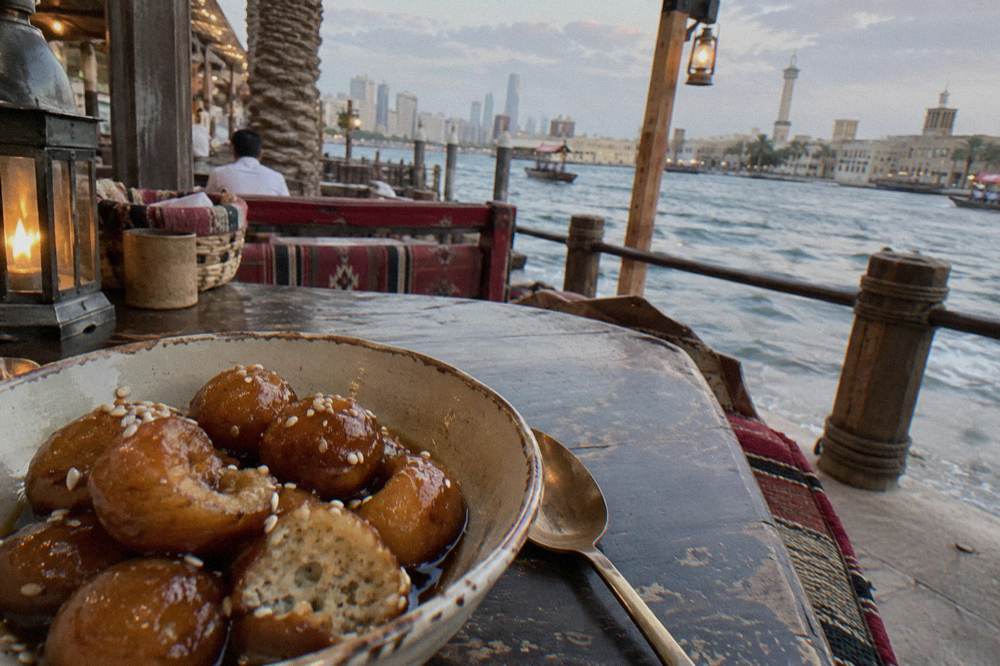
Luqaimat are small fried dough dumplings, crisp outside and soft inside, drizzled with date syrup and scattered with sesame seeds. Served warm and eaten immediately, they are the classic sweet ending to an Emirati meal and a beloved Ramadan treat. They taste like a lighter, stickier doughnut hole, with the date syrup doing the sweetening and the sesame adding a faint nutty crunch.
The one rule of luqaimat is freshness. Fried dumplings go soft within minutes, so a good batch is fried to order and eaten standing up, straight from the plate. That is why they are the classic Ramadan evening street food, appearing at iftar tables and at family gatherings when the day's fast breaks, and why stale luqaimat from a display case are a disappointment no visitor should judge the dish by.
Date syrup is the traditional topping, and it is a genuinely local sweetener: the UAE grows around 150 date varieties, with the fresh rutab harvest peaking from June to September and festival prices reported from around AED 15 per kilogram, while dried dates are available year-round. Luqaimat themselves are listed at around AED 10 to 18 per portion at Deira street stalls, as reported by 2026 dining sources.
For a sit-down version with the full dish set around it, the Flavors of Arabia Old Dubai & Souks & Authentic Emirati Cuisine experience runs 2 hours 30 minutes through the emirati-cultural-dining format, covering souks and a meal that includes the sweet course. Check the booking page for what the current menu includes.
The Rest Of The Emirati Table: Balaleet, Chebab, Thareed And Karak
Beyond the big three, the Emirati table runs on balaleet, sweet saffron and cardamom vermicelli topped with a thin omelette; chebab, saffron and cardamom pancakes served with cream cheese and date syrup; thareed, a meat and vegetable stew ladled over thin regag bread; and karak, spiced milky tea. Breakfast is where the cuisine is at its most distinctive.
Balaleet confuses first-timers in the best way: sweet noodles and egg on one plate should not work, and it does, which is the whole point. Chebab are its plainer sibling, turmeric and saffron pancakes that arrive with date syrup for dipping. Thareed, a stew poured over paper-thin regag bread so the broth soaks in, is the other Ramadan anchor alongside harees. Karak chai, the strong milky spiced tea that costs around AED 1 to 3 at local cafeterias as reported by 2026 cost guides, washes all of it down and pairs naturally with the breakfast dishes.
| Dish | What it is | When it is eaten |
|---|---|---|
| Machboos | Rice slow-cooked with meat, dried limes and spices | Gatherings, celebrations |
| Harees | Wheat and meat cooked 6 to 8 hours to a smooth porridge | Ramadan, family meals |
| Luqaimat | Fried dumplings with date syrup and sesame | Dessert, Ramadan evenings |
| Balaleet | Sweet saffron vermicelli with a thin omelette | Breakfast |
| Chebab | Saffron and cardamom pancakes with date syrup | Breakfast |
| Thareed | Meat and vegetable stew over regag bread | Ramadan, gatherings |
The breakfast side of the cuisine deserves its own morning, and the Arabic coffee, karak and dates guide covers the drinks culture that frames every one of these plates.
Where To Taste Emirati Food In Old Dubai
The two reliable routes are heritage restaurants in Deira and Bur Dubai, where local dining guides report mains like machboos at around AED 58 to 65 and harees at around AED 42, and cultural meal programs, where the Sheikh Mohammed Centre for Cultural Understanding hosts 1.5-hour meals with Emirati hosts, with reported prices of AED 130 for breakfast, AED 145 for lunch, AED 150 for tea time and AED 160 for dinner, booking required. Both put the dishes in their proper context.
The restaurant route is self-guided and cheap. Local House and Al Bait Al Qadeem in Deira serve machboos, harees, thareed and margoog in heritage settings, and Arabian Tea House in Al Fahidi serves balaleet at around AED 52 alongside Emirati breakfast boards, as reported by local dining guides. None of these needs a booking agent, just a map and an appetite.
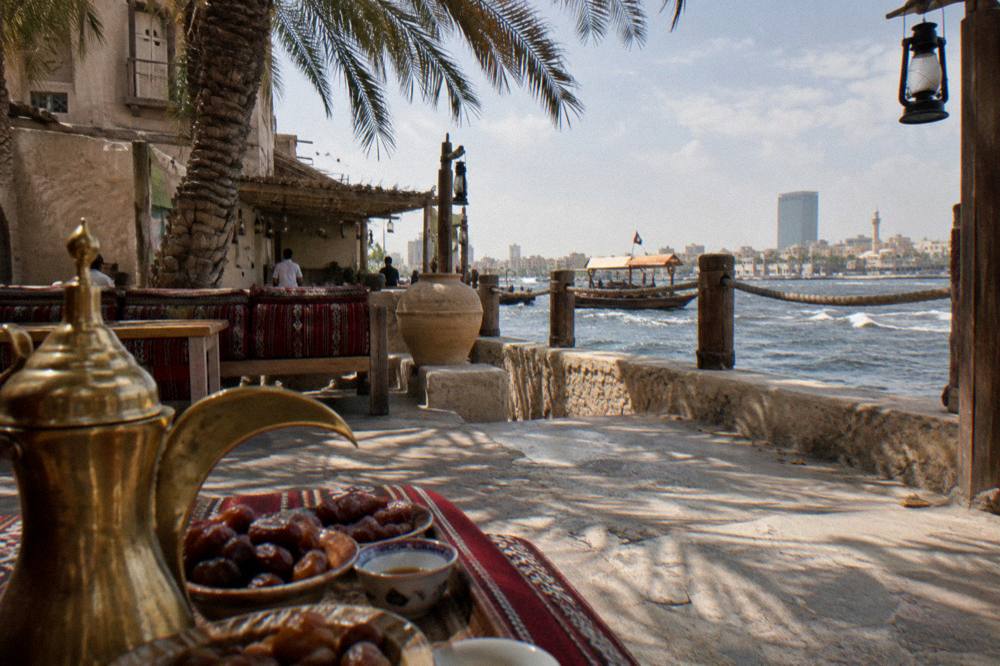
The cultural meal route adds the explanation layer. The SMCCU program in the Al Fahidi Historical Neighbourhood seats visitors with Emirati hosts for a meal and an open question session on customs, Islam and daily life, with Arabic coffee and dates served as part of the format. During Ramadan the dinner adjusts to an iftar timing. Prices above are as reported by the centre's own program page and local guides; confirm current rates when booking.
| Option | Format | Reported cost | Best for |
|---|---|---|---|
| Heritage restaurant, Deira | Individual mains | Around AED 42 to 65 per main | Independent eaters |
| Arabian Tea House, Al Fahidi | Breakfast dishes | Balaleet around AED 52 | A first Emirati breakfast |
| SMCCU cultural meal | Meal plus hosted Q&A | AED 130 to 160 per person | Context and conversation |
| Guided souk tour with dinner | Walk plus tastings and dinner | See the booking page | Combining souks with a meal |
How A Guided Emirati Tasting Works
A guided Emirati tasting pairs a short walk or talk with a seated meal of the dishes above, typically running 1 hour 30 minutes to 2.5 hours, with Arabic coffee and dates served as the opening and the sweet course closing, and with the host explaining each dish as it arrives. The format is conversation plus food, not a lecture.
The three Emirati cultural dining experiences compared here differ mainly in weight. The Dubai: Flavors of Arabia Souk Tour with Tastings & Dinner runs 2.5 hours and folds souk browsing into the meal, which suits a first visit to Old Dubai. The Authentic Emirati Cultural Meal and Talk is 1 hour 30 minutes and skips the walking, suiting a hot afternoon or a tight schedule. The Flavors of Arabia Old Dubai & Souks & Authentic Emirati Cuisine option runs 2 hours 30 minutes and sits between the two in structure.
What each one serves on the day depends on the operator's current menu, so check the booking page for the inclusions before deciding. The dishes that define the cuisine, machboos, harees and luqaimat, are the ones to look for in the description, and the tastings counted per stop are listed on each tour's own page. For the full cost picture across every format, the how much a food tour costs guide breaks down what drives the price.
One practical note on pace: these are the slowest food experiences in the city. A street food walk moves constantly, but an Emirati meal is a sit-down affair with a host, so book it for a moment when you want to stop moving. That is also why Dubai Food Tours groups these under cultural dining rather than street food: the meal is the main event.
Etiquette At An Emirati Table
The three habits that matter are accepting gahwa with the right hand, covering shoulders and knees in heritage districts, and eating from the shared platter with the right hand only, since Emirati dining is communal and the right hand is the traditional eating hand. None of it is enforced on tourists, but all of it is noticed.
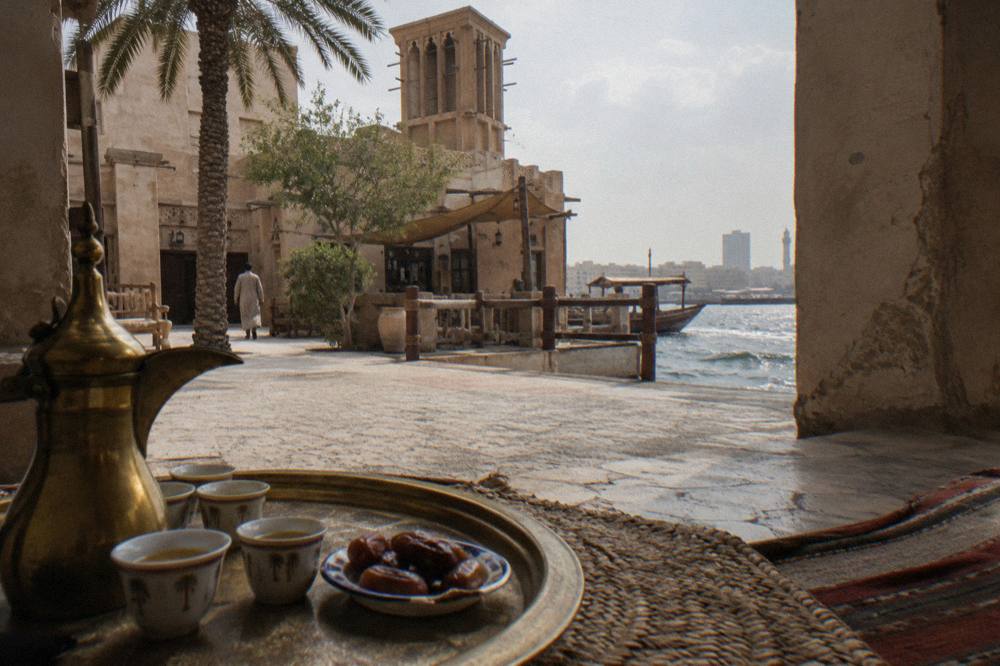
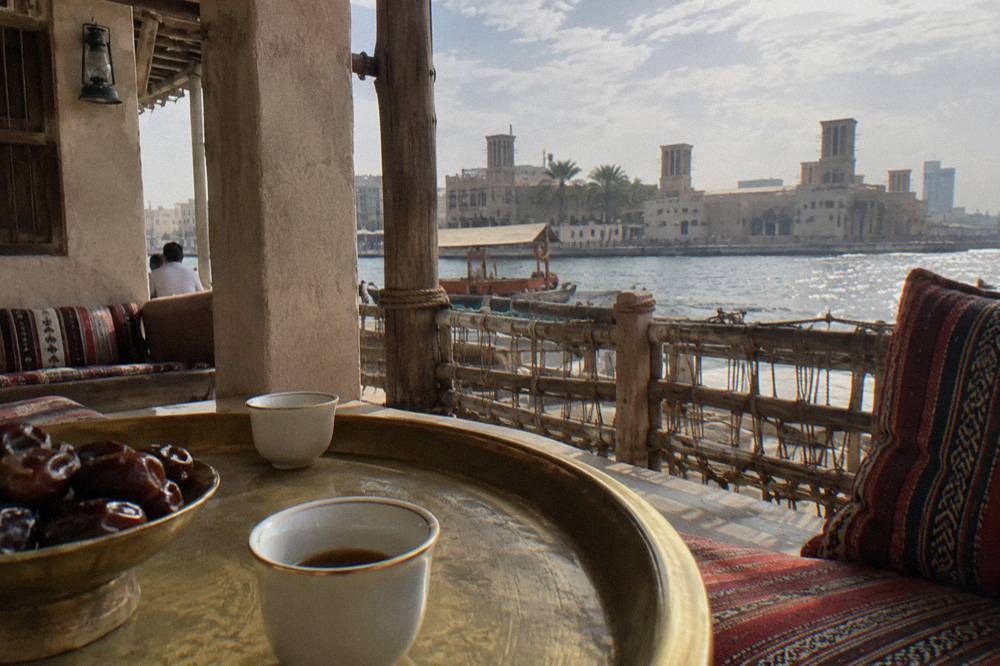
Gahwa, the lightly spiced, unsweetened cardamom coffee served in small finjan cups, opens the meal, always with dates. The cup is refilled until you signal, and the signal is a gentle side-to-side shake of the empty cup. Asking before photographing anyone, especially Emirati women and families, is basic courtesy in the souks and heritage areas, and privacy rules in the UAE back that expectation. Dress is covered shoulders and knees in the heritage districts, which is about respect rather than law.
| Situation | The habit | Why it matters |
|---|---|---|
| Gahwa served | Right hand, shake empty cup side to side when done | Signals no more refills |
| Shared machboos platter | Eat from the section nearest you, right hand | Communal dining convention |
| Souks and heritage areas | Shoulders and knees covered | Respect in traditional districts |
| Photographing people | Ask permission first | Privacy expectations and rules |
| Restaurant bill | Service charge often added, cash tip of 5 to 10 per cent is voluntary | Tips are appreciated, not owed |
Tipping follows the general Dubai pattern: restaurants commonly add a service charge of up to 10 per cent, and an extra 5 to 10 per cent cash tip for good service is common but voluntary. For guided meals, the same logic applies to the host.
What Emirati Food Costs Compared To Eating Independently
Eating the dishes independently at reported Deira prices costs around AED 42 to 65 for a main plus AED 10 to 18 for luqaimat, while a hosted cultural meal runs a reported AED 130 to 160 per person and a guided tour with dinner is priced on the booking page, so the premium buys context, counted tastings and a host rather than more food. Neither route is wrong.
The independent route suits confident eaters. A casual neighborhood meal in Old Dubai runs a reported 15 to 40 AED per person at cafeterias, and heritage restaurant mains push that up but stay modest. Add the fact that all meat in Dubai restaurants is halal, and that restaurants commonly add a 10 per cent service charge plus 5 per cent VAT to the bill, and a self-guided Emirati dinner remains one of the cheapest full meals in the city.
The guided route suits first-timers who want the dishes decoded. The price of each experience is on its booking page, and the difference is real: a host who explains why the loomi is in the machboos, why the harees took all day, and why the gahwa cup is small changes the meal from a plate of food into a short course in local culture. That is the gap a guided tasting fills, and for many visitors it is worth the premium exactly once, on the first day in the city.
| Item | Reported cost | Notes |
|---|---|---|
| Karak chai at a cafeteria | AED 1 to 3 | Cafe versions cost more |
| Luqaimat portion | AED 10 to 18 | Fried to order |
| Harees main, Deira heritage restaurant | Around AED 42 | Reported by local guides |
| Machboos main, Deira heritage restaurant | AED 58 to 65 | Lamb or fish versions |
| Casual neighborhood meal | AED 15 to 40 per person | Biryani and mezze sets |
| SMCCU cultural meal | AED 130 to 160 per person | Booking required |
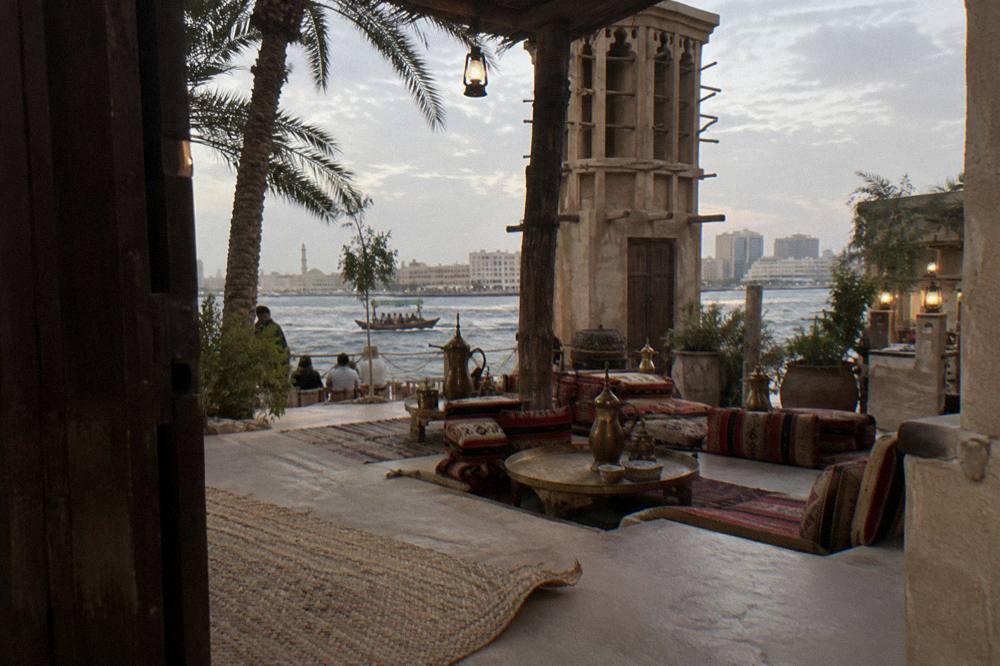
The three experiences below are the ones that put the full dish set, from gahwa to luqaimat, in front of you with someone to explain each course.
Common Questions About Traditional Emirati Food
What Is The National Dish Of The UAE?
Machboos, long-grain rice slow-cooked with lamb, chicken or fish, dried limes, baharat spices, cardamom, saffron and cinnamon, served family-style on a shared platter.
What Does Harees Taste Like?
Mild and comforting: wheat and meat simmered for six to eight hours until smooth, finished with ghee. It is seasoned at the table, and its appeal is the soft texture rather than strong spice.
What Are Luqaimat?
Small fried dough dumplings, crisp outside and soft inside, drizzled with date syrup and sesame seeds. They are served warm and eaten immediately, and are a classic Ramadan dessert.
Where Can I Try Emirati Food In Dubai?
Heritage restaurants in Deira serve machboos and harees at reported mains prices, Arabian Tea House in Al Fahidi serves Emirati breakfast dishes, and cultural meal programs in the Al Fahidi Historical Neighbourhood offer hosted meals with reported prices of AED 130 to 160 per person.
Is Emirati Food Spicy?
No. It is spiced rather than spicy, built on cardamom, saffron, dried limes and baharat. The heat level is low, and the defining flavors are warm and sour rather than hot.
Can I Eat Emirati Food During Ramadan?
Yes. Non-Muslims are not required to fast, and restaurants operate normally. Cultural meal programs adjust dinner to an iftar format during Ramadan, and discretion in shared public spaces during daylight hours is the local etiquette.