Things To Do In Dubai For Food Lovers
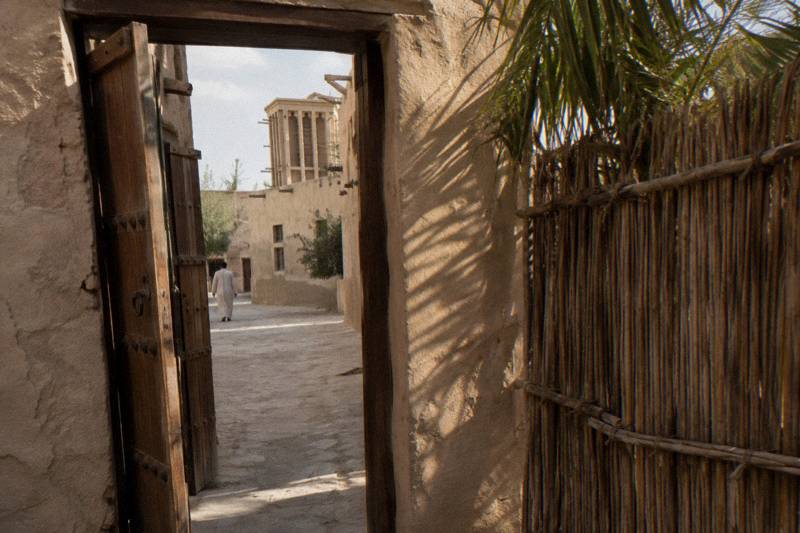
Dubai rewards people who plan their days around eating. The city's most interesting food sits in Old Dubai, where souks, Creek crossings and heritage lanes hold the flavours the skyline districts traded away.
Short answer
The best food-led things to do in Dubai cluster in Old Dubai: walk the Al Fahidi Historical Neighbourhood, browse the Textile, Spice and Gold Souks, cross the Creek by abra, and eat shawarma, falafel, karak and luqaimat along the way. A guided tasting walk from the tours compared here adds counted tastings and a local guide.
What Are The Best Things To Do In Dubai For Food Lovers?
The best food-led things to do in Dubai sit in Old Dubai, not in the mall-and-skyscraper districts. Walk Al Fahidi Historical Neighbourhood, browse the Bur Dubai Textile Souk, cross the Creek by abra to the Deira Spice and Gold Souks, and eat shawarma, falafel, karak chai and luqaimat between stops. A guided tasting walk stitches all of it into one route with counted tastings.
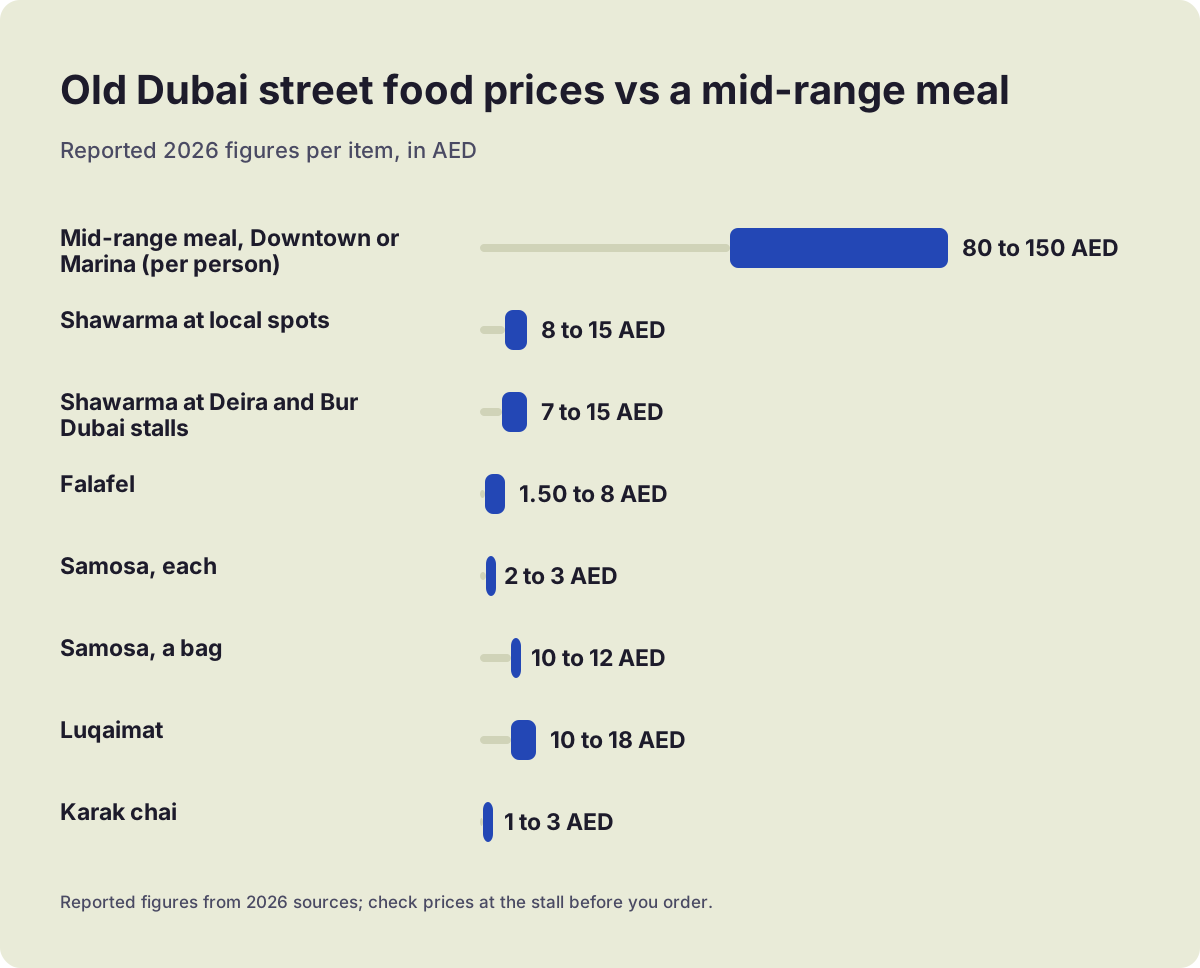
Dubai has two food cities living side by side. One is the polished restaurant scene of Downtown and the Marina, where a mid-range meal runs roughly 80 to 150 AED per person as of 2026 data, mains often 40 to 80 AED. The other is Old Dubai, where the same budget buys a full day of eating: a shawarma reported at 8 to 15 AED at local spots, karak chai at 1 to 3 AED at neighbourhood cafeterias, and a bag of samosas for around 10 to 12 AED.
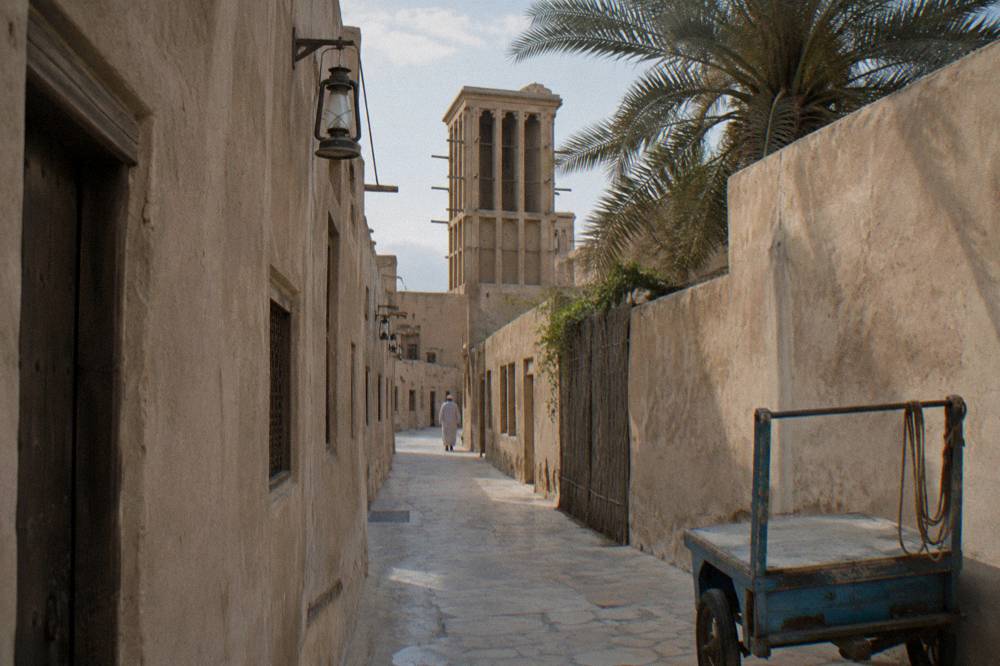
For a visitor whose day is planned around food, the second city is the destination. The lanes of Bur Dubai and Deira hold the Iranian, Afghan, Indian, Pakistani and Lebanese cafeterias that feed the people who work in the souks, plus a small set of heritage restaurants serving Emirati dishes that are genuinely hard to find elsewhere in the city. The Dubai Culture authority keeps the Al Fahidi Historical Neighbourhood open to walkers, with reported hours of 7am to 8pm daily and free public access to its lanes and courtyards.
The question is not whether there is enough to do, it is how to sequence it. This page lays out the food-led activities in the order that makes sense for a single day or a two-day stay, with the costs, timings and transport facts you need to plan it, and a look at where a guided tasting walk earns its place. For a dish-by-dish companion to the snacks themselves, the Dubai street food guide covers what to try and where.
Old Dubai On Foot: Souks, Creek And Street Food
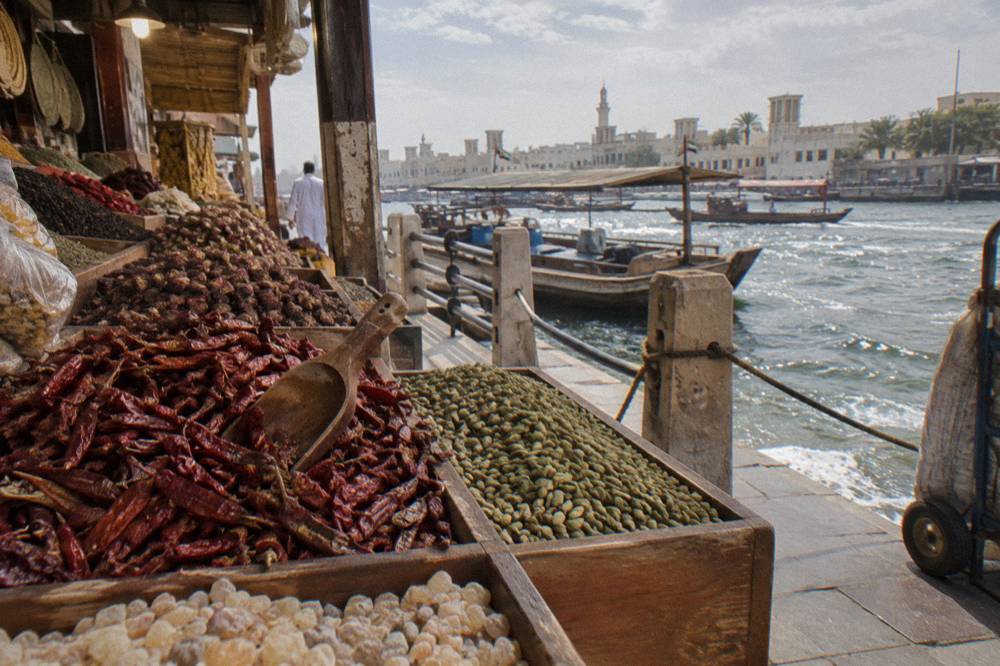
A food-lover's walk of Old Dubai runs from Al Seef or Al Fahidi through the Textile Souk, over the Creek by abra, and into the Deira Spice and Gold Souks, eating at the cafeterias and stalls between stops. The whole route is walkable, free to enter, and reported open daily, with souk shops keeping varied hours. Before you go, the guide to whether the Gold Souk is worth the hype explains how bargaining works there and how to pair it with Deira's food streets.
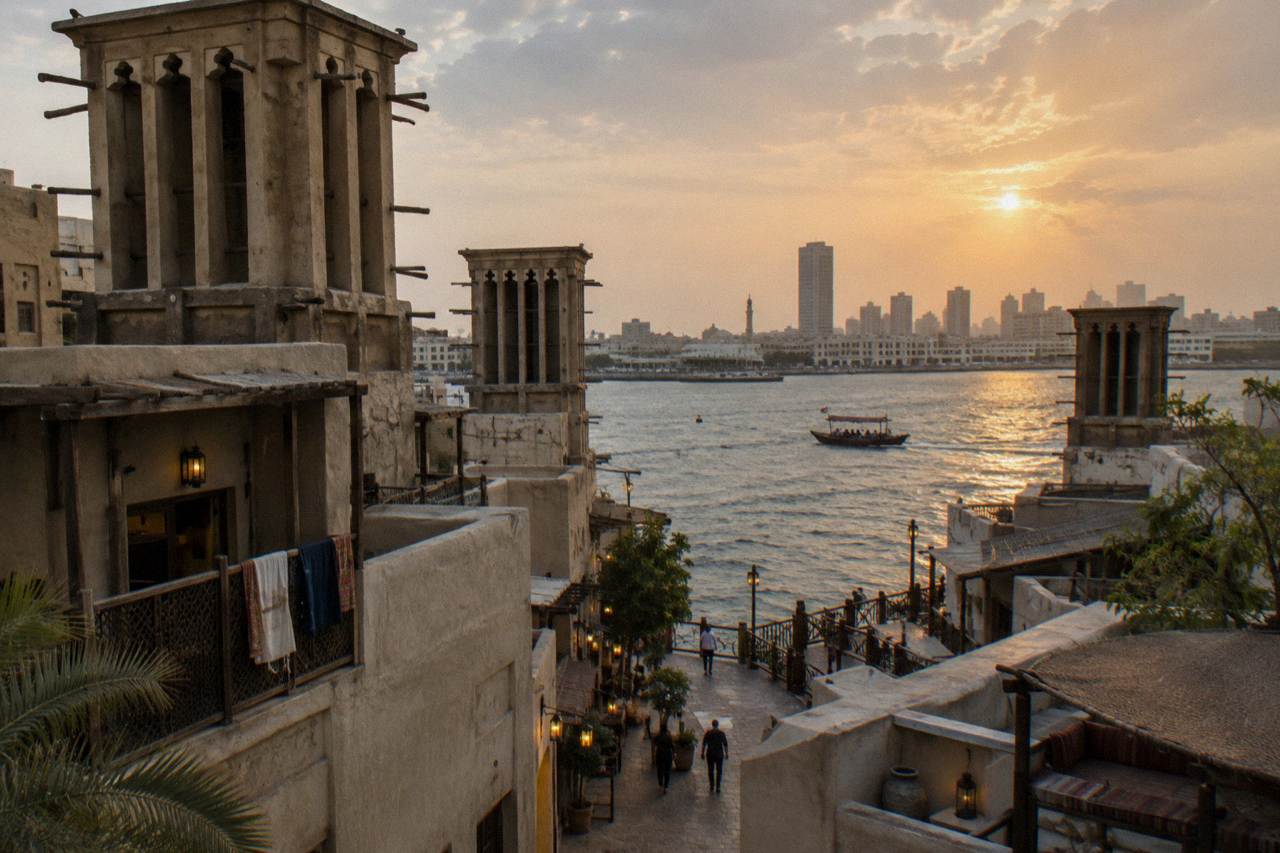
The classic route starts on the Bur Dubai side of the Creek. Al Seef is a roughly 1.8 km waterfront promenade, free to enter and reported open daily, split between a heritage quarter of coral-stone facades and a modern dining stretch. From there the walk reaches the Al Fahidi Historical Neighbourhood, a district of wind tower houses and narrow lanes that Dubai Culture reports as open 7am to 8pm, Monday to Sunday. The Textile Souk sits on the district's edge; vendor hours vary, with typical reported hours around 9am to 8pm and some Friday afternoon closures. Once you've eaten your way through the souks, the guide to Old Dubai's non-food attractions covers the museums, Creek crossings, and heritage lanes that fill out the rest of a day in this district.
The Creek crossing is the hinge of the day. The Roads and Transport Authority operates traditional commuter abras on several Creek routes, including CR1 between Bur Dubai and Deira Old Souq, CR2 between Dubai Old Souq and Al Sabkha, and CR5 between Al Fahidi and Deira Old Souq, per the RTA marine page. The crossing takes minutes and lands you in Deira, where the Spice Souk and Gold Souk sit a short walk apart. Visit Dubai reports most Gold Souk shops open around 10am to 10pm, while Spice Souk traders generally open earlier than 8am and stay past 9pm, with daytime Friday closures and midday breaks common.
Eating happens along the way, not after it. The Deira and Bur Dubai stalls and cafeterias offer shawarma, falafel, samosa, luqaimat and karak; recent sources report shawarma at 7 to 15 AED, falafel at 1.50 to 8 AED, samosa at 2 to 3 AED each or 10 to 12 AED a bag, and luqaimat at 10 to 18 AED. These are reported figures from 2026 sources; check prices at the stall before you order.
The route in sequence, with the reported hours for each stop:
| Stop | Side of the Creek | What a food lover does there | Reported hours |
|---|---|---|---|
| Al Seef promenade | Bur Dubai | Waterfront walk, heritage quarter, dining stretch | Free entry, open daily, about 1.8 km |
| Al Fahidi Historical Neighbourhood | Bur Dubai | Wind tower lanes, galleries, courtyards, coffee stops | 7am to 8pm, Monday to Sunday |
| Textile Souk | Bur Dubai | Fabric browsing between heritage lanes | Vendor hours vary, typically about 9am to 8pm |
| Abra crossing | Creek | Traditional boat ride between the two halves | RTA routes CR1, CR2, CR5 and others |
| Spice Souk | Deira | Spice, dried lime and incense browsing, snack stalls | Earlier than 8am to past 9pm, Friday daytime closures |
| Gold Souk | Deira | Window shopping, nearby cafeterias | Most shops about 10am to 10pm |
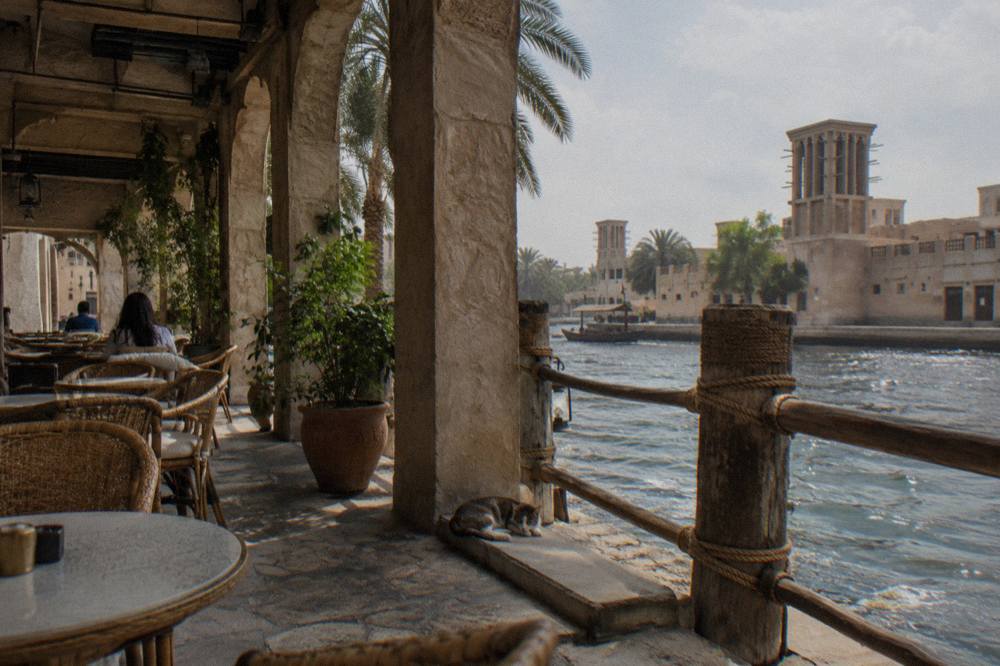
If you want the same route with the eating organised for you, the Aladdin souks and Creek walk covers Old Dubai, the souks and the Creek with tastings built in, over about 3 hours. Two other options from the tours compared here cover similar ground with different emphases:
The three walks above differ mainly in length and pace. The Aladdin tour runs about 3 hours and threads souks, Creek and Old Dubai with tastings; the authentic souks and local boat tour is a shorter 2-hour format with a boat element; the Old Town street food walk runs about 3 hours with a local guide focused on the food stops. Prices for each are on the operator's live listing, since several of these walks are priced per person with from-prices that vary by date and group size.
For a fuller version of the same route, the Old Town souks and street food walk with abra ride runs 3 to 4 hours and pairs the guided route with the Creek crossing. Its listing describes tastings of shawarma, falafel, karak, samosa, rogag and luqaimat, the exact snack set the stalls above sell. Check the booking page for the current price, the meeting point and what the tastings include on your date.
How A Guided Tasting Walk Fits Into A Dubai Day
A guided tasting walk fits best as the anchor of a morning or late afternoon, since it bundles the route, the eating and the history into 2 to 4 hours, leaving the rest of the day for the souks, the Creek waterfront or a sit-down Emirati meal. Most walks start near a metro station, so no car is needed.
The case for booking one is sequencing. Walking Old Dubai alone works, but you spend attention on navigation and stall selection instead of on the food. A guided walk hands you a tested route, counted tastings and a guide who can answer questions about dishes, and the walks compared here are short enough, 2 to 4 hours, that they leave most of the day free.
Timing matters more than most first-time visitors expect. December through February brings the lowest average daytime highs, 24 to 26 °C per NCM-derived climate normals for Dubai International Airport, which makes midday walking comfortable. Summer months flip the logic: a guided walk with shaded stops and a set route beats improvising in 40 °C heat. Either way, the listed start times on each booking page are the ones to plan around, since operators set them for the weather and the souk hours rather than for convenience.
Meeting points seen on the walks compared here are all transit-friendly: Al Khayma Heritage Restaurant in Al Fahidi, Al Ras Metro Station exit 2 in Deira, the Al Seef Heritage Hotel entrance, and Sharaf DG Metro exit 4. The metro's Green Line stations, Union, Baniyas Square, Gold Souq, Al Ras and Sharaf DG, put you within walking distance of every part of the route; the RTA timetable lists metro hours of 5am to midnight Monday to Thursday and Saturday, 5am to 1am on Friday, and 8am to midnight on Sunday.
One practical note on dietary needs: all meat sold in Dubai's restaurants and markets is halal, and pork appears only in designated licensed sections. If you are vegetarian, vegan or gluten-free, the listings do not all say so; message the operator before booking and they will tell you what the tasting set can accommodate.
Emirati Food And Cultural Dining
Emirati food is the hardest thing to find by accident in Dubai, so it deserves a planned stop. Machboos, harees, balaleet and luqaimat appear at a handful of Old Dubai heritage restaurants, and cultural centres in Al Fahidi sit visitors down with Emirati hosts for a meal and an open question session.
The national dish, machboos, is long-grain rice slow-cooked with lamb, chicken or fish, dried limes, baharat spices, cardamom, saffron and cinnamon, served family-style. Harees is wheat and meat cooked for 6 to 8 hours until it turns porridge-smooth, finished with ghee. Luqaimat are crisp fried dough dumplings drizzled with date syrup and sesame, eaten warm. Balaleet, sweet saffron vermicelli under a thin omelette, and chebab, saffron pancakes served with cream cheese and date syrup, anchor the Emirati breakfast table.
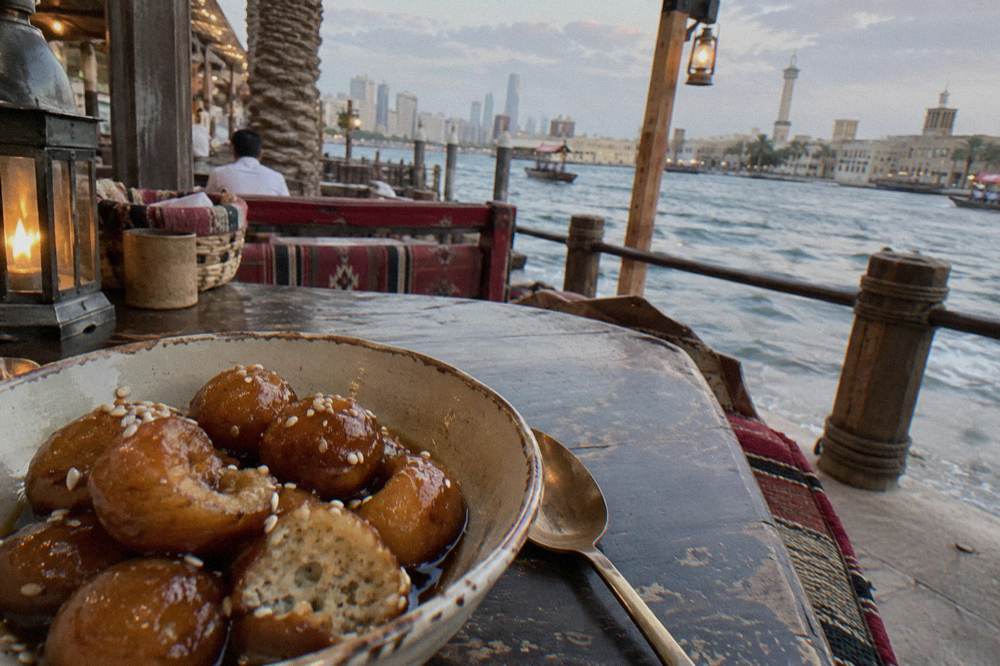
Two ways to eat this food stand out. First, the heritage restaurants: sources report Emirati mains in Old Dubai at roughly 58 to 65 AED for machboos, around 42 AED for harees, and 55 to 58 AED for thareed and margoog, with luqaimat as dessert. Second, a cultural meal: the Sheikh Mohammed Centre for Cultural Understanding in Al Fahidi runs 1.5-hour meals with Emirati hosts, Arabic coffee and dates, and an open question session on customs and daily life, with reported prices of AED 130 for breakfast, AED 145 for lunch, AED 150 for tea time and AED 160 for dinner, booking required, per its programme page at cultures.ae.
| Emirati dish | What it is | Reported Old Dubai price (AED) |
|---|---|---|
| Machboos | Rice slow-cooked with meat, dried limes and baharat spices | About 58 to 65 for lamb or fish |
| Harees | Wheat and meat cooked 6 to 8 hours to a smooth porridge | About 42 |
| Thareed and margoog | Meat and vegetable stews over thin bread | About 55 to 58 |
| Balaleet | Sweet saffron vermicelli with a thin omelette, a breakfast dish | Reported around 52 at an Al Fahidi cafe |
| Luqaimat | Fried dough dumplings with date syrup and sesame | 10 to 18 at dessert stalls |
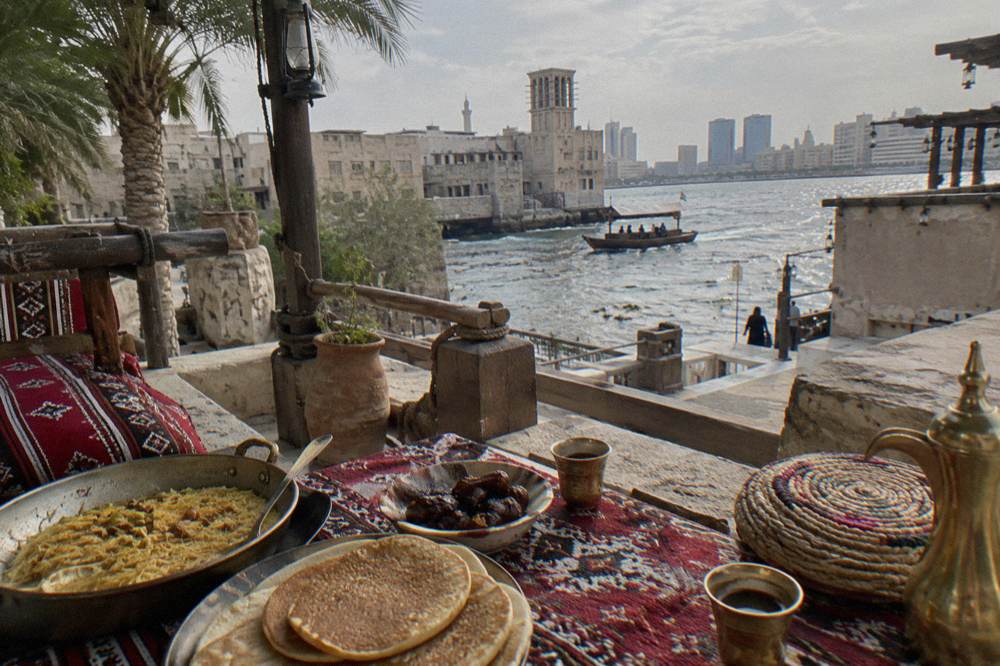
Gahwa etiquette is worth knowing before you sit down. Arabic coffee is served unsweetened in small finjan cups, always taken with the right hand; a gentle side-to-side shake of the empty cup signals you are finished. Dates accompany the coffee, and the UAE's fresh date harvest runs primarily through summer, with around 150 varieties reported and fresh dates at festivals and markets from about 15 AED per kilo. For a deeper run through these dishes and how they are cooked, the Emirati food guide is the companion page.
A guided walk can cover this too. The Flavors of Arabia souk tour with tastings and dinner is a 2.5-hour walk in the emirati-cultural-dining family that combines souk browsing with tastings and a dinner, per its listing. For a shorter cultural meal with a talk, the authentic Emirati cultural meal and talk in Old Dubai runs 1 hour 30 minutes. Check each booking page for what the meal includes on your date. If you would rather wander and taste your way through the older districts on your own schedule, the guide to a Dubai street food tour and its real costs shows exactly what such a walk serves and how it compares to dining independently.
What Street Food And Snacks Cost In Old Dubai
Street food in Old Dubai is cheap by any Dubai standard: reported 2026 prices put shawarma at 7 to 15 AED, falafel at 1.50 to 8 AED, karak chai at 1 to 3 AED, samosa at 2 to 3 AED each, and luqaimat at 10 to 18 AED. A cafeteria meal of biryani or mezze runs about 15 to 40 AED per person, against 80 to 150 AED mid-range. For the cheapest bite of all, the guide to ordering shawarma in Dubai covers fillings, sauces, and where stands beat cafes.
These figures come from 2026 price sources for Deira and Bur Dubai stalls and cafeterias, and they are reported prices, so treat them as planning ranges and check the board at the stall. The gap between street eating and restaurant eating in Dubai is wide enough to shape a whole trip: the same money that buys one mid-range dinner buys a full day of cafeteria meals and snacks.
| Item | Reported price (AED) | Where you find it |
|---|---|---|
| Shawarma | 7 to 15 at local spots, 20 to 40 at tourist spots | Cafeterias and street stalls, Deira and Bur Dubai |
| Falafel wrap | 1.50 to 8 | Levantine cafeterias, example 13 AED |
| Karak chai | 1 to 3 at local cafeterias, higher in cafes | Tea stalls, around 14 AED in cafe versions |
| Samosa or samboosa | 2 to 3 each, 10 to 12 for a bag of about 5 | Deira snack stalls |
| Luqaimat | 10 to 18 | Dessert stalls, served warm |
| Cafeteria meal (biryani, mezze) | 15 to 40 per person | Neighbourhood cafeterias |
| Mid-range restaurant meal | 80 to 150 per person, mains often 40 to 80 | Downtown, Marina, hotel districts |
On restaurant bills, expect a 5 per cent VAT, and note that a service charge of up to 10 per cent, where a venue adds one, is discretionary and venue-retained rather than a government fee. Tipping is personal preference; Visit Dubai's guidance suggests 10 to 15 per cent at restaurants, and checking with the waiter that a card tip reaches the staff. Bottled water runs about 1 to 2 AED per litre in supermarket multipacks and 6 to 12 AED per bottle in restaurants, as reported.
A guided walk sits between these worlds. One reported example of a guided Dubai food tour is priced at 435 AED per person for 3.5 hours including sampled food and water, per its operator page; the walks compared here carry their own prices on their booking pages, often with from-prices that vary by date and group size. What you are buying is not the food alone, it is the counted tastings, the route and the guide.
Getting Around: Metro, Abra And Timing
Old Dubai needs no car. The Green Line serves the whole route, with Sharaf DG for Al Fahidi, Al Ras for Deira's souks and Union as the Red and Green interchange; the RTA also runs traditional Creek abras between Bur Dubai and Deira, including the CR1 and CR5 routes. Metro runs from 5am, and taxis start at a reported AED 5.
The metro is the spine of a food day. Sharaf DG station serves the Al Fahidi area, Al Ras puts you at the edge of the Spice and Gold Souks, and Baniyas Square and Gold Souq stations sit nearby on the same line. The RTA timetable lists all lines running 5am to midnight Monday to Thursday and on Saturday, 5am to 1am on Friday, and 8am to midnight on Sunday. A reloadable Nol card, at AED 25 for an anonymous Silver or Gold card including initial credit per the RTA, covers metro, tram and buses.
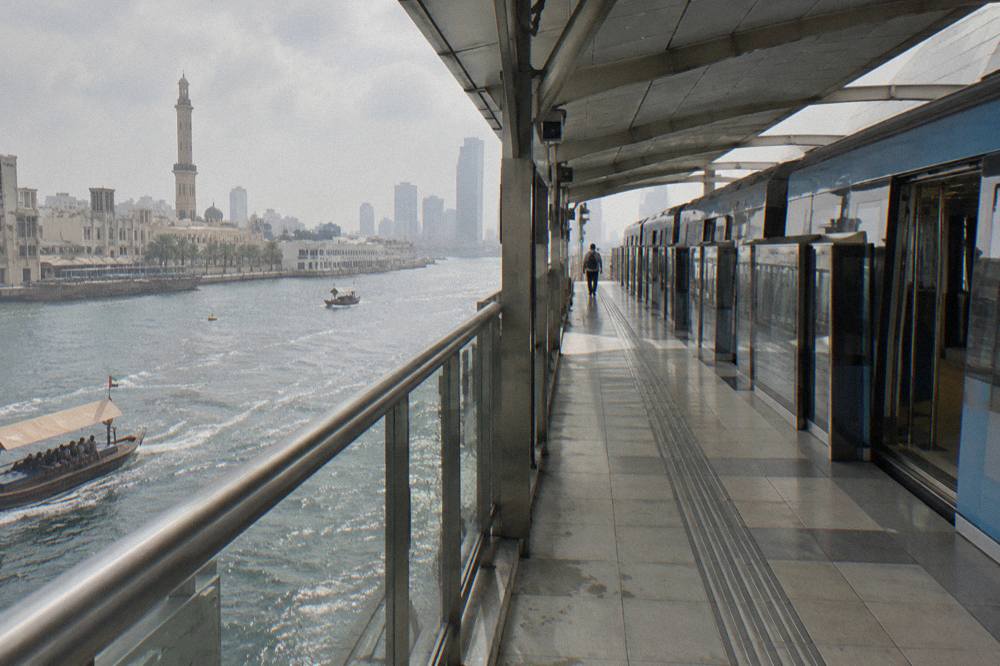
The abra is the crossing, and it is part of the pleasure of the route rather than just transport. The RTA operates traditional commuter abras on routes including CR1 from Bur Dubai to Deira Old Souq, CR2 from Dubai Old Souq to Al Sabkha, CR5 from Al Fahidi to Deira Old Souq, and CR6 from Al Seef to Baniyas, per the authority's marine page at rta.ae. Timings are as the RTA page states them; check it before you plan a crossing, since routes and schedules can adjust.
| Transport | What it serves | Reported fare or cost |
|---|---|---|
| Green Line metro | Sharaf DG for Al Fahidi, Al Ras for the Deira souks, Union interchange | Nol card AED 25 including initial credit |
| Metro hours | All lines | 5am to midnight, Friday to 1am, Sunday from 8am |
| Traditional Creek abras | CR1, CR2, CR5, CR6 routes between Bur Dubai and Deira | Fare as stated on the RTA marine page |
| Taxi road pickup | Citywide | Starting fare AED 5, AED 5.5 from 10pm to 6am |
| On foot | Al Fahidi, Al Seef, Textile Souk, abra stations, Deira souks | Free, no 2026 closures reported |
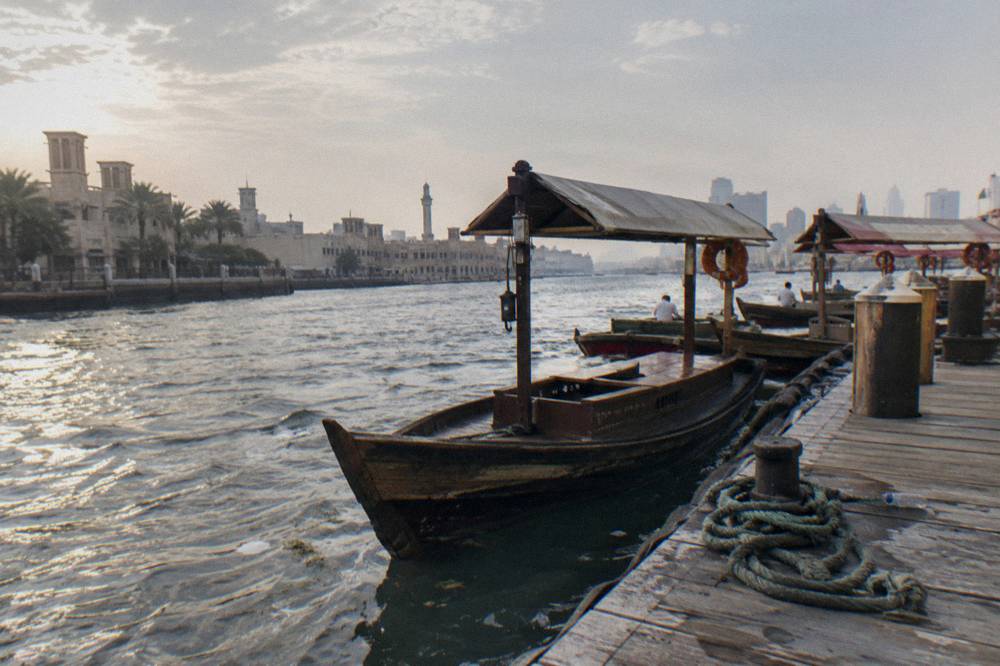
Walking distances between the key points are short; the standard connections between Al Fahidi, Al Seef, the Textile Souk, the abra stations and the Deira souks are all on foot, and no 2026 route closures are reported for pedestrian access. The one construction note worth knowing is the Dubai Creek Lights project, a Dubai Municipality scheme along roughly 8 km of the Creek including the Gold Souq promenade, Bur Dubai Souq and Al Seef, scheduled for completion in Q1 2027; it is a lighting and promenade upgrade rather than a closure.
Taxis start at a reported AED 5 between 6am and 10pm and AED 5.5 overnight, per the RTA's fare page. For a food day, though, the metro plus abra combination is faster than road traffic across the Creek at peak times, and it drops you exactly where the eating happens. The metro and abra guide to Old Dubai covers the same network in more detail.
Planning Your Food Day: Weather, Etiquette And Timing
Plan around three things: the season, the souk rhythm and modest dress. December to February brings 24 to 26 °C average daytime highs, the best walking weather of the year; souk shops keep varied hours with Friday daytime closures in places; and shoulders and knees should be covered in heritage areas, not as law but as respect in traditional districts.
Weather first. NCM-derived climate normals for Dubai International Airport put December at a mean daily maximum of 26.5 °C and minimum of 17.3 °C, January at 24.4 °C and 15.3 °C, and February at 26.1 °C and 16.4 °C. Winter sunrise and sunset sit around 6:57am and 5:32pm in mid-December, so a morning walk gets cool, bright light and an afternoon walk gets golden light over the Creek. Summer inverts everything: a guided walk with a set route and shaded stops is the saner option.
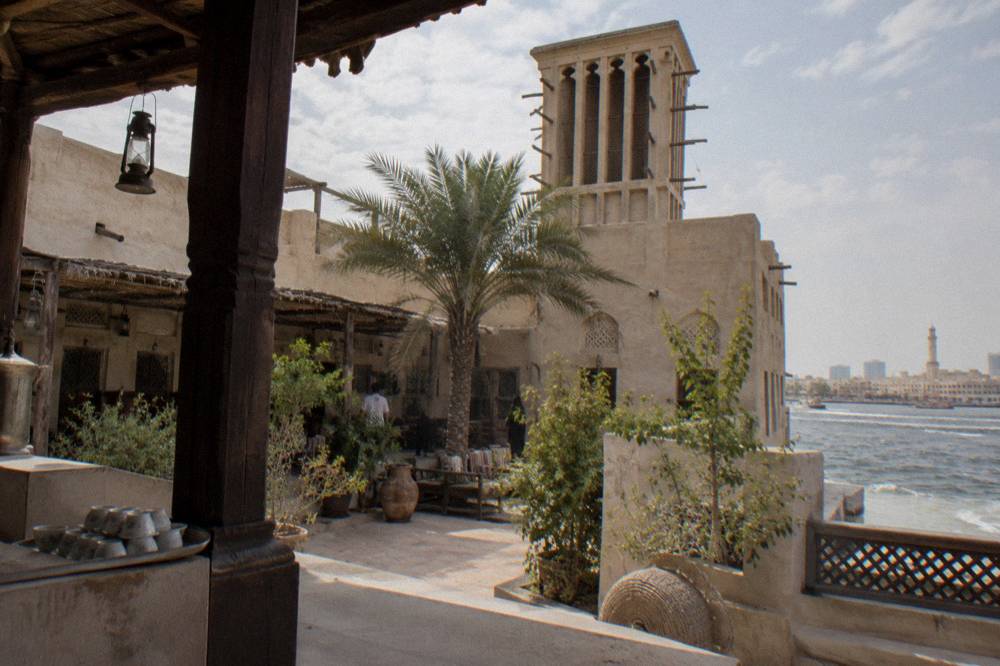
Etiquette second. There is no single dress-code law for tourists, but covering shoulders and knees is the reported expectation in heritage areas, souks and malls. Photography etiquette matters in the souks: ask permission before photographing individuals, particularly Emirati women and families. Alcohol is not part of this itinerary; visitors over 21 may drink only at licensed venues, never in public places, and the Old Dubai food walks serve no alcohol unless their listing says otherwise.
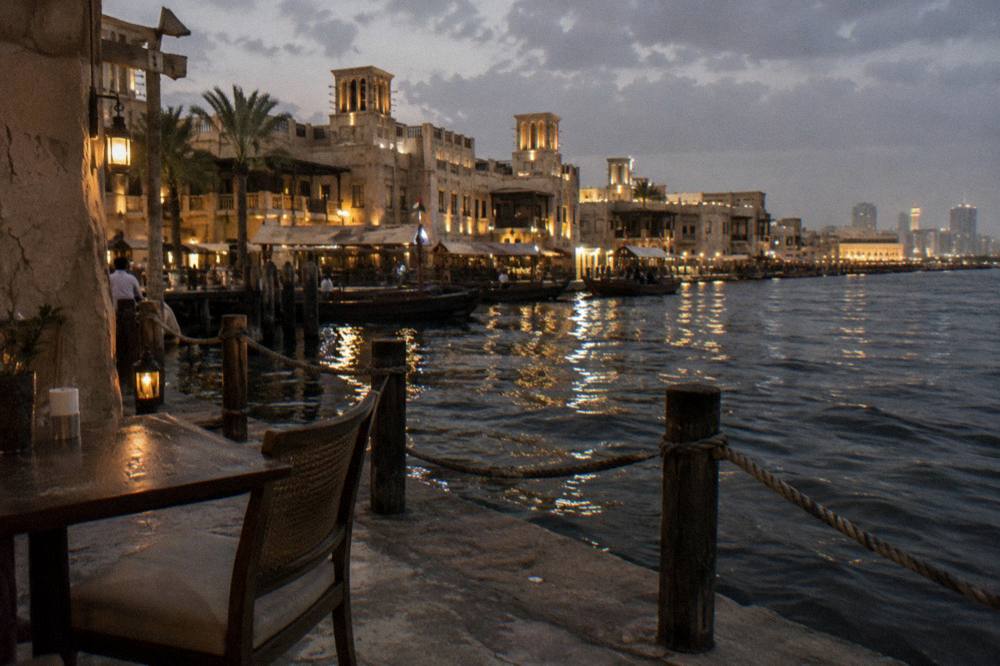
Souk rhythm third. The Spice Souk's traders generally open earlier than 8am and stay past 9pm, closed during the daytime on Fridays, with many taking midday breaks; the Gold Souk's shops mostly open around 10am to 10pm; the Textile Souk keeps vendor-set hours, typically around 9am to 8pm. Individual shops vary and no single official timetable exists, so treat these as reported patterns and check on the day.
If your food day runs into the evening, a night-format walk extends it. The Dubai food tour covering 4 cuisines, souks and street bites runs 3 to 4 hours and is built as an evening-friendly combination of cuisines and souk browsing, per its listing; check the booking page for start times and what the tastings include.
For a food day that ends at altitude, the VIP food walk with 7 tastings and Burj Khalifa access pairs a 3-hour tasting route with entry to the Burj Khalifa, moving the day from Old Dubai to the skyline in one booking. It is the priciest format among the walks compared here; the price is on the operator's listing.
Whichever shape the day takes, the underlying logic holds: eat the old city on foot, use the metro and the abra instead of a car, and let one guided walk carry the planning load for the part of the day where eating well matters most. That is the honest version of the Dubai Food Tours pitch, and it is why the souks, not the malls, are where a food lover's Dubai day should start.
Common Questions About Food Things To Do In Dubai
What Are The Best Things To Do In Dubai For Food Lovers?
Walk Old Dubai: Al Seef, Al Fahidi Historical Neighbourhood, the Textile Souk, an abra crossing of the Creek, then the Deira Spice and Gold Souks, eating shawarma, falafel, karak and luqaimat along the way. Add one Emirati meal, either at a heritage restaurant or a cultural centre, and consider a guided tasting walk to organise the eating.
How Much Does Street Food Cost In Old Dubai?
Reported 2026 prices put shawarma at 7 to 15 AED at local spots, falafel at 1.50 to 8 AED, karak chai at 1 to 3 AED, samosa at 2 to 3 AED each, and luqaimat at 10 to 18 AED. A cafeteria meal of biryani or mezze runs about 15 to 40 AED per person. Check the stall before ordering, as prices vary.
Do I Need A Guided Tour To Eat Well In Old Dubai?
No, the district is walkable and free to enter. A guided walk adds a tested route, counted tastings and a guide who explains the dishes, which matters if your time is short or you want the Emirati and cafeteria food decoded rather than discovered by trial. The walks compared here run 2 to 4 hours.
What Emirati Dishes Should I Try In Dubai?
Machboos, the rice dish slow-cooked with meat, dried limes and spices; harees, wheat and meat cooked to a smooth porridge; balaleet, sweet saffron vermicelli with egg, eaten at breakfast; and luqaimat, fried dough dumplings with date syrup and sesame. Cultural centres and heritage restaurants in Old Dubai serve them.
When Is The Best Time Of Year For A Dubai Food Walk?
December to February, when NCM-derived normals put average daytime highs at 24 to 26 °C and walking is comfortable at any hour. In summer, choose early morning or evening formats and prefer guided walks with shaded stops.
How Do I Get Around Old Dubai Without A Car?
The Green Line metro serves the whole route, with Sharaf DG for Al Fahidi and Al Ras for the Deira souks, and the RTA's traditional Creek abras cross between Bur Dubai and Deira on routes including CR1 and CR5. A Nol card at AED 25 including initial credit covers metro, tram and buses.