Dubai Street Food Tour: What You Eat And What It Costs
A guided tasting walk through Bur Dubai and Deira is the cheapest way to understand what the city actually eats. Here is what is on the plate, what the walk costs, and how it differs from a restaurant crawl.
Short answer
A guided street food walk in Old Dubai typically runs 2 to 4 hours and serves tastings of shawarma, falafel, karak chai, samosas, regag bread and luqaimat, plus an abra crossing of the Creek. Reported standalone prices for the same items run from around 1 AED for karak to 15 AED for a shawarma, while tour prices are stated on each listing.
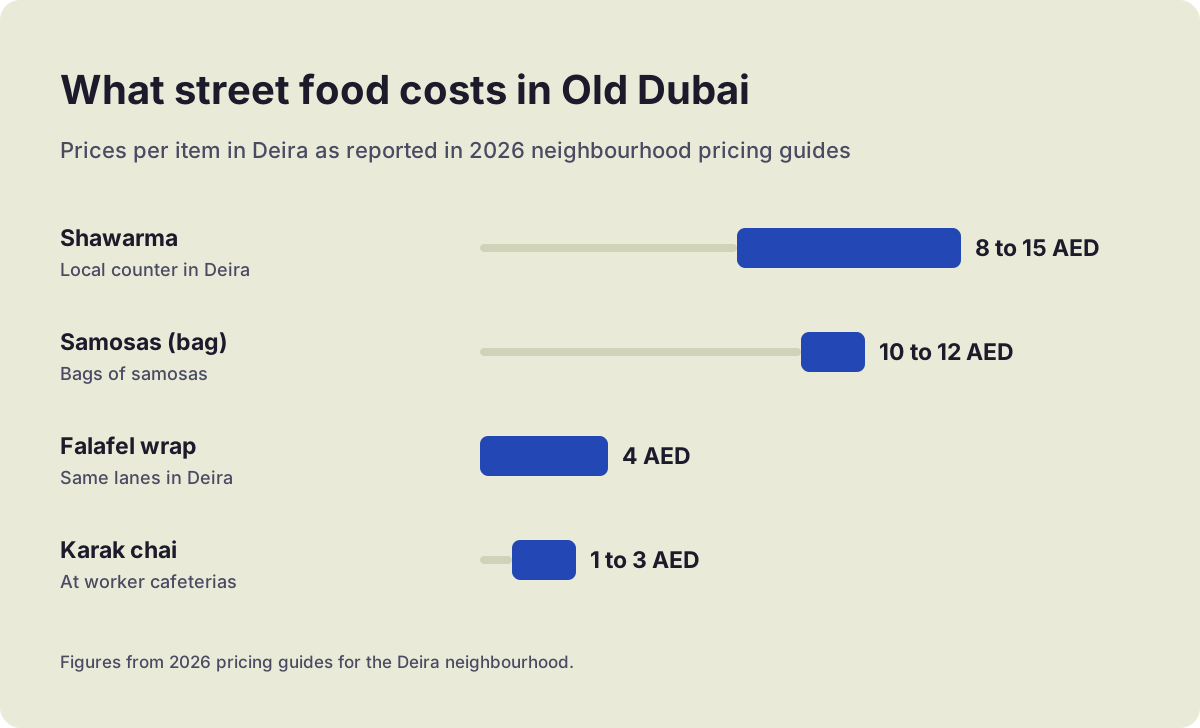
A shawarma at a local counter in Deira runs a reported 8 to 15 AED. The same walk of lanes also holds falafel wraps from 4 AED, karak chai from 1 AED and bags of samosas at 10 to 12 AED, all figures reported in 2026 pricing guides for the neighbourhood. That is the raw economics behind every guided tasting walk in Old Dubai: the food itself is cheap, and what a paid walk adds is route, context and someone who knows which counter to stop at. This guide lays out what a Dubai street food tour actually puts in front of you, what the guided versions cost and include, and how the format differs from simply eating your way through the souks on your own. If shawarma is the item you most want to get right, the guide to ordering shawarma in Dubai covers chicken versus lamb, the sauces and breads, and what stands charge compared with cafes.
What A Street Food Walk In Old Dubai Serves
The core tasting list on Old Dubai food walks is built around six items: shawarma, falafel, karak chai, samosas, regag bread and luqaimat, with Arabic coffee and dates as the traditional welcome. Listings for the premium walks name these tastings directly, and the same dishes dominate the Deira and Bur Dubai counters that independent eaters visit. Meat is halal throughout, and portions are tasting sized rather than full meals.
The dishes themselves are simple, which is the point. Shawarma is marinated meat shaved from a vertical spit and wrapped in flatbread with garlic sauce and pickles. Falafel comes as crisp chickpea fritters, usually folded into a wrap with hummus. Karak chai is strong black tea boiled with milk, cardamom and sugar, the city's default drink, and it costs a reported 1 to 3 AED at the cafeterias where workers actually take their breaks. Samosas, often called samboosa locally, are fried pastry triangles filled with spiced meat or vegetables.
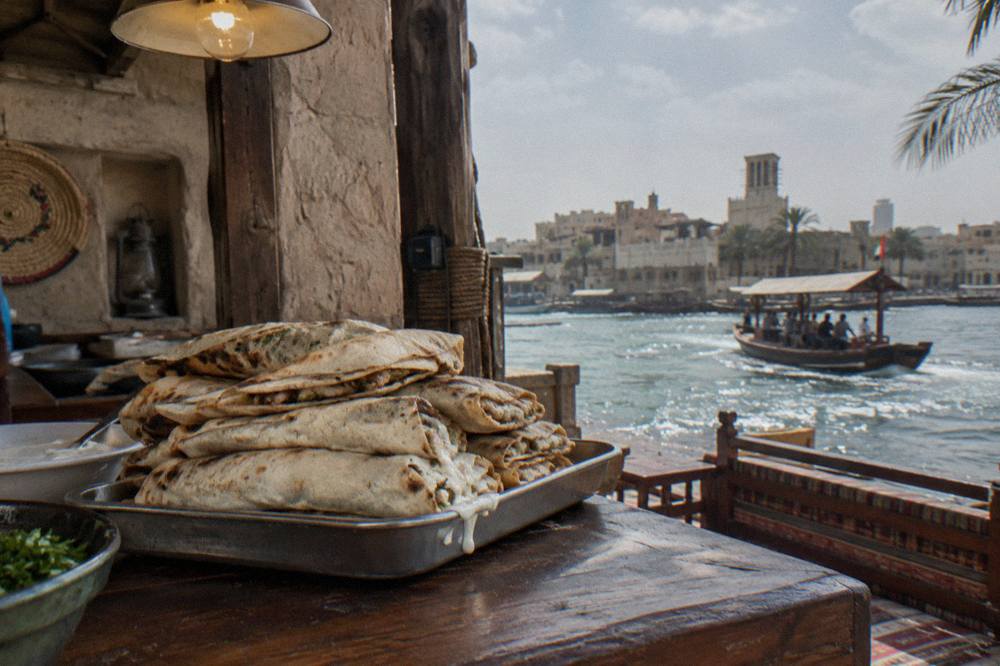
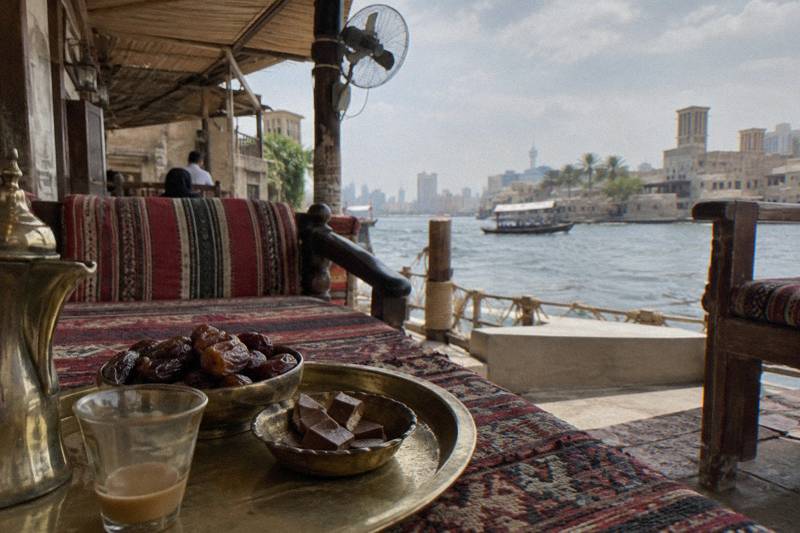
The Emirati items show up on the better walks. Regag is a paper-thin bread cooked on an iron plate, sometimes topped with egg and cheese. Luqaimat are small fried dough dumplings drizzled with date syrup and sesame, served warm and eaten immediately. A premium listing in the Old Dubai family names tastings of shawarma, falafel, karak, samosa, rogag and luqaimat specifically, so those six are a fair expectation of the format, though the exact stops and counts vary by listing and guide. Where a listing does not spell out its tastings, check the booking page before assuming a full meal.
| Tasting | What it is | Typical form on a walk |
|---|---|---|
| Shawarma | Spit-roasted meat wrap with garlic sauce | Shared wrap, cut into pieces |
| Falafel | Fried chickpea fritters with hummus | Wrap or plate with 2 to 3 pieces |
| Karak chai | Milky spiced tea | Small cup, often at a standing counter |
| Samosa / samboosa | Fried pastry triangle, meat or vegetable | One to two pieces |
| Regag / rogag | Thin bread, sometimes egg and cheese | Quarter or half bread |
| Luqaimat | Fried dumplings with date syrup | Small shared box |
Not every walk serves all six, and none of the listings promise a set menu. The general pattern across the Old Dubai walks compared here is a mix of Emirati, Iranian, Indian and Levantine counters, reflecting who actually eats in the district. For the wider dish background, the site's Dubai street food guide covers where each item sits in the city's food map.
How Much A Guided Tasting Walk Costs
Guided Old Dubai food walks in the range compared here run 2 to 4 hours, with prices stated per person on each listing and varying by date, group size and format. Group walks sit at the lower end, premium guided versions cost more, and private tours are priced per group on several listings. No single printed price holds, so the honest answer is to read the basis on the booking page before comparing.
The price basis matters more than the headline number. Several listings in this family are per-person from-prices that shift with group size or season, and some carry limited-time deals. A private tour that looks expensive per person may be priced per group, which changes the maths entirely for a family of four. The rule when comparing: check whether the figure is per person or per group, whether tastings are included or paid separately, and whether the abra crossing is part of the ticket.
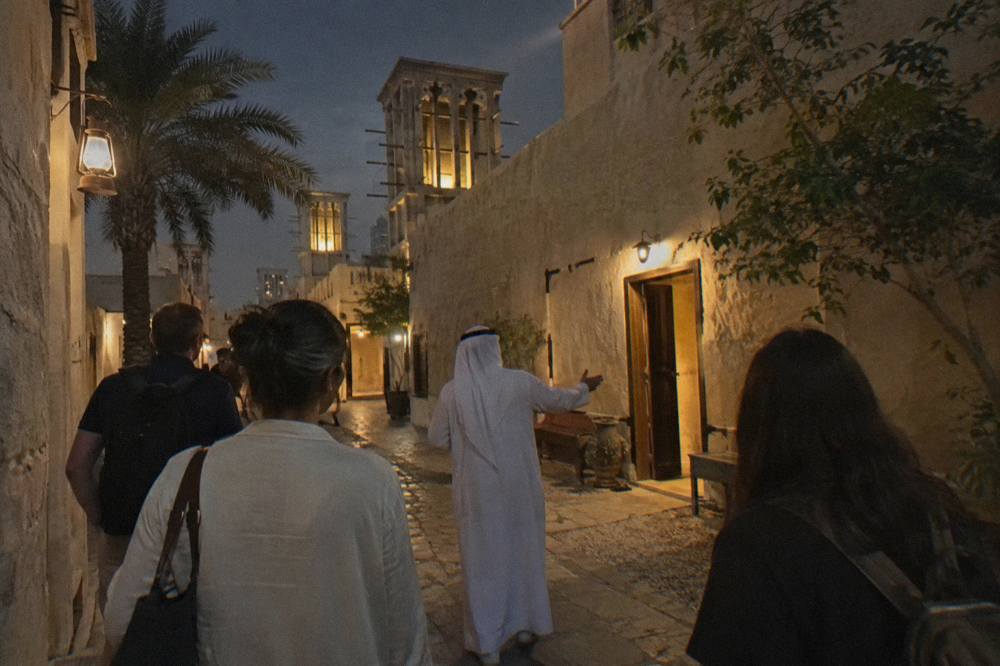
What you get for the money is consistent across the format. A guide who walks you between counters and orders for the group, the tastings themselves on most listings, and the historical commentary that turns a snack crawl into an explanation of the city. The three walks below are the clearest examples of the format at three price points and durations.
One honest gap to note: the guided price buys the route and the story, not more food than you could buy yourself. Reported standalone costs for the same items are a fraction of any tour price, and the section on eating independently below puts numbers on that. What the tour price actually purchases is the hour structure, the ordering in local language where needed, and the confidence to walk into counters you would never choose alone. Whether that is worth the listing price is a personal call, and the site's longer breakdown of how much a food tour in Dubai costs works through the arithmetic.
What The Day Looks Like, Stop By Stop
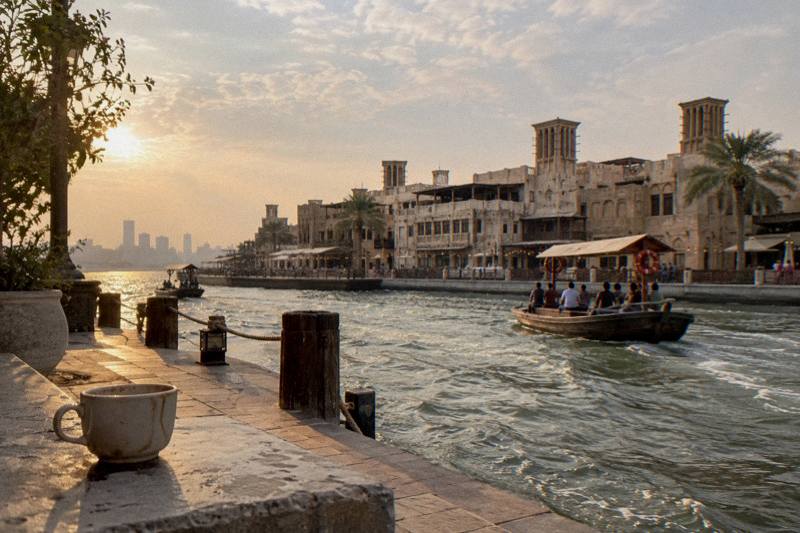
Most Old Dubai food walks follow the same spine: a Bur Dubai start near Al Fahidi or Al Seef, a walk through the Textile Souk, an abra crossing of the Creek, then the Spice Souk and Gold Souk in Deira, with tastings scattered along the way. The crossing itself is a heritage boat ride, and the whole route is walkable and flat. Total distance is modest, and the pace is set by the food stops.
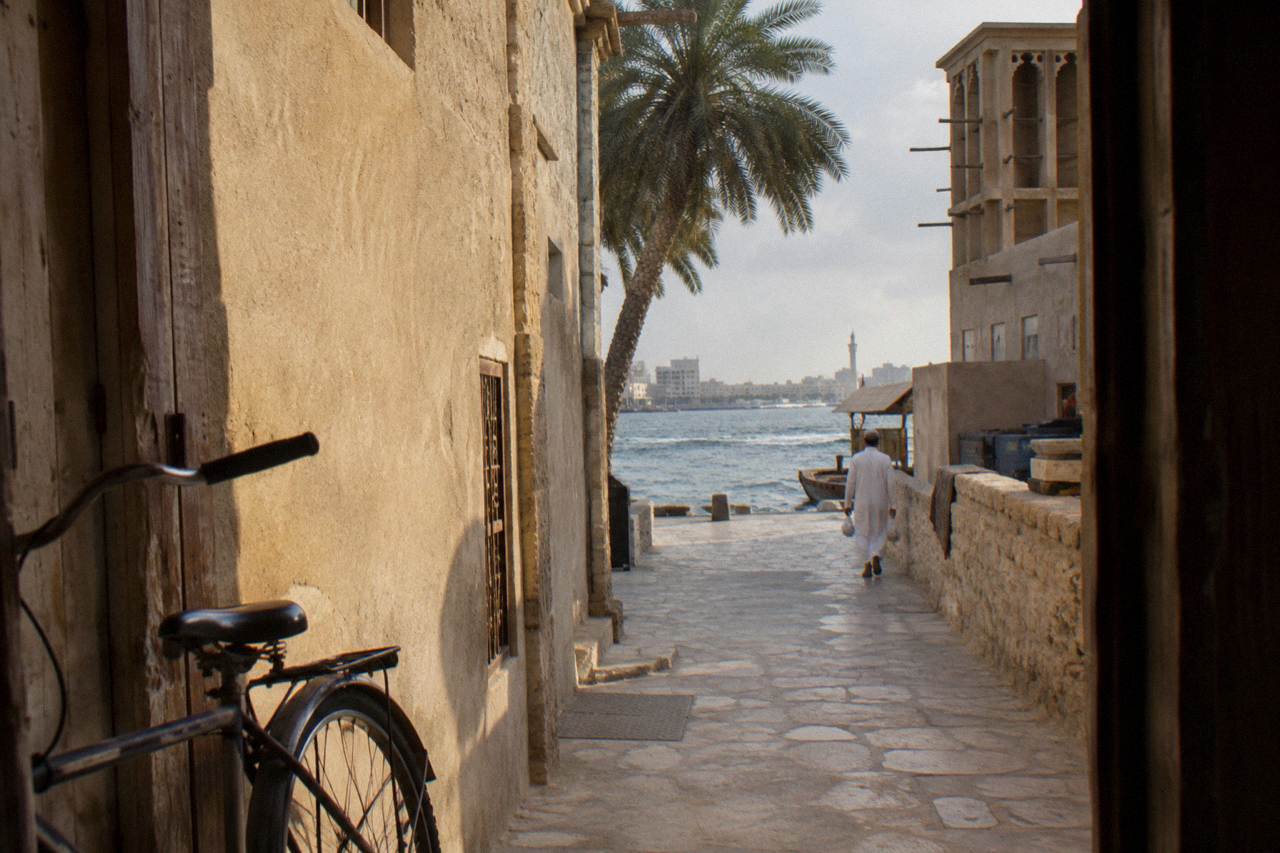
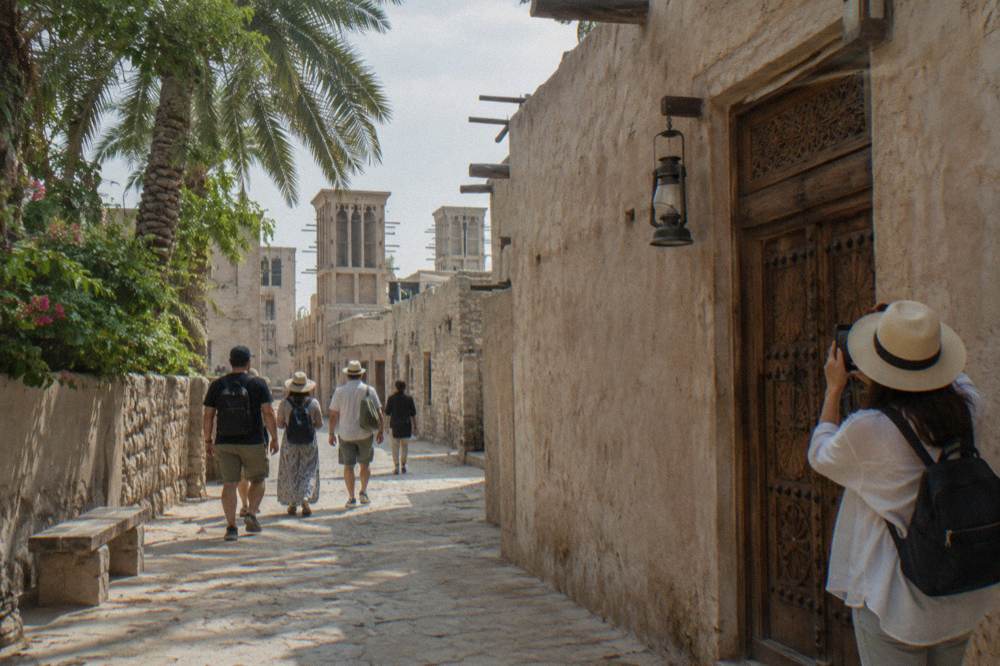
The Bur Dubai half sets the tone. Al Fahidi Historical Neighbourhood is a grid of coral-stone and gypsum buildings from the pearl-trading era, open to walkers with free public access, and Dubai Culture reports neighbourhood hours of 7am to 8pm daily. Al Seef stretches roughly 1.8 km along the waterfront, mixing restored heritage structures with modern additions, and both are free to wander. Guides typically use these lanes for the opening history before the first counter stop.
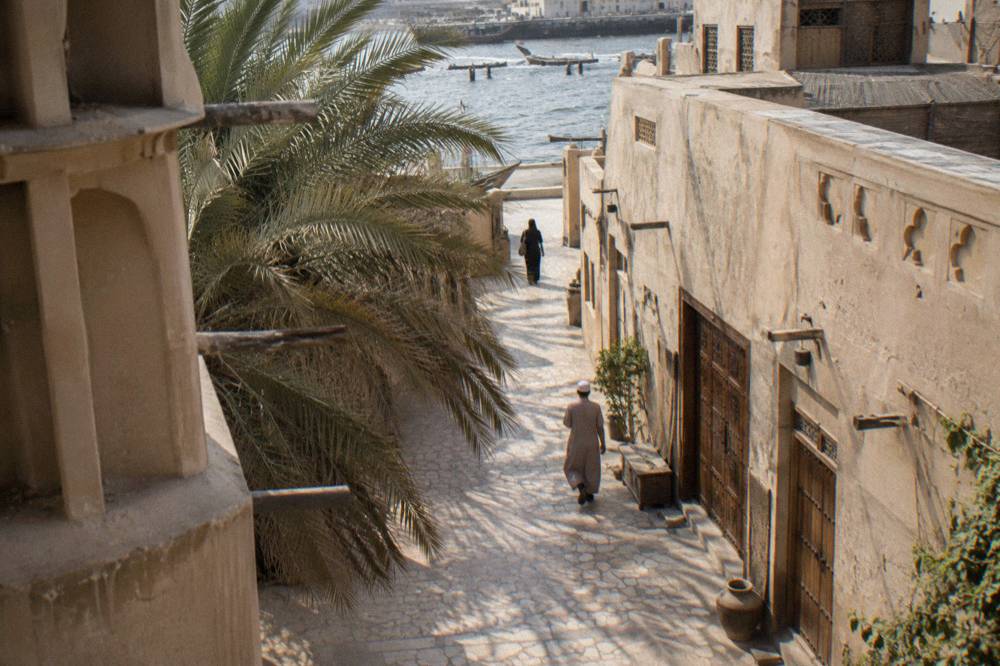
The abra crossing is the hinge of the route. The Roads and Transport Authority runs traditional commuter abras across the Creek on several routes, including the Bur Dubai to Deira Old Souq crossing, and the crossing is a standard feature of the Old Dubai walks compared here. The fare is small and paid locally, and the listings that include a boat crossing state it in their inclusions. The Deira side then delivers the Spice Souk, with sacks of cumin, saffron and dried limes, and the Gold Souk, where most shops open around 10am to 10pm per Visit Dubai's reported guidance, with individual shop hours varying.
Timing shapes the day more than distance. Spice Souk shops are reported to open earlier than 8am and run past 9pm, closing during daytime on Fridays, and many take midday breaks. Evening walks get cooler air and lit-up souks; morning walks get fresher bread and quieter lanes. Winter helps too: December and January average daytime highs of 24 to 26 °C per NCM-derived normals, against a summer that makes midday walking punishing. The site's guide to the best time to visit Dubai for food and walking goes deeper on seasons.
If you would rather structure the same route yourself, the walk between Al Fahidi, Al Seef, the Textile Souk, the abra stations and the Deira souks is fully connected on foot, and no 2026 route closures have been reported for pedestrian access. The trade-off is that you lose the ordering, the history and the counted tastings. The site's route breakdown of what a guided Old Dubai food walk covers maps both versions stop by stop.
Group, Private Or Premium: Which Format Fits
The walks compared here come in three formats: shared group walks of roughly 3 hours, premium guided versions of 3 to 4 hours with more inclusions, and private tours of 3 to 4 hours priced per group. Group suits solo travellers and couples who want the lower price. Private suits families and dietary complications. Premium adds boat crossings and a fuller tasting set.
Group walks are the entry point. A 3 to 4 hour shared walk covering Old Town, the souks, street food and an abra ride is the standard shape, and the shared format means you pay one per-person rate and join whoever books the same slot. The 3-hour Aladdin-themed walk covering souks, the Creek and Old Dubai with tastings is a typical example, running at a fixed duration with the tastings stated in the listing. The shorter 2-hour authentic Old Dubai walk with souk tastings and a local boat ride suits anyone tight on time, at the cost of fewer stops. Other pages covering the same trip are gathered on Dubai Food Tours.
Private tours change the maths and the menu. The private family in this range includes 3-hour and 4-hour walks, with 10 and 12 tasting counts stated in their listing titles, and several are priced per group rather than per person. That per-group basis is the one to check before comparing against a shared walk, because a per-group price divided by four people can undercut the group rate. Private also means the guide can slow down, skip or adapt stops, and handle dietary questions directly.
The premium tier sits between them. The premium guided walk with street food and an abra ride runs 3 to 4 hours and names its tastings, shawarma, falafel, karak, samosa, rogag and luqaimat, on the listing. The classic group walk below is the straightforward version of the same route for comparison.
| Format | Typical duration | Best for | Watch for |
|---|---|---|---|
| Shared group walk | 2 to 4 hours | Solo travellers, couples, lower price | Fixed pace, fixed stops |
| Premium guided walk | 3 to 4 hours | Fuller tasting set, boat crossing | Higher per-person price |
| Private tour | 3 to 4 hours | Families, dietary needs | Often priced per group, check basis |
Whichever format you lean toward, the decision guide on choosing between Dubai food tours and the private versus group comparison work through the trade-offs in detail.
Meeting Points And Getting To Old Dubai
Listings in this family typically name meeting points inside Old Dubai itself: Al Khayma Heritage Restaurant in Al Fahidi, Al Ras Metro Station exit 2 in Deira, the Al Seef Heritage Hotel entrance and Sharaf DG Metro exit 4. The Green Line serves the district directly at Sharaf DG, Baniyas Square, Gold Souq and Al Ras stations, and the Metro runs from 5am to midnight on most days.
The Metro is the practical answer. The Green Line stations relevant to a food walk are Sharaf DG for the Al Fahidi area, Baniyas Square, Gold Souq and Al Ras for Deira, with Union as the shared Red and Green interchange, per the official RTA station map. Trains run 5:00 to 24:00 Monday to Thursday and Saturday, 5:00 to 01:00 the next day on Friday, and 8:00 to 24:00 on Sunday, per the RTA timetable. Fares are paid with a Nol card, a reloadable smart card reported at 25 AED including initial credit on the official RTA pages.
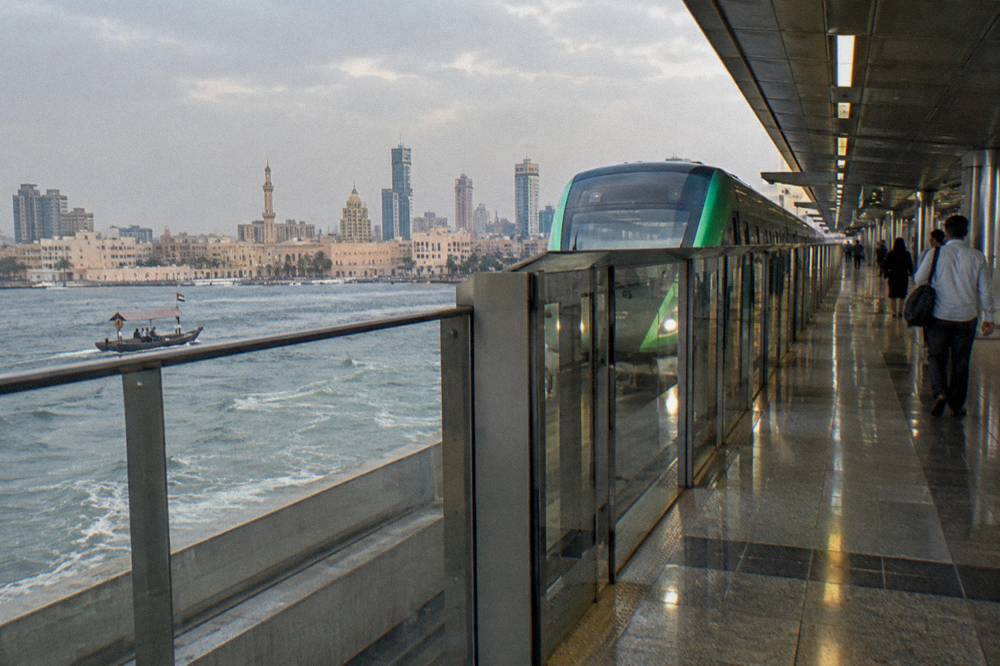
Taxis start at a reported 5 AED between 6am and 10pm and 5.5 AED overnight per the RTA fare page, useful if you are coming from a hotel far from a Metro line. If your walk starts on the Deira side, Al Ras or Gold Souq stations put you inside the souks within minutes; if it starts in Al Fahidi, Sharaf DG is the stop. The meeting point is stated on each listing, and guides wait at a named spot, so confirm the exact exit before travel. The site's full guide to getting to Old Dubai by metro and abra covers every approach.
What The Same Food Costs On Your Own
Reported 2026 prices for the items a walk serves: shawarma 8 to 15 AED at local spots, falafel wraps 4 to 15 AED, karak chai 1 to 3 AED, samosas 1 to 5 AED each or 10 to 12 AED a bag, and a casual cafeteria meal 15 to 40 AED per person. Mid-range restaurant meals run around 80 to 150 AED. All figures are reported local prices, not tour inclusions, and they shift by venue.
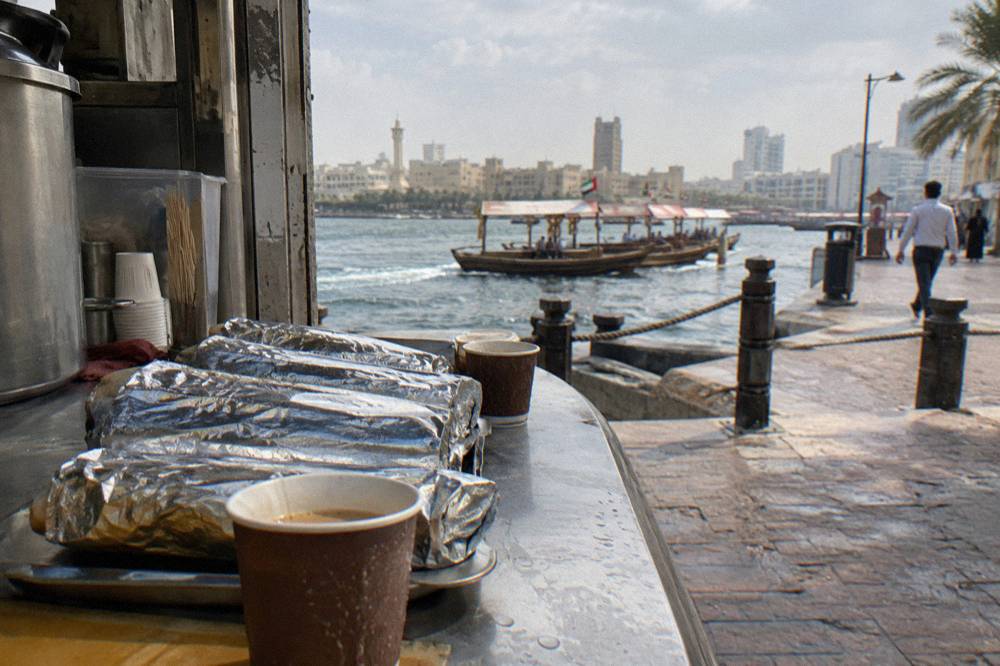
The comparison is the honest one to make before booking. Six tastings bought independently at reported Deira prices cost a fraction of any guided listing price, and nobody should book a food walk under the impression that the food value alone covers the ticket. The walk sells the route, the guide and the counted, ordered tastings, and the price gap between that and a self-guided snack crawl is the price of the guiding.
| Item | Reported local price | Notes |
|---|---|---|
| Shawarma | 8 to 15 AED | Local spots; tourist spots run 20 to 40 AED |
| Falafel wrap | 4 to 15 AED | Around 13 AED at example counters |
| Karak chai | 1 to 3 AED | Cafeteria price; cafe versions higher |
| Samosa / samboosa | 1 to 5 AED each | Bags of about 5 at 10 to 12 AED |
| Casual cafeteria meal | 15 to 40 AED per person | Biryani and mezze sets |
| Mid-range restaurant meal | 80 to 150 AED per person | Mains often 40 to 80 AED |
Two bill mechanics are worth knowing either way. Restaurants commonly add a 10 per cent service charge, which is venue-retained rather than a government fee, plus 5 per cent VAT, and some hotel-affiliated venues add a 7 per cent municipality fee, all reported in 2026 guides. Tipping is personal preference per Visit Dubai's own guidance, with 10 to 15 per cent at restaurants the usual reference point. Check with the waiter that any card-added tip reaches staff.
For a fuller budget picture, including what a whole day of eating runs, the guide to Dubai food prices and what a meal costs carries the numbers. If the self-guided route appeals but you still want a few counted stops with a guide, the shorter group walk below splits the difference.
How A Guided Walk Differs From A Restaurant Crawl
A restaurant crawl is you choosing venues, reading menus and paying as you go. A guided walk is a counted tasting set, a fixed route and a guide who orders, explains and handles payment, usually with the Creek crossing and souk history folded in. The food overlap is real, but the structure, pacing and what you learn are entirely different products.
The practical differences show up in three places. First, ordering: at a busy Deira counter with no English menu, a guide removes the friction that stops most visitors eating well in the district. Second, counting: listings state their tasting counts, and a 10-tasting private walk is a different proposition from three snacks grabbed on the move. Third, context: the difference between eating luqaimat and understanding that they are a Ramadan treat served warm is the guide's whole job.
The walk in this family that makes the contrast clearest is the souks, museums and local food walk, a 3-hour route that deliberately mixes museum stops with food testing, the souks, museums and local food tasting walk. It is less a pure eating route than a heritage walk with tastings attached, which is exactly the shape that suits travellers who want the district explained, not just fed. Its duration and inclusions are on the listing.
A premium listing shows the other end of the same spectrum, with the tasting list named on the booking page and the abra ride built in.
Neither format is a restaurant crawl in disguise. A crawl gives you one table, one cuisine and one bill. A walk gives you six counters, four cuisines and no decisions after the booking. Travellers who want the seated version should look at the Emirati cultural dining options instead, where a hosted meal and talk replace the walking entirely.
Dietary Needs, Halal And The Rules Worth Knowing
All meat served in Dubai restaurants and markets is halal, and pork appears only in designated licensed sections, so a standard Old Dubai walk is halal throughout. Listings do not describe themselves as vegetarian, vegan or gluten-free unless they say so, so message the operator before booking with any dietary need. Alcohol is not part of these walks, and visitors over 21 drink only at licensed venues.
The halal point simplifies most dietary questions but not all. Vegetarians can usually eat well on falafel, hummus, regag and luqaimat, but the listings here do not promise vegetarian menus, and the honest instruction is to message the operator before booking. The site's guide to vegetarian and dietary needs on a Dubai food tour covers what to ask and when.
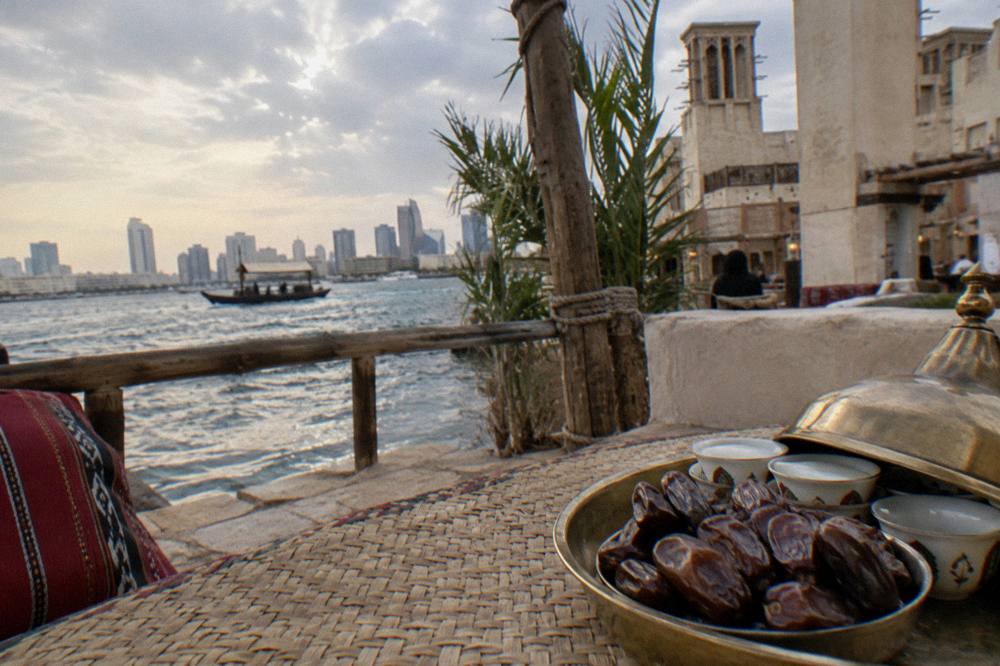
Alcohol is the clearest rule. Visitors over 21 may drink at licensed hotels, restaurants and lounges, with no tourist permit needed, and alcohol is not allowed in public places outside licensed venues, per the official guidance the site's facts file records. Food walks through Old Dubai serve no alcohol unless a listing says otherwise, and the traditional welcome is the opposite direction: gahwa, lightly spiced unsweetened Arabic coffee served in small cups with dates. Etiquette is to accept it with the right hand and shake the empty cup gently side to side when you are finished.
Three more customs keep a walk smooth. Cover shoulders and knees in the souks and heritage areas, which is respect rather than law. Ask before photographing individuals, especially Emirati women and families. And during Ramadan, restaurants operate as normal and non-Muslims are not required to fast, though discretion in shared public spaces during daylight hours is the reported etiquette, and the site's guide to food tours during Ramadan handles the timing questions. For the practical side of settling bills, Visit Dubai's tipping guide is the official reference.
Common Questions About Dubai Street Food Tours
What Do You Eat On A Dubai Street Food Tour?
The core tasting list is shawarma, falafel, karak chai, samosas, regag bread and luqaimat, with Arabic coffee and dates as a traditional welcome. Premium listings name these tastings directly. Exact stops, counts and dishes vary by listing and guide, so check the booking page for the tasting list before you book.
How Much Does A Dubai Street Food Tour Cost?
Prices are stated per person on each listing and vary by date, group size and format, with private tours on some listings priced per group. Group walks sit at the lower end, premium guided versions cost more, and several listings carry limited-time deals. Read the price basis on the booking page before comparing formats.
How Long Does A Food Walk In Old Dubai Take?
The walks compared here run from 2 hours for the shortest authentic Old Dubai route to 4 hours for the premium and half-day versions, with 3 hours the most common duration. The route spine, Al Fahidi or Al Seef, the Textile Souk, an abra crossing, then the Deira souks, is walkable and flat, with food stops setting the pace.
Is A Street Food Tour Worth It If The Food Is Cheap Anyway?
Reported standalone prices for the same items run from about 1 AED for karak to 15 AED for a shawarma, so the food value alone never covers a tour price. What the ticket buys is the route, the guide, the counted tastings and the confidence to eat in counters you would not choose alone. Whether that is worth it is a personal call.
Are Dubai Food Tours Suitable For Vegetarians?
All meat in Dubai restaurants and markets is halal, and pork appears only in designated licensed sections. Listings do not describe themselves as vegetarian or vegan unless they say so, so message the operator before booking. Falafel, hummus, regag and luqaimat are usually available, but no listing here promises a vegetarian menu.
Do These Walks Include The Abra Ride Across The Creek?
Many Old Dubai listings include a Creek crossing by traditional abra or local boat, and the ones that do state it in their inclusions. The Roads and Transport Authority runs the commuter abra routes, including the Bur Dubai to Deira Old Souq crossing. Check the specific listing for whether the crossing and its fare are included.
If the format still appeals after the numbers, the three walks below are the clearest examples of the route at three durations and price points.