Deira Food Guide: Eating In Old Dubai
Deira is where Old Dubai actually eats: karak counters, Iranian bakeries, fish market edges and the lanes behind Al Ras, all walkable from two Metro stations and an abra crossing.
Short answer
Deira is the eating half of Old Dubai, across the Creek from Bur Dubai. Street food here is cheap and reported: shawarma around AED 7 to 15, karak AED 1 to 3, samosa AED 2 to 3 each. Guided Deira routes run 2 to 4 hours and pair the souks with tastings.
Deira sits on the eastern bank of Dubai Creek, and for food it is the more interesting side of the water. This is where the Spice Souk and Gold Souk draw the crowds, but it is also where the city's cafeterias, Iranian bakeries and fish market edges feed the people who actually work in Old Dubai. A shawarma counter near Al Ras, a karak stall at midmorning, a bakery pulling flatbread from a clay oven: these are the places a Deira food walk is built around. If you're still weighing whether this district suits your trip, the honest look at Deira as a place to stay and eat covers the souks, transport links and costs.
The area is compact and flat, stitched together by two Green Line Metro stations and the abra docks on the Creek. You can walk from Gold Souq station to the Spice Souk in minutes, cross to Bur Dubai by boat, and eat four or five different cuisines inside a couple of kilometres. This guide lays out what Deira food is, what it costs, how a guided route strings it together, and how to get around without a car. If you'd rather have someone else handle the route, the guide to a guided street food walk through Old Dubai shows what a tour actually serves and how the price compares to eating on your own.
What Is Deira Food, And Why Does It Anchor Old Dubai Eating?
Deira food is the everyday eating of Old Dubai's commercial district: shawarma, falafel, samosa, karak chai and luqaimat from cafeterias and stalls, plus Iranian flatbreads, Levantine mezze and South Asian plates from the neighbourhood's long-established kitchens, most of it halal and most of it inexpensive by Dubai standards.
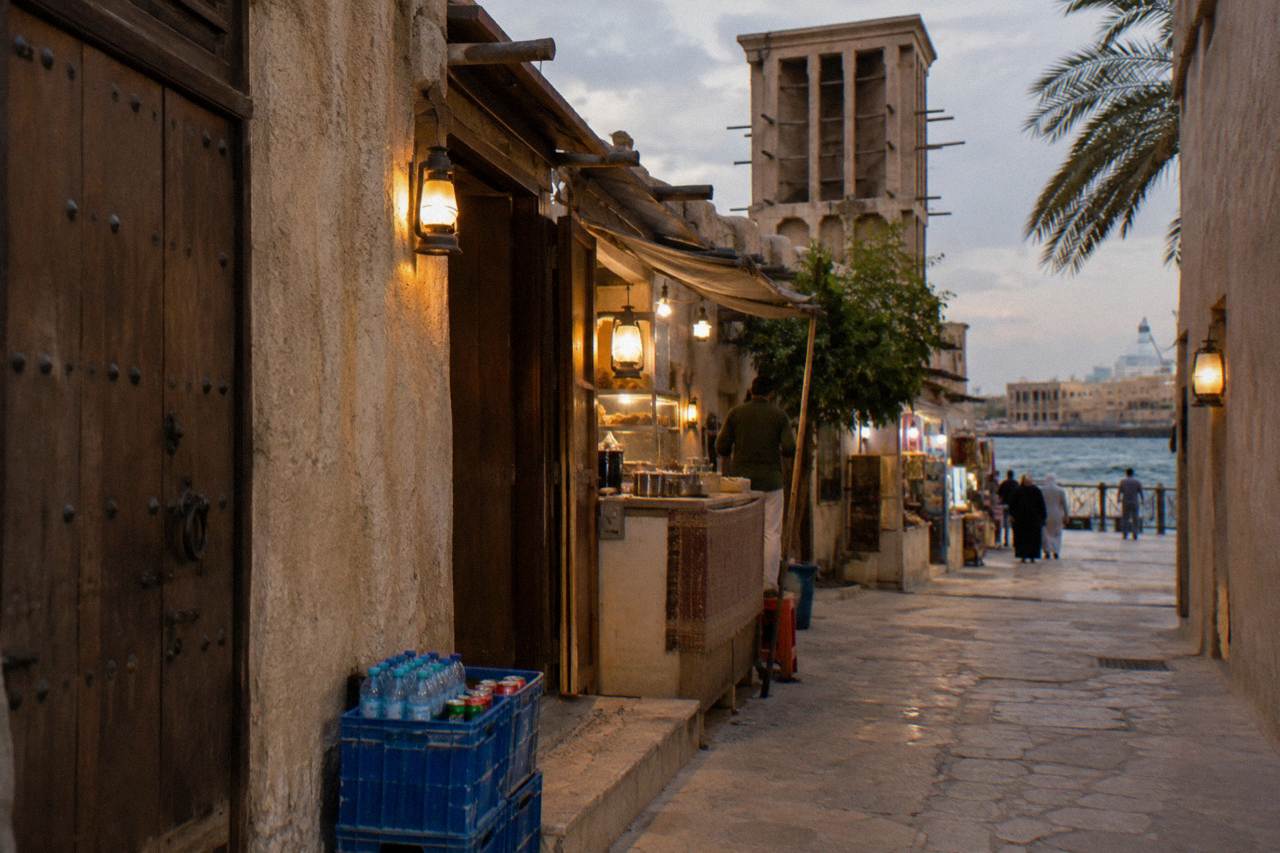
The district's food comes from its trade history. Deira grew around the Creek port, and the merchants, sailors and dockworkers who worked there brought Afghan, Iranian, Indian, Pakistani and Lebanese cooking with them. Recent guides to the area note that the typical Deira and Bur Dubai street-food stalls and cafes serve shawarma, falafel, samosa or samboosa, luqaimat and karak, with Iranian, Afghan, Indian, Pakistani and Lebanese kitchens filling the side streets. That mix is not a curated food scene. It is what has been feeding the district for decades.
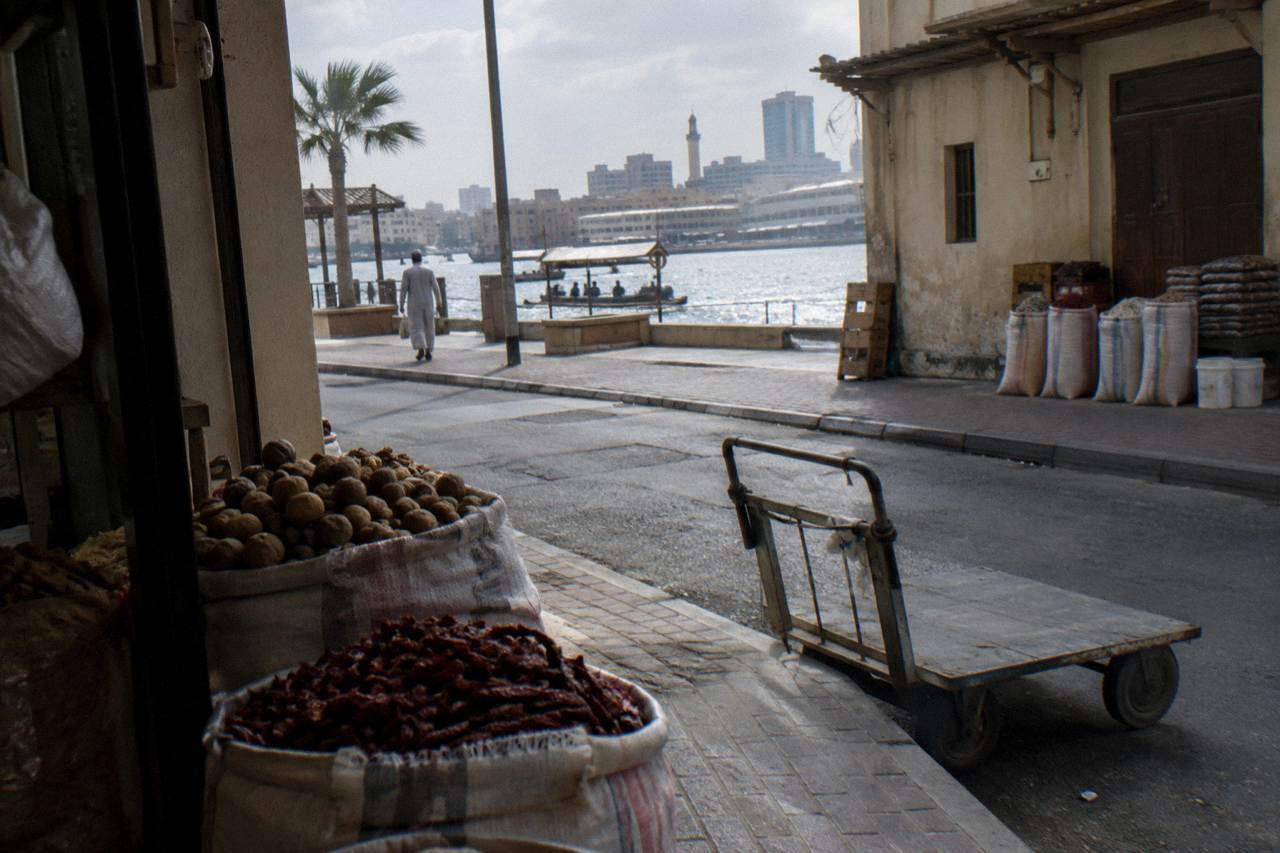
Two souks define the eating geography. The Spice Souk, with sacks of whole spices, incense and dried limes stacked outside the shopfronts, sits a short walk from the Gold Souk's window displays. Neither souk is a food court, but both are surrounded by the cafeterias and juice counters that serve the shopkeepers, and a walk between them passes most of the cheap-eating lanes a visitor would want. The Al Ras Metro station on the Green Line drops you right inside this grid.
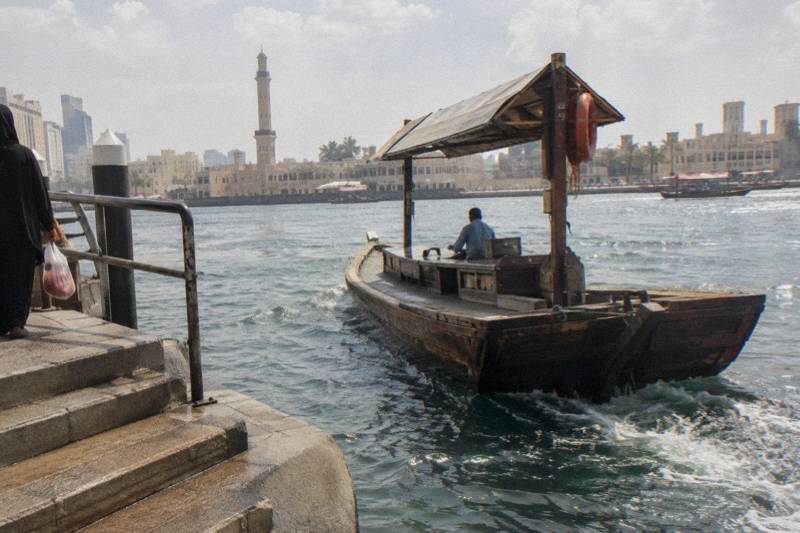
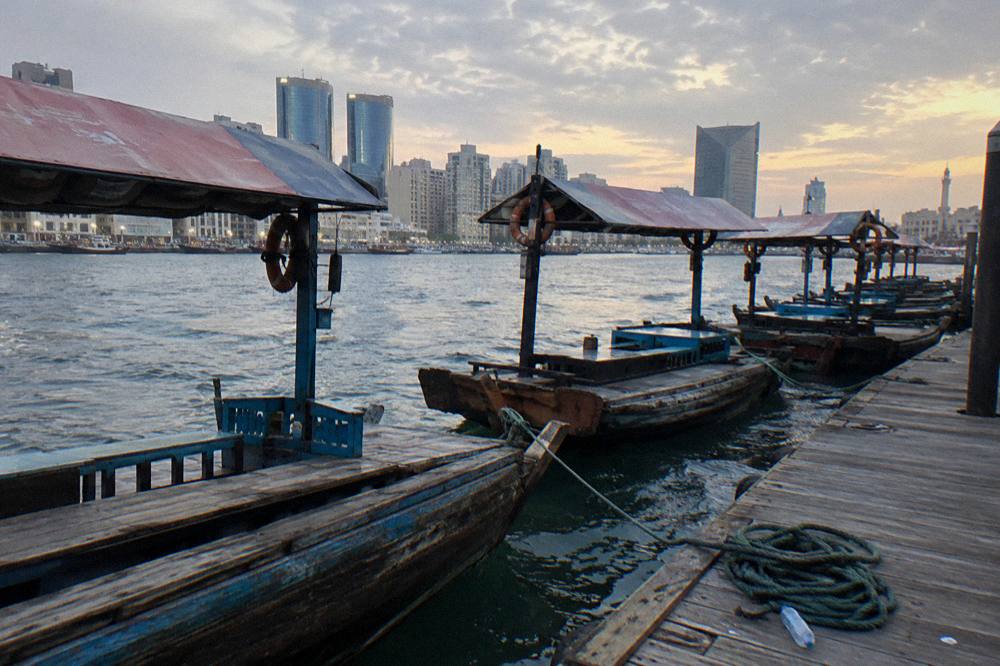
The third anchor is the water. The fish market edges and the abra docks tie Deira's food to the Creek itself, and the crossing to Bur Dubai is part of the experience rather than a commute. The Roads and Transport Authority runs the traditional commuter abra routes across the Creek, including CR1 between Bur Dubai and Deira Old Souq and CR2 between Dubai Old Souq and Al Sabkha, with further routes CR3 to CR6 connecting Baniyas, Al Fahidi, Al Seef and Deira Old Souq. For the layout of the whole crossing, the Dubai Creek abra ride and waterfront eating guide walks the route in detail.
Where To Eat In Deira: Cafeterias, Bakeries And Souk Edges
The eating in Deira clusters in three zones: the cafeteria and shawarma lanes around Al Ras and the souks, the Iranian and Afghan bakeries scattered through the back streets, and the fish market edges near the Creek, where grilled and fried seafood kitchens sit closest to the morning's catch.
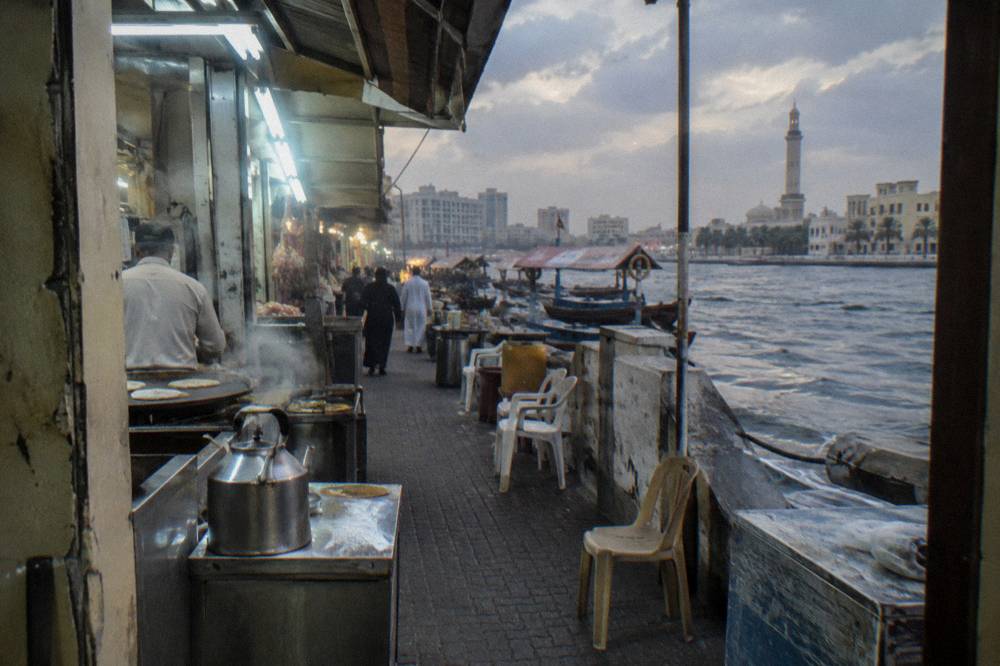
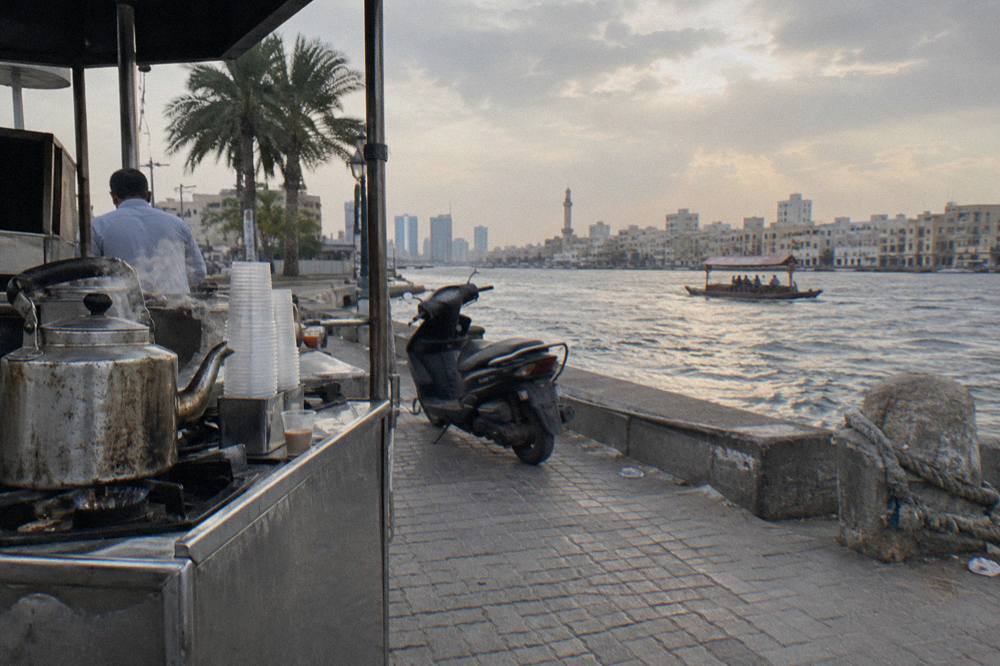
Cafeterias are the backbone. These are small counter operations, often a handful of seats or none at all, selling karak, chai, juices and fried snacks through a hatch. Karak chai, the spiced milky tea brewed with cardamom and sometimes saffron, is reported at AED 1 to 3 at local cafeterias and stalls, with cafe versions running higher, one cited example around AED 14. Samosa or samboosa runs around AED 2 to 3 each, or AED 10 to 12 for a bag of roughly five. A bag of samosas and two karaks is a full Deira breakfast for pocket change.
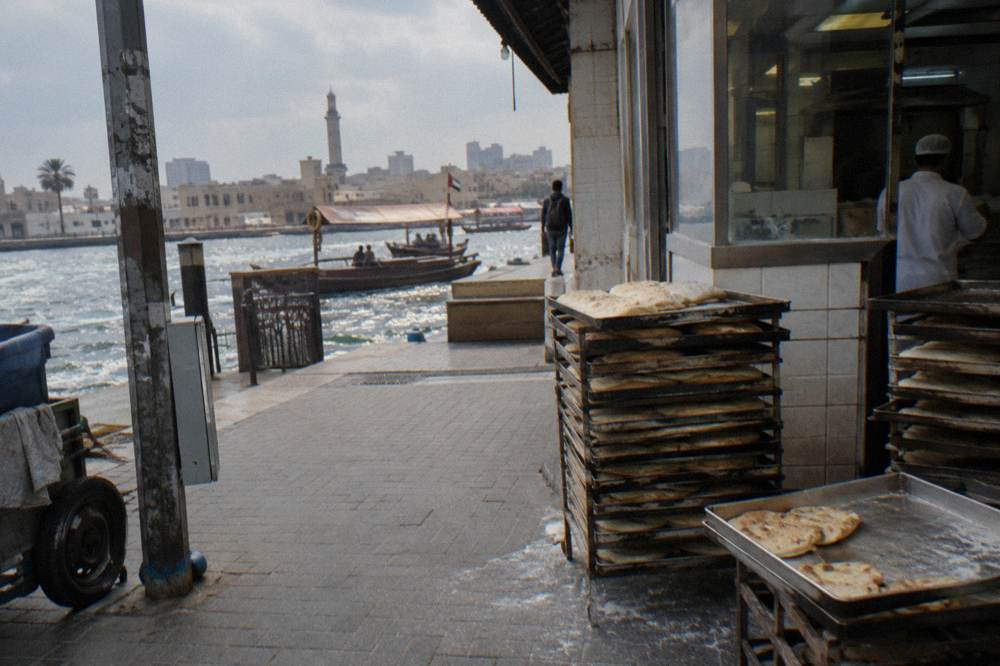
The bakeries are quieter and easy to walk past. Iranian and Afghan bread shops bake flatbreads in clay ovens through the day, and the bread comes out in minutes, sold by the piece. Around them sit the shawarma counters: recent price reporting puts shawarma at AED 7 to 15 at local spots, with tourist-facing outlets charging AED 20 to 40, and a chicken shawarma wrap cited around AED 12 to 18. The gap between local and tourist pricing is real in Deira, and it shrinks the moment you walk two streets back from the Gold Souk.
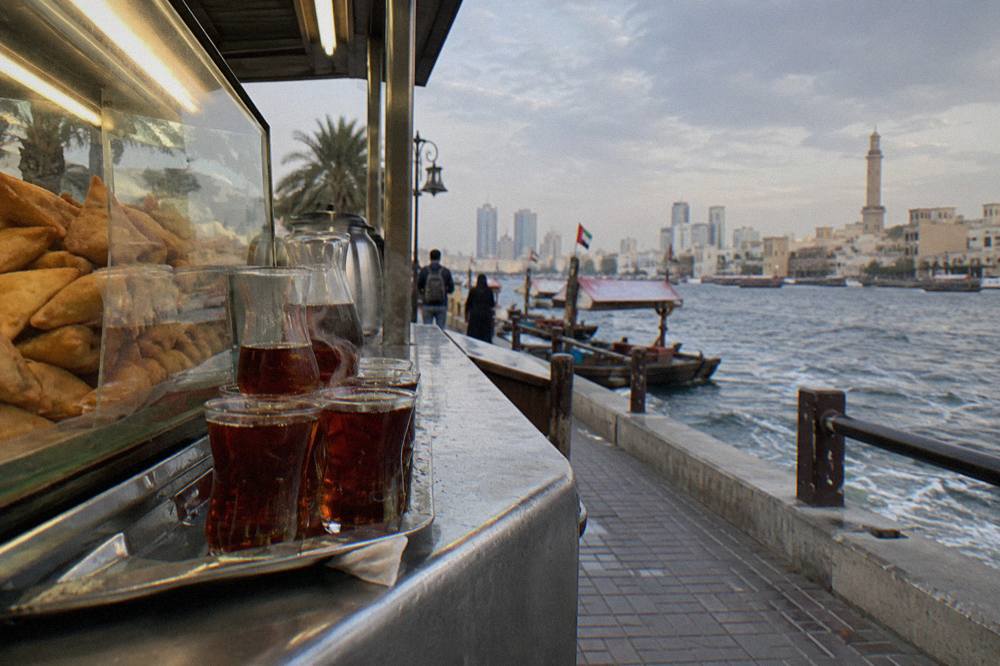
The fish market edges round it out. Seafood here is grilled or fried to order, priced by the kilo and reported as varying with the catch, so check the board before you commit. What a market stall serves on any given day varies, so treat the seafood counters as a strong maybe rather than a promise.
For the dish-by-dish side of all this, the Dubai street food guide: what to try and where covers shawarma, falafel and karak across the whole city, and the Deira Spice Souk: what to taste and buy guide goes deeper on the souk itself.
How Much Does Street Food In Deira Cost?
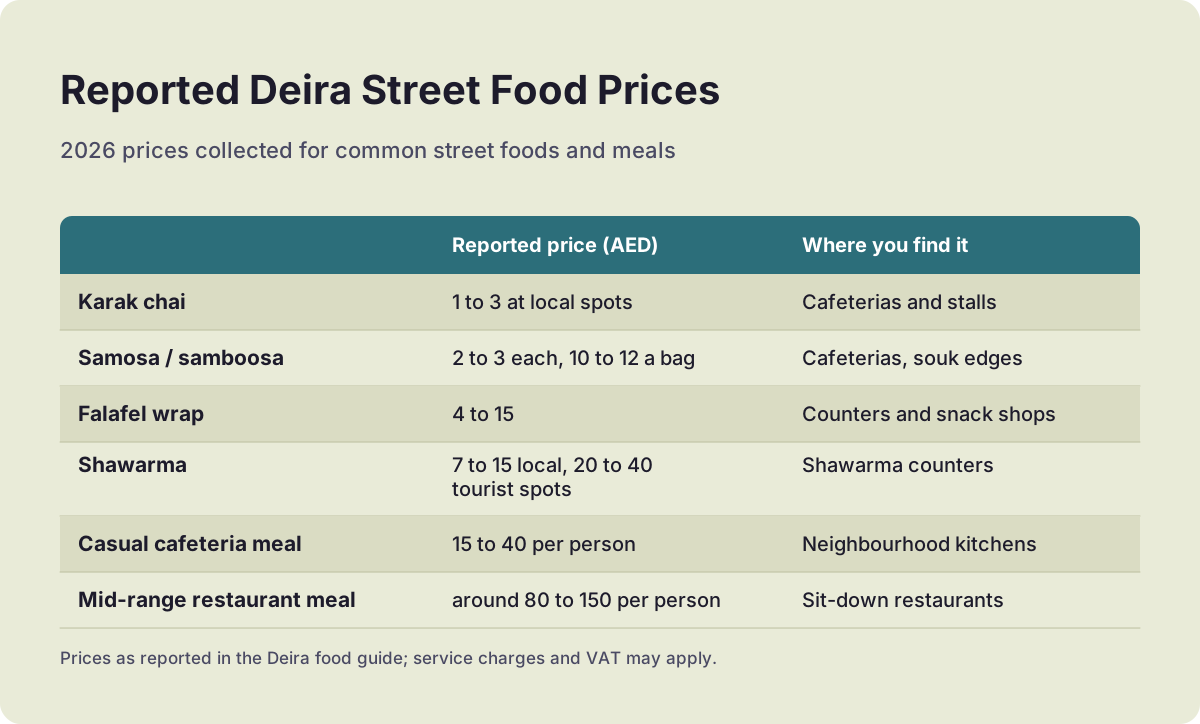
Reported 2026 prices put Deira street food among the cheapest eating in Dubai: shawarma AED 7 to 15 at local spots, falafel wraps AED 4 to 15, karak AED 1 to 3, samosa AED 2 to 3 each, and a casual cafeteria or neighbourhood meal AED 15 to 40 per person, with mid-range restaurants a different league at roughly AED 80 to 150. For a side-by-side look at how those prices stack against the glitzier side of the Creek, the comparison of Marina and Downtown dining with Old Dubai food walks covers costs, transport and tour options.
Those figures are reported prices from recent area guides, not promises, and individual stalls vary. They are also AED, not dollars, and they belong to the independent-eating side of Deira. A guided walk is priced separately on the operator's booking page, and the two budgets should not be mixed: a tour price covers a route, a guide and the tastings the listing flags, not a market-priced meal.
| Item | Reported price (AED) | Where you find it |
|---|---|---|
| Karak chai | 1 to 3 at local spots | Cafeterias and stalls |
| Samosa / samboosa | 2 to 3 each, 10 to 12 a bag | Cafeterias, souk edges |
| Falafel wrap | 4 to 15 | Counters and snack shops |
| Shawarma | 7 to 15 local, 20 to 40 tourist spots | Shawarma counters |
| Casual cafeteria meal | 15 to 40 per person | Neighbourhood kitchens |
| Mid-range restaurant meal | around 80 to 150 per person | Sit-down restaurants |
Two bill mechanics are worth knowing before you sit down anywhere. Restaurants commonly add a service charge of up to 10 percent, which is venue-retained rather than a government fee, plus 5 percent VAT, and some hotel-affiliated venues add a further municipality fee. Tipping on top is voluntary and common, usually 5 to 10 percent or rounding up. The tipping and paying in Old Dubai guide unpacks the whole bill.
If you are weighing a self-guided eating afternoon against a booked route, the how much does a food tour in Dubai cost guide sets out what a tour price typically buys.
Which Deira Food Walk Covers The Most Ground?
The Deira-focused walks compared here run 2 to 4 hours and pair the souks with tastings and a Creek crossing, and the one that covers the most ground is the 4-hour premium route, which links Old Town, the street food stops, the souks and a boat ride in a single booked afternoon.
The premium route, Dubai: Premium Old Town, Street Food, Souks & Boat Ride Tour, is the longest of the Deira-linked walks at 4 hours. The listing describes street food, souks and a boat ride in one route, which makes it the choice if you want the Creek, both souks and the eating lanes covered without planning the connections yourself. Its price and current availability are on the operator's booking page.
Shorter options trade breadth for pace. The Aladdin tour runs 3 hours through the souks, the Creek, Old Dubai and tastings, and a 2-hour authentic Old Dubai walk covers the souks, tastings and a local boat for visitors on a tight schedule. Neither listing promises a fixed stop list, so check what each includes on the booking page before choosing.
The Aladdin route suits visitors who want the souks and the Creek with a tasting thread through it, and it pairs well with a morning in Bur Dubai beforehand. The listing describes souks, Creek, Old Dubai and tastings across 3 hours.
A different shape again is the souks-and-museums walking tour, which folds museums and local food testing into a 3-hour walk. It leans more toward the heritage side than the eating side, which makes it a fit for travellers whose interest is Old Dubai as a whole rather than lunch as the headline.
Choosing between formats is its own question, and the how to choose between Dubai food tours guide compares group, private and premium walks on pace, price basis and what each actually includes.
What Does A Guided Deira Route Look Like On The Day?
A guided Deira route typically starts at a stated meeting point, often a Metro station exit or a named heritage restaurant, moves on foot through the souks and eating lanes with tastings at stops the listing flags, crosses the Creek by abra or boat, and finishes 2 to 4 hours later with the guide's local pointers as the lasting takeaway.
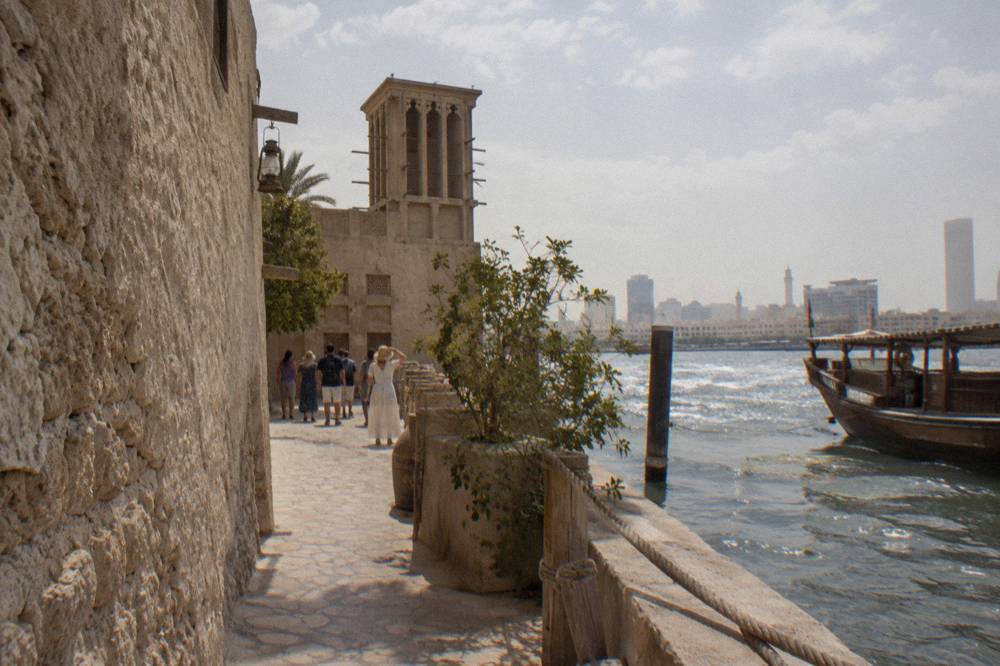
Meeting points seen on Old Dubai listings include Al Ras Metro Station exit 2 on the Deira side, Al Khayma Heritage Restaurant in Al Fahidi, the Al Seef Heritage Hotel entrance and Sharaf DG Metro exit 4. Which one applies depends on the tour, so read the booking page's meeting instructions rather than assuming. Arriving by Metro makes most of these painless: Al Ras and Gold Souq stations both sit inside the Deira grid, per the official RTA station map.
The eating itself is structured around stops rather than a sit-down meal unless the listing says so. Listings describe tastings of shawarma, falafel, karak, samosa, rogag and luqaimat on some routes, and what a guide shows and a stall serves varies by day, so the honest framing is a counted set of tastings, not a menu. Where a listing flags drinks or a meal included, that is stated on the booking page; where it does not, budget for your own.
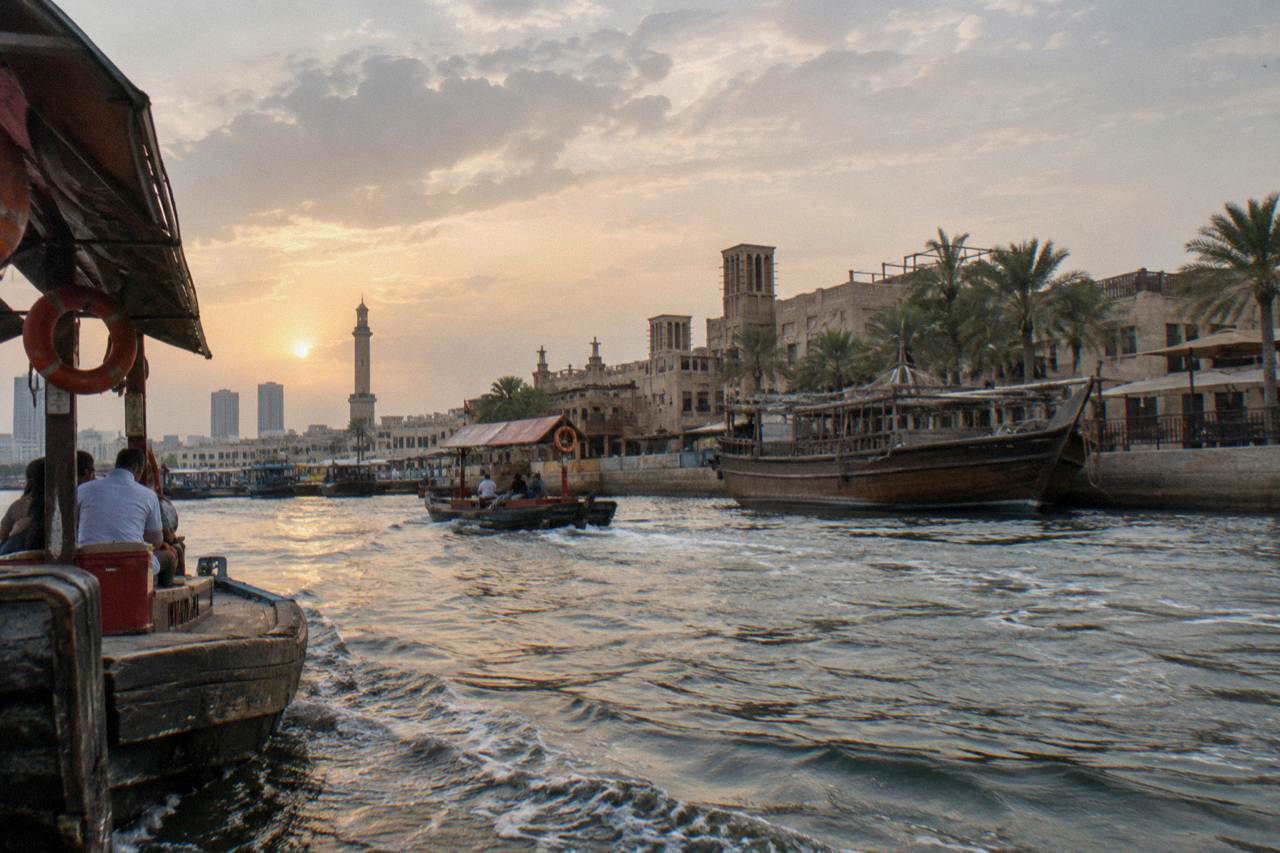
The classic Deira route crosses the Creek at some point, usually by abra, and the crossing is short. The RTA operates the traditional commuter routes on the water, and the ride is part of the tour's rhythm rather than a transfer. A longer premium route adds a boat ride segment, and the 4-hour premium listing describes exactly that.
If you want the stop-by-stop mechanics of a guided walk, the Dubai food walking tour: pace, stops and what to wear guide covers pacing, distances and footwear, and the what a guided route covers guide walks through the standard Old Dubai geography.
Getting To Deira: Metro, Abras And Walking Times
Deira is served by the Green Line at Al Ras and Gold Souq stations, with Union on the shared Red and Green interchange, and the RTA Metro runs from 05:00 to 24:00 Monday to Thursday and Saturday, from 05:00 to 01:00 on Friday and from 08:00 to 24:00 on Sunday, so the district is reachable by rail for almost any eating hour.
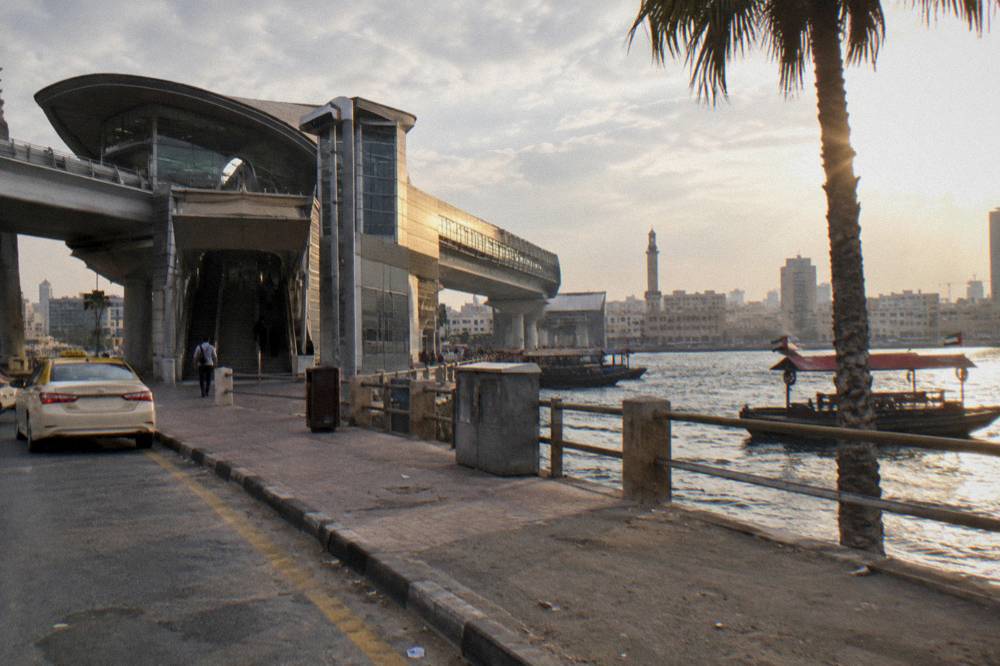
The official RTA station map places Baniyas Square, Gold Souq and Al Ras on the Green Line, with Union as the Red and Green interchange and Sharaf DG serving the Al Fahidi side. For a Deira food walk, Al Ras is the most useful drop: it is a few minutes on foot from the Spice Souk lanes. The Nol card, the reloadable smart card for Metro, tram and buses, costs AED 25 for an anonymous Silver or Gold card including initial credit, per the RTA's fare pages.
Taxis start at AED 5 between 06:00 and 22:00 and AED 5.5 overnight, as reported on the RTA's fare page, and they make sense from hotels far from the Green Line. Inside Deira itself, walking is the whole point. The district is flat, and the standard walking connections between the souks, abra stations and the Al Fahidi side across the water are open with no reported route closures.
| Way in | Reported figure | Notes |
|---|---|---|
| Green Line stations | Al Ras, Gold Souq, Baniyas Square | Union is the Red and Green interchange |
| Metro hours | 05:00 to 24:00 most days, Sunday from 08:00 | Friday runs to 01:00 |
| Nol card | AED 25 including initial credit | Silver or Gold anonymous cards |
| Taxi start fare | AED 5 day, AED 5.5 night | Per RTA fare page |
| Creek crossing | Traditional abra routes CR1 to CR6 | RTA marine services |
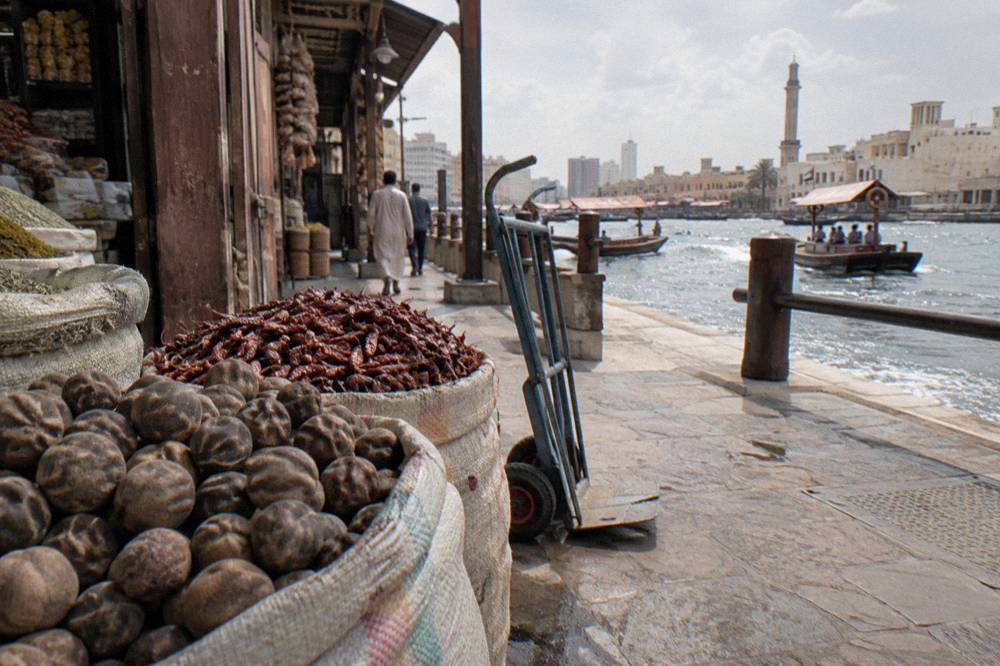
Souk hours matter for timing. Visit Dubai states most Gold Souk shops open around 10:00 to 22:00, and Spice Souk shops generally open earlier than 08:00 and past 21:00, with a daytime closure on Fridays and many shops taking midday breaks. Individual shop hours vary, and no single official timetable is published, so treat those as reported patterns and check before an early visit. The getting to Old Dubai by Metro and abra guide covers the full journey in more depth.
Etiquette, Dress And Paying In Deira
Deira asks for modest dress in its souk and heritage streets, halal eating is the default everywhere with pork absent from ordinary kitchens, alcohol is not part of a street food walk, and cash tips of 5 to 10 percent are welcome but voluntary, so plan for covered shoulders and knees, a card for the bill and small notes for the stalls.
There is no single dress-code law for tourists, but covering shoulders and knees in heritage areas and souks is the reported expectation, and it draws less attention in a traditional district like Deira. Swimwear belongs at beaches and pools. The Dubai dress code for walking tours and souks guide covers this in full.
On the plate, all meat sold in restaurants and markets follows halal rules, and pork appears only in designated licensed sections, so a Deira food walk is uniformly halal by default. Dietary needs beyond that are a different question: no listing should be assumed vegetarian, vegan, gluten-free or kosher unless its booking page says so, and the right move is to message the operator before booking. The vegetarian and dietary needs on a Dubai food tour guide sets out what to ask.
Alcohol is not part of this district's street eating. Visitors over 21 may drink at licensed venues only, and alcohol is not allowed in public places outside them, per the official visitor guidance. Food walks through Old Dubai serve no alcohol unless a listing says otherwise, and Deira's cafeterias and bakeries are dry by nature.
Photography deserves one line of care: ask permission before photographing individuals, especially in traditional attire or inside the souks, as photographing people without consent can breach privacy expectations. And at the table, gahwa, the lightly spiced cardamom coffee served in small finjan cups, carries its own etiquette: accept and receive with the right hand, and shake the empty cup gently side to side to signal you are done.
| Situation | The reported norm |
|---|---|
| Dress in souks | Cover shoulders and knees |
| Meat and pork | Halal everywhere; pork only in licensed sections |
| Alcohol | Licensed venues only, age 21 and over, none in public |
| Restaurant bill | Up to 10 percent service charge plus 5 percent VAT |
| Tipping | 5 to 10 percent or rounding up, voluntary |
| Photography | Ask before photographing people |
When To Eat In Deira: Timing, Seasons And Ramadan
The best eating window in Deira is late afternoon into evening, when the souk shops are fully open and the cafeteria counters are busy, and the best months for walking are December to February, when the airport weather station's normals put daytime highs at roughly 24 to 26 °C, with Ramadan shifting daytime dining norms without closing the kitchens.
The weather numbers come from the Dubai International Airport station's 1991 to 2020 monthly normals: December's mean daily maximum is 26.5 °C, January's 24.4 °C and February's 26.1 °C, the lowest of the year. Summer walking is a different proposition, and the Dubai food tours in summer heat and timing guide deals with it directly. Mid-winter sunrise runs around 06:57 with sunset near 17:32, so an afternoon walk finishes under lights.
Ramadan changes the rhythm rather than the availability. Non-Muslims are not required to fast, and restaurants and dining establishments operate as normal, with people not fasting able to eat and drink during the day, per the official guidance on the holy month. Discretion in shared public spaces during daylight hours is the reported etiquette. The food tours in Dubai during Ramadan guide covers what shifts and what does not.
For a first visit, the practical pattern is an arrival by Metro in the afternoon, a walk through the Spice Souk while the shops are open, tastings through the cafeteria lanes, an abra crossing at dusk and a finish in Bur Dubai or back in Deira for a sit-down plate. The Sheikh Mohammed Centre for Cultural Understanding on the Bur Dubai side offers 1.5-hour cultural meals with Emirati hosts, with reported prices of AED 130 for breakfast or brunch, AED 145 for lunch, AED 150 for tea time and AED 160 for dinner, booking required, per its official programme page. That is a different format from a street walk, and some travellers book both.
Deira rewards the traveller who treats it as a place rather than a photo stop. The district's food is working food, priced for the people who eat it daily, and a guided route simply arranges it: the crossings, the souk shortcuts, the counted tastings and the context. Whether you walk it alone with a Metro card and small notes, or book a premium route that strings the whole Creek story together, the eating is the same eating, and it is the best-value table in the city. Dubai Food Tours covers the rest of the city's food walks for the days after.
Common Questions About Deira Food
What Food Is Deira Known For?
Deira is known for cafeteria street food: shawarma, falafel, samosa, karak chai and luqaimat, plus Iranian and Afghan flatbreads, Levantine mezze and South Asian plates from the district's long-established kitchens, with grilled seafood near the fish market edges.
How Much Does Eating In Deira Cost?
Reported prices put karak at AED 1 to 3, samosa at AED 2 to 3 each, shawarma at AED 7 to 15 at local counters and a casual cafeteria meal at AED 15 to 40 per person. Mid-range restaurants run around AED 80 to 150. Individual stalls vary, so check the board.
Is Deira Good For A Food Walk?
Yes. The district is flat and compact, two Green Line Metro stations sit inside it, and the souks, cafeteria lanes and Creek crossings all connect on foot in a couple of kilometres, which is why so many guided Old Dubai routes run through it.
How Do I Get To Deira For Eating?
Take the Green Line to Al Ras or Gold Souq station. The Metro runs from 05:00 to 24:00 on most days, from 08:00 on Sunday and to 01:00 on Friday, and a Nol card costs AED 25 including initial credit. Taxis start at AED 5 in the day and AED 5.5 overnight.
When Are The Deira Souks Open?
Visit Dubai states most Gold Souk shops open around 10:00 to 22:00, and Spice Souk shops from earlier than 08:00 to past 21:00, closed during the daytime on Fridays with many taking midday breaks. Individual shops vary, so check before an early visit.
Can I Drink Alcohol On A Deira Food Walk?
No. Alcohol is served only at licensed venues to visitors over 21, and it is not allowed in public places outside them. Deira's cafeterias, bakeries and street stalls are dry by nature, and food walks through Old Dubai serve no alcohol unless a listing says otherwise.