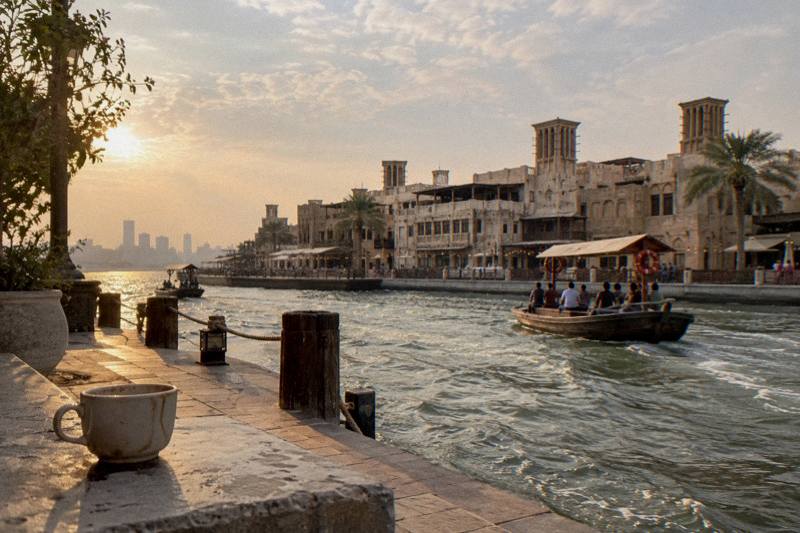
Emirati Cuisine Explained: Spices And Cooking Methods
Emirati food is built on a small, precise spice cabinet and a lot of patience: dried limes, saffron and cardamom, wheat and meat cooked for hours, Gulf seafood, and dates with cardamom-scented coffee to finish. This guide explains the ingredients and methods, then how to taste them in Old Dubai.
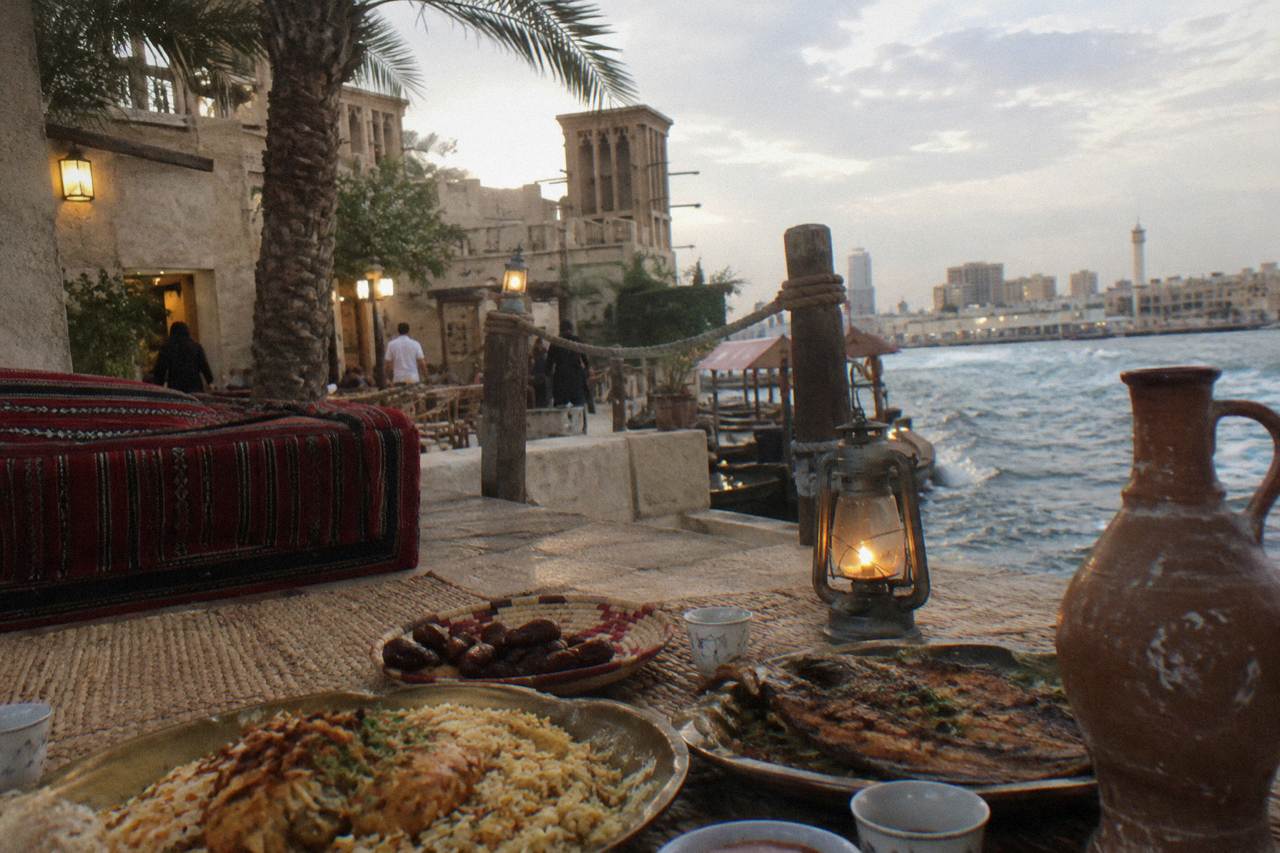
Short answer
Emirati cuisine centres on dried limes (loomi), saffron, cardamom and baharat spices, slow-cooked dishes like harees and machboos, Gulf seafood, and dates with gahwa coffee. Cultural meals with Emirati hosts in Al Fahidi are reported around AED 130 to 160 per person, and guided souk tours with tastings and dinner run about 2.5 hours.
Emirati cuisine is one of the least understood food traditions in a city famous for food. Dubai's restaurant scene imports flavours from every corner of the world, and the UAE's own cooking often gets folded into a generic "Middle Eastern" label that flattens what is actually a distinct Gulf kitchen. It has its own spice cabinet, its own slow cooking methods, its own seafood traditions and its own coffee ritual, and none of it is the same as Levantine or Persian food even when a dish shares a name.
The core is easy to state. Dried limes, saffron, cardamom and baharat provide the flavour base. Wheat and meat are cooked for six to eight hours until they collapse into soft, porridge-like dishes. Rice arrives on platters, family-style, soaked in the cooking juices of lamb, chicken or fish. Dates close the meal, and cardamom-scented Arabic coffee, gahwa, is poured in small cups throughout. The rest of this guide unpacks each of those elements and then explains how to taste them in Old Dubai without guessing at a menu.
What Makes Emirati Cuisine Different From Other Gulf Food?
Emirati cooking is defined by a small set of ingredients used with intent: dried limes for sourness, saffron and cardamom for aroma, baharat blends for warmth, and long cooking times that turn wheat and meat into soft, communal dishes. It is closer to other Gulf kitchens than to Levantine food, but its breakfast dishes, date culture and coffee ritual are distinctly its own.
The confusion usually starts with geography. The UAE sits on the Arabian Gulf, and its historic food trade ran to Iran, India and East Africa, so the pantry includes rice, dried lime and spices that travelled those routes. A visitor ordering hummus and falafel in Dubai is eating well, but they are eating Levantine food, not Emirati food. The dishes that belong to the UAE are things like machboos, harees, balaleet and luqaimat, and they rarely appear on the menus of the international restaurants that dominate the newer districts.
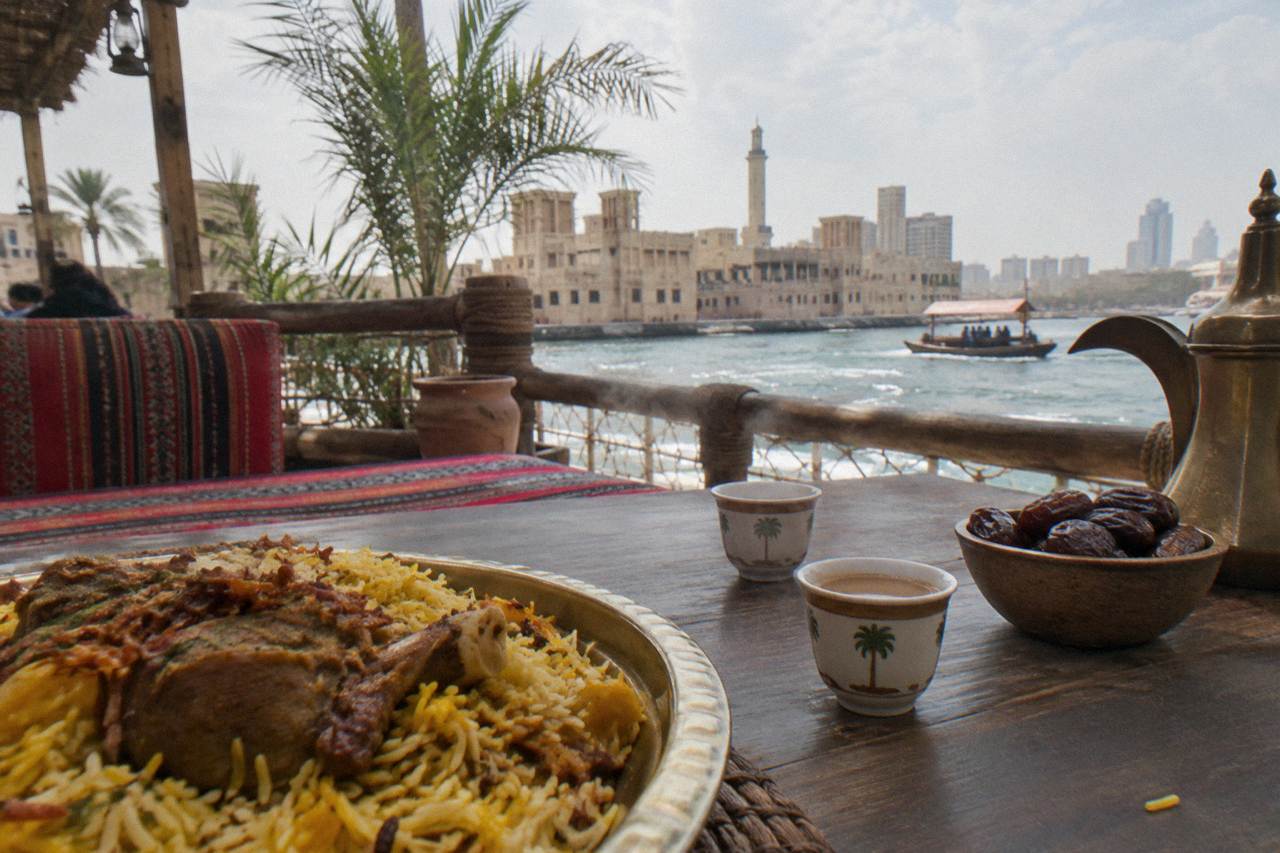
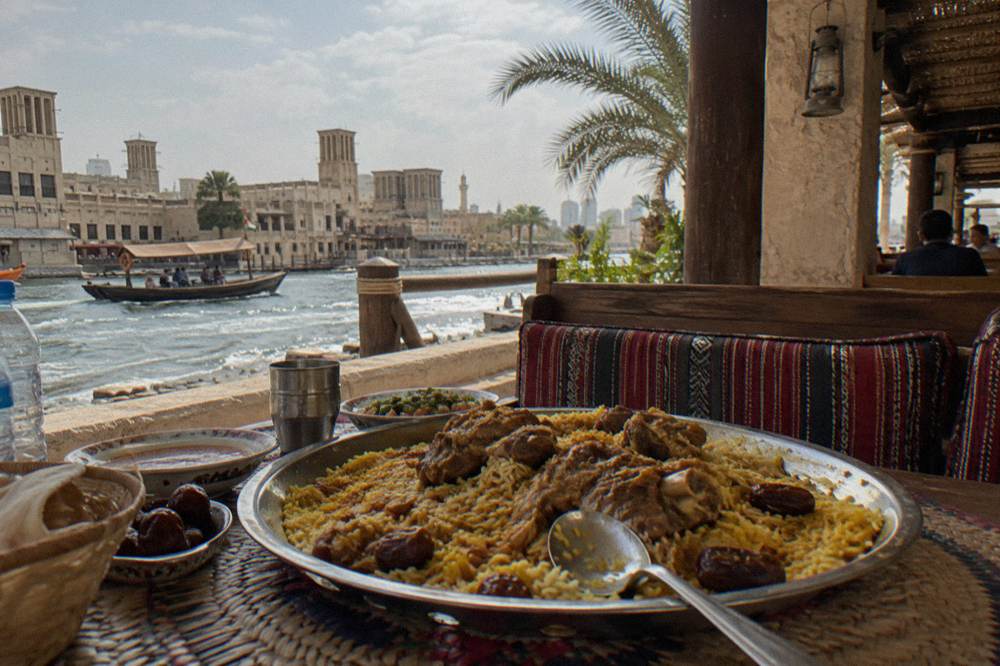
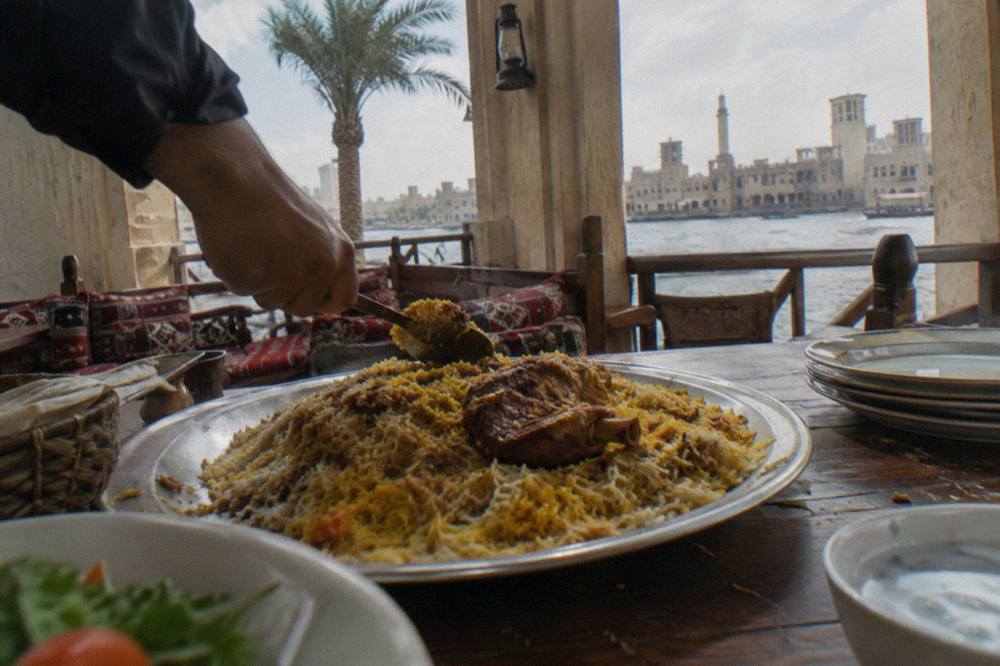
Machboos is the clearest example. It is described in Emirati food guides as the UAE's national dish: long-grain rice slow-cooked with lamb, chicken or fish, dried limes, baharat spices, cardamom, saffron and cinnamon, served family-style on a platter, often with tomato sauce or pickles. The technique, cooking the rice in the meat's own spiced liquid, is the same logic that runs through the whole tradition. Flavour goes into the pot early, and the dish builds depth over hours rather than being assembled at the end.
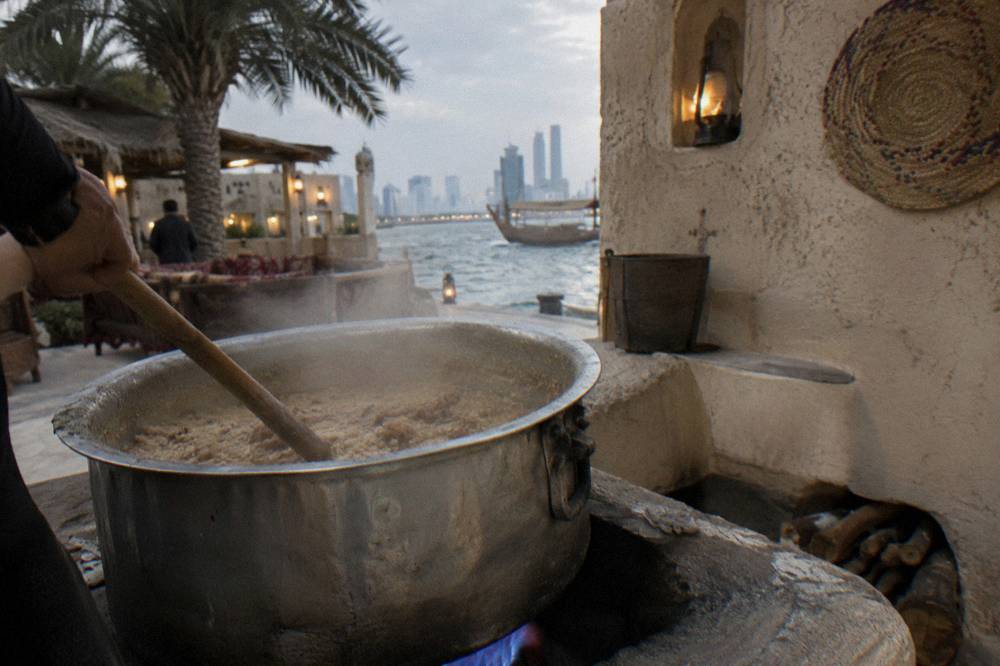
Harees shows the method even more starkly. Wheat and meat, lamb or chicken, are slow-cooked for six to eight hours until the mixture becomes smooth and porridge-like, then finished with ghee and sometimes cinnamon. It is a comfort dish, eaten at gatherings and during Ramadan, and there is no shortcut version: the texture is the dish. Thareed, a meat and vegetable stew ladled over thin regag bread so the bread soaks up the broth, works the same way. The bread is not a side, it is part of the cooking.
For a first-timer, the practical difference is this: Emirati food rewards sitting down. A tasting of shawarma or falafel is a snack, and a good one. A plate of machboos or a bowl of harees, with dates and gahwa afterwards, is the cuisine. Our Emirati food guide: the dishes worth knowing covers the individual dishes in more depth if you want the full list before you travel.
The Spice Cabinet: Dried Lime, Saffron, Cardamom And Baharat
Four flavour sources do most of the work in Emirati cooking: loomi (dried limes) for a sour, fermented depth; saffron for colour and aroma; cardamom for the sweet, resinous note that also scents coffee; and baharat, a warm spice blend, for the savoury base. Cinnamon appears in both savoury pots and desserts, which surprises many visitors.
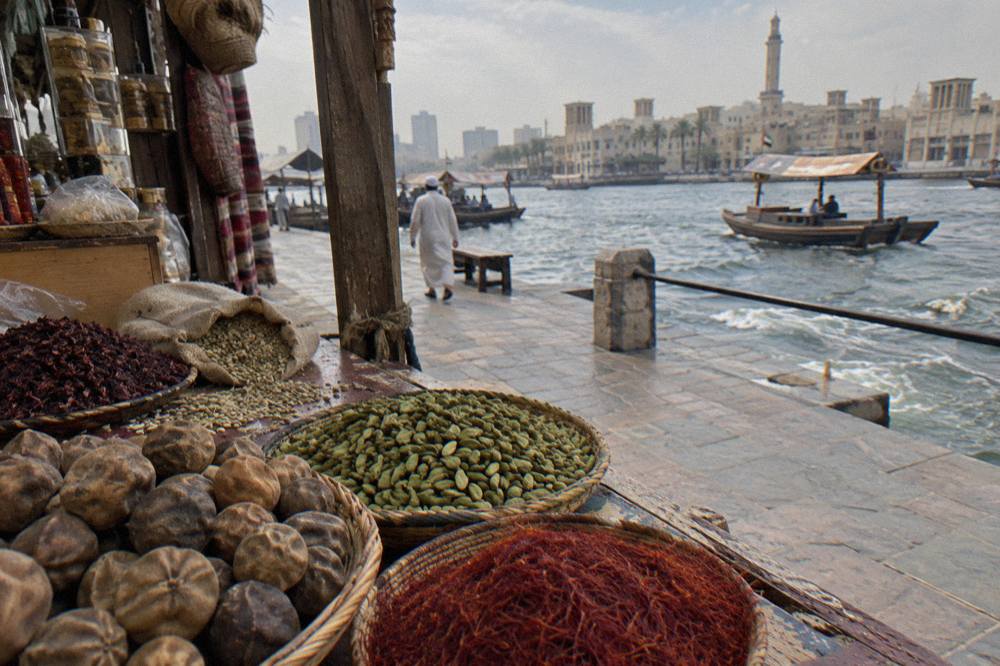
Loomi are whole limes, dried until hard and dark, and they are the ingredient that most separates Gulf cooking from other regional kitchens. One or two are dropped into a pot of machboos or a fish broth, and they release a sourness that is sharper than lemon but rounder than vinegar. In the Spice Souk in Deira they are sold by the bag, and a visitor walking the lanes will recognise them instantly: small, black-brown spheres that look like dried fruit and smell like a citrus grove in the dark.
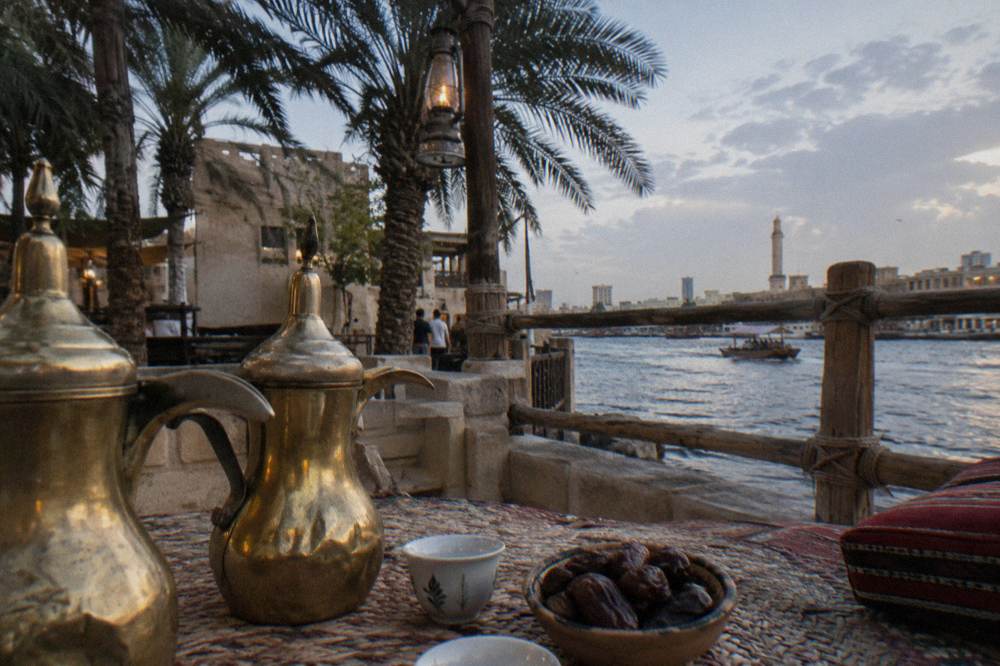
Saffron and cardamom are the aromatic pair. Cardamom is so embedded in the culture that it appears twice in a single meal, first in the savoury pot and then in the coffee. Gahwa, Arabic coffee, is lightly spiced, unsweetened, cardamom-scented coffee served in small finjan cups, traditionally with dates. The etiquette around it matters: the guides on the ritual say to accept and receive the cup with the right hand, and to gently shake the empty cup side to side to signal no more refills. It is a small gesture, and hosts notice it.
| Spice or ingredient | Role in the pot | Where you meet it |
|---|---|---|
| Loomi (dried lime) | Sour, fermented depth in rice and broth dishes | Machboos, fish stews |
| Saffron | Aroma and golden colour | Rice dishes, desserts |
| Cardamom | Sweet resinous note, savoury and sweet use | Machboos, gahwa, chebab |
| Baharat blend | Warm savoury base | Meat and rice dishes |
| Cinnamon | Soft warmth in both pots and sweets | Harees, balaleet |
| Turmeric | Colour and earth in pancakes | Chebab |
If you want to buy any of this to take home, the Spice Souk is the place, and a guided walk makes the shopping easier because the guide can name what you are looking at. A souk walk with tastings and a dinner afterwards is the format that fits this cuisine best, since it connects the raw ingredients to the finished table. Dubai Food Tours compares the culture-led options in one place, and the three below are the closest matches for this specific interest.
The Sheikh Mohammed Centre for Cultural Understanding in the Al Fahidi Historical Neighbourhood runs cultural meals with Emirati hosts that include exactly this kind of context: Arabic coffee and dates, a meal, and an open question-and-answer session on customs, Islam and daily life. Its cultural meals are reported at AED 130 for breakfast or brunch, AED 145 for lunch, AED 150 for fuala tea time and AED 160 for dinner, with booking required, per the centre's own programme page (cultures.ae). Those are reported figures, and the page should be checked before you plan around them.
Slow Cooking Methods: Harees, Machboos And The Family Pot
The defining Emirati cooking method is time. Harees cooks wheat and meat for six to eight hours until smooth; machboos builds rice in a spiced meat broth; thareed soaks regag bread in stew. None of these dishes can be rushed, which is why they anchor gatherings and Ramadan tables rather than quick lunches.
This is where Emirati cuisine is most like a technique and least like a recipe list. The pot sits at the centre of the household, and the dishes that come out of it are designed to feed a room. Harees, in particular, is a dish of patience: the wheat must break down completely, and the guides to the cuisine describe the finished texture as porridge-like, finished with ghee. You cannot order "quick harees" and get the same thing, and no kitchen pretends otherwise.
Machboos uses the same slow logic on rice. The meat cooks first in its spiced liquid, with loomi and baharat doing the seasoning, and the rice then cooks in that same liquid, taking on its colour and fat. Served on a platter, family-style, it is a dish built for a shared table. Madrouba, a thick, spiced salted-fish porridge, shows the method applied to the sea instead of the pasture, and it is one of the dishes visitors are least likely to have met before arriving.
| Dish | Method | Time and texture |
|---|---|---|
| Harees | Wheat and meat slow-cooked, finished with ghee | Six to eight hours, smooth and porridge-like |
| Machboos | Rice cooked in spiced meat or fish broth | Long simmer, family-style platter |
| Thareed | Meat and vegetable stew ladled over regag bread | Bread soaks up the broth |
| Madrouba | Salted fish boiled with rice and spices, beaten | Thick porridge |
| Balaleet | Sweet saffron vermicelli topped with fried egg | Breakfast, sweet and savoury |
Balaleet belongs on this list because it shows the sweet-savoury side of the same tradition. It is saffron- and cardamom-scented vermicelli noodles topped with a thin omelette or fried egg, a classic Emirati breakfast dish, and the combination of sweet noodles and egg confuses visitors until the first bite settles the argument. Chebab, saffron-, cardamom- and turmeric-flavoured pancakes eaten with cream cheese and date syrup, sits on the same breakfast table. Emirati cuisine, as documented by cultural bodies including the UAE's own culture pages (uaeinteract.com), treats breakfast as a full expression of the cuisine, not an afterthought.
The practical point for a visitor is that these dishes are hard to find by wandering. A few restaurants in Deira serve machboos and harees, with reported mains around AED 42 to 65, but the surest way to meet the slow-cooked tradition with an explanation attached is a cultural meal or a guided dinner. A short cultural meal and talk in Old Dubai, about an hour and a half long, is built around exactly that, and the price is on the listing rather than quoted here.
The tour behind the box above, a souk walk with tastings and dinner, runs about 2.5 hours and pairs the market with the meal, which suits this cuisine: you see the loomi and the saffron in the souk, then taste what they do in the pot. Cancellation terms are shown on the operator's listing before payment, so there is little risk in booking ahead of your trip.
Gulf Seafood And The Coastal Pantry
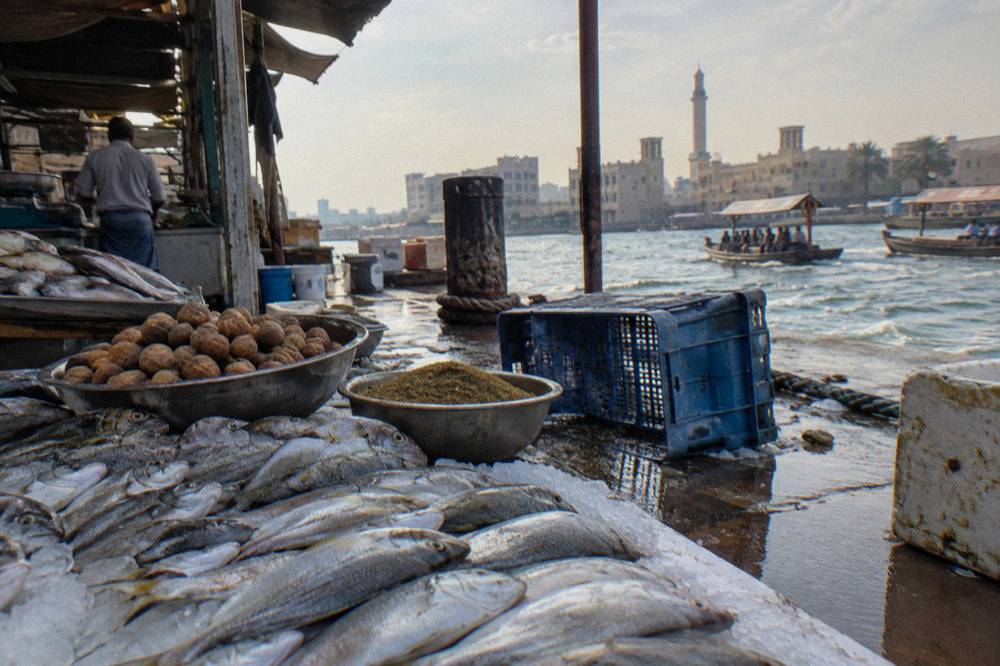
Before oil, the UAE's economy ran on the sea and the date palm, and both shaped the plate. Gulf fish appears in machboos and in salted-fish dishes like madrouba, dried lime and spices cut the richness of the fish, and the coastal pantry still defines which seafood is considered local. Rice, meanwhile, arrived by trade and stayed.
The seafood tradition is the least visible part of Emirati cuisine to visitors, because most of it is cooked at home or served in heritage-style restaurants rather than on tourist strips. Fish machboos, with the day's Gulf fish standing in for lamb, is a coastal variant of the national dish. Salted fish, preserved before refrigeration, survives in madrouba, where the saltiness is balanced by spicing and the soft, beaten texture of the rice.
The date palm is the other half of the old economy, and it is treated as a food source in its own right rather than a garnish. Fresh dates, rutab, have a harvest season that runs primarily through the summer, with the peak from June to September, and the UAE grows roughly 150 varieties, including Khalas, Barhi and Fard. Fresh rutab is reported from around AED 15 per kilogram at festivals and markets, with dried dates available year-round. That seasonality matters: a visitor in December tastes stored dried dates, a visitor in July can taste fresh ones, and they are close to different foods.
| Pantry element | Traditional role | Notes for visitors |
|---|---|---|
| Gulf fish | Machboos, grilled, salted preservation | Seasonal, sold in Deira markets |
| Loomi with fish | Sour balance for rich seafood | Classic pairing |
| Dates (rutab) | Dessert, gift, hospitality | Fresh season peaks June to September |
| Rice | Base of celebratory platters | Arrived via historic Gulf trade |
| Ghee | Finishing fat for harees and pots | Signature of slow dishes |
One honest note on the sweets: luqaimat, crisp fried dough dumplings drizzled with date syrup and sesame seeds, are served warm and meant to be eaten immediately. They turn soft as they sit, so a luqaimat tasting is best had where they are fried to order. Many of the Old Dubai food walks include them as a final stop for exactly this reason, and our guide to traditional Emirati food: machboos, harees and luqaimat goes deeper on the dessert end of the tradition.
Dates, Gahwa And The Ritual Finish
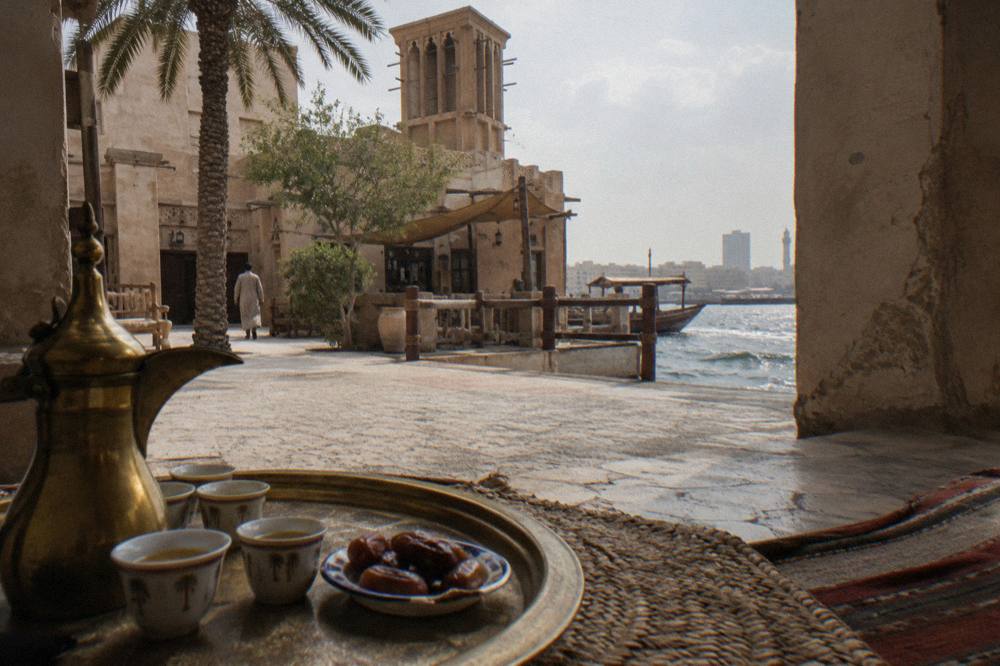
An Emirati meal traditionally ends with dates and gahwa, cardamom-scented unsweetened coffee poured in small cups, and the ritual carries its own etiquette: receive the cup with the right hand, and shake the empty cup gently side to side to signal you are finished. Dates are the sweetness; the coffee is deliberately plain.
The pairing is deliberate. Gahwa is unsweetened, lightly spiced with cardamom, and served in small finjan cups, and the dates that accompany it provide the sugar the coffee refuses. The gesture of hospitality runs one direction, host to guest, and the refills keep coming until the guest shakes the cup. Guides to gahwa etiquette describe the right-hand rule as consistent, and it applies in homes, cultural centres and heritage restaurants alike.
For visitors, the coffee ritual is also the easiest part of the cuisine to join respectfully. Accept the cup, drink, and shake it gently when done. Photography etiquette matters too: always ask permission before photographing individuals, especially Emirati women and families, in souks and heritage settings. The rules on that are consistent across current etiquette guides (citiesinsider.com), and a food walk through Old Dubai is exactly the setting where it applies.
If you want to taste the full arc, spices to slow pot to dates and coffee, in one sitting, a guided experience that ends with an Emirati meal is the most direct route. The Flavors of Arabia walk through Old Dubai and the souks, ending with authentic Emirati cuisine, runs about two and a half hours; its current price and inclusions are on the listing.
How To Taste Emirati Cuisine In Old Dubai
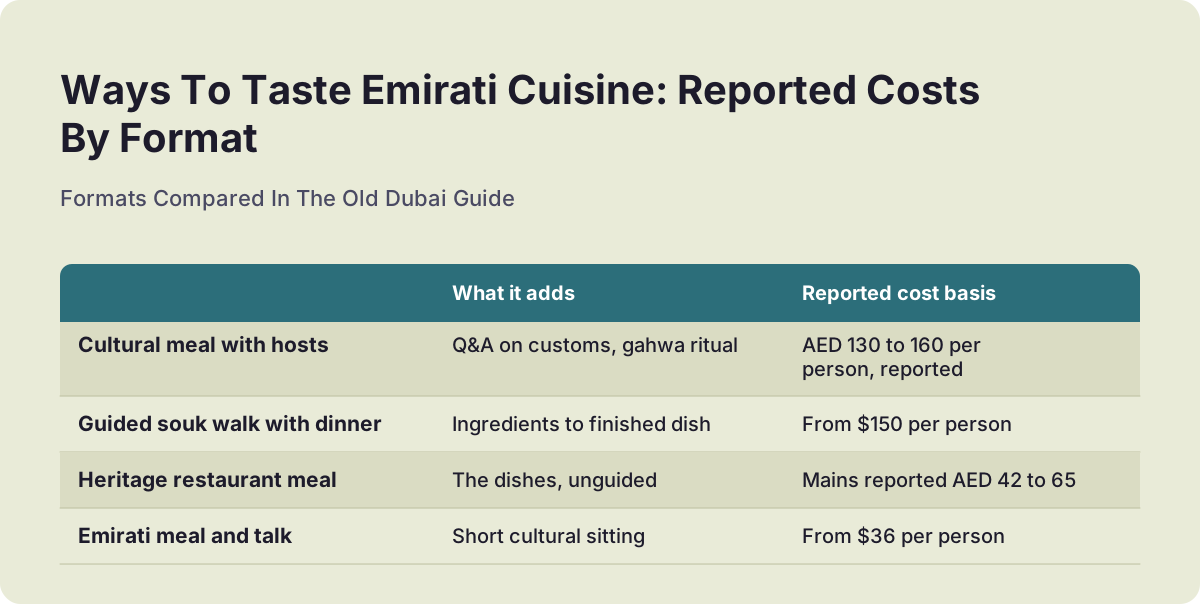
The surest ways in are a cultural meal with Emirati hosts in Al Fahidi, a guided souk walk with tastings and dinner, or a heritage restaurant meal in Deira, where reported mains run around AED 42 to 65. Guided formats cost more than eating independently, but they attach explanations, etiquette and access to home-style dishes that menus rarely describe.
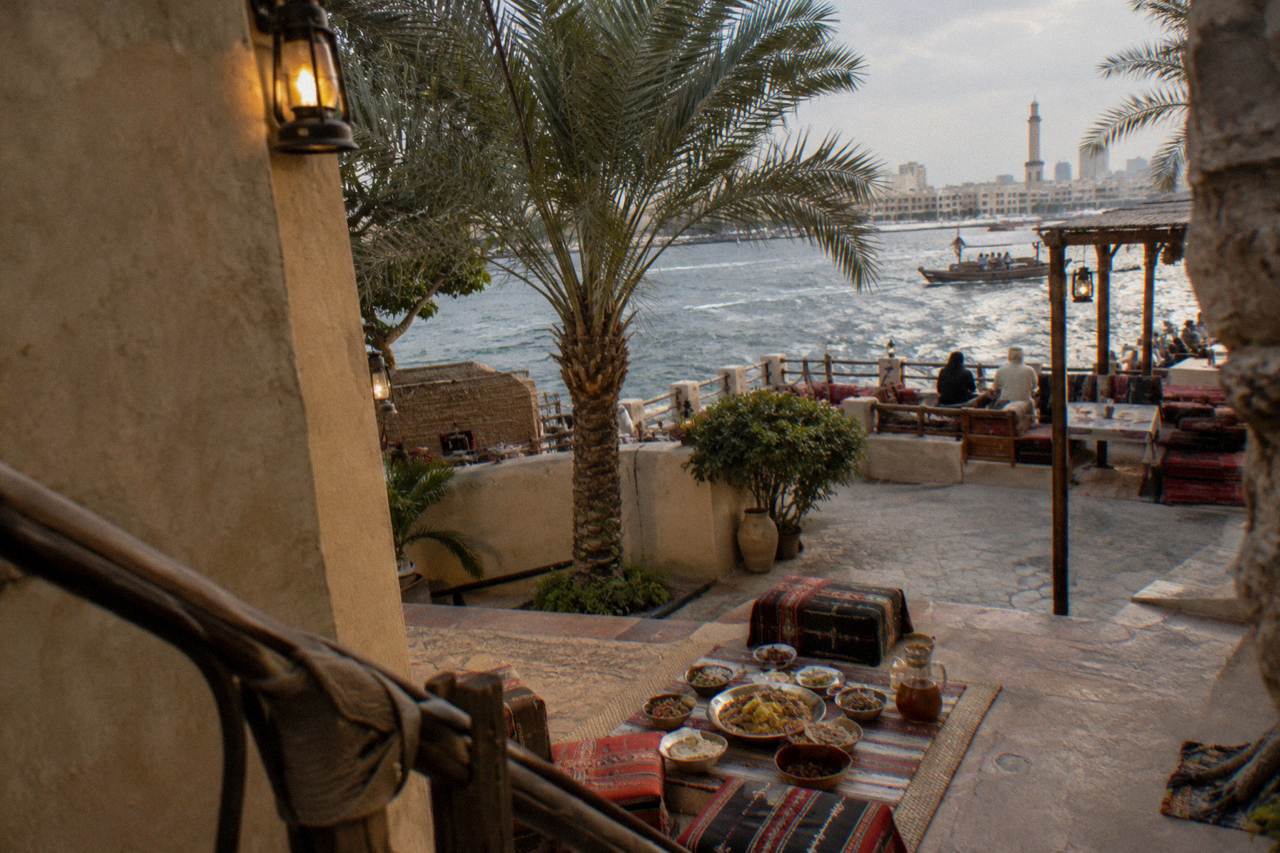
Old Dubai is the right neighbourhood for this because that is where the tradition lives. The Al Fahidi Historical Neighbourhood, with free public access to its lanes and courtyards, holds the cultural centre and several heritage dining rooms, and Deira across the Creek holds the souks and the older restaurants. Everything is walkable, and the Green Line's Sharaf DG station serves the Al Fahidi side, per the RTA's own metro map (rta.ae). Our guide to getting to Old Dubai by metro and abra covers the routes in detail.
Choosing between the formats is mostly a question of what you want explained. A cultural meal is a conversation: food, coffee, dates, and a host answering questions about customs and daily life. A souk walk with dinner is a route: ingredients first, then the table. A heritage restaurant is neither, but it is the cheapest way to eat machboos and harees, with reported prices around AED 58 to 65 for lamb or fish machboos and around AED 42 for harees at named Deira venues, as reported by local dining guides. Check current menus before you go, since dish prices at named venues are not verified here.
| Format | Setting | What it adds | Reported cost basis |
|---|---|---|---|
| Cultural meal with hosts | Al Fahidi cultural centre | Q&A on customs, gahwa ritual | AED 130 to 160 per person, reported |
| Guided souk walk with dinner | Deira souks and heritage restaurant | Ingredients to finished dish | From $150 per person |
| Heritage restaurant meal | Deira | The dishes, unguided | Mains reported AED 42 to 65 |
| Emirati meal and talk | Old Dubai | Short cultural sitting | From $36 per person |
For most first-time visitors with a food interest, the guided souk walk with tastings and dinner is the best single choice: it covers the spice cabinet, the slow-cooked mains and the date-and-coffee finish in about 2.5 hours, with a guide to translate both menus and customs. It is also the most reviewed of the Emirati dining experiences compared here, though the exact rating and review count are on the live listing, so check them there before booking.
If a shorter, seated cultural experience suits your schedule better, the authentic Emirati cultural meal and talk in Old Dubai, an hour and a half, covers the table and the conversation without the walk. Dietary needs are worth flagging before booking on any of these: all meat served in Dubai restaurants is halal, and specific vegetarian or other requirements should be messaged to the operator, since a listing that does not mention them is not a promise either way. Our page on vegetarian and dietary needs on a Dubai food tour explains what to ask.
Whichever you choose, the pairing of guided and independent works well: book one Emirati experience, then use what the guide taught you to order confidently on your own in Deira afterwards.
Common Questions About Emirati Cuisine
What Is The National Dish Of The UAE?
Machboos, long-grain rice slow-cooked with lamb, chicken or fish, dried limes, baharat spices, cardamom, saffron and cinnamon, served family-style on a platter. Guides to Emirati food describe it as the UAE's national dish.
What Spices Are Used In Emirati Cooking?
Dried limes (loomi), saffron, cardamom, cinnamon and baharat blends are the core. Cardamom appears in both savoury dishes and coffee, and turmeric shows up in breakfast pancakes like chebab.
What Is The Difference Between Harees And Machboos?
Harees is wheat and meat slow-cooked for six to eight hours until smooth and porridge-like, finished with ghee. Machboos is rice cooked in a spiced meat or fish broth and served on a shared platter.
What Is Gahwa And How Do You Drink It?
Gahwa is lightly spiced, unsweetened cardamom coffee served in small finjan cups with dates. Receive it with the right hand, and shake the empty cup gently side to side to signal you want no more refills.
Where Can I Try Emirati Food In Dubai?
Old Dubai: cultural meals with Emirati hosts in the Al Fahidi Historical Neighbourhood, heritage restaurants in Deira with reported mains around AED 42 to 65, and guided souk walks that end with an Emirati dinner.
Is Emirati Food Spicy?
It is warmly spiced rather than hot. Baharat, cinnamon and cardamom give depth, and dried lime gives sourness, but the tradition does not rely on chilli heat the way some South Asian kitchens do.