Tipping And Paying In Old Dubai
Tipping in Dubai is personal preference rather than obligation, but the bills themselves carry charges many visitors do not expect. Here is what to tip, what your bill already includes, and how to pay for everything from karak chai to the boat across the Creek.
Short answer
There is no set tipping rule in Dubai. Visit Dubai suggests 10 to 15 per cent at restaurants and AED 5 to 10 at cafes. Bills usually add a service charge of up to 10 per cent plus 5 per cent VAT. Cash is still useful at small stalls, while cards and the Nol card cover most everything else.
Money questions have a way of surfacing on the day of a walk, usually while standing at a counter with a plate of luqaimat in one hand and a card machine blinking in the other. Old Dubai runs on a mix of cash, cards and the Nol transport card, and the tipping culture is looser than many visitors expect. The official line from the city's tourism body is that there are no set rules: tipping in Dubai is personal preference. That freedom is genuine, but it helps to know what your bill already carries, what the small stalls expect, and where a note in your pocket still matters.
This guide covers the practical side: tipping norms at restaurants, cafes and food stalls, the service charge and VAT that appear on Dubai bills, paying for transport around the Creek, and how a guided tasting walk changes the arithmetic. The figures below come from official sources and reported 2026 data, and the tour details come from the operators' own listings, where current prices and inclusions live.
How Much Should You Tip In Dubai?
Tipping in Dubai is voluntary and unregulated, with no fixed percentage required by law or custom. Visit Dubai's own guidance frames it as personal preference, suggesting 10 to 15 per cent at restaurants, AED 5 to 10 at cafes, and AED 5 to 10 for porters and valets. Nothing obliges you to tip at a street food stall, though rounding up is a common gesture.
That official guidance is worth taking at face value. The city's tourism authority publishes a plain statement that there are no set rules, which surprises visitors arriving from countries where a service charge is effectively compulsory. In Dubai the decision is yours, and the amounts suggested are ranges, not demands.
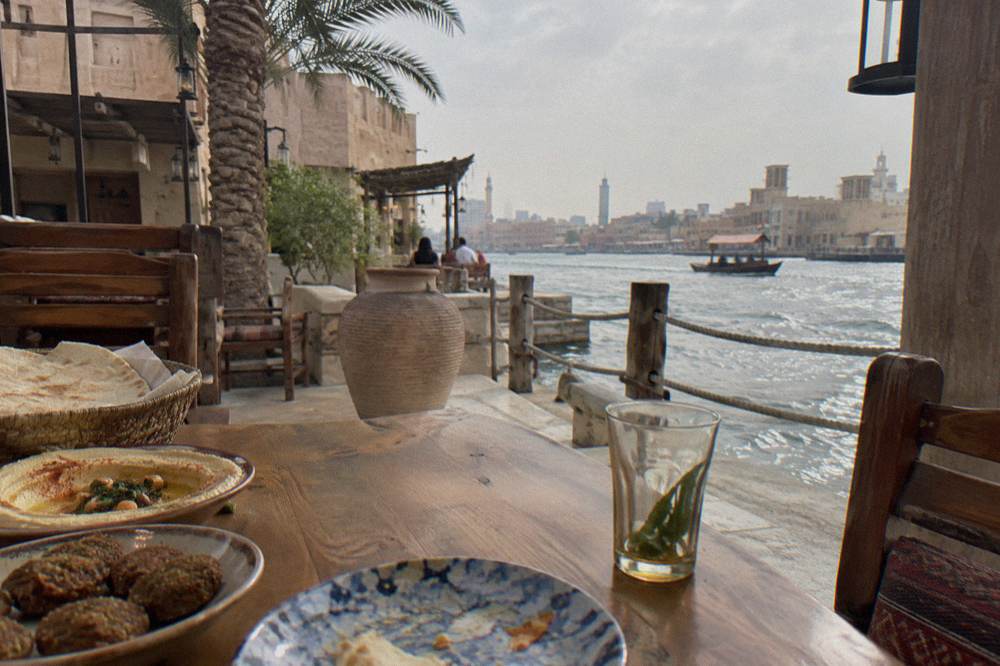
At a sit-down restaurant, 10 to 15 per cent of the bill is the usual benchmark, and the tourism authority notes this is usually straightforward to calculate. At a cafe, the suggested range is AED 5 to 10, or 10 per cent on a larger bill. Lounges fall in the same AED 5 to 10 bracket. Most card terminals let you add a tip at the point of payment, but the tourism authority adds one practical caution: check with the waiter that the amount reaches the staff rather than the restaurant, since a card tip and a cash tip do not always travel the same path.
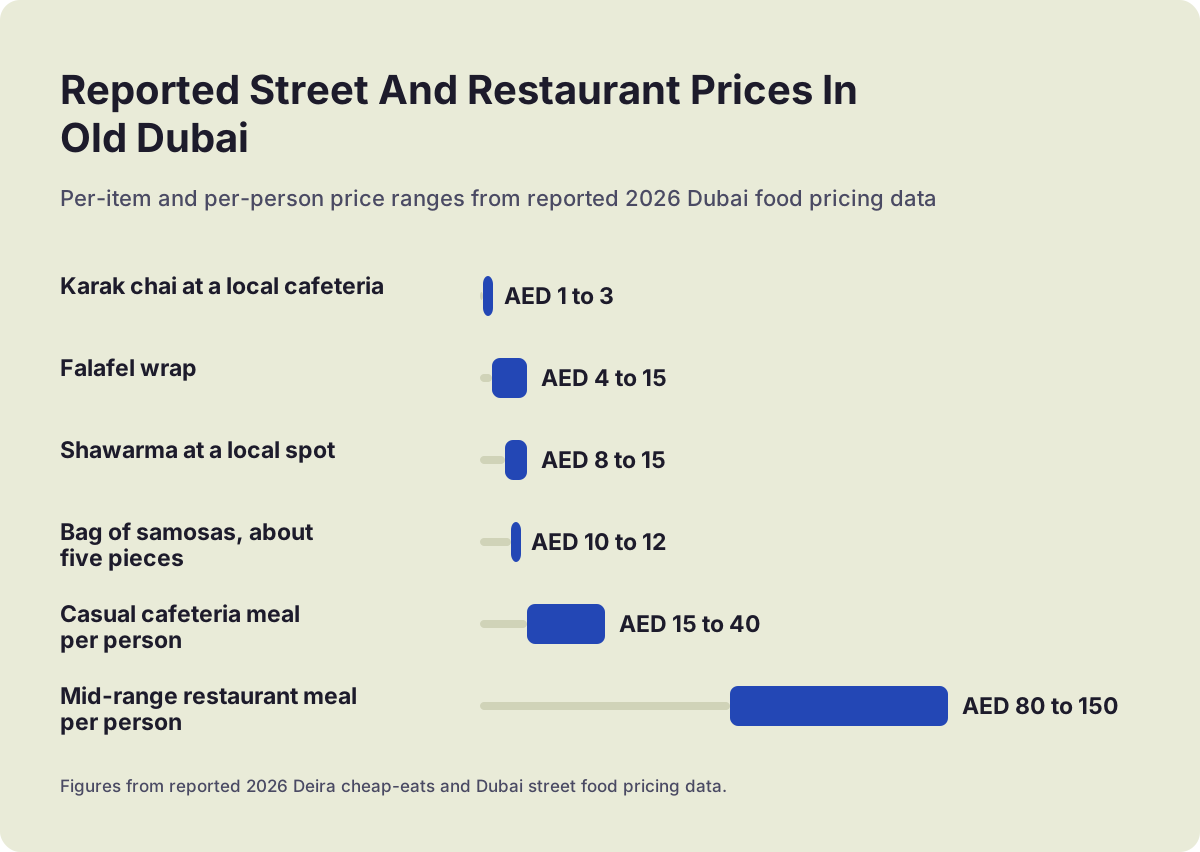
Street food is a different economy. A karak chai that costs a reported AED 1 to 3 at a local cafeteria, or a bag of samosas at a reported AED 10 to 12, is not a percentage-tipping situation. There, rounding up or leaving the small change is the norm, and handing over a note and waving away the coins is a perfectly ordinary transaction. For a fuller picture of what dishes cost across the city, the Dubai food prices guide breaks down meal costs by neighbourhood and venue type.
| Situation | Suggested tip | Source of the figure |
|---|---|---|
| Restaurant meal | 10 to 15 per cent of the bill | Visit Dubai tipping guide |
| Cafe or casual stop | AED 5 to 10, or 10 per cent on a larger bill | Visit Dubai tipping guide |
| Lounge service | AED 5 to 10 | Visit Dubai tipping guide |
| Porters and valets | AED 5 to 10 | Visit Dubai tipping guide |
| Street food stall | Not expected; rounding up is common | Reported local practice |
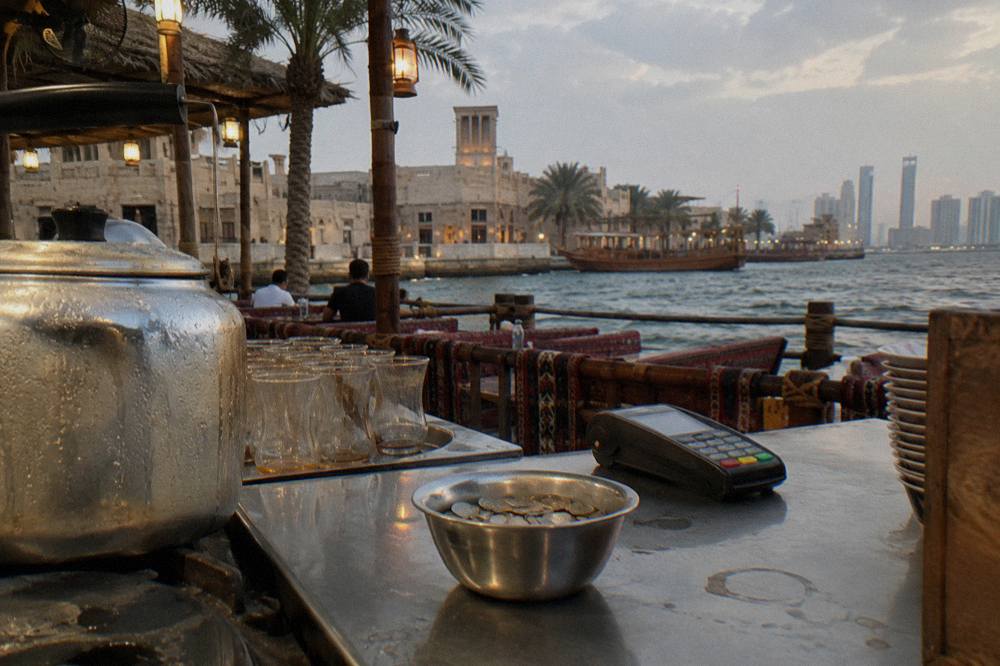
One habit worth adopting: keep small notes. A pocketful of AED 5 and AED 10 notes makes cafe tips, stall purchases and small gestures painless, and saves you from tapping a card for a cup of tea that costs less than the tip would.
Cash Or Card: How Old Dubai Actually Gets Paid
Cards are widely accepted in Old Dubai's restaurants, cafes and shops, but cash remains genuinely useful at small stalls, juice stands and market vendors, where card terminals are not universal. The Nol card handles metro, bus and boat fares, and taxis take cards and cash. Carrying a modest amount of cash alongside a card is the practical setup.
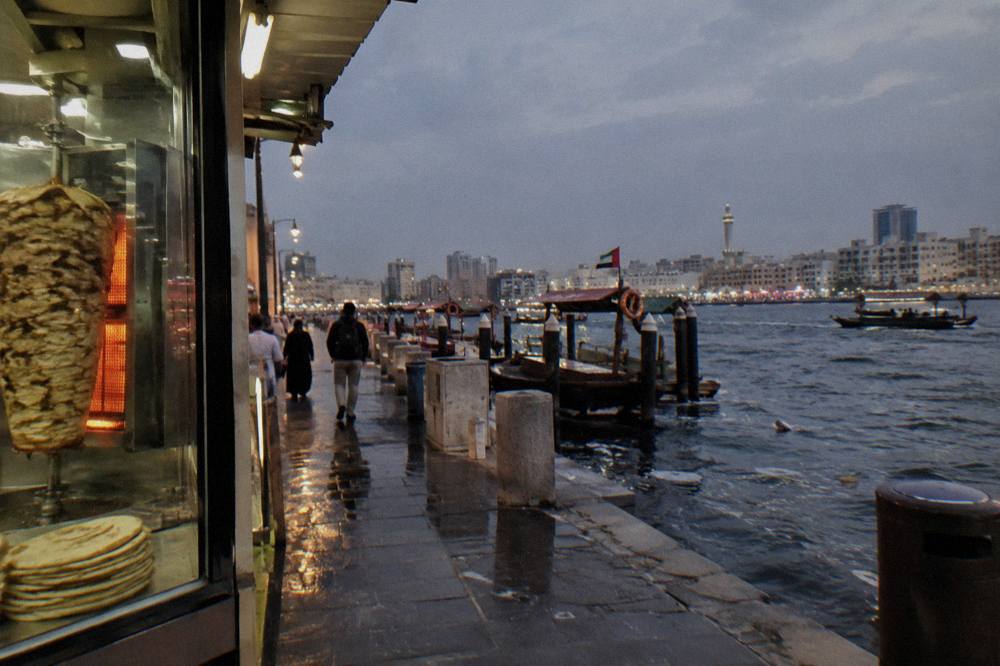
The split is generational rather than geographic. Established restaurants, hotel cafes and the bigger shops in the souks take cards without a second thought. The smaller the operation, the more likely a cash transaction is, and the fresh 2026 reporting on Deira's cheap-eats scene describes an ecosystem of cafeterias and stalls where a handful of dirhams buys a shawarma, a falafel wrap or a karak, transactions that move faster in cash.
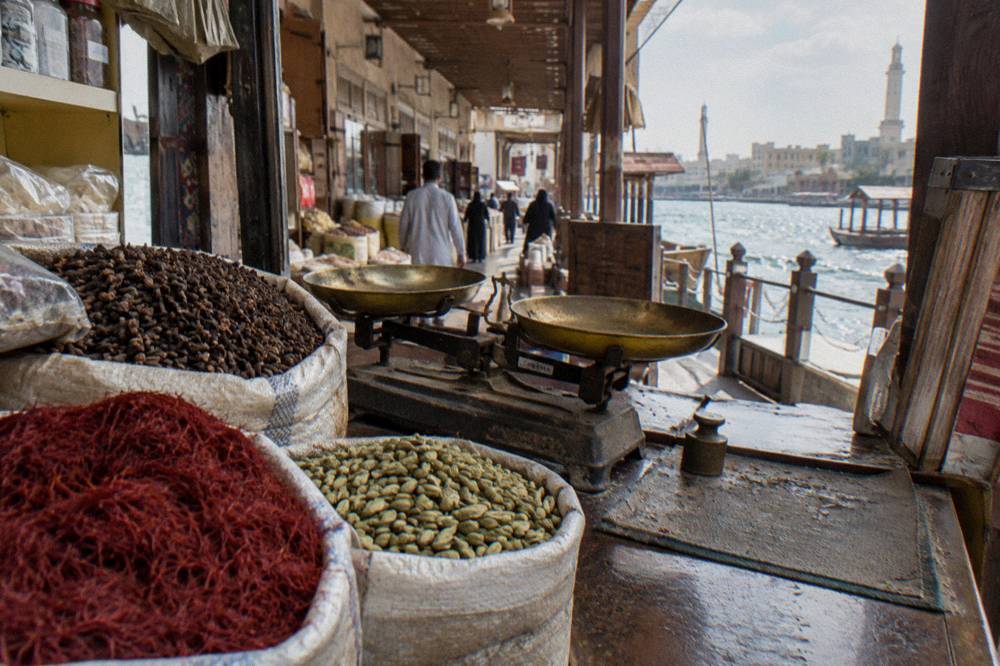
For the souks themselves, both work. Vendors in the Gold Souk and the Spice Souk are used to tourists paying by card, and haggling happens the same way regardless of payment method. What cash does give you is speed and flexibility at the low end of the market, where the reported prices are small enough that card fees and minimum spends start to distort the experience.
A useful comparison for a day of eating, drawn from the reported 2026 figures:
| Item | Reported price | Where the figure comes from |
|---|---|---|
| Karak chai at a local cafeteria | AED 1 to 3 | Reported Deira cheap-eats data |
| Falafel wrap | AED 4 to 15 | Reported street food pricing |
| Shawarma at a local spot | AED 8 to 15 | Reported Dubai street food data |
| Bag of samosas, about five pieces | AED 10 to 12 | Reported Deira cheap-eats data |
| Casual cafeteria meal per person | AED 15 to 40 | Reported neighbourhood pricing |
| Mid-range restaurant meal per person | AED 80 to 150 | Reported restaurant pricing data |
These are reported ranges, not promises: individual stalls and venues vary, and the only way to know what a specific place charges is to look at the board or ask. The pattern, though, is consistent. A day spent eating at the small end of the market runs on coins and small notes, and a day that includes a sit-down dinner runs comfortably on a card.
Guided walks change that arithmetic in one specific way: the tastings are paid for upfront, on the booking page, rather than negotiated stall by stall. The walks compared here include a souks-and-museums walk with local food tasting, an Aladdin-themed souk and Creek tour with tastings, and a shorter authentic souks and boat tour, and each lists its inclusions on the operator's page, which is where the current price and what it covers should be checked.
The appeal is not just convenience. A prepaid tasting walk means you are not making a payment decision at every counter, which matters on a hot afternoon when the queue behind you is three deep and the vendor is waiting. It also means the food is chosen for you by someone who knows the stalls, rather than picked by whatever sign you can read first.
Service Charges, VAT And What Your Bill Already Includes
Restaurant bills in Dubai commonly add a service charge of up to 10 per cent, which is venue-retained and not a government fee, plus a 5 per cent federal VAT on food and drink. Some hotel-affiliated venues add a municipality fee. The service charge is discretionary by law, so an extra cash tip is a genuine choice, not a double payment you are trapped into.
This is the part of paying in Dubai that catches the most visitors. The bill arrives with lines that look like tax, and the instinct is to tip on top of a total that already includes service. Knowing what each line is changes the calculation.
The 5 per cent VAT is a federal tax on food and beverage, and it applies across the board. The service charge is different: reported as capped at 10 per cent by law, it is not mandatory and not a government levy, and it is often retained by the venue rather than passed to staff. That last point is the one worth remembering when deciding whether to add a cash tip. A 2026 explainer on UAE tipping notes that additional cash tips of 5 to 10 per cent, or simply rounding up, are common but voluntary for good service, and the official tourism guidance treats the whole question as personal preference.
| Charge on a Dubai restaurant bill | What it is | Where it goes |
|---|---|---|
| 5 per cent VAT | Federal tax on food and beverage | Government |
| Service charge, up to 10 per cent | Discretionary venue charge, not a government fee | Often retained by the venue |
| Municipality fee, around 7 per cent at some venues | Applies at some hotel-affiliated venues | Reported, check your bill |
The practical read: look at the bill, see whether service is already included, and decide from there. If the service charge is present and the service was good, many diners round up or leave a small cash amount for the waiter specifically, which is exactly the path the tourism authority's caution about card tips reaching staff points toward.
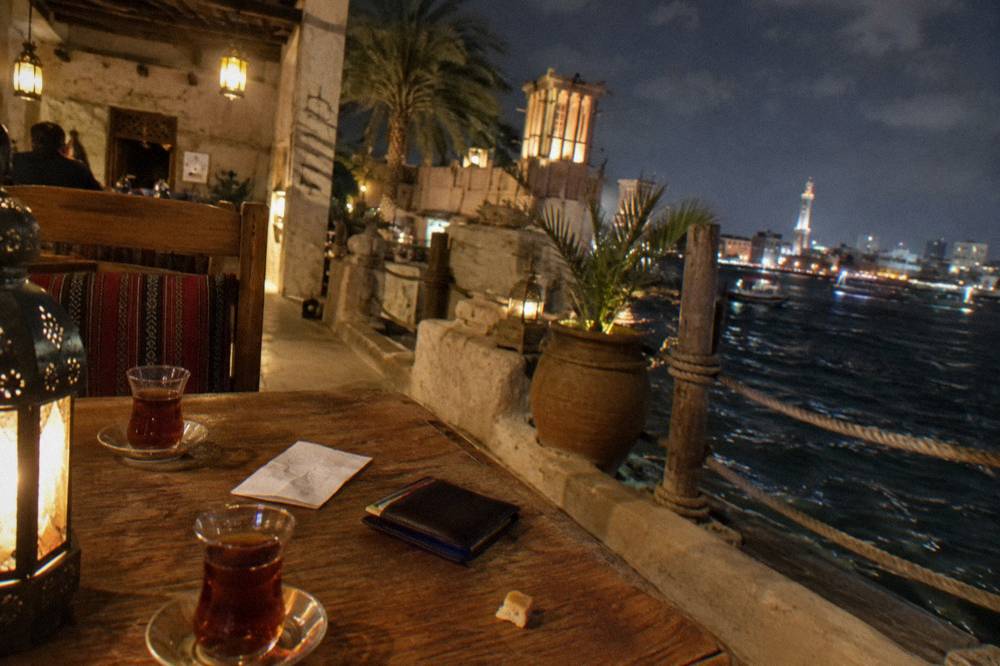
For a guided tasting walk, none of this applies at the point of eating. The tour price covers the stated tastings, and the operator's listing spells out what is included, whether that is food only or food plus drinks. Where a listing does not state a detail, the booking page is the place to ask before you pay. If a prepaid walk with the tastings counted up front sounds like the right fit for your day, the options are on the operator's pages.
The souks, museums and local food tasting walk runs about 3 hours through Old Dubai, and its listing states the food testing component directly. Its current price, meeting point and full inclusion list are on the booking page, and the cancellation terms there are worth a read before committing, since prepaid walks are the one food purchase in Dubai you make days rather than seconds in advance.
Paying For Transport: Nol Cards, Taxis And The Creek Crossing
The Nol card is Dubai's reloadable transport smart card, valid on metro, tram, buses and some marine services, with anonymous Silver and Gold cards costing AED 25 including initial credit. Taxis start at a reported AED 5 between 06:00 and 22:00 and AED 5.5 overnight. The traditional Creek boat crossing is a separate, very cheap cash-and-card transaction.
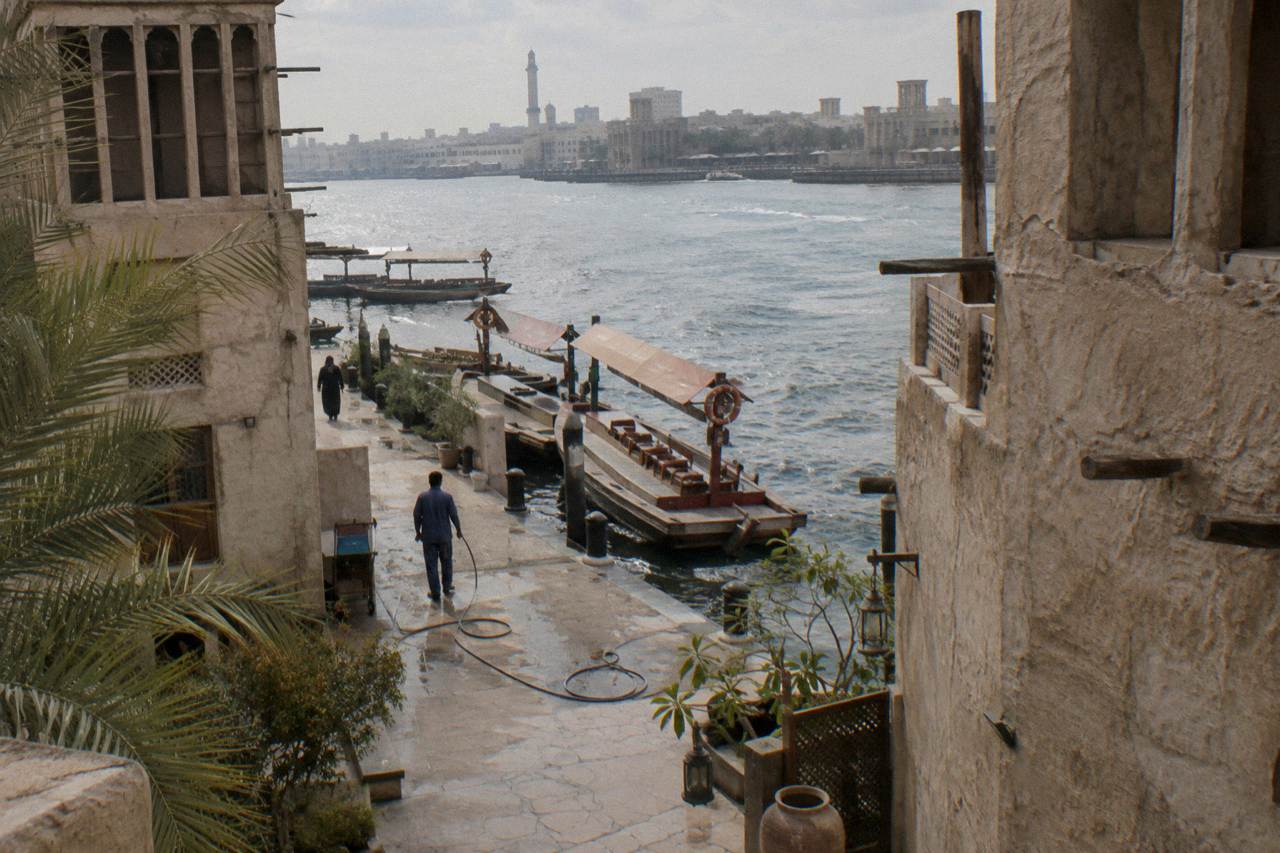
The Nol card is the piece of payment infrastructure that visitors most often underuse. The Roads and Transport Authority issues reloadable cards that work across the metro, tram, buses and some non-transport services, and the anonymous Silver and Gold cards cost AED 25, which includes initial credit. For a day built around Old Dubai, that covers the Green Line stations that serve the area: Sharaf DG for the Al Fahidi side, Al Ras and Baniyas Square for Deira, and Union as the shared interchange. The RTA's own Nol card page lists the current card types, prices and top-up options.
Taxis run alongside the card system rather than through it. The RTA's published starting fares are AED 5 for pickups between 06:00 and 22:00 and AED 5.5 overnight for regular and family taxis, and the fare builds from there. For getting to a walk's meeting point on time, a taxi is often the pragmatic choice, and the metro is the cheap one; the metro and abra guide covers the stations and connections in detail.
The Creek crossing deserves its own sentence because it is the transaction visitors ask about most. The Roads and Transport Authority operates the traditional Creek boats on several commuter routes between the Bur Dubai and Deira sides, and the crossing is short, frequent and cheap. Do not rely on a single printed fare figure: check the current fare on the operator's page or at the station before you board, and carry a little cash for it, since the small boats are the kind of operation where a contactless tap is not guaranteed.
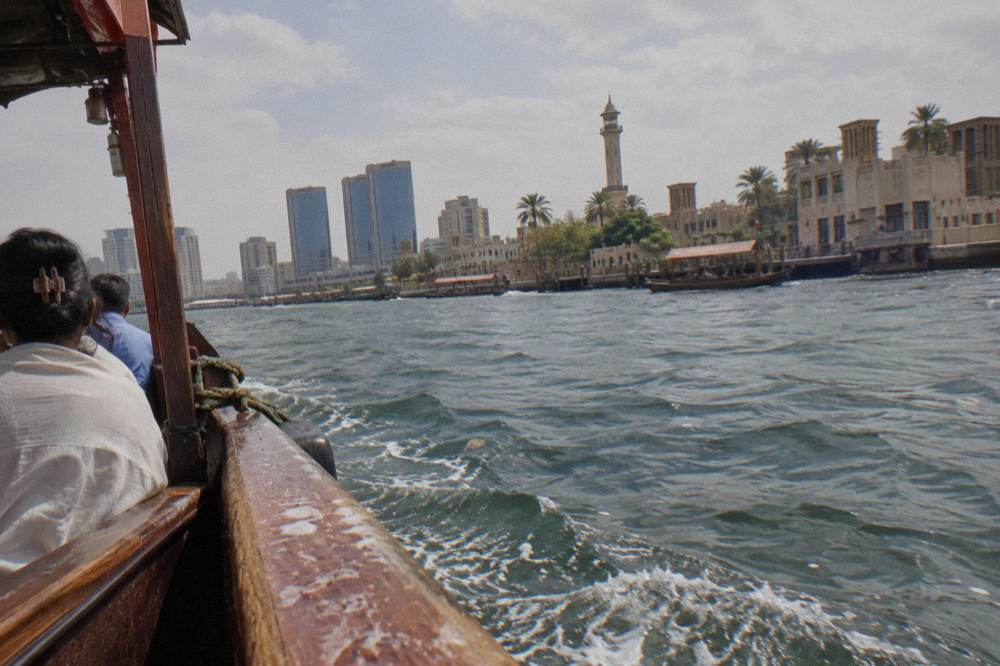
One transport note that intersects with money: several guided walks include the boat crossing as part of the tour, which removes the fare question entirely. The listing states whether a boat ride is included, and that is worth checking when comparing tours, since it is one of the few line items where a guided walk and an independent walk genuinely differ in what you pay on the day.
Tipping Your Food Tour Guide
Tipping a food tour guide in Dubai follows the same voluntary logic as everywhere else in the city: there is no required amount. On a prepaid group walk, a tip of roughly 10 to 15 per cent of the tour price is a common gesture for a guide who did well, and on private walks the same range applies. Cash in the guide's hand is the surest route.
The guide on a tasting walk is doing the thing you are paying for twice over: leading the route and curating the food. Because the tour itself is prepaid, the tip is the only money that changes hands on the day, and it is entirely discretionary in Dubai, consistent with the city's official position that there are no set rules anywhere in its tipping culture.
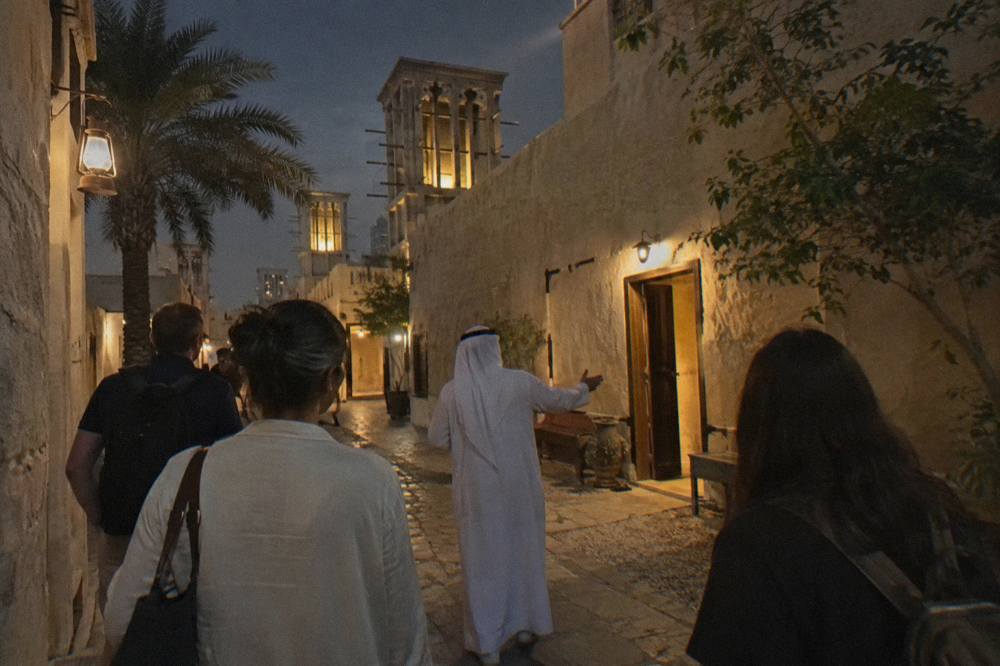
The practical mechanics matter more than the amount. A cash tip handed directly to the guide at the end of the walk is unambiguous, which is the same logic the tourism authority applies to restaurant staff when it suggests checking that a card tip actually reaches the person who served you. If you are joining a walk and want the amount planned in advance, look at the tour price on the booking page and set aside a proportionate amount in small notes.
The walks compared here differ in format, and format affects what a tip feels like. The souks, museums and local food testing walk is a 3-hour guided route; the Aladdin tour covers souks, the Creek and Old Dubai with tastings over about 3 hours; and the authentic souks and boat tour is a shorter 2-hour version with a local boat component. Each operator's listing carries the current price and what is included, and the tip sits on top of that, decided on the day.
A shorter walk can be the right call if the budget is tight or the day is already full. The authentic souks, tastings and local boat guided tour compresses the Old Dubai highlights into about 2 hours, and its listing states the tastings and the boat component. The current price is on the booking page, and the cancellation terms are worth confirming there too.
Dietary Rules That Shape How You Order And Pay
All meat sold in Dubai's restaurants and markets is halal, and pork appears only in designated licensed sections. Alcohol is served at licensed venues to visitors over 21, and drinking in public outside licensed venues is not allowed. These rules shape what appears on menus and bills in Old Dubai, where food walks serve no alcohol unless a listing says otherwise.
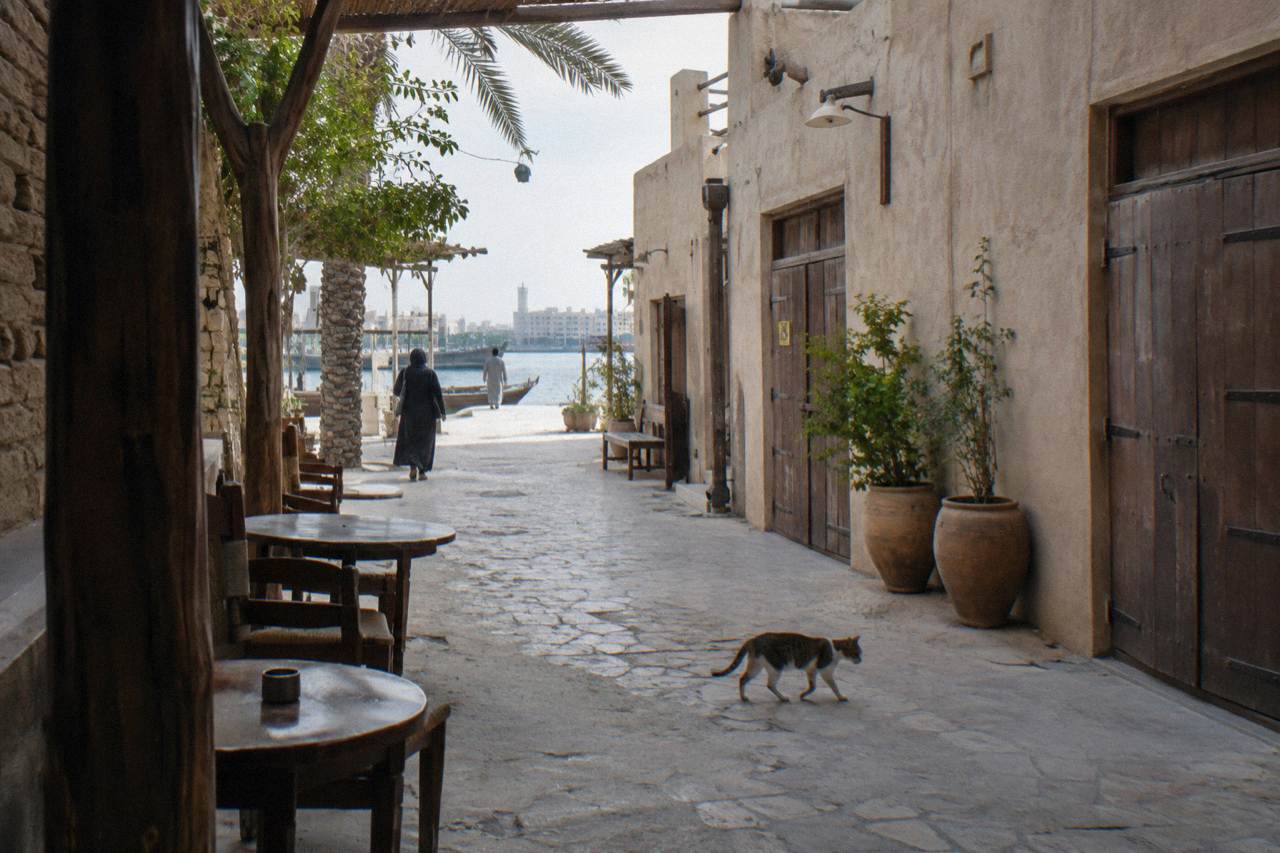
The halal framework is federal, and it means the default everywhere in Old Dubai is halal meat, with pork confined to segregated, clearly labelled sections of licensed venues. For visitors this is mostly invisible, but it matters for one practical reason: if you have a dietary restriction, whether vegetarian, vegan, gluten-free or anything else, the listing of a guided walk is the place to check, because a listing that does not state an accommodation does not mean one exists. The advice is to message the operator before booking, and the dietary needs guide covers the questions worth asking.
Alcohol is the other rule that touches paying. Visitors over 21 may drink at licensed venues, hotels, restaurants and lounges, with no personal licence needed for on-site consumption, per the official guidance. What it means for a food walk is simpler: the traditional food walks through Old Dubai serve no alcohol unless the operator's listing says so, and a walk that ends at a licensed venue is a separate transaction from the walk itself.
Photography etiquette has a small money angle too, in that the best market interactions, including with vendors, start with permission before a photo, and a purchase is often the natural bridge. The dress code for the souks and heritage areas, covering shoulders and knees, is reported as cultural respect rather than a legal fine, and the dress code guide has the details.
During Ramadan, reported 2026 guidance holds that non-Muslims are not required to fast and restaurants operate normally indoors, with discretion advised outdoors during daylight fasting hours. Dining continues, in other words, and the paying mechanics do not change; the Ramadan food tours guide covers the timing questions.
What A Day Of Eating And Walking Actually Costs
A day built on reported figures runs from a few dirhams per snack to AED 80 to 150 per person at a mid-range restaurant, with a casual cafeteria meal at AED 15 to 40. A prepaid guided walk replaces the stall-by-stall arithmetic with one upfront price stated on the booking page. Transport adds a Nol top-up or a taxi starting fare of AED 5 to 5.5.
Putting the pieces together is where the reported figures earn their keep. A morning karak and a samosa, a lunchtime shawarma, a cafeteria plate and an evening sit-down meal land across the ranges already listed, and the total depends almost entirely on where you set the ceiling. The cheap end of Old Dubai is genuinely cheap by global city standards, and the reported data backs that up rather than relying on impression.
The guided walk sits in that landscape as a fixed point. Its price is stated on the booking page, its tastings are counted, and the guide's tip is the only open variable. Against a day of independent eating, the comparison is not strictly about money: it is about whether you want the route, the stalls and the context chosen for you, or the freedom to follow your nose and pay as you go. Both are legitimate ways to eat Old Dubai, and many visitors do one of each.
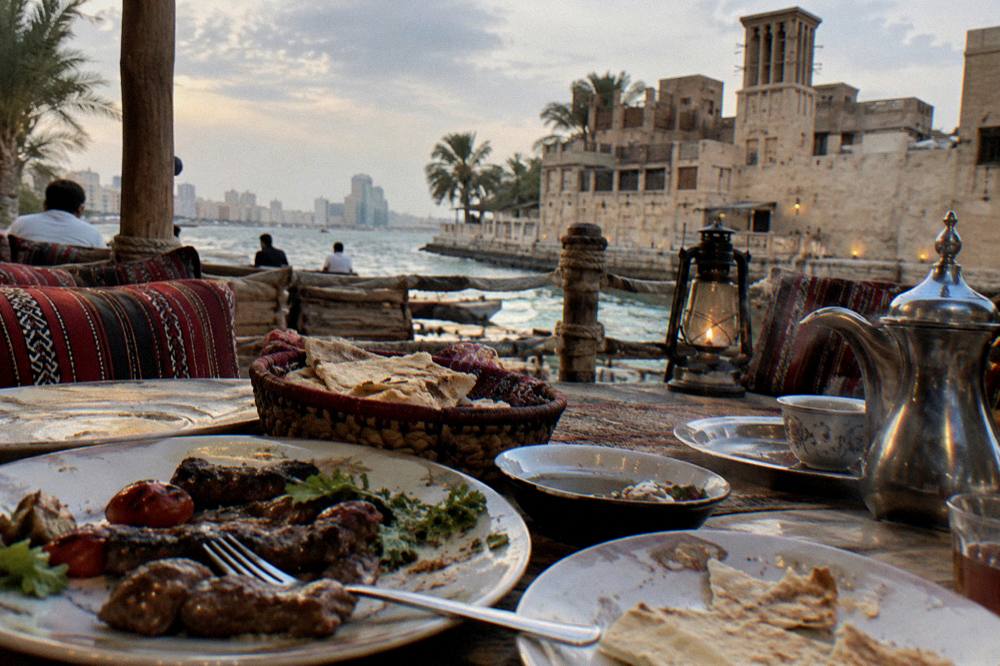
The Aladdin tour, covering souks, the Creek, Old Dubai and tastings over about 3 hours, is the middle option of the three walks compared here, and its listing carries the current price, the meeting point and the inclusions. Checking those before the day means the only cash you need on your walk is the tip and whatever you spend in the souks.
However you structure the day, the payment habits that serve visitors best in Old Dubai are the same three: a working Nol card for transport, a small float of cash for the low end of the food market and the boat, and a card for everything else. The tipping, as the city's own guidance says, is personal preference, and knowing that is itself a kind of budgeting freedom.
For the wider picture of what a walk through Old Dubai covers, route by route, the Old Dubai food walk guide lays out the stops, and this site, Dubai Food Tours, keeps the current tour pages updated with each operator's listed price and inclusions.
Common Questions About Tipping And Paying In Old Dubai
Is Tipping Required In Dubai?
No. Visit Dubai's official guidance states there are no set rules and that tipping is personal preference. Suggested ranges exist, 10 to 15 per cent at restaurants and AED 5 to 10 at cafes, but they are suggestions, not obligations.
What Is The Service Charge On A Dubai Restaurant Bill?
Reported as up to 10 per cent, the service charge is a discretionary venue charge, not a government fee, and it is often retained by the restaurant. A separate 5 per cent VAT applies to food and beverage as a federal tax.
Should I Tip On Top Of A Service Charge?
It is your choice. The service charge is not mandatory by law, and additional cash tips of 5 to 10 per cent or rounding up are reported as common for good service. Handing cash directly to staff is the surest way for it to reach them.
Do Street Food Stalls In Old Dubai Expect A Tip?
No. At the reported price level of a karak chai or a bag of samosas, tipping is not part of the transaction. Rounding up or leaving the small change is a normal gesture, nothing more.
Can I Pay By Card Everywhere In Old Dubai?
Cards are widely taken at restaurants, cafes and souk shops, but small stalls and juice stands are not guaranteed to have terminals. Carry a modest cash float for the low end of the market and for the Creek boat crossing.
How Much Should I Tip A Food Tour Guide In Dubai?
There is no required amount. On a prepaid walk, roughly 10 to 15 per cent of the tour price is a common gesture for a guide who did well, and cash handed directly to the guide at the end of the walk is the simplest method.