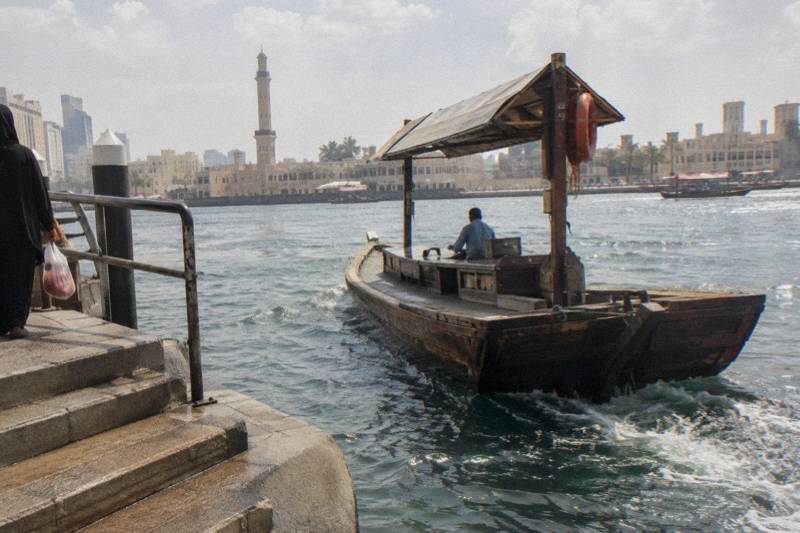
Dubai Creek Abra Ride And Waterfront Eating
The Creek is the oldest geography in Dubai, and the small wooden boats that cross it are still the quickest way between the two best eating districts in the city.
Short answer
The Dubai Creek abra is a small wooden boat that shuttles between Bur Dubai and Deira, part of the city's public transport. The crossing links the Al Fahidi and Al Seef waterfront on one bank with the Spice Souk and Gold Souk on the other, and several guided food walks build their route around it. The fare is paid at the dock; check the RTA page for current details.
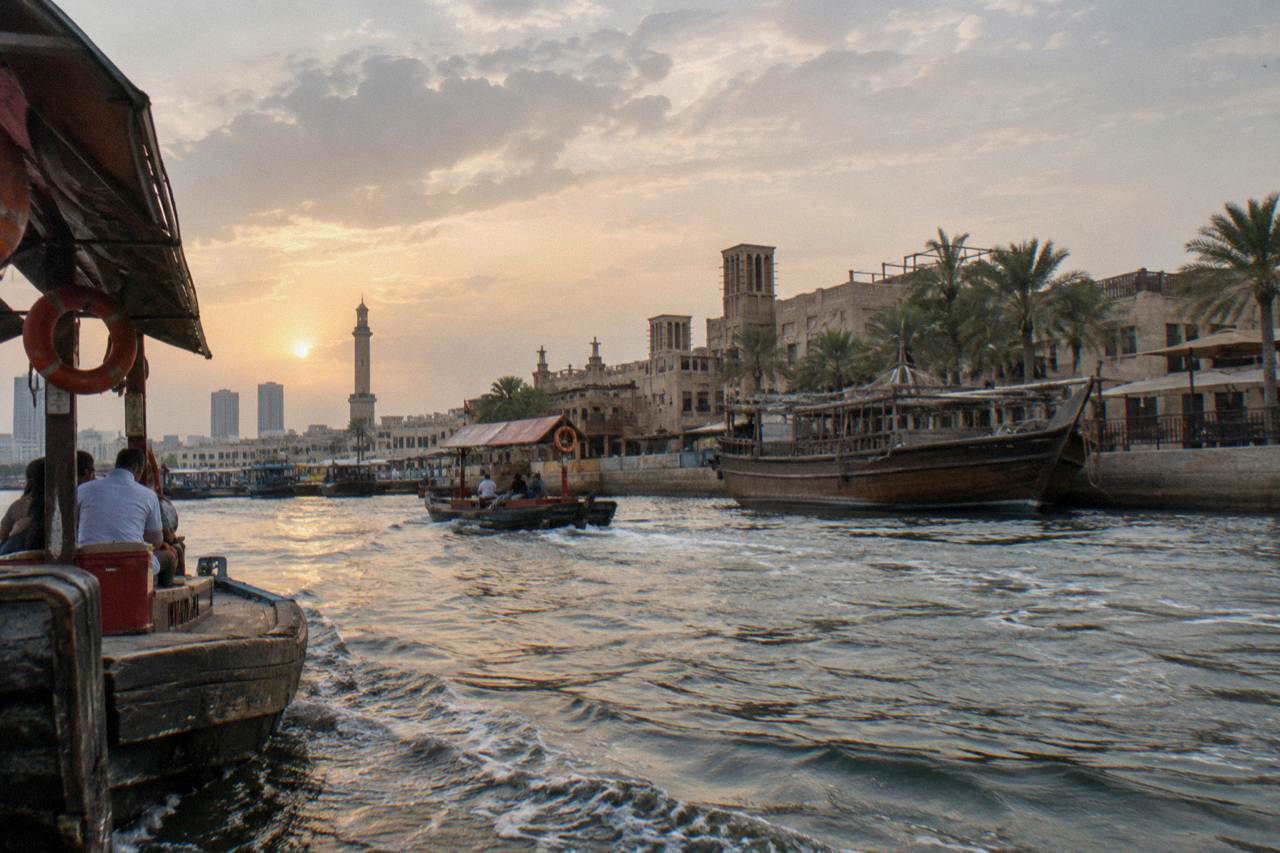
The Creek split Dubai long before the towers arrived. Boats have crossed this water for generations, and the abra, a low wooden open boat, still runs the same short hops between the Bur Dubai bank and the Deira bank that it always has. What has changed is what waits on either side: a heritage waterfront on one bank, two of the most famous souks in the Gulf on the other, and street food in every lane between. This page explains how the crossing works, which guided food walks include it, and what to eat within a short walk of each dock.
What Is The Dubai Creek Abra And Where Does It Run?
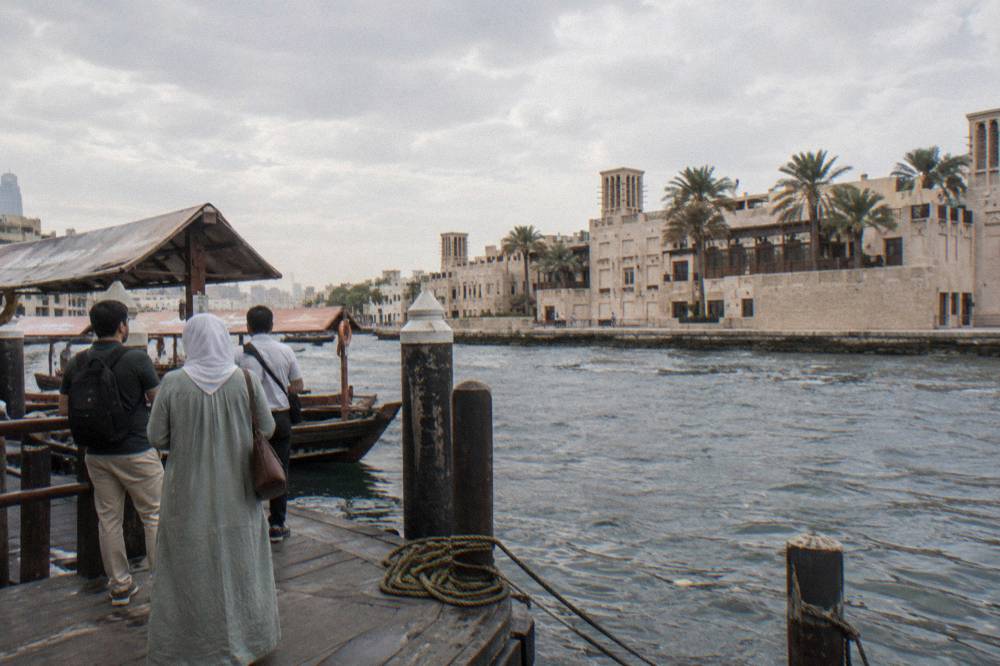
The abra is a small wooden boat operated as public transport across Dubai Creek, running fixed short routes between the Bur Dubai bank and the Deira bank. The Roads and Transport Authority lists several crossing routes, including the traditional commuter hops between Bur Dubai and Deira Old Souq, plus connections serving Al Seef, Al Fahidi, Baniyas and Al Sabkha. Each crossing takes only a few minutes, and boats run as a regular service rather than as private charters.
The name covers two experiences that visitors sometimes confuse. The commuter abras are the open wooden boats that locals have used for decades to get to work across the water. Separately, operators run longer sightseeing boats along the Creek, and some guided food walks include a boat segment as part of their route. The commuter crossing is the one most visitors mean when they talk about taking an abra.
The RTA, the city's transport authority, publishes the route map on its official Creek abra page. The routes described there include the traditional commuter crossings and additional connections along both banks.
| Route | Connection | Type |
|---|---|---|
| CR1 | Bur Dubai to Deira Old Souq | Traditional crossing |
| CR2 | Dubai Old Souq to Al Sabkha | Traditional crossing |
| CR3 | Dubai Old Souq to Baniyas | Traditional crossing |
| CR4 | Al Sabkha to Al Fahidi | Traditional crossing |
| CR5 | Al Fahidi to Deira Old Souq | Traditional crossing |
| CR6 | Al Seef to Baniyas | Traditional crossing |
| CR7 | Al Seef, Al Fahidi, Dubai Old Souq | Listed with one route noted on hold in a 2026 flyer |
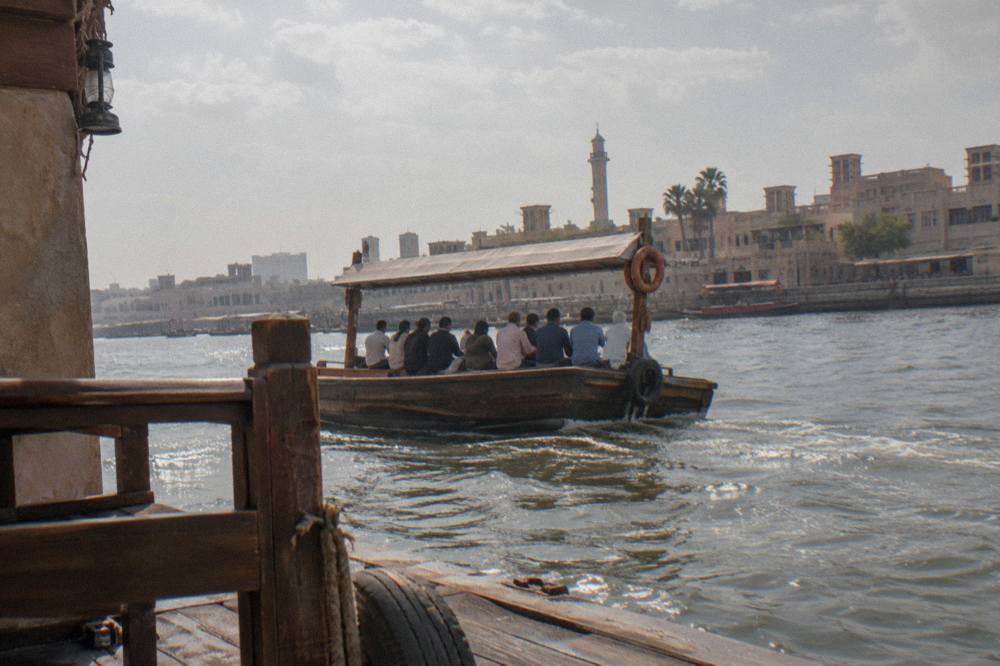
The geography is simple once you see it. On the Bur Dubai side sit Al Fahidi Historical Neighbourhood, the Al Seef waterfront promenade and the Textile Souk. On the Deira side sit the Spice Souk, the Gold Souk and the lanes around Al Ras. The Creek between them is narrow at the crossing points, which is why the boat hop has survived as a genuine commuter service rather than a tourist relic. Once you've mapped the two banks, the guide to Old Dubai's sights beyond the food helps you plan a full day across both sides of the Creek.
How Does An Abra Crossing Work?
You board at a dock on one bank, pay at the dock, and the boat crosses directly to the opposite dock. There is no ticket office in the sense of a metro station; the fare is handled at the point of boarding, and the RTA page carries the current fare and timetable details. Boats load quickly, the crossing itself lasts only minutes, and the docks sit within walking distance of the souks and heritage lanes on both banks.
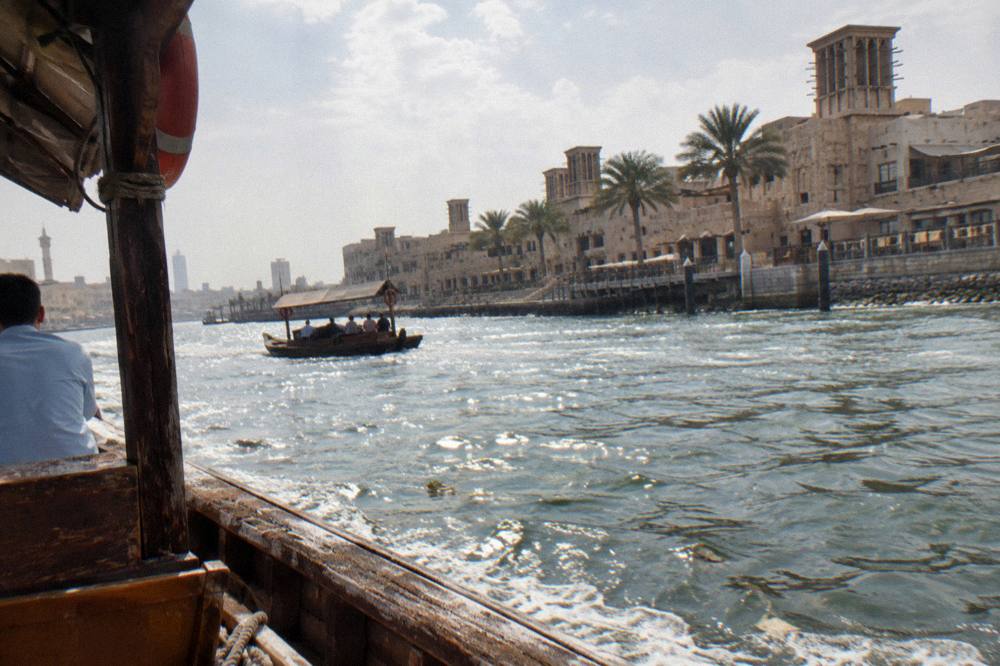
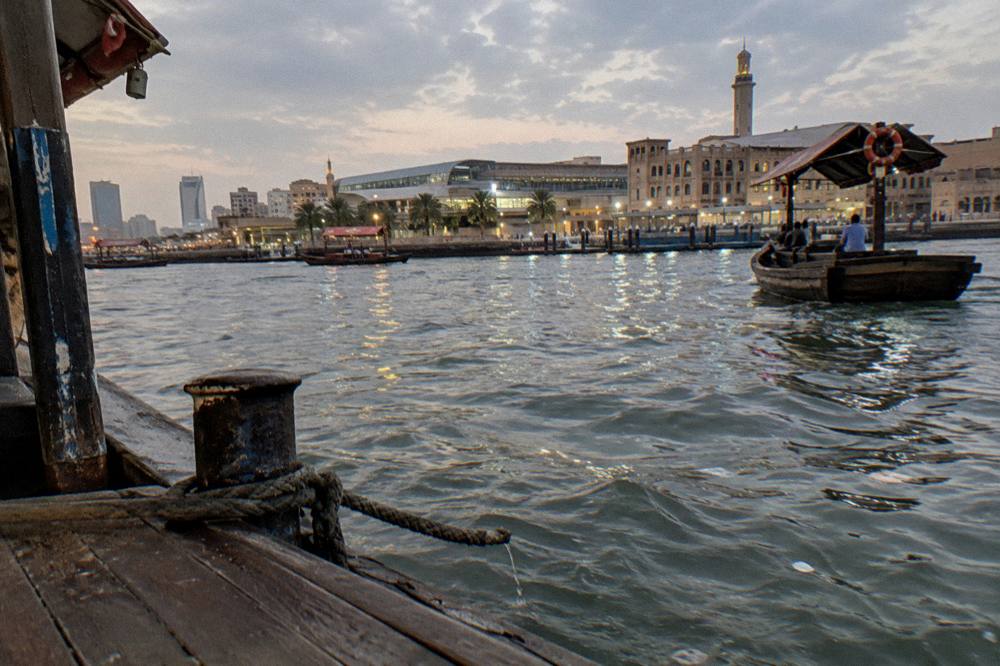
For planning purposes, treat the crossing like a very short ferry ride rather than a cruise. You stand or sit in an open boat, the water is calm in the Creek, and the skyline of old and new Dubai is visible from the water. In warm months the breeze on the crossing is one of the more comfortable minutes of a walking day.
A few practical notes. The docks can be busy at the start and end of the working day because this is a real commuter service. Boats run frequently, so a full boat simply means waiting for the next one. If you want to know what the ride costs before you travel, check the RTA page linked above, since fares are handled at the dock itself.
Photography deserves a mention here. The crossing gives you close views of working boats and the waterfront, and it is tempting to photograph everything. Etiquette in the UAE is to ask permission before photographing individuals, particularly families and women in traditional dress, and this applies on the docks and in the souks as much as anywhere in the city. Our page on the Dubai Food Tours site covering the dress code for walking tours and souks goes into what to wear on both banks.
Which Guided Food Walks Include The Abra Crossing?
Several guided food walks in Old Dubai build their route around a Creek crossing, combining a heritage walk on one bank with a boat ride and souk browsing on the other. These tours typically run about 3 hours and include street food tastings alongside the crossing, with the exact stops and inclusions described on each booking page. The abra segment is part of the route rather than a separate ticket you buy yourself.
The featured example is the Aladdin tour with souks, Creek and tastings, a 3-hour guided walk covering Old Dubai, the souks and the Creek with tastings included. It is a good fit for visitors who want the crossing explained in context: a guide leads you through the lanes, the boat ride is part of the narrative of the city, and the tastings are counted in the tour description. Check availability
A longer option is the Old Town, Souks, Street Food and Abra Ride tour, which runs 3 to 4 hours and covers the Old Town, the souks, street food and the crossing in a single guided route. The extra hour matters if you like a slower pace through the lanes, and the listing describes exactly what food is included.
What Do The Boat Cruise Food Walks Cover?
Some tours replace the short commuter crossing with a longer boat cruise along the Creek, pairing the ride with a guided food route through Al Fahidi and the souks. These walks run between 2.5 and 4 hours depending on the option, and the boat segment is a cruise rather than a dock-to-dock hop. The inclusions, from tastings to the boat ride itself, are listed on each tour's booking page.
The Al Fahidi Old Town, Souks, Street Food and Abra Cruise tour runs 2.5 to 4 hours and starts in the heritage district before reaching the water. It suits visitors who want more time on the Creek itself rather than a quick hop between banks. The premium version of this format, the Premium Old Town, Street Food, Souks and Boat Ride tour, runs a full 4 hours and adds a more relaxed pace.
The choice between a crossing and a cruise comes down to time and interest. The crossing is a few minutes and puts you in the souks almost immediately. A cruise gives you the waterfront from the water, which is a different view of both banks, at the cost of a longer tour overall.
What To Eat On The Bur Dubai Waterfront?
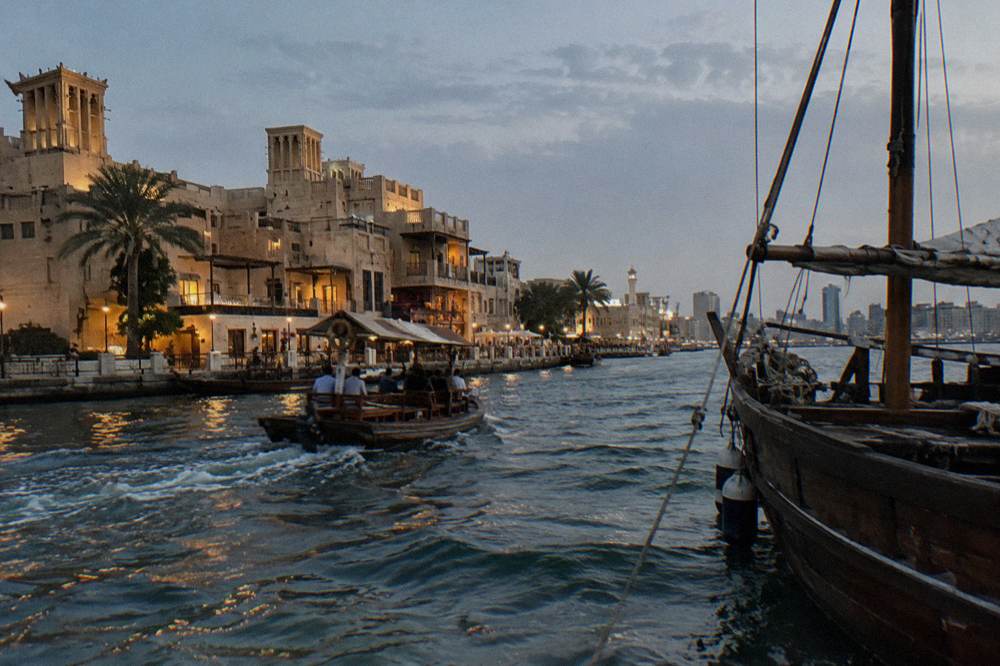
The Bur Dubai bank holds Al Fahidi Historical Neighbourhood, the Al Seef promenade and a cluster of Emirati dining options within a short walk of the abra dock. The Sheikh Mohammed Centre for Cultural Understanding in Al Fahidi offers cultural meals with Emirati hosts, with reported prices from AED 130 for breakfast to AED 160 for dinner, booking required. The promenade itself is free to walk, roughly 1.8 km end to end.
Al Fahidi is the oldest surviving residential district in the city, a grid of wind tower houses, galleries and courtyards. Dubai Culture states the neighbourhood is open daily from 7am to 8pm, and walking the lanes is free. The Al Seef promenade alongside it mixes recreated heritage architecture with modern cafes, and the whole stretch is flat, shaded in places and easy on foot.
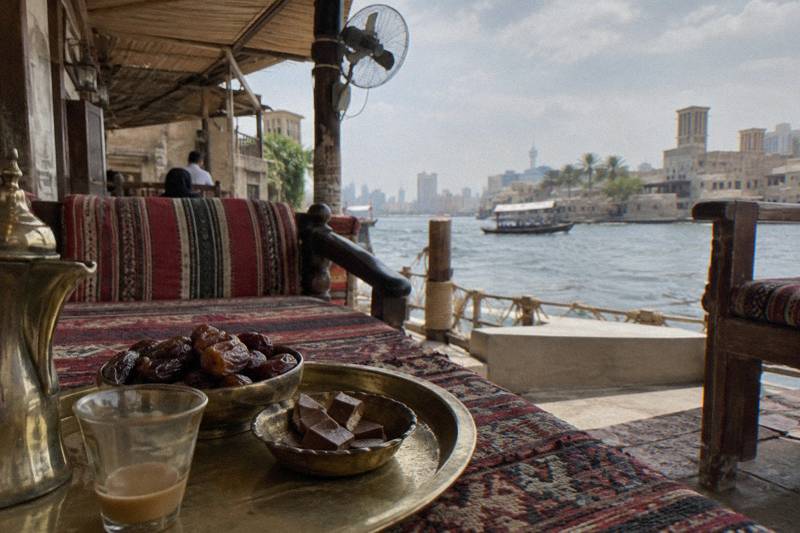
For a sit-down Emirati experience, the Sheikh Mohammed Centre for Cultural Understanding hosts 1.5-hour cultural meals with Emirati hosts, including a question and answer session on customs and daily life, Arabic coffee and dates. The centre's own programme page lists the current meal schedule and prices.
| Cultural meal (SMCCU, Al Fahidi) | Reported price per person |
|---|---|
| Breakfast or brunch | AED 130 |
| Lunch | AED 145 |
| Fuala tea time | AED 150 |
| Dinner | AED 160 |
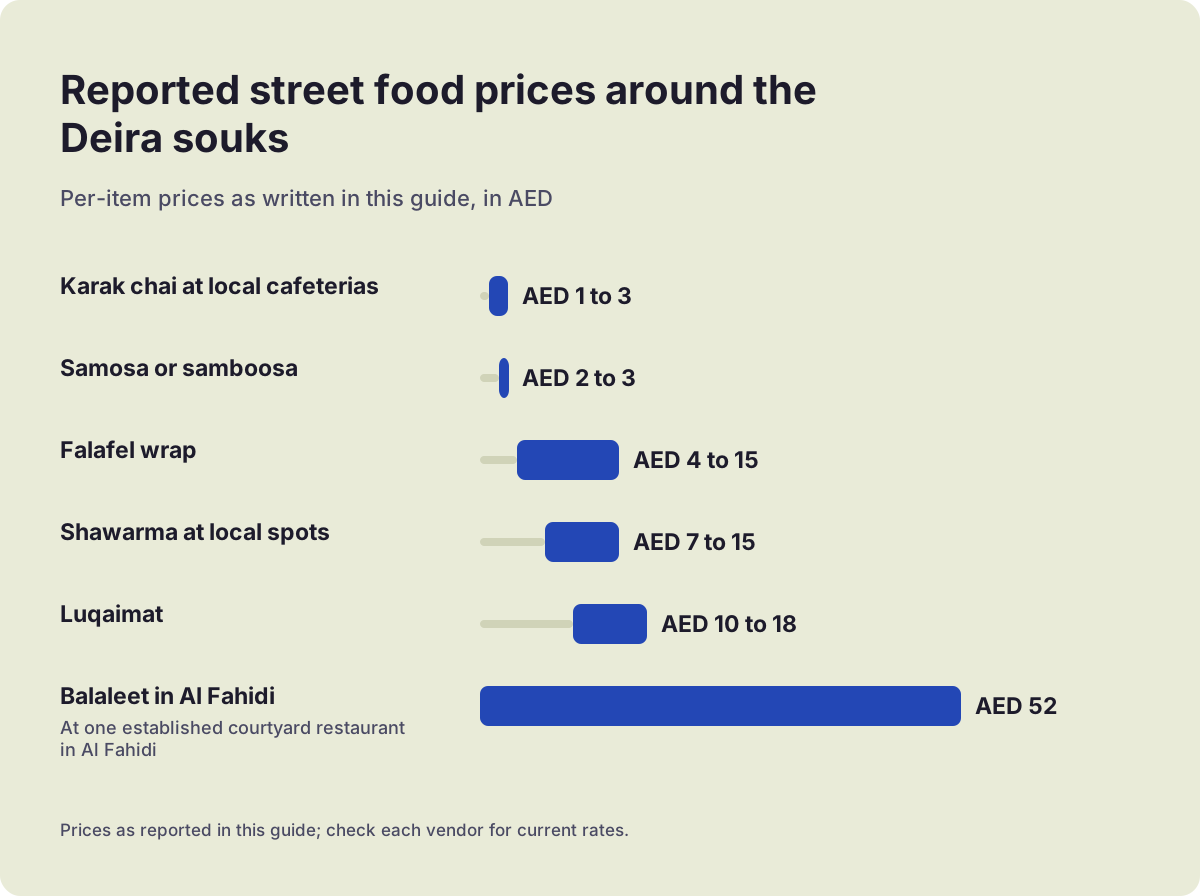
Emirati breakfast dishes worth knowing on this bank include balaleet, sweet saffron and cardamom vermicelli topped with a thin omelette, and chebab, saffron pancakes served with cream cheese and date syrup. One established courtyard restaurant in Al Fahidi serves balaleet at a reported AED 52. Our Al Fahidi historic district food and coffee stops guide maps the district in more detail, and the Bur Dubai food walk guide covers the full bank.
Crossing To Deira: What To Eat Around The Souks?
The Deira bank puts you at the Spice Souk and the Gold Souk within minutes of the dock, with a dense band of street food stalls and small cafes in the surrounding lanes. Reported prices for the staples are low: shawarma around AED 7 to 15 at local spots, karak chai around AED 1 to 3 at local cafeterias, and samosa around AED 2 to 3 each. The souks are browsing markets as much as eating grounds.
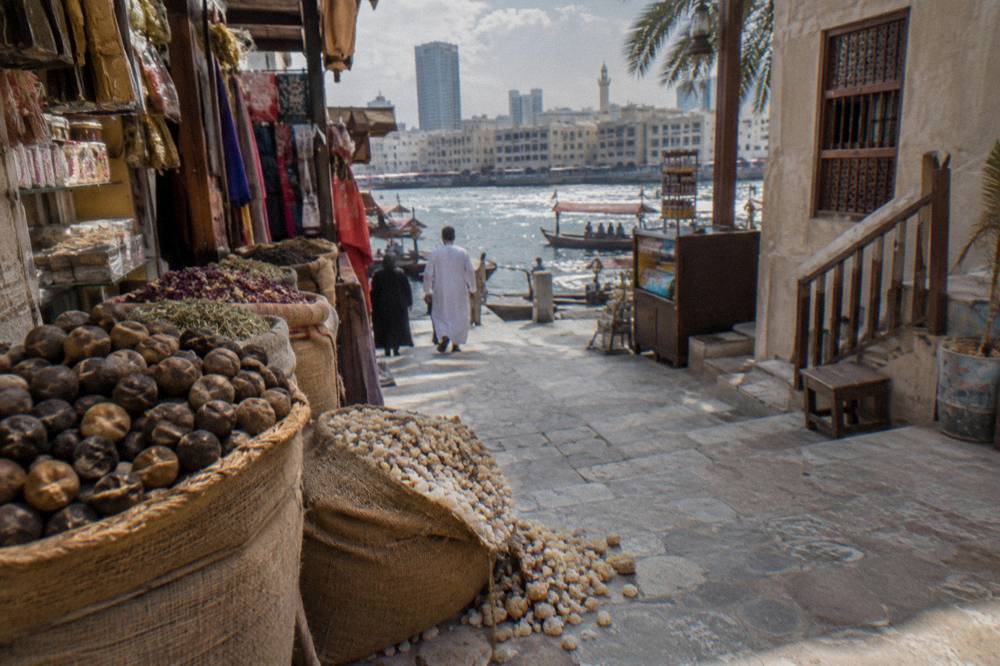
The Spice Souk is the sensory half of the crossing: sacks of dried lime, baharat blends, saffron and frankincense line the lanes, and vendors sell by weight. The Gold Souk next to it is the famous one, with shopfronts of jewellery along a covered walk. Visit Dubai states most Gold Souk shops open around 10am to 10pm, while Spice Souk shops generally open earlier than 8am and run past 9pm, with many closing during the daytime on Fridays. Individual shops vary, so check before planning an early morning.
| Street food item (Deira lanes) | Reported price |
|---|---|
| Shawarma at local spots | AED 7 to 15 |
| Falafel wrap | AED 4 to 15 |
| Karak chai at local cafeterias | AED 1 to 3 |
| Samosa or samboosa | AED 2 to 3 each, bags of around 5 at AED 10 to 12 |
| Luqaimat | AED 10 to 18 |
One tour format that pairs well with the Deira side adds an Emirati house to the Creek route. The Old Town, Street Food, Creek, Souks and Emirati House tour runs 3 hours and combines the street food walk with a cultural stop, which suits visitors who want both the market lanes and a sense of how food is served at a local table.
For a deeper look at the bank itself, see the Deira food guide for eating in Old Dubai and the Deira Spice Souk guide.
How Do You Get To The Abra Docks By Metro?
The Green Line serves both banks: Al Ras and Gold Souq stations sit on the Deira side, while Sharaf DG station serves the Al Fahidi area on the Bur Dubai side. A Nol card, the city's rechargeable transport card, costs AED 25 for an anonymous Silver or Gold card including initial credit, and covers metro, tram and buses. Metro operating hours run from 5am to midnight on most days, with later Friday service and an 8am Sunday start.
The stations are close to the action. On the Deira side, Al Ras station is a short walk to the Spice Souk, and Gold Souq station is named for the market it serves. On the Bur Dubai side, Sharaf DG station is the one listings commonly use as a meeting point for the Al Fahidi area. The official RTA metro map shows the full line.
| Green Line station | Serves |
|---|---|
| Union | Interchange with the Red Line, edge of the old district |
| Baniyas Square | Deira, near the Creek mouth and Baniyas |
| Gold Souq | Deira, the Gold Souk |
| Al Ras | Deira, the Spice Souk and surrounding lanes |
| Sharaf DG | Bur Dubai, Al Fahidi and the Textile Souk area |
Walking between the metro station, the souks and the docks is the normal way to do this district. The distances are short, the streets around the souks are flat, and the standard walking connections between Al Fahidi, Al Seef, the Textile Souk, the abra stations and the Deira souks are all open, with no reported route closures. Our getting to Old Dubai by metro and abra guide covers the full journey in detail.
What Does A Day On Both Banks Cost?
A day on both banks can be remarkably affordable: the crossing itself costs a small amount paid at the dock, casual meals around the souks run AED 15 to 40 per person, street snacks like karak cost just AED 1 to 3, and a guided 3.5-hour food walk with the crossing included is reported at AED 435 per person.
The honest comparison is between doing the district independently and joining a walk. Independently, you pay for the crossing, your snacks and your sit-down meals, and you navigate without a guide. On a guided walk, the price bundles the route, the guide's context and a set of tastings, and the listing states exactly what is included before you book.
| Eating level (reported) | Typical price |
|---|---|
| Karak chai at a local cafeteria | AED 1 to 3 |
| Street snacks, samosa or falafel | AED 2 to 15 per item |
| Casual Emirati or cafeteria meal | AED 15 to 40 per person |
| Mid-range restaurant meal | AED 80 to 150 per person |
| Independent guided food walk example | AED 435 per person, 3.5 hours, food included |
Restaurants commonly add a service charge of up to 10 percent, which is venue-retained rather than a government levy, plus 5 percent VAT on the bill. Tipping is voluntary; cash tips of 5 to 10 percent are common for good service. Our tipping and paying in Old Dubai guide covers this in full.
When Is The Best Season For The Crossing?
December to February offers the lowest average daytime highs for walking Old Dubai, with December means around 26.5 °C maximum and 17.3 °C minimum, and January around 24.4 °C and 15.3 °C, based on 1991 to 2020 climate normals. Winter daylight runs roughly 7am to 5.30pm, so an afternoon crossing happens in daylight and the souks stay open well past sunset. The evening waterfront is a highlight in any season.
The walking season matters here because the abra district is entirely a walking district. A summer crossing at midday pairs heat with souk lanes that offer patchy shade, while a December afternoon is close to ideal. Sunrise in December sits around 6.57am with sunset around 5.32pm, so plan the outdoor stretch for the afternoon and leave the souks, which stay open to around 10pm, for after dark.
One forward-looking note: the Dubai Municipality's Creek Lights project is installing more than 5,000 lighting units along roughly 8 km of the Creek, including the Gold Souq promenade, the Bur Dubai Souq and Al Seef areas, with completion scheduled for the first quarter of 2027. Evening crossings in the coming seasons should be brighter on both banks. Our best time to visit Dubai for food and walking guide frames the full year.
If a guided version of the day appeals, the three walks below all include the Creek and the souks in their routes, with tastings counted on each booking page.
Common Questions About The Creek Abra And Waterfront Eating
What Is The Dubai Creek Abra And Where Does It Run?
The abra is a small wooden boat run as public transport across Dubai Creek, on fixed short routes between the Bur Dubai and Deira banks. The RTA lists crossings including Bur Dubai to Deira Old Souq, plus routes serving Al Seef, Al Fahidi, Baniyas and Al Sabkha. Each crossing takes only a few minutes.
How Does An Abra Crossing Work?
You board at a dock on one bank, pay at the dock, and the boat crosses directly to the opposite side. The fare is handled at the point of boarding, and the RTA page carries the current fare and timetable details. Boats run frequently, so a full boat means a short wait for the next one.
Which Guided Food Walks Include The Abra Crossing?
Several Old Dubai food walks build their route around a Creek crossing, typically over about 3 hours with street food tastings included. The Aladdin tour covering souks, Creek, Old Dubai and tastings is one example. Each tour's booking page lists the exact stops and inclusions.
What To Eat On The Bur Dubai Waterfront?
Al Fahidi Historical Neighbourhood and the Al Seef promenade anchor the bank, with Emirati cultural meals at the Sheikh Mohammed Centre for Cultural Understanding reported from AED 130 to 160 per person, booking required. Emirati breakfast dishes like balaleet and chebab appear on courtyard menus in the district.
What To Eat Around The Deira Souks?
The lanes around the Spice Souk and Gold Souk carry the cheap end of Dubai eating: reported shawarma at AED 7 to 15, karak chai at AED 1 to 3, and samosa at AED 2 to 3 each. The souks are browsing markets as much as eating grounds, with shops generally open to around 10pm.
When Is The Best Season For The Crossing?
December to February brings the lowest average daytime highs for walking, with January means around 24.4 °C maximum and 15.3 °C minimum. Winter daylight runs roughly 7am to 5.30pm, so an afternoon crossing happens in daylight and the souks stay open past sunset.