What Is The Famous Market In Dubai?
The famous market in Dubai is the Gold Souk in Deira, paired with the neighbouring Spice Souk. This guide covers what to buy, what things cost, how to get there and how a guided food walk fits in.
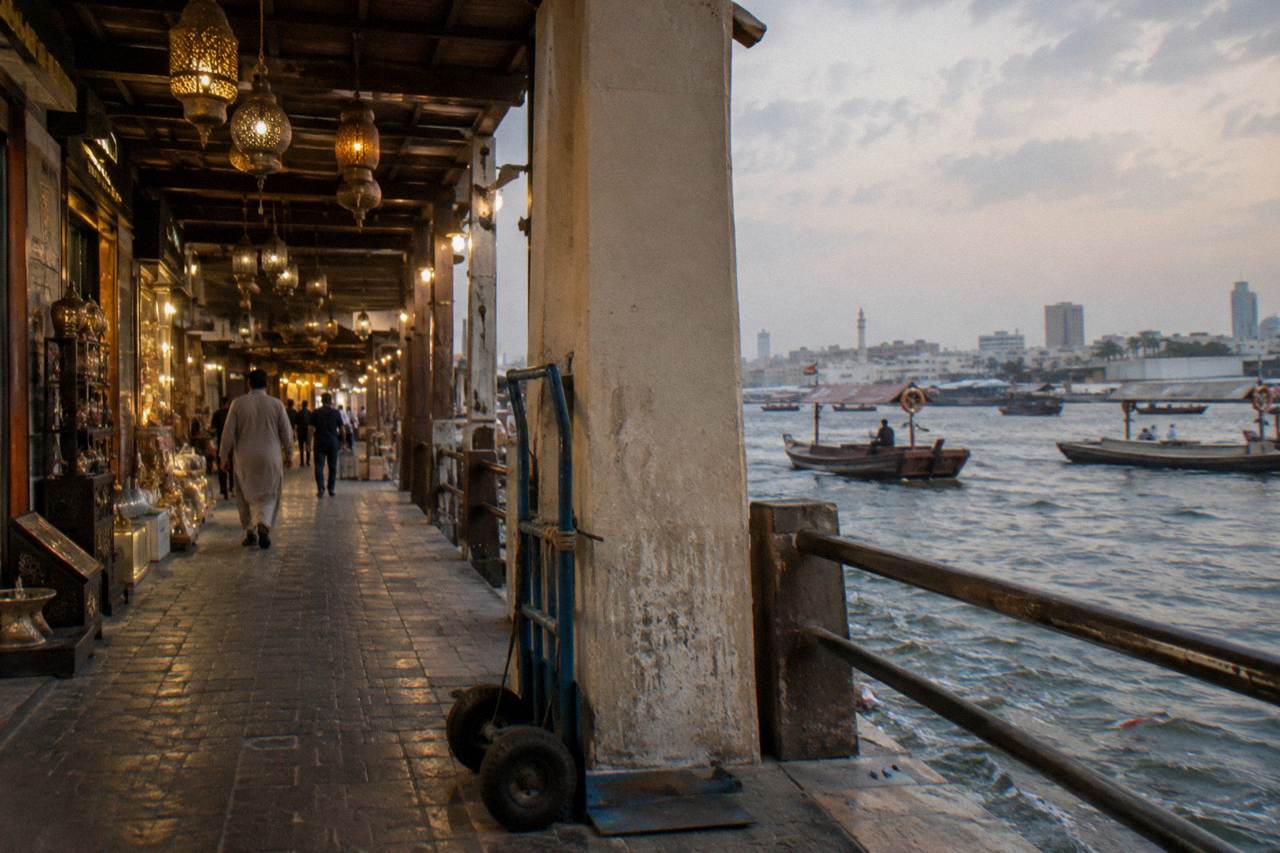
The famous market in Dubai is the Gold Souk in Deira, a covered district of jewellers' lanes on the old side of Dubai Creek, flanked by the Spice Souk a few minutes' walk away. Together they form the traditional souk quarter that most visitors mean when they talk about shopping in old Dubai, and the area gives its name to a Metro station. Before you shop, the honest look at whether gold is really cheaper in the Deira Gold Souk explains how its prices actually work.
The Gold Souk is the single market with the widest name recognition. It is a warren of narrow lanes under arcades, with hundreds of shopfronts displaying gold in the window the way other cities display clothes. The neighbouring Spice Souk is smaller and more fragrant, stacked with sacks of dried limes, saffron, chilli and frankincense. On the Bur Dubai side of the Creek, the Textile Souk sells fabric and tailor-made clothing, and the whole quarter is stitched together by an abra crossing that has run for generations.
For food travellers the souk quarter matters beyond shopping. The lanes around the Gold and Spice Souks hold some of the densest street food in the city, from shawarma counters to karak cafeterias, and a guided walk is the easiest way to combine the markets with the eating. The Dubai Food Tours site exists largely because the market quarter and the food overlap so heavily; if you are weighing a guided option, these three walks all cover the souk area with tastings built in.
Where Is The Gold Souk And What Can You Buy There?
The Gold Souk sits in Deira, on the eastern bank of Dubai Creek, centred on the streets around the Gold Souq Metro station on the Green Line. It sells gold jewellery by weight, plus silver, watches, stones and bespoke pieces made while you wait. Visit Dubai states most shops open around 10am to 10pm, though individual shop hours vary and no single official timetable is published.
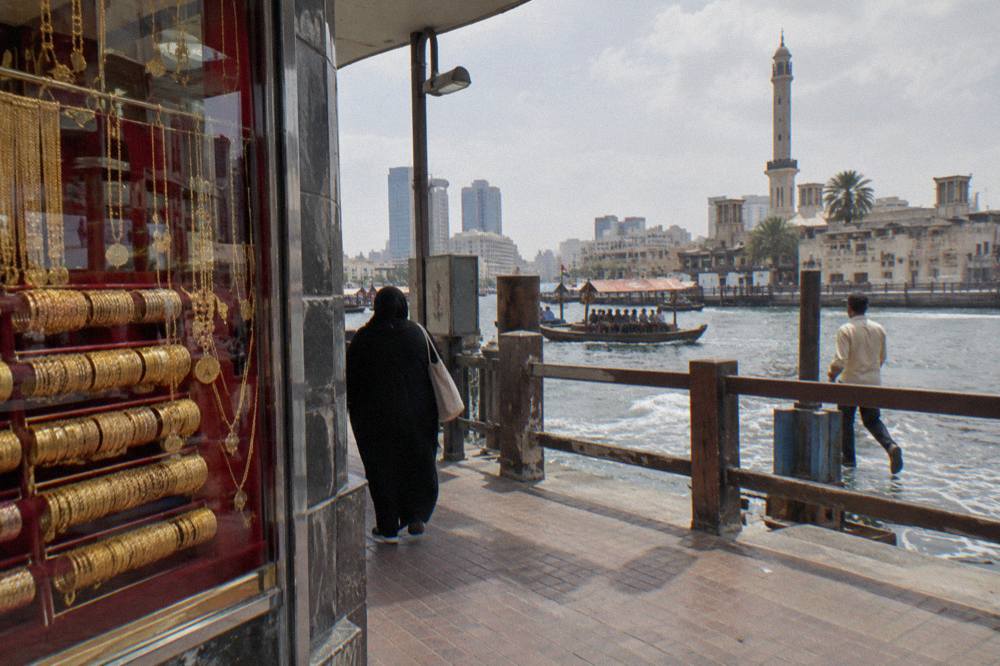
The souk is not one building but a district: covered lanes where shopfront after shopfront shows bangles, necklaces and sets arranged in dense displays. Gold is priced by weight plus a making charge, and bargaining on the making charge is normal practice. Silver and plain pieces sit alongside the window displays, and several shops will make a bespoke piece to order. Retailers here are used to visitors, and window shopping is entirely acceptable.
What the souk does not sell is food, with a couple of exceptions around the edges, and that is where the market quarter becomes interesting for eaters. The streets south and west of the jewellery lanes run into the Spice Souk and then toward Al Ras, and that stretch holds the shawarma grills, falafel counters and tea stalls that a market day in Deira is really built around. The Deira spice souk tasting guide covers that side of the quarter in detail.
“It was a personal tour with Orlina. Very special and great to have her all to ourselves. Orlina’s knowledge of Dubai and UAE history was great. She answered every question. Was great to learn and see loads about how Dubai has grown. Excellent trip round many key areas and the food tasting was brilliant addition. Lovely food and restaurants. Would highly recommend Orlina. She made us feel special.”
If you want the souk lanes explained rather than worked out alone, the Local Street Food and Guided Walking Tour of Dubai Old Town runs through the old town with a guide and street food stops along the route. Duration, meeting point and what is included are set out on the operator's booking page, and the tour suits travellers who want the market quarter and its food covered in one walk. Check availability
What About The Spice Souk And The Textile Souk?
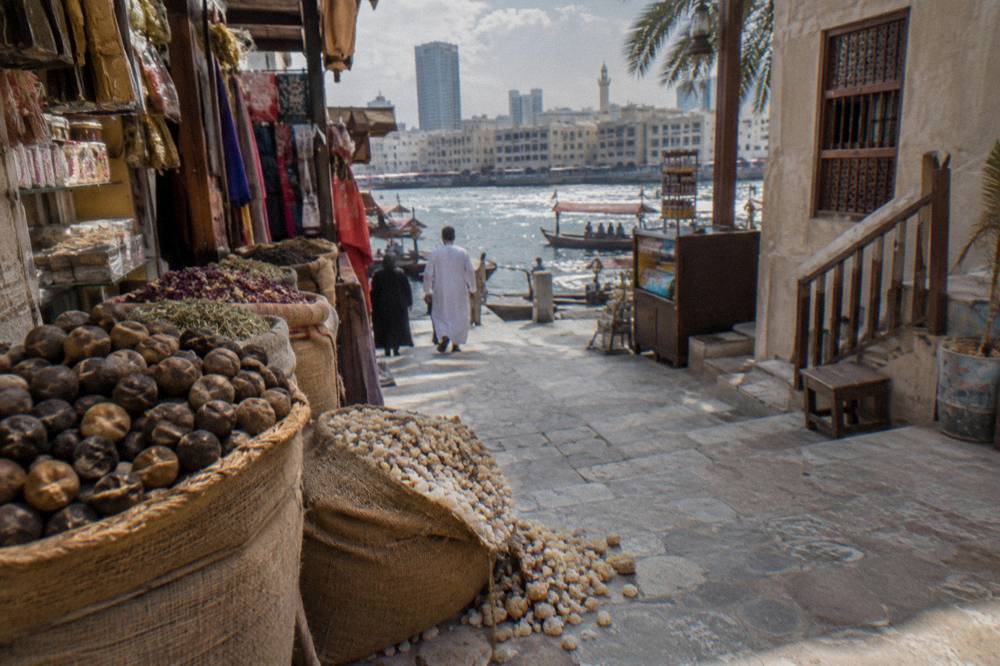
The Spice Souk lies a short walk from the Gold Souk in Deira, selling whole spices, dried limes, saffron, incense and dates from open sacks. The Textile Souk is across the Creek in Bur Dubai, near the Al Fahidi Historical Neighbourhood, and sells fabric and tailoring. Reported hours are around 8am to past 9pm for the Spice Souk, with many shops closed during the daytime on Fridays.
The Spice Souk is the more atmospheric of the two Deira markets. Sacks line the lane fronts, and the shopkeepers sell by weight: cardamom, cumin, dried barberries, loomi limes, saffron in small glass cases, and frankincense resin. It is a working wholesale and retail market, and buying is optional; plenty of visitors walk the lane for the smell alone. Dates are sold here too, and the fresh rutab season runs through the summer months, with fresh dates reported from around 15 AED per kilogram at markets and festivals.
The Textile Souk in Bur Dubai is the quietest of the three. Under a covered arcade, shops sell silk, cotton and pashmina by the metre, and several tailors will make a suit or a kandura within a day or two. It sits within an easy walk of the Al Fahidi Historical Neighbourhood, whose lanes and galleries are open to walk freely, and the Al Seef waterfront promenade, a stretch of around 1.8 kilometres along the Creek that mixes heritage-style buildings with cafes.
One caution applies to all three souks: hours are reported patterns, not guarantees. Individual shops open and close on their own schedule, midday breaks are common, and Friday daytime closures in the Spice Souk are the norm. Check the official pages before planning a morning visit, and treat any specific shop as variable.
How Much Do Things Cost Around The Souks?
Street food around the Deira and Bur Dubai souks is among the cheapest eating in the city, with reported prices of 7 to 15 AED for shawarma, 1 to 3 AED for karak tea, 1.50 to 8 AED for falafel and 2 to 3 AED per samosa. Casual Emirati and Levantine cafeteria meals run 15 to 40 AED per person, while a mid-range restaurant meal runs around 80 to 150 AED per person. If you're weighing a sit-down meal against something more adventurous, the comparison of a desert safari dinner with a guided Old Dubai food walk helps you pick the evening that fits your budget and schedule.
These are reported figures from 2026 price surveys of the neighbourhood, and they hold best in the small cafeterias and grills that line the lanes between the markets rather than in the sit-down restaurants on the main roads. A realistic day of eating your way around the souk quarter looks something like the table below.
| Item | Reported price | Where to look |
|---|---|---|
| Shawarma | 7 to 15 AED | Grill counters in Deira and Bur Dubai lanes |
| Falafel wrap | 1.50 to 8 AED | Falafel shops around Al Ras and the souks |
| Karak chai | 1 to 3 AED | Cafeterias and tea stalls |
| Samosa or samboosa | 2 to 3 AED each, bags of about 5 for 10 to 12 AED | Street stalls near the Spice Souk |
| Luqaimat | 10 to 18 AED | Sweet stalls in the market lanes |
| Casual cafeteria meal | 15 to 40 AED per person | Neighbourhood Emirati and Levantine cafeterias |
| Mid-range restaurant meal | around 80 to 150 AED per person | Sit-down restaurants outside the souk lanes |
Two bill mechanics are worth knowing before you sit down anywhere. Restaurants commonly add a service charge of up to 10 per cent, which is retained by the venue and is not a government fee, plus 5 per cent VAT; some hotel-affiliated venues add a municipality fee on top. Tipping is voluntary: the official Visit Dubai tipping guide suggests 10 to 15 per cent in restaurants, with smaller cash amounts for cafes and porters, and stresses there are no set rules.
For gold, the honest answer is that prices follow the daily market rate and shift constantly, and making charges are negotiable. The same applies to spice prices by weight: ask per sack, compare two or three stalls, and expect to negotiate a little. If a guided food budget is what you are planning, the Dubai meal prices guide breaks down what a day of eating costs across the city's neighbourhoods.
How Do You Get To The Souks Without A Car?
The Metro's Green Line serves the market quarter directly, with Baniyas Square, Gold Souq and Al Ras stations all within a few minutes' walk of the Deira souks, and Sharaf DG station serving the Al Fahidi and Textile Souk side. A Nol card costs 25 AED including initial credit. The souks sit on opposite banks of the Creek, connected by the abra crossing.
The Green Line is the market line. On the Deira side, Gold Souq station (G22) opens onto the jewellery lanes, Al Ras (G23) sits at the edge of the old residential grid where the cheap eating concentrates, and Baniyas Square (G21) anchors the district's commercial end. On the Bur Dubai side, Sharaf DG (G25) is the station for the Al Fahidi area, the Textile Souk and the Al Seef promenade. Metro hours run from 5am to midnight most days, with a later Friday finish and a Sunday start from 8am, and the official RTA timetable carries the current schedule.
Taxis are metered, with reported road-pickup starting fares of 5 AED between 6am and 10pm and 5.5 AED overnight, and they suit the trip back from the souks with bags of shopping. Walking is the real transport inside the quarter: the whole circuit from Al Fahidi through the Textile Souk, across the Creek, and through the Spice and Gold Souks is a compact, flat walk, and no 2026 route closures have been reported on the standard pedestrian connections between them.
“Our guide was amazing and knowledgeable. We learned alot about the history of UAE and Emirati culture. As for the food it was filling and tasty. This is a tour you should not miss and want be disappointed.”
If you would rather not arrange any of this yourself, a private walk with hotel transfers removes the transport question entirely. The Private Old Dubai Street Food and Walking Tour With Transfers covers the old town on foot with pickup and dropoff included, and the operator's booking page lists the areas served and what the tour includes.
What Is The Abra Crossing Between The Souks?
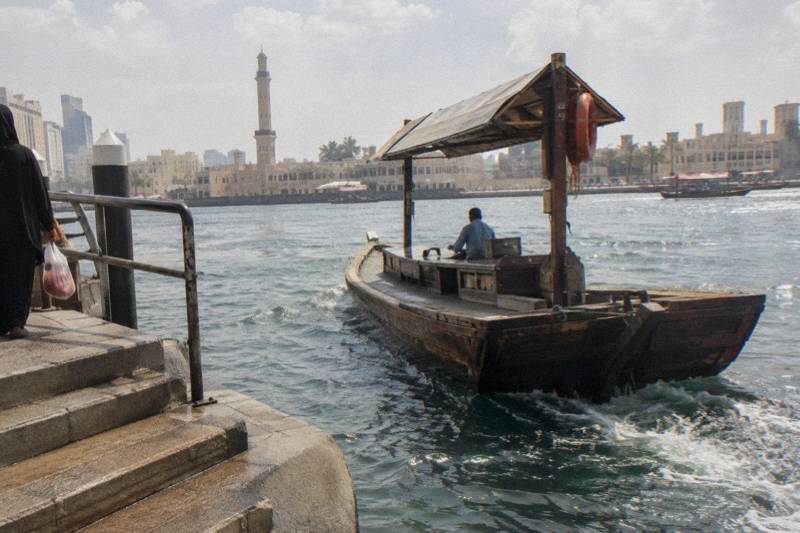
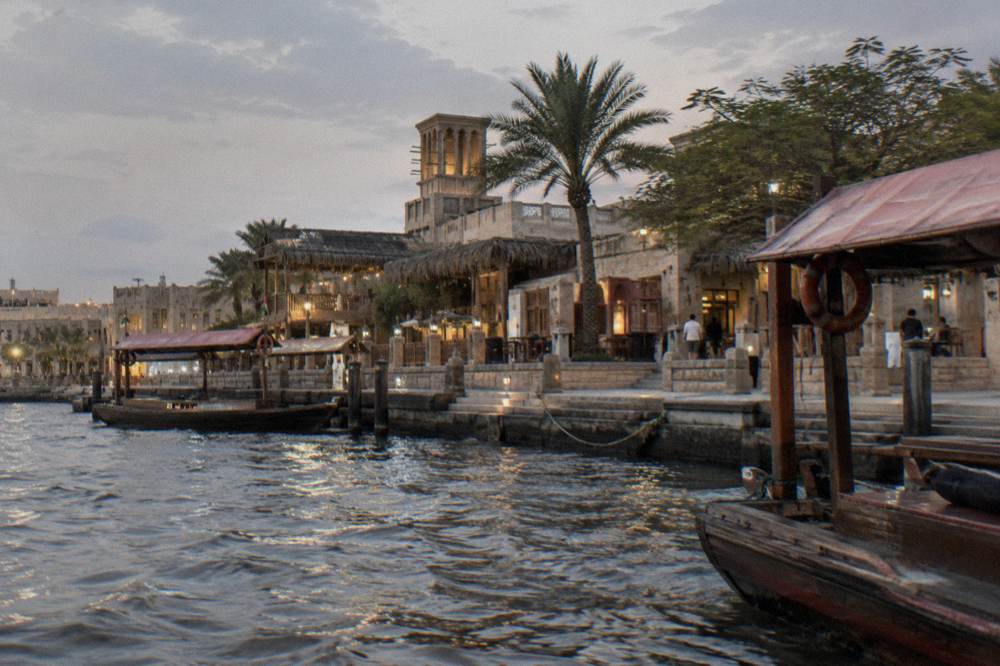
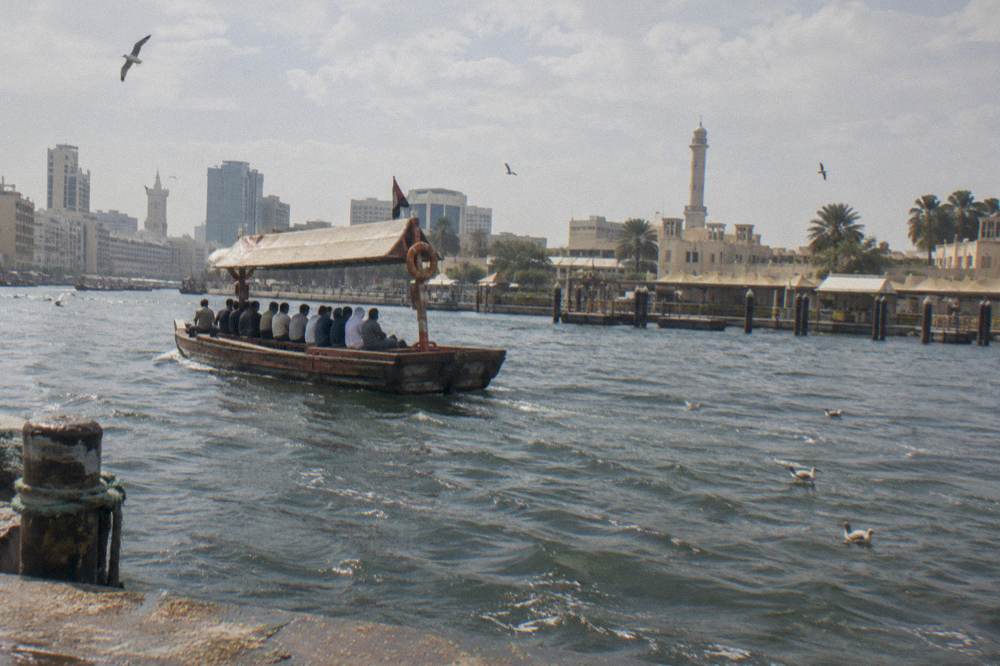
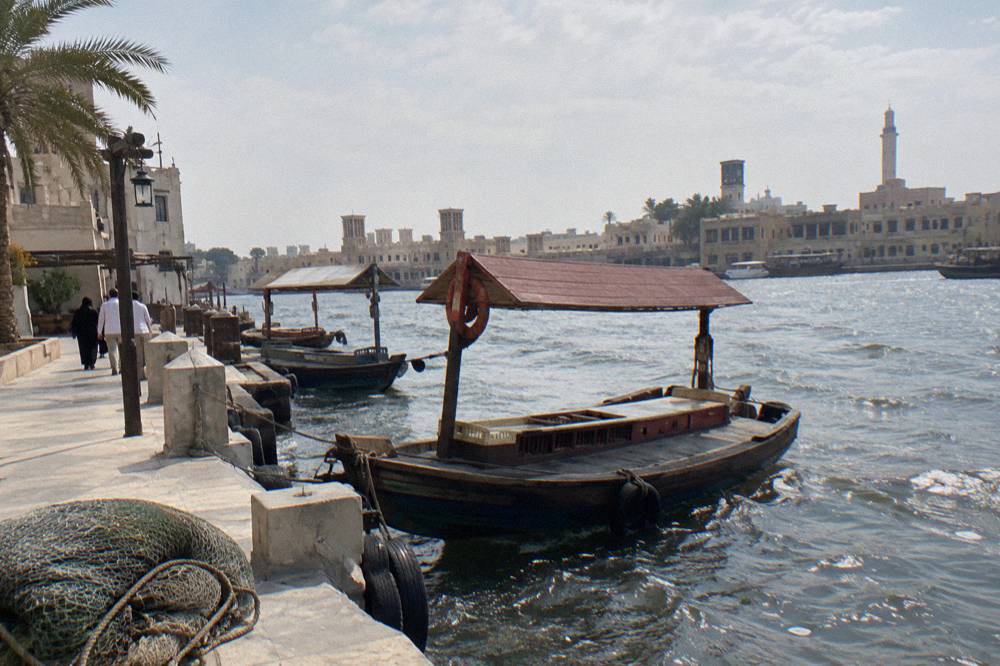
The abra is the small wooden boat that shuttles across Dubai Creek between the Bur Dubai and Deira souk docks, and it is the traditional way to move between the two market sides. The Roads and Transport Authority operates the routes, including the commuter crossings between Bur Dubai and Deira Old Souq and between Al Seef and Baniyas. The fare is paid at the dock; check the RTA page for current fares and timings.
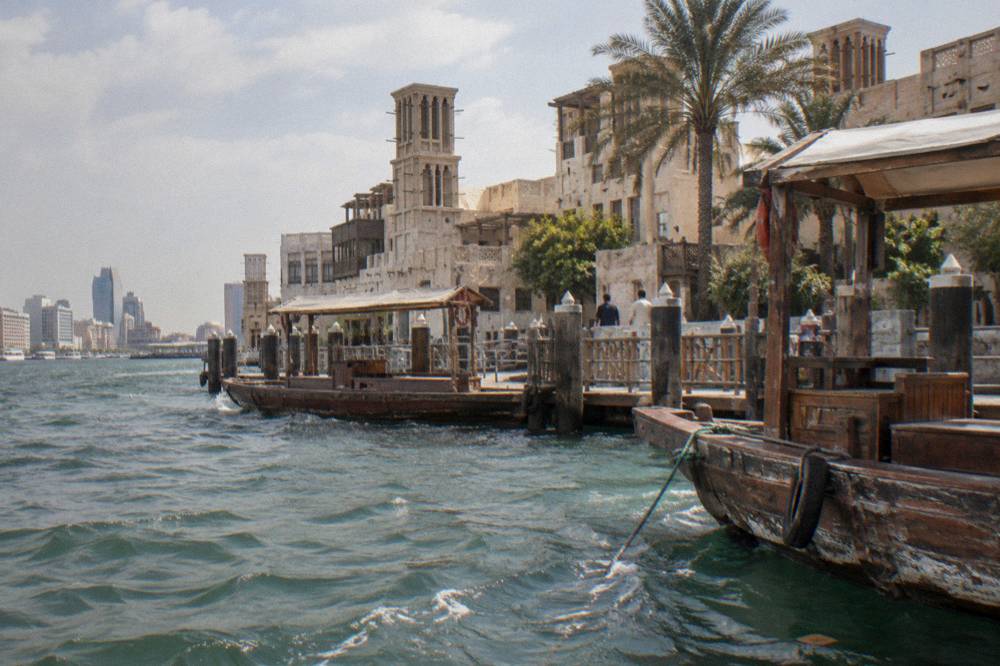
The crossing takes only a few minutes, but it is the moment the market quarter makes sense: the Gold Souk skyline on one bank, the Textile Souk arcade on the other, and the water between them carrying the same boats that have served these docks for generations. The RTA lists several Creek routes, including crossings from Al Fahidi and Al Seef on the Bur Dubai side, and the official RTA Creek abra page carries the current route list, timings and fares. Once you step off the abra, a full circuit through the Textile, Spice and Gold Souks with food stops along the way is easy to plan, and the guide to a Dubai souk tour with markets, food and history covers the routes, costs and timing.
Most guided walks of the old town include an abra crossing as part of the route, and the food tours through the quarter typically ride between the souk sides rather than walking the long way round. If you are doing the circuit independently, the boats run frequently through the day, and the docks sit at the natural hinge of any souk walk, so you rarely wait long. Once the souk walk ends, the guide to Dubai's famous chocolate and where to find it makes a sweet final stop easy to plan.
The Creek itself is changing. A municipal lighting project is underway along roughly 8 kilometres of the waterfront, including the Gold Souk promenade, Bur Dubai Souk and Al Seef areas, with more than 5,000 lighting units and promenade upgrades scheduled for completion in the first quarter of 2027. The work has not closed the core walking routes, but the waterfront will look progressively different over the coming year.
What Should You Know About Manners And Bargaining In The Souks?
Dress with shoulders and knees covered in the souk lanes, ask before photographing individuals, and bargain on non-food goods, where haggling on the making charge is expected. All meat served in the city's restaurants and markets is halal, and pork is sold only in designated licensed sections. Tipping in the souk area is voluntary and small amounts are normal for good service.
The dress point is cultural rather than legal: there is no single dress-code law for tourists, but covering shoulders and knees in heritage areas, souks and malls avoids attention and is the local norm. Photography etiquette is more concrete: always ask permission before photographing individuals, especially Emirati women, families, or anyone in traditional attire, and photographing without consent can breach privacy rules. Shopkeepers displaying goods are usually happy to be asked.
Bargaining is normal for gold making charges, fabric and spices, but not for street food, where prices are posted and fixed. A polite counter-offer on the making charge, or on a bulk spice purchase, is expected; on a 2 AED karak it is not. If a shop offers you gahwa, Arabic coffee served in small cups with dates, accept it with the right hand, and shake the empty cup gently side to side to signal you have had enough, which is the local convention.
Dietary needs are worth flagging before any guided booking. All meat in the city's restaurants and markets follows halal rules, and no listing should be assumed vegetarian, vegan, gluten-free or kosher unless the operator says so: message the operator before booking to confirm what can be arranged. The dietary needs on a Dubai food tour guide covers this in full.
Can A Guided Walk Combine The Markets With The Food?
Yes, and it is the most efficient way to see the souk quarter, because a guided route strings the Gold Souk, the Spice Souk, the abra crossing and the street food lanes into one circuit with tastings built in. Several private walks also cover the same ground with a dedicated guide and, on some listings, hotel transfers. Prices, durations and inclusions for each tour are on the operator's booking pages.
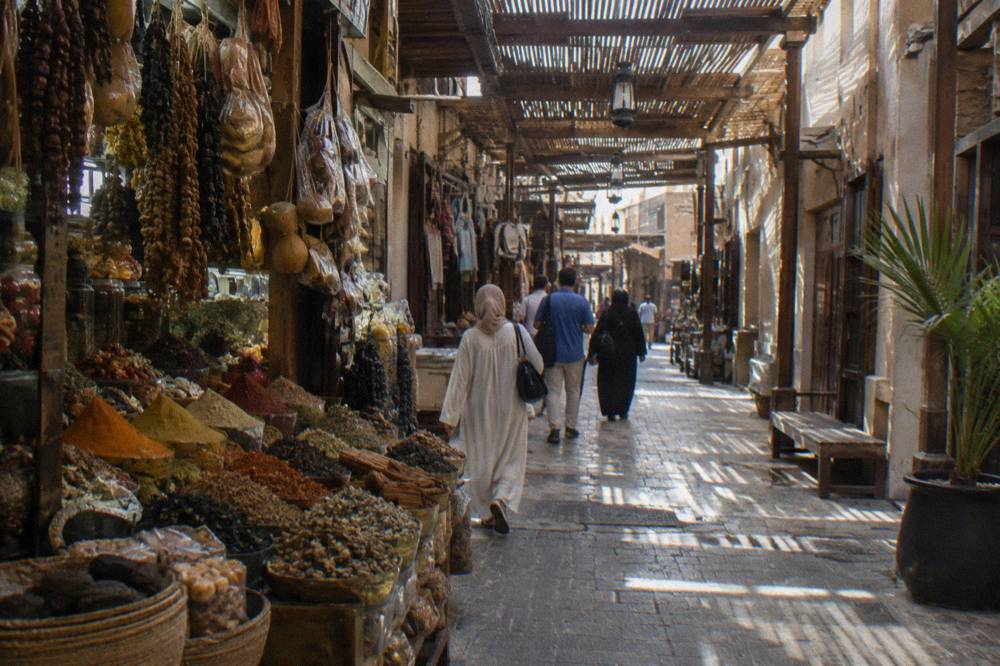
The argument for a guide in the souk quarter is not navigation, the area is compact and hard to get lost in, but context and access. A guide explains what the sacks in the Spice Souk hold, which grill counters are worth stopping at, and how the Creek crossing fits the district's history, and the tasting stops are pre-arranged rather than improvised. For a first visit with limited time, that trade is usually worth it. The is a food tour worth it guide weighs the question honestly.
The private options run deeper. The Private Food Tour: The 10 Tastings of Dubai With Locals is built entirely around the eating, with ten tastings led by a local guide through the old town's food lanes. The meeting point, route and full inclusion list are on the operator's booking page, and private formats mean the pace and dietary questions can be raised before you go.
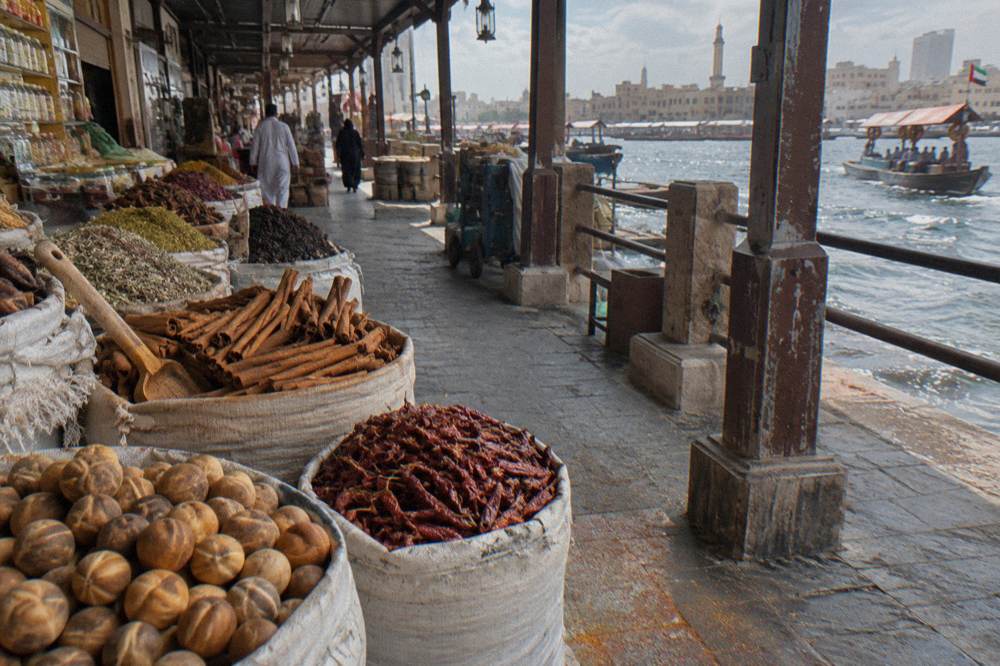
Whichever way you go, the market quarter rewards the early or late hours: the lanes are quieter, the light through the arcades is better, and the food counters turn over faster at mealtimes. Combine the Gold Souk, the Spice Souk and an abra crossing into one walk, eat in the lanes between them, and you will have seen the famous market in Dubai the way it actually works rather than the way the bus tours show it.
Common Questions About The Famous Market In Dubai
What Is The Famous Market In Dubai?
The famous market in Dubai is the Gold Souk in Deira, the covered district of jewellers' lanes beside Dubai Creek, with the Spice Souk a few minutes' walk away. Together, plus the Textile Souk across the Creek in Bur Dubai, they form the traditional souk quarter most visitors come to see.
Is The Gold Souk Worth Visiting If I Am Not Buying Gold?
Yes. The lanes are free to walk, the window displays are unlike anything else in the city, and the surrounding streets hold some of the densest street food in Dubai. Treat it as a walking district with food attached rather than a shopping errand.
How Do I Get To The Souks From Elsewhere In Dubai?
The Metro's Green Line serves the quarter directly: Gold Souq, Al Ras and Baniyas Square stations cover the Deira side, and Sharaf DG covers the Bur Dubai side. A Nol card costs 25 AED including initial credit, and taxis are metered with reported starting fares of 5 AED.
How Much Does Street Food Around The Souks Cost?
Reported prices run 7 to 15 AED for shawarma, 1 to 3 AED for karak tea, 1.50 to 8 AED for falafel and 2 to 3 AED per samosa. A casual cafeteria meal runs 15 to 40 AED per person. These are reported neighbourhood figures, so check the stall or cafe for current prices.
Can A Guided Tour Include The Markets And The Food?
Yes. Guided walks of the old town typically route through the souk lanes with street food tastings included, and private versions cover the same ground with a dedicated guide or hotel transfers. Check the operator's booking page for each tour's duration, meeting point and inclusions.
When Are The Souks Open?
Visit Dubai states most Gold Souk shops open around 10am to 10pm, and the Spice Souk generally runs from earlier than 8am to past 9pm, with many shops closed during the daytime on Fridays. Individual shops vary, so check the official pages before an early visit.