Is Gold Cheaper In Dubai Souk?
Is gold cheaper in Dubai souk? An honest look at how the Deira Gold Souk works, what drives its prices, and how the souk sits beside Old Dubai's best food walk routes.
No honest answer can put a number on it, because gold prices change daily and the souk prices its jewellery from the day's market rate plus a making charge that varies stall by stall. What is fair to say is this: the Gold Souk is a dense, competitive market with hundreds of shops in a few lanes, which keeps making charges more negotiable than in a single-store retail setting, and shoppers should check the day's rate and compare stalls before buying anything. Anyone promising a fixed saving is promising something nobody can guarantee.
That is the honest core of the answer, and this article will not pretend to improve on it with invented numbers. Gold rates move with the world market, the making charge a stall quotes depends on the piece and the negotiation, and no article written before your visit can know either figure. What can be described with confidence is the souk itself: where it sits, how it works as a place, how to reach it, and what surrounds it, because the Gold Souk sits inside the same few square kilometres of Old Dubai that hold the Spice Souk, the Creek abras and some of the city's best street food. If you want a fuller picture of the souk before committing an afternoon, the honest walkthrough of the Gold Souk and its surroundings covers what to expect and how to pair it with a food crawl through Deira.
For visitors pairing the souk with the rest of Old Dubai, a guided walk is the simplest way to see both sides of the Creek in one afternoon.
What The Gold Souk Is Actually Like As A Place
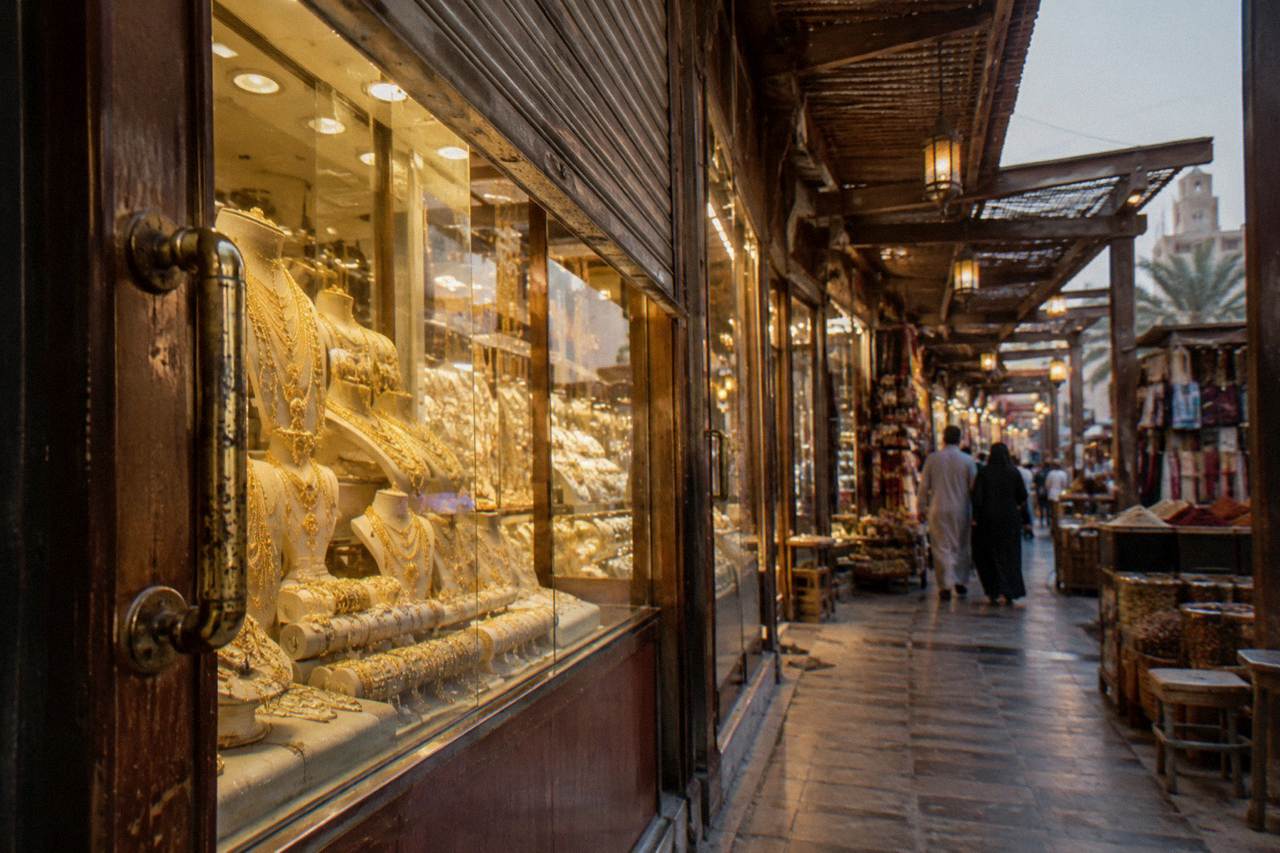
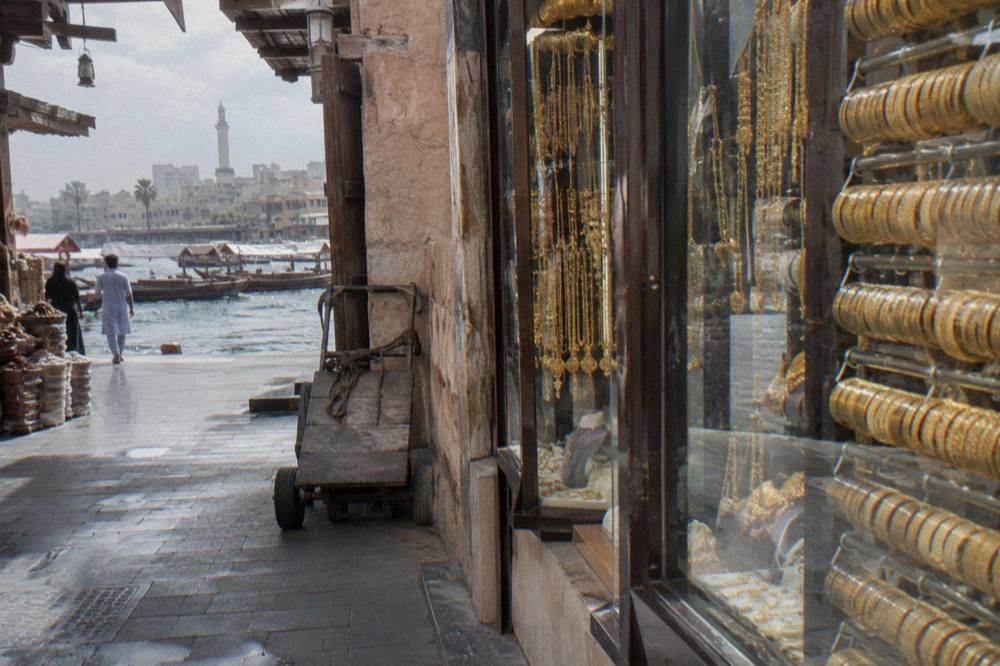
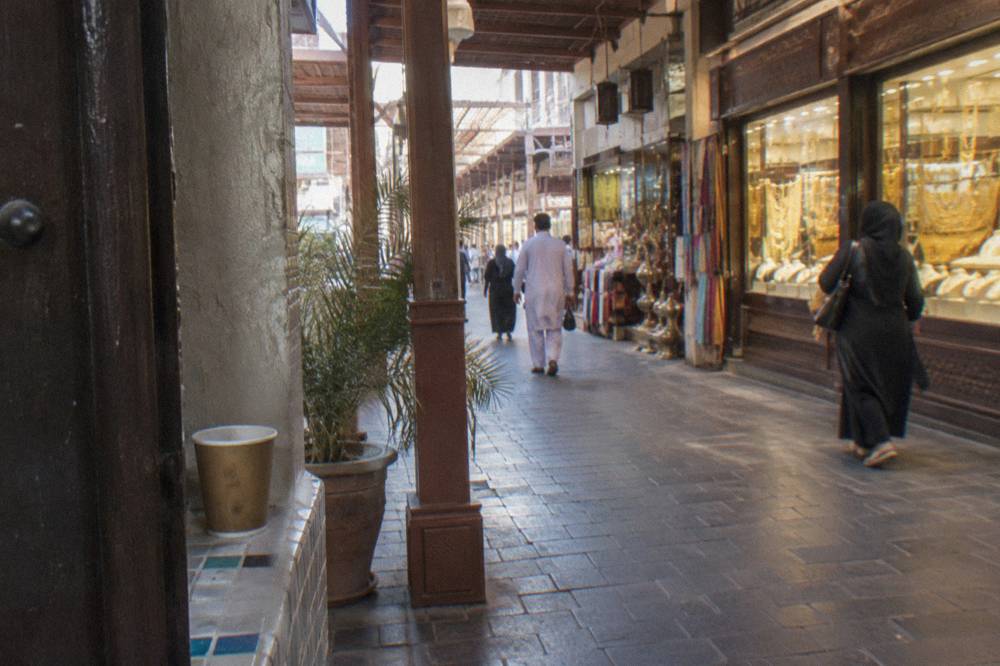
The Gold Souk is a compact, partly covered market of roughly a few hundred shops in Deira, on the Dubai side of the Creek opposite Bur Dubai, and it is free to enter and browse with no obligation to buy. Visit Dubai reports most shops open around 10am to 10pm, though individual shop hours vary and no single official timetable exists. The lanes are pedestrian, air-conditioned in the covered sections, and dense with window displays that stack bangles and necklaces floor to ceiling.
The first thing that surprises many visitors is how small the souk feels once you are inside it. From the outside it reads as a maze; inside, the main lanes connect quickly and you can walk the whole market in well under an hour at browsing pace. The Gold Souq metro station on the Green Line sits a short walk away, and the Spice Souk is a few minutes further along the Deira side of the Creek, which is why almost every walking route in Old Dubai ends up linking the two.
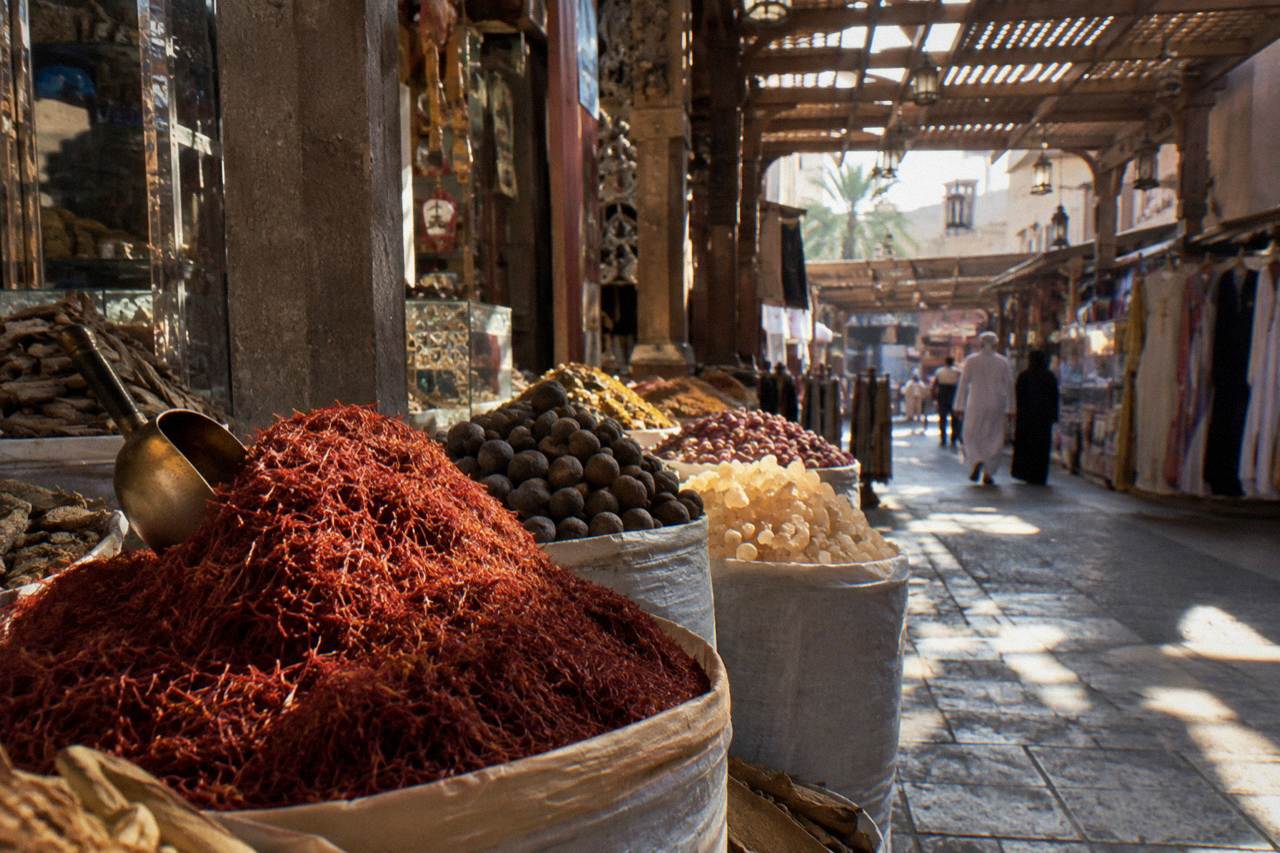
The second surprise is the variety inside a single market. Alongside the gold shops there are stalls selling dates and spices at the edges, perfume shops, and small cafeterias serving karak chai to the shopkeepers and their customers. The souk is a working market, not a museum piece, and the rhythm of the place is shopkeepers opening late morning, a busy evening trade, and a Friday pattern where the Spice Souk side is reported closed during the daytime. For more on the neighbouring market, see what to taste and buy at the Deira Spice Souk.
How Gold Pricing Works At The Souk
Every gold price in the souk is the sum of two things: the day's gold rate, which moves with the world market and is posted at shops, and a making charge, which covers craftsmanship and is where the negotiation happens. Neither figure is fixed, both change, and any comparison with prices at home has to be made on the day, at the stall, with the rate in front of you. This article states no gold prices, rates, savings or purity claims, because none can honestly be printed in advance.
The practical implication is that the question "is it cheaper?" cannot be answered by an article, only by a shopper on the day. What can be said about the market's structure is that competition is real: with hundreds of shops in walking distance of each other, a buyer can compare making charges across several stalls for a similar piece, which is a structural advantage a single jewellery store in most cities cannot match. Whether that converts into a saving depends on the rate, the piece and the buyer's patience.
| Part of a gold price | What it is | Who sets it |
|---|---|---|
| The day's gold rate | The market price the metal is sold at, posted at shops and changing daily | The world market, reflected locally |
| The making charge | The craftsmanship fee added on top of the metal price | The individual shop, negotiable |
| The final ticket | Rate plus making charge, agreed before purchase | Shop and buyer together |
A few honest cautions follow from the structure. Ask how the rate is calculated and what the making charge is before you commit, and treat any pressure to decide quickly as a reason to walk to the next stall. If a price seems too far below every other quote in the souk, that is a question to ask rather than a bargain to grab. And since rates change daily, a quote from a friend's trip last year tells you nothing about today's board.
Where The Gold Souk Sits On The Old Dubai Map
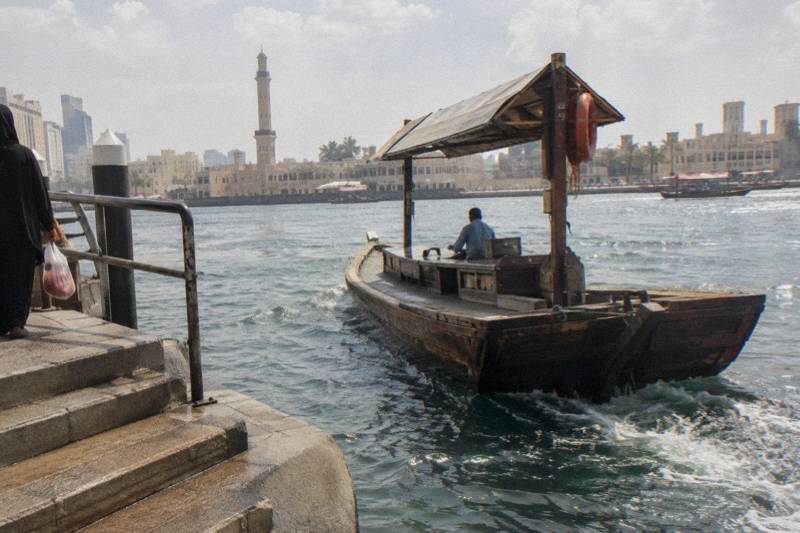
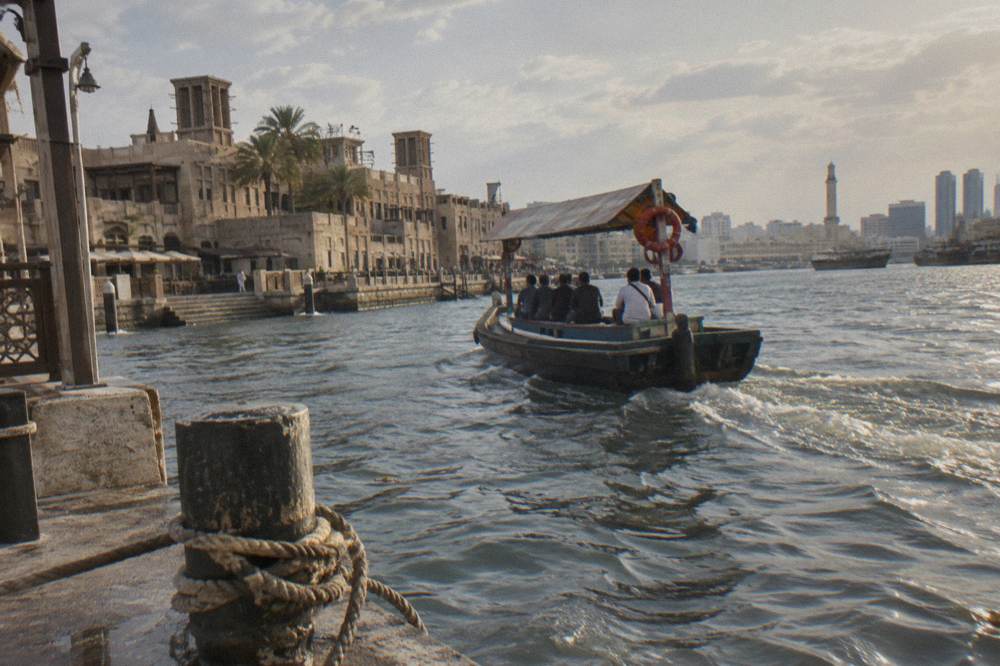
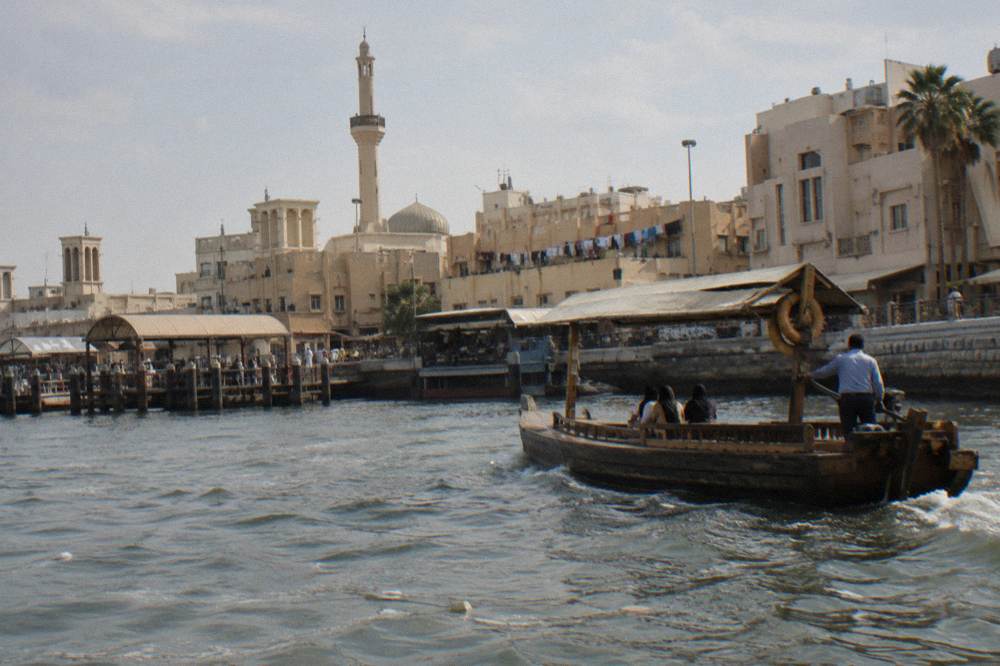
The Gold Souk is in Deira, on the north-east bank of Dubai Creek, directly opposite the Bur Dubai side where the Al Fahidi Historical Neighbourhood, the Textile Souk and the Al Seef waterfront sit, and the two banks are linked by the Creek abras. The Road and Transport Authority operates the traditional abra routes across the Creek, including the CR1 route between Bur Dubai and Deira Old Souq, plus further routes connecting Al Seef, Al Fahidi and Baniyas, and the crossing is short enough that walkers do it between souks rather than treating it as a trip in itself.
This geography is why the souk question and the food question turn out to be the same question. A visitor who takes the metro to the Gold Souq station, walks the souk, crosses the Creek by abra to Bur Dubai, and wanders through Al Fahidi to Al Seef will have covered the classic Old Dubai loop, and every guided food walk in this part of the city follows some version of it. The street food clusters sit along that route: shawarma and falafel stalls in Deira, karak cafeterias near the abra docks, and the heritage restaurants of Al Fahidi on the other side. Everything else covered here is indexed on Dubai Food Tours.
“Seeing the old parts of the city was amazing, but the bits that we really loved came from our tour guide, Seef, who provided just with so much information and insights into local culture. Definitely recommend!”
The walk itself is short by Dubai standards. The Al Seef promenade is a stretch of roughly 1.8 km along the Bur Dubai side, fully open and free to enter, and the standard walking connections between Al Fahidi, Al Seef, the Textile Souk, the abra stations and the Deira souks are all reported open with no route closures. In the words of one planning piece on this site, the abra crossing and waterfront eating belong on the same afternoon as the souks, not on separate days.
What A Guided Walk Adds To A Souk Visit
A guided souk and street food walk adds three things an independent visit does not: a route through the souks without the guesswork, tastings counted and listed in the booking, and a guide who can explain what you are looking at in a market where nothing is labelled in a tourist's language. The tours compared here vary in format, from a half-day walk to a two-hour souks and boat tour to a seated Emirati meal, and the right one depends on whether you want distance, depth or dinner.
The featured walk on this page is the Al Fahidi Old Town, Souks, Street Food and Abra Cruise tour, which runs 2.5 to 4 hours and crosses from the Bur Dubai heritage district through the souks with street food tastings and a Creek cruise. The meeting point and the full list of inclusions are on the booking page, and those details are worth checking before you plan the rest of your day around it. A guided route through the souk district also answers the pricing question in a way an article cannot: a local guide will tell you honestly how the souk's gold trade works and where the food stalls are that the shopkeepers themselves use.
For visitors whose main interest is the souk rather than the walking, the shorter options make sense. The Authentic Old Dubai, Souks, Tastings and Local Boat Guided Tour runs around 2 hours and covers the souks with a boat element, while the Authentic Emirati Cultural Meal and Talk in Old Dubai is a 1 hour 30 minute seated meal with conversation, a different experience entirely and one worth reading about in the guide to what happens at a local Emirati table.
Getting To The Souk: Metro, Abras And Timing
The Green Line of the Dubai Metro serves the souk district directly, with the Gold Souq station the closest stop to the Gold Souk, Al Ras serving the Spice Souk end of Deira, and Sharaf DG serving the Al Fahidi area on the Bur Dubai side. The Road and Transport Authority's metro map lists these stations in that order, and the RTA operates the Creek abra routes that link the two banks, including CR1 between Bur Dubai and Deira Old Souq and further routes connecting Al Seef, Al Fahidi, Al Sabkha and Baniyas.
| Way of arriving | What it serves | Where it fits |
|---|---|---|
| Green Line, Gold Souq station | The Gold Souk and central Deira | The direct souk visit |
| Green Line, Al Ras station | The Spice Souk end of Deira | Combining the two souks on foot |
| Green Line, Sharaf DG station | Al Fahidi and the Bur Dubai heritage side | Starting the walk from the heritage district |
| Creek abra routes | Bur Dubai to Deira crossings, including CR1 | The crossing between souk districts |
Timing matters more than most visitors expect. The RTA operates the metro from 05:00 to midnight Monday to Thursday and Saturday, from 05:00 to 01:00 on Friday, and from 08:00 on Sunday, so an early souk arrival is easy by train. The souks themselves keep their own rhythm: Visit Dubai reports most Gold Souk shops open around 10am to 10pm, the Spice Souk shops generally open earlier than 8am and run past 9pm but are reported closed during the daytime on Fridays, and individual shops vary with no single official timetable. An evening visit catches the souk at its busiest, which suits browsing and people-watching better than a patient price comparison.
Weather is the other timing factor. December to February brings the lowest average daytime highs for walking Old Dubai, with NCM-derived normals showing December mean daily maxima around 26.5 C and January around 24.4 C at the Dubai International Airport station. The covered lanes of the souk make the gold shopping itself tolerable even in hotter months, but the walk between the souks, the abra docks and Al Fahidi is an outdoor affair, and the cooler window is the comfortable one. The official RTA station and timetable information is on the RTA metro pages.
“Wonderful tour and great experience. The gold market & boat is an added treat. We would definitely book again.”
Etiquette, Dress And Photography In The Souk
Yes, modest dress matters: cover your shoulders and knees in the souk and heritage districts. Always ask before photographing individuals, and respect that every meat sold in the city's restaurants and markets is halal, with pork available only in designated licensed sections. None of this is enforced with fines in most cases, but the souk district is a working traditional area and dressing and behaving accordingly avoids unwanted attention, especially for photographing people in traditional attire.
The photography point deserves its own sentence, because the Gold Souk is one of the most photographed places in the city and the people in it are not props. Etiquette guides for the city are consistent: ask before photographing individuals, particularly Emirati women and families, and treat a refusal as final. Shopkeepers displaying gold are usually relaxed about photographs of their windows, but a shop's interior and its staff are a different matter, and a smile and a gesture will get you an answer faster than a raised camera.
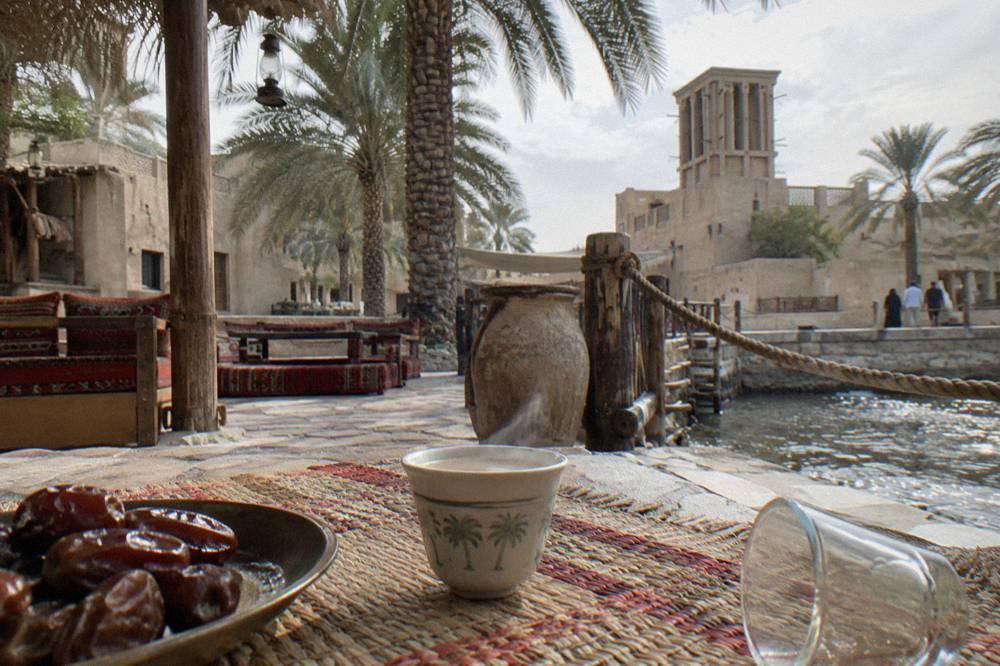
Around the souk, the food etiquette follows the same pattern of respect. If gahwa, the lightly spiced cardamom coffee, is offered, tradition is to accept and receive the small finjan cup with the right hand, and to shake the empty cup gently side to side to signal that you have had enough, a custom the city's own cultural guides describe. Tipping in restaurants is personal preference rather than obligation; Visit Dubai's guidance suggests 10 to 15 per cent in restaurants, and notes that most card terminals let you add a tip, though it is worth checking with the waiter that the amount reaches the staff. More detail is in the site's guide to tipping and paying in Old Dubai.
Pairing The Souk With The Street Food Around It
The most efficient souk visit ends with a meal, because the streets around the Deira souks hold some of the cheapest and best food in the city, with reported prices for shawarma of 7 to 15 AED, falafel from around 1.50 AED, karak chai at 1 to 3 AED and bags of samosas at 10 to 12 AED at local spots. These are reported figures from 2026 price guides, they vary stall to stall, and the tourist-facing spots cost more, so treat them as a planning range and check the board at each stall.
| Street food around the souks | Reported local price | Where it fits the walk |
|---|---|---|
| Shawarma | 7 to 15 AED at local spots | A quick stop between souks in Deira |
| Falafel wrap | Around 1.50 to 8 AED | The vegetarian fallback anywhere on the route |
| Karak chai | 1 to 3 AED at local cafeterias | The standard pause near the abra docks |
| Samosas, a bag of about 5 | 10 to 12 AED | A shared snack before the Creek crossing |
The point of pairing the souk with the food is that the two halves of the district explain each other. The souk tells you how the city traded, the street food tells you who actually eats in it, and the walk between them, abra ride included, is the single best introduction to Old Dubai that a first-time visitor can give themselves. For a fuller reading of the dishes, the Dubai street food guide covers what to try and where, and the first-timer's list of what to eat in Dubai is the companion read.
The Emirati meal deserves a final word, because it is the least obvious pairing with a gold shopping trip and often the one people remember. The Authentic Emirati Cultural Meal and Talk in Old Dubai runs 1 hour 30 minutes and is a seated meal with conversation rather than a walk, a format that suits the end of a day spent on your feet in the souk lanes. Dishes like machboos, the UAE's rice and meat national dish, harees and luqaimat are the ones to know, and the guide to machboos, harees and luqaimat explains them properly.
Common Questions About Gold And The Dubai Souk
Is Gold Cheaper In Dubai Souk?
Gold prices at the souk change daily with the world market rate, and each shop adds its own negotiable making charge, so no honest article can promise a saving. The souk's density of competing shops makes comparing quotes easier than in a single-store setting, which is the real advantage. Check the day's posted rate, compare making charges across several stalls, and decide on the evidence in front of you.
Can I Haggle Over The Price Of Gold At The Souk?
The day's gold rate itself is not negotiable, it reflects the world market and is posted at the shops. The making charge is where the negotiation happens, and comparing similar pieces across several stalls before agreeing is the normal approach. Walk if the pressure to decide quickly feels wrong.
When Is The Gold Souk Open?
Visit Dubai reports most shops open around 10am to 10pm, with individual shop hours varying and no single official timetable published. The neighbouring Spice Souk shops generally open earlier than 8am and run past 9pm, and are reported closed during the daytime on Fridays. An evening visit catches the souk at its busiest.
How Do I Get To The Gold Souk By Metro?
The Green Line serves the district directly: Gold Souq station sits closest to the Gold Souk, Al Ras serves the Spice Souk end of Deira, and Sharaf DG serves the Al Fahidi area on the Bur Dubai side. The Creek abra routes, including CR1 between Bur Dubai and Deira Old Souq, link the two banks for the walk between souks.
Can I Combine The Gold Souk With A Food Walk?
Yes, and it is the natural way to do it. The souk sits in the same Old Dubai district as the Spice Souk, the abra docks and the street food of Deira and Bur Dubai, and guided walks like the Al Fahidi Old Town, Souks, Street Food and Abra Cruise tour cover the route with tastings included. Reported street food prices near the souks run from around 7 to 15 AED for a shawarma to 1 to 3 AED for karak chai at local spots.
Is There A Dress Code For Visiting The Souk?
There is no single dress-code law for tourists, but covering shoulders and knees in the souk and heritage districts is the respectful norm and avoids attention in traditional areas. Ask permission before photographing individuals, particularly Emirati women and families, and treat a refusal as final.