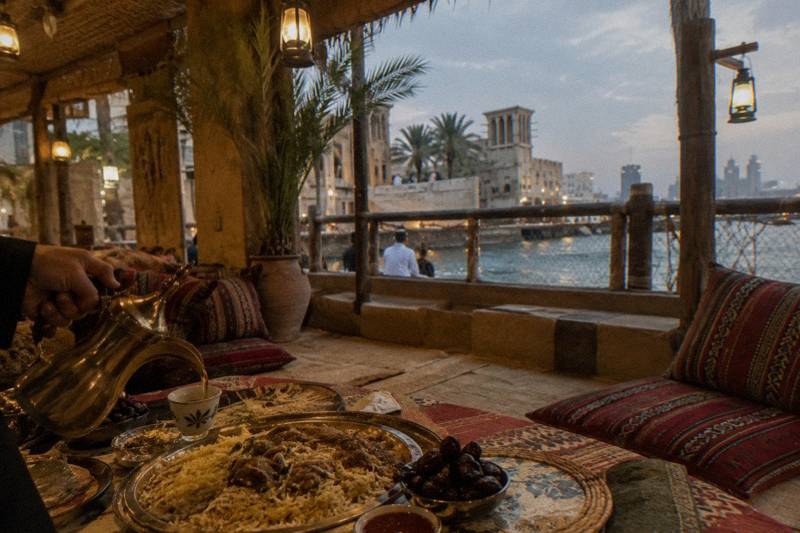
Emirati Food Experience: What Happens At A Local Table
The dishes are the easy part. What makes an Emirati food experience different from any other meal in Dubai is the format: food arrives shared, coffee arrives with rules, and the host expects you to ask questions.
Short answer
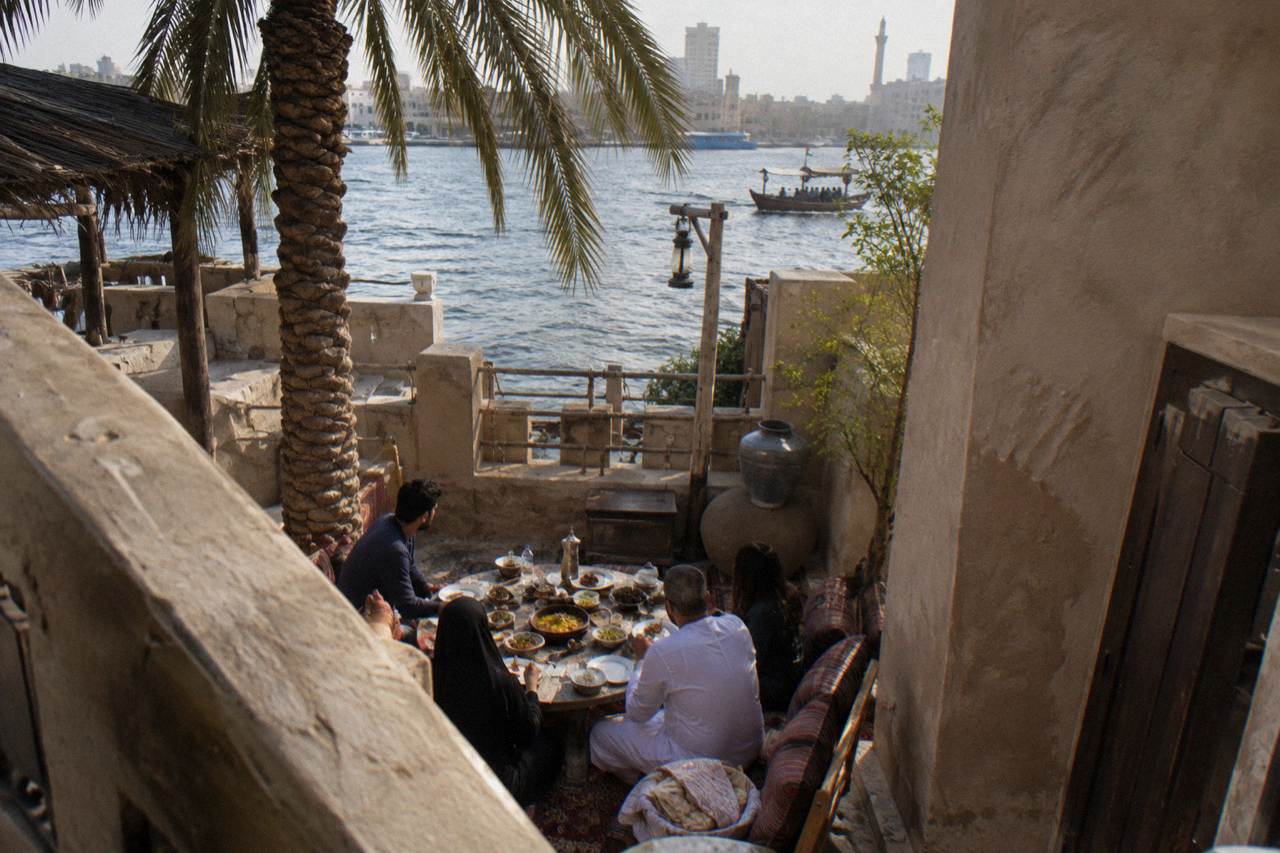
A hosted Emirati meal is a seated, guided format: shared platters such as machboos and harees, gahwa and dates served first, and a host who explains customs as the meal goes. Cultural meals at the Sheikh Mohammed Centre are reported at AED 130 to 160 per person, and guided dinner formats run about 2.5 hours.
What An Emirati Food Experience Actually Looks Like
An Emirati food experience is a seated, hosted meal built around shared platters and explained customs, not a restaurant dinner with a view. Food lands in the middle of the table, guests eat from the same dishes, and a host walks everyone through what each one is and why it matters. Gahwa and dates open the meal, and the format runs roughly 1 hour 30 minutes to 2.5 hours depending on where you book.
Most visitors to Dubai eat Emirati food by accident, a plate of luqaimat at a market stall, a karak from a cafeteria window, and never see the format the dishes were built for. The traditional Emirati table is communal. Machboos, the national dish of long-grain rice slow-cooked with lamb, chicken or fish, dried limes and baharat spices, is served family-style on a platter in the middle of the table, often with tomato sauce or pickles on the side. Harees, wheat and meat cooked for six to eight hours until it turns smooth, comes the same way. The dishes assume a group.
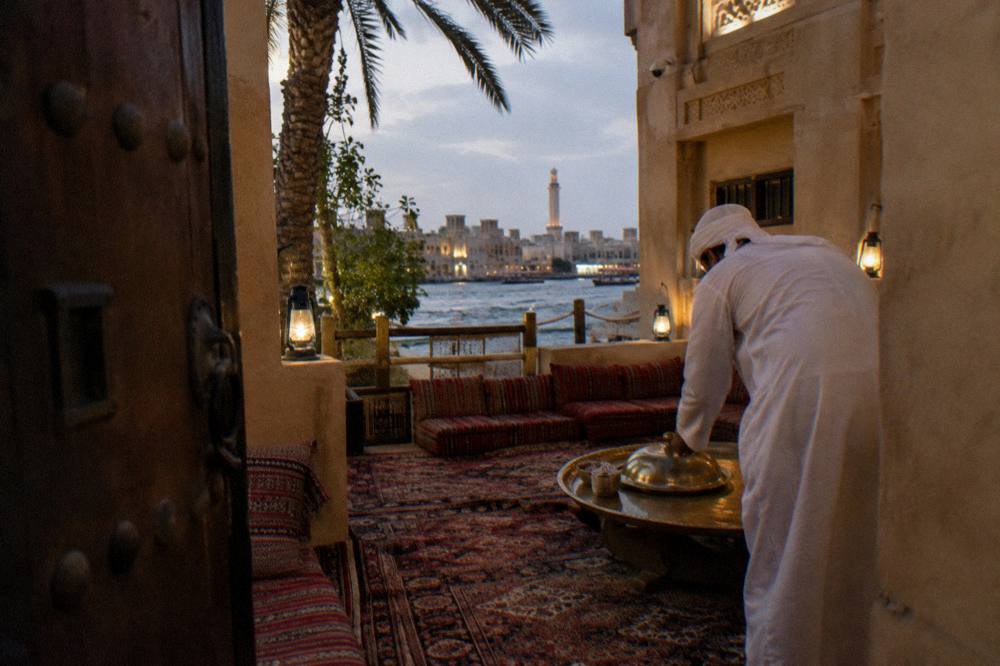
The experience format exists because the format is the point. At a hosted meal, someone sits with you, pours the gahwa, explains the cardamom in it, tells you why the cup is small, and answers questions about customs, Islam and daily life. That is a different product from a self-guided dinner, and for many travellers it is the only realistic route into an Emirati home-style table, since private household invitations are not something a trip can be planned around.
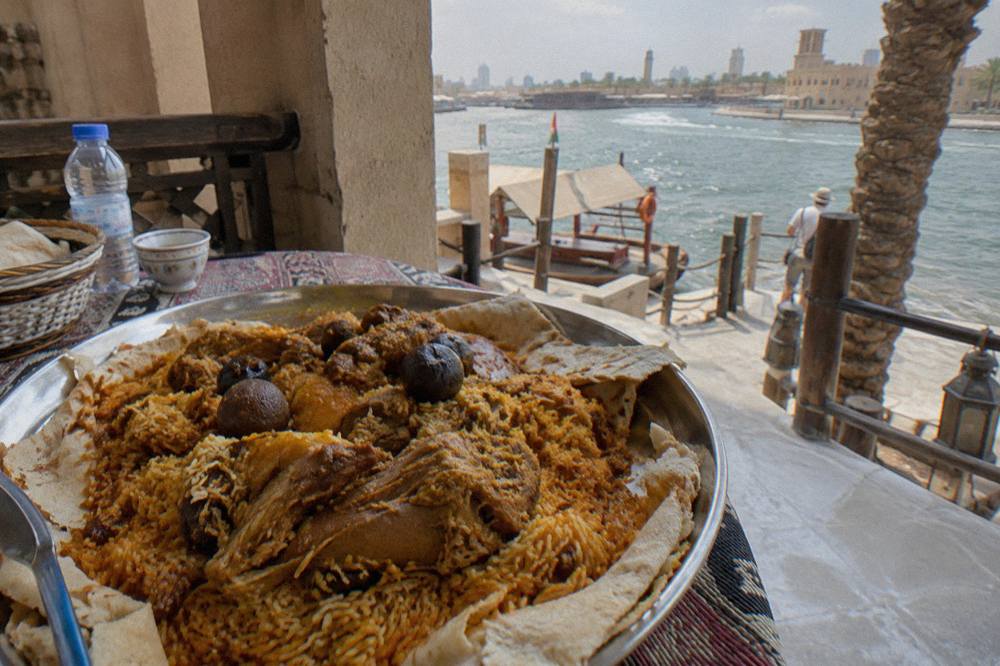
Old Dubai is where almost all of this happens. The Al Fahidi Historical Neighbourhood in Bur Dubai holds the heritage buildings, courtyard restaurants and cultural centres where hosted meals run, and the souks and Creek walks sit minutes away on foot. If you want the background on the dishes themselves first, the Emirati dishes worth knowing guide covers the food, while this page covers what actually happens when you sit down.
How A Hosted Emirati Meal Unfolds, Step By Step
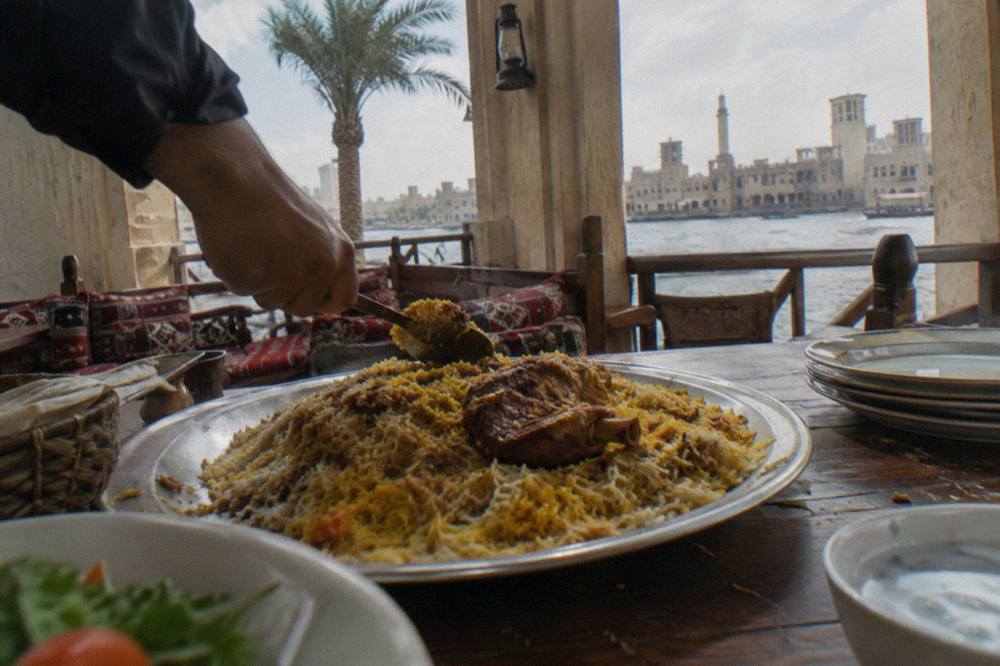
The typical sequence is arrival and gahwa with dates, a short introduction to the household's customs, then shared platters served to the middle of the table, with the host explaining each dish as it lands, and tea or sweets to close. Seated formats run from 1 hour 30 minutes for a cultural meal to about 2.5 hours for a guided dinner with a souk walk attached. You eat with the group, not from individual plates.
The opening matters more than visitors expect. Gahwa, lightly spiced, unsweetened coffee flavoured with cardamom, arrives in small finjan cups, traditionally alongside dates. There is a ritual to it: the cup is received and returned with the right hand, and when you have had enough you gently shake the empty cup from side to side to signal no more refills. Nobody will quiz you on this, but hosts notice when guests know it, and a good host will demonstrate it anyway.
Then the food. A hosted table usually builds from rice dishes outward: machboos as the centrepiece, sometimes harees in cooler months or at gatherings, stews such as thareed, meat and vegetables ladled over thin regag bread, and side plates of pickles, breads and sauces. Dessert is very often luqaimat, crisp fried dough dumplings drizzled with date syrup and sesame seeds, served warm and eaten immediately. Sweet-savoury breakfast dishes such as balaleet, saffron vermicelli topped with a thin omelette, and chebab, saffron and cardamom pancakes with cream cheese and date syrup, appear at breakfast-format meals rather than dinner.
Conversation is part of the menu. The best-documented hosted format in the city, the cultural meals at the Sheikh Mohammed Centre for Cultural Understanding in Al Fahidi, is explicitly built as a meal with a question-and-answer session: Emirati hosts, Arabic coffee and dates, and open discussion about customs and daily life. The centre's own cultural meals programme page describes the format and requires booking ahead.
For travellers who want the meal plus the surrounding neighbourhood, guided formats combine a souk walk with a seated dinner. The Dubai Flavors of Arabia souk tour with tastings and dinner is one option in that family: a 2.5-hour walk through the Old Dubai souks that ends with seated Emirati tastings and dinner. The listing describes the route and inclusions, and the price is shown on the booking page, so check the live listing for the current figure and start times.
The Flavors of Arabia dinner is a 2.5-hour walk-plus-meal, the authentic cultural meal and talk is a seated 1 hour 30 minute format, and the Old Dubai and souks version runs 2 hours 30 minutes with Emirati cuisine at its centre. All three sit in the emirati-cultural-dining family, and the right pick depends less on food, which overlaps heavily, and more on how much walking you want around the table time.
The Dishes You Are Likely To Be Served
Expect gahwa and dates first, then shared rice and stew dishes, chiefly machboos and sometimes harees or thareed, with breads and pickles alongside, and luqaimat as the standard dessert. Menus shift with season and household, so treat any dish list as typical rather than fixed, and check the booking page for what a specific meal includes.
No two hosted tables serve exactly the same spread, but the core dishes repeat because they are the dishes the cuisine is built on. The table below is what the Emirati food record consistently shows, with the role each dish plays at a hosted meal.
| Dish | What it is | Role at the table |
|---|---|---|
| Gahwa | Unsweetened cardamom coffee in small cups | Served first with dates |
| Machboos | Rice slow-cooked with lamb, chicken or fish, dried limes and baharat spices | Main platter, served family-style |
| Harees | Wheat and meat cooked six to eight hours to a smooth consistency | Comfort dish, gatherings and Ramadan |
| Thareed | Meat and vegetable stew over thin regag bread | Main course, common at Ramadan tables |
| Balaleet | Sweet saffron vermicelli with a thin omelette on top | Breakfast-format meals |
| Chebab | Saffron, cardamom and turmeric pancakes with cream cheese and date syrup | Breakfast-format meals |
| Luqaimat | Fried dough dumplings with date syrup and sesame | Dessert, served warm |
Two things surprise first-time guests. First, the food is not spicy-hot in the chilli sense; the seasoning comes from dried limes, cardamom, saffron, cinnamon and baharat blends, which read as warm and aromatic rather than sharp. Second, the meal is not plated. Dishes arrive centrally and everyone eats from them, which is why the format works better with a host explaining pacing than it does as a solo dinner. For the deeper background on the cooking methods behind these dishes, the spices and cooking methods behind Emirati cuisine guide goes dish by dish.
Seasonality shapes the edges of the menu. The UAE's fresh date, or rutab, harvest peaks through summer into early autumn, with around 150 varieties grown and fresh dates reported from around AED 15 per kilogram at festivals and markets, so a meal in that window is more likely to feature fresh dates alongside the dried year-round staple. Harees and thareed carry a strong association with Ramadan and winter gatherings. None of this is guaranteed at any single booking, which is exactly why the hosted format, where the host narrates the choices, delivers more than the dish list alone.
Gahwa, Karak And The Rituals Of Coffee
Gahwa is the ritual that opens an Emirati meal: unsweetened cardamom coffee poured in small amounts, received and returned with the right hand, refilled until you shake the cup side to side to signal you are done. Karak, spiced milky tea, is the everyday counterpart, paired with breakfast dishes like balaleet rather than poured at formal tables.
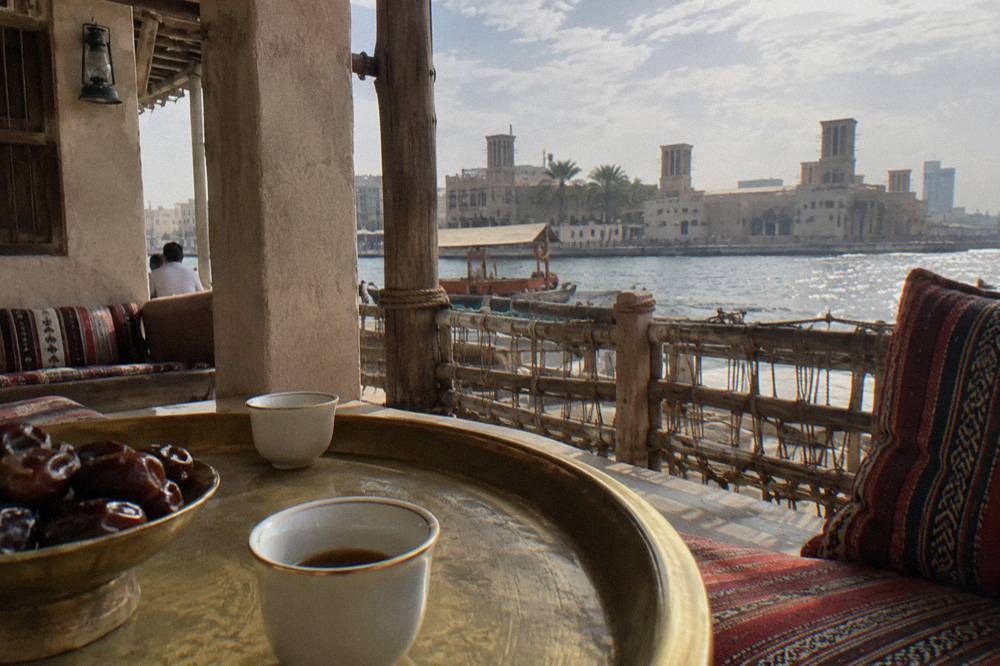
The finjan cup is small on purpose. Gahwa is served in short pours because it is a gesture of hospitality, not a caffeine delivery, and the host keeps refilling until you signal. The signal is the side-to-side shake of the empty cup, and the right hand applies to giving, receiving and returning the cup alike. Dates sit beside the coffee to balance the unsweetened pour, and the combination of gahwa and dates is the standard welcome at Emirati gatherings.
Karak is the other half of the story, and it belongs to a different register. It is spiced milky tea, the drink of cafeterias and quick stops, sold at local stalls for a reported 1 to 3 AED a cup, with cafe versions priced higher. At a hosted breakfast, karak commonly appears alongside balaleet and chebab. The Arabic coffee, karak and dates in Dubai guide covers where to find both drinks across the city if you want to build them into the rest of your trip.
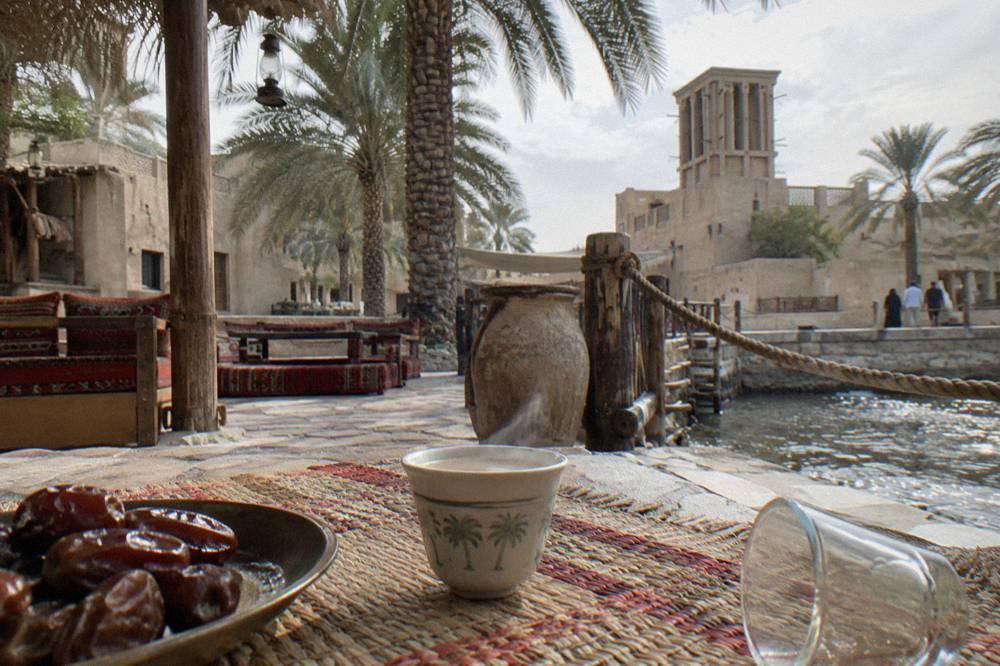
One practical note: neither drink carries alcohol, and neither does anything else at a traditional Emirati table. The cuisine's drinks are coffee, tea and water. Visitors used to a drink with dinner should plan the hosted meal as the alcohol-free course of the evening, which is also consistent with how Dubai treats alcohol generally, licensed venues only, and with the fact that food walks through Old Dubai serve no alcohol unless a listing says otherwise.
Etiquette At The Table: What To Do And What To Avoid
The short version: use your right hand for gahwa and for eating, dress with shoulders and knees covered in heritage areas, ask before photographing people, and tip at your discretion since service charges on bills are venue-retained rather than a government levy. None of it is enforced with fines at a hosted meal, but all of it is noticed.
Hosted meals are forgiving, because explaining the customs is the host's job. Still, arriving with the basics makes the meal flow better, and the table below is the practical version of what the etiquette record reports. Other pages covering the same trip are gathered on Dubai Food Tours.
| Situation | The custom | Why it matters |
|---|---|---|
| Receiving gahwa | Right hand only, return the cup the same way | Traditional hospitality ritual |
| Declining more coffee | Shake the empty cup gently side to side | The host otherwise keeps refilling |
| Eating from shared platters | Take from the section nearest you | Communal table convention |
| Dress in heritage areas | Cover shoulders and knees | Respect in traditional districts |
| Photographing people | Ask permission first, always | Privacy expectations, especially in souks |
| Restaurant bills | A service charge of up to 10 per cent may appear, tips of 5 to 10 per cent are voluntary | Service charge is retained by the venue |
Tipping deserves one clarification because it confuses visitors. Restaurants commonly add a service charge of up to 10 per cent, which is discretionary and venue-retained rather than a mandatory government fee, plus 5 per cent VAT. Cash tips of 5 to 10 per cent, or rounding up, are common but voluntary. The official Visit Dubai tipping guide puts restaurants at 10 to 15 per cent by personal preference and cafes at AED 5 to 10. At a hosted cultural meal, a tip is likewise a gesture, not an obligation.
Dress is the other frequent question, and the answer is simple: in heritage areas, souks and hosted-meal settings, cover shoulders and knees. There is no single dress-code law aimed at tourists, but traditional districts read uncovered dress as careless at best, and a hosted Emirati meal is precisely the setting where the gesture counts. The dress code for walking tours and souks guide has the fuller checklist if your itinerary runs beyond the meal.
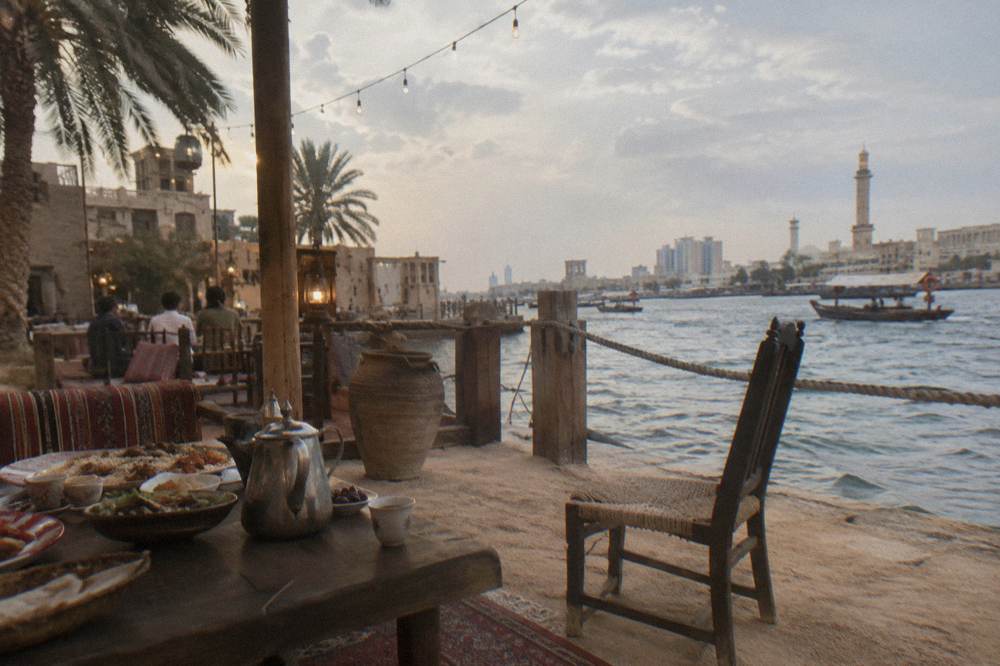
Dietary needs work differently here than elsewhere, so raise them before booking. All meat sold and served in Dubai restaurants and markets is halal, and pork appears only in designated licensed sections, so halal is the default at any Emirati table. But a listing is only described as vegetarian or gluten-free if its own description says so, and many traditional dishes are built on meat, wheat or both. The right move is to message the operator with requirements before booking, not to hope at the table. The vegetarian and dietary needs on a Dubai food tour guide covers what to ask. Once your dietary questions are settled, the guide to Dubai's most famous restaurant explains why fame works differently in this city and what the food is actually known for.
Where Hosted Emirati Meals Happen In Old Dubai
Two settings dominate: cultural-centre meals inside the Al Fahidi Historical Neighbourhood, the best documented being the Sheikh Mohammed Centre for Cultural Understanding, and heritage restaurants in Bur Dubai and Deira such as Arabian Tea House, Local House and Al Bait Al Qadeem, plus guided dinner formats that pair a souk walk with a seated meal.
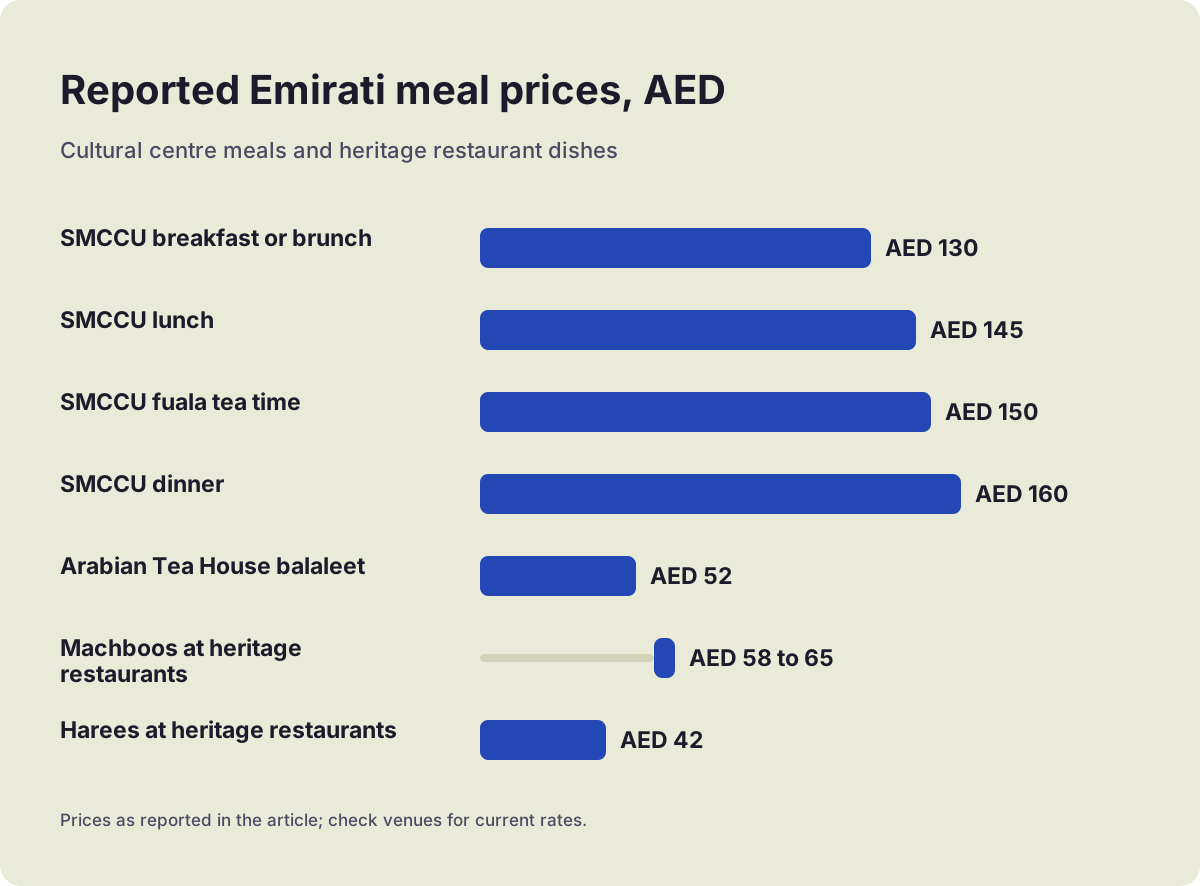
The Sheikh Mohammed Centre for Cultural Understanding sits inside Al Fahidi and runs 1.5-hour cultural meals with Emirati hosts, Arabic coffee and dates, and an open question-and-answer session on customs and daily life. Reported prices are AED 130 for breakfast or brunch, AED 145 for lunch, AED 150 for the fuala tea time and AED 160 for dinner, with booking required and Ramadan adjusting the dinner format to iftar. The neighbourhood around it is open for walking, with Dubai Culture listing hours of 7am to 8pm daily, so arrive early and walk the lanes first.
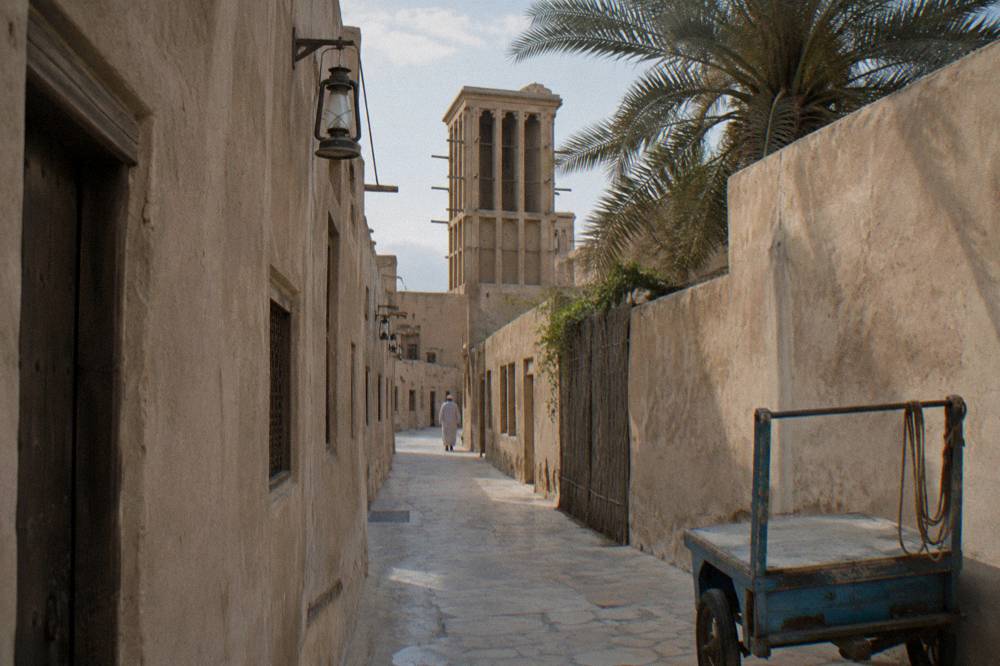
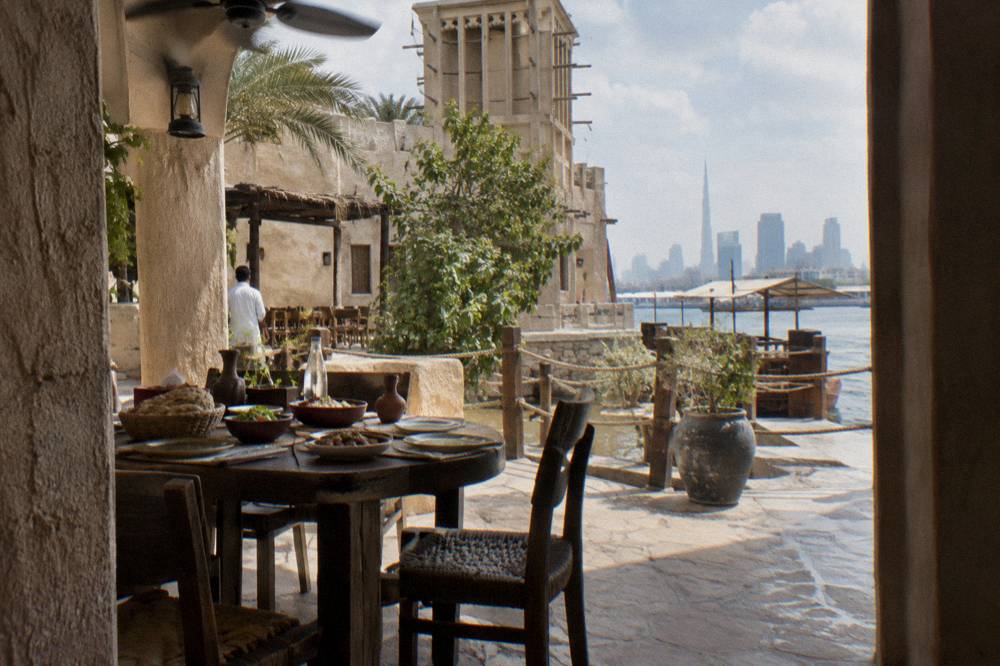
Heritage restaurants give you the food without the structured talk. In Al Fahidi, Arabian Tea House serves traditional breakfast items including balaleet at a reported AED 52, alongside regag with egg or cheese and Emirati breakfast boards. In Deira, Local House and Al Bait Al Qadeem serve Emirati mains in heritage settings, with machboos reported around AED 58 to 65, harees around AED 42, and thareed or margoog around AED 55 to 58. These are reported figures from recent dining guides, so treat them as planning ranges and check current menus.
The third setting is the guided dinner, and it is the one that fits a short trip best. The Dubai Flavors of Arabia souk tour with tastings and dinner pairs the Old Dubai souks with a seated Emirati dinner in one 2.5-hour outing, which matters if you would otherwise skip the souks or the meal for lack of time. Check availability on the operator's page for current dates and start times.
A shorter, seated-only alternative is the authentic Emirati cultural meal and talk in Old Dubai, a 1 hour 30 minute format that skips the walking and goes straight to the table and the conversation. It suits anyone with mobility limits, tight schedules or an afternoon already spent in the souks. The price and current availability are on the booking page.
What A Hosted Emirati Meal Costs
Cultural-centre meals are reported at AED 130 to 160 per person depending on the sitting, heritage-restaurant mains run reported AED 42 to 65 per dish, and guided dinner formats carry per-person prices shown on their booking pages. For a full evening with a walk attached, budget for the guided dinner; for the meal alone, the cultural-centre sittings are the clearest benchmark.
The honest comparison is between three spending levels, and they do not overlap much. The table below sets them out with the figures the sources actually state, reported rather than guaranteed, since restaurant prices move.
| Format | Reported cost | What it includes |
|---|---|---|
| Cultural-centre breakfast or brunch | AED 130 per person | Meal, gahwa and dates, hosted Q&A |
| Cultural-centre lunch | AED 145 per person | Meal, gahwa and dates, hosted Q&A |
| Cultural-centre fuala tea time | AED 150 per person | Tea-time meal format with host |
| Cultural-centre dinner | AED 160 per person | Dinner sitting, gahwa and dates, hosted Q&A |
| Heritage restaurant mains | AED 42 to 65 per dish, reported | Machboos, harees, thareed, priced per dish |
| Guided souk walk with dinner | Price on the booking page | Souk walk, tastings, seated dinner, about 2.5 hours |
Notice what is not in that table: a like-for-like figure comparing guided dinner tours against independent meals for equivalent food. No recent source provides one, and inventing it would be dishonest, so the right planning approach is to price the guided format from its booking page and the independent meals from the reported ranges above. What the guided format adds is not food volume but the counted, listed tastings and the host's narration, which the restaurant sitting delivers only in the cultural-centre format.
For context on the rest of your eating budget, casual neighbourhood meals run a reported 15 to 40 AED per person and mid-range restaurant meals around 80 to 150 AED, so a hosted Emirati meal sits at the top of the everyday range but well below fine dining. The Dubai food prices guide has the full breakdown by meal type if you are costing the whole trip.
Who A Hosted Emirati Meal Suits, And Who It Does Not
It suits curious eaters who want context, not just calories: families, first-time visitors, anyone who wants questions answered by an Emirati host, and travellers with limited time who want the souks and the table in one booking. It suits you less if you want a private romantic dinner, a fast bite between sights, or a menu you control dish by dish.
The format's strength is narration. If you are the kind of traveller who asks why, a hosted meal answers questions a restaurant cannot, from the gahwa ritual to how harees is made to what Ramadan changes. Families do well because the shared-platter format is naturally social and hosts are used to children. First-time visitors do well because one sitting covers dishes, customs and neighbourhood in a single block of time.
It fits less well in a few cases. If you want a quiet dinner for two, a hosted group format is the wrong instrument, and a heritage restaurant is the better pick. If your trip is built around a tight sightseeing schedule, a seated meal of an hour and a half beats a 2.5-hour walk-plus-dinner. And if you have specific dietary requirements, sort them with the operator before booking rather than at the table, since traditional dishes lean on meat and wheat. A good comparison of the private-versus-group question generally is in the private or group food tour decision guide.
One timing note for the coming months: no public consumer food festival is confirmed in Dubai between now and early February 2027, so there is no event to plan a hosted meal around. The reliable anchors are the neighbourhood itself, and the pace of Old Dubai, which the best time to visit Dubai for food and walking guide covers season by season.
Common Questions About Emirati Food Experiences
What Actually Happens At A Hosted Emirati Meal?
Gahwa and dates open the sitting, a host explains the customs as the meal goes, and shared platters such as machboos, harees or thareed arrive at the middle of the table for everyone. Luqaimat usually closes the meal. Formats run from 1 hour 30 minutes for a cultural meal to about 2.5 hours for a guided walk with dinner.
How Much Does An Emirati Cultural Meal Cost?
Cultural meals at the Sheikh Mohammed Centre for Cultural Understanding are reported at AED 130 for breakfast or brunch, AED 145 for lunch, AED 150 for tea time and AED 160 for dinner, with booking required. Heritage-restaurant mains are reported around AED 42 to 65 per dish. Guided dinner formats show their per-person price on the booking page.
Do I Need To Know The Gahwa Ritual Before I Go?
No, hosts demonstrate it. The essentials: receive and return the small cup with your right hand, and shake the empty cup gently side to side when you have had enough. Otherwise the host keeps refilling.
Is A Hosted Emirati Meal Suitable For Vegetarians?
Not automatically. Traditional tables lean on meat and wheat, and a listing is only vegetarian or gluten-free if its own description says so. Message the operator with your requirements before booking and check what the host can adapt.
What Should I Wear To An Emirati Meal In Old Dubai?
Cover shoulders and knees, in line with the dress expectations for heritage areas and souks generally. There is no tourist-specific dress law, but a hosted Emirati meal is exactly the setting where the gesture of respect is noticed.
Is Alcohol Served At A Hosted Emirati Meal?
No. Traditional Emirati tables serve coffee, tea and water. Alcohol in Dubai is limited to licensed venues, and food experiences through Old Dubai include alcohol only where a listing explicitly says so.