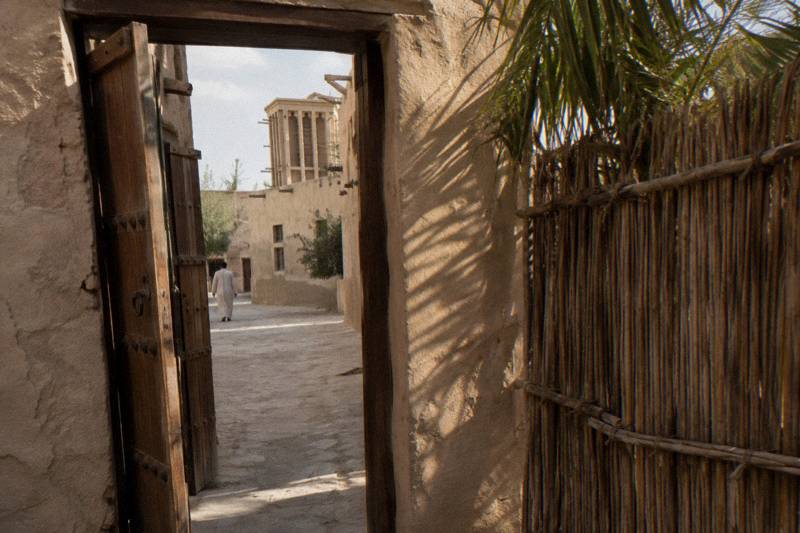
Three Days In Dubai With A Food Tour
Three days is enough to eat well across Dubai if you anchor the trip around one guided food walk through Old Dubai and build the rest of the itinerary from there. This is the day-by-day plan, with transport, reported costs and timing drawn from official sources.
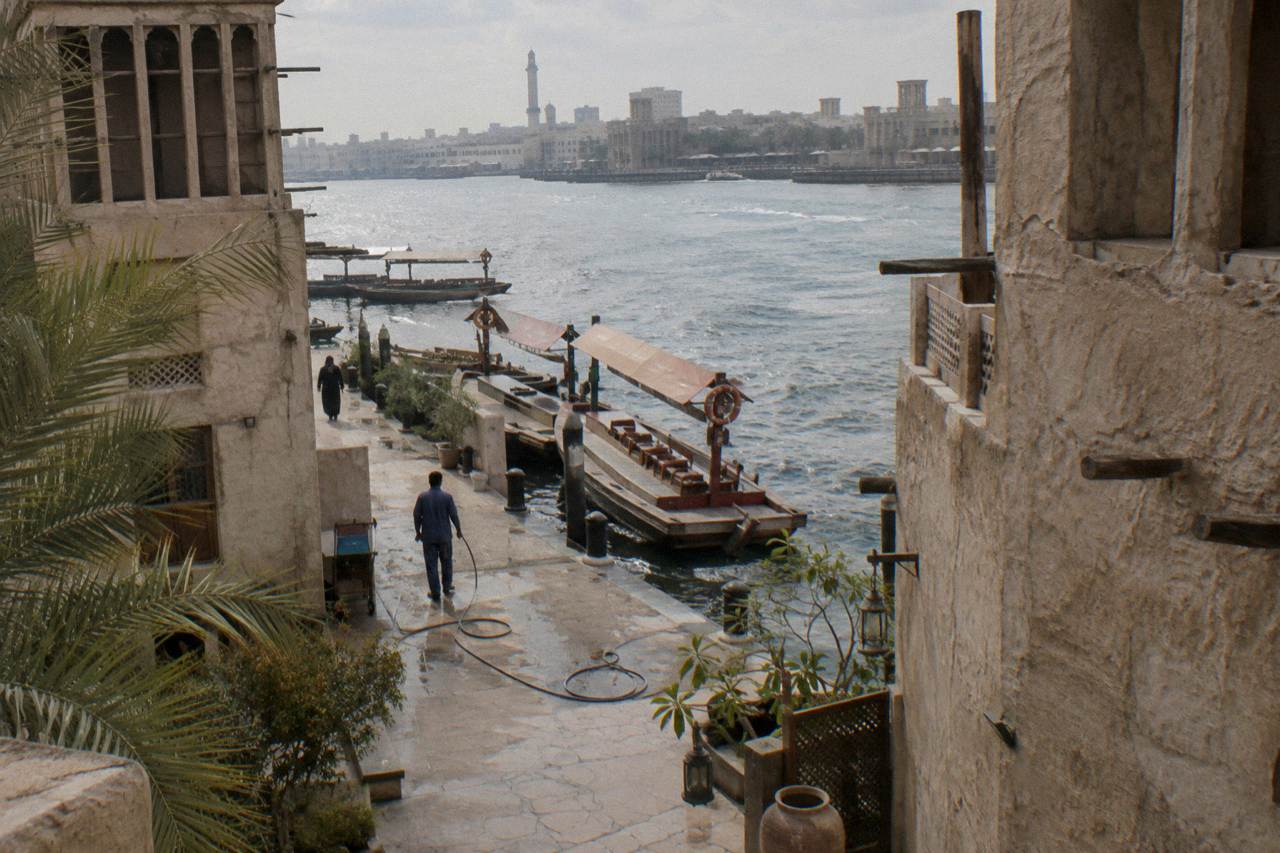
Short answer
Plan Day One around Al Fahidi and the Creek, put a guided Old Dubai food walk on Day Two, and keep Day Three for the souks and a slower waterfront evening. December to February daytime highs average 24 to 26 C, the metro starts at 05:00, and reported street food runs from about 8 AED for a shawarma.
How Do You Fit A Food Tour Into Three Days In Dubai?
The trick is to put the guided walk in the middle of the trip, on Day Two, and let it teach you the geography before you explore alone. A three day visit splits cleanly into Old Dubai, the souks and Creek crossings, then the modern city or a slower heritage morning. The walk you book covers the lanes, the crossings and the tastings in one 2.5 to 4 hour stretch, so the other two days stay relaxed.
Most first-time visitors try to see everything and end up eating badly, grabbing food court meals between sights. Reversing that order works better. Eat first, learn the neighbourhood, then sightsee. A guided food walk through Al Fahidi and the souks gives you a route, a set of dishes you now recognise, and the confidence to return to the lanes on your own for the rest of the stay.
The plan below assumes you are staying anywhere on the metro network. Dubai's Green Line runs straight through the old district, with stations at Baniyas Square, Gold Souq, Al Ras and Sharaf DG serving the Al Fahidi area, so no day here needs a car. The Dubai Food Tours site exists for exactly this kind of planning: short trips where one well-chosen walk does the work of a dozen solo stops.
Weather shapes the whole schedule. December to February bring the lowest average daytime highs of the year, 24 to 26 C per normals compiled from national climate data, which makes long walking days comfortable. Summer visits flip the plan: walk early, eat indoors at midday, and return to the lanes after dark. The best time to visit Dubai for food and walking guide covers the month-by-month detail if your dates are flexible.
What Does Day One In Old Dubai Look Like?
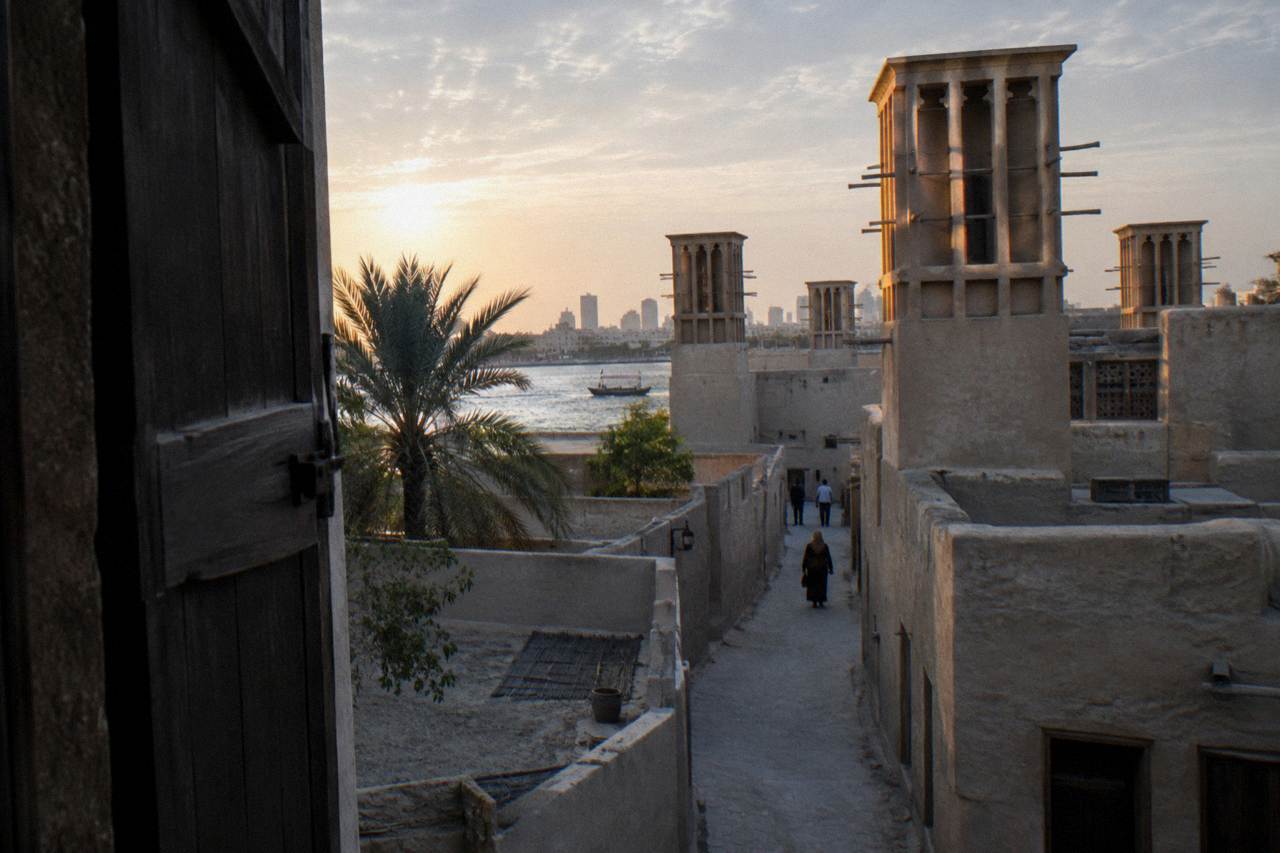
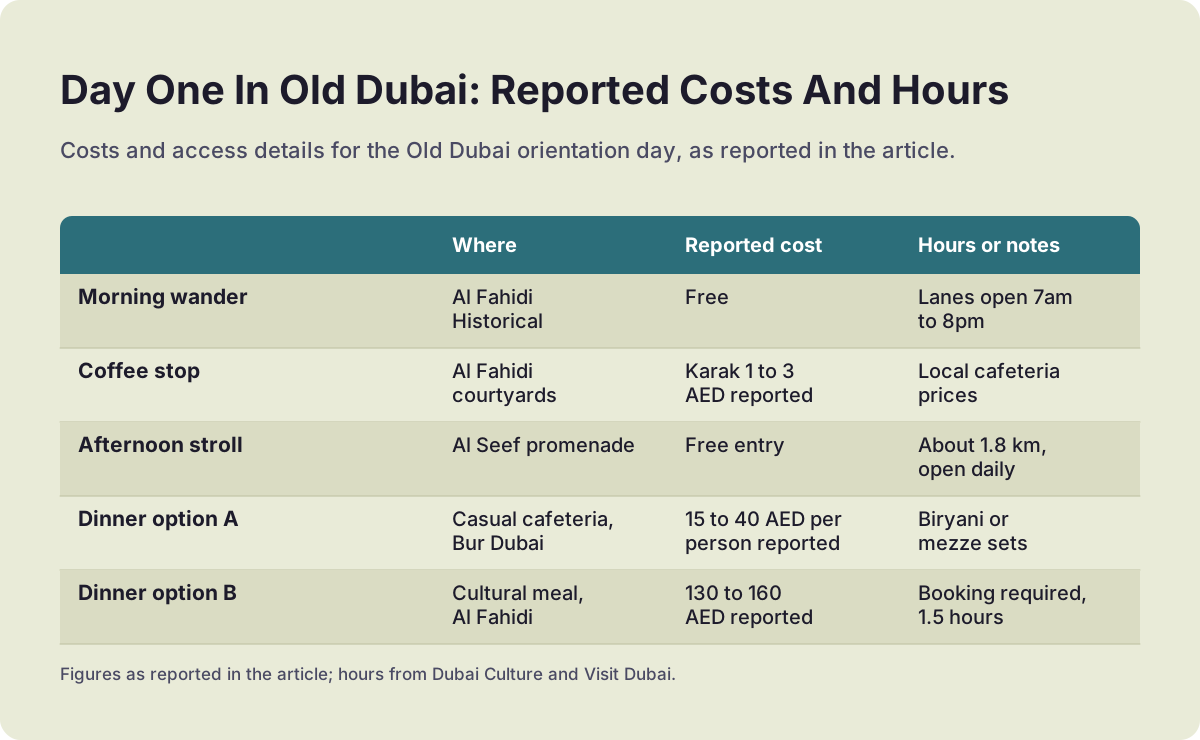
Day One is a low-effort orientation day: Al Fahidi Historical Neighbourhood in the morning, the Al Seef waterfront in the afternoon, and an early dinner near the Creek. Al Fahidi's lanes and courtyards are free to walk, the neighbourhood is reported open 7am to 8pm daily, and Al Seef stretches about 1.8 km along the water with free entry. Nothing on this day needs a booking.
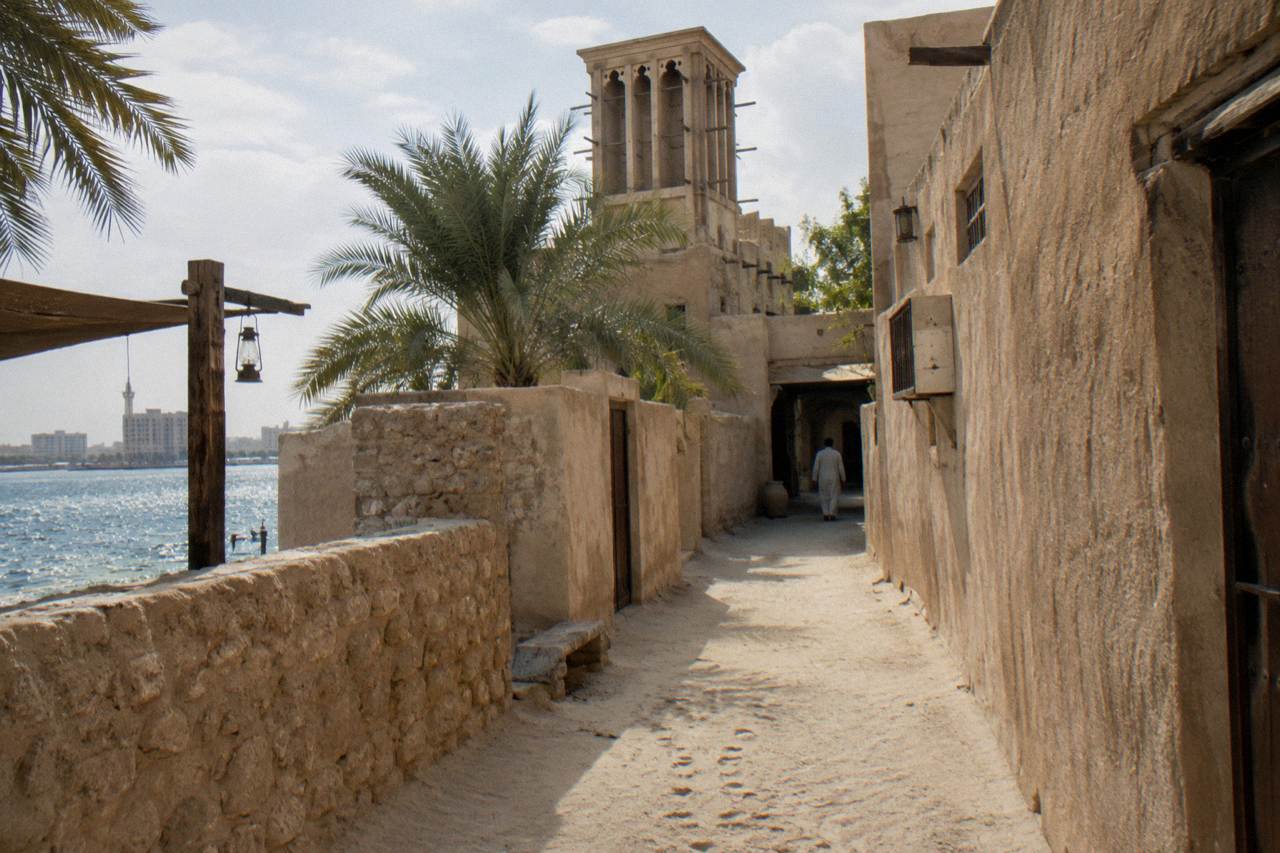
Start at Sharaf DG station, the Green Line stop that serves the Al Fahidi area. The historical neighbourhood is a grid of coral-stone and gypsum buildings with wind towers, small galleries and courtyards, and it takes about two unhurried hours to wander properly. Dubai Culture reports neighbourhood hours of 7am to 8pm Monday to Sunday, and access to the lanes is free. One caveat: Al Fahidi Fort, which normally houses Dubai Museum, has been closed for restoration since 2021, with reports from late 2026 pointing to a reopening in the coming weeks or months. Check before you plan a museum stop.
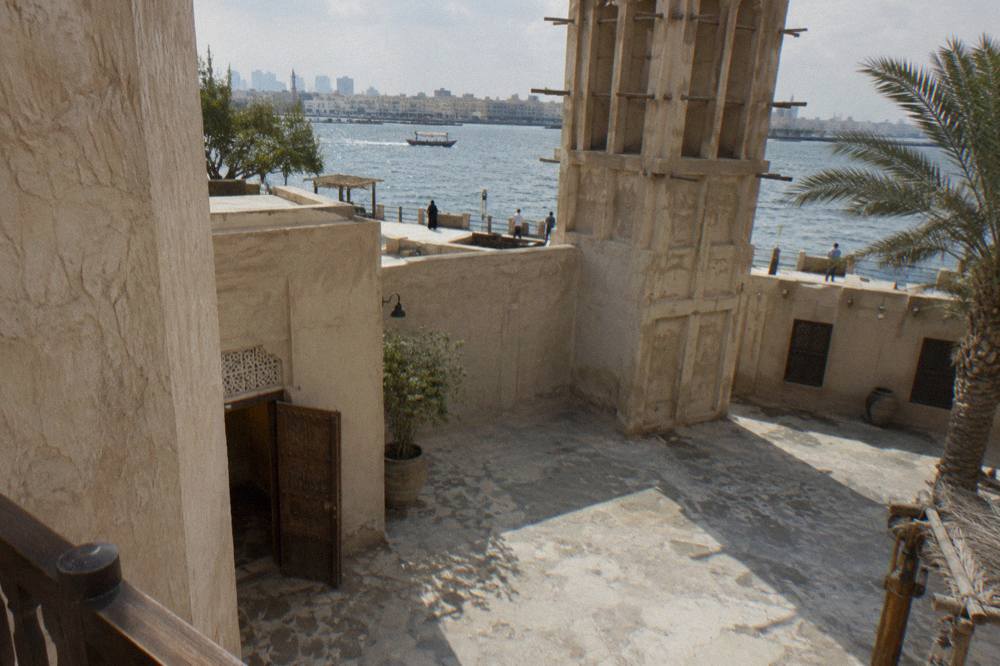
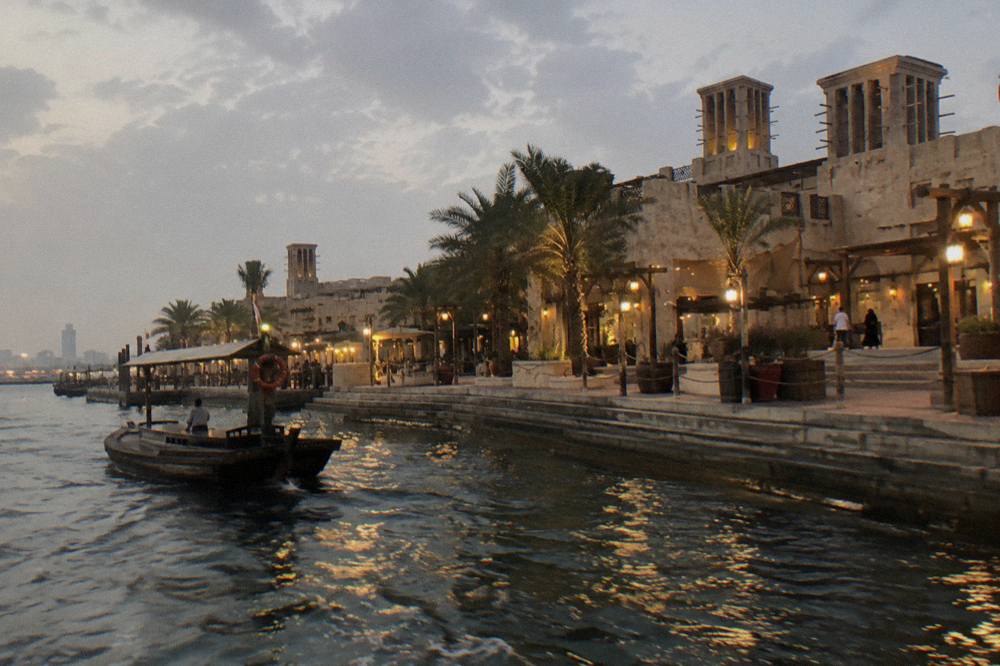
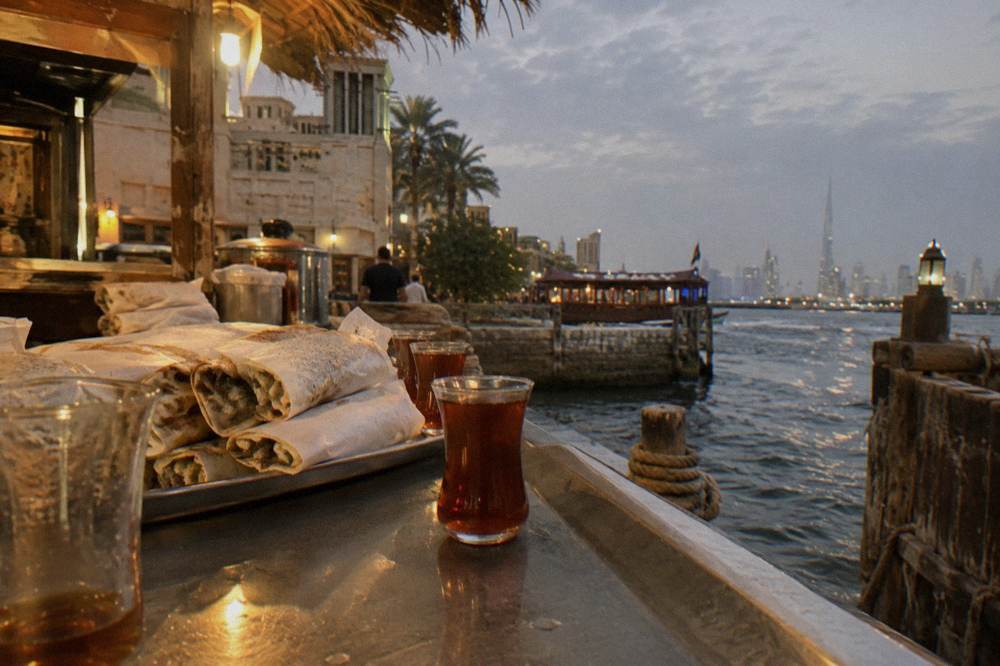
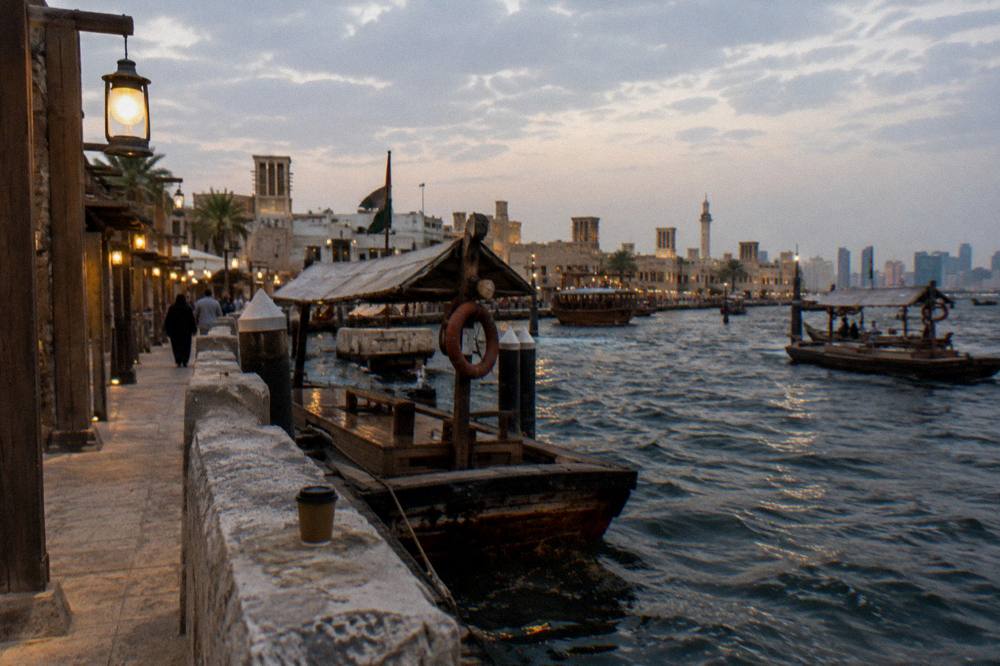
From Al Fahidi it is a short walk east to Al Seef, the waterfront promenade on the Bur Dubai side of the Creek. The stretch mixes heritage-style architecture with modern cafes and runs about 1.8 km, open daily with free entry. This is where the evening pays off. The sunsets over the water are the reason to be here in the late afternoon, and the lane food nearby is cheap in the way the malls never are: reported shawarma prices run 8 to 15 AED at local spots, a falafel wrap 4 to 15 AED, and karak chai 1 to 3 AED at local cafeterias. Those are reported figures from 2026 price surveys, so treat them as planning ranges and check each stall.
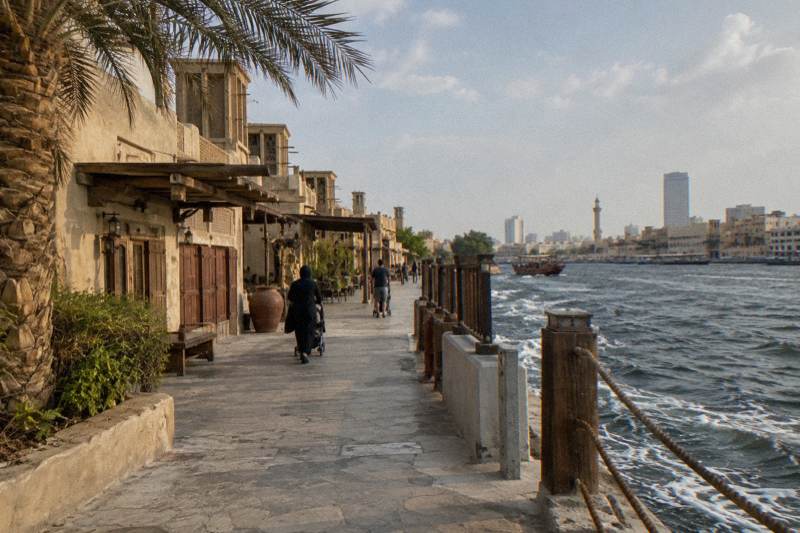
For dinner, the casual Emirati and Levantine cafeterias around Bur Dubai are reported to cost 15 to 40 AED per person for a biryani or mezze plate. If you want a sit-down Emirati meal with context instead, the Sheikh Mohammed Centre for Cultural Understanding in Al Fahidi runs 1.5-hour cultural meals with local hosts, reported at 130 AED for breakfast, 145 for lunch, 150 for a tea-time fuala and 160 for dinner, booking required. Those sessions include Arabic coffee, dates and a question-and-answer session on customs and daily life, which is a good primer before Day Two's walk.
| Day One block | Where | Reported cost | Notes |
|---|---|---|---|
| Morning wander | Al Fahidi Historical Neighbourhood | Free | Lanes open 7am to 8pm per Dubai Culture |
| Coffee stop | Al Fahidi courtyards | Karak 1 to 3 AED reported | Local cafeteria prices |
| Afternoon | Al Seef promenade | Free entry | About 1.8 km, open daily |
| Dinner option A | Casual cafeteria, Bur Dubai | 15 to 40 AED per person reported | Biryani or mezze sets |
| Dinner option B | Cultural meal, Al Fahidi | 130 to 160 AED reported | Booking required, 1.5 hours |
End the day early. The walk tomorrow is the point of the trip, and it goes better on a full night's sleep than on a late skyline dinner.
Which Food Walk Should Anchor Day Two?
Day Two belongs to a guided food walk, and the strongest fit for a three day trip is the Al Fahidi Old Town, Souks, Street Food and Abra Cruise tour, a 2.5 to 4 hour route through the heritage district, the souks and a boat crossing of the Creek. It compresses the whole Old Dubai food story into one morning or afternoon and leaves the day free. Price and current inclusions are shown on the booking page.
This is the walk that earns its place in a short itinerary because it does three jobs at once: it feeds you, it teaches you the dish names you will see on every menu for the rest of the trip, and it handles the Creek crossing, which is the one piece of Old Dubai geography that confuses first-timers. The route starts from the Al Fahidi side, works through the lanes and the Textile Souk, crosses the water, and finishes among the Deira souks. Meeting point details and exact inclusions are on the booking page, and you should check both before you go, since stops and start times vary by departure.
Two alternatives suit a different pace. The Premium Guided Tour with Street Food and Abra Ride runs 3 to 4 hours and suits visitors who want a smaller group and a longer sit-down stretch; the listing describes tastings of shawarma, falafel, karak, samosa, rogag and luqaimat, though the exact line-up varies by departure. The Historic Guided Tour: Creek, Street Food and Souks covers similar ground in the same 3 to 4 hour window with a heavier history emphasis. Whichever you pick, book it for Day Two morning: souk lanes are cooler, the stalls are fully stocked, and you still have the afternoon for the Gold Souk or a rest.
After the walk, repeat what you liked. This is the quiet advantage of putting the tour on Day Two rather than Day Three: every dish the guide introduced, from luqaimat to karak, is now something you can order yourself for the rest of the stay. The dubai street food guide covers where each of those dishes sits on the map if you want to chase a favourite.
What Does Day Three Add Beyond The Souks?
Day Three is the flexible day: a slower souk morning on the Deira side, an abra crossing back to Bur Dubai, and either a modern-city afternoon or a second heritage stop. Gold Souk shops are reported open around 10am to 10pm, the Spice Souk opens earlier and runs past 9pm but closes during the daytime on Fridays, and the crossings between the two sides take minutes by boat.
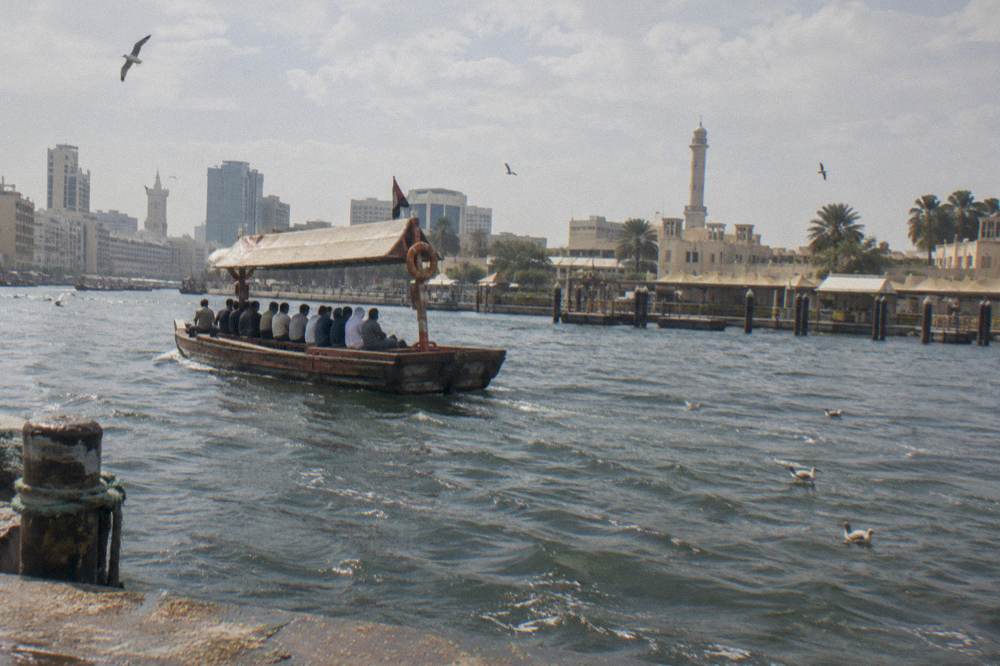
Start on whichever side you did not finish on. If the tour ended in Deira, begin Day Three in Bur Dubai: the Textile Souk first, where vendors are typically open around 9am to 8pm with some Friday afternoon closures, then the abra back across. If you ended in Bur Dubai, reverse it. The Roads and Transport Authority runs the traditional Creek boats on several commuter routes, including the Bur Dubai to Deira Old Souq crossing, so the boat is a working part of local transport rather than a tourist ride. Do not print a fare from memory: check the current RTA marine page for the crossing price.
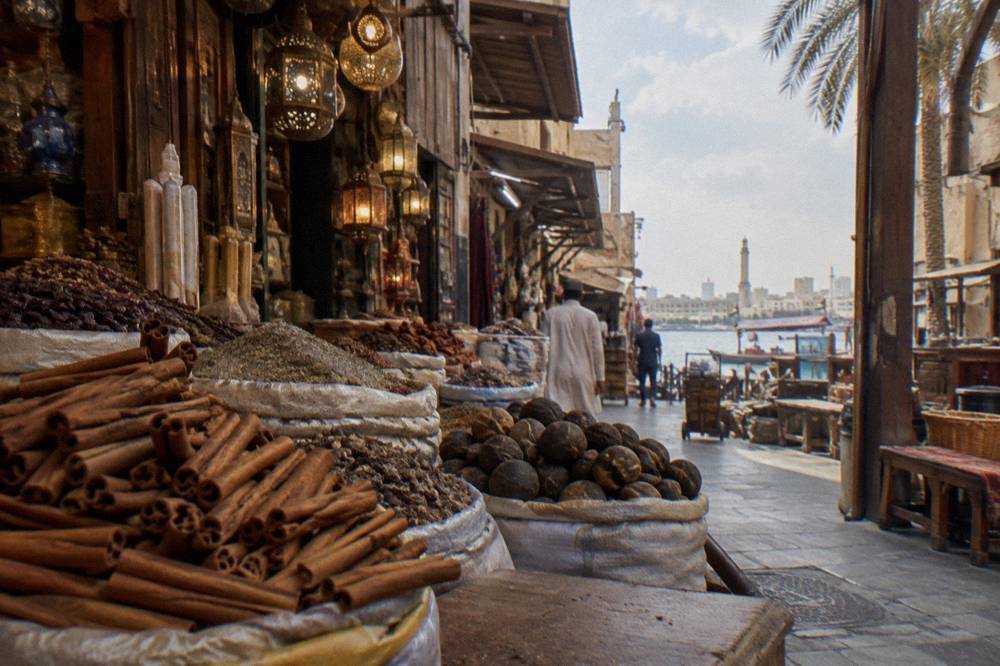
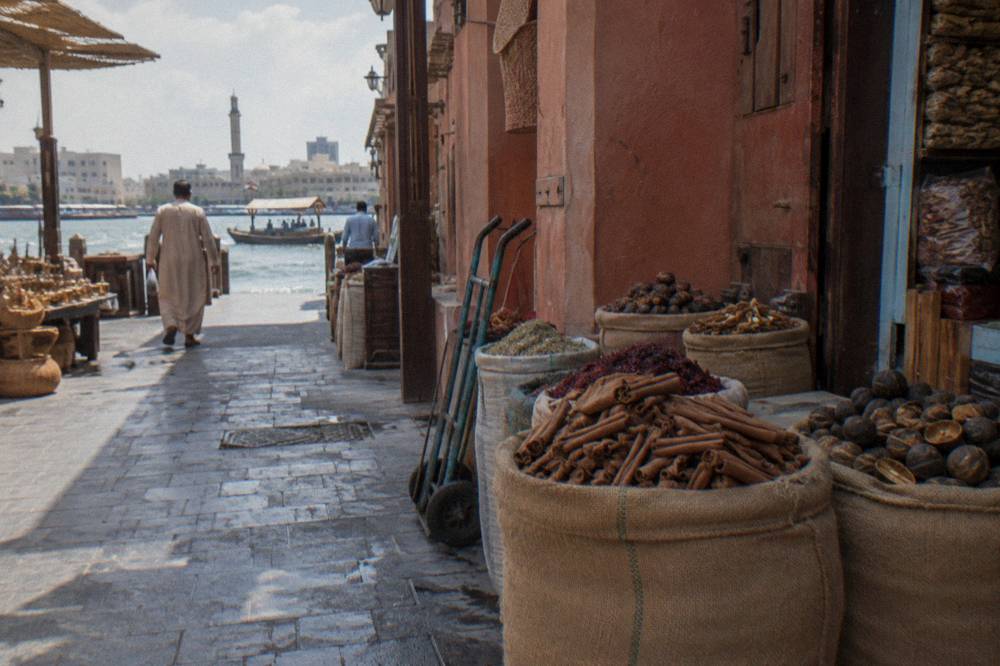
The Spice Souk rewards an early start more than the Gold Souk does. Visit Dubai reports spice shops generally open earlier than 8am and run past 9pm, with daytime closures on Fridays and midday breaks at many stalls. The Gold Souk's shops are reported at roughly 10am to 10pm, with individual hours varying and no single official timetable. Both are browsing experiences rather than eating ones, but the Spice Souk is where the vocabulary of Day Two's dishes becomes physical: dried limes, baharat blends, cardamom, the saffron that goes into machboos and balaleet.
For lunch, the reported street prices around Deira hold: samosa at 2 to 3 AED each or 10 to 12 AED for a bag of about five, luqaimat at 10 to 18 AED, shawarma 8 to 15 AED at local spots versus 20 to 40 AED at tourist-facing ones. Those are 2026 reported ranges, not promises; each stall sets its own prices. The deira spice souk guide covers what to taste and what to carry home.
The afternoon splits by interest. A first visit usually wants the skyline, which means the metro back toward downtown. A second visit, or anyone who fell for Old Dubai, can stay: the Creek Lights project is upgrading the promenades on both sides, with more than 5,000 lighting units along roughly 8 km of waterfront and completion scheduled for the first quarter of 2027, so the evening waterfront walk is only getting better. The dubai night food tour guide covers the after-dark side of the same district.
How Much Should Three Days In Dubai Cost?
The honest way to budget is to separate the three spending layers. Layer one is street and cafeteria food, where the reported ranges below apply and where most of Old Dubai's best eating happens. Layer two is sit-down dining, where mid-range meals are reported at 80 to 150 AED per person. Layer three is the guided walk itself, whose price is on the booking page.
Street and cafeteria eating is the cheap layer: karak chai at a reported 1 to 3 AED, shawarma 8 to 15 AED at local spots, casual meals 15 to 40 AED per person. Restaurant mains are reported at 40 to 80 AED, full mid-range meals around 80 to 150 AED per person, and a 1.5-litre bottle of water 1 to 2 AED from supermarkets. Those are planning ranges from 2026 price surveys, not promises, and each stall and restaurant sets its own prices.
| Spending layer | Reported range (AED) | Where it applies | Planning note |
|---|---|---|---|
| Karak chai | 1 to 3 | Local cafeterias and stalls | Cafe versions cost more |
| Shawarma | 8 to 15 local, 20 to 40 tourist spots | Deira and Bur Dubai stalls | Reported 2026 ranges |
| Falafel wrap | 4 to 15 | Street counters | Example at 13 AED reported |
| Casual meal | 15 to 40 per person | Cafeterias, biryani or mezze | Main lunch layer |
| Mid-range dinner | 80 to 150 per person | Sit-down restaurants | Mains often 40 to 80 |
| Bottled water | 1 to 2 per litre | Supermarket multipacks | 6 to 12 per bottle in restaurants |
Two rules keep the budget honest. First, the service charge on a restaurant bill is venue-retained and not a government levy, and an extra cash tip of 5 to 10 per cent is common but voluntary; the official tourism guidance simply says tipping is personal preference, with 10 to 15 per cent at restaurants the usual practice. Second, never convert these reported AED figures into a tour comparison: guided walk prices are set per listing and shown on the booking page, and mixing the two layers produces meaningless totals.
How Do You Get Between The Old Dubai Stops?
The Green Line does most of the work: Sharaf DG serves Al Fahidi, Baniyas Square, Gold Souq and Al Ras serve Deira, and Union connects to the Red Line, with trains reported running from 05:00 Monday to Saturday and from 08:00 on Sundays. An anonymous Nol card costs 25 AED including initial credit, and road taxis start at a reported 5 AED in the day and 5.5 AED at night.
Three days in this district needs exactly one transport decision made in advance: get a Nol card at the first metro station. The card covers metro, tram, buses and some other services, and the anonymous Silver or Gold version costs 25 AED with credit included, per the official RTA card page. The metro timetable, per RTA, runs 05:00 to midnight Monday to Thursday and Saturday, 05:00 to 01:00 on Friday, and 08:00 to midnight on Sunday. Plan Sunday mornings accordingly: a heritage walk start before 08:00 means a taxi, not a train.
| Journey | Best option | Reported detail |
|---|---|---|
| Hotel to Al Fahidi | Green Line to Sharaf DG | Trains from 05:00, Sundays 08:00 |
| Bur Dubai to Deira souks | Green Line to Al Ras or Gold Souq, or the Creek boat | Boat crossings run on several RTA commuter routes |
| Day trip to downtown | Green Line, change at Union to Red Line | Union is the shared interchange |
| Late-night returns | Taxi | Starting fare 5 AED day, 5.5 AED night, reported |
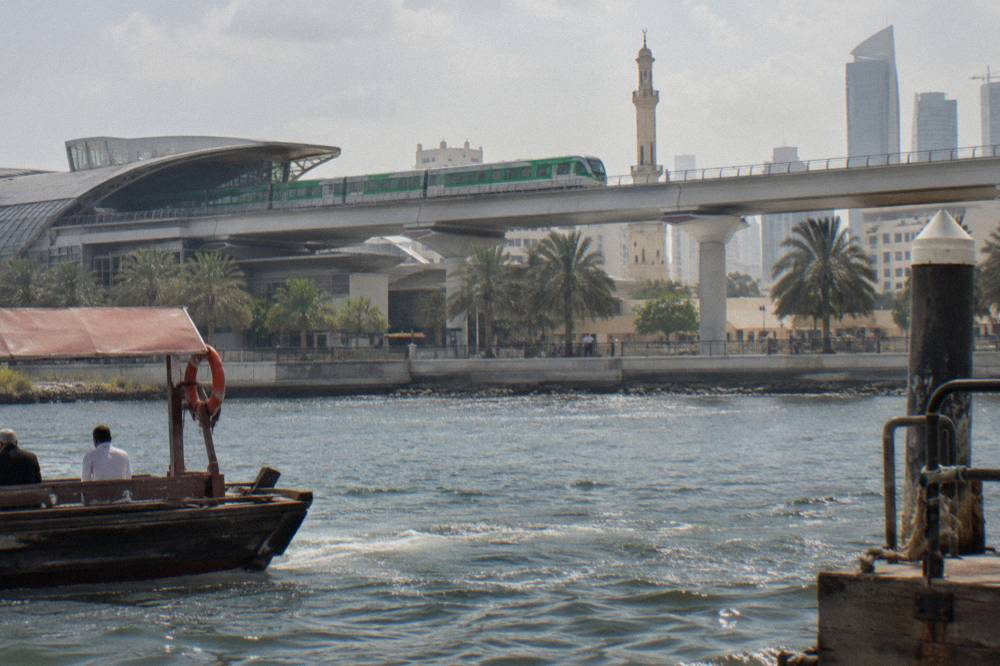
The Creek boat deserves its own mention because it is both transport and sightseeing. The RTA operates the traditional crossings on routes including Bur Dubai to Deira Old Souq, Al Sabkha, Baniyas and Al Seef connections, and the crossing takes only a few minutes. The fare is on the current RTA marine page, and one 2026 flyer noted a route temporarily on hold, so check the page on the day if a specific crossing matters to your route. The getting to old dubai by metro and abra guide has the full station-by-station detail.
When Is The Best Time Of Day For Each Day's Plan?
Run Day One and Day Two's walk in the morning, shop the souks late morning or after 4pm on Friday, and keep midday for indoor stops. December days run from a reported sunrise near 06:57 to sunset near 17:32, so winter visitors have roughly eleven hours of daylight, and Spice Souk stalls take midday breaks while Gold Souk shops are reported open toward 10am.
Timing in Old Dubai is less about clocks and more about heat and prayer breaks. In the December to February window, with daytime highs averaging 24 to 26 C, a 09:00 start is comfortable and a full walking morning is realistic. In summer, flip it: walk before 09:00, spend 11:00 to 16:00 indoors or at a mall, and return to the lanes after sunset, when the district is at its liveliest anyway.
Friday needs its own note. The Spice Souk is reported closed during the daytime on Fridays, and the Textile Souk sees Friday afternoon closures at some vendors, with shopping hours commonly from about 16:00 after prayers. If your three days include a Friday, make it the Al Fahidi and Al Seef day, or the downtown day, and keep souk browsing for a Saturday morning when the stalls are fully open. Souk hours are reported patterns rather than official timetables, so check the current details before you set an itinerary in stone.
For the guided walk itself, morning departures are the safe default: cooler lanes, stocked stalls, and an afternoon left over. Whatever the listing shows for start times and meeting points is the final word, since departures vary; the meeting points seen on local listings include Al Khayma Heritage Restaurant in Al Fahidi, Al Ras Metro Station exit 2, and the Al Seef Heritage Hotel entrance, so know which one applies to your date before you travel.
What Should You Pack And Wear For Three Days Of Walking?
Pack for walking, heat and modesty: covered shoulders and knees in the souks and heritage areas, comfortable shoes for long walking days, and a refillable bottle since supermarket water runs a reported 1 to 2 AED per litre. There is no single dress-code law for tourists, but heritage districts reward respectful clothing, and photography of people always needs permission first.
The dress guidance from official tourism sources is simple: swimwear belongs at beaches and pools, and shoulders and knees should be covered in heritage areas, souks and malls. No strict fine applies in most cases, but the traditional districts are exactly where modest clothing avoids unwanted attention. Loose, light clothing solves both problems at once in the warmer months. If shorts are on your packing list, the guide to wearing shorts in Dubai as a woman explains exactly where they work and where longer hemlines are the better call.
Two etiquette points matter on a food-focused trip. All meat served in Dubai's restaurants and markets is halal, and pork appears only in designated licensed sections, so menus reflect that automatically and no special request is needed. Alcohol is served only at licensed venues to visitors over 21, and drinking in public places outside licensed venues is not allowed, so the street food lanes are a dry experience by design. If a dietary need goes beyond that, message the operator before booking: listings do not describe themselves as vegetarian, vegan, gluten-free or kosher unless they say so explicitly, and the tasting line-up varies by departure.
Photography etiquette is the one people forget. Ask before photographing individuals, especially women, families or anyone in traditional dress, in the souks as elsewhere; photographing people without consent can violate privacy rules. In the lanes this is easy: a smile and a gesture toward the camera is usually enough, and shopkeepers showing off their spices generally welcome the attention.
A final word on pacing. Three days is enough, but only if you do not stack the plan. One guided walk, one souk morning, one flexible afternoon, and meals you actually sit down for: that is a trip that ends with you knowing the district rather than having collected it. The are food tours in dubai worth it guide goes deeper on the value question if you are still weighing whether the walk earns its day.
Common Questions About Three Days In Dubai
Is Three Days Enough For A Dubai Food Trip?
Yes, if the trip is anchored on Old Dubai. One guided walk of 2.5 to 4 hours covers the heritage district, the souks and a Creek crossing, and the remaining days let you revisit the dishes and stalls you liked at reported street prices.
Which Day Should Hold The Food Tour?
Day Two. It teaches you the geography and the dish names while you still have time to use them, and it leaves Day One for low-effort orientation and Day Three for souk browsing at your own pace.
How Much Does Food Cost Across Three Days?
Reported street and cafeteria eating runs from 1 to 3 AED for karak up to 15 to 40 AED for a casual meal, with mid-range dinners around 80 to 150 AED per person. The guided walk's price is on its booking page and sits outside those ranges.
Do I Need A Car For Three Days In Old Dubai?
No. The Green Line serves Al Fahidi via Sharaf DG and the Deira souks via Al Ras and Gold Souq stations, the Creek boats cross between the two sides in minutes, and taxis start at a reported 5 AED for late-night returns.
What Should I Wear For Three Days Of Walking?
Covered shoulders and knees in the souks and heritage areas, comfortable shoes for long walking days, and a refillable bottle. There is no single dress-code law for tourists, but heritage districts reward modest clothing.
Can I Do The Souks On A Friday?
Partly. The Spice Souk is reported closed during the daytime on Fridays, and some Textile Souk vendors close Friday afternoons, with shopping commonly resuming around 16:00. Make Friday your Al Fahidi or downtown day instead.